
21 Space Crafts For Kids For 2026
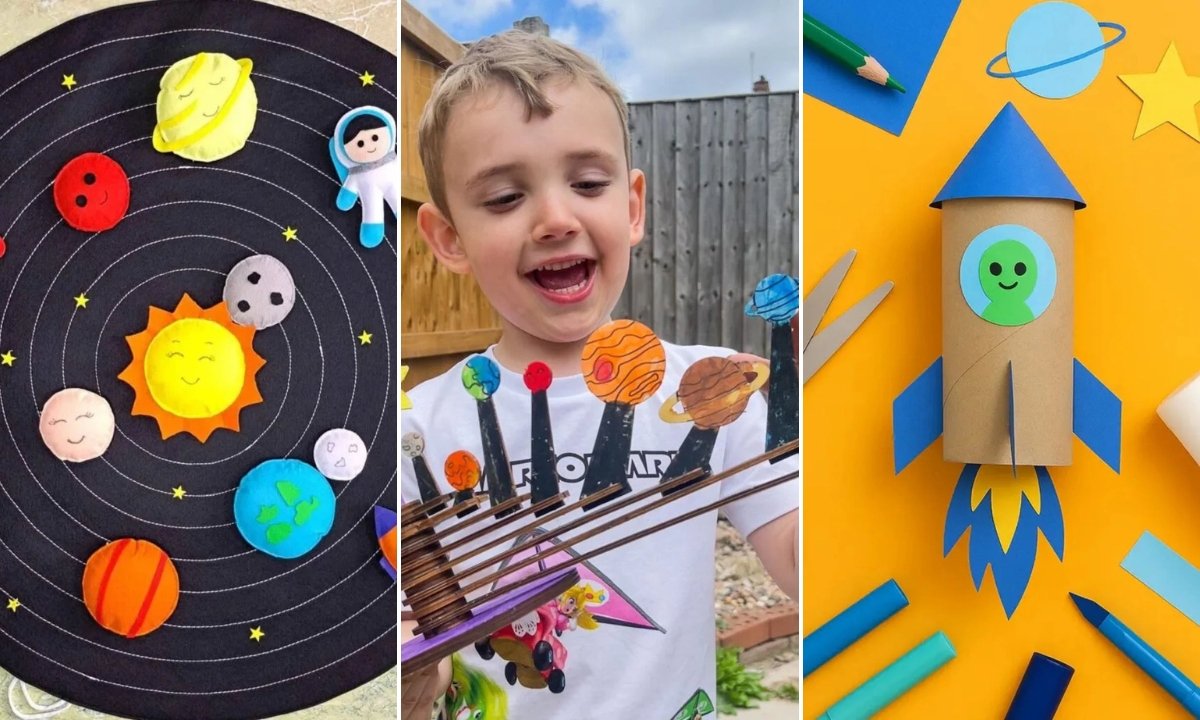
You pull out your phone, hoping to find a straightforward space-themed craft to entertain your child, and before you know it.
You’re overwhelmed by intricate concepts, extensive shopping lists, and projects that seem utterly impractical.
Your child wants to build a rocket immediately, not after a lengthy expedition to the craft store. You need something simple, not another disaster or tantrum.
This article covers 21 easy Space crafts for kids that make creative time simple and enjoyable in 2026.
Let’s jump into it!
How Do You Make Space Crafts Without Fancy Materials?
You begin with the basics. Paper, cardboard, empty toilet paper tubes, some glue, and crayons will do the trick. Want a rocket? Roll up some paper and tape it.
Need planets? Cut out circles from old boxes and color them in. The point isn’t to create a masterpiece; it’s to get started.
When the materials are simple, children concentrate on creating and imagining, rather than worrying about the next step.
By taking away the expectation of perfection, kids dive in quicker and have more fun.
Save this article for later!👇👇👇

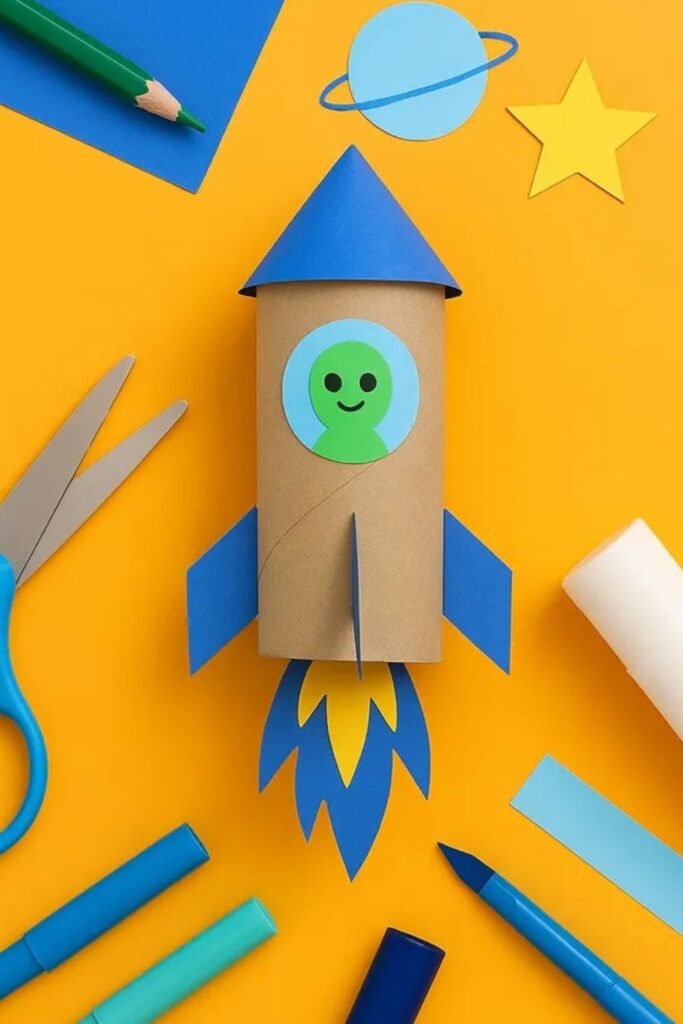
Paper Rocket
Kids jump into pretend play faster when a craft doubles as a toy. Turn an empty toilet roll into a rocket by adding paper fins, a cone top.
Add a few simple flame shapes at the base. To give it some personality, draw or paste in a tiny alien or astronaut peering out.
This is most effective during free play, when children may create narratives, not simply rockets, and let their imaginations take flight.
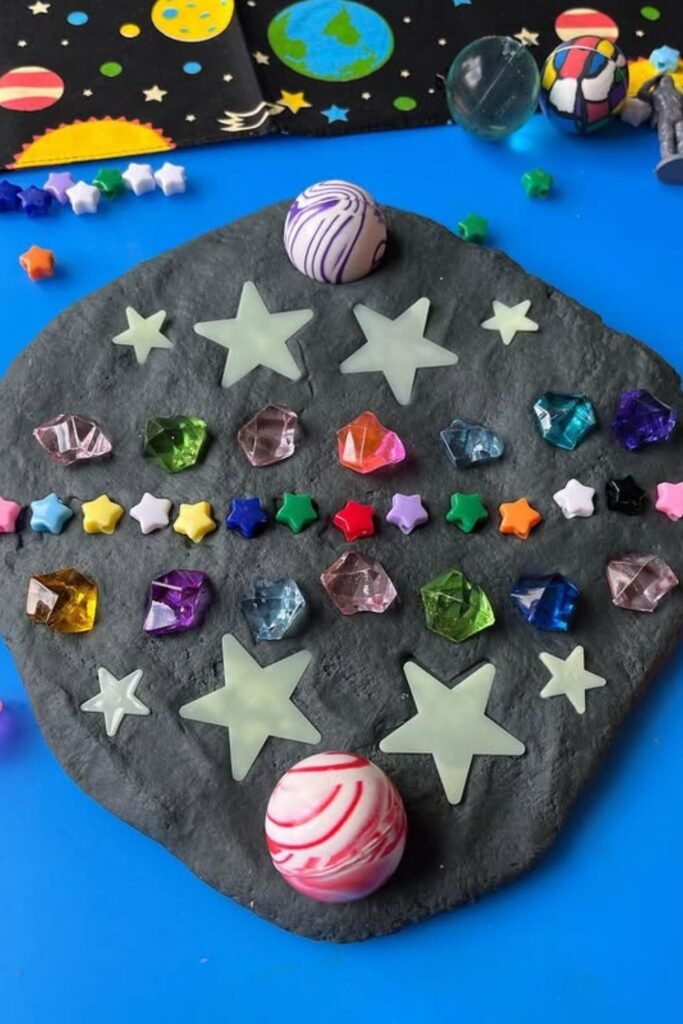
Galaxy Board
Hands stay busy while imagination stays wide open with a textured space board like this. Use air-dry clay or dough as a base.
Press in gems, stars, and little balls to form planets. This can be done during quiet time or as part of sensory play.
Children can sort the colors, trace the patterns or even build their own space pathways. It’s a great way to boost focus and improve fine motor skills.
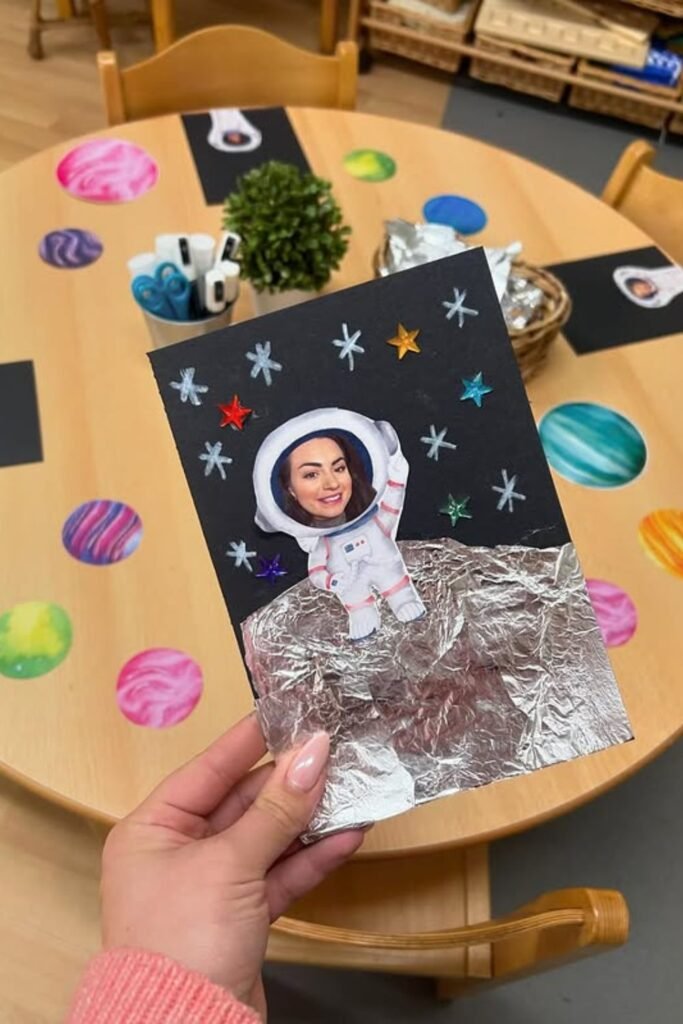
Astronaut Portrait
Kids love seeing themselves inside their creations and that’s what makes this one click instantly. Print a small photo.
Place the image inside an astronaut outline, then use foil to create a gleaming moon surface. Black paper and star stickers complete the look.
This approach is ideal for classroom projects or keepsakes particularly when children want to actively participate in the space narrative rather than simply seeing it.
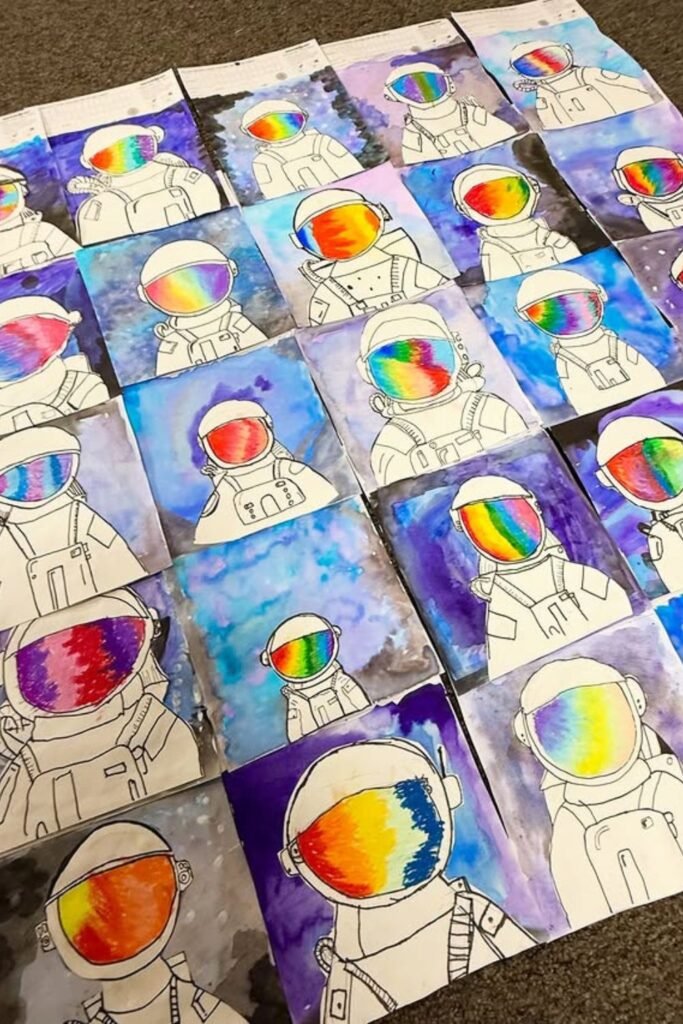
Color Helmets
Rainbows grab attention fast, and that why this activity works so well in group settings. Start with a simple astronaut outline.
Next, have the children fill the helmet with watercolors or crayons mixed with water. The results will be unique and that exactly what you want.
This activity is perfect for art class or a space themed week, fostering color blending, patience and self-assurance in making daring artistic decisions.
Space Station
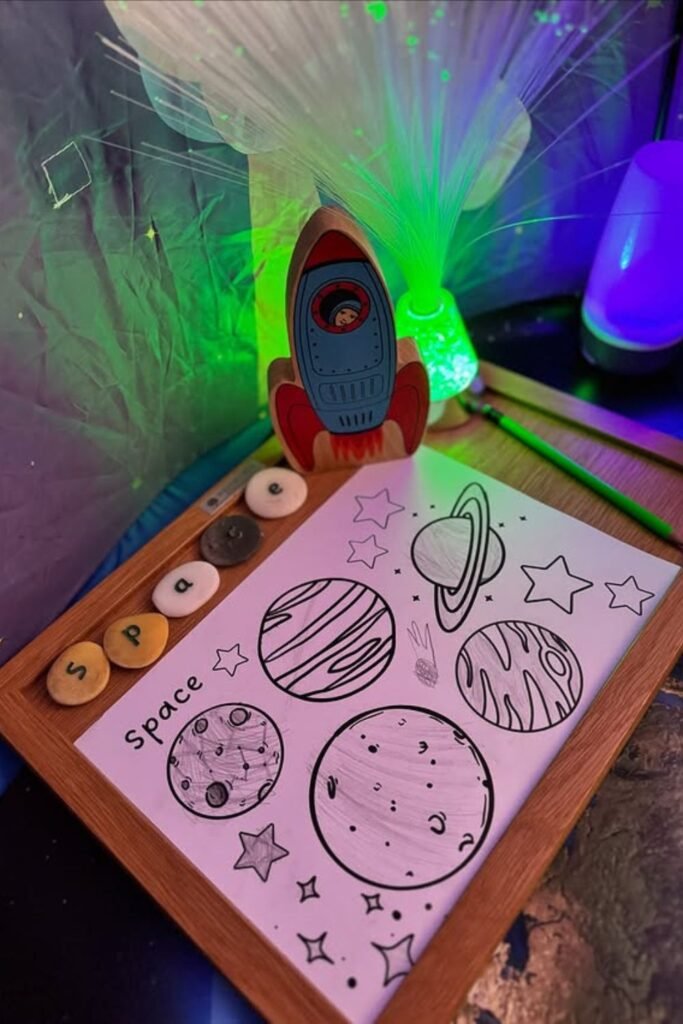
Dim lights change everything for kids who struggle to focus. Set up a small drawing spot with planet outlines, soft glow lights.
And a basic rocket prop sits nearby. Kids can trace, paint or dream up their own planets, taking their time.
This works well during quiet periods or evening play, where the focus is on creative exploration, not speed.
Sensory Galaxy
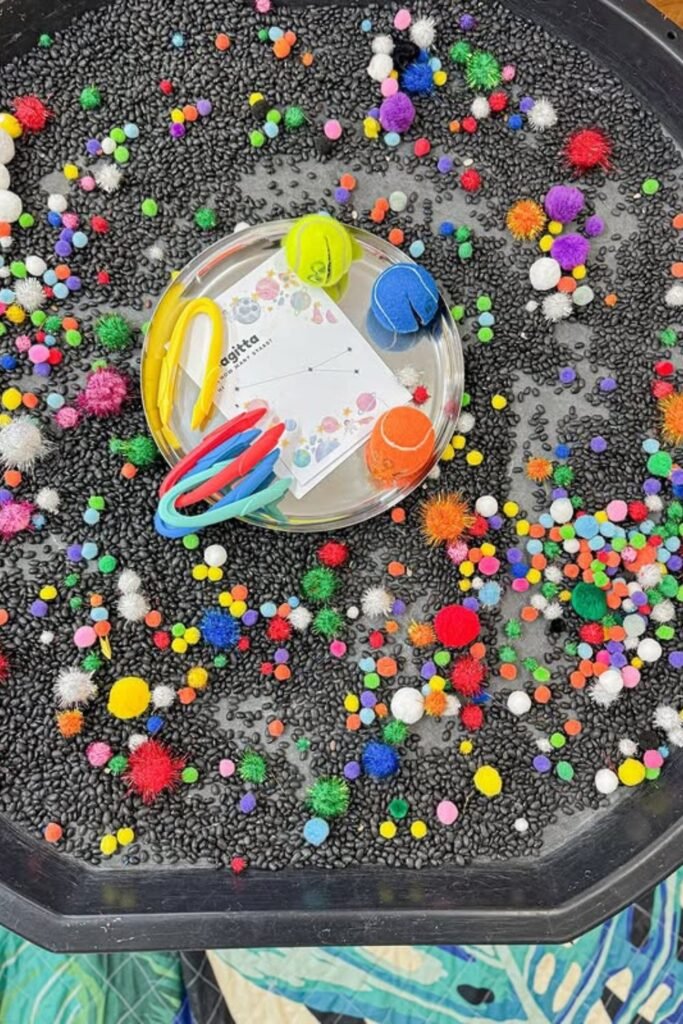
Curiosity grows fast once hands sink into texture. Fill a shallow tray with black beans or rice, then scatter pom-poms.
And use beads to represent stars and planets. Incorporate tweezers or scoops to make it a bit more challenging.
This arrangement is ideal for sensory play areas or quiet activity stations allowing children to explore space while simultaneously improving focus and fine motor skills.
Felt Orbit
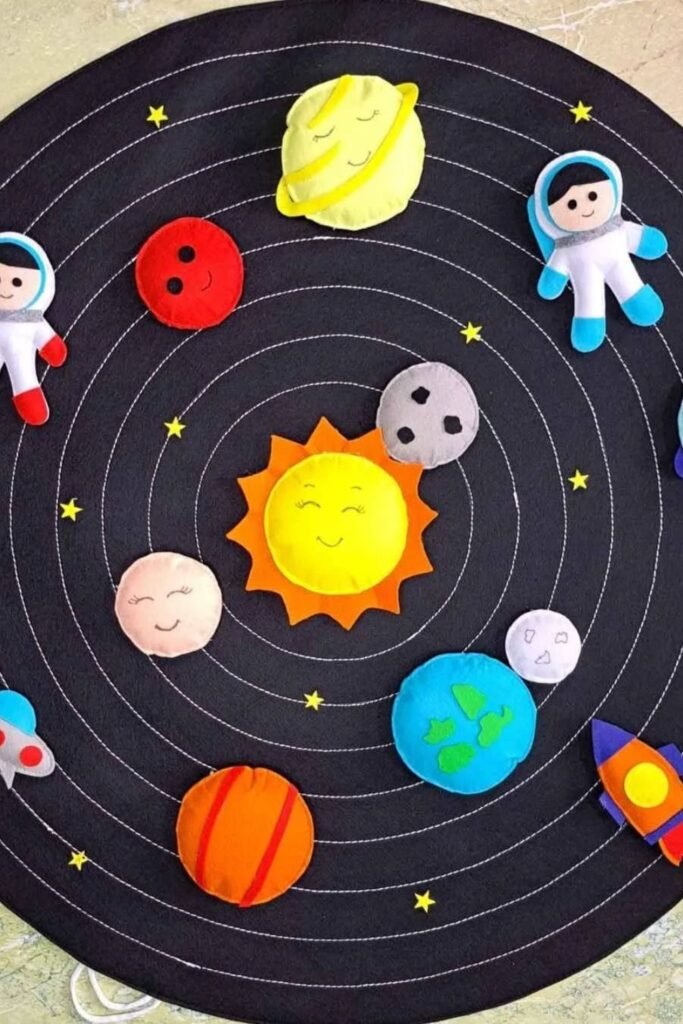
Movement makes learning stick better. Lay out a felt space mat with stitched orbit lines, then add soft planets, astronauts, and rockets that kids can move around.
During story time or when playing together you may casually introduce space positions without making it feel like a lesson.
Moving pieces around gives youngsters a chance to grasp concepts like order, distance and sequence all while keeping the play interactive and adaptable.
Planet Stack
Nothing explains space order better than building it with your hands.
Stack painted planets on sticks or card strips, spacing them out to show how the solar system flows.
Let the children choose the sequence initially and then we can subtly modify it as a group.
This approach is particularly effective during outdoor activities or scientific lessons.
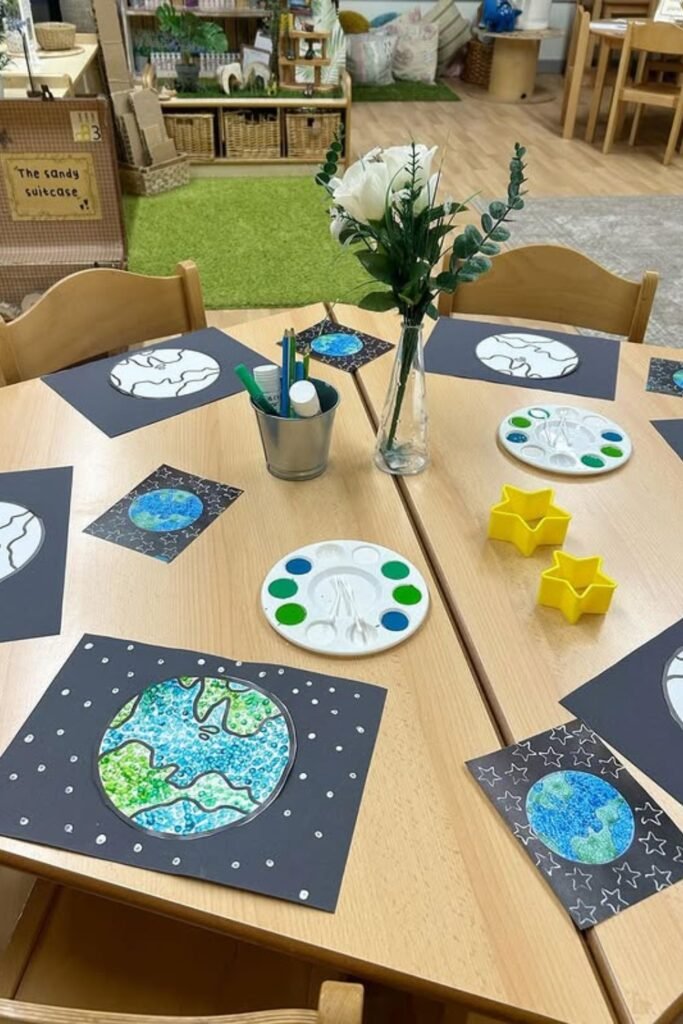
Earth Prints
Dot painting slows kids down in a good way. Set out black paper, circle templates, and cotton swabs dipped in blue and green paint.
Kids can create their own Earth, dot by dot, and then add white dots for stars when the paint has dried.
Where the emphasis is on patience, fine motor skills, and concentration, rather than on completing the project quickly.
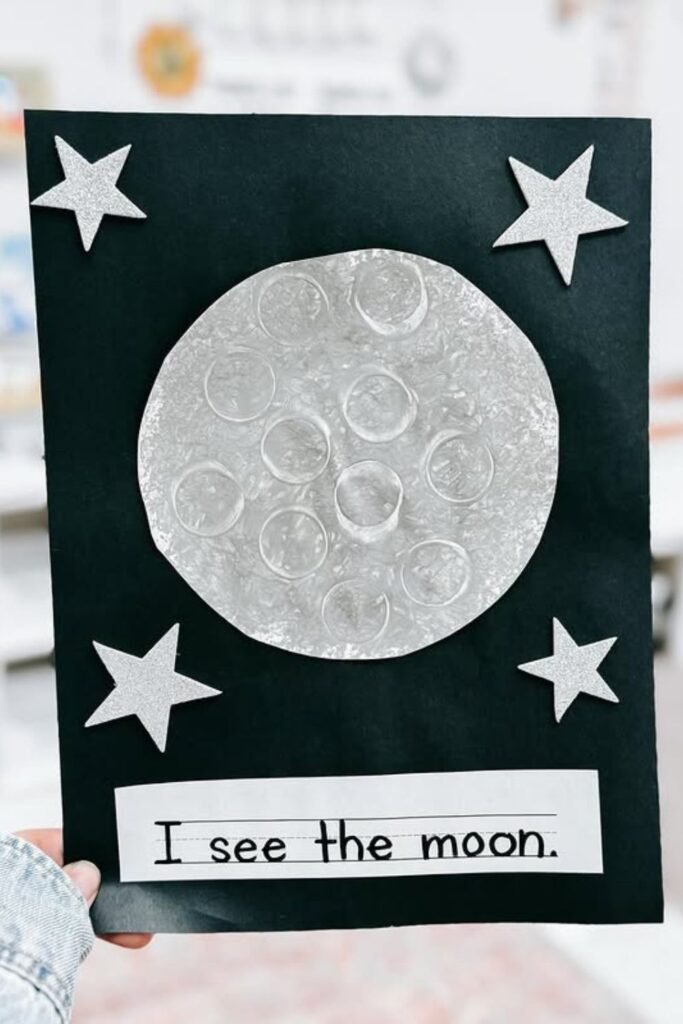
Moon Texture
Fingers learn faster through touch than sight alone. Press bubble wrap onto a paper moon with glue.
Then place it on a black background to make craters stand out. Stars or a brief phrase can link art to early reading.
This approach is ideal for preschool settings or calm home activities, where sensory experiences aid memory retention in young children.
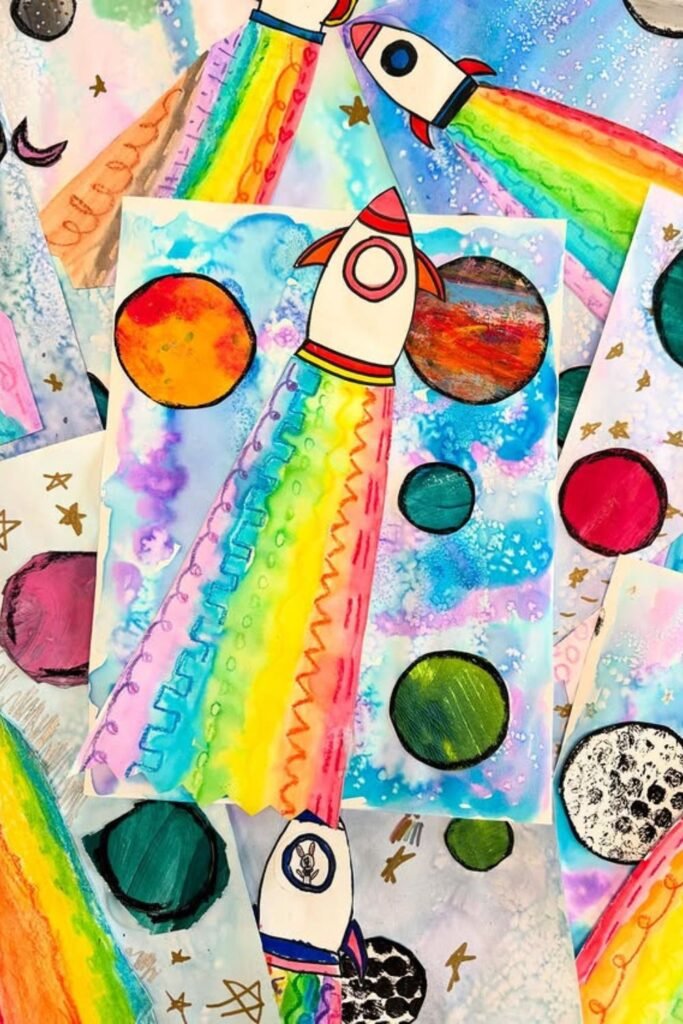
Rainbow Rockets
Bright color changes the whole mood of a space project. Paint a loose watercolor background first, then add a simple rocket cutout once everything dries.
Let the children create the flame’s path however they choose zigzags, dots, or broad strokes.
This approach is especially effective on those art-filled days when imagination takes precedence over precision, and kids relish the freedom to blend colors.
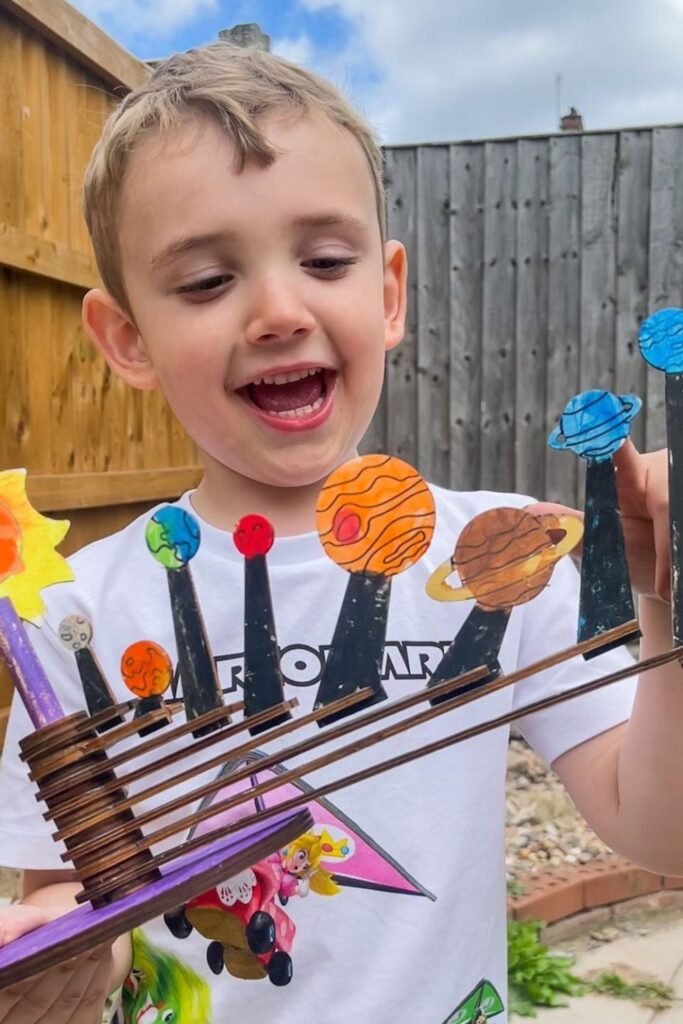
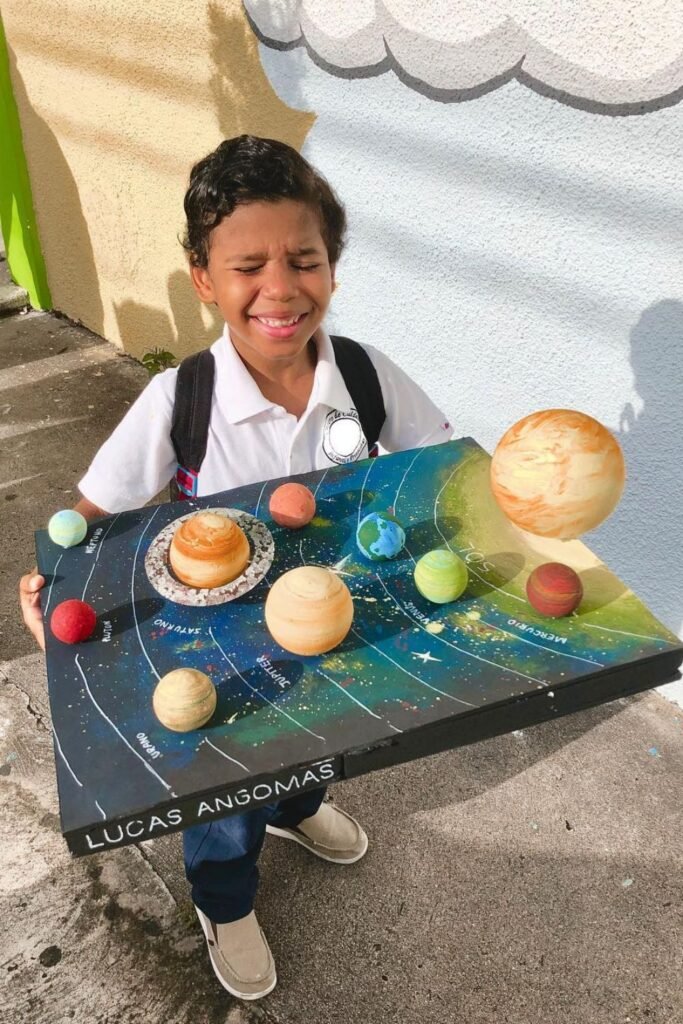
Solar Model
Pride shows up fast when kids can carry their work around. Build a 3D solar system using foam balls or paper mache glued onto a painted board.
In this context, the relative sizes of the planets are more important than their exact colors. This notion can be used in school projects or presentations.
Children can explain the sequence of the planets while using their hands to point, touch and demonstrate their own creations.
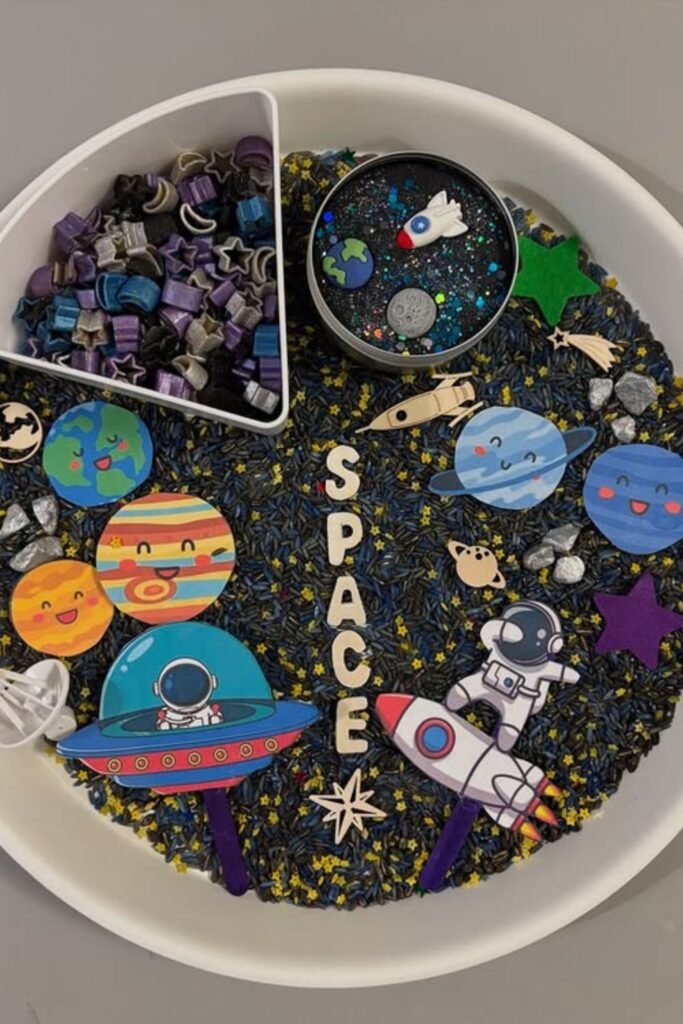
Space Bin
Scooping turns learning into play without feeling forced. Fill a round tray with dyed rice or lentils then drop in flat planets, rockets.
And miniature space figures. Include a cup or spoon, allowing children to dig, pour, and reshape their own little universe.
This setup shines during solo play or learning centers and where calm concentration and tactile discovery are key.
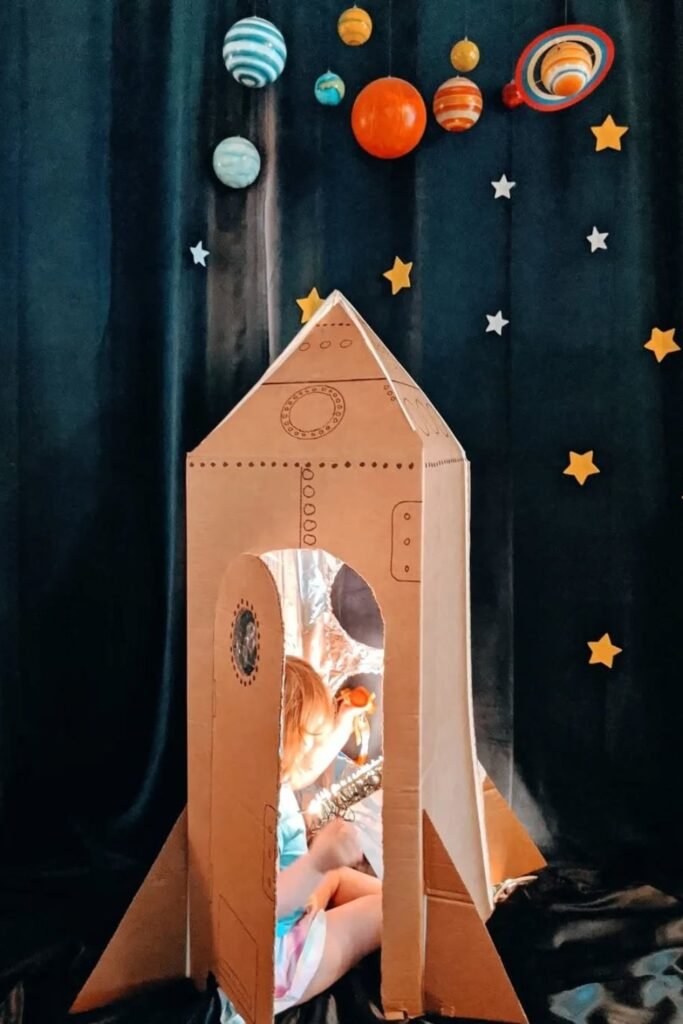
Cardboard Rocket
Big builds turn pretend play into full body adventure. Cut windows and doors into a tall cardboard box.
Then let the kids go wild and drawing buttons, panels and lines directly on the surface. The foil interior creates a space age vibe with minimal fuss.
When kids can crawl in, chatter about their missions, and stay occupied for ages, far longer than with those little crafts that seem to lose their appeal.
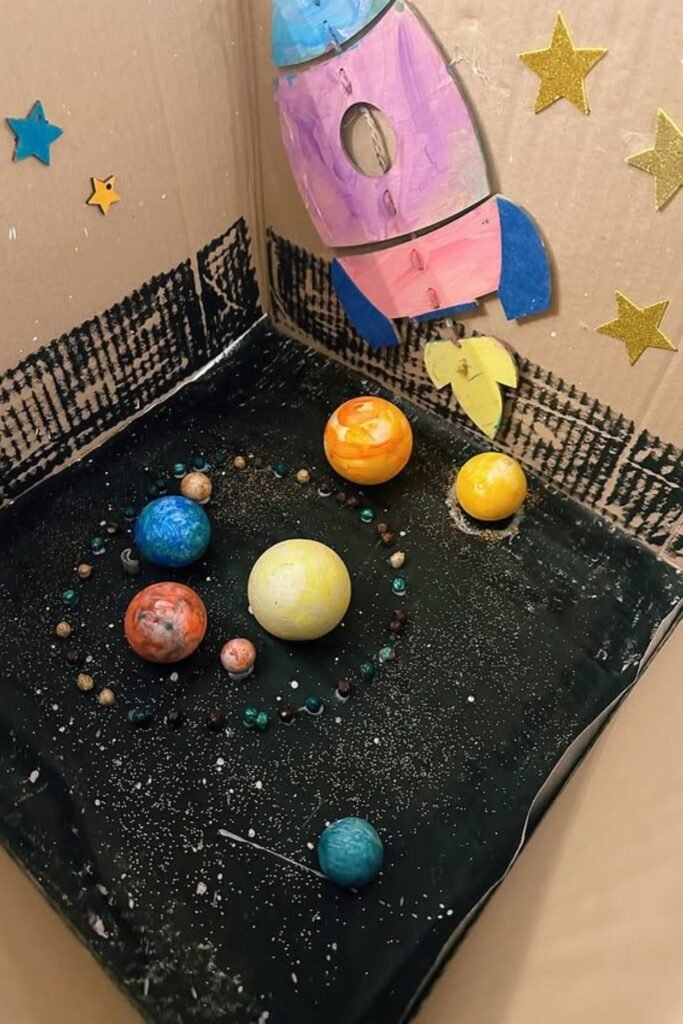
Space Diorama
Depth pulls kids in faster than flat paper ever will. Turn a shoebox into outer space by painting the inside black, splattering white dots for stars.
Placing little painted balls to represent planets is a good start. Attach a rocket, either by hanging it or gluing it to the side, to imply motion.
This is a great activity for school projects or those days when the weather keeps the kids indoors, giving them a chance to create, modify.
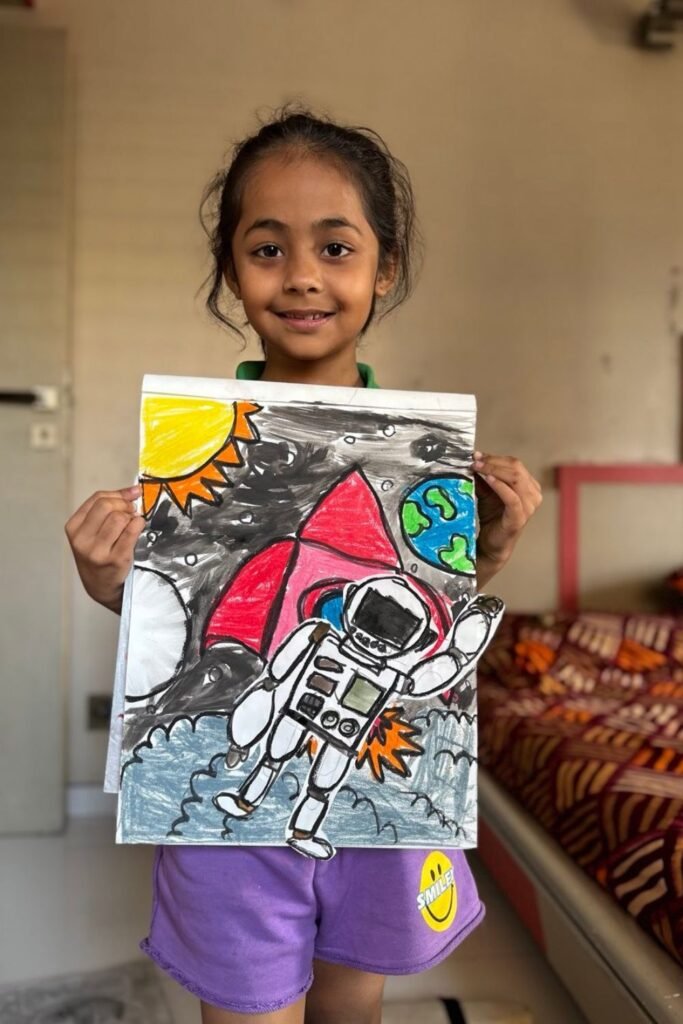
Space Drawing
Confidence grows when kids hold up something they made themselves. Give a simple astronaut outline, then let crayons, markers, or paint take over the story.
Fill the background with planets, stars, or maybe even some explosions no need for any corrections.
This approach is ideal for after school or during those quiet moments indoors, when self-expression takes precedence over perfecting every detail.
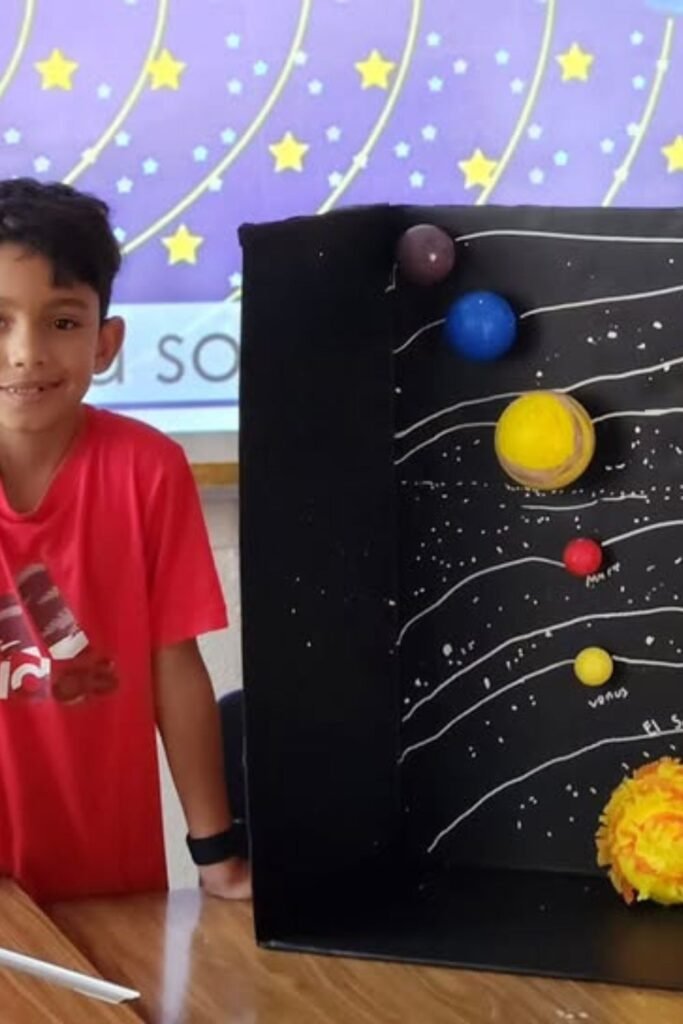
Orbit Box
Explaining space feels easier once kids can point instead of talk. Build a standing display using a cardboard box, black paper, and painted balls glued at different distances.
Draw orbit lines using white paint or chalk. This approach is ideal for school projects or show-and-tell presentations.
Kids may then guide their classmates through the solar system’s planet order, physically tracing the courses with their fingers.
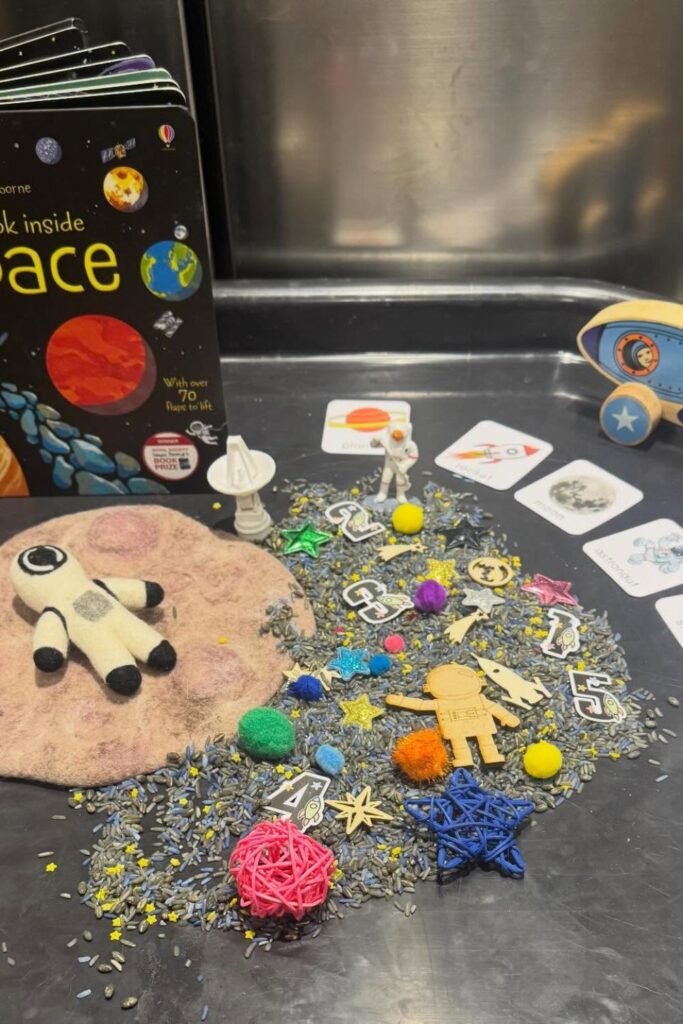
Space Playtray
Storytelling flows naturally once books and play connect. Pair a space-themed book with a sensory tray filled with dyed rice, small figures, stars and planets.
Let children narrate existing stories or create whole new ones while manipulating the pieces.
This approach is most effective during extended reading sessions, where imagination or language skills and tactile play converge all with out the structure of a formal lesson.
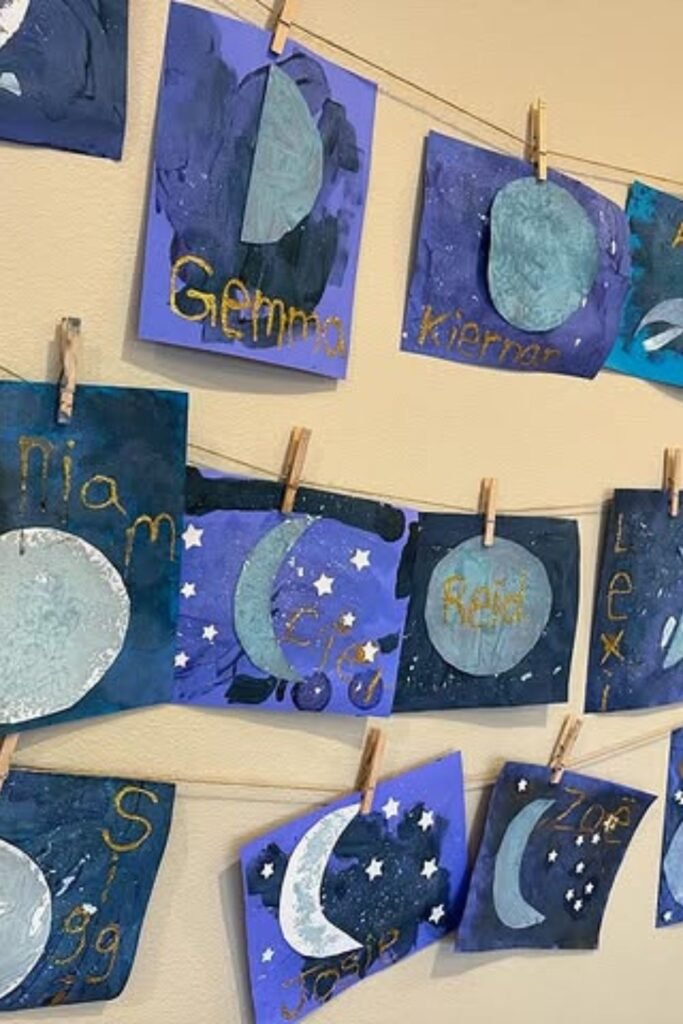
Moon Phases
Names stick better once kids can see changes side by side. Paint dark blue paper, then add moon shapes using sponges, foil or torn paper to show different phases.
Attach the completed artworks to a string, allowing for simultaneous viewing. This method is particularly effective in class rooms or corridors.
Children can then return to the exhibit observing the pieces and making quiet connections and between the shapes and the moon’s evolving appearance.
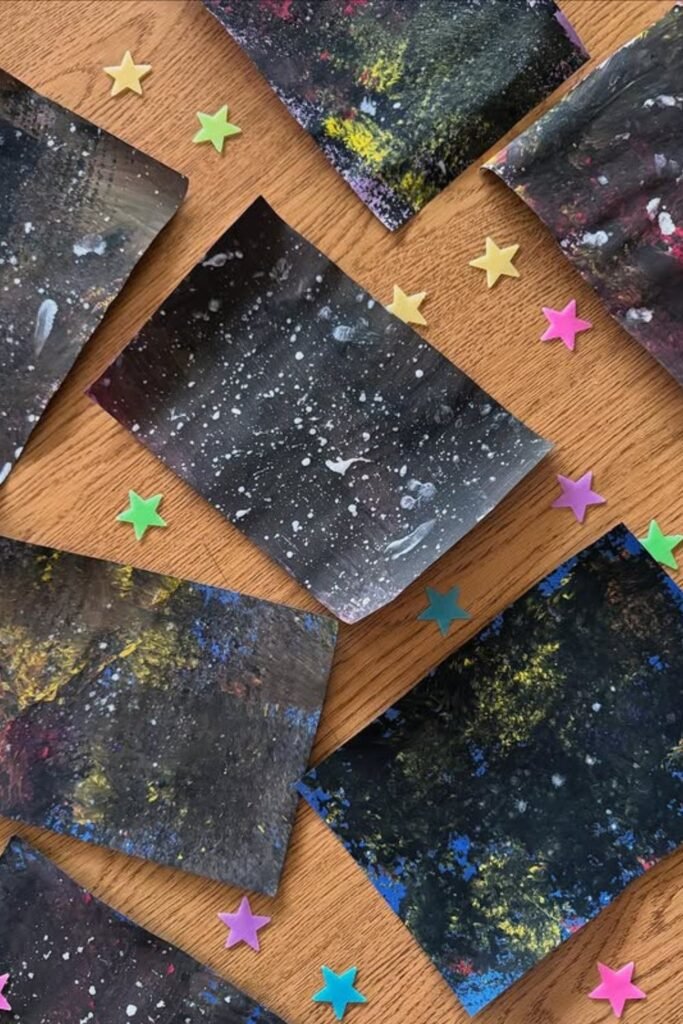
Galaxy Paintings
Messy steps lead to the best surprises here. Start with dark paper, dab on different paint colors using sponges or scrunched paper.
Then, flick white paint to make stars. No need for a plan; the random layers build depth all on their own. This approach shines during open art time.
When youngsters unwind, explore without restrictions, and produce space scenes that are all unique, without any effort to replicate something specific.
Orbit Spinner
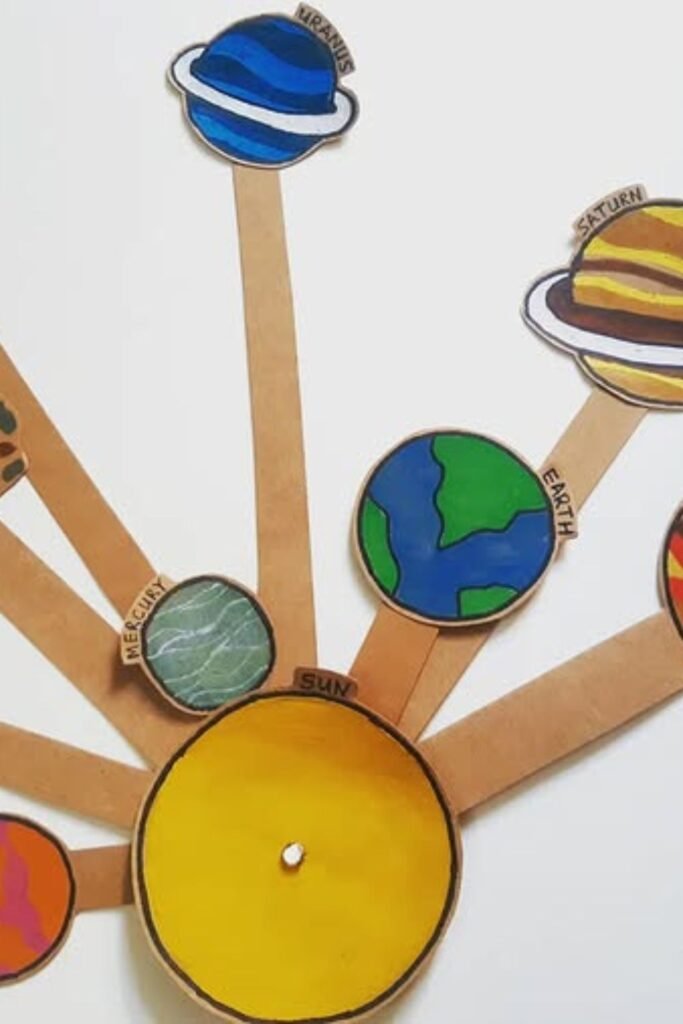
Movement helps ideas stick without extra explaining. Cut planet circles from cardboard, color them.
Attach each planet to a craft stick then fasten them to a central sun using a paper fastener.
Spinning the planets helps youngsters recall their sequence and position.
This method is ideal for interactive scientific lessons. Children learn best when they can manipulate, alter and observe the motion of space.
FAQs
Do space crafts work for kids who don’t like drawing or coloring?
Indeed. A lot of spacecraft construction hinges on assembling, organizing, attaching, or transporting components, rather than sketching.
Sensory bins, cardboard rockets and planetary models are particularly effective for children who gravitate toward tactile activities rather than artistic endeavors.
How long should a space craft activity last before kids lose interest?
Kids tend to remain focused for around 10 to 20 minutes, if the activity is straightforward and allows them some latitude.
When their attention wanes, it’s often a signal that the activity is either too restrictive or lacks sufficient freedom, rather than a need for additional materials.
Hi, I’m Afaf! I’m a law student who loves writing about everyday life – from home projects and crafts to fashion, beauty, and parenting tips.
I’ve been writing for over a year, sharing ideas that are simple, practical, and easy to try. I write about things I find interesting and useful, whether that’s organizing a space, trying a new DIY, or finding activities to keep kids entertained.
My goal is to share helpful ideas without making things complicated. If it works in real life, I’ll write about it.
When I’m not studying or writing, I’m usually experimenting with new projects or scrolling for inspiration!