
18 Space Activities for Kids 2026
I said, “Just watch something about space,” last week because I didn’t have the energy to plan something better.
My kid wanted to know more about rockets and planets, so I gave them a screen. You’re not the only one who has been there.
You want things to do that are both fun and educational. You want to spend less time on screens without having to fight all the time.
You want something that is straightforward, meaningful, and something you can do with what you currently have at home.
In this article, I’ll walk you through 18 practical space activities for kids that are easy to set up and fun.
Let’s jump in!
How Do Space Activities Support Learning Without Screens?
Screens are fun. Space activities are fun. Kids aren’t just passing the time when they build rockets, make moon craters, or map constellations.
They’re thinking, experimenting, and solving issues. That’s what makes them different. Activities with a space theme easily mix curiosity with action.
They teach kids about STEM topics like motion, gravity, and the arrangement of the planets through play.
They help kids focus better since they have to follow steps try out ideas, and change things when they don’t work.
Save this article for later!👇👇👇
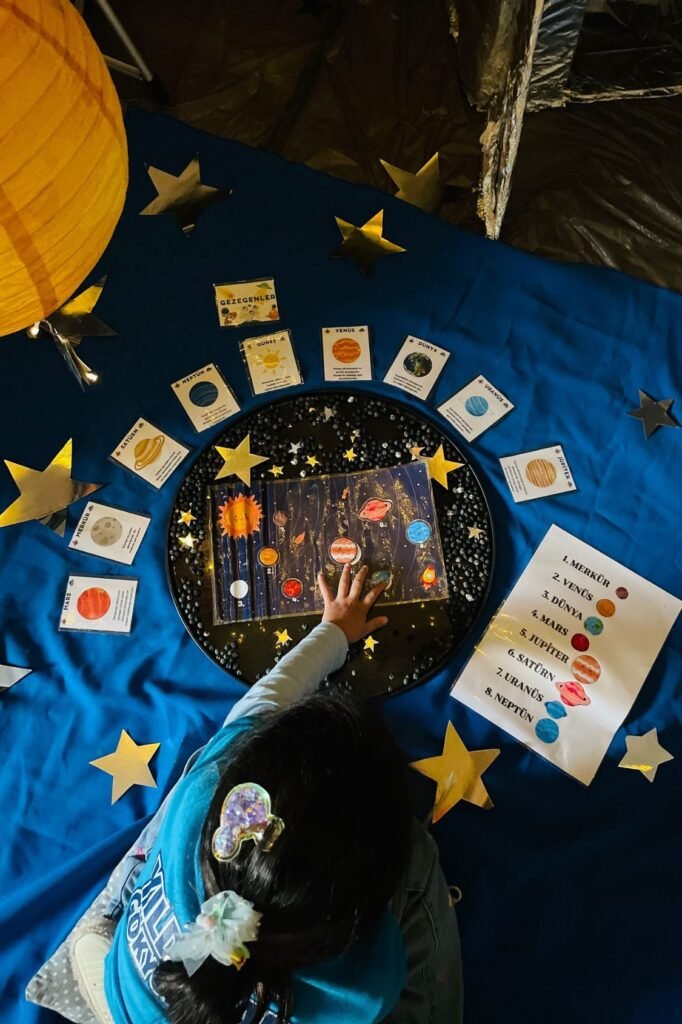
Planet Mapping
Curiosity deepens the moment planets stop being names in a book and become pieces a child can move, arrange, and question.
This kind of hands-on solar system structure turns memorizing into exploration. Put a dark cloth or tray down as your “space,” and then put planet cards around the sides.
Let the youngsters assemble the solar system from the center out. Instead of just copying a chart, tell students to compare sizes, colors and distances.
Mistakes are a normal part of the process of finding things out. This setup is great for a themed learning day or a small group.
It works great during quiet time or as a led STEM station. Put a printable planet order sheet near by so kids can check their work or turn it into a timed mission control task.
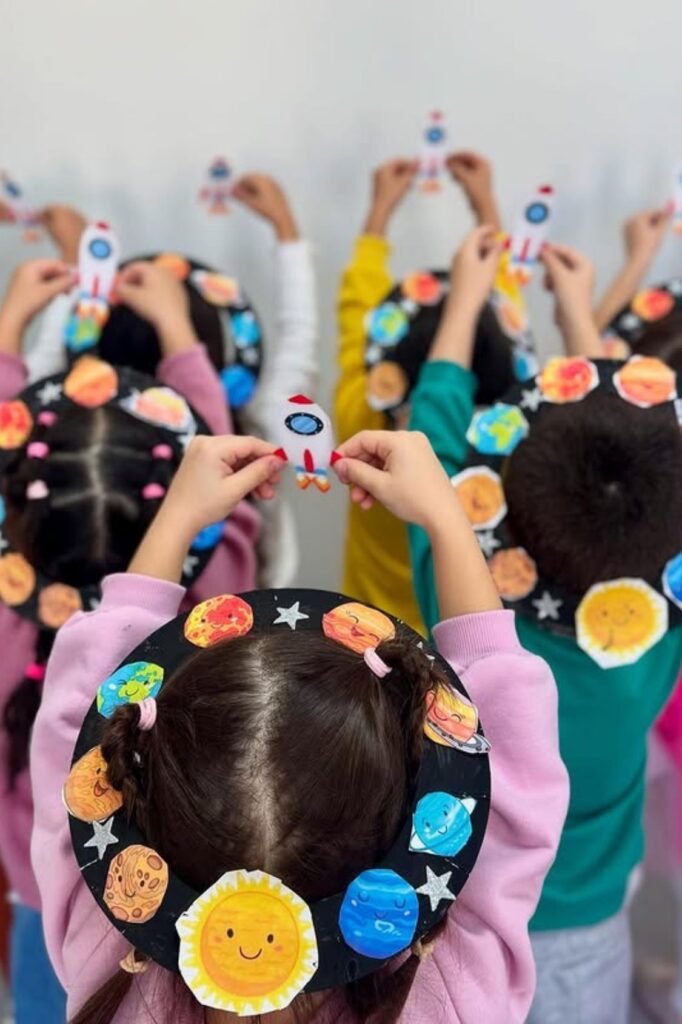
Orbit Crowns
Nothing spark excitement faster than turning children into part of solar system itself.
Planet themed head bands that instantly shift learnings from observation to participation.
Cut durable black chart paper into circles and let kids sketch or print planets on them. You can use small rocket cutouts as mobile pieces.
So that kids can “travel” from planet to planet during stories or studies. This idea works best when combined with role-play.
And it’s great for birthday themes, classroom space week, or group activities.
Give each child a planet to learn about or act out,then let them announce themselves as Mercury, Mars, Neptune.
It’s easier to remember things like the order and qualities of planets when you can see them in action instead than just hearing them.
Astronaut Portraits
Every child secretly wants to imagine life inside a spaceship.
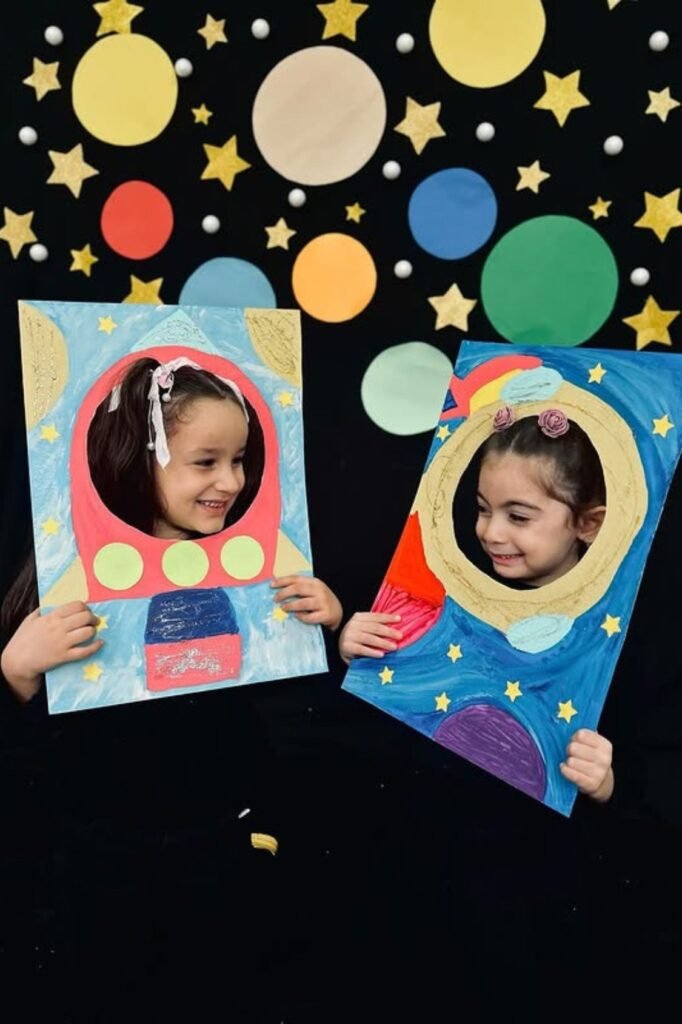
Turning that dream into a framed “astronaut portrait” makes space exploration personal and unforgettable.
Cut a big helmet window out of thick cardstock or recycled cardboard. Paint the background with stars and planets.
Then let the youngsters customize their suits anyway they want to. Once it’s dry, hold it up like a picture frame and take a picture of their “launch day” smile.
This game is great for preschool classes, space week activities, or birthday party stations because it combines art with identity.
To make the role-play last longer, give each person a small name tag that says “Commander” or “Mission Specialist.”
Star Rescue
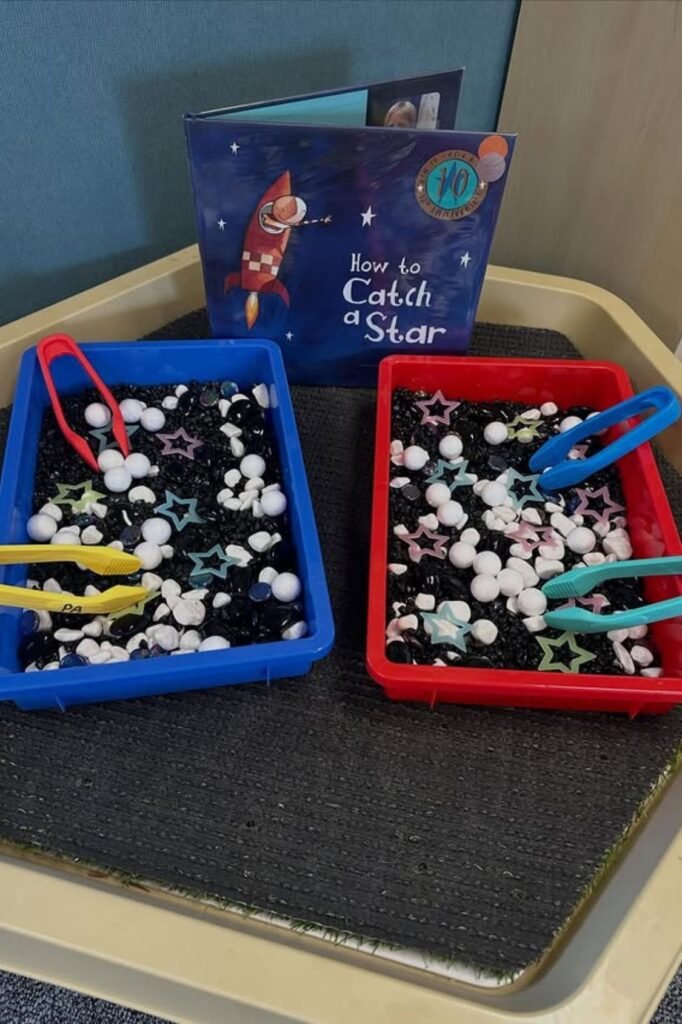
Tiny hands searching through a galaxy of black beans instantly turn fine motor practice into a mission.
A simple sensory bin with dark fillers, white pebbles, and hidden star shapes makes a “night sky” that kids may touch and explore.
Put some scoops or tweezers nearby and tell the youngsters to save as many stars as they can before “sunrise.”
You may make the activity more story-based by adding a space-themed book, or you can turn it into a counting challenge by adding number cards.
This design is great for preschool stations, quiet nooks, or kids who finish their work early. It keeps kids interested without being too much work.
Galaxy Dough
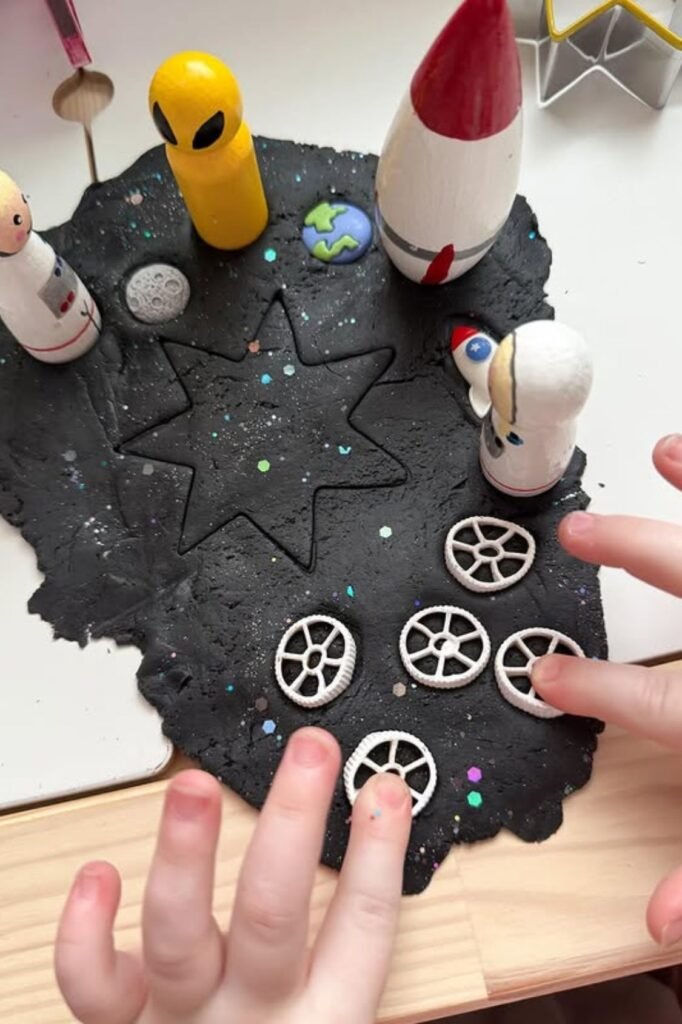
Imagination explodes the moment a plain lump of dough transforms into deep space. Dark play dough speckled with glitter becomes a galaxy landscape.
Roll out black or dark blue dough, add some glitter or paint splatters for stars, and then add little figures, pebbles for moons, or toy rockets.
Kids automatically start making craters, carving constellations, and coming up with space missions without having any help.
This setup is great for open-ended play sessions at home or sensory tables in early years schools. It stimulates both storytelling and problem-solving.
Pressing, sculpting, and arranging things helps kids improve their fine motor skills, while role-playing helps them improve their language and creative thinking.
Helmet Craft
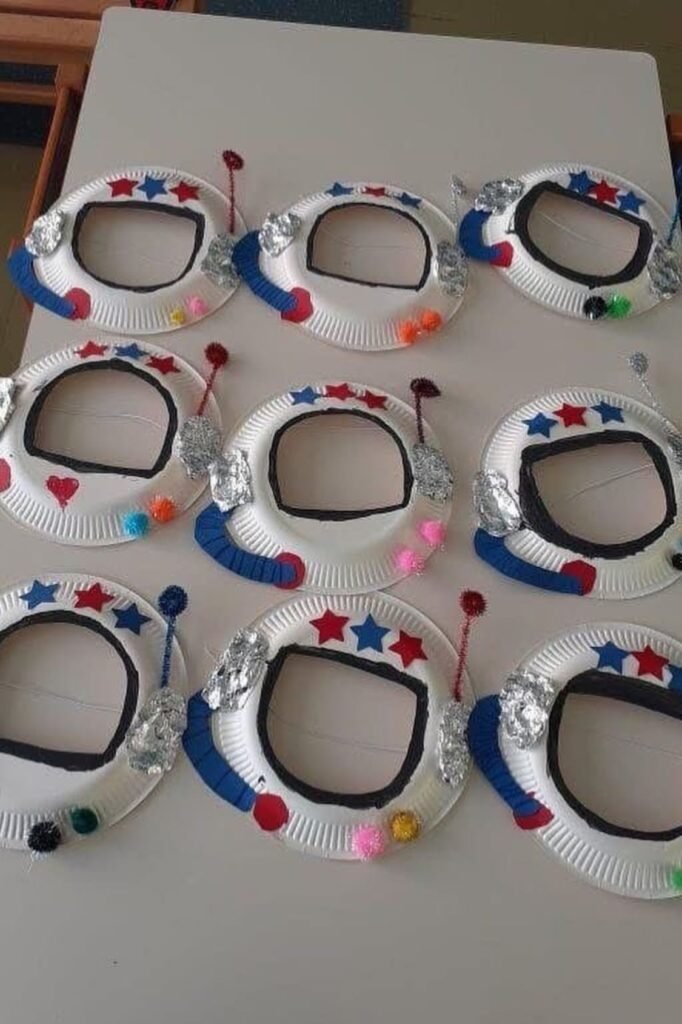
Ordinary paper plates suddenly become launch-day gear with a few bold details and imagination.
To make a visor, cut out the center and outline it with black paint or marker. Then let the kids adorn the rim with stars, foil “controls,” and colorful pipe cleaners for antennas.
This activity is great for preschool classes or birthday party stations, and you can also wear it as a costume.
When they’re done, kids naturally get into character, whether they’re counting down launches, floating in zero gravity, or reporting back to mission control.
With only a few items, prep is easy, but the reward is huge. Choosing design elements and decorating both help with fine motor skills and give kids a sense of ownership.
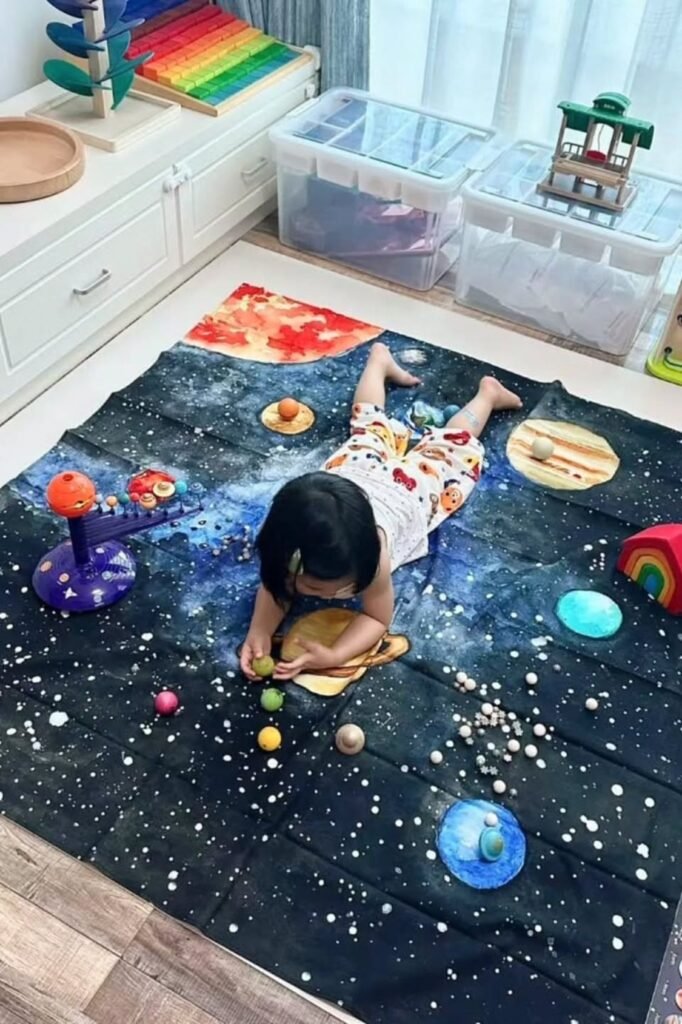
Cosmic Floor
Space feels limitless when it stretches across the floor. A large galaxy-themed mat instantly transforms ordinary playtime into an immersive exploration zone.
Put out a starry blanket or a printed space mat, and then let the kids design their own solar system by throwing around planet balls or wooden spheres.
Moving planets about, putting them in groups by size, or making up orbits converts movement into learning.
Crawling, reaching, and moving things around naturally helps with gross motor skills and spatial awareness.
This configuration is great for toddlers and kids in early elementary school. It works well for both open play and guided lessons about the order of the planets.
Telescope Corner
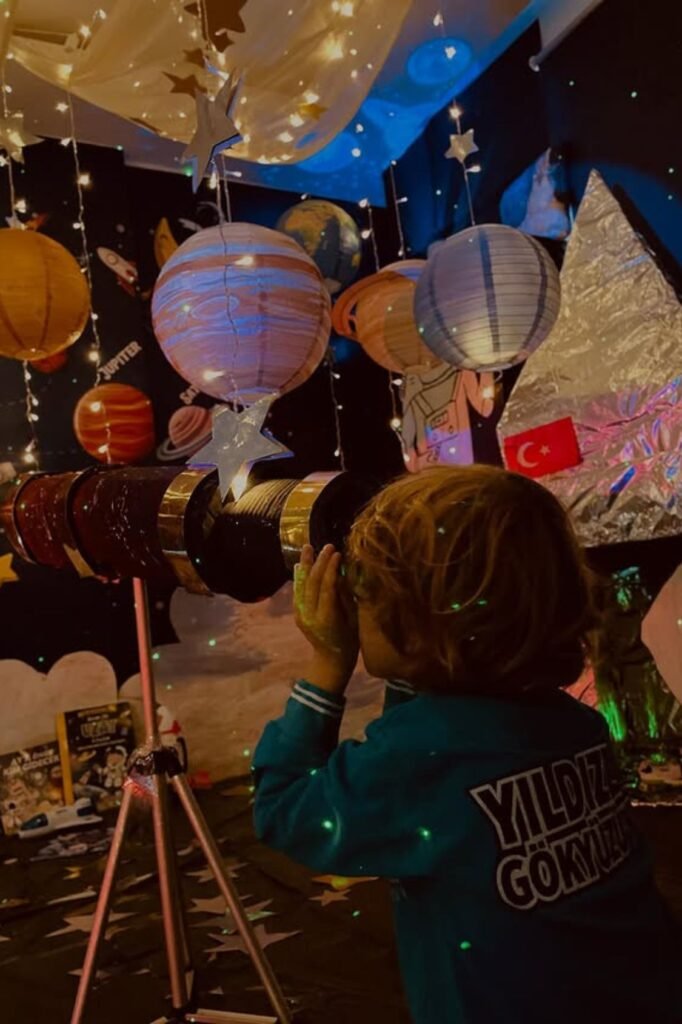
Wonder grows quieter and deeper when a child leans into a homemade telescope and believes something extraordinary is waiting on the other side.
A basic cardboard tube on a tripod or stand can quickly become a doorway to your ideas. To set the mood, hang lightweight planet cutouts from the ceiling.
Add string lights for a faint galaxy glow, and make the space a little darker.
Even taped-up pictures of planets at different distances make it look like you can “spot” Jupiter or Saturn.
This layout is great for a reading nook, a themed party area, or a classroom discovery zone. It encourages focused observation and storytelling.
Put space books next to it so that kids can naturally study while they play. Here, your ability to observe gets better.
Planet Patterns
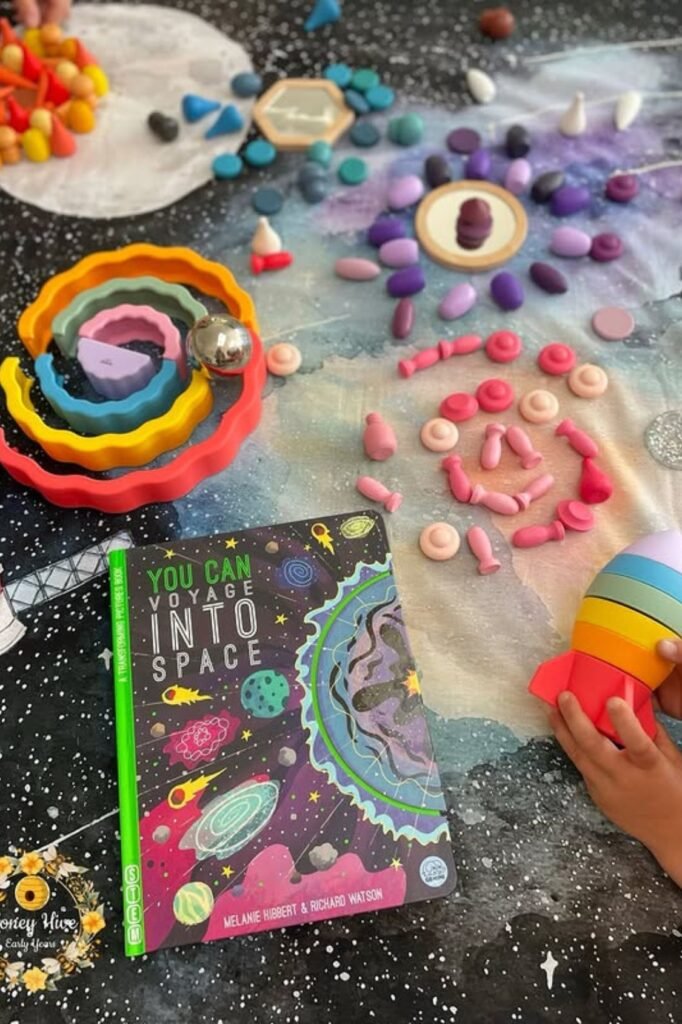
Patterns hide everywhere in space planet rings, orbital paths, constellations and recreating them with loose parts turns math into something beautifully visual.
You can make whirling galaxies, symmetrical patterns, or color sequences that repeat over a galaxy-themed mat by putting small stones, buttons, pebbles, or clay pieces on it.
Use stacking toys to challenge kids to make a planet with rings or to make circular patterns that get bigger like orbits do.
When youngsters arrange things by size, shape, or color during quiet time, they don’t realize they’re getting better at math.
This setup is great for focused small-group work or independent play sessions. It works well with a space-themed book nearby to get thoughts flowing.
Mission Control
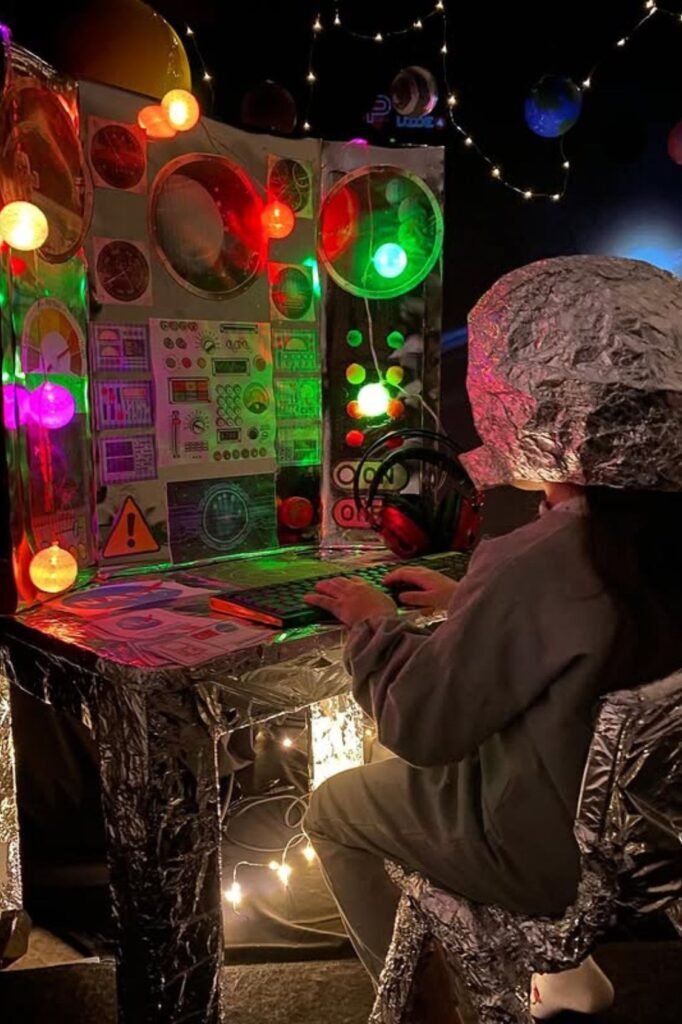
Excitement rises instantly when an ordinary desk transforms into a glowing command center. Cardboard panels covered in foil, printed control buttons.
Just a few string lights make it look like a real spacecraft cockpit without needing to spend a lot of money.
Before they sit down, ask the kids to prepare a “mission” that includes the destination planet, a fuel check, and a countdown.
Using old keyboards, headphones, or other repurposed electronics makes pretend play more lifelike and helps kids stay focused.
Dark lighting makes the mood better and makes you feel more involved.
This game combines storytelling with problem-solving and is great for a permanent play area.
Planet Parade
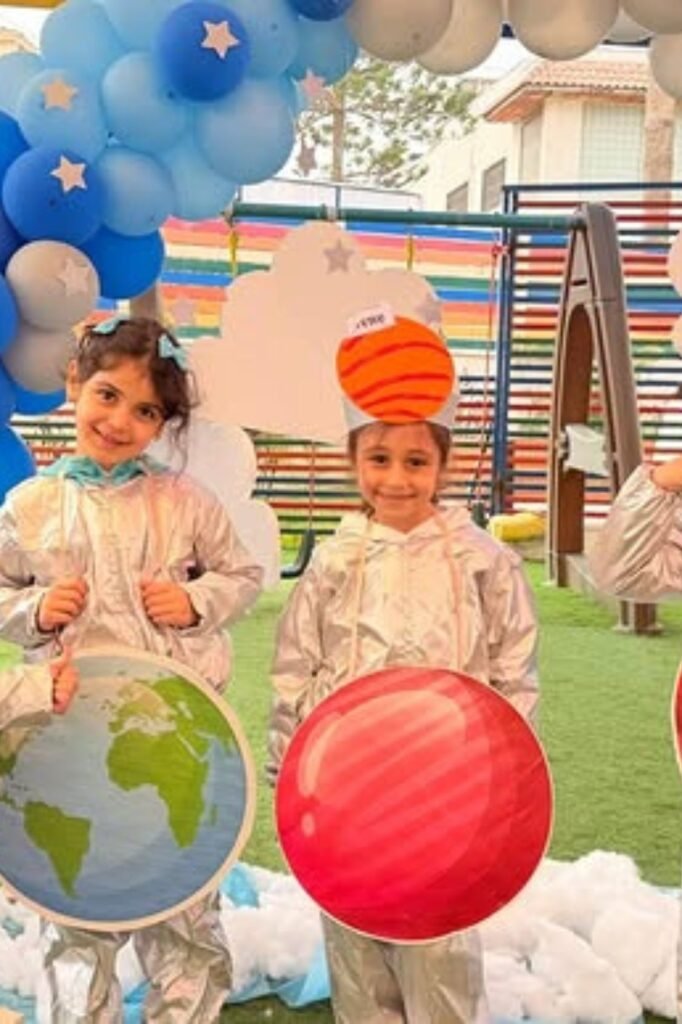
Energy shifts instantly when children become the solar system instead of simply studying it.
Wearing big planet cutouts around your neck turns a boring lesson into a powerful, unforgettable one.
Give each youngster a planet or the sun and have them stand in a line from the closest to the farthest.
Adding simple silver clothing or themed accessories makes things more fun without making them harder to get ready for.
This idea is great for school assemblies, space week parties, or outdoor activity days. It works best in groups where people need to walk around to stay interested.
Orbit Model
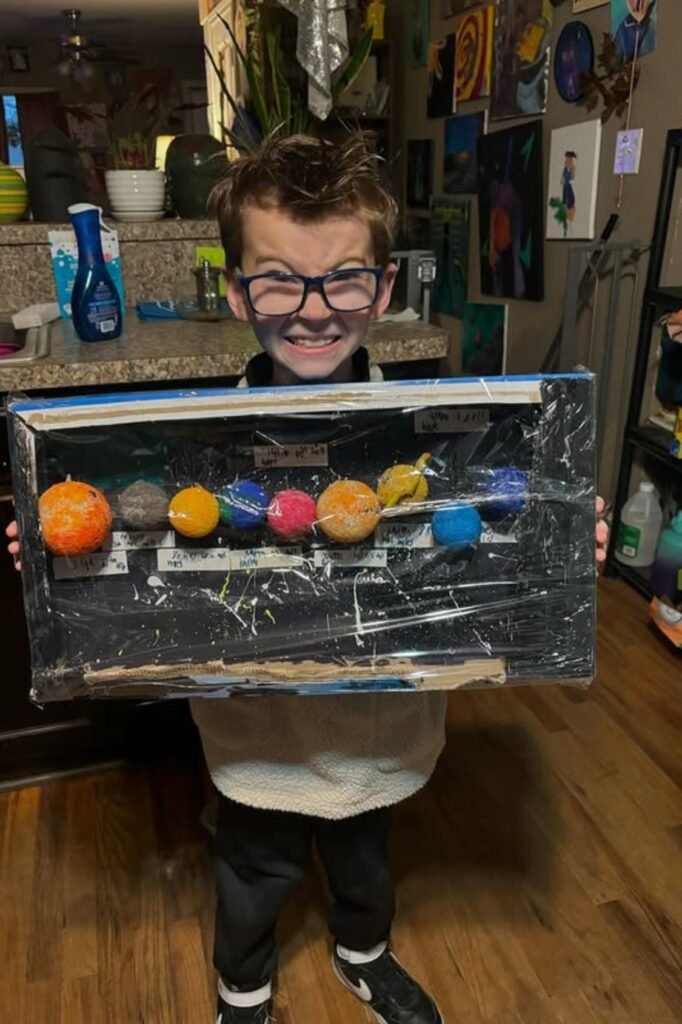
Pride shows up differently when a child holds a universe they built themselves.
A boxed solar system display made from painted foam balls or textured craft spheres.
Converts research into something real. Put planets on thin rods or string inside a shallow box, mark each one properly and create little gaps between them to suggest size.
Encourage kids to paint the intricacies of the planets’ surfaces, including rings for Saturn, swirls for Jupiter, and deep red for Mars.
This activity is great for upper elementary students or home science projects because it combines art with structured study.
To help kids remember what they learned and get better at speaking in front of others, let them show off their model and tell one interesting fact about each planet.
Moon Landing
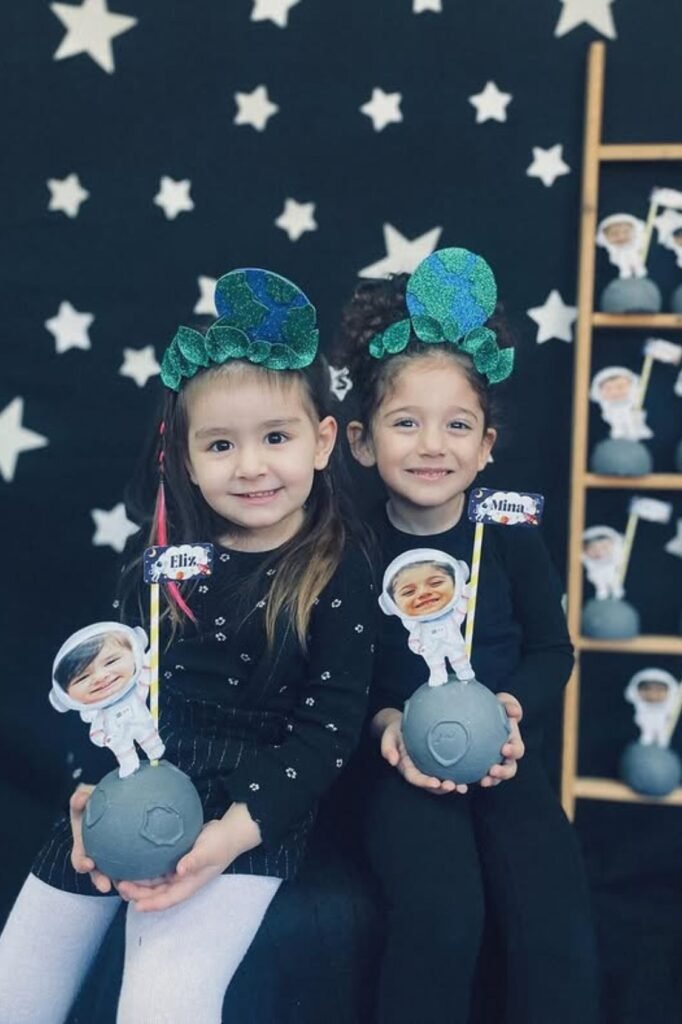
Joy doubles when children see their own faces stepping onto the moon. A small painted foam sphere becomes a “moon base,” and a printed astronaut photo.
Put a picture of each child on a simple astronaut cutout, stick it into the top of a gray-painted ball, and add a small flag with their name on it.
Families can get ready for photos by adding glittery Earth headbands or starry backdrops to the scene.
This game is great for preschool graduations, themed picture days, or classroom parties because it combines crafting, identity, and generating memories all at once.
Space exploration is no longer something far away and in the past; it is now something people can relate to and do.
Space Selfies
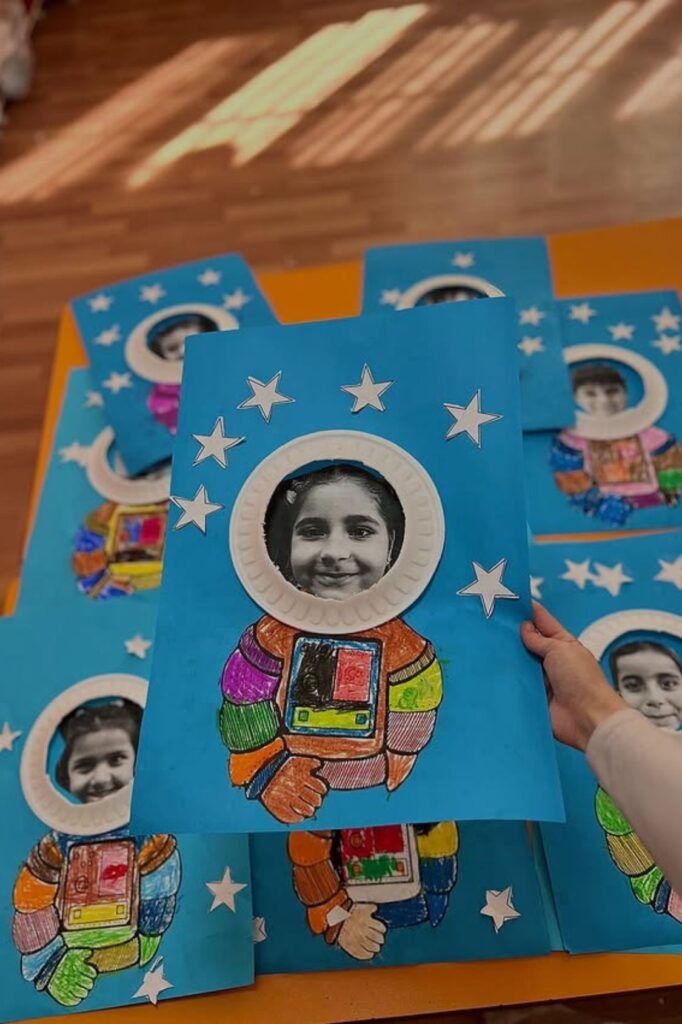
Confidence shines brighter when children see themselves suited up for space. A simple astronaut body template paired with a real photo instantly turns a worksheet.
Make a big outline of an astronaut, cut a round hole in the helmet, and place a black-and-white or color photo behind it.
Let the youngsters color their outfits in bright colors, including buttons, patches, and mission logos.
This exercise is great for bulletin boards in the classroom, displays in the corridor, or end-of-unit parties. It combines creativity with identity.
To help kids naturally improve their reading and writing skills, put a short writing challenge under the picture, like My mission is.
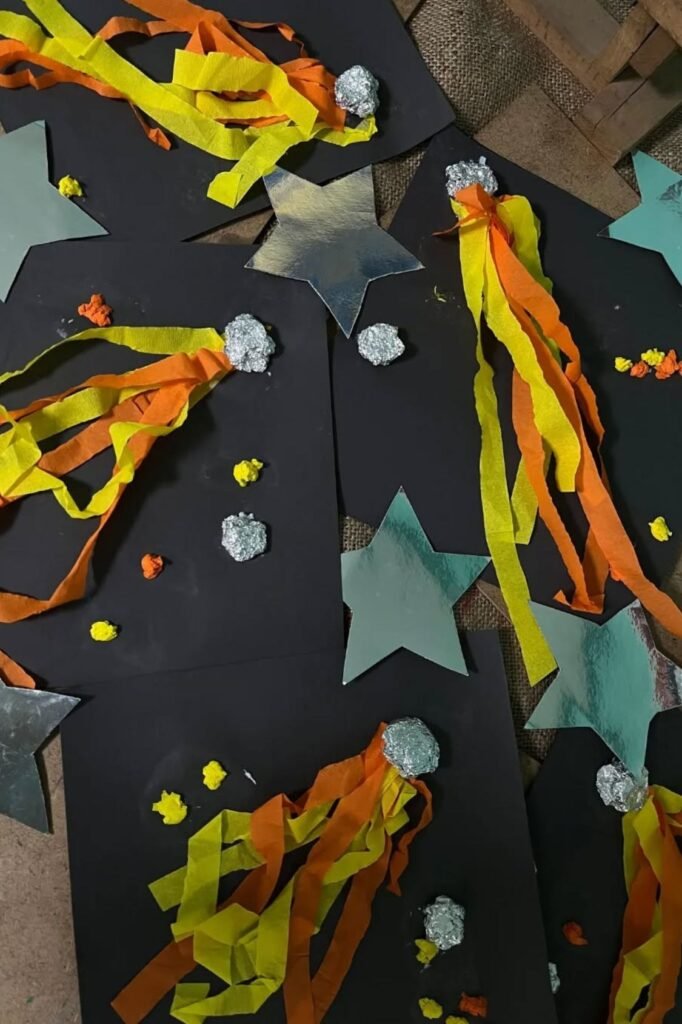
Meteor Trails
Energy bursts across the page when kids create blazing meteors racing through the night sky. Strips of orange and yellow paper flowing behind a crumpled foil “rock”.
Use black cardstock as your background. Glue a little foil ball in one corner, then add long strips of tissue or crepe paper to look like blazing trails.
For depth, spread out silver stars or little painted dots. Encourage kids to change the angle of their meteors so that each one feels different.
This project is great for art corners, bulletin board displays or group craft sessions during space week.
By changing the direction, speed, and color of the objects you can turn a basic collage into a lesson about how things move through space without ever reading a book.
Solar Display
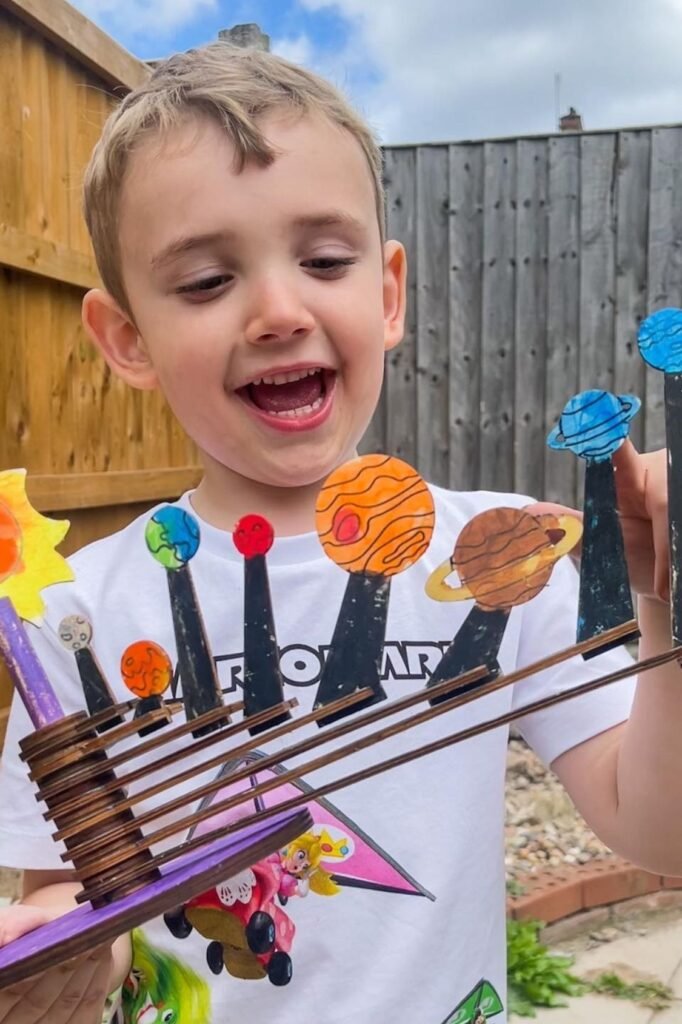
Excitement peaks when planets stand tall instead of sitting flat on paper. A layered solar system display built with cardboard strips or wooden bases.
Shows kids clearly how the planets are arranged and how big they are compared to each other.
Put painted planet cutouts on vertical supports, starting with the sun and working your way out.
Changing the height of each stand a little bit gives it depth and makes it easier to compare.
This model makes sequencing a hands-on activity that is great for scientific fair projects, backyard learning days, or weekend projects at home.
Moon Missions
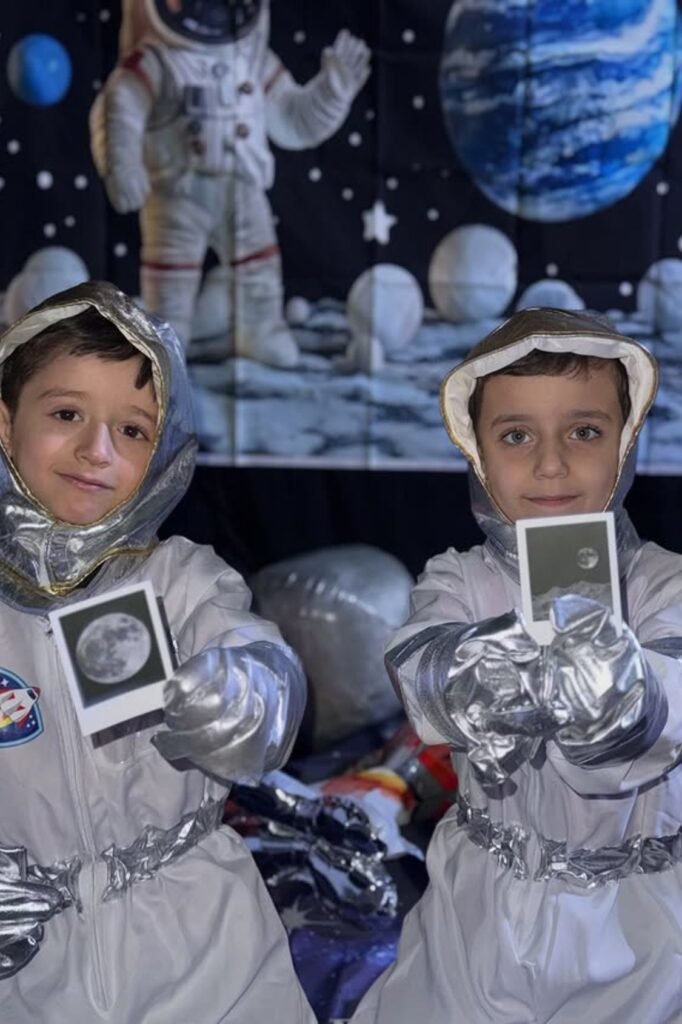
Adventure feels real the moment children step into silver suits and “collect” moon samples.
A simple costume paired with printed moon images or small “mission cards”.
Turns make-believe play into meaningful exploration. Give each child an image of the moon’s surface or a miniature picture card.
And ask them to describe what they see, such as craters, shadows, and stony textures. Put foil rocks or cotton-ball “moon dust” throughout the room to make it feel more real.
This setup is great for themed parties, dramatic play corners in the classroom, or end-of-unit celebrations. It combines imagination with observation skills.
Encourage short mission reports to help people learn new words and feel more sure of themselves.
Lunar Landscape
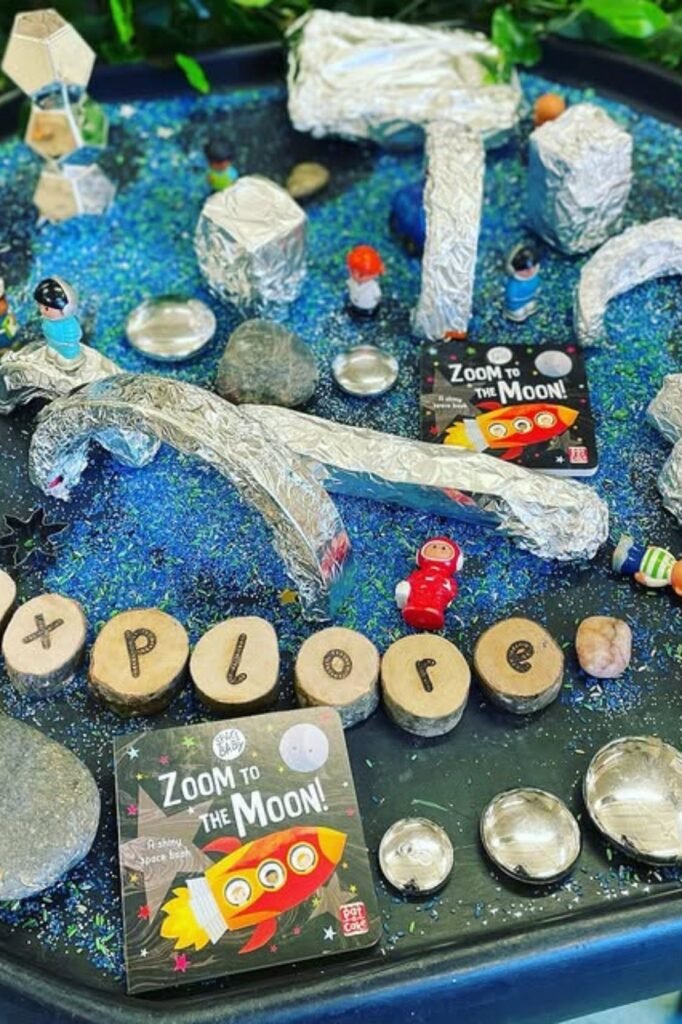
Imagination deepens when a tray transforms into a textured moon surface ready for exploration.
Foil-covered arches, strewn stones, glittery sand, and little astronaut figures provide a lunar habitat that kids may explore right away.
Start with a small dish loaded with colored rice or sand. Add rocks, foil constructions, and little figures to get kids to tell stories and solve problems.
Wooden letter pieces can even spell out words that go with the theme to help kids learn to read and write.
This configuration is great for sensory tables, small-group centers, or autonomous discovery time. It lets kids explore without having to be told what to do all the time.
FAQs
What age is best to start space activities with kids?
People are unexpectedly interested in the sky from a young age. Preschoolers may learn about simple sensory bins, play the role of an astronaut.
And learn the names of the planets through songs and pictures. Elementary school kids can learn more by doing hands-on STEM activities.
Making models of the solar system, and doing modest research projects. It’s not about age; it’s about matching the activity to the person’s attention span and motor skills.
How can I make space activities educational without making them feel like school?
First, give them experience then, explain. Before you tell kids the facts, let them construct, move, explore and invent.
A rocket launch challenge naturally teaches about force and motion while stacking planets helps with memory and sequencing.
Short interactions during play feel less serious than formal lessons but kids frequently learn more because they stay emotionally involved.
Hi, I’m Afaf! I’m a law student who loves writing about everyday life – from home projects and crafts to fashion, beauty, and parenting tips.
I’ve been writing for over a year, sharing ideas that are simple, practical, and easy to try. I write about things I find interesting and useful, whether that’s organizing a space, trying a new DIY, or finding activities to keep kids entertained.
My goal is to share helpful ideas without making things complicated. If it works in real life, I’ll write about it.
When I’m not studying or writing, I’m usually experimenting with new projects or scrolling for inspiration!