
23 Shark Craft Ideas for 2026
You’ve undoubtedly made a “simple” shark craft before. It seemed easy at first, but halfway through, your preschooler lost interest.
The glue was everywhere, and you were left wondering why you had started. Kids in preschool and kindergarten need arts.
And crafts that are appropriate for their level of competence, attention span, and patience. They give up if the craft is too hard. You regret it if it’s too messy.
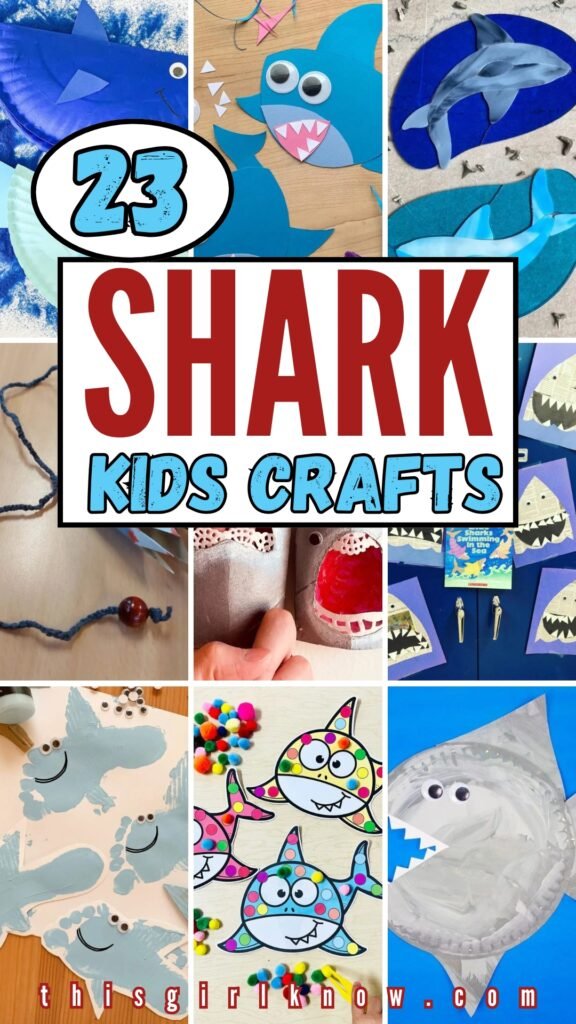
In this article, you’ll find 23 playful Shark craft ideas for kids here that can be made at home or in class during 2026.
Let’s jump in!
Which Shark Crafts Work Best For Preschool And Kindergarten Activities?
Most people make a mistake when they think that all shark crafts are good for little kids. Kids in preschool.
And kindergarten don’t have extended attention spans, are good with scissors, or can wait for too many steps.
They quit if a craft seems too hard. You get agitated out when things are messy.
For this age group, the greatest shark crafts are ones that are easy, quick, and hands-on.
When you pick the proper kind of project, kids stay interested, feel good about what they do, and you enjoy the activity too.
Save this article for later!👇👇👇
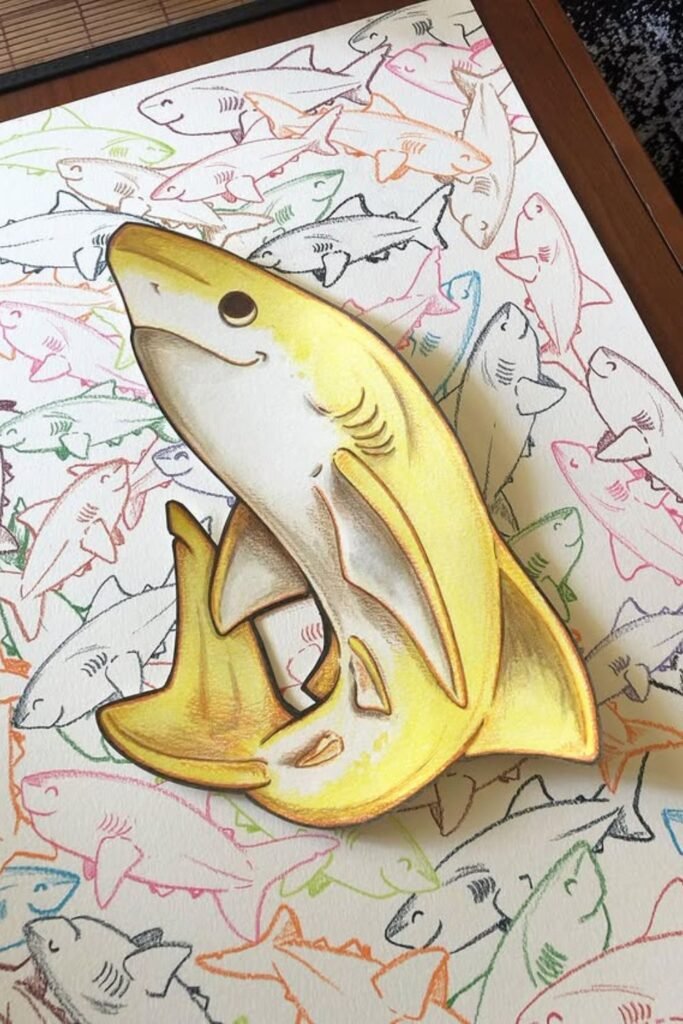
Mosaic Shark
Shiny pieces like these grab kids’ attention fast, which makes this craft perfect for quiet table time or small classroom groups.
It’s not accuracy that’s important here; it’s location. Cut or pre-cut simple curving forms out of colorful paper, foam, or clear plastic.
Then let the youngsters put the shark body together like a puzzle. If your group has trouble cutting.
Get the shapes ready ahead of time and let them do the fun part: arranging and gluing.
This is a great way to help kindergarteners learn how to solve problems without it feeling like “work.”
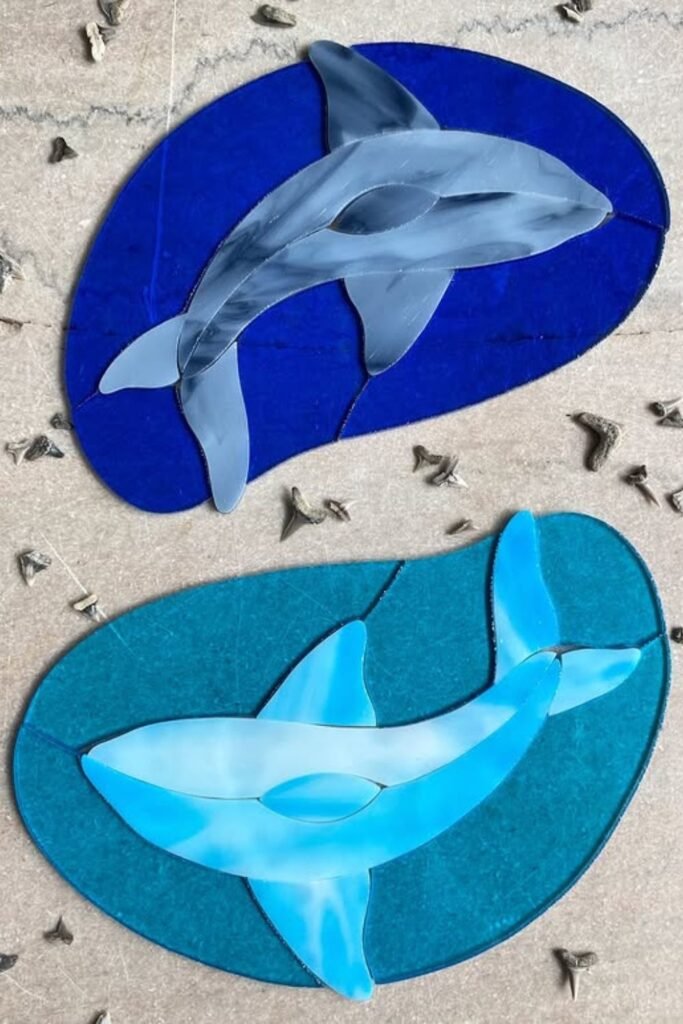
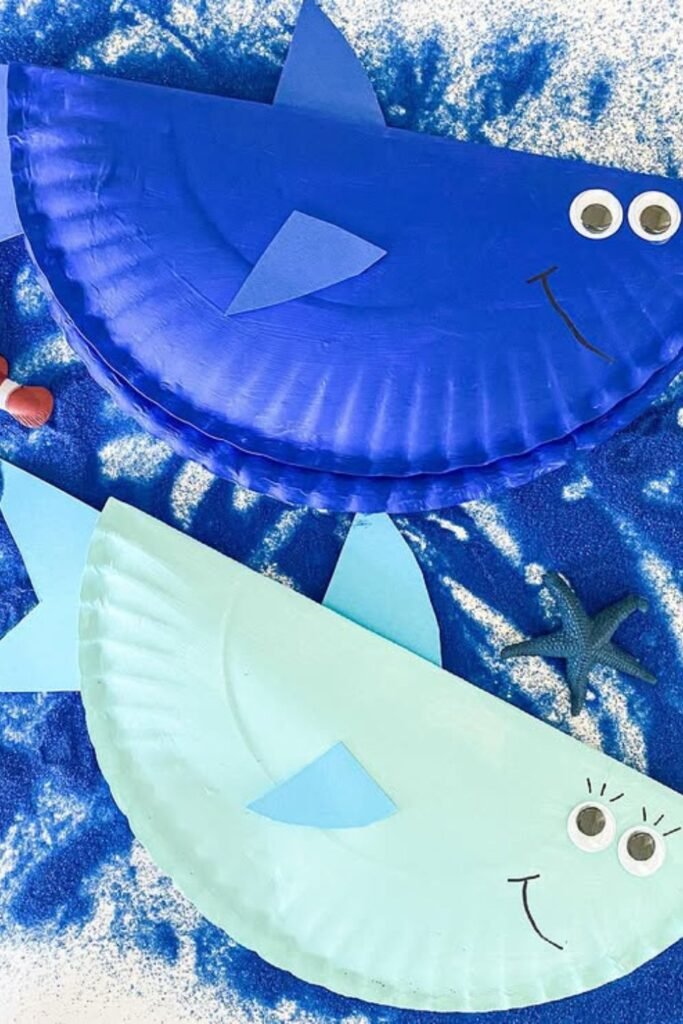
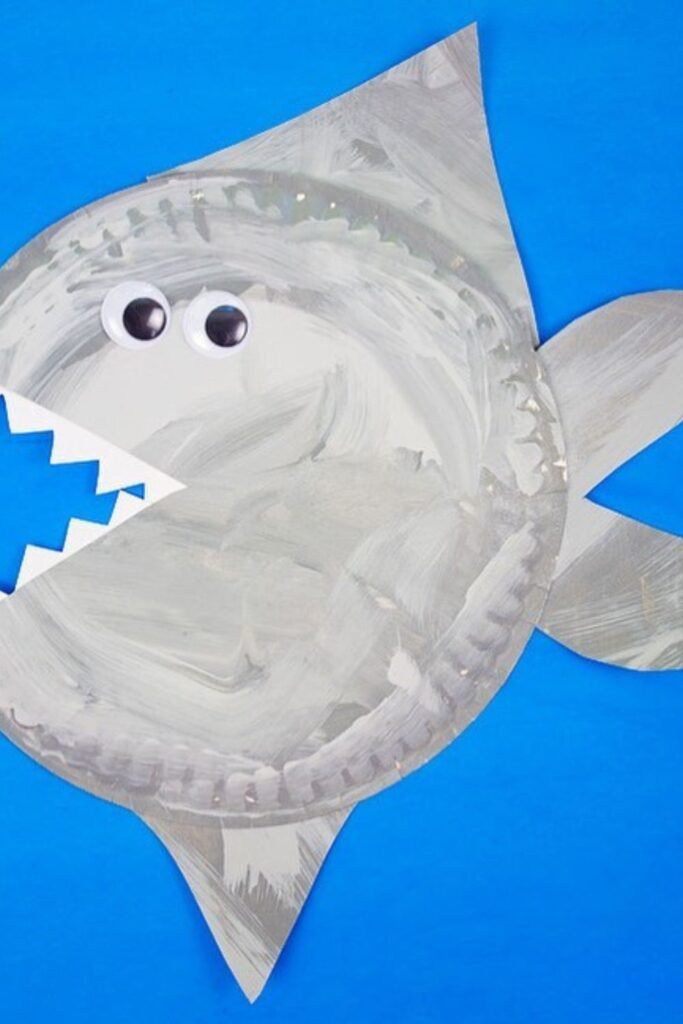
Plate Shark
Half a paper plate does most of the work for you, which is why this craft is such a win with younger kids.
The curving edge already looks like a shark body, so you don’t have to fight the shape. First, paint or color the plate and let it dry.
Then, cut basic fins out of construction paper and glue them on. Kids will love it right away, even if their painting isn’t flawless, because of the googly eyes.
This is great for preschool and kindergarten schools since everyone can keep up with the same pace.
And you can make the fin forms ahead of time to keep the activity peaceful and the mess under control.
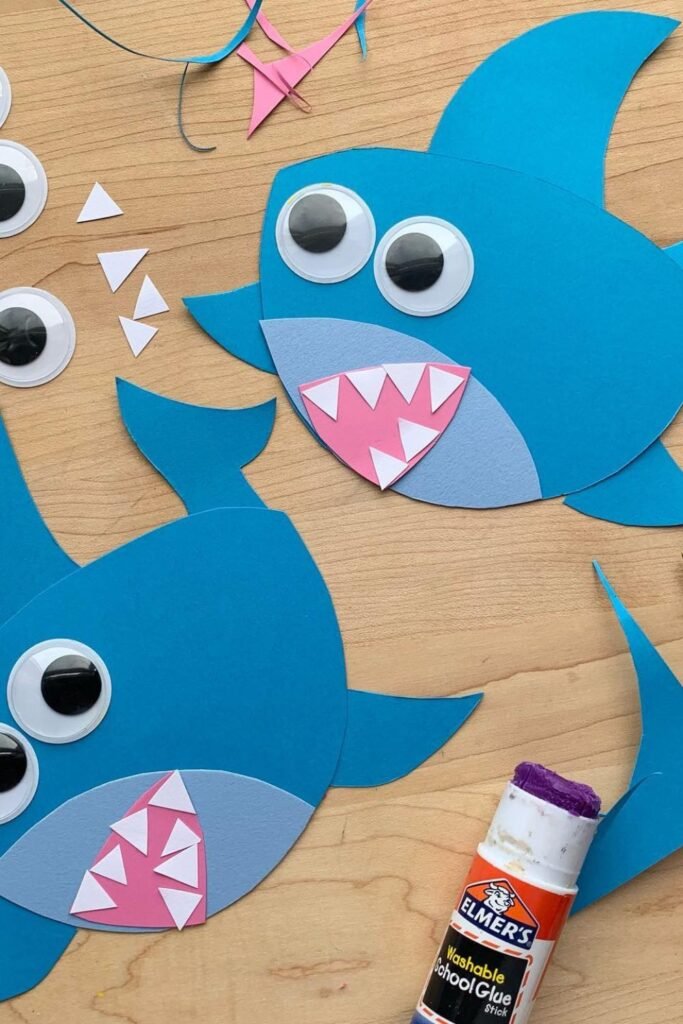
Paper Shark
Big shapes and bold colors make this one feel exciting without being hard. Kids love the mouth first, so start there cut a simple oval, add a pink paper layer.
And let them stick on triangle teeth however they wish. Here, perfection doesn’t matter, which protects people from getting upset.
Use cardstock or sturdy craft paper so that the pieces don’t bend or tear when you glue them together.
This works best for kindergarten or mixed-age groups because the bigger kids can cut their own fins while the younger kids focus on putting on eyes and teeth.
It’s also a wonderful choice if you want a craft that looks done even if you lose interest halfway through.
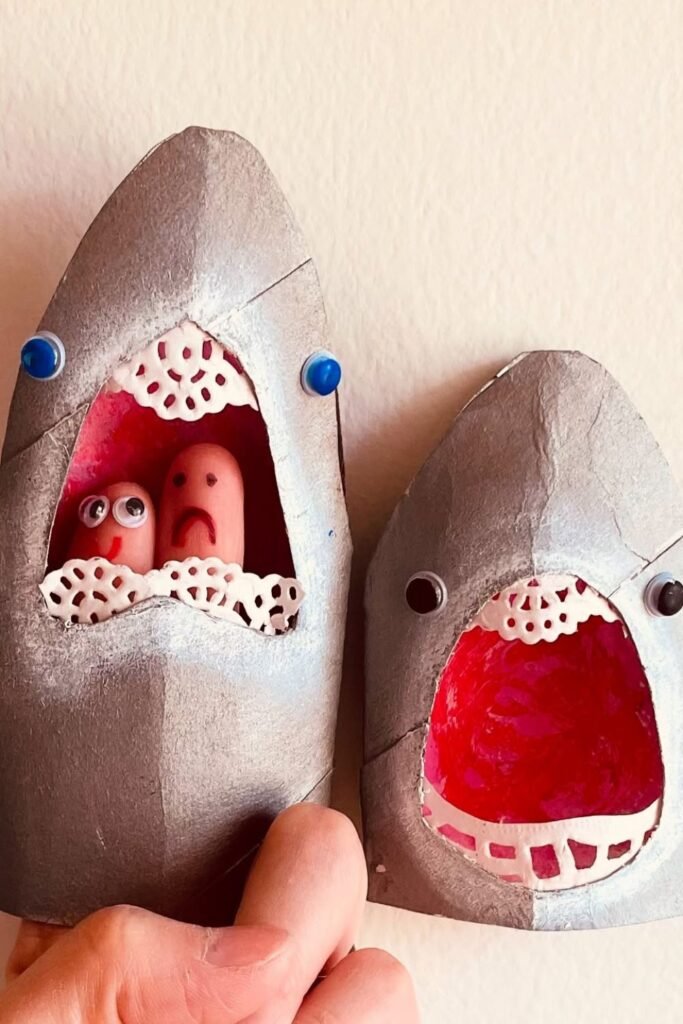
Finger Shark
Little hands love anything that moves, and that’s what makes this craft such a hit.
Sliding fingers inside the shark mouth turns playtime into storytelling without extra effort.
Use folded paper or a small cardboard tube as the base, and then cut a large mouth opening so your fingers may fit inside easily.
To make cleaning up later easier, paint the inside red before putting it together. This is excellent for small groups.
Shark Week centers, or quiet time inside because kids can finish the activity and start playing right away.
If you generally lose interest quickly, this one keeps it longer because the craft may be played with right away.
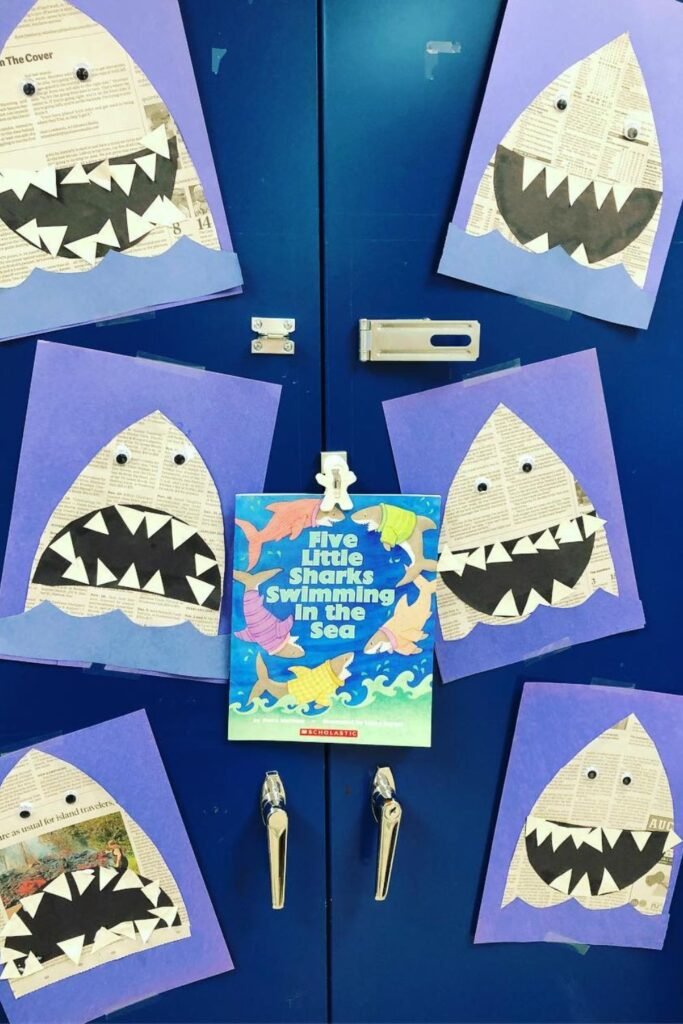
Newspaper Shark
Old newspapers solve two problems at once: cheap supplies and easy cutting. Thin paper cuts smoothly, which helps preschoolers who still struggle with scissors.
Cut or tear out a simple shark shape and glue it to colored cardboard. Then, use thicker paper to make a prominent mouth and teeth that stand out.
The shark stands out without any extra work because of the different textures. This is great for walls in the classroom, displays in the corridor.
Shark Week boards since each shark looks different, even when you follow the same techniques.
Recycled paper makes the whole activity feel relaxed instead of precious, which is great if you want a cheap craft that yet feels creative and keeps youngsters focused.
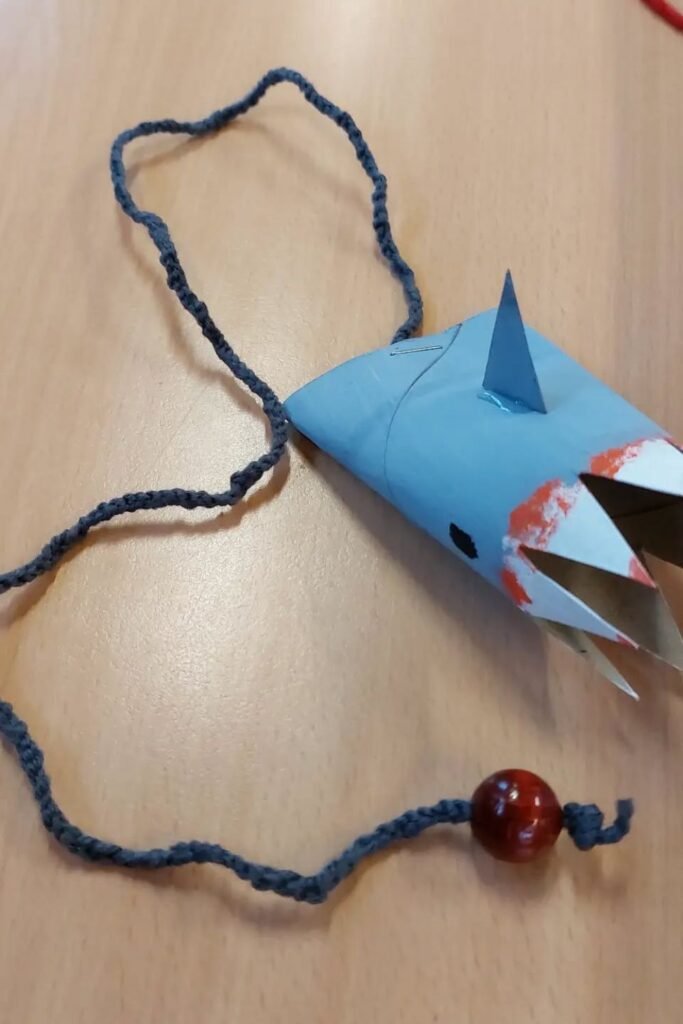
Pull Shark
Movement changes everything for kids and who can not sit still for long. A simple pull string turns this shark into an instant game instead of just a craft.
Cut a broad mouth in a cardboard tube and glue triangle teeth inside so they don’t bend when you pull on them.
Put a bead or knot at the end of a thick piece of yarn and thread it through the body so young hands can grab it.
This works best during free play, activity stations, or transition time because kids may use the project right away once they finish it.
This style of interactive shark keeps hands busy without making noise or mess when energy levels are high.
Painted Plate
Paint becomes the main attraction here, which works well when kids need a sensory break.
You don’t need to worry about the little things; just use broad brush strokes. This way, even younger preschoolers can be calm while they paint.
Put a paper plate on the bottom, let the kids color it gray or white, and then cut a basic mouth opening in it after it dries.
Adding teeth and eyes at the end keeps the fun going without making the paint process go too fast.
This is excellent for days when you want to be creative without rigid limits, such during Shark Week or at art centers when the process is more important than the end look.
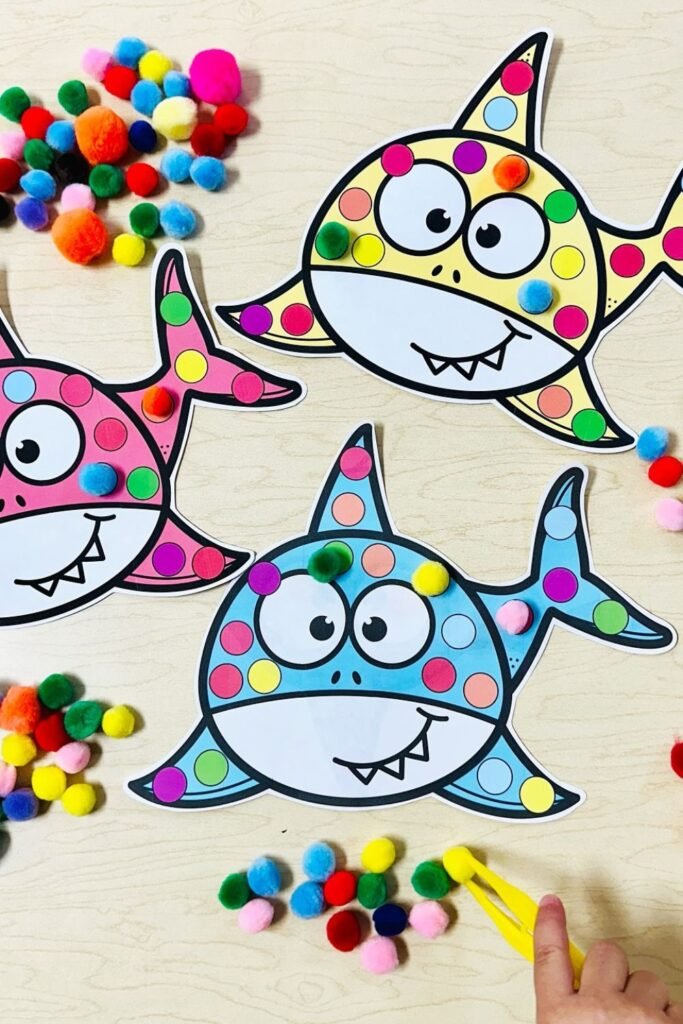
Pom Shark
Bright dots turn this into a focus game disguised as a craft. Picking up pom-poms and placing them one by one slows kids down in a good way.
It helps with patience and fine motor skills. You can start with a printed shark outline or a simple paper cutout.
Then, give them glue dots or a thin layer of liquid glue. Kindergarteners can use tweezers, but toddlers can use their fingers.
This works best at tables, learning centers, or calm-down nooks since kids can be busy without needing support all the time.
Bonus: you don’t have to explain anything for the kids to instinctively match colors and count.
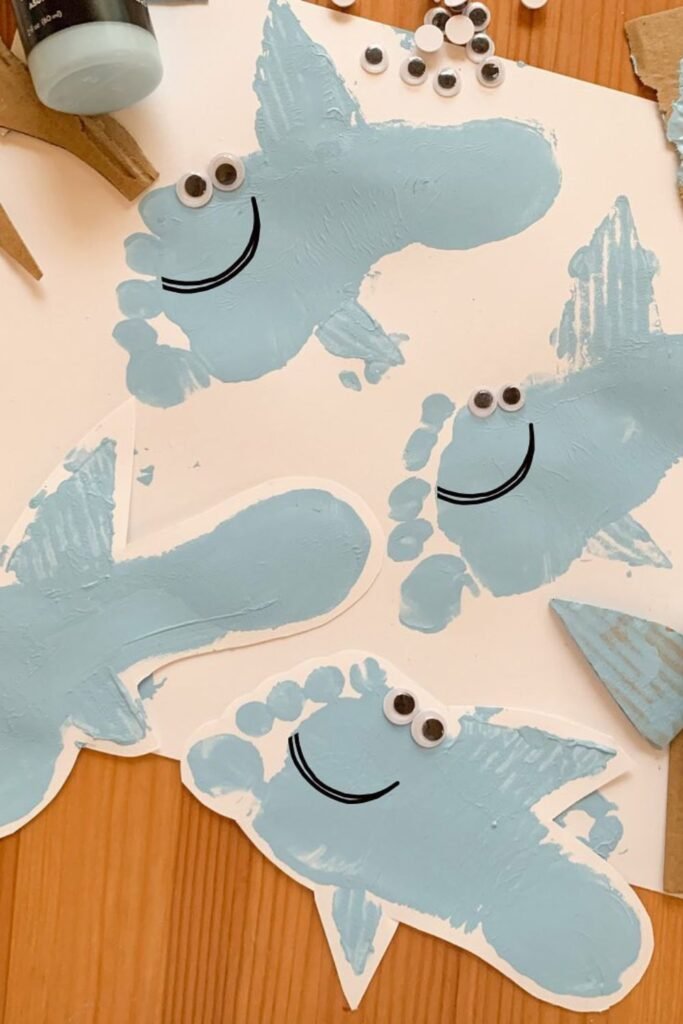
Handprint Shark
Paint-covered hands turn into instant excitement, which makes this craft perfect for kids who learn by doing.
You can make the shark’s body with just one handprint, and you can make the fin with a thumb or side swipe without cutting anything else.
Use washable paint and let youngsters press, lift, and enjoy the painting before adding eyes and a simple smile when it dries.
This is excellent for art days in preschool, items that will be kept forever, or Shark Week displays when personality is more important than perfect edges.
Handprint sharks are a great way to make something memorable with very little prep. Kids will feel pleased because their own hands are part of the art.
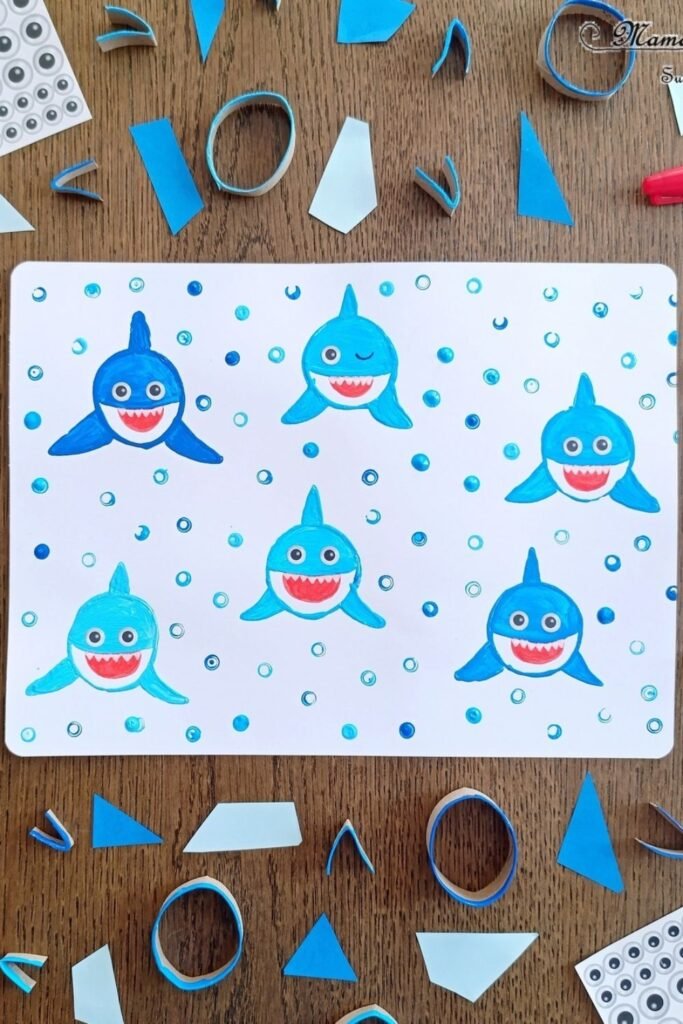
Stamp Sharks
Repetition keeps kids calm, and that’s exactly why this activity works so well. Stamping the same shark shape again and again.
It feels predictable in a nice manner, which is great for preschoolers who like things to be the same.
You may either use a simple shark template or make one shape yourself. Then, let the youngsters stamp or paint it all over the sheet.
To break things up without disrupting the core objective, you can add dot stamps or fingertip bubbles around them.
This is great for art centers or Shark Week mornings when you want to work on something without being told what to do all the time.
Sketch Sharks
Fast-moving kids often do better with crayons than scissors, and that’s where this idea shines.
Drawing the same shark shape over and over again helps you feel more sure of yourself without the stress of having to “get it right.”
Show the youngsters one simple shark outline to start with, and then let them trace it throughout the page in different colors.
You may give the page a polished look without doing any more work by adding a cutout or sticker shark to the top.
This is excellent for quiet time in the classroom, when students finish early, or on days when you want to be creative with very little planning.
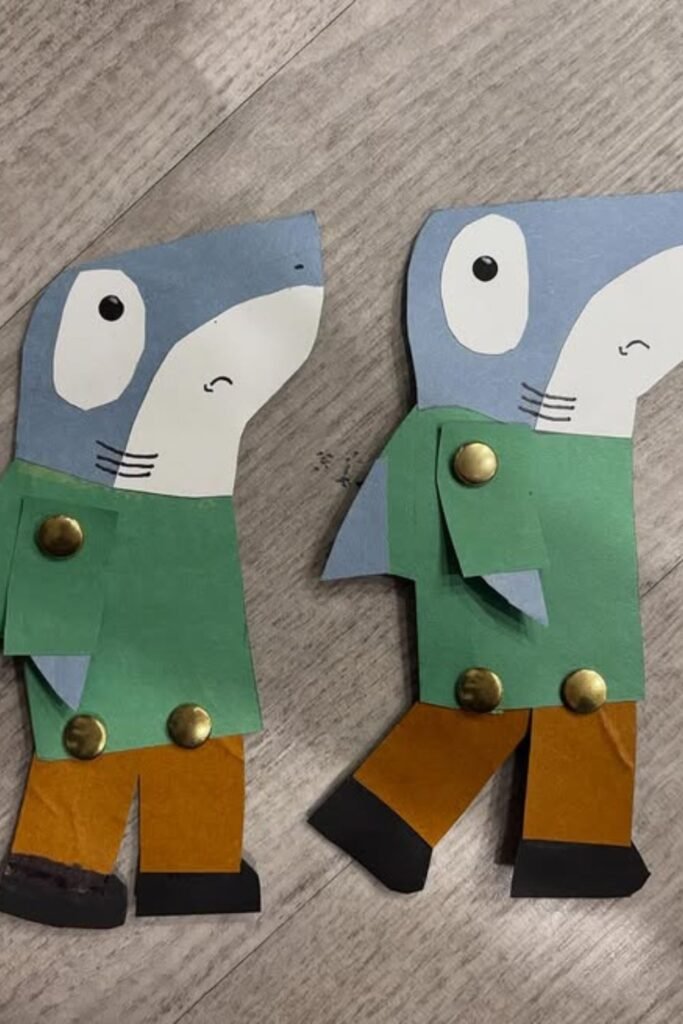
Jointed Shark
Moving parts instantly change how kids interact with a craft. Split the shark into simple sections head, body, legs.
And use paper fasteners to hold them together so they may bend and swing. That small bit of movement keeps hands busy and minds focused.
Cut the pieces out ahead of time for the preschoolers, and then let them pick colors or clothes to make the shark unique.
This is a great idea for kindergarten classes, story time, or centers that focus on fine motor abilities.
When they’re done, kids don’t simply gaze at it; they posture it, walk it, and make it into a character, which makes the fun last much longer than just at the craft table.
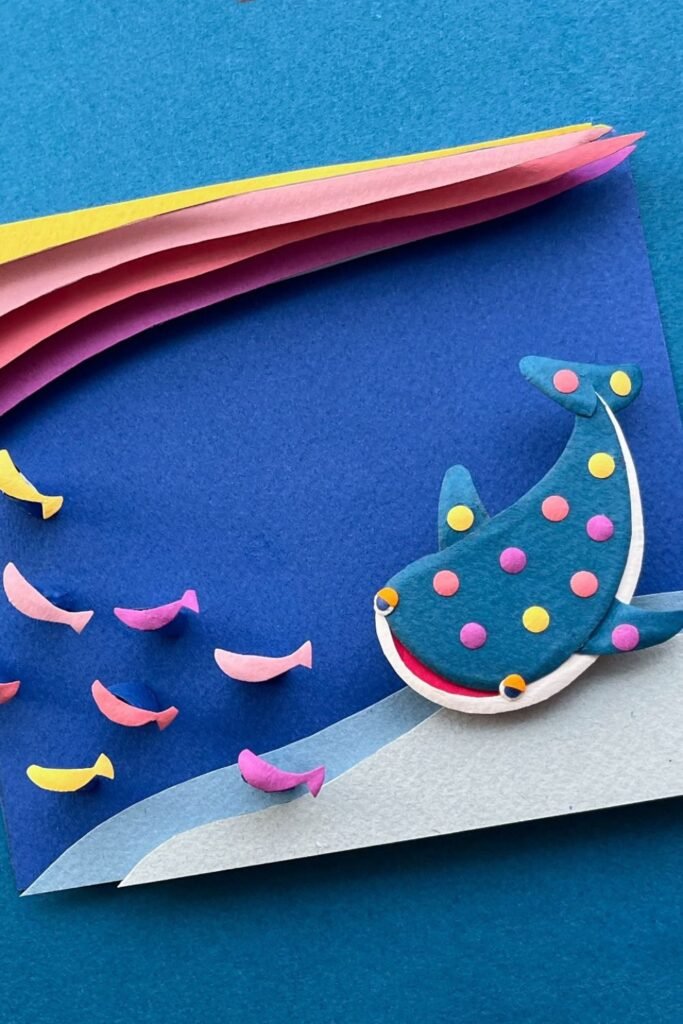
Layered Scene
Depth makes kids stop and look, which is exactly why this craft feels special without being complicated.
When you stack paper, it makes waves, fish, and a shark that looks like it’s swimming instead than sitting still. Cut the backdrop layers ahead of time.
Then let the youngsters put each piece in the order they want and glue it down. Small paper dots or shapes offer detail without needing more instructions.
This works best for kindergarten or supervised preschool sessions where kids may take their time and deliberate about where to put things.
Layered scenes are the perfect way to have a finished creation that appears ready to be put on display while yet giving kids the freedom to be creative.
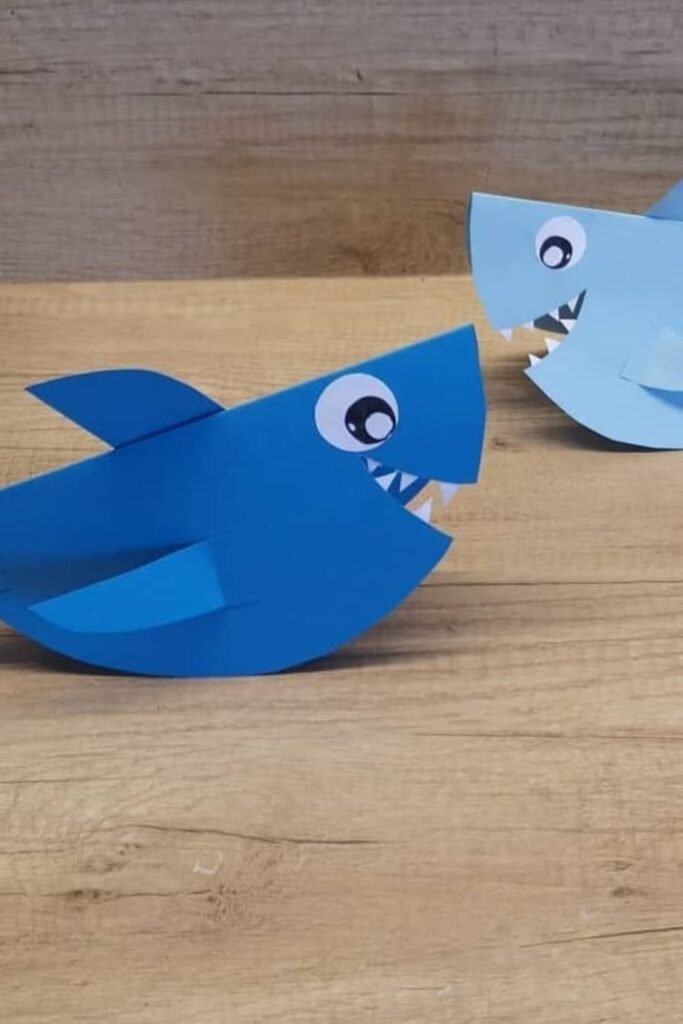
Standing Shark
Folded paper turns a flat cutout into something kids want to pick up and play with. Curved folds create a body that stands on its own.
That preschoolers think is almost like magic. Start with a half-circle or oval form and add basic fins.
Then, gently bend the bottom so that it sits on the table. Teeth and eyes do it quickly without any extra procedures.
This is great for table games, center work, or projects that kids can take home because it doesn’t need a wall or background.
If you want a shark project that looks more like a toy than art, standing sharks can keep kids busy long after the glue dries.
Book Page
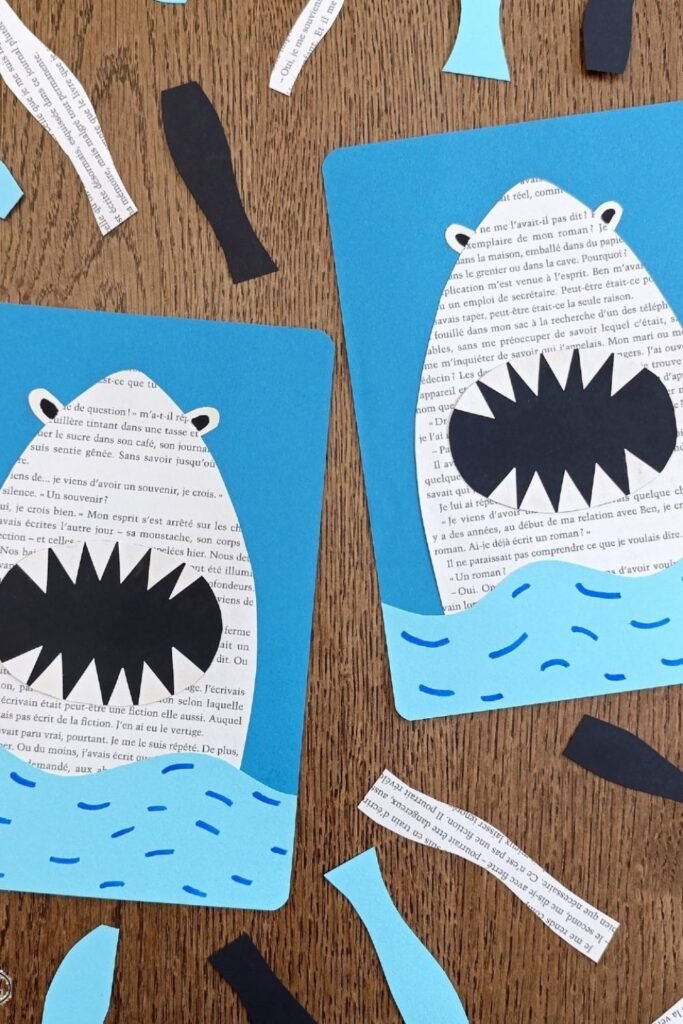
Old book pages turn into instant texture, which makes this craft feel special without extra supplies.
The printed text gives the shark body detail on its own, so kids don’t have to color anything in. Cut out a tall shark shape from the page and glue it to cardstock.
Then, to make waves, add blue paper to the bottom. The shark stands out quickly because of its big black mouth and plain teeth.
This is great for kindergarten classrooms, library tie-ins, or Shark Week displays because it naturally combines art with early reading.
Recycled book pages do the hard work for you if you want something that stands out yet stays calm and regulated.
Hungry Shark
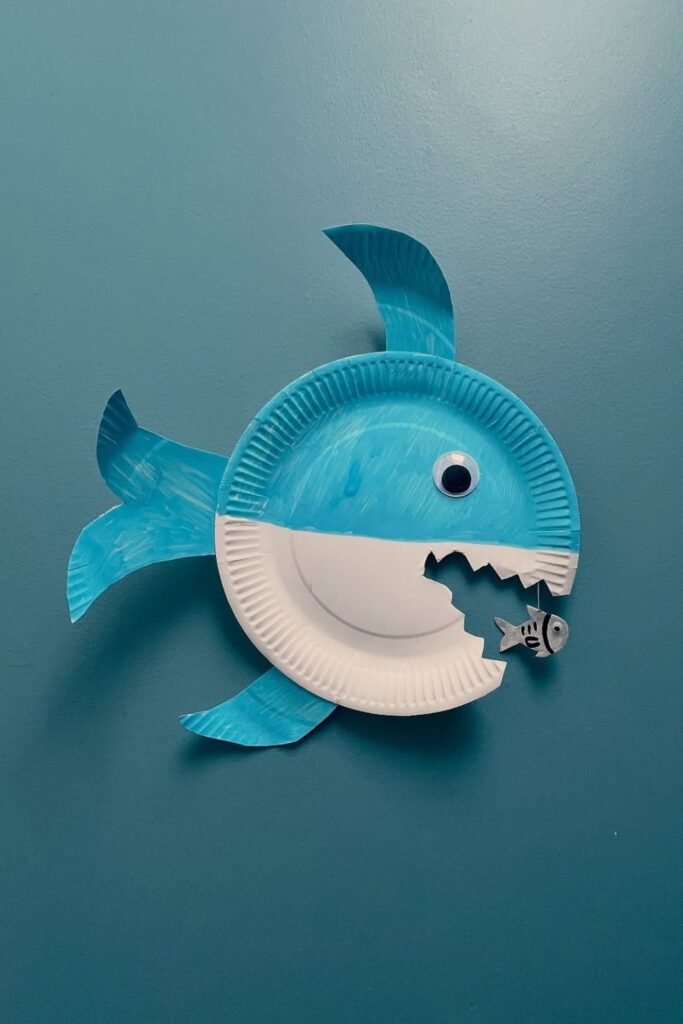
Open mouths make kids laugh, and laughter keeps them working longer. Cutting a bite shape out of a paper plate.
Turns this shark into a little story instead of just a picture. First, paint the plate and let it dry.
Then, add fins and one big eye to keep the face simple. Kids can chat about and roleplay with a little paper fish that slips into their mouths.
This is a terrific activity for preschool story time, Shark Week activities, or any time you want to do something that organically leads to play.
This project slows youngsters down because they want to “feed” the shark over and over again.
Tube Shark
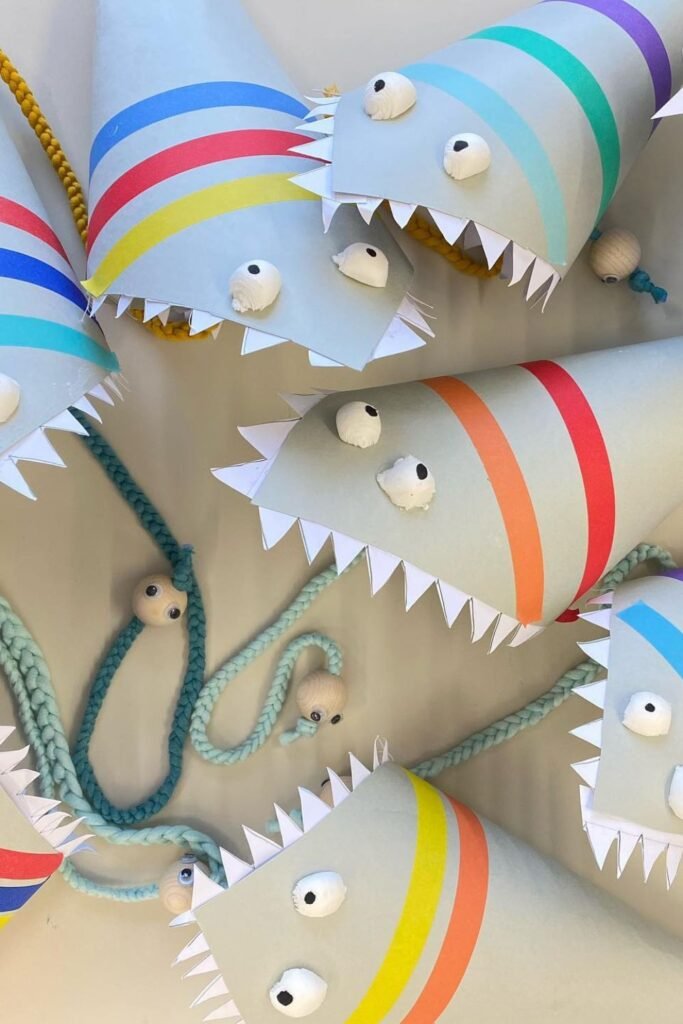
Colorful stripes turn recycled tubes into something kids actually get excited about. Wrapping paper around the tube gives the shark its body.
The mouth is strong enough for play since the triangle teeth are attached within the opening.
Adding a thick string or rope turns it from a craft into a toy right away, which keeps kids busy longer.
This is excellent for group activities, party crafts, or Shark Week stations where each shark can appear different without changing the processes.
If you want a cheap project that you can accomplish with your hands and that won’t get lost in a drawer, tube sharks are the perfect mix of easy and enjoyable.
Proud Shark
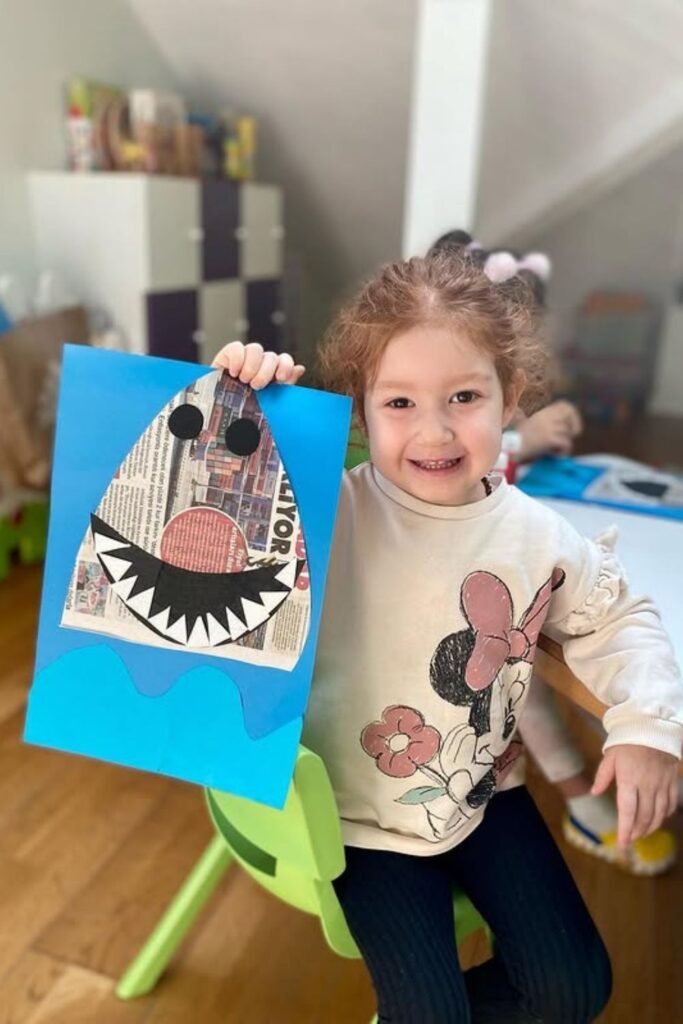
Finished crafts feel different when kids can hold them up and smile. A simple collage shark like this gives that “I did it myself” moment without complicated steps.
Use a bold background, glue on a shark form cut out of newspaper or scrap paper, and then add big eyes and a mouth so that the face is easy to see from a distance.
The wavy paper at the bottom makes it seem good quickly. This is great for preschool classrooms, daycare walls.
Projects that kids can take home because they can see their own work right away. When confidence is more important.
Than perfection, crafts like this let kids feel good about themselves and want to show off what they accomplished.
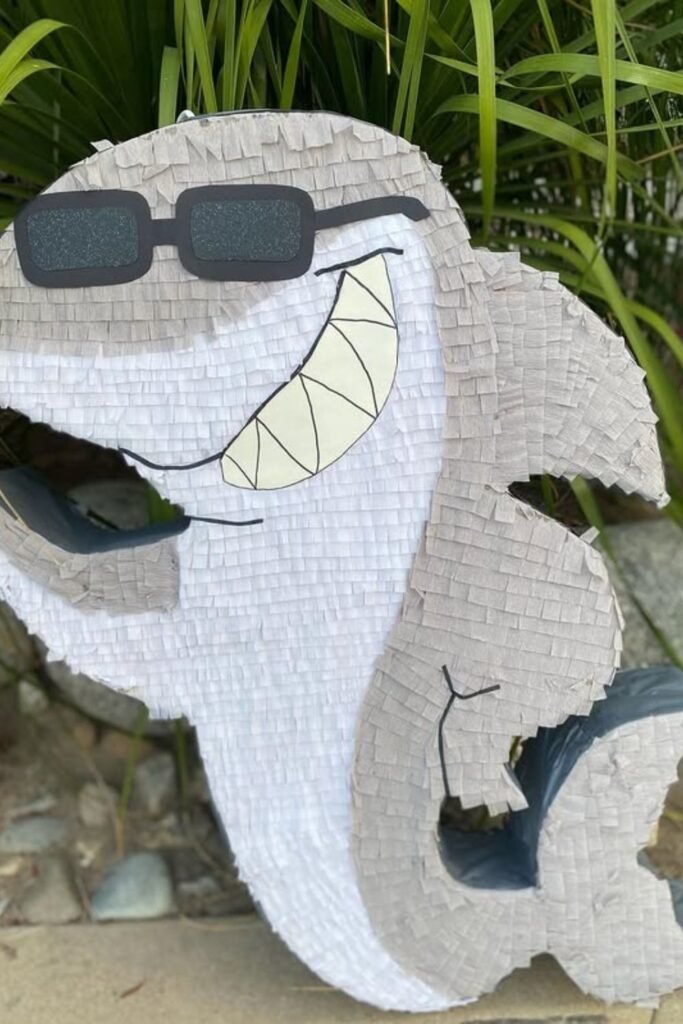
Piñata Shark
Big crafts feel intimidating, but this one works when adults handle the base and kids handle the fun parts.
You don’t have to be precise to make a plain form look bold by layering tissue paper. Cut out a shark shape from cardboard.
And let the kids glue on little tissue squares one piece at a time. A cheeky grin or a pair of sunglasses may quickly add charm.
This is excellent for birthday parties, Shark Week events, or outdoor activities when mess isn’t a big deal.
If you want one big shark instead of twenty little ones, a piñata-style shark is a fun activity that kids can work on together from start to end.
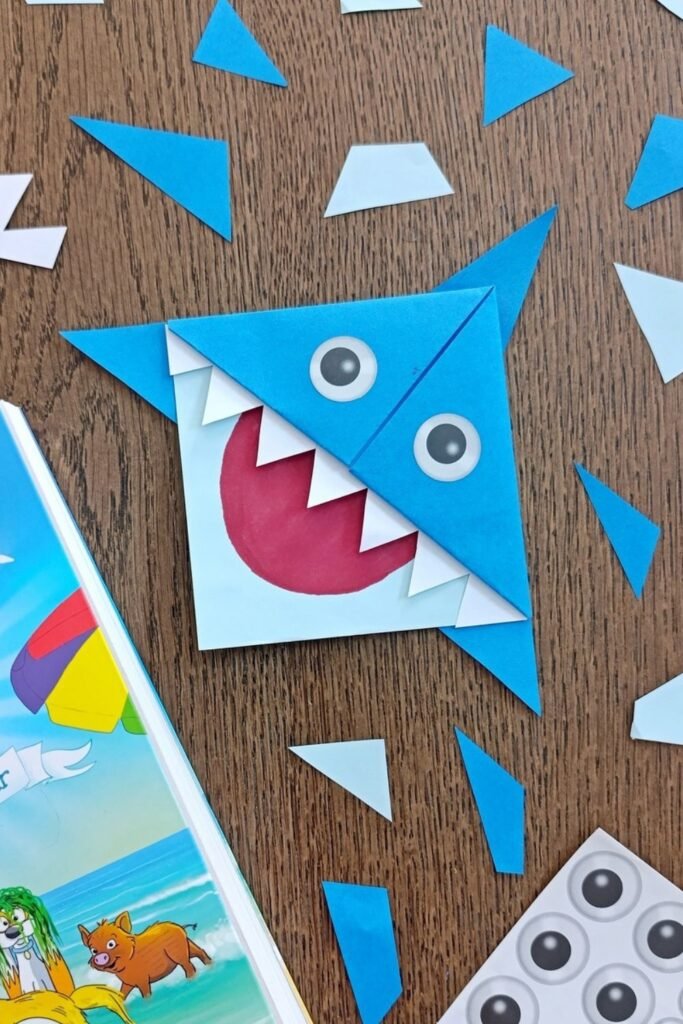
Corner Shark
Corners get ignored in crafts, but here they do all the work. Folding paper into a bookmark shape creates a shark mouth that actually opens.
Which makes kids want to know right away. Put glue on the triangle teeth along the edge, add giant eyes on top.
And that’s it no more details are needed. This is great for kindergarteners who like folding more than cutting.
As well as for quiet reading nooks or library week activities. Put it on a book page, and all of a sudden it seems helpful, not just pretty.
Corner sharks are a wonderful way to read since they transform books into part of the enjoyment.
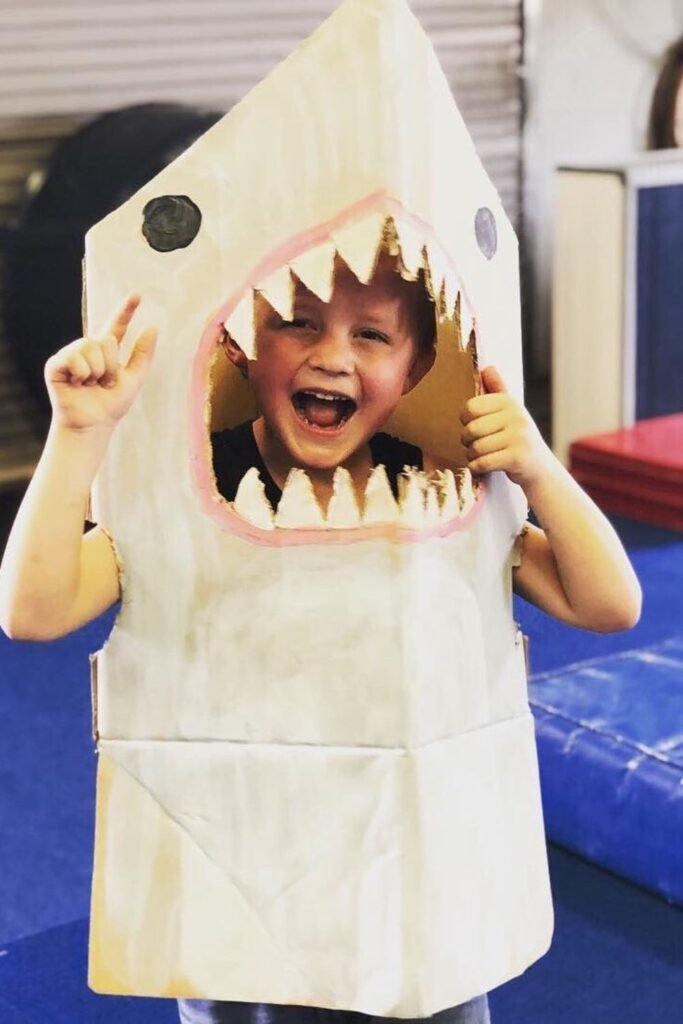
Shark Costume
Dress-up flips the switch from crafting to full-body play. A cardboard box becomes the base here, and once the face opening is cut, kids are all in.
First, paint the box. Then, put big triangle teeth around the opening so that the shark face is easy to see from across the room.
Make details big and clear so kids don’t think they are fragile when they move. This is great for school events.
Theatrical play corners, or Shark Week parties where everyone is really excited. A shark costume is a lot more fun than a sit-down project.
Since it lets you do all three things at once: make, use your imagination, and move around.
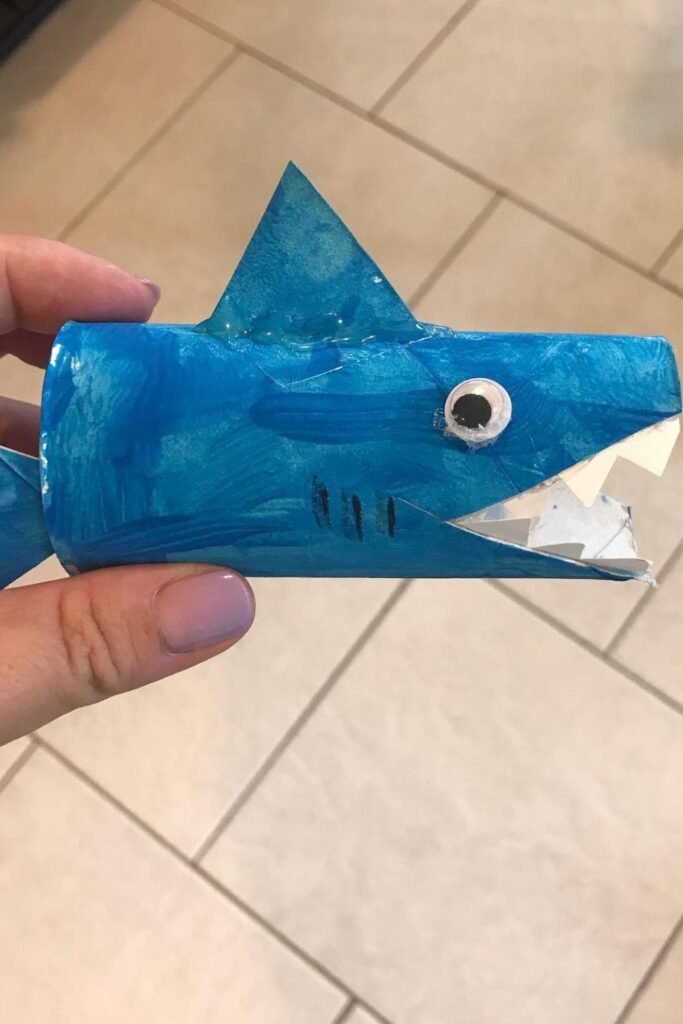
Mini Shark
Small crafts feel less overwhelming, which is why kids stick with this one until the end. A short cardboard tube becomes the body.
So the size already seems easy to handle with small palms. First, paint it and let it dry. Then, cut a simple mouth.
And put the teeth inside so they don’t fall out. You only need one fin on top; don’t go overboard.
This is excellent for short tasks, people who finish early. Crafts that kids can take home and not break in their backpacks.
Mini sharks are a great way for youngsters to win without taking too long because they don’t have much time or attention span.
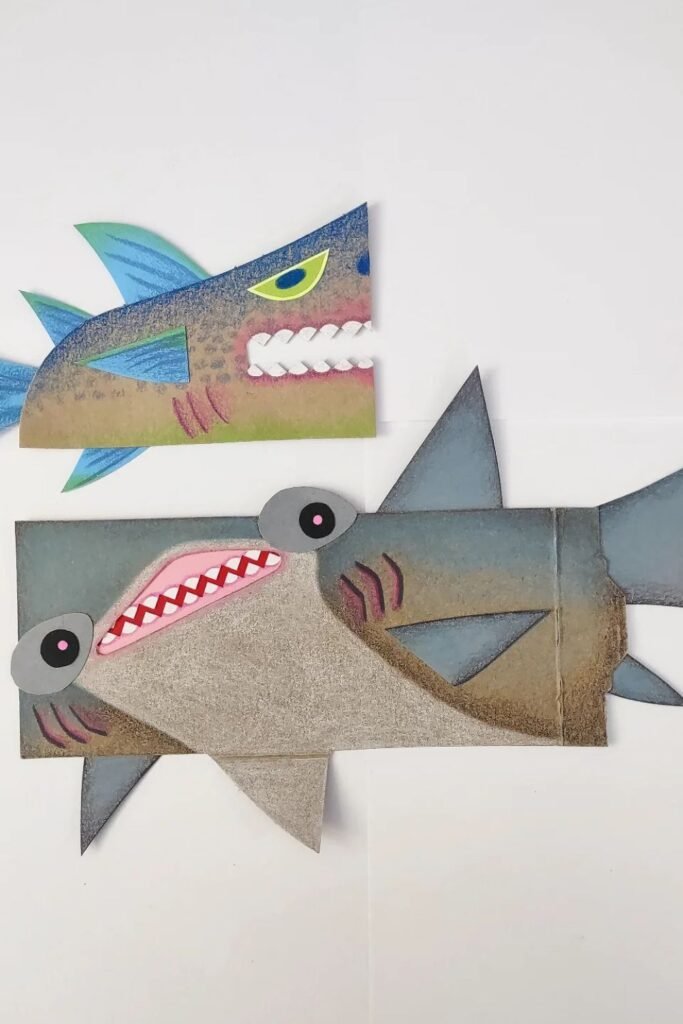
Shape Shark
Straight edges make this one feel doable, even for kids who usually avoid crafts.
Rectangles and triangles snap together to form a shark without any tricky curves.
Cut the major pieces ahead of time, then let the youngsters put the fins, eyes, and fangs on whatever they choose.
Crayons or pastels are good for this since they offer personality without making things more complicated.
This is great for kindergarten classes, activities that focus on shapes, or math-and-art tie-ins where kids learn without even knowing it.
This method keeps things structured without being rigid or dull, so it’s a good way to make a shark craft that boosts confidence and teaches basic forms.
FAQs
How do I keep shark crafts from turning into a mess with preschoolers?
Use glue sticks and instead of liquid glue for projects and only paint one step at a time.
If you need to paint, do it first and let it dry before adding small pieces.
Cut out difficult shapes ahead of time so that kids can concentrate on sticking and decorating instead of having trouble with scissors.
What should I prep ahead of time to make shark crafts go smoothly?
Cut out all the main shapes, put the small pieces in bowls, and put one finished example on the table.
Kids work more confidently and ask fewer questions when they can see where things belong.
Hi, I’m Afaf! I’m a law student who loves writing about everyday life – from home projects and crafts to fashion, beauty, and parenting tips.
I’ve been writing for over a year, sharing ideas that are simple, practical, and easy to try. I write about things I find interesting and useful, whether that’s organizing a space, trying a new DIY, or finding activities to keep kids entertained.
My goal is to share helpful ideas without making things complicated. If it works in real life, I’ll write about it.
When I’m not studying or writing, I’m usually experimenting with new projects or scrolling for inspiration!