
26 Preschool Activities For 2026
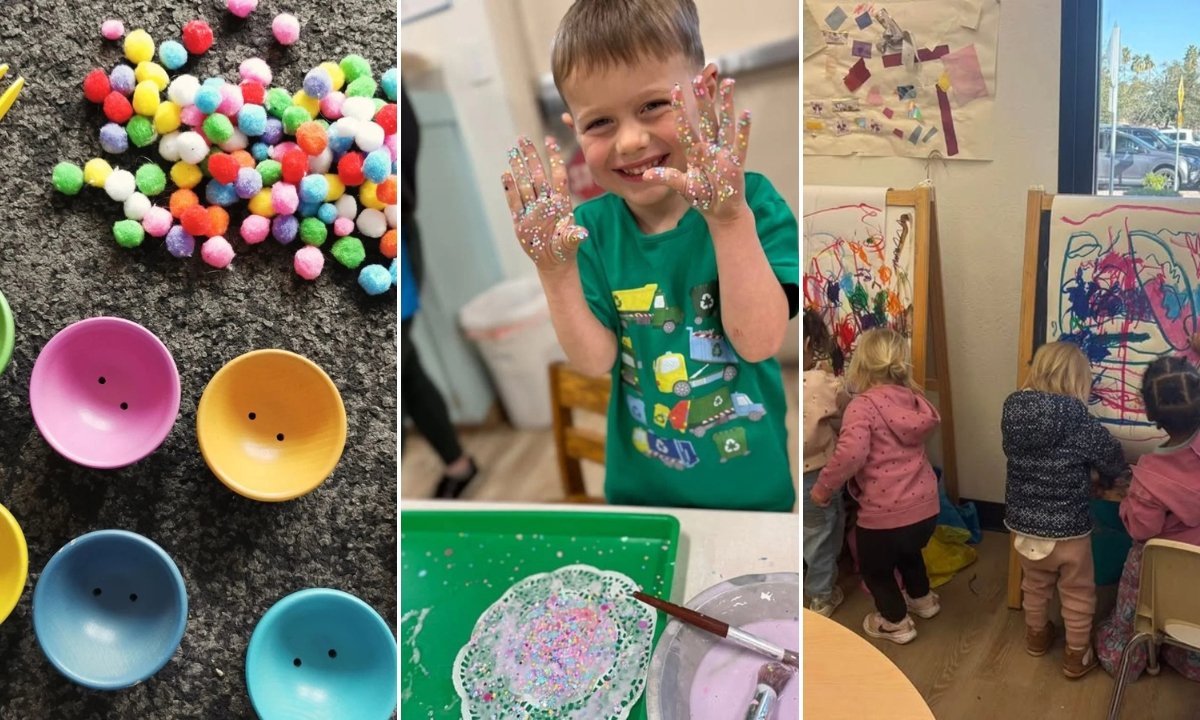
My preschooler asked for the tablet before breakfast yesterday. Once more. I hadn’t even had coffee yet, yet I could already feel that little bit of guilt.
I didn’t want to spend another day in front of a screen, but I also needed time to clean, cook, and think. If that sounds similar, you’re not the only one.
When you’re weary and your preschoolers are bored, it can seem impossible to keep them busy at home without devices.
You don’t need pricey toys or hard crafts. You only need basic things to do that really work, and I’m going to teach you precisely how.
These 26 Preschool activities ideas for kids are made for modern homes, modern kids, and 2026 lifestyles.
How Can You Keep Preschool Kids Busy at Home Without Screens?
You need to give your preschooler something to do with their hands and mind if you want them to stay occupied without begging for a screen every ten minutes.
Kids in preschool don’t require fancy toys. They need easy things that they can do, such pouring, sorting, creating, and pretending.
They pay attention longer when you give them tasks that let them roam around, investigate, and make little choices.
The most important thing is to keep it easy, make it hands-on, and let them know they can do it. That’s what really keeps them busy.
Save this article for later!👇👇👇
Big Canvas
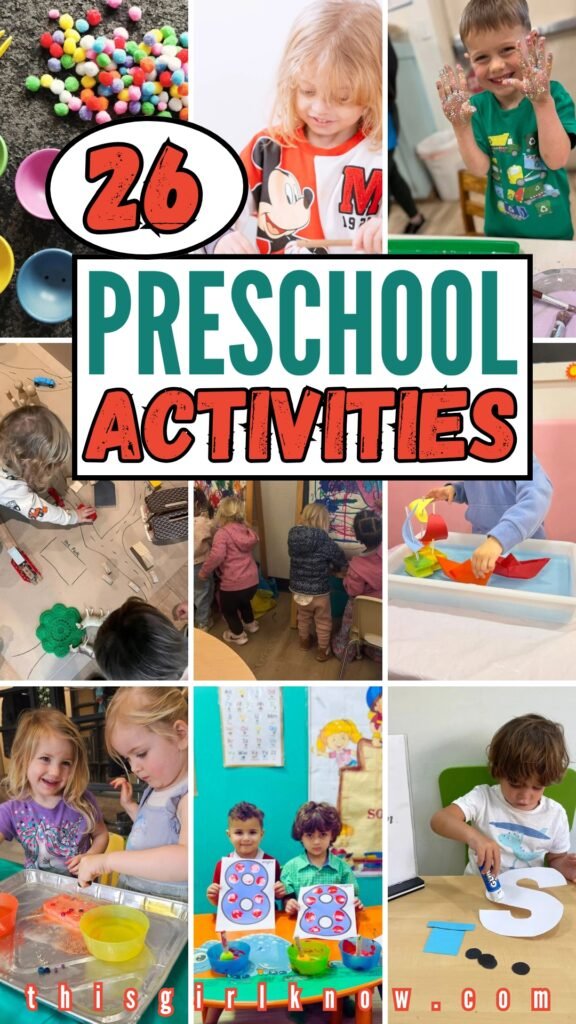
Walls covered in paper and kids standing on chairs with markers in hand that’s the kind of freedom preschoolers crave.
A big vertical sketching space makes a big difference. Arms shift more apart, shoulders work harder and energy finally finds a place to go.
You can use an easel or tape a big piece of paper to a wall. Give them washable markers and step back.
There are no rules or outlines. Great for rainy days, daycare corners, or when the house is too loud and busy.
Big motions make the muscles in your arms and shoulders stronger, which makes writing easier later. Sometimes untidy lines are just what busy tiny bodies need.
Water Boats
Quiet focus shows up fast once water hits the table. Floating paper boats instantly turn into a science experiment.
Without anyone saying it was one. Fill a shallow pail with water, make a few simple boats, and let the kids play.
For more fun, use sponges as “islands” or attach sails on toothpicks.
You can use the bathroom floor, the rear patio, or the kitchen counter. Just put down a towel first.
Floating, sinking, pushing, and racing will keep young hands busy for longer than you think. Curiosity comes naturally.
Watching boats float teaches you about cause and effect equilibrium and patience with out feeling like a lesson.

Cardboard City
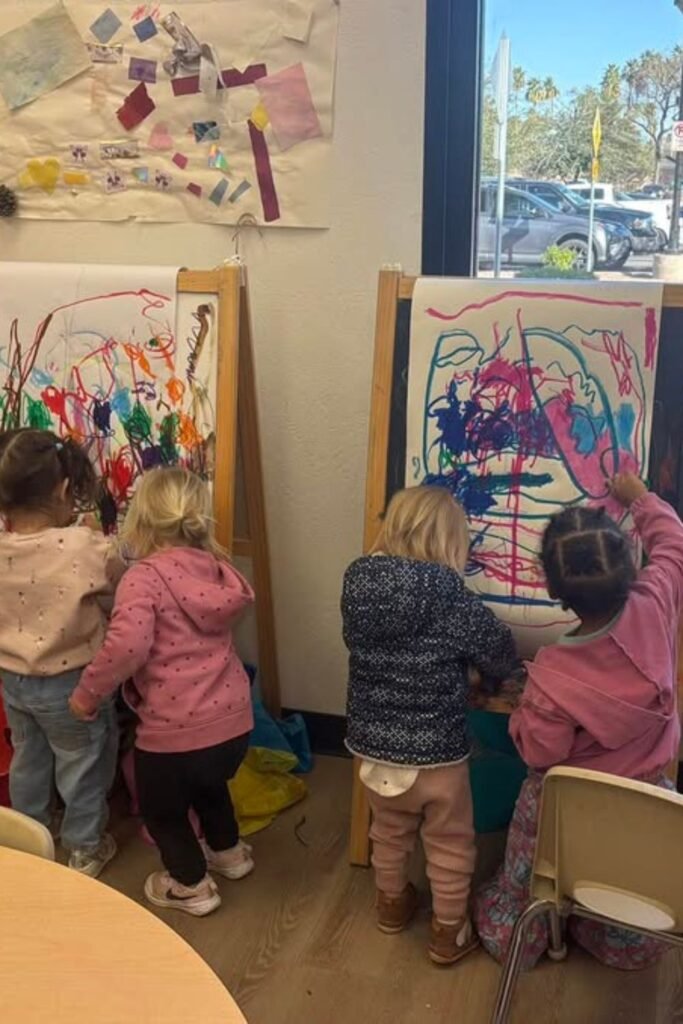
Floor space turns into a whole world once cardboard hits the ground. Grab a big flattened box draw simple roads a park maybe a school.
And let toy vehicles takes charge. Houses are made out of wooden blocks. Dolls with pegs become neighbors.
Things don’t have to be perfect rough lines are fine. Kids can sit, crawl, and roam around freely in the corners of the living room or the floor of the playroom.
It comes naturally to tell stories. One minute they’re on their way to the park, and the next minute they’re stuck in traffic.
You don’t need pricey playsets to help kids develop their imagination, problem-solving, and social skills.
Letter Craft
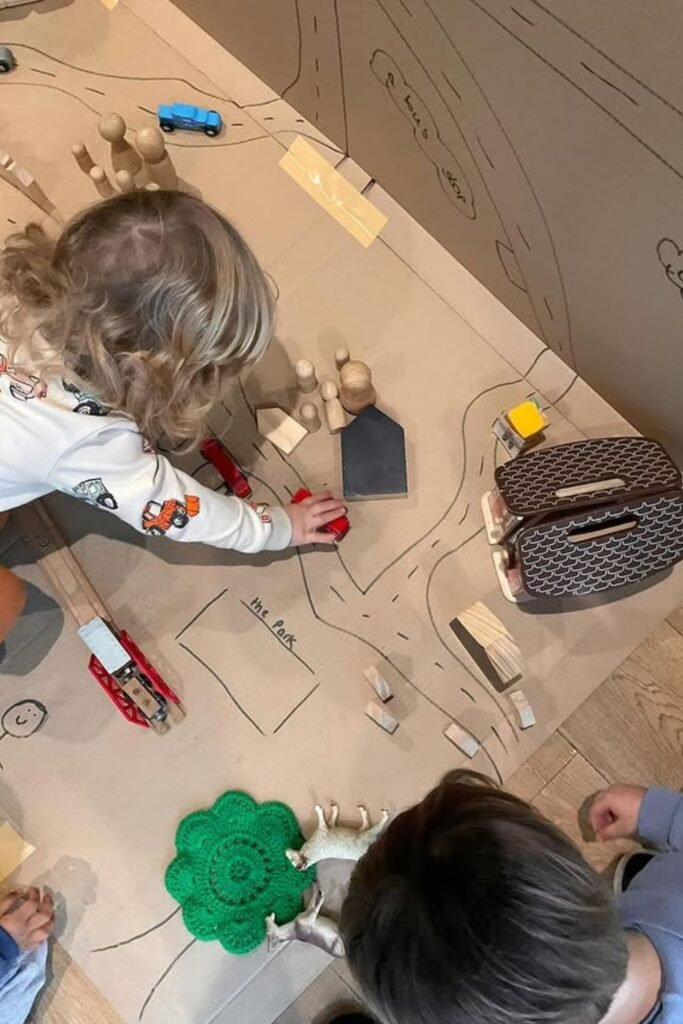
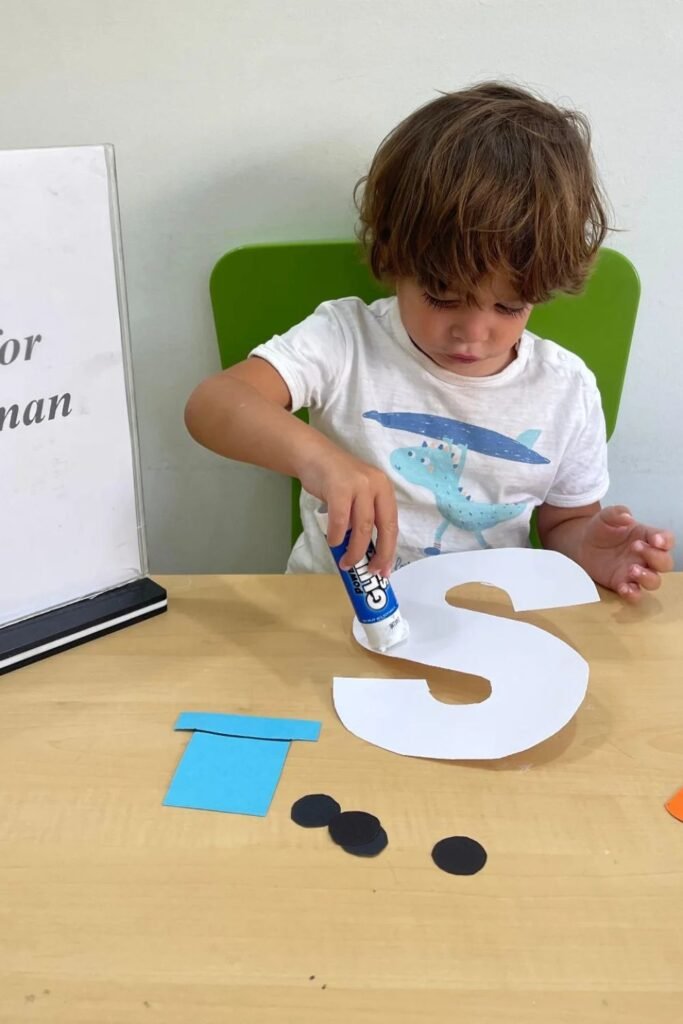
Glue in hand and one big letter on the table that’s all it takes to turn alphabet practice into something hands-on.
Cut a big “S” out of cardstock, then add basic shapes that fit the theme, such snowman parts for “S.”
Let your youngster put glue on each part, put it in place, and press it down. This works great on kitchen tables because they are easy to wipe up.
Saying the letter sound out loud while you create helps it stick. They connect sound, form and meaning all at once instead of drilling flashcards.
Little fingers stay busy and kids learn to recognize letters without feeling like they have to.
Number Painting
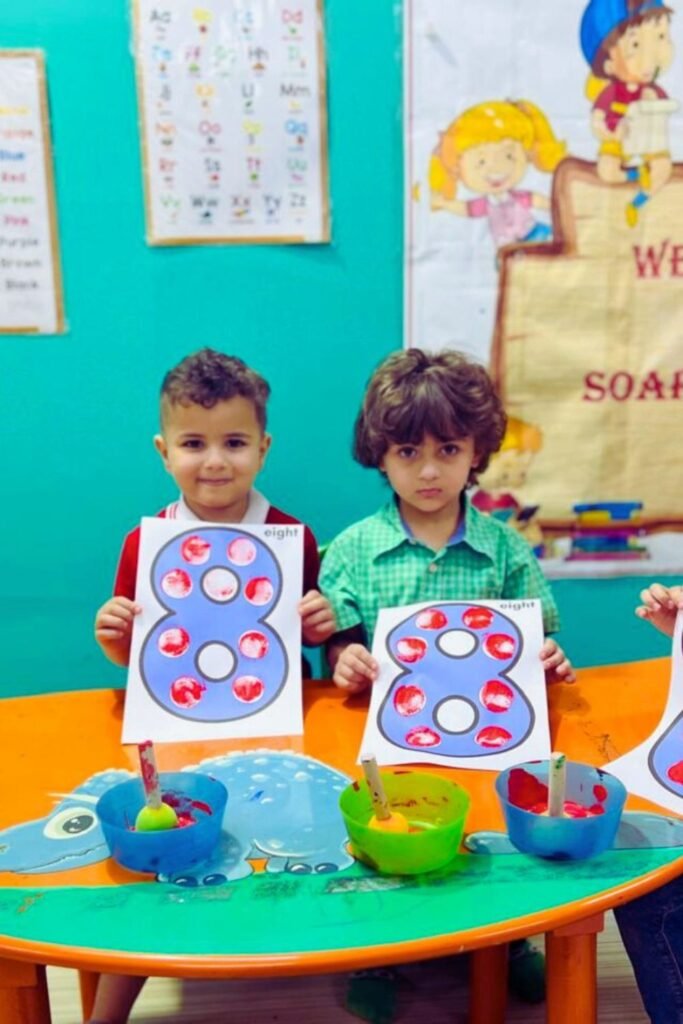
Paint plus numbers instantly feels more exciting than a worksheet. Big bold “8” on paper and small circles inside it turn counting into a hands-on game.
Put washable paint on your fingers or cotton balls and press one dot into each place while counting out loud.
This works well on dining tables or in art corners in the school. Just put down a plastic mat first.
Saying the number before each dot helps kids learn to count one by one without stress. Touch, color, and repetition all work together.
Kids don’t just memorize numbers they see and feel what eight really means.
The cleanup is worth it because of the messy hands, clear math connection, and proud smiles at the end.
Ice Rescue
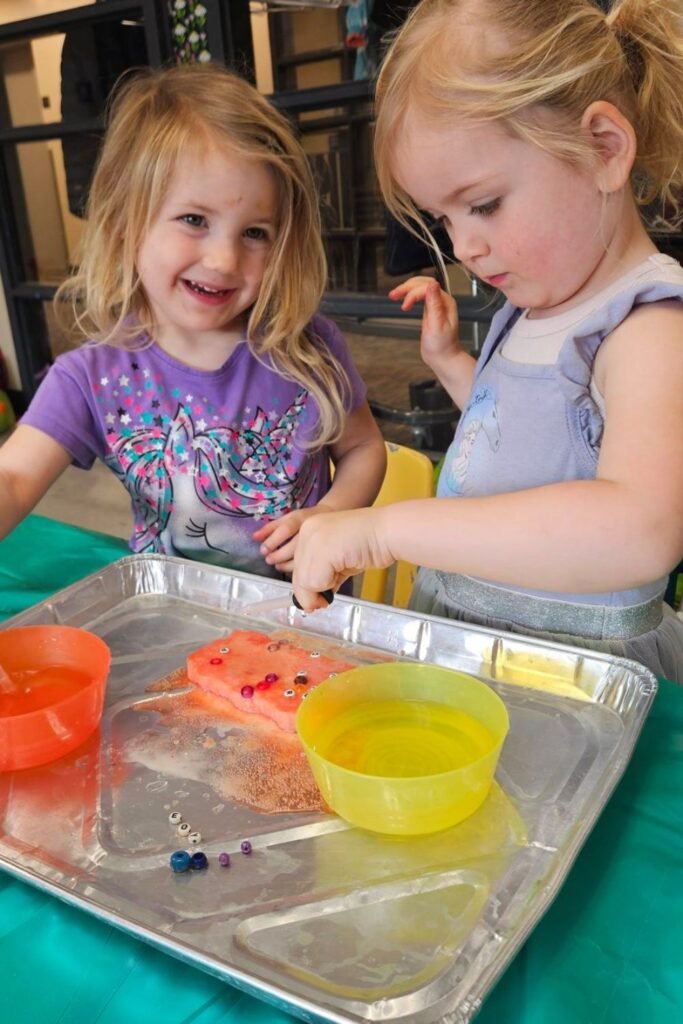
Cold hands and big smiles usually mean something exciting is happening. Freeze small beads or plastic gems.
In a thin layer of water for the night. The next day, put the ice block in a tray and give people droppers or small glasses of warm water.
Kids will pay attention as they squeeze, leak, and slowly melt their “treasures” free. Tables outside or messy play areas are better because water will spill.
Every time you squeeze, your fine motor muscles get stronger, and every time you slowly melt, your patience grows.
Curiosity is what makes everything happen. No one needs a screen for simple science, sensory delight, or problem-solving to happen.
Sprinkle Art
Sticky hands covered in colorful sprinkles usually mean one thing pure sensory joy. Spread a thin layer of glue on paper.
Or let them lightly dip their hands into safe, washable glue and then press them into a dish of sprinkles.
Pick up, shake, and watch patterns form. It’s easier to clean up after a meal when you have a tray under your kitchen table.
Fine motor skills get better when you carefully pinch and sprinkle with your fingertips.
People pay more attention to texture, color, and movement than they thought they would.
This kind of art is exciting since it breaches the “stay clean” norm in a safe way.
Little artists are pleased and focused when they have creative freedom and sensory play.

Tap Turtles
Little hands gripping a wooden hammer usually means serious focus is happening. Colorful peg toys like this turn simple tapping.
Into an exercise for coordination. Put the board on a strong table and let your child carefully hammer the turtles down.
Turn it over and start afresh. The tapping can get a little loud, so playroom floors or kitchen tables are good places to do it.
Every swing enhances your hand-eye coordination and grip strength, but no one notices. If you like, you can add an extra layer by matching colors or counting taps.
Preschoolers stay engaged with simple tools like these because they feel capable and in charge.

Pom Sorting
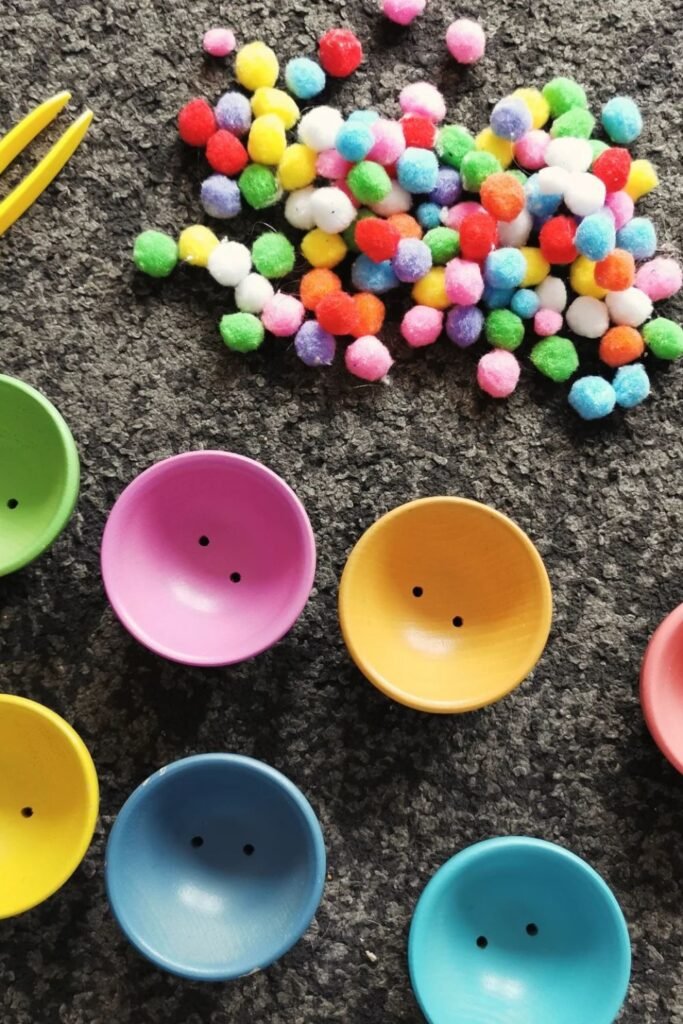
Color chaos on the floor can turn into calm focus in minutes. Spread out a pile of pom-poms and place small colored bowls nearby.
Add tweezers that are safe for kids to make it harder. The goal is easy: put each pom in the bowl that has the same color.
Carpeted areas are excellent since they keep things from rolling around. Using tweezers makes your fingers work harder.
Which helps you write better afterward. Sorting also helps kids learn math abilities early on without anyone using the word “math.”
This layout is great for quiet afternoons, waiting for dinner, or classroom centers. Kids stay active with simple colors, a clear aim, and consistent focus.
Tooth Brushing
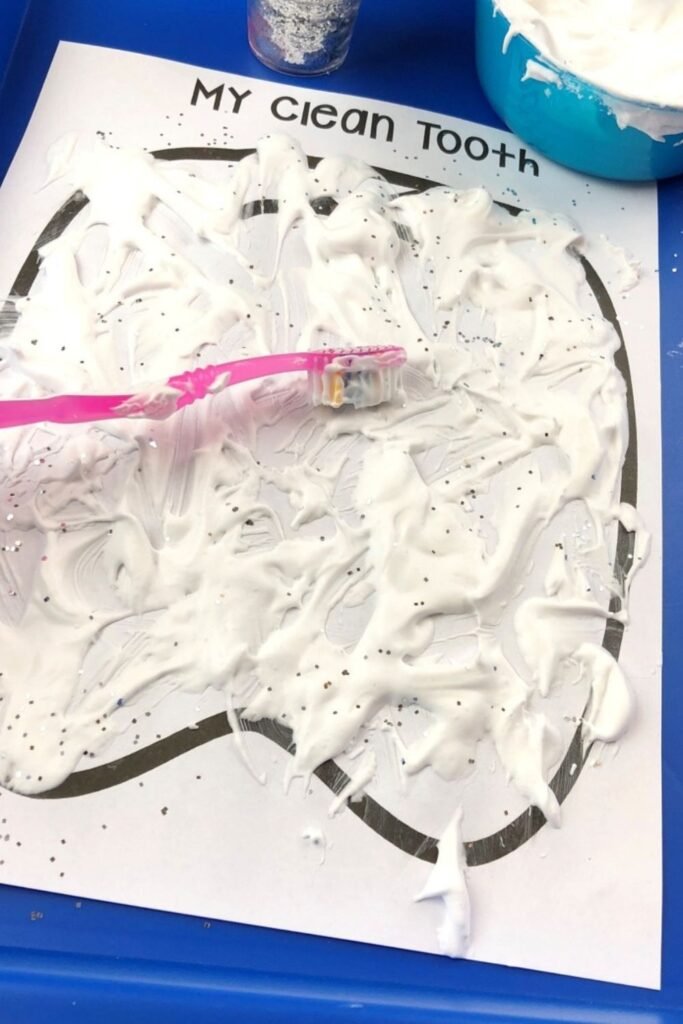
Toothpaste battles feel a lot different after playful practice. Print a large tooth outline and spread shaving cream across it.
Put some beads or glitter on top to look like “germs.” Give them a toothbrush and let them start brushing.
Bathroom counters or kitchen trays help keep the mess from spreading.
Without any resistance, circular strokes, mild pressure, and consistent scrubbing teach the appropriate way to do things.
Cleaning your teeth while laughing makes brushing them afterward go more smoothly. Playing with your senses and learning real-life skills is better than reminders.
Kids are more likely to pick up and healthy habits when they feel like they are playing instead of being told what to do.
Apple Painting
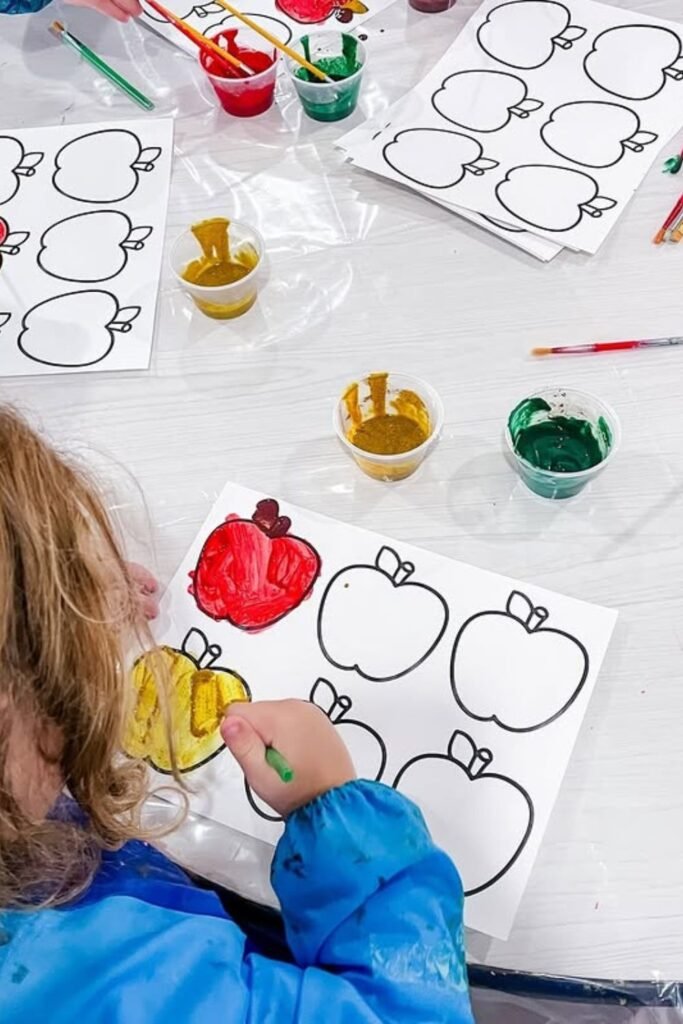
Rows of blank apples suddenly become much more interesting once paint comes out. Simple fruit outlines on paper.
Give just the right amount of direction so that creativity isn’t stifled. Put out little glasses of red, yellow, and green paint and let the kids decide how each apple will look.
Art tables or kitchen countertops with covers make cleaning up easy. Holding a brush and staying.
Inside strong lines helps you get better control without feeling too strict. Talk about colors while they paint to make it a rapid sorting activity.
This is even more fun when you add seasonal themes like fall. Repetition helps people stay focused, and dazzling outcomes make them proud of what they do.
Mud Construction
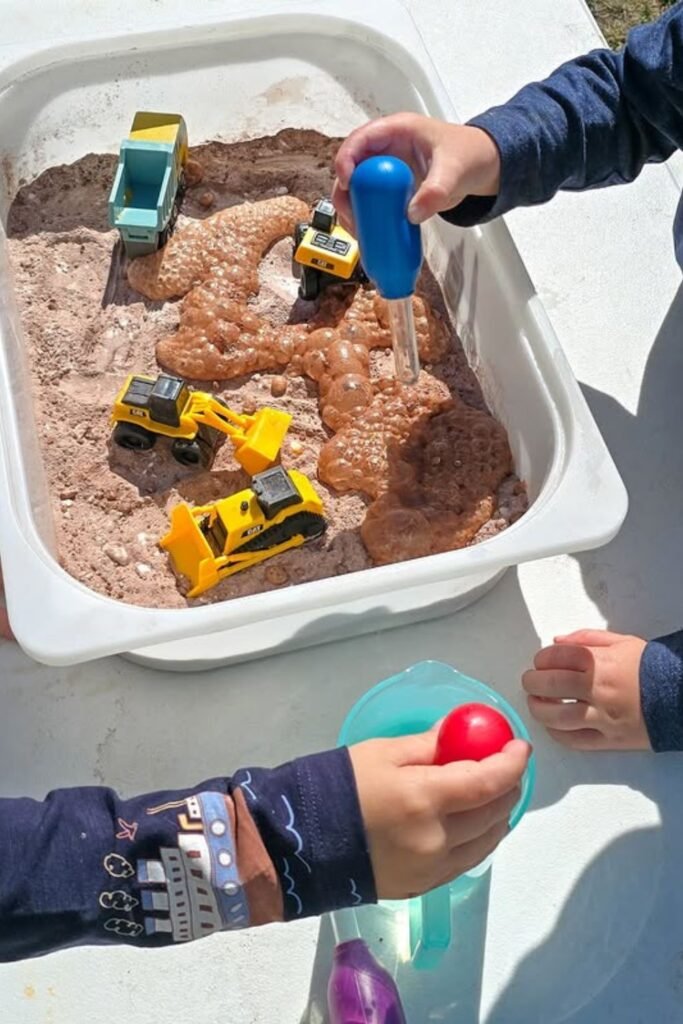
Digging feels different when trucks get involved. Fill a shallow bin with sand or dirt, add a little water, and drop in toy dump trucks and bulldozers.
Give the kids a dropper or tiny cup so they can choose how much water to add to the dust to make mud.
This kind of dirty play is great for tables or patios in the backyard. Pushing, pouring, and scooping all help your hands get stronger and your coordination get better.
Building things also gets kids thinking about how to solve problems, like how much water produces the best mud.
Let them try new things. Dirt comes off. The focus, teamwork, and quiet time you gain back are worth every dirty sleeve.
Banana Cutting
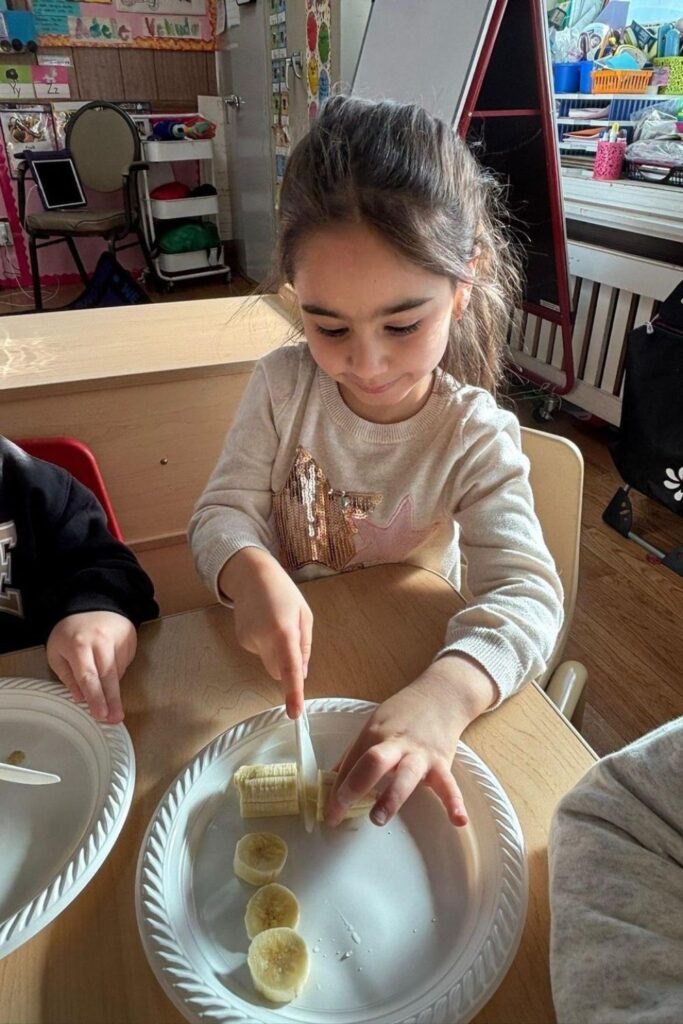
Snack time can double as skill time without adding extra work to your day. Hand over a soft banana and a child-safe plastic knife.
Then let your preschooler cut it into coins. Cleaning up is easy with paper plates.
Cutting slowly and steadily increases hand strength and control, which helps with writing later.
Adding up the slices or aligning them up provides a simple arithmetic twist. Kitchen tables are great because you’re already there.
Kids like professions that make them feel like adults. Giving kids safe responsibilities makes them feel better.
About themselves and helps them stay focused longer than any screen ever could. Making meals becomes peaceful, important activity.
Wrap Painting
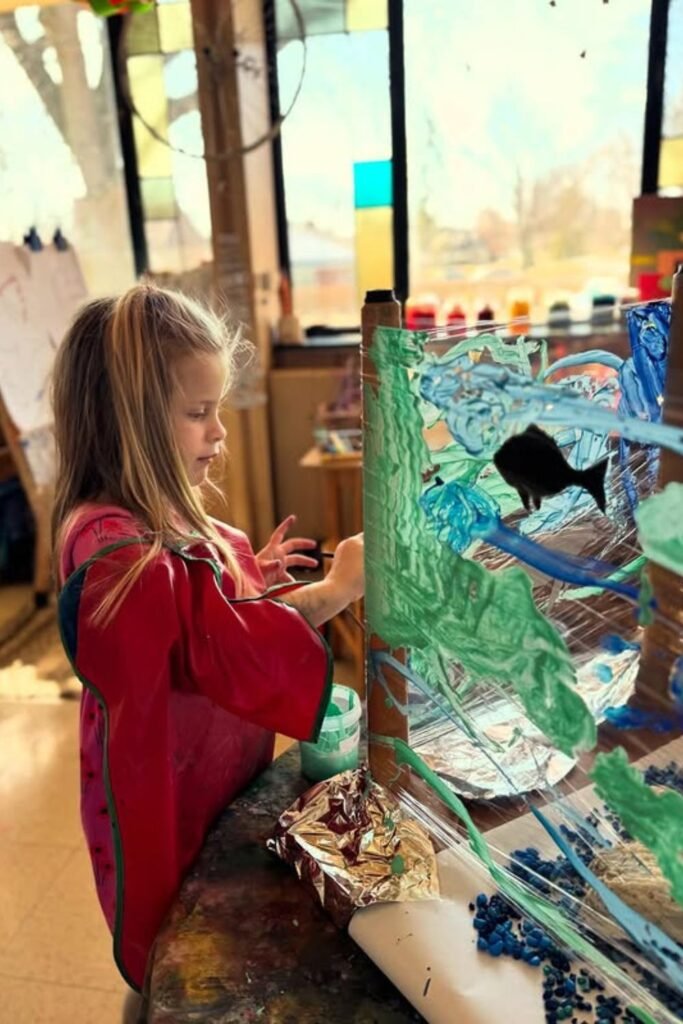
Paint feels different when it isn’t on paper. Stretch plastic wrap tightly across a simple frame or two chairs.
Then put a little paint on the surface. When you stand up to paint, everything changes.
Your arms move more, your body stays engaged, and the mess stays on the wrap.
Art nooks or outdoor patios are great since splatters can happen. Pressing, smearing, and mixing colors on a vertical surface works.
The shoulder muscles that help with writing later on. Use cotton swabs or your fingers to get different textures.
Light can also shine through clear wrap, which makes colors stand out. Preschoolers stay engaged for a lot longer with mobility and creative flexibility than with a seated craft.
Seed Scooping
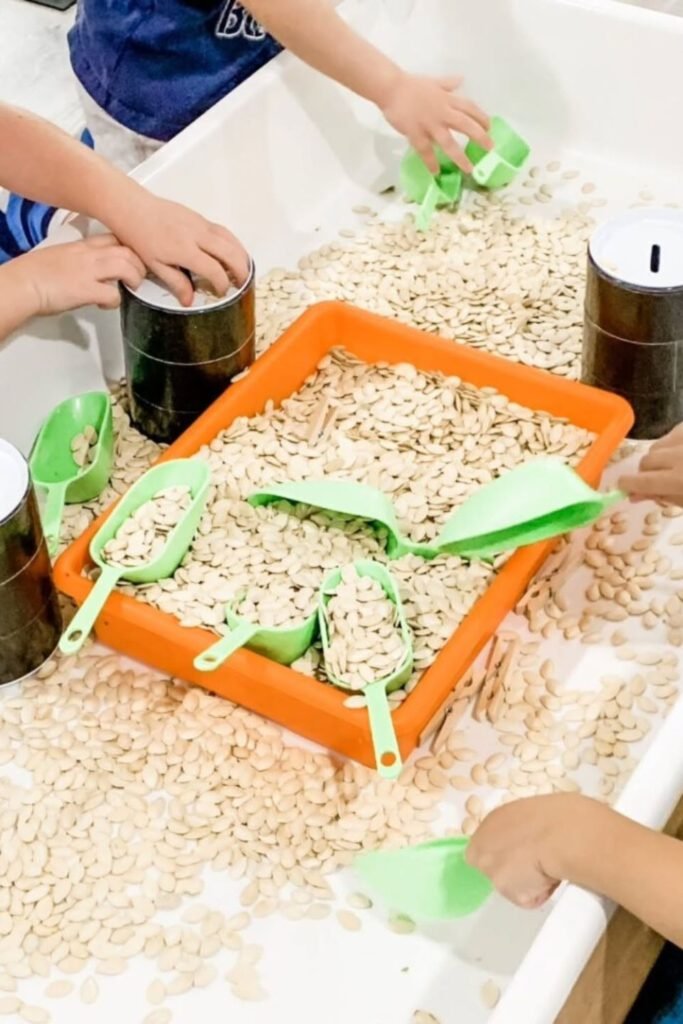
Quiet concentration shows up fast when tiny hands get tools. Fill a large bin with dried pumpkin seeds or any dry beans.
Then add cups, scoops and containers with lids. It seems easy to pour, move, and fill but it keeps preschoolers occupied longer than you think.
Laundry rooms, patios, or kitchen corners that are easy to sweep are excellent since pieces will fall.
Every scoop makes your hands stronger and more controlled. Filling containers to the top is a fun way to learn about volume without taking a class.
Moving in the same way over and over again soothes busy minds. Screen-free focus is at its finest when you use simple materials, move steadily, and have a clear goal.
Sand Writing
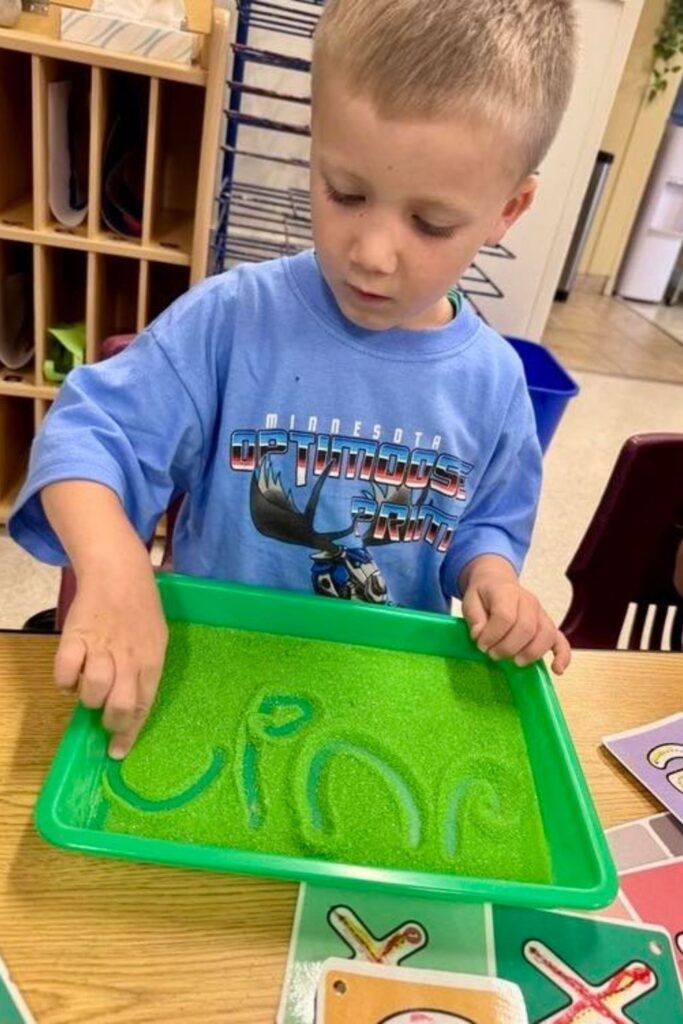
Finger trails in colored sand feel more exciting than pencil on paper. Pour a thin layer of sand or colored salt into a shallow tray and smooth it out.
Say a letter or a basic word, and then let your youngster trace it with one finger. One shake gets rid of mistakes, which makes you feel better right away.
The tray keeps everything in one place, so kitchen counters or classroom tables work well.
Touching letters in sand helps you remember them better, not just seeing them. If you need help, put letter cards nearby.
This kind of practice boosts writing confidence early on without making you mad. The soft texture and simple repetition keep tiny learners interested.
Snack Faces
Food turns into art the moment you let kids design it. Lay out simple ingredients like watermelon slices, blueberries, olives, and pretzel sticks.
Give them a dish and let their imaginations go wild. Putting pieces together to make comical faces or creatures keeps kids’ minds busy for a lot longer than just eating.
Since you’re already making snacks, kitchen counters are great. Putting small things in the right place helps you.
Improve your fine motor skills without making you feel like you’re practicing. Talking about colors and forms naturally aids to learning.
Bonus: Kids are more likely to consume something they helped make. You get a few calm, joyful minutes in exchange when snack time turns into play time.

Shape Collage
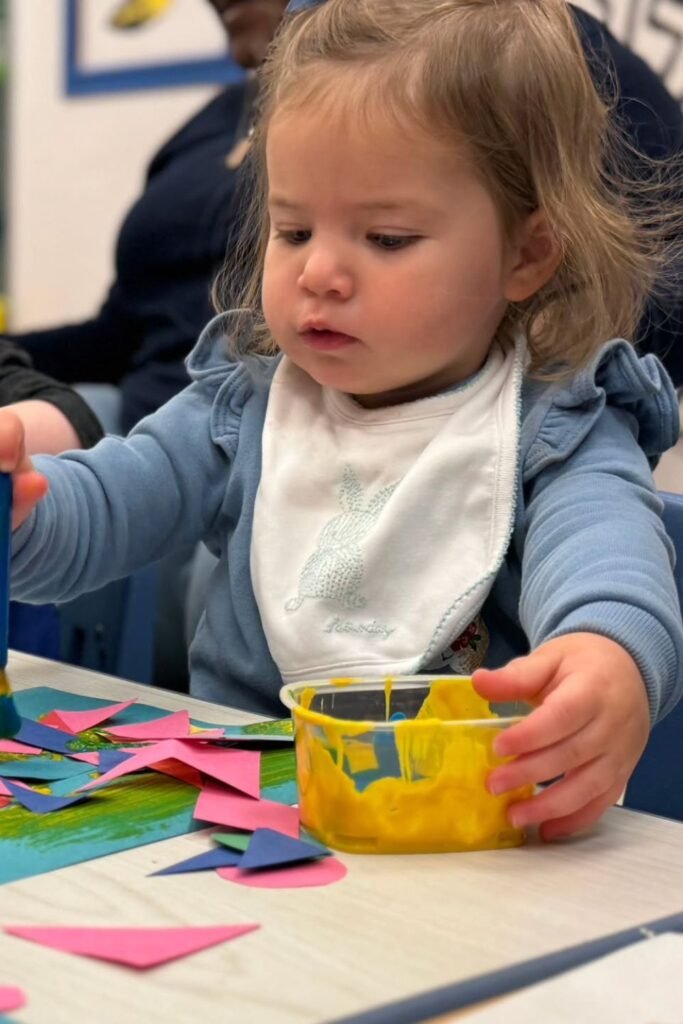
Bright paper scraps scattered across the table instantly invite little hands to create. Spread glue over a sheet of cardstock.
Then let your youngster put triangles, circles, and squares wherever they choose. No need for an outline.
They stay interested longer when they have freedom than when they have stringent rules.
Art tables or kitchen countertops with covers are the best places to put paint and glue.
Picking up little shapes helps with fine motor abilities, and talking about each shape helps kids learn about geometry without stress.
Using different colors and angles together helps people be creative and make decisions. Kids stay motivated on collage art.
Animal Sorting
Tiny animals scattered across a table can turn into a full learning zone in seconds. Set up simple wooden dividers or trays.
And sort animals by type, such farm, ocean, jungle, or by color and size.
Give each youngster a tiny bowl and let them put each piece where they think it should go.
Tables in playrooms and classrooms are best since the pieces stay in one place. Sorting helps kids learn early numeracy skills.
Like putting things into groups and comparing them without making them feel like they are in school.
Make pretend play more fun by making habitats in each section. Language, attention, and the ability to make decisions all grow on their own.

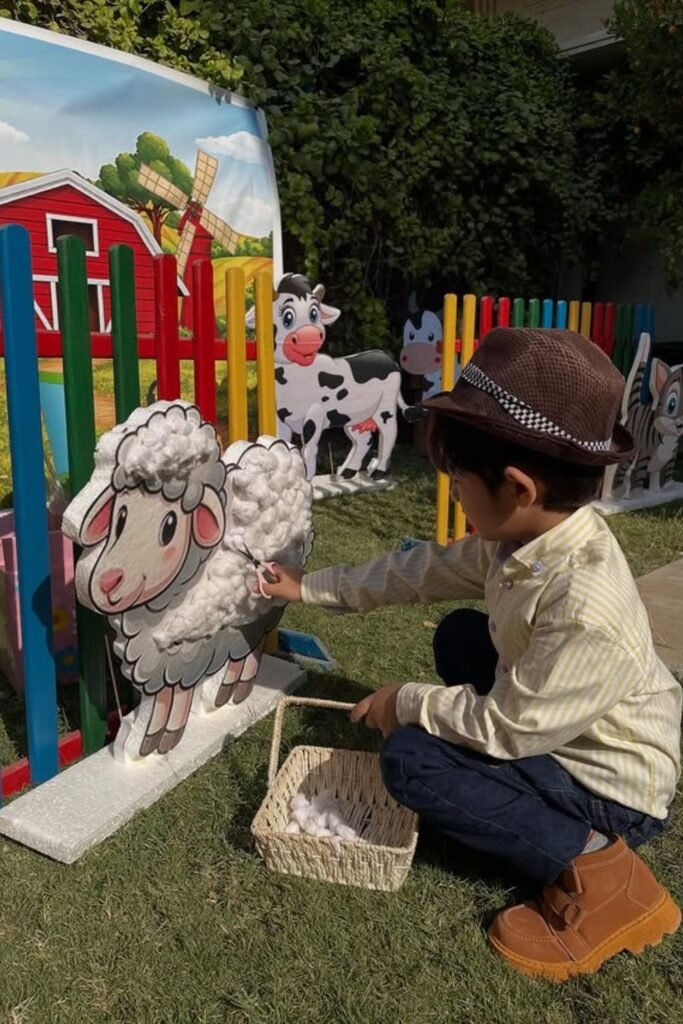
Farm Pretend
Outdoor play feels magical once imagination steps in. Set up simple farm cutouts or stuffed animals in the yard.
And put a little basket of cotton balls in it to look like “wool.” Tell your child to feed, care for, or “shear” the sheep.
Patios or grassy areas are great since kids can run around in them.
This kind of pretend play helps kids learn language, empathy, and how to tell stories without any official teaching.
Acting out farm chores provides movement a purpose and keeps energy concentrated. Add animal sounds or simple role-playing to make the game last longer.
Being outside and using your imagination can make you active in a way that seems tranquil, not frantic.
Chalk Art
Dark paper changes everything. Bright chalk pops instantly, and even simple scribbles look exciting.
Put down black cardstock, put a small bowl of colorful chalk pieces in the middle, and let the youngsters create however they want.
No need for instructions. Anything goes, like swirls, lines, and faces. Art desks or coffee tables are preferable since they keep the chalk dust in one place.
Thick strokes help kids learn to write without putting too much strain on them. Gently blowing on the paper to get rid of dust provides a little science moment as well.
There isn’t much mess, but there is a lot of ingenuity. Changing the color of the background can sometimes make drawing feel new again.

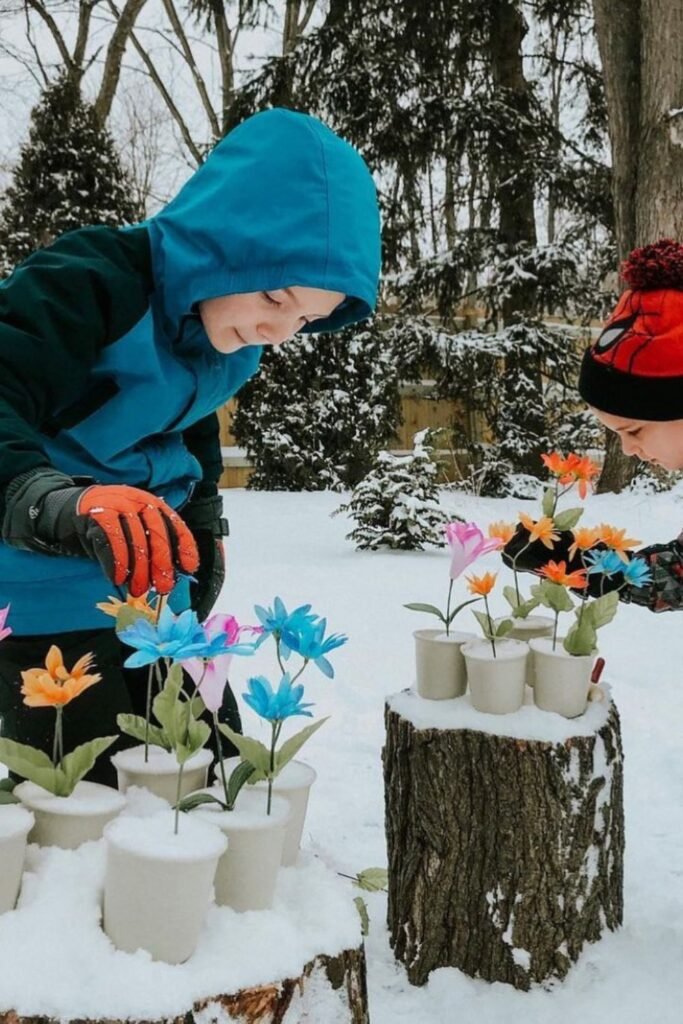
Snow Garden
Winter doesn’t have to mean staying inside. Fresh snow can turn into a pretend garden with just a few cups and artificial flowers.
Put paper cups in the snow, fill them up, and then put beautiful flowers on top. You can use tree stumps or corners of your yard as “garden tables.”
Cold air keeps energy high, and putting flowers in the snow makes people think of things right away.
Talk about the seasons while you arrange the colors. Why don’t flowers bloom in the winter.
This kind of sensory play outside keeps youngsters busy and makes them think at the same time. Easy to set up, makes a big impression, and no screens in sight.
Sand Stamps
Outdoor play gets even better once there’s a simple challenge. Cut large circles into a piece of cardboard and hand over a small shovel.
Fill each circle with sand, push it down hard, and then raise it up to show off flawless sand “cookies.”
Playground corners or sandboxes in the backyard are the ideal because they are easy to clean up.
Packing sand tightly makes your hand muscles stronger and gives you better control. Guess which circle will keep its shape the best, and then switch.
Count as you fill each mold. Repetition is rewarding, and working together naturally makes things better.
Fresh air and hands-on texture keep preschoolers engaged without anybody talking about devices.

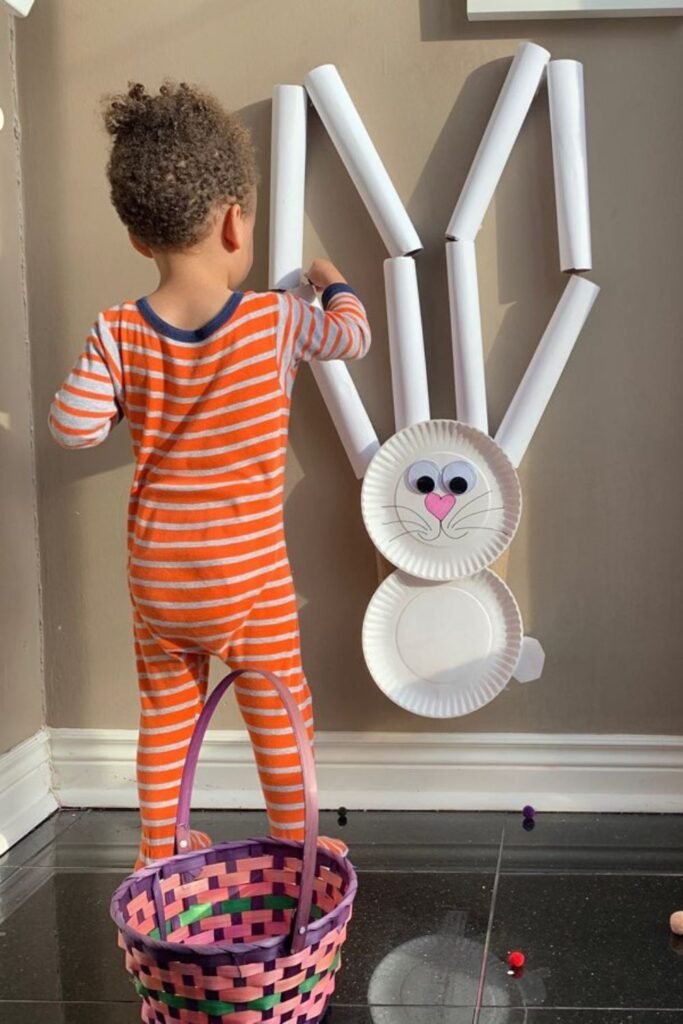
Bunny Toss
Movement gets louder and more exciting when there’s a target on the wall. Create a large bunny shape using paper plates and tape.
Then cut or leave holes in the top so you can throw pom-poms inside. Give your youngster a little basket and tell them to stand back and aim.
The greatest places to put wayward pieces are in the corners of hallways or on the walls of playrooms.
Throwing things helps you focus and coordinate without making you feel like you’re working out. Make it a counting game by keeping track of how many go inside.
Burning energy is good, and laughter typically comes after. When kids can’t go outside, simple wall games like this one keep them busy indoors.
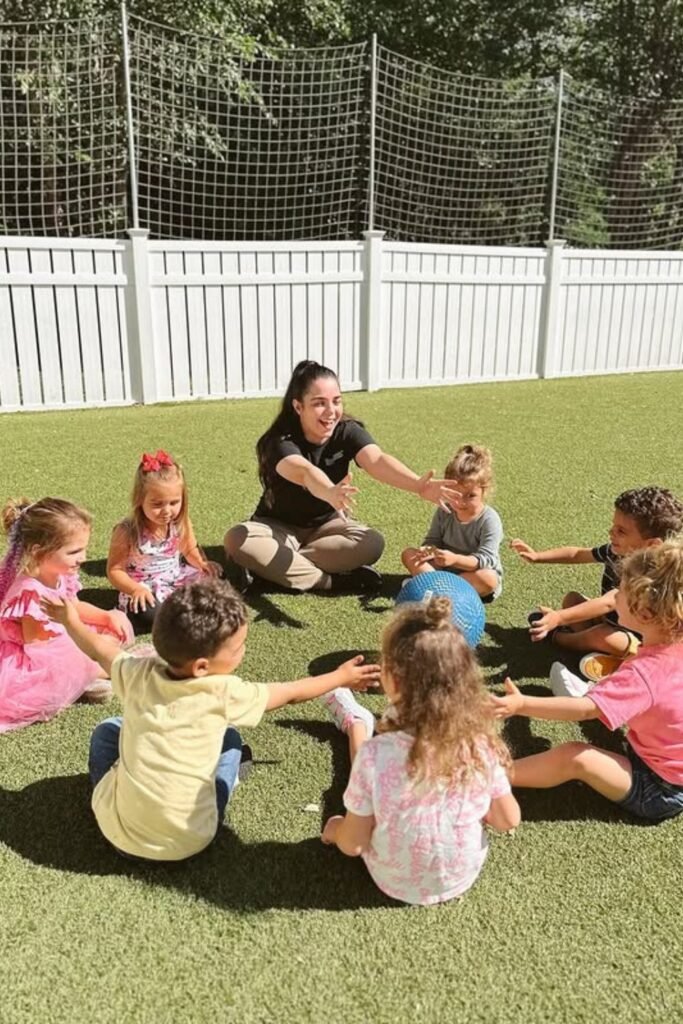
Circle Ball
Group energy feels different when every one has a turn. Sit children in a circle on grass or a soft mat and roll a ball from one person to another.
Say your name before you roll, mention a color or count each pass out loud. Outdoor spaces are preferable.
Since they make it easy and relaxing to walk around. Instead of tossing, rolling keeps things peaceful while still being active.
Waiting for your turn teaches you to be patient. Listening for your name makes you pay more attention.
Kids naturally learn social skills because they have to watch, respond, and work together.
This kind of simple circle game turns surplus energy into connection instead of turmoil.
Alphabet Board
Letters feel more real when kids can touch them. Cover small cardboard squares with glue and outline each letter.
Employing buttons, sticks, cotton, beads, and leaves that aren’t attached to anything. Put them at a height that kids can reach so they can trace each shape.
This style of presentation works great on classroom boards or hallway walls. Tracing letters with different textures helps kids.
Learn to read by moving their bodies instead than memorizing them. Say the sound of the letter while your youngster traces the shape with their finger.
Adding natural things to craft projects makes them more fun. You don’t have to use flashcards to learn the letters.

FAQs
How long should screen-free activities keep a preschooler busy?
It’s common for preschoolers to only be able to focus on one thing for 10 to 20 minutes at a time. Great if something keeps their attention longer.
If not, change it up. Short, easy tasks are better than long, hard ones. The point isn’t to keep them busy for hours.
What if my child refuses activities and keeps asking for a screen?
Be calm and steady. Instead of ten choices, give people one straightforward choice. Get the game ready and play it for a minute yourself.
Most of the time, curiosity draws them in. It can take a few days to get used to not using displays if you’ve been using them a lot.
Hi, I’m Afaf! I’m a law student who loves writing about everyday life – from home projects and crafts to fashion, beauty, and parenting tips.
I’ve been writing for over a year, sharing ideas that are simple, practical, and easy to try. I write about things I find interesting and useful, whether that’s organizing a space, trying a new DIY, or finding activities to keep kids entertained.
My goal is to share helpful ideas without making things complicated. If it works in real life, I’ll write about it.
When I’m not studying or writing, I’m usually experimenting with new projects or scrolling for inspiration!