
23 One Year Old Activities for 2026
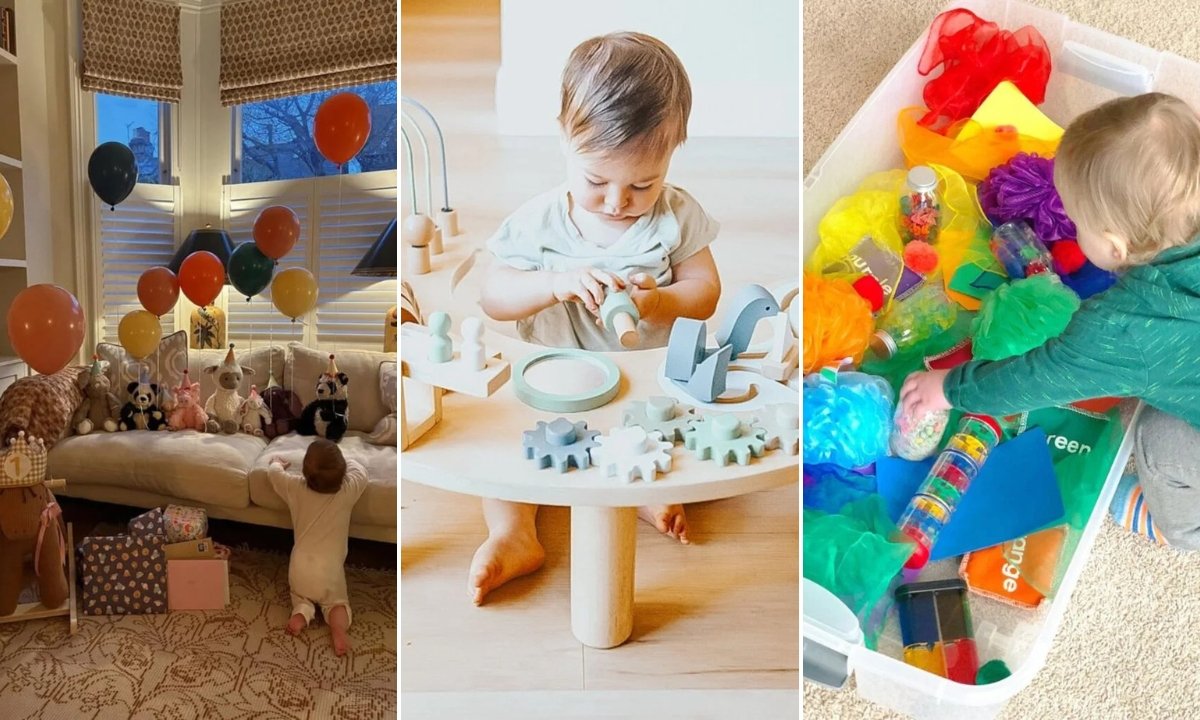
Some days, it seems like your one-year-old wakes up with only one goal: to take everything off the shelves and see how patient you are.
You have used the toys. You’ve listened to the music. You even gave them your phone so you could have five minutes of peace. And now you’re thinking, “What else can I do?”
The good news is that you don’t need any more toys. You don’t need to set things up as they do on Pinterest. You already have all you need at home.
In this article, I’ve rounded up 23 one year old activities that work well at home, school, or playtime.
Let’s jump in!
How Can Everyday Household Items Become Activities For One-Year-Olds?
A toy store isn’t necessary to keep your one-year-old busy. Take a look around your home. That bowl made of plastic.
It turns into a drum. Spoons made of wood? Rhythm sticks right away. Boxes that are empty? A automobile, a tunnel, or a game where you stack things.
Your youngster doesn’t care about brand names at this age. They like to explore. You offer them a chance to touch, shake, stack, drop.
And figure things out when you give them safe, everyday stuff. That’s how kids learn. When you let your child safely explore simple things, they can become strong activities.
Save this article for later!👇👇👇
Memory Moment
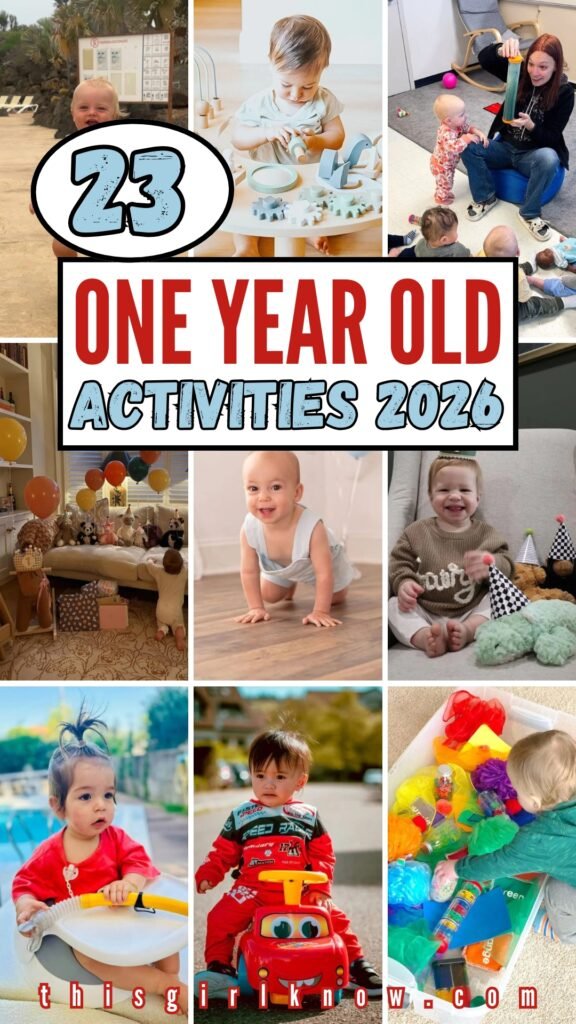
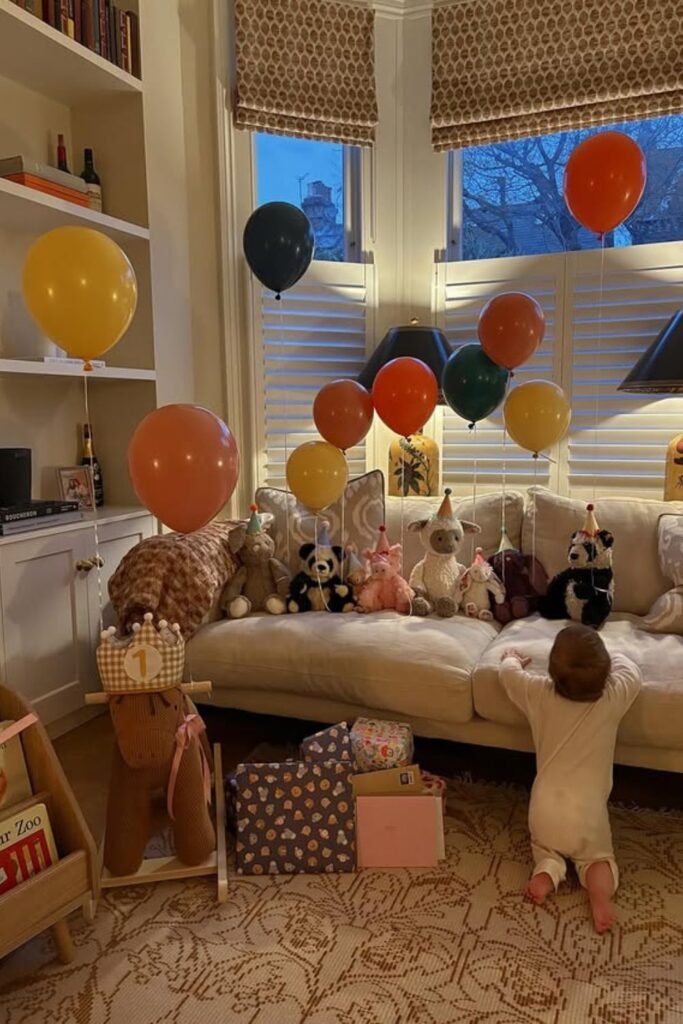
First birthdays don’t need a big party to feel special. Clear a small corner in your living room, add a soft chair, a simple crown.
And a few plush animals with little party hats on them. That’s enough to make a great photo opportunity.
And a small party that your one-year-old will love. Make it short and fun. Instead than making your child pose.
Let them touch the hats, grab the stuffed animals, and look about. You’ll receive real emotions and grins.
This works best when your baby is happiest, which is usually after a nap and a snack. That way, the moment won’t be too much for them.
Balloon Chase
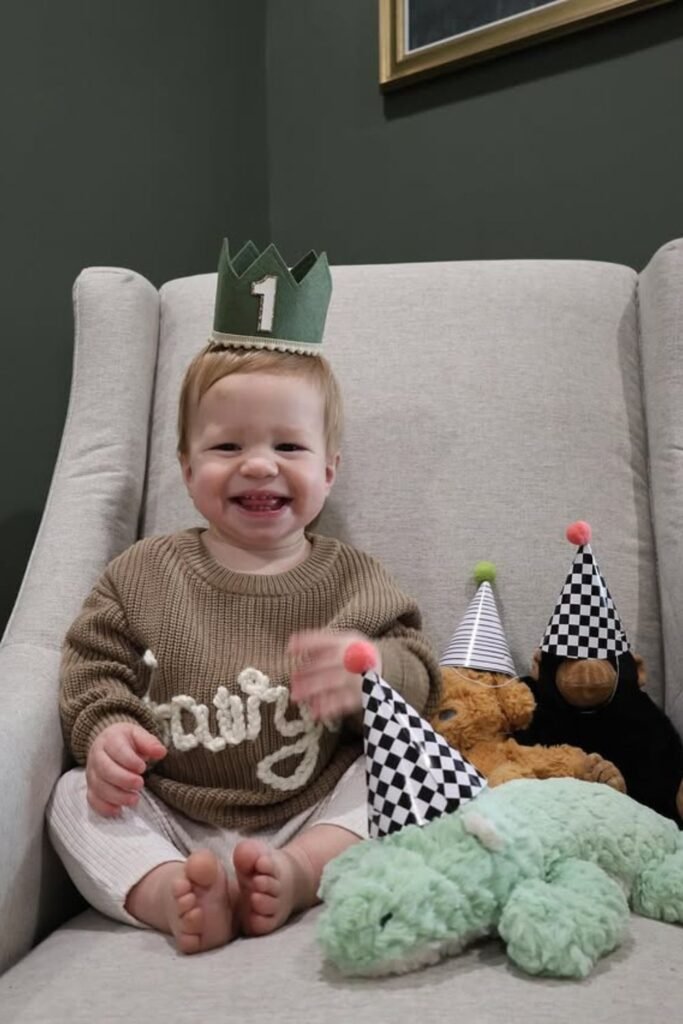
Nothing motivates crawling like a floating balloon drifting across the floor. Tie a helium balloon to a light string.
And keep it just low enough for your child to reach. The goal is to move.
Every stretch you do strengthens your arms improves your balance and helps you coordinate your movement.
Use this when you have a lot of energy and your baby needs room to move. Get rid of little things and clear the floor.
Stay close while they look about. To keep the game going, add a second balloon afterward.
Easy to set up, and it pays off big time, especially for babies who are learning to crawl or take their first steps.
Sofa Surprise
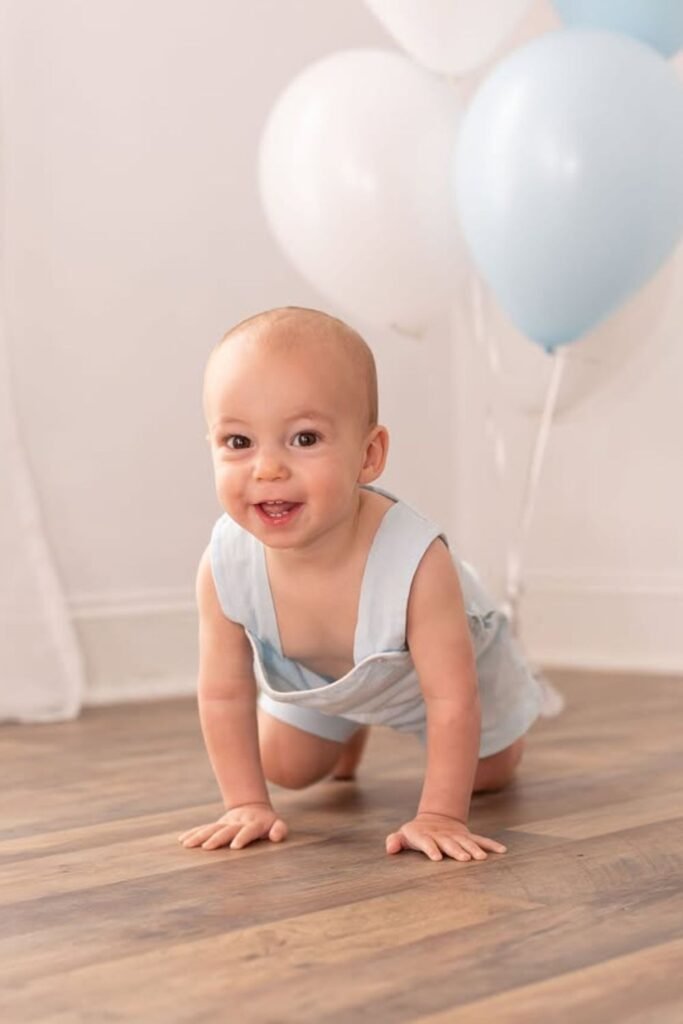
Turn your living room into a mini celebration zone without booking a venue. Line up stuffed animals on the couch.
Put tape on the balloons so they can’t get to them, and make a soft area where your one-year-old can crawl, pull up, and look about.
Curiosity takes care of the rest. Bright balloons get people’s attention, soft toys make them want to grab them, and the couch becomes a safe place to practice standing.
It works great for a birthday morning reveal or just a “special day” at home. Make sure everything is light and safe so that nothing falls by accident.
Take pictures while your child looks about the arrangement. Exploration is like playing, and you didn’t have to do anything to get ready.
Outdoor Walk
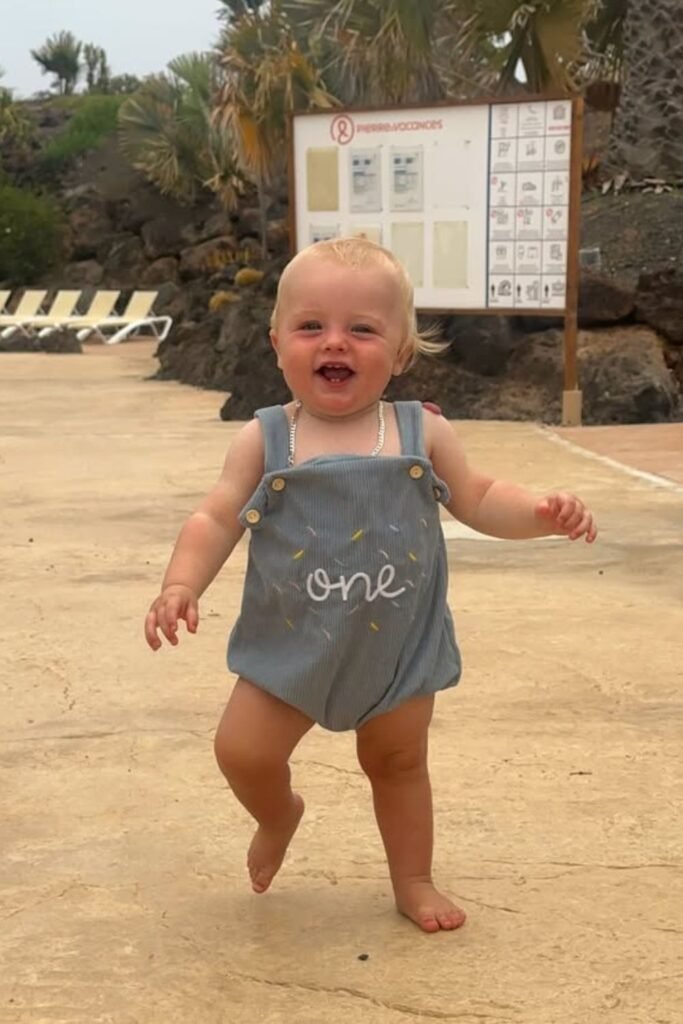
Fresh air changes everything. Open space gives your one-year-old room to test balance without bumping into furniture every two seconds.
Early walkers who still wobble do best on flat pavement or a smooth park path. Stay close, but let those little legs take the lead.
Every step makes you stronger, more coordinated, and more confident. Don’t hold both hands at once unless you have to.
At this age, a little freedom goes a long way. Walking outside also uses up additional energy, which usually implies better naps later.
Make it short, make it safe, and treat every stride without falling as a triumph in a marathon.
Water Play
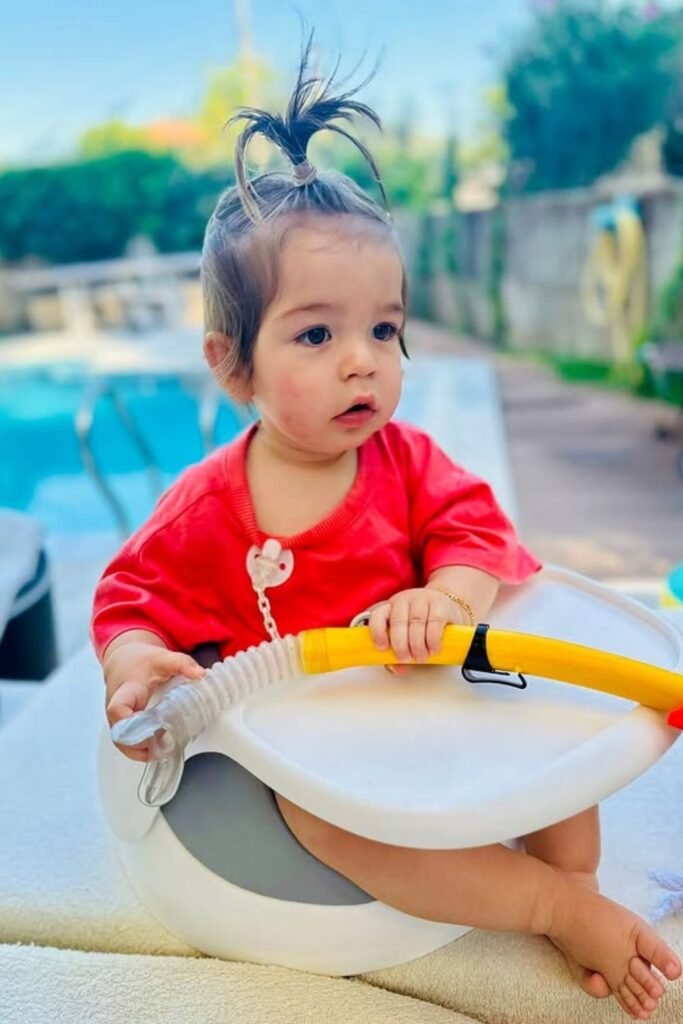
Hot afternoons call for something simple and sensory. A shallow container, a soft hose attachment.
A one-year-old may have fun with simply a cup of water. Kids can learn coordination by splashing, pouring and feeling cool water on their small hands without feeling practice.
Put this together outside where it won’t make a mess. For safety, sit close and keep the water level very low.
Give them several safe instruments, such plastic cups or silicone spoons, to help them pour.
Outdoor water play is great before nap time because it uses up energy in a peaceful way.
The cool air, moderate splashing, and vast space make it both relaxing and exciting at the same time.
Ride On
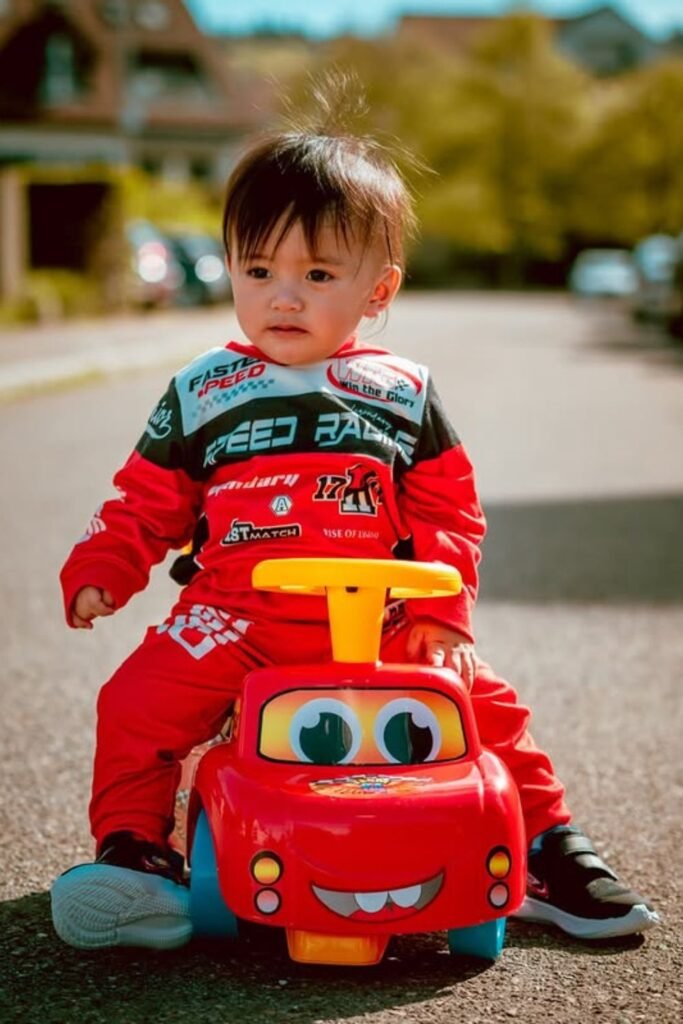
Little legs love movement, even before they master steady walking. A small ride-on toy gives your one-year-old.
A safe method to push, scoot, and explore without having to hold hands all the time. They can move around best on open driveways or quiet sidewalks.
Instead of doing it for them, tell them to push with their feet. That simple movement makes your leg muscles stronger and helps you keep your balance.
Short outside workouts keep frustration low and excitement high. Stay close, especially near roads, and take your time on the excursion.
At this age, movement feels like freedom, and riding on things builds confidence one push at a time.
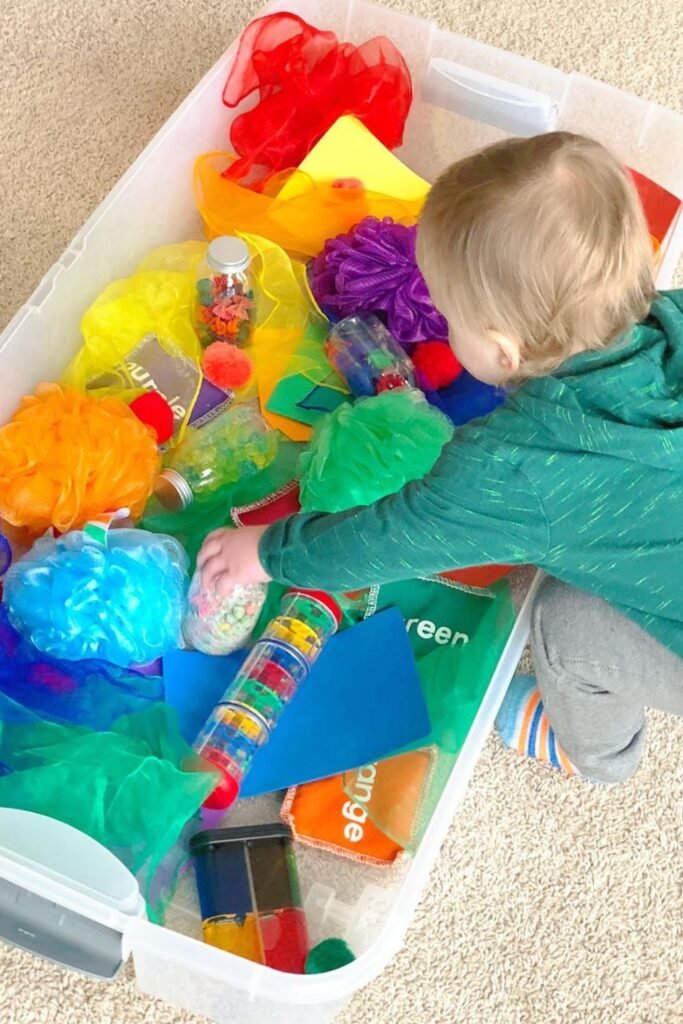
Sensory Bin
Curiosity explodes when colors and textures fill one big container. Fill a large plastic bin with safe household items scarves.
Soft loofahs, empty sealed bottles with beads, fabric scraps, and huge things that are too big to swallow.
You don’t have to be right next to your child all the time when they are sitting on the floor. They can dig, grasp, shake, and throw things.
Change things out every few days to keep it fresh. It works great for rainy afternoons or when you need 20 minutes of peace and quiet nearby.
Different textures help you become more aware of your senses and improve your fine motor skills at the same time.
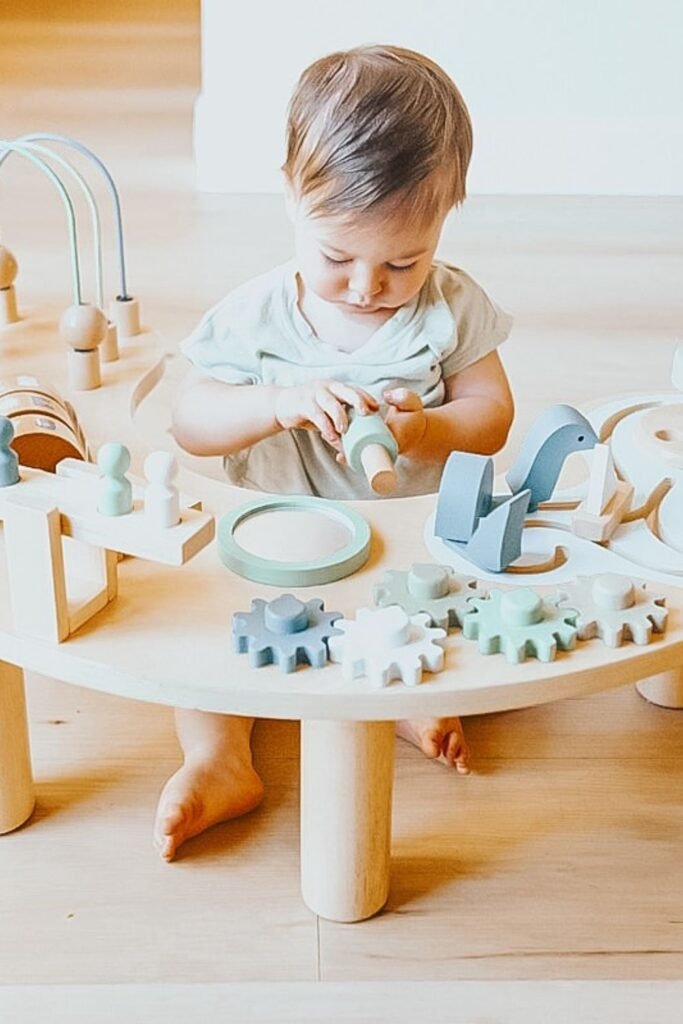
Activity Table
Busy hands need a place to focus. A low activity table filled with simple wooden pieces, spinning beads, chunky shapes.
and gears give your one-year-old a safe place to play over and over. Put it in a calm place where there aren’t many things to do.
Sitting or kneeling helps strengthen the core, and minor motions help with hand-eye coordination and problem-solving.
Don’t be in a hurry to explain how anything works. Let trying and failing teach you how to be patient. Some days they’ll spin one piece for ten minutes straight.
Make sure the pieces are big and strong, and change out the small ones every now and then to keep things interesting without overwhelming them.
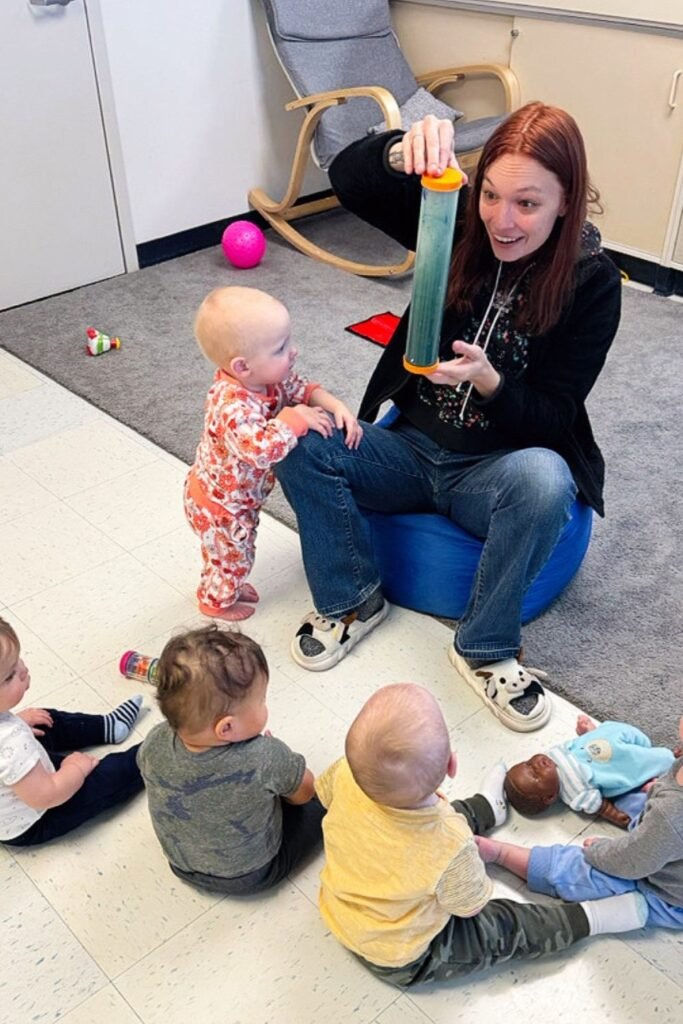
Group Circle
Attention grows when little ones watch something together. Sit on the floor and hold a clear sensory tube filled with beads, glitter, or colored water.
Slowly lift it up, turn it upside down, then stop so they can see how it moves. Shaking, rolling, and passing it around.
Are all simple things that help kids focus and be mindful of others. Great for daycare or playdates where babies learn by watching each other.
To avoid grabbing fights, keep turns brief. Talking about what they see”Look, it’s falling!”helps them learn language skills.
Without making them feel like they’re in a lesson. Their interest is generally held longer by playing with others than by playing alone.
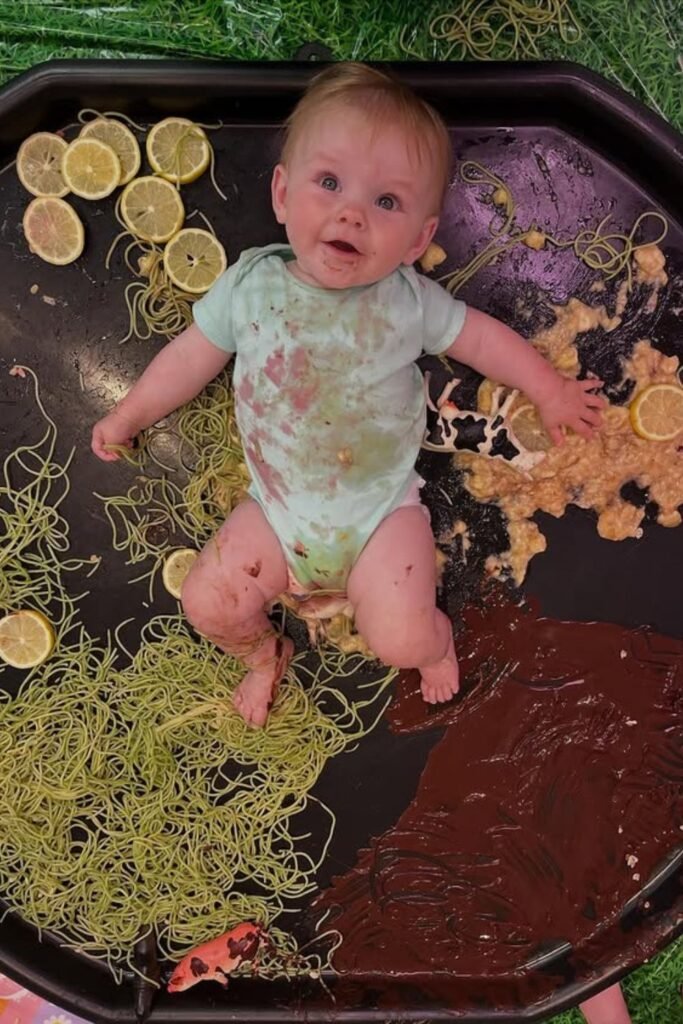
Messy Play
Some days call for full-on sensory chaos. Spread a large plastic tray or shallow tub outside and add safe, taste-friendly textures.
like pasta that has been cooked, fruit that has been mashed, yogurt, or lemon slices. Your bare hands and feet will do the rest.
Squishing, smearing, and patting diverse textures quickly helps kids learn about their senses.
Cleaning up is easier outside, so don’t worry about the mess. Keep the ingredients close by and out of reach of babies’ mouths in case they get intrigued.
Great for warm afternoons when you have a lot of energy and don’t mind taking a fast wash later.
Tape Rescue
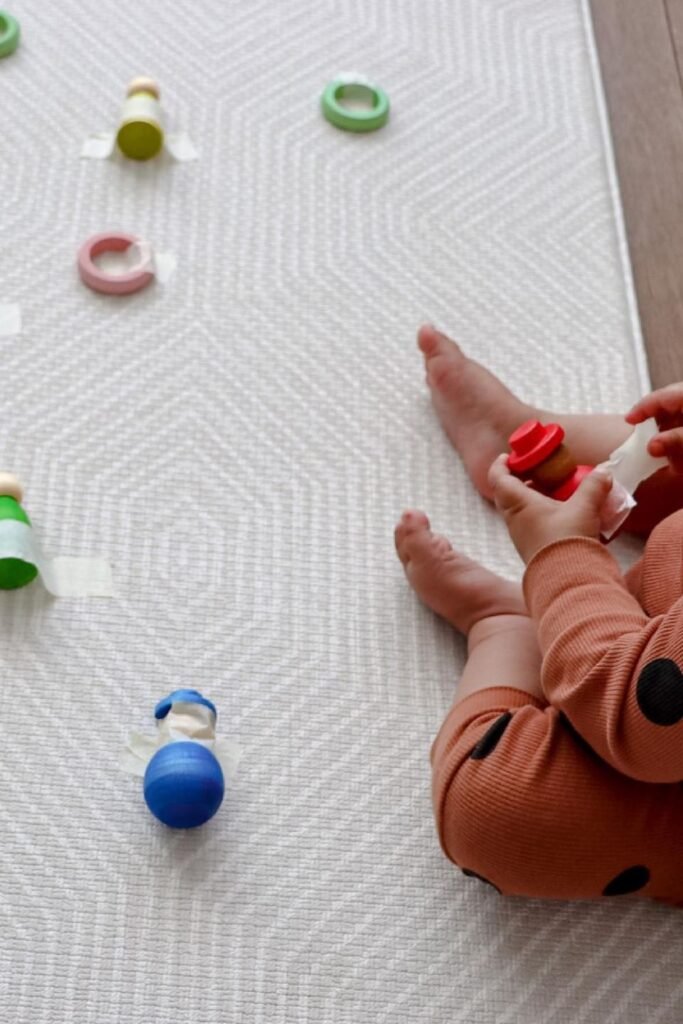
At this age, peeling tape feels like magic. Put painter’s tape on the floor and use it to hold up big rings or wooden pieces.
Your child will pull, tug, and work hard to “rescue” each toy while sitting on a comfortable mat.
Every peel makes your fingers stronger. They became more patient as they learn how much force to apply.
It takes two minutes to set up, and it’s ideal to do it on calm mornings inside. Keep the tape low-tack so that it comes off easily and is safe for small hands.
Change the position of things to keep it interesting. This kind of simple problem-solving retains their attention longer than flashy gadgets ever would.
Sticky Wall
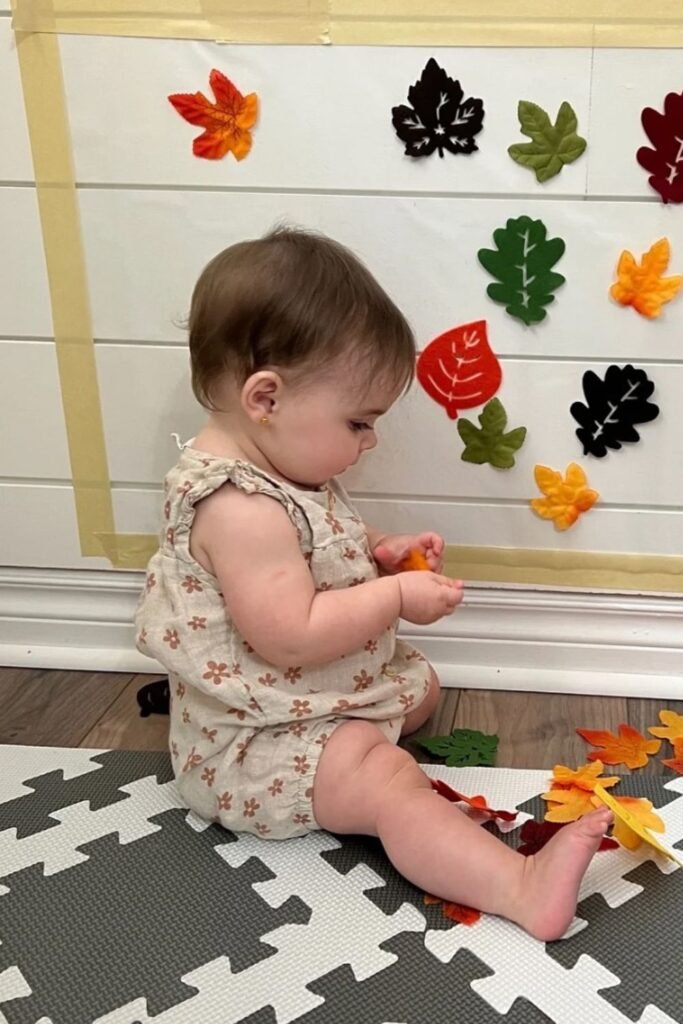
Standing play changes the whole game. Tape a large sheet of contact paper or wide painter’s tape onto a wall.
At the height of your child, with the sticky side facing out.
Give them light things to play with, like felt leaves, fabric shapes, or foam cutouts, and let them start experimenting.
Reaching up strengthens and balances the shoulders, which is especially important for early walkers who need more practice standing up.
Taking parts off and putting them back on again improves fine motor skills.
Works well with seasonal motifs, like leaves in the fall, hearts in February, and flowers in the spring.
Make it low enough that your youngster can do it on their own without help all the time. Vertical play keeps people moving and their thoughts on the task at hand.
Color Match
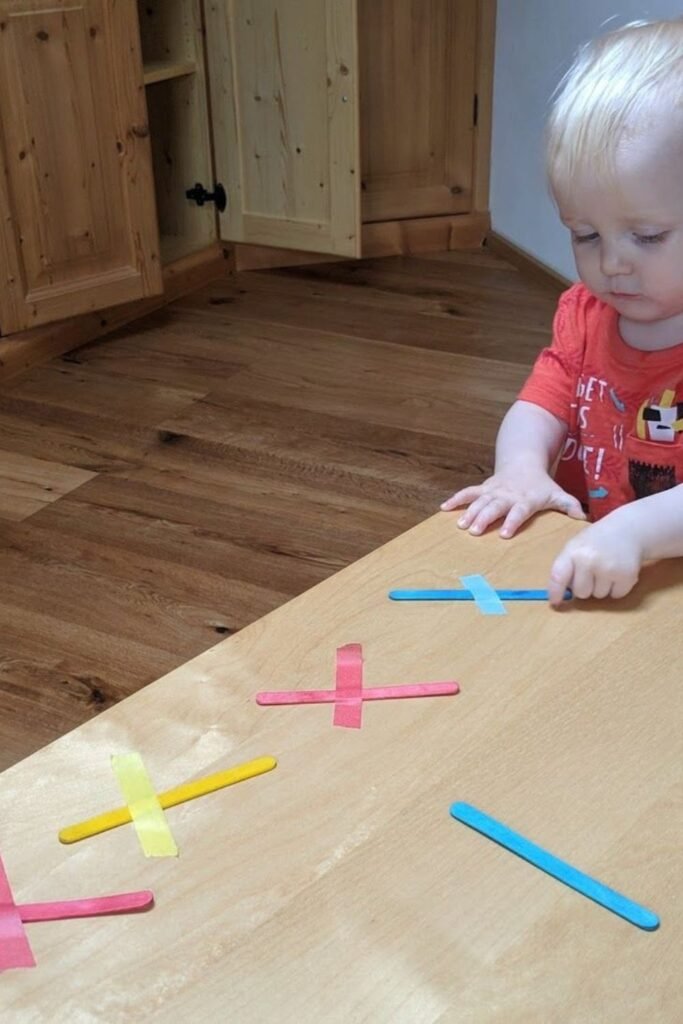
Sorting starts with simple choices. Place colored craft sticks on a low table and secure matching tape strips across each one.
Give your youngster a loose stick and show them how to press it against the same color. Small hands practice aiming and putting things where they belong.
Their eye coordination gets better when they look, compare and choose where it goes. At start keep the colors bright and restrict the choices so it doesn’t feel too much.
Good for peaceful time inside when you want to do something calm but focused. Do not celebrate perfection celebrate tries.
Games like these that include matching are a fun way to start learning without making it feel like a lesson.
Mini Climber
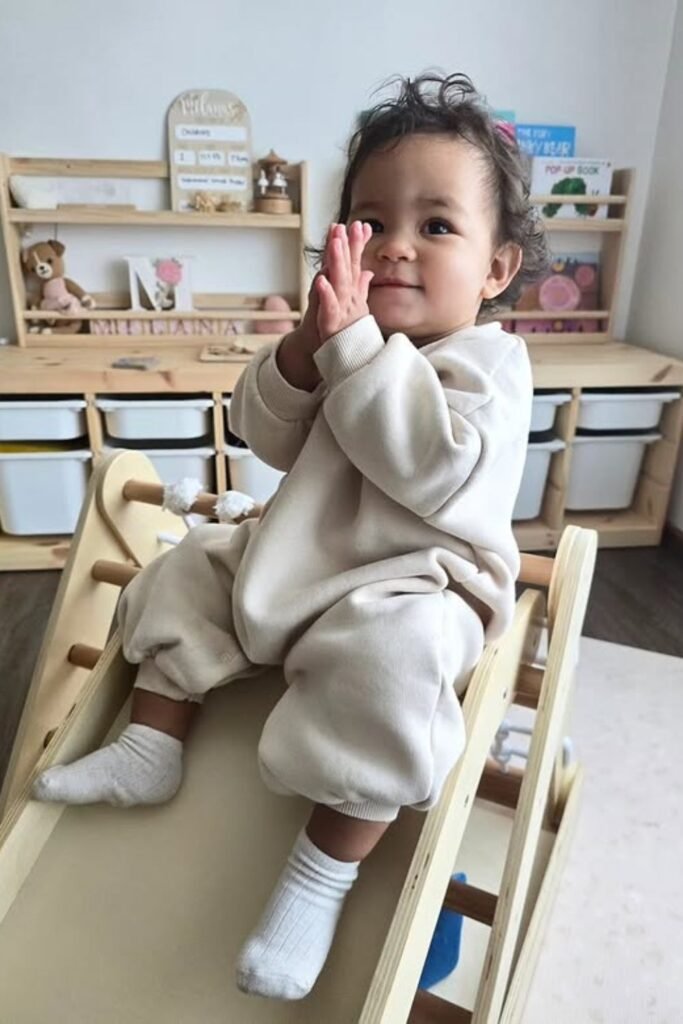
Confidence grows when little feet learn to climb safely. A small indoor slide or low climbing frame.
Gives your one-year-old a safe way to practice climbing up and down. Put it on a soft surface and stay close by while they play with it.
Climbing is much better for your legs, core, and balance than playing on a level floor. Tell them to turn around and slide down with their feet first.
That simple move helps kids learn about their bodies and how to stay safe. Short sessions are great.
Since they keep it exciting and not boring. Indoor climbers are great for mornings when you have a lot of energy but can’t play outside.
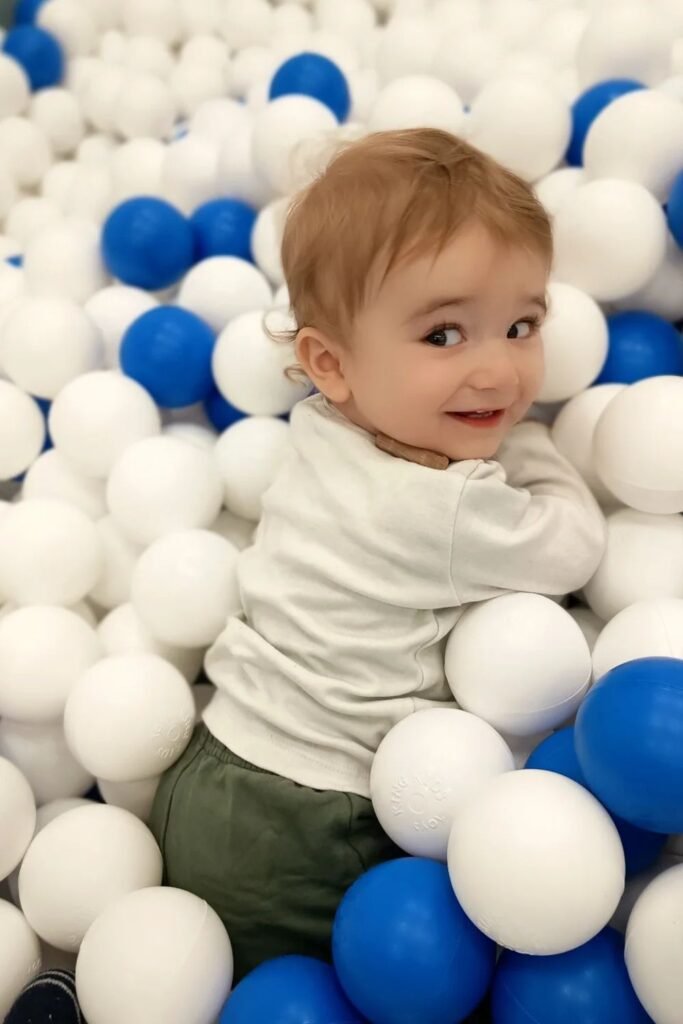
Ball Pit
Pure joy often looks like diving into a sea of plastic balls. A small ball pit at home gives your one-year-old.
A safe spot to crawl, roll, and bury little hands that doesn’t have any sharp corners or harsh edges.
Moving about inside shifting balls is a nice way to test your balance.
Every stride or crawl needs to be adjusted, which works the core muscles more than playing on a flat floor.
Put some bigger toys inside to make it an easy “find and grab” activity. On days when you can’t go outside, this is a great way to keep your energy up.
Put the pit in a corner to keep it stable, and continually watch it. This kind of sensory activity keeps bodies occupied and makes people feel better.
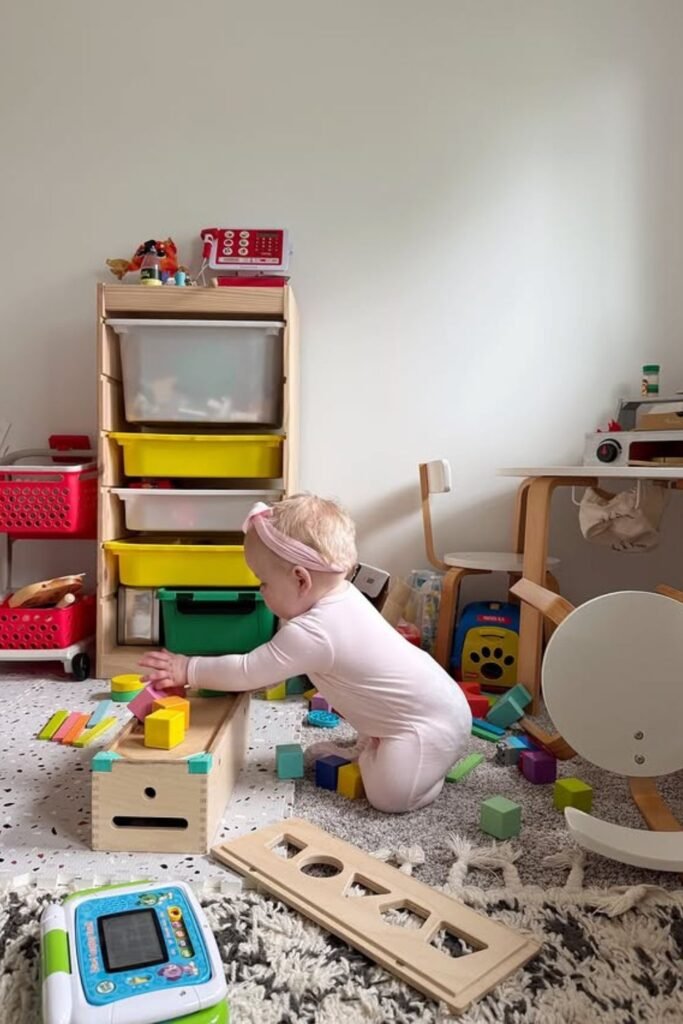
Block Station
Open-ended play shines when you create a simple building corner. Place chunky wooden blocks.
Put a low box or bench in front of your one-year-old so they can start stacking. No rules, no directions.
Simply look around. Stacking, knocking down, and reconstructing things quickly teaches cause and effect.
Little hands learn how to control things as their eyes watch for equilibrium. Set up the game so that falling bricks don’t get in the way.
Works great when you need to be close for a few minutes during solo playtime. Change the shapes of the blocks every week to keep things interesting.
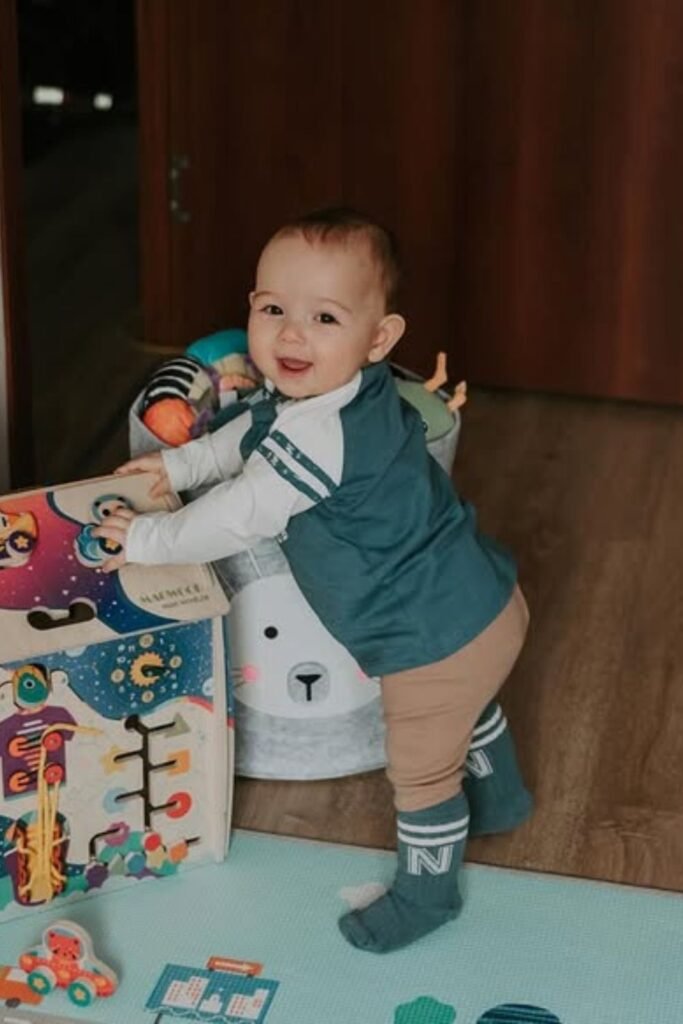
Push Stand
Furniture becomes a practice tool when tiny legs start testing balance. A sturdy activity cube or solid box.
A wall gives your one-year-old something safe to grasp on to while they pull themselves up and cruise sideways.
Standing play is better for your thighs, ankles, and core muscles than sitting down. Instead of rushing ahead, tell people to take slow side steps.
Put your child’s favorite toys on top to encourage them to reach and transfer their weight. Works best on mats that don’t slip, so young feet feel safe.
Stay close, but don’t worry about little wobbles. Every time they pull up without help and see that they can maintain upright on their own, their confidence builds.
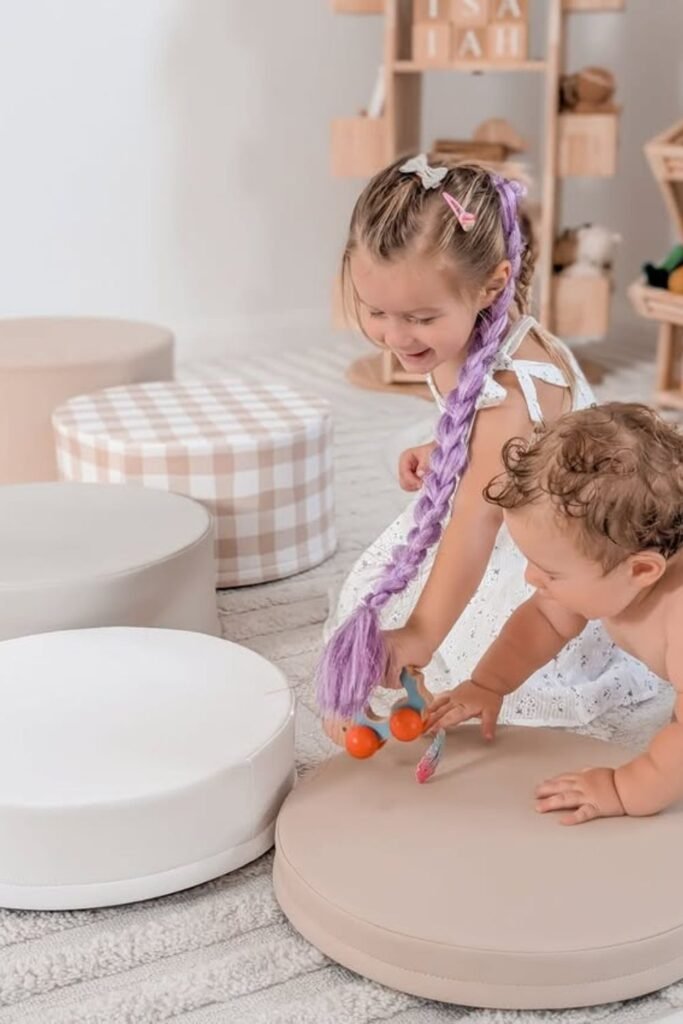
Cushion Steps
Living room cushions can turn into a mini obstacle course in minutes. Spread firm floor cushions or ottomans a short distance apart.
And help your one-year-old crawl or walk from one to the next. Uneven surfaces are a safe way to test your balance.
Every time you shift your weight, your ankles and core muscles get stronger without you even knowing it.
At initially, make the spacing modest, especially for people who are just starting to walk. Put the setup on a rug so that nothing moves.
Older siblings can join in by showing how to take slow steps, which makes it even more fun. Great for when kids need to move but can’t go outside to play.
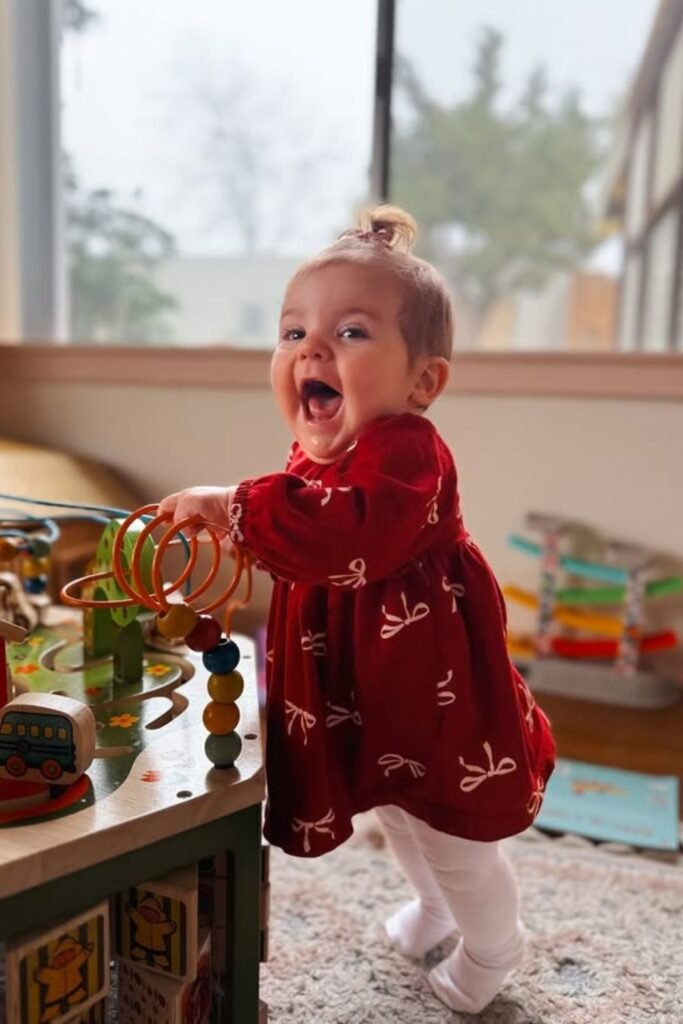
Bead Maze
Standing at a play table feels exciting because everything happens at eye level. A wooden bead maze gives your one-year-old something steady to hold.
While moving big beads back and forth. At the same time, the hands move, the eyes follow, and the equilibrium gets better.
Reaching across the table makes you adjust your weight, which softly builds up the leg muscles of early walkers.
If your youngster is still shaky, keep the table against a wall. As they move each bead, talk about the colors to help them learn language without putting them under strain.
Before you get too frustrated, short sessions are ideal. This kind of simple repetition helps with coordination in a way that feels like pure fun.
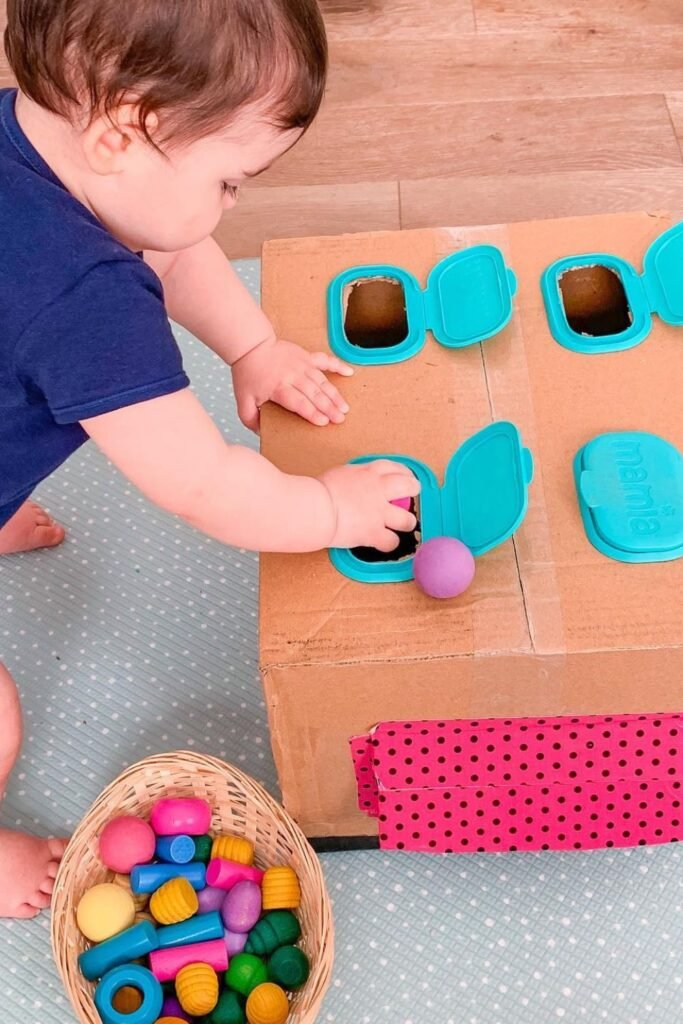
Drop Box
Few things satisfy a one-year-old more than putting objects in and taking them out again. Cut holes into a sturdy cardboard box.
And put flip lids or plastic covers on top. Give them big wooden pieces or big balls and let the dropping begin.
Dropping things is a simple approach to teach cause and effect and improve hand control. Take off the cover, put in the thing, and close the lid.
Do it again. Make sure the pieces are big enough so that no one chokes, and tape the edges down well.
Change what’s inside every week, like putting in balls one week and blocks the next, to keep interest up without having to build the whole thing again.
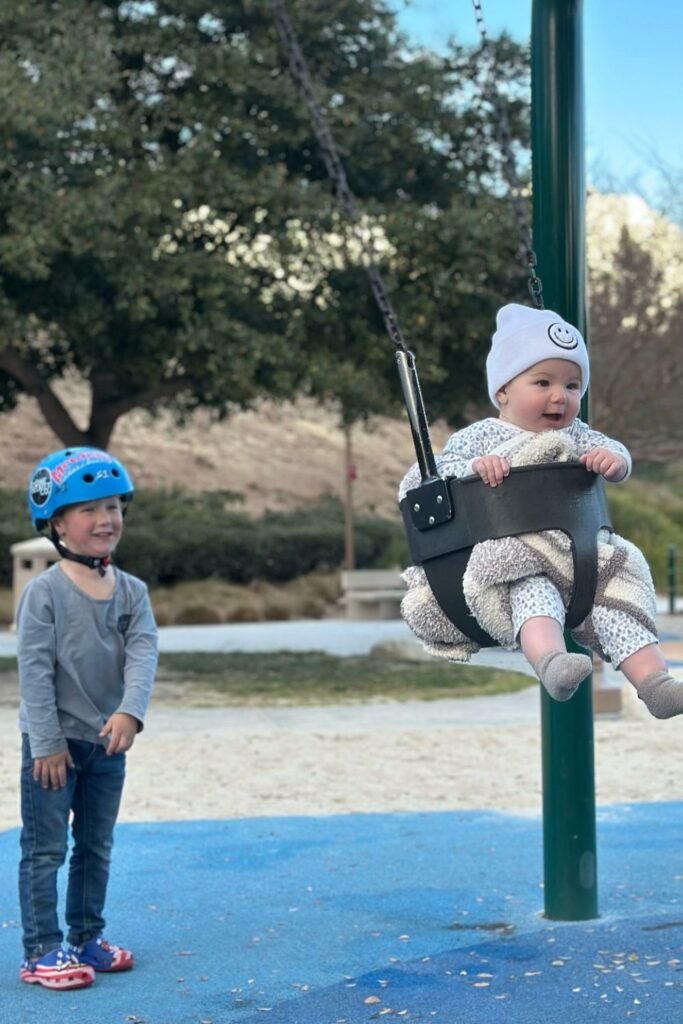
Park Swing
Pure laughter often starts with a gentle push. A bucket swing at the park gives your one-year-old safe support.
While feeling the air move. That back-and-forth action helps kids learn to balance and be aware of their bodies without them even knowing it.
At beginning, keep your pushes slow and steady. Look at their face for signs. A large smile means to keep going, while wide eyes may signal to slow down.
Outdoor air and moving in a rhythm can quickly settle down bad moods. Make sure they are comfortable so that the straps stay in the right place and stay close at all times.
Short swing sessions are great before naps or after snack time when your energy is constant but not too high.
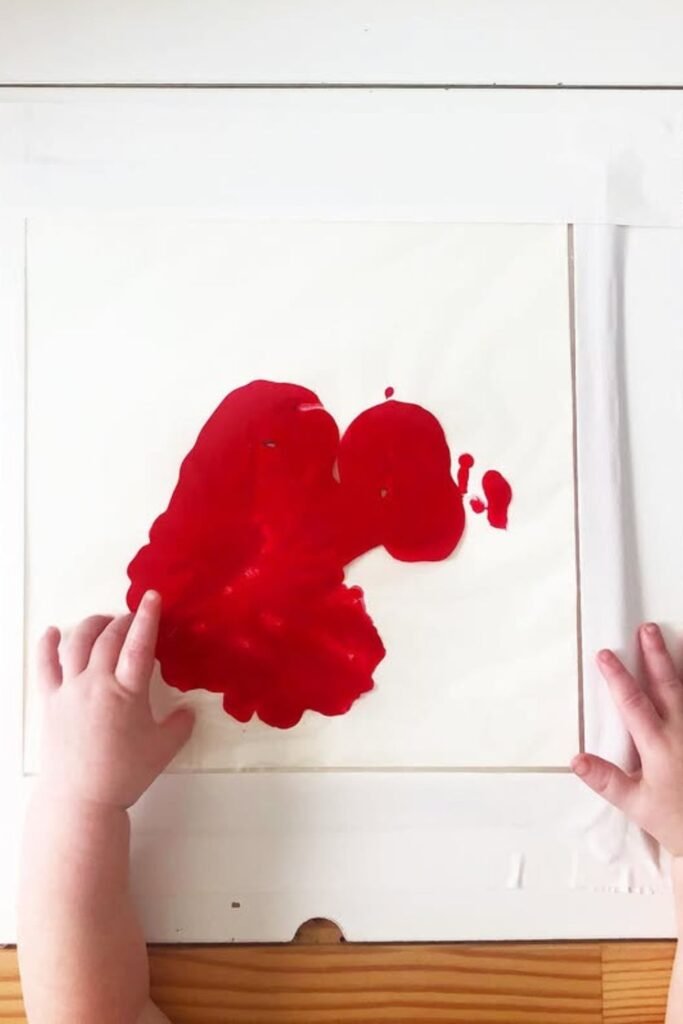
Paint Press
Bright color instantly grabs attention. Tape a large sheet of paper to the table and squeeze a small amount of washable paint in the center.
Put another sheet over it or slide it into a clear plastic sleeve so that young hands can press it without making a mess.
Pressing, smearing, and patting help kids learn about their senses and make cleanup easy. Big movements come from flat hands.
And small movements come from fingers. Keep the paint safe and stay close by in case your child wants to explore with their mouth.
Great for creative time inside when you want to make art without a mess. Short sessions make it fun, and the finished print is a nice memory.
Hanging Grab
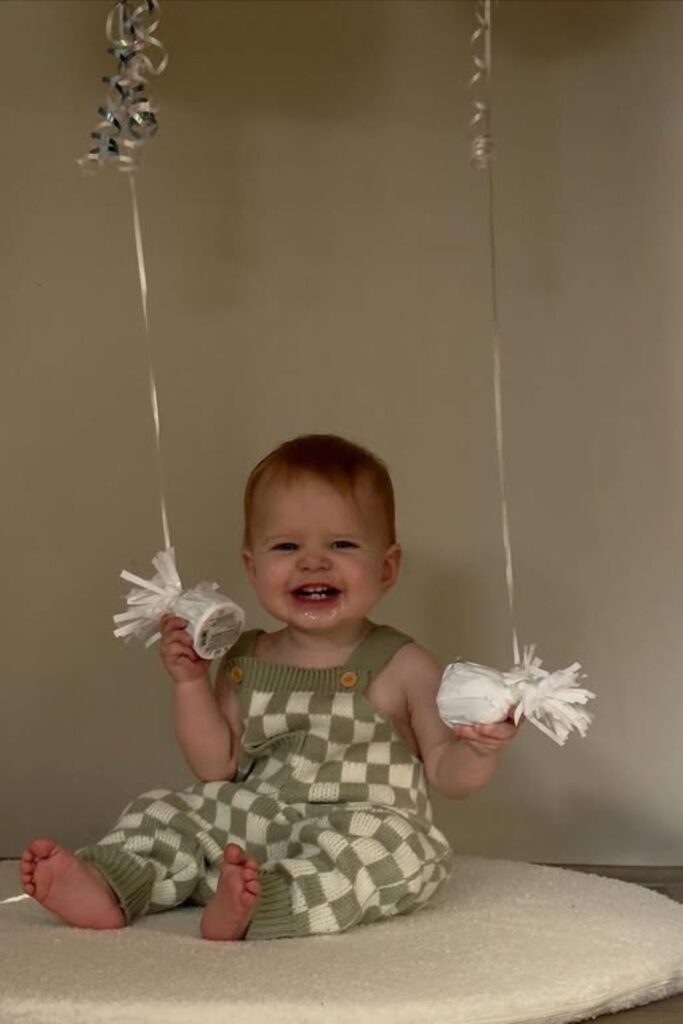
Floating objects instantly spark curiosity. Hang lightweight paper balls or soft wrapped items from the ceiling or a doorway.
Utilizing string to keep them at your child’s height when they are sitting or standing. Reaching up to tap, grab, or bat them strengthens your shoulders.
And helps you coordinate your movements. The thing swings away and offers another try when you move it gently.
Great for birthday mornings or easy indoor sensory play when you want to try something different but don’t have time to put up a whole game.
Watching them figure out how to move while sitting underneath them typically makes me smile the most.
FAQs
What activities help a one-year-old learn without feeling like a lesson?
Play that is basic and hands-on that enables your child explore on their own is best. Putting things in a box, stacking blocks.
Pushing a toy, or peeling tape all help kids learn actual skills including how to solve problems, balance, and coordinate their movements.
You don’t need flashcards or a set way to “teach.” At this age, doing things over and over again helps the brain grow.
How long should a one-year-old play with one activity?
At this point, people don’t pay attention for long. Some days you’ll receive two minutes, and other days you’ll get 10. Both are OK.
Instead of making them play for longer, switch up the activities and follow what your child wants to do. If they leave, it’s time to change things up.
One long session of focused play doesn’t function as well as short, frequent bursts of play throughout the day.
Hi, I’m Afaf! I’m a law student who loves writing about everyday life – from home projects and crafts to fashion, beauty, and parenting tips.
I’ve been writing for over a year, sharing ideas that are simple, practical, and easy to try. I write about things I find interesting and useful, whether that’s organizing a space, trying a new DIY, or finding activities to keep kids entertained.
My goal is to share helpful ideas without making things complicated. If it works in real life, I’ll write about it.
When I’m not studying or writing, I’m usually experimenting with new projects or scrolling for inspiration!