
28 Kids Shared Bedroom Ideas For 2026

When siblings share a room it often feels like the space is conspiring against you. There a constant shortage of room, belongings are perpetually mixed up.
And bedtime becomes a nightly battle. You might try moving furniture around, investing in storage solutions or even redecorating, but the underlying issues persist.
The reality is, most shared bedrooms are poorly designed because they don’t consider how children actually use the space.
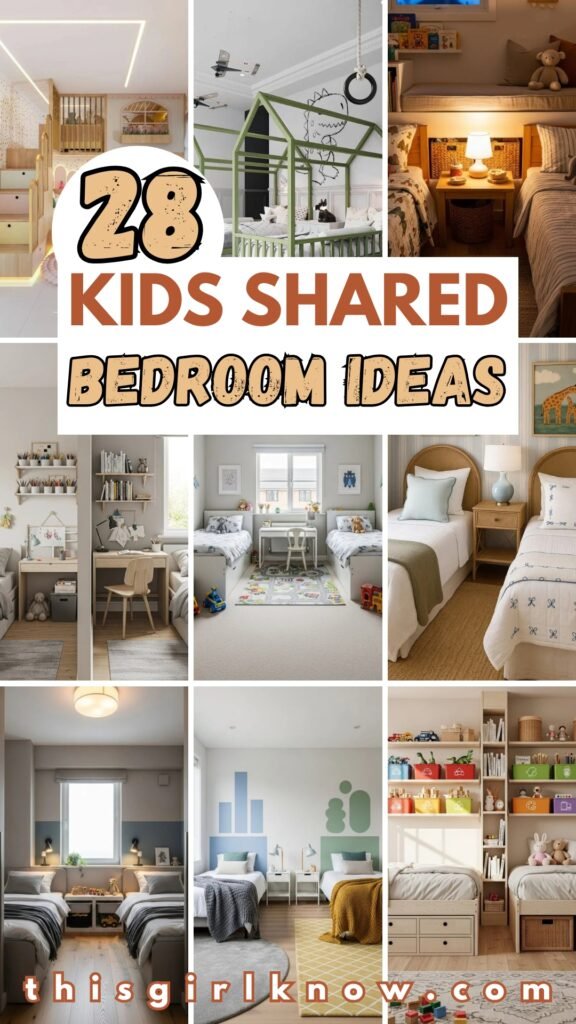
In this article, you’ll find 28 small kids Kids Shared Bedroom that feel fun, organized, and modern for 2026.
What Is The Best Layout For A Kids Shared Bedroom?
The bed placement is the foundation of a well-designed room; everything else follows.
Get the beds wrong, and the room will always feel off-kilter, no matter how much you spend on accessories.
In a smaller space, consider pushing beds against the walls or opting for bunk beds to maximize floor area.
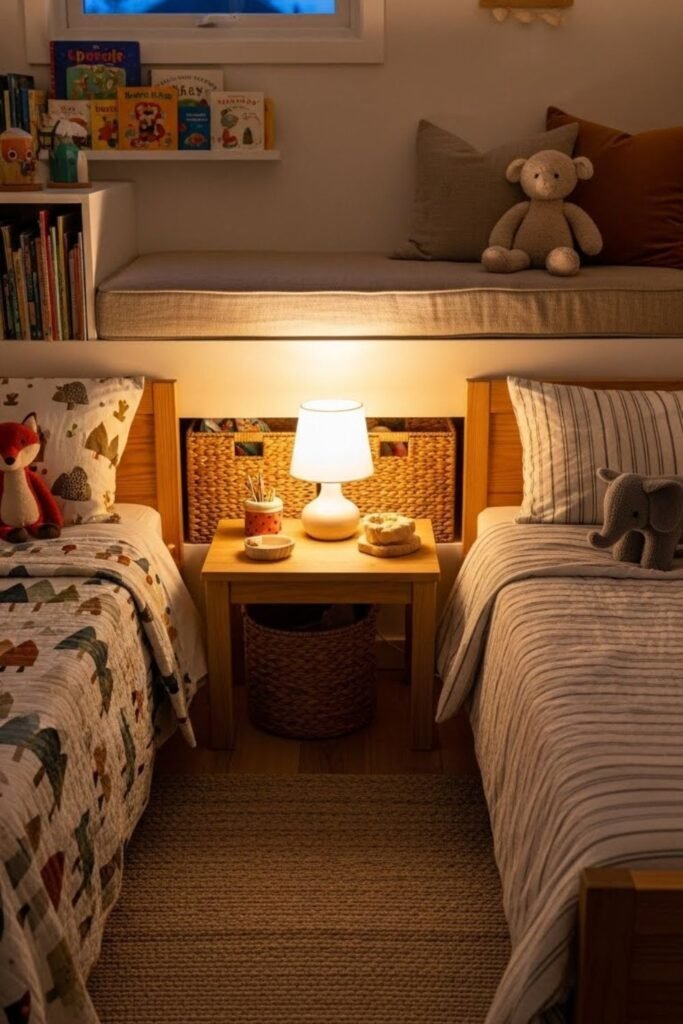
If you have a bit more room to work with, a nightstand or shelf between the beds can help diffuse potential sibling squabbles.
Save this article for later!👇👇👇
How Can You Give Each Child Privacy In A Shared Room?
Privacy isn’t about isolation it’s about providing each child with a sense of ownership. When children share everything, conflicts tend to arise.
Employ straightforward dividers shelves, curtains or even the arrangement of beds to establish boundaries.
Ensure each child has their own storage, their own light source and a designated personal area. If one child requires quiet, position their bed further from the door or play area.
When children feel they possess personal space the overall atmosphere of the room becomes more serene for all.
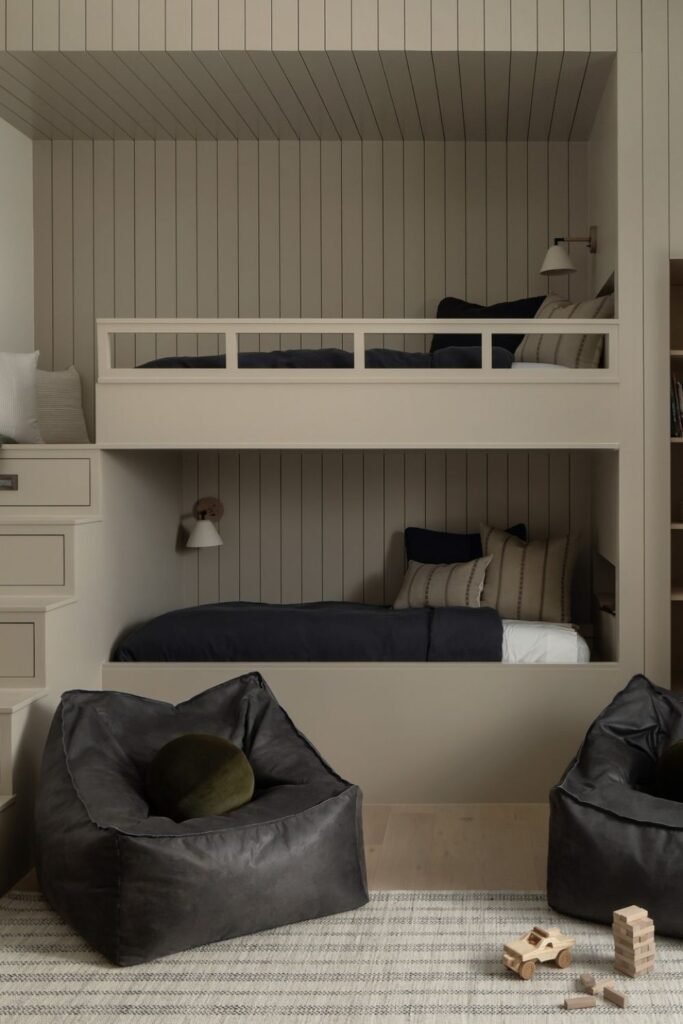
Calm Bunks
Built-in bunks bring order without making the room feel crowded. Sleeping stays contained in one vertical zone, which frees the floor for play and movement.
Individual lights and frames that fit snugly around each child’s bed allow them to settle in without bothering their sibling.
The storage steps serve a dual purpose: they hide away toys and clothes, and they provide a secure way for kids to climb.
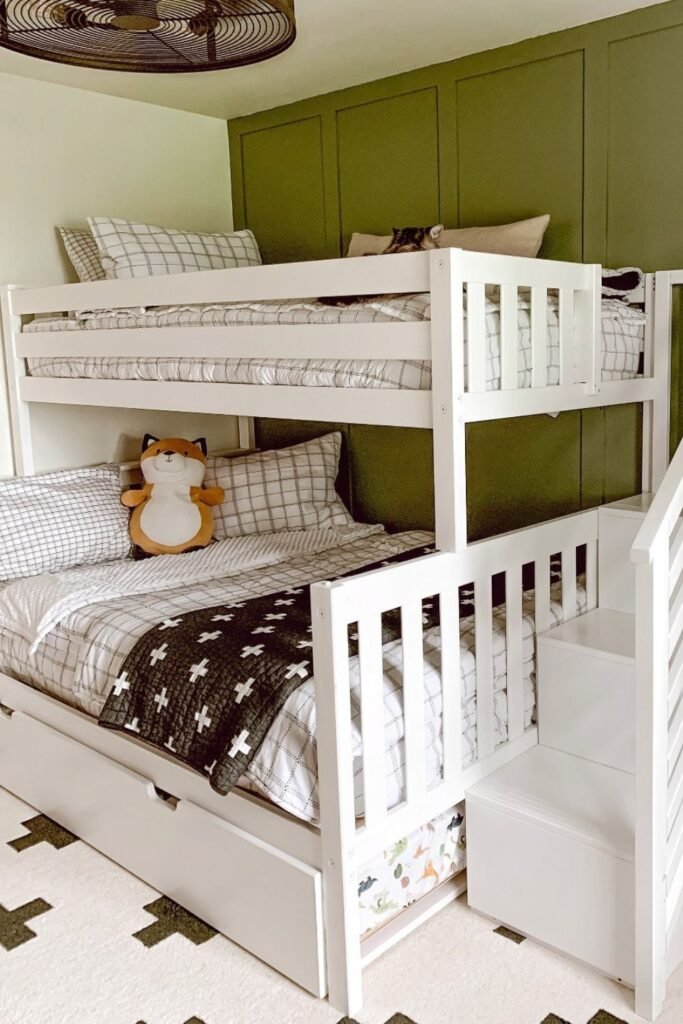
Layered Sleep
Vertical sleeping solves more than space problems. One child stays grounded while the other gets a tucked away upper spot which naturally reduces bedtime distractions.
The broad stairs offer a sense of security especially for little ones, and provide convenient resting spots.
This arrangement works well in shared rooms and where children share similar schedules but still need defined personal spaces for the sleep.
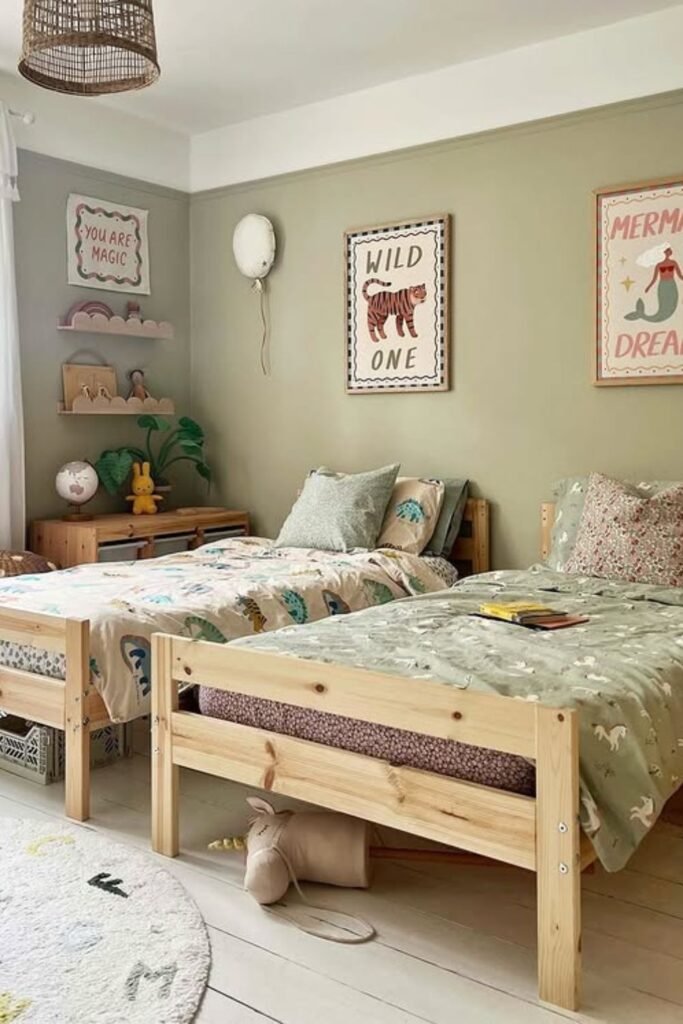
Side Twins
Parallel beds work well when both kids need equal footing. Nobody sleeps higher nobody feels tucked away and morning routines stay smooth.
Keeping the beds a bit separated establishes a subtle division, yet maintains a sense of togetherness.
Artwork hung above each bed gives children a way to personalize their space without going overboard with the specific themes.
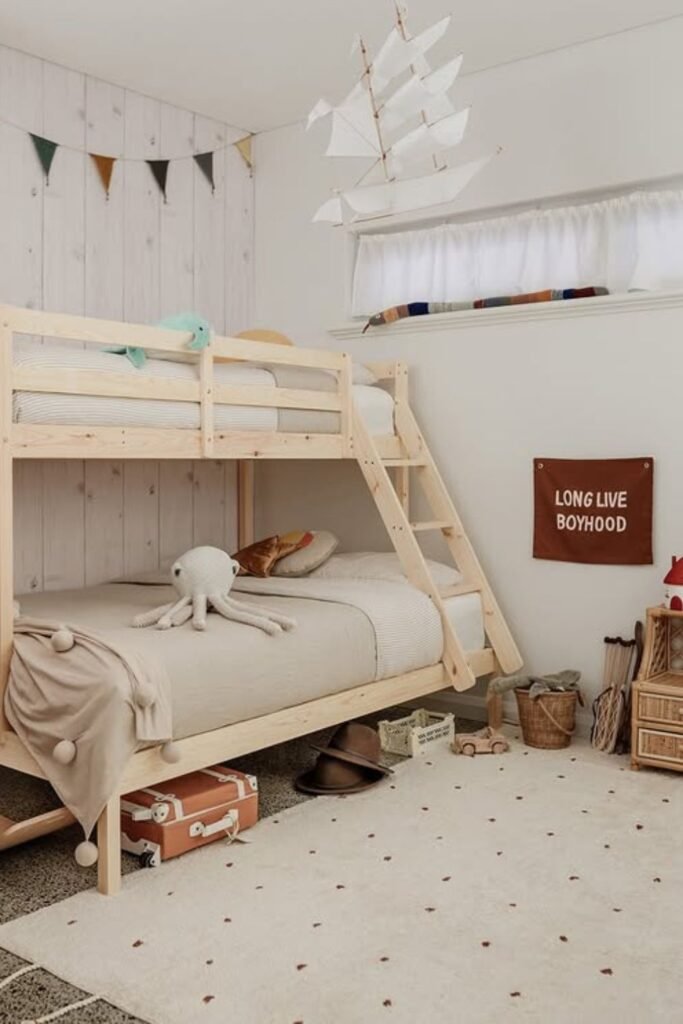
Playful Bunks
Open floor space changes how kids use a shared room. Lifting both beds creates room to move, build and play without stepping over toys.
Simple ladders are ideal for children who are already comfortable with climbing and the open design prevents the room from feeling cramped.
This arrangement is perfect for energetic children who use their bedroom for both sleeping and daytime play.
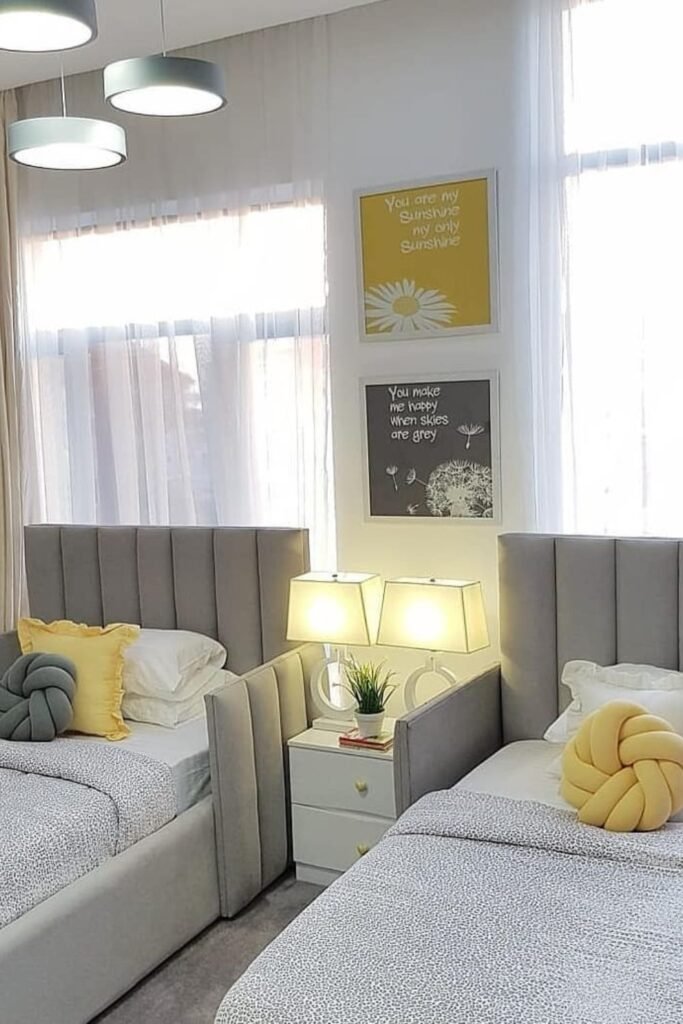
Shared Frames
Sleeping side by side feels easier when each bed still has its own outline. Framed beds create visual separation without cutting the room in half.
Children have a natural sense of their personal space, which helps contain the chaos of bedtime and the inevitable morning clutter.
Keeping both beds low is particularly effective for younger siblings who tend to shift around in their sleep.

Equal Ground
Nothing sparks arguments faster than one bed feeling better than the other. Matching beds at the same height remove that problem instantly.
Every child experiences the same level of comfort the same gentle illumination and the same feeling of being valued.
A shared nightstand maintains equilibrium even as personal belongings find their places on either side.
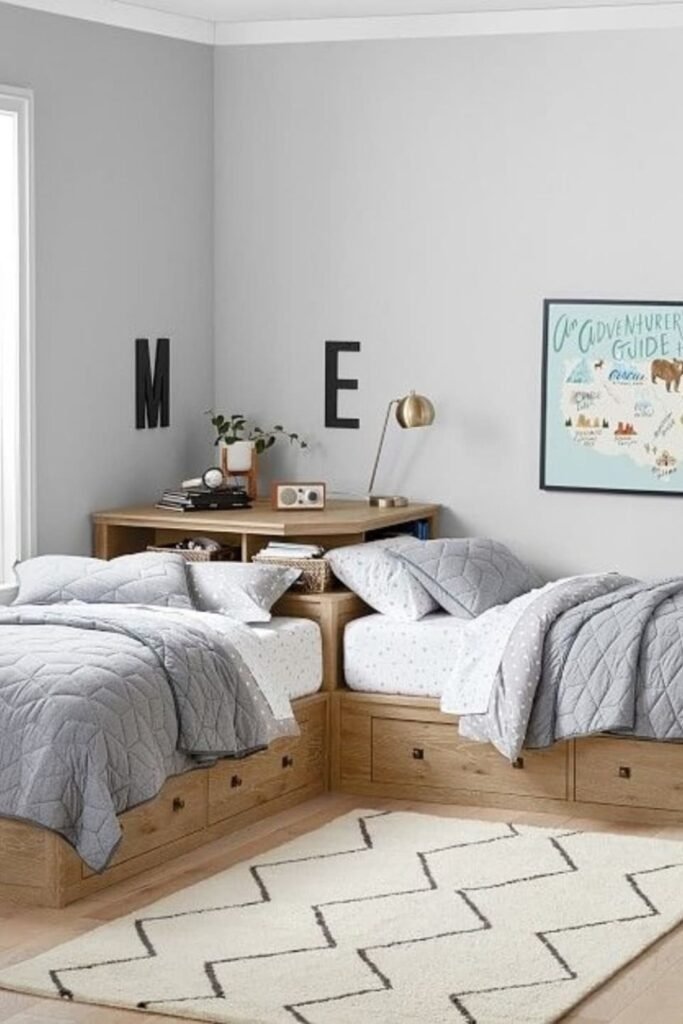
Corner Twins
Corners often go unused but turning them into sleep zones changes everything. L shaped beds give each child their own direction.
This design inherently reduces eye contact noise or those pesky bedtime interruptions.
The integrated drawers beneath the beds manage clothes and toys eliminating the need for additional furniture.
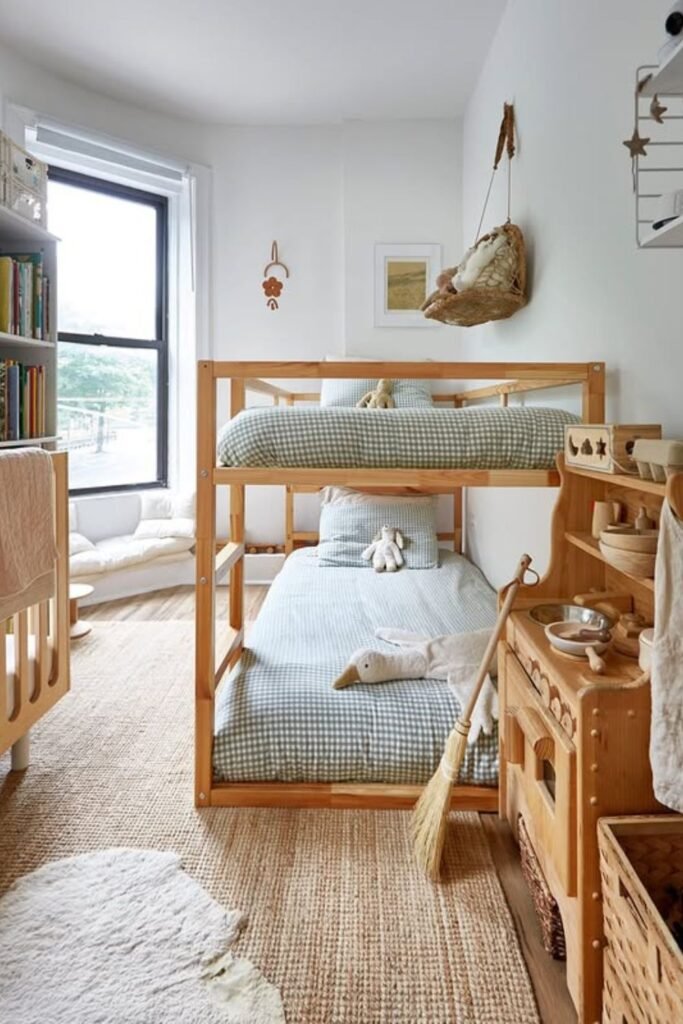
Vertical Calm
Tall shelving and stacked beds turn a narrow room into a calm usable space. Sleeping stays centered while storage and play hug the walls so nothing feels crowded.
The bottom bunk offers a sense of security for little ones, but the upper bunk is perfect for a child who ready to spread their wings.
Using soft, natural materials contributes to a calm atmosphere avoiding a cluttered sensation.
Soft Separation
Each bed becomes a quiet personal cocoon which helps kids wind down faster and feel less watched.
Lightweight materials provide an open feel yet they effectively minimize distractions. Wall-mounted lights provide a personal reading place for one child.
This approach is particularly beneficial for children who are light sleepers or for siblings sharing a room who desire their own peaceful environment when it’s time to sleep.
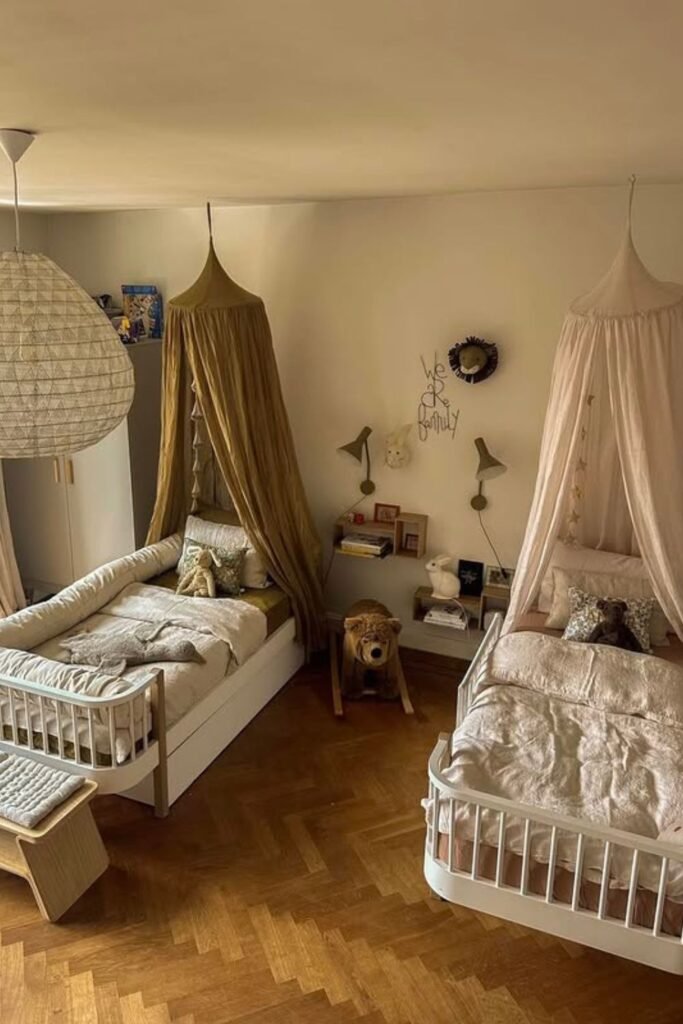
Built-In Balance
Walls can do the separating without closing the room off. Recessed shelving between the beds gives each child a clear boundary while keeping everything open and connected.
Personal belongings remain within reach and the space stays tidy, preventing anyone from feeling hemmed in.
The beds are positioned symmetrically ensuring fairness and the shared central area fosters relaxed interaction throughout the day.
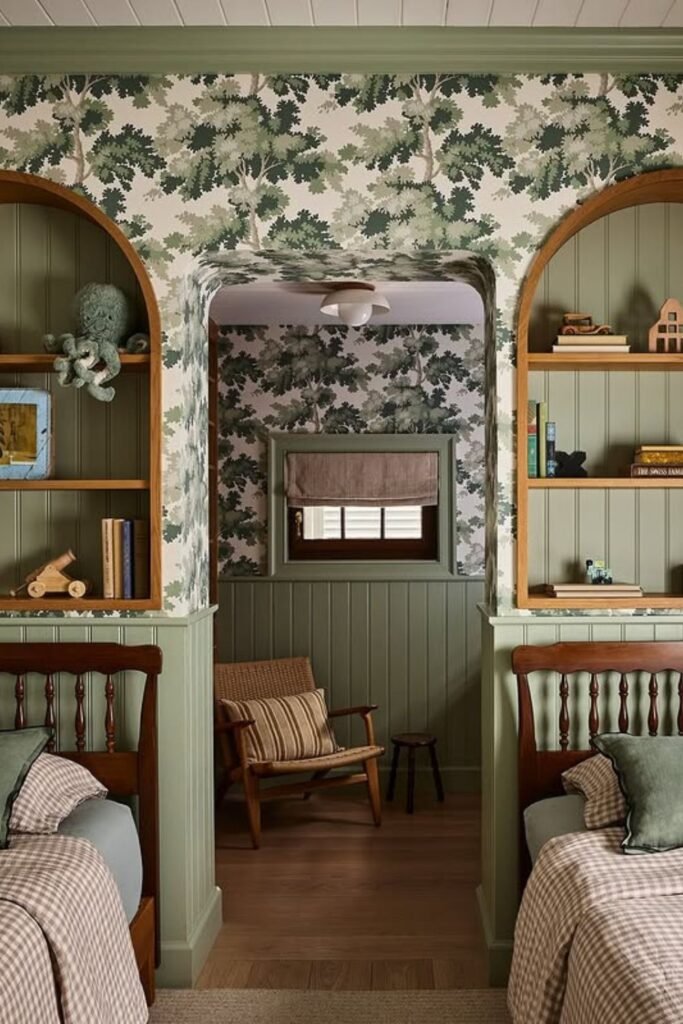
Gentle Zones
Soft colors can do the dividing without adding barriers. Each bed feels personal through wall details, bedding and initials even though both sit close together.
A shared nightstand creates a sense of equilibrium in the room providing space for personal belongings on either side.
This design works well for smaller children who often find comfort in sleeping next to a sibling yet still benefit from visual markers that designate their individual space.
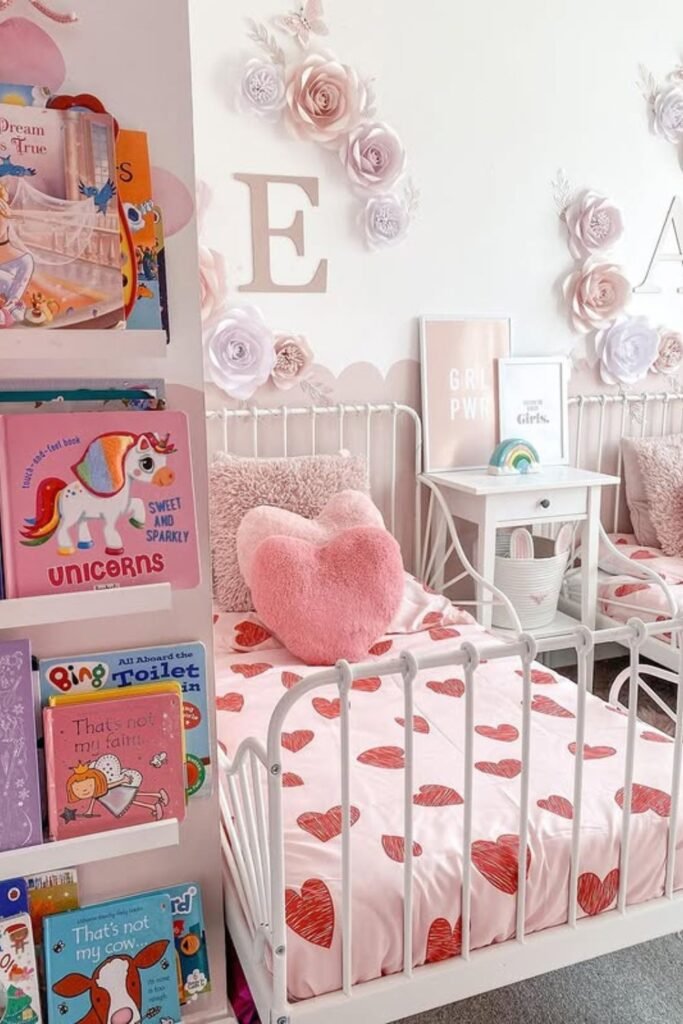
Balanced Twins
Symmetry fosters tranquility in shared spaces. Matching beds shelves, or lights might help eliminate the subtle rivalry that sometimes develops among children over possessions.
Each youngster gets the same storage space for their comfort items along with a visual cue designed to nip any and potential arguments in bud.
Small personal touches like initials or special pillows can provide a feeling of ownership without upsetting the overall balance.

Private Nooks
Built in alcoves turn shared sleeping into separate experiences. Each child gets the tucked away nook that feel quiet or personal even though the room stays open.
Having books and comforting objects within easy reach allows children to find their own calm. Gentle lighting by each bed minimizes disruptions during the night.
This method is particularly effective for siblings sharing a room especially when they want clear boundaries to feel at ease and safe while they sleep.

Quiet Twins
Soft shapes and low beds change how kids settle into sleep. When both beds sit close to the ground the room feels safe and calm not busy or competitive.
Built in shelves tucked under each headboard offer a tidy storage solution, eliminating the need for additional furniture.
A central light fixture provides a sense of equilibrium or ensuring both shared and personal comfort.
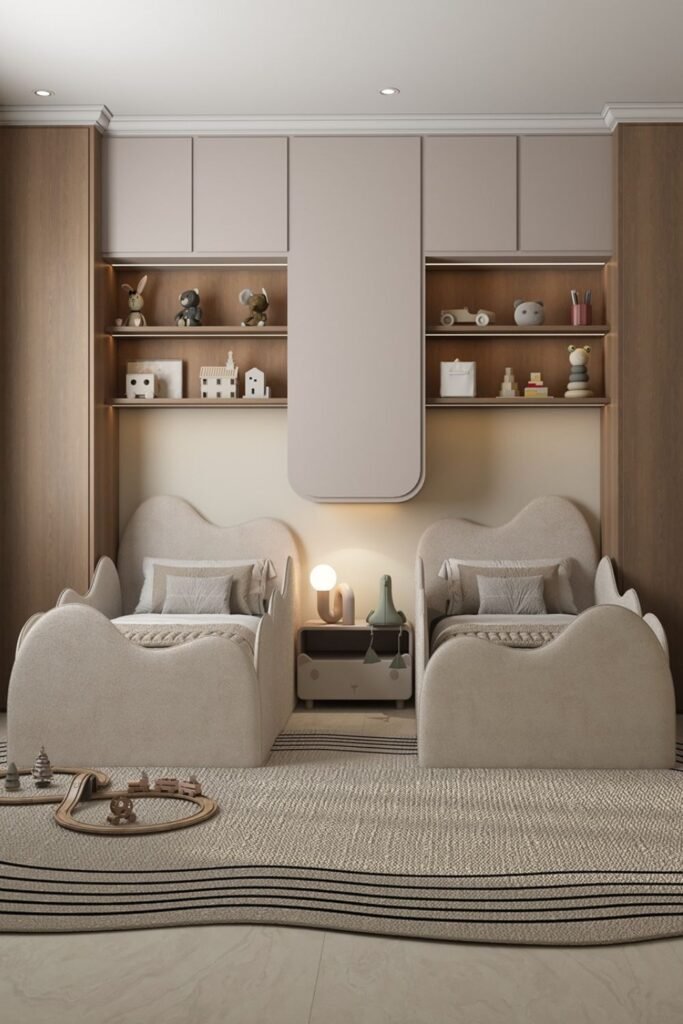
Zoned Livi
Light strips and built-in levels quietly tell kids where each activity belongs. Sleeping stays tucked to the sides studying gets its own stretch and play naturally settles in the center.
Raised platforms offer a way to the divide space without the need for physical barriers allowing siblings to transition between activities without constant friction.
This design is particularly effective for shared rooms that must accommodate study relaxation and play within a single area.
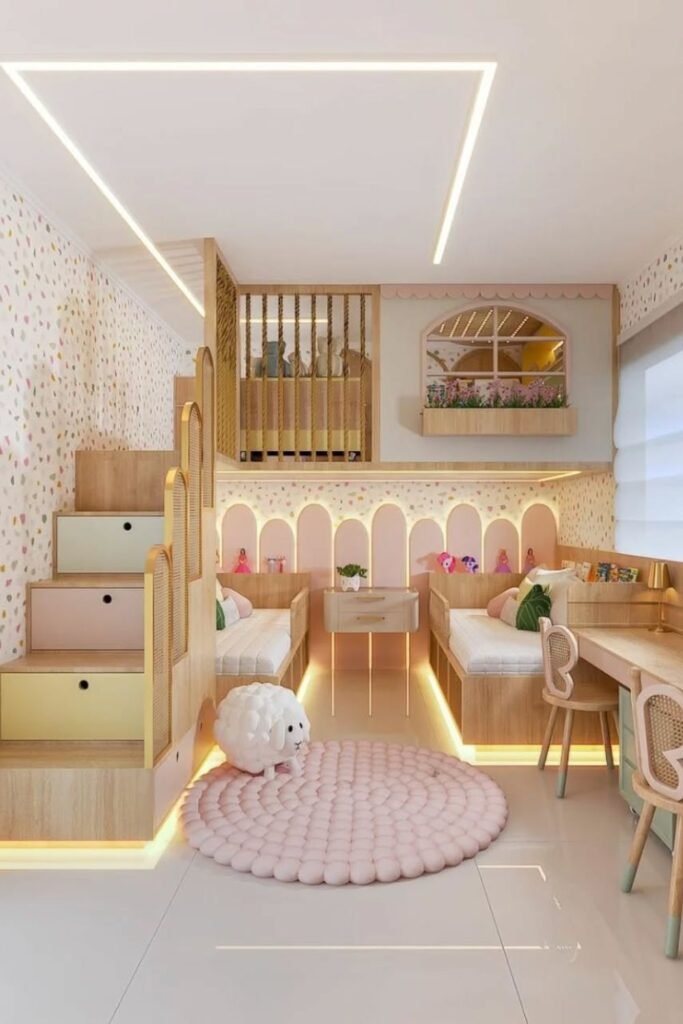
Floor Comfort
Sleeping low can ease tension in a shared room. One bed stays grounded while the other remains raised which naturally suits kids with different comfort needs.
Floor-level bedding offers a sense of security and comfort particularly for little ones or those who toss and turn.
This approach is ideal for smaller spaces when adaptability is key providing youngsters with a tranquil environment to settle down in the evening.
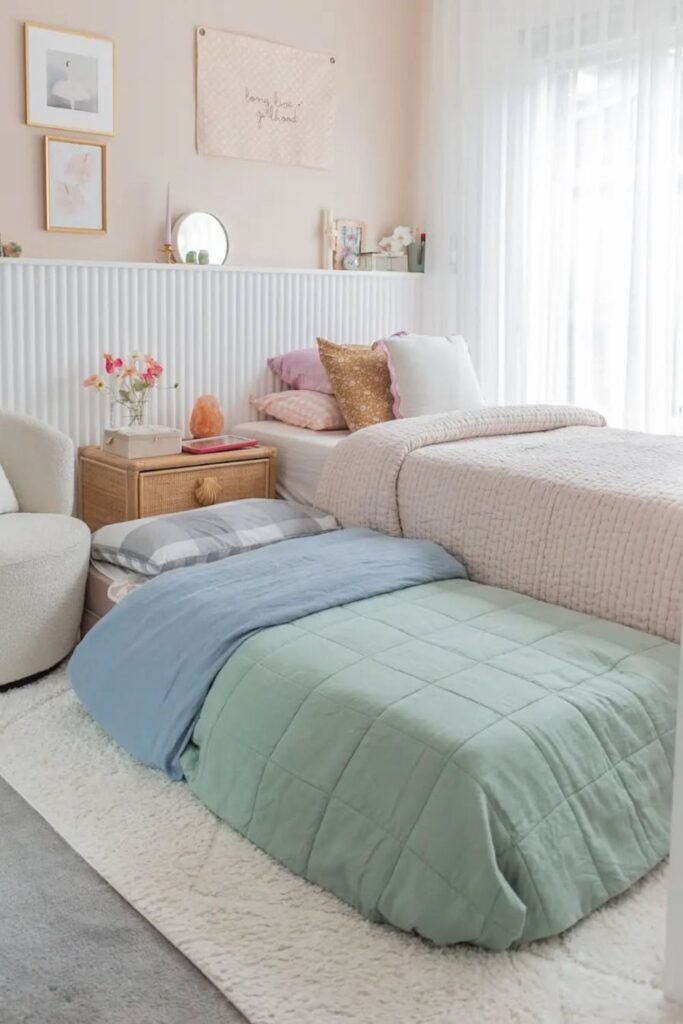
Framed Privacy
Wood slats create separation without cutting off light or air. Each bed feels enclosed enough to be personal yet the room still stays connected and open.
The upper sleeping area offers a sense of seclusion and yet the lower bed remains readily accessible and quiet.
This arrangement is ideal for older children who crave privacy or yet still share daily activities and common areas.
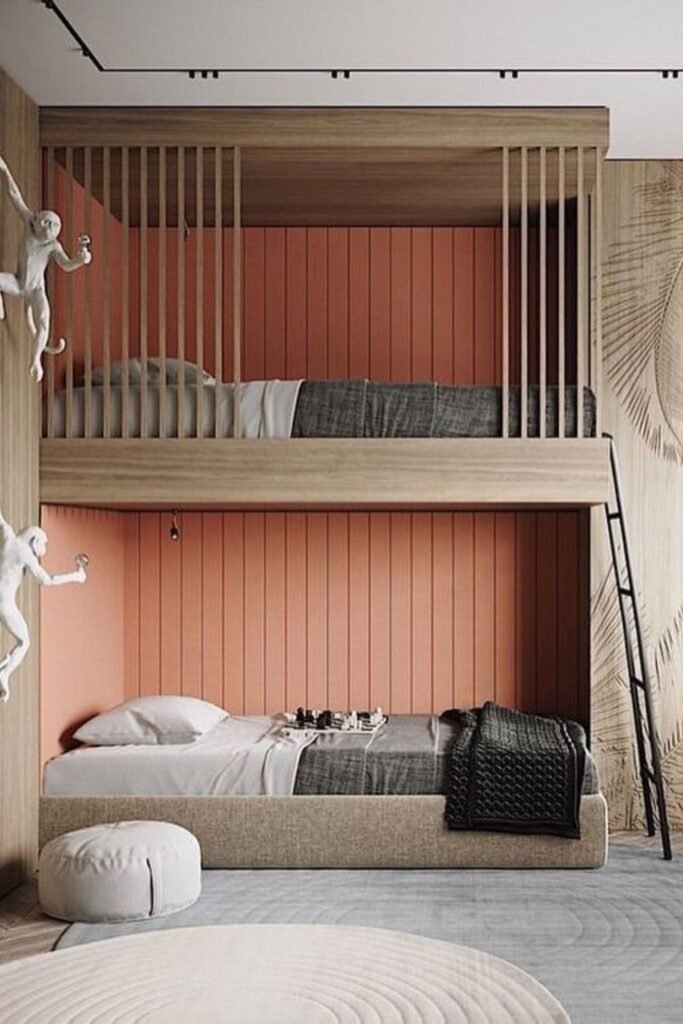
Open Bunks
Breathing room matters just as much as sleep. Open sided bunks keep kids close without making the room feel heavy or boxed in.
The lower bunk is perfect for little ones and while the upper bunk offers a sense of privacy without making them feel cut off.
This arrangement is particularly effective in sunny rooms or where the natural light helps to harmonize the space for both sleeping and daily activities.
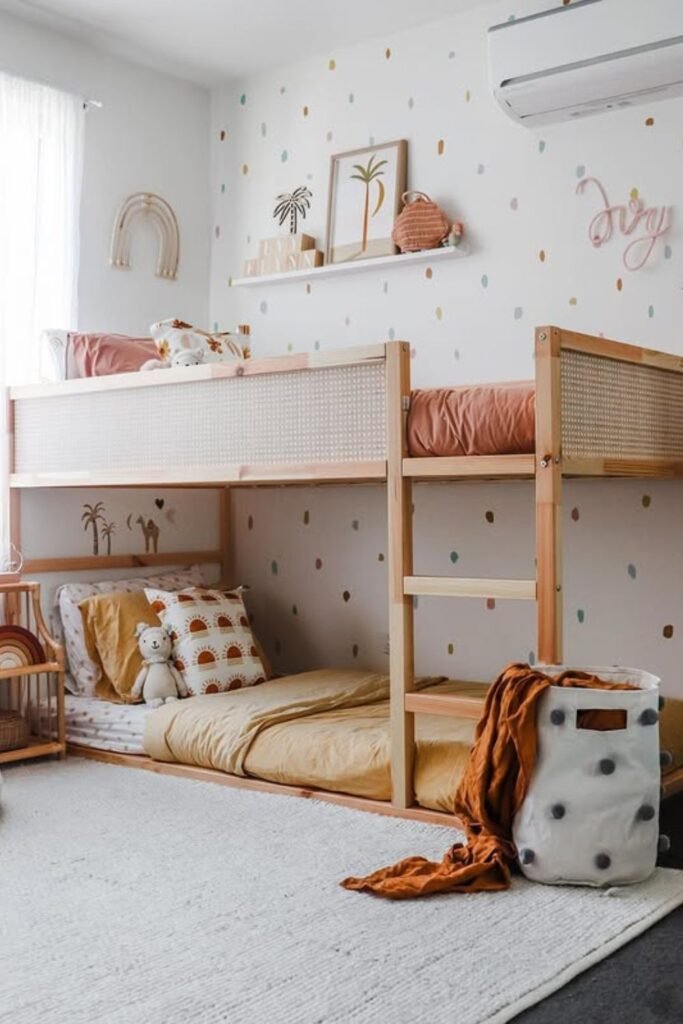
Personal Balance
Monograms instantly settle the who owns what question. Each bed carries its own identity while the room stays visually calm and shared.
Spacing the beds allows for some personal space perfect for getting dressed and reading or just enjoying a bit of quiet.
This setup works well for siblings who crave individual attention while still appreciating a room that feel mature respectful or rather than childish and cramped.
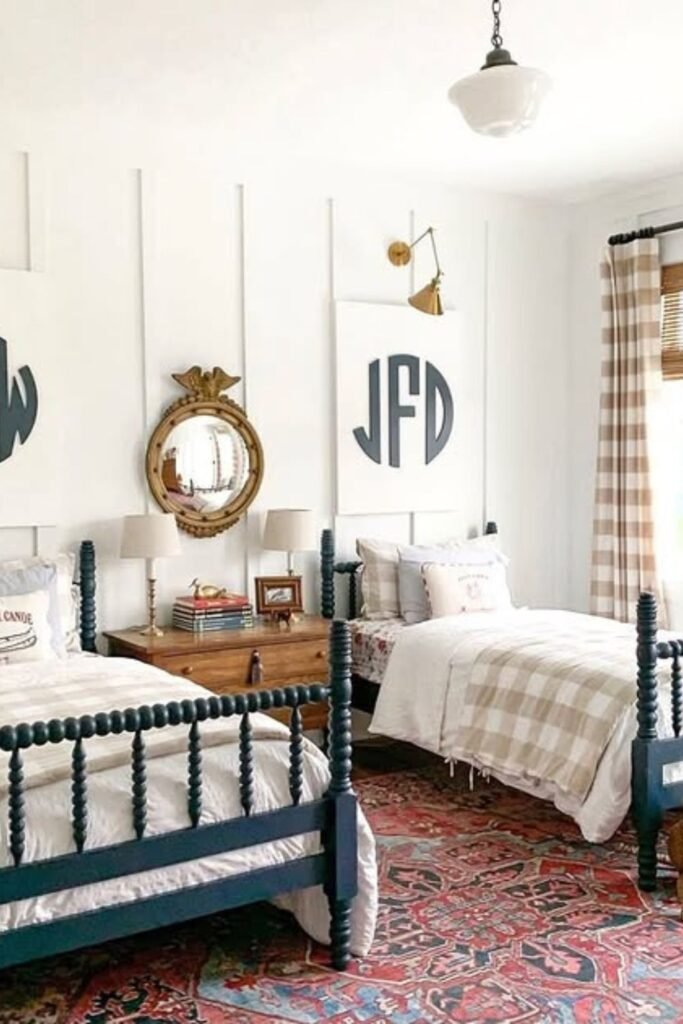
Cozy Hideaway
Canopies change how kids experience bunk beds. The fabric creates a quiet tucked in feeling that helps sensitive sleepers relax faster.
A youngster enjoys a private place up top and while the lower bed remains accessible and safe.
This arrangement is ideal for siblings sharing a room providing the extra comfort and isolation they need to drift off to sleep soundly.
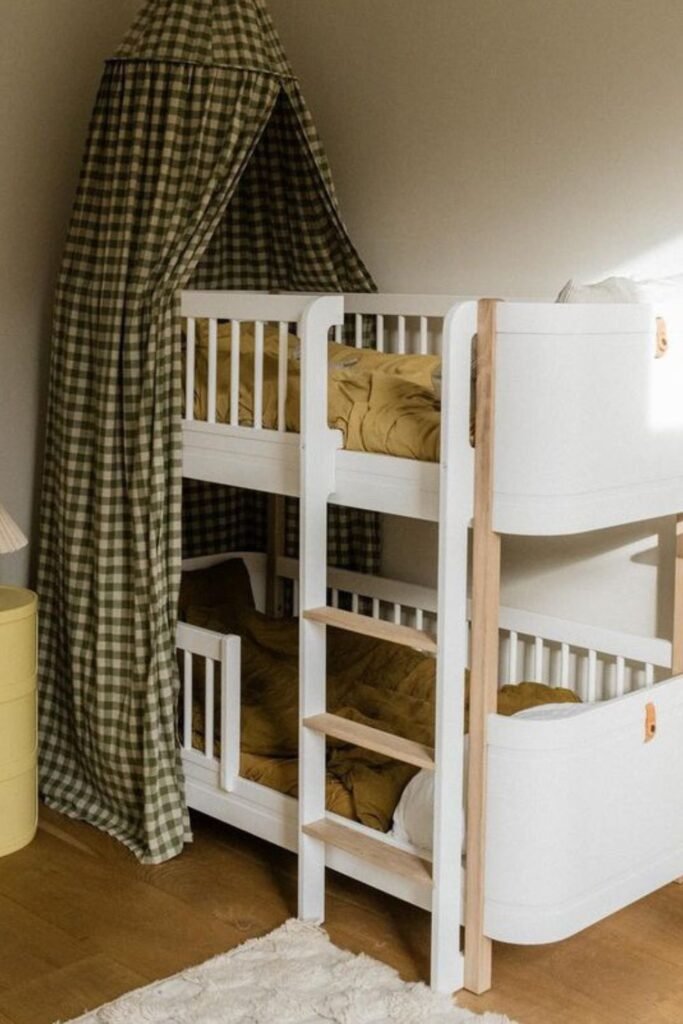
Twin Towers
Each child gets a clear sleep zone with walls that block noise and movement which helps everyone settle faster.
Ladders remain distinct and preventing bedtime chaos. Elevating both beds opens up the rooms center for play and getting dressed.
This arrangement work particularly well in the larger shared spaces and offering children a sense of the privacy while yet enjoying their sibling presence.
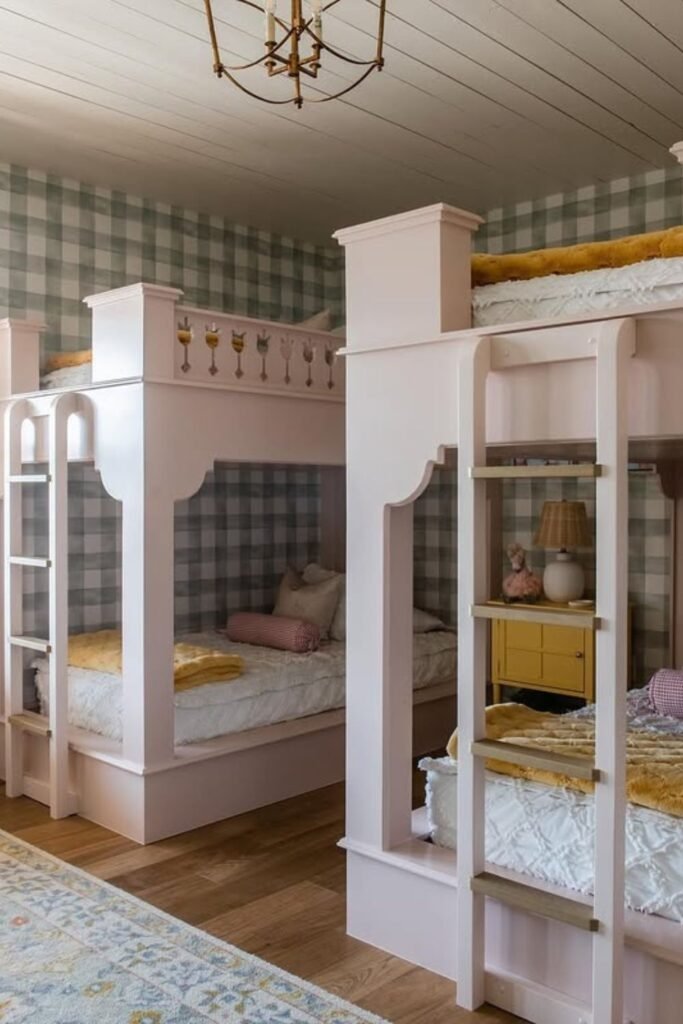
Gentle Symmetry
Soft matching maintains a tranquil atmosphere in common spaces, avoiding any sense of artificiality. A near bed sit offering comfort while also allowing for personal space.
Coordinating lighting and headboards can help avoid any underlying competition while varied artwork allows each child to feel seen.
This arrangement is particularly effective for the younger siblings who thrive on a predictable environment and gain tranquil harmonious space is not overly stimulating.

Rotating Zones
When children share a room, it can feel unfair if one child constantly gets the better spot. Rotating zones address the issue silently.
The sleeping arrangements stay the same, albeit the extras window access, desk positioning and reading nooks get shuffled around every few months.
Teaching youngsters adaptation helps prevent feelings of unfairness from developing.
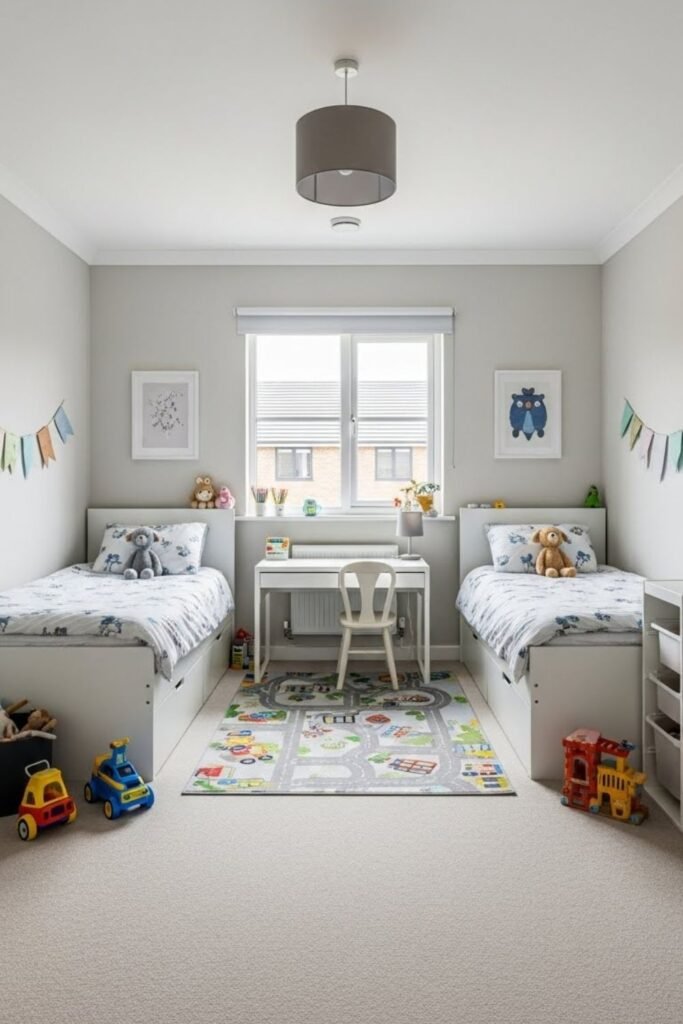
Daytime Split
Nighttime sharing feels easier when daytime needs stay separate. One side of the room supports play and creativity.
And the other supports calm activities like reading or homework. Beds remain in their usual spots but the everyday routines have room to expand.
Children, in turn, gravitate toward the space that suits their current state of mind and rather than squabbling over a single shared area.
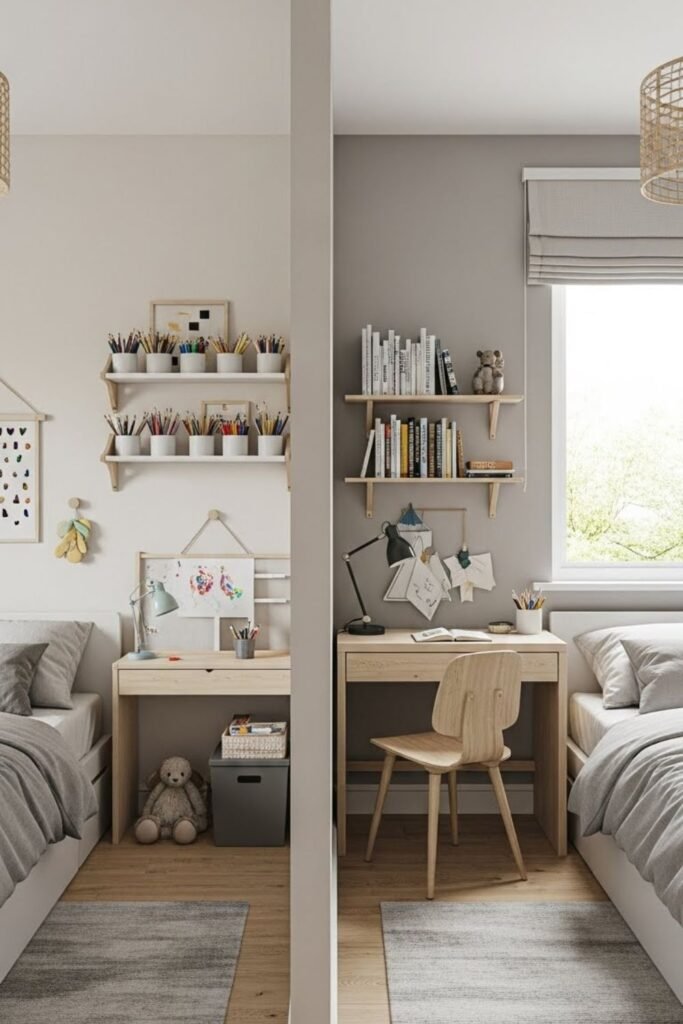
Storage Identity
Arguments often start inside drawers, not beds. Giving each child clearly defined storage zones solves that problem fast.
Distinct drawer designs, varied basket materials and shelf elevations contribute to a sense of identity while avoiding visual disorder.
Children are better able to locate items thereby minimizing impulsive actions and subsequent accusations.
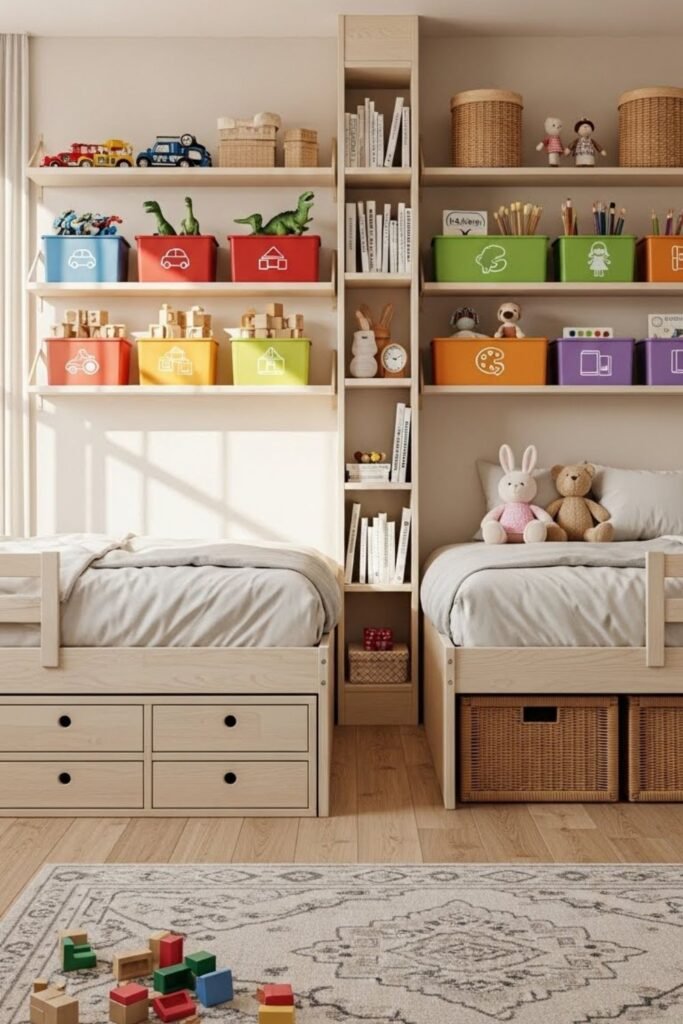
Visual Anchors
Shared rooms feel less overwhelming when each child has a visual anchor. One strong element like a wall color block, rug shape or ceiling detail signals personal territory.
Children instinctively gravitate toward their chosen focal point which minimizes distractions and keeps things tidy.
This approach works well for imaginative children who are the particularly responsive to visual stimuli.
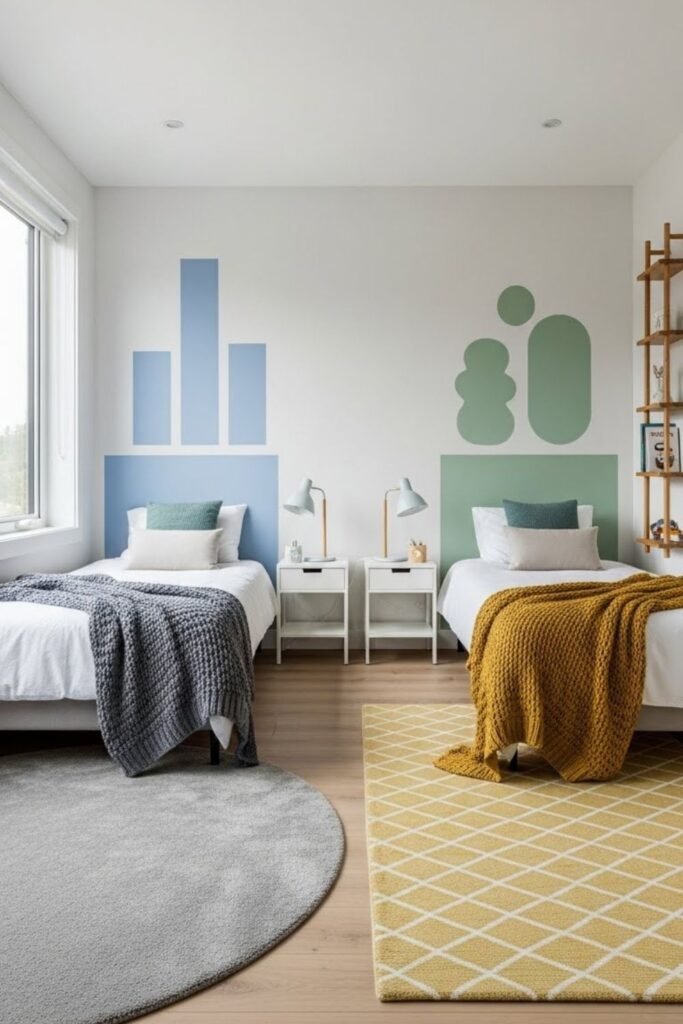
Quiet Corridor
Walking paths matter more than parents realize. Creating a clear corridor through the room prevents accidental bumping, toy collisions, and frustration.
Beds and furniture are pushed to the periphery creating a clear path for children to navigate without bumping into things.
This arrangement is particularly effective in the tight spaces and where things can quickly become overwhelming.
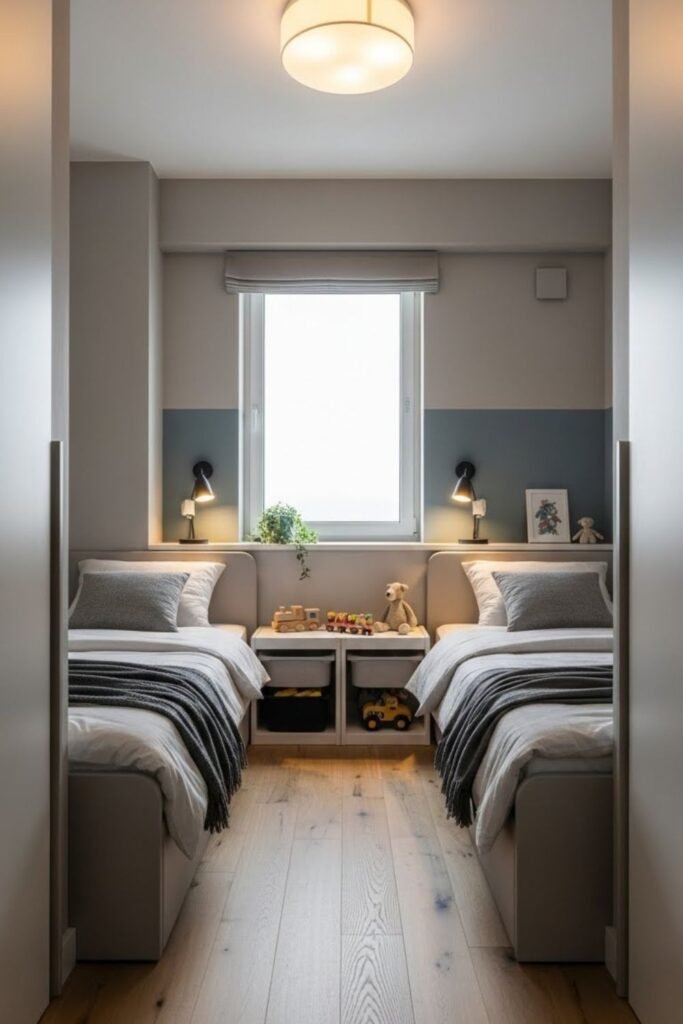
Shared Rituals
A shared bedtime routine zone like a small reading bench or music corner creates connection without forcing closeness.
Afterward and each child returns to their own sleeping area already settled. This arrangement reduces competition or strengthens the established routine.
The room design supports emotional balance not just physical space making sharing feel natural rather than forced.
FAQs
How long should kids realistically share a bedroom?
Children can successfully share a room for a long time, as long as the environment accommodates to their changing needs.
Problems often develop when a room design doesn’t change as youngsters grow.
If each child has their own storage, some degree of privacy and a voice in the room’s arrangement sharing can remain a positive experience even as they reach school age.
What causes most shared bedroom problems space or behavior?
The root of most problems isn’t the physical space itself. Instead, many issues arise from unclear boundaries.
When children don’t know who owns what, where they can play, or when they need to be quiet, arguments often happen.
Setting up spaces with clear layouts personal areas and simple rules for the room prevents more disagreements than adding furniture or decorations.

Hi, I’m Afaf! I’m a law student who loves writing about everyday life – from home projects and crafts to fashion, beauty, and parenting tips.
I’ve been writing for over a year, sharing ideas that are simple, practical, and easy to try. I write about things I find interesting and useful, whether that’s organizing a space, trying a new DIY, or finding activities to keep kids entertained.
My goal is to share helpful ideas without making things complicated. If it works in real life, I’ll write about it.
When I’m not studying or writing, I’m usually experimenting with new projects or scrolling for inspiration!