
22 Group Games For Kids Ideas For 2026
If you’ve ever found yourself in a room full of restless, noisy kids, you understand how quickly a situation can spiral. You attempt a game, and it bombs.
You try another, and pandemonium erupts. More often than not, the issue isn’t the children themselves; it’s the game.
The right group activity can keep kids engaged, entertained, and cooperating. The wrong one, however, only amplifies the stress.
In this article, you’ll explore 22 Group Games ideas for kids that truly fit how homes are used in 2026.
Let’s jump in!
What Indoor Group Games Work Best For Kids At Home?
Space and noise are the main headaches when children are cooped up inside. Choose a game that demands too much running, and chaos quickly ensues.
The most effective indoor group games are straightforward, require minimal setup and are easy to grasp.
Begin with games that emphasize listening, taking turns or gentle movement. If the rules can be explained in under a minute kids are more likely to stay engaged.
Furthermore, games that keep everyone participating, rather than eliminating players, help prevent boredom and disputes.
Save this article for later!👇👇👇
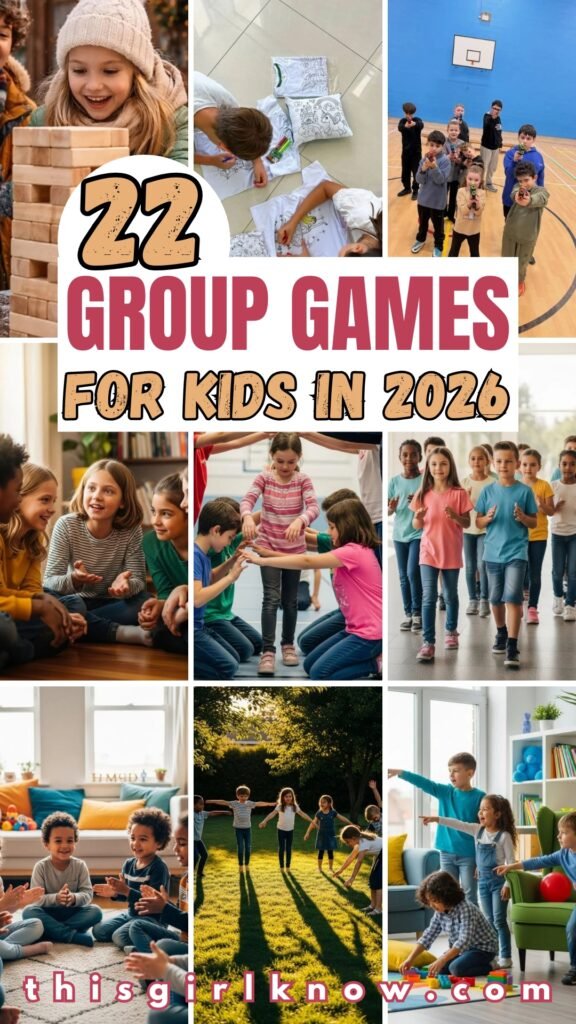
Which Outdoor Group Games Are Fun For Large Groups Of Kids?
Outdoor games are most effective when children have ample space to move and expend energy.
A common error is selecting games that only a limited number of children can participate in simultaneously.
For larger groups, it is advisable to choose games that ensure continuous movement or teamwork.
Outdoor group games should be characterized by quick setup, straightforward resetting and adaptability to accommodate varying age groups.
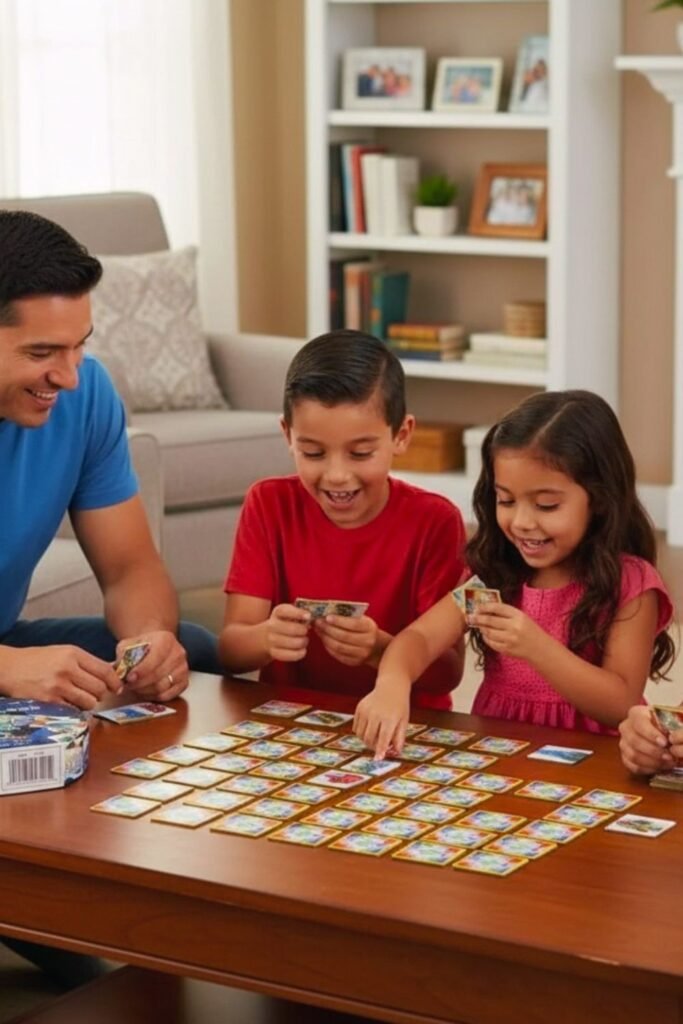
Game Table
Shared table games slow kids down in a good way. Cards spread across a coffee or dining table give everyone a clear spot and a shared focus.
Living rooms are ideal settings because they allow adults to offer guidance without being overbearing.
To recreate this dynamic, clear the table use a single card or matching game and have food within reach to prevent distractions.
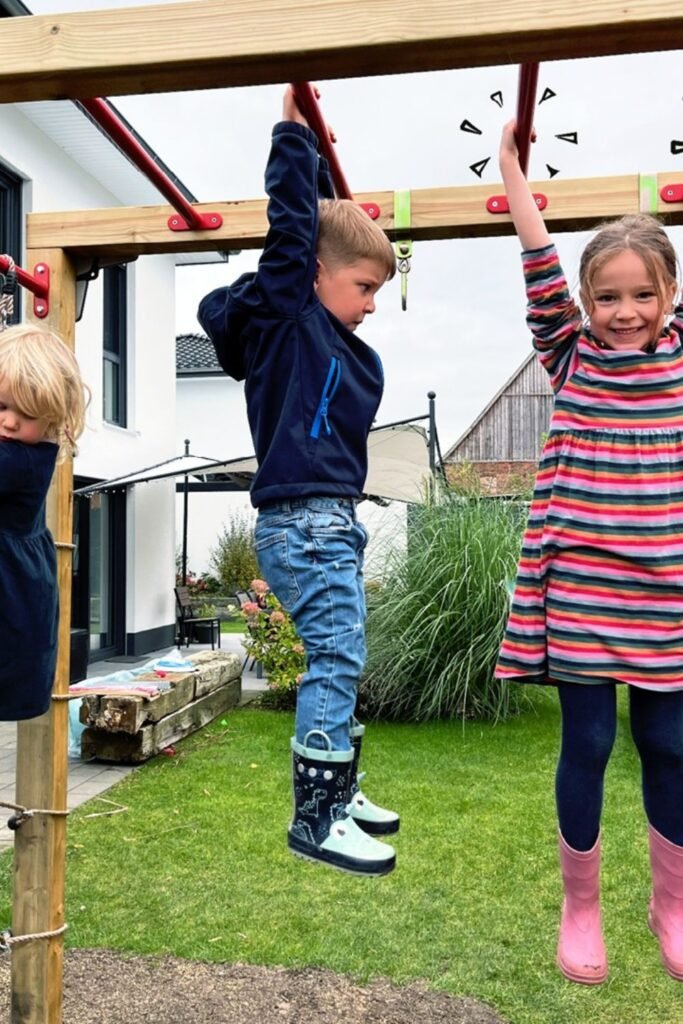
Backyard Climb
Natural climbing setups turn outdoor energy into focused play. Monkey bars and rope frames work best in backyards.
Where children can roam with out the constant refrain of be careful. You can achieve this with a robust play structure or even a simple hanging bar.
Climbing fosters strength, quickly expends energy and keeps kids occupied with out the need for structured rules.
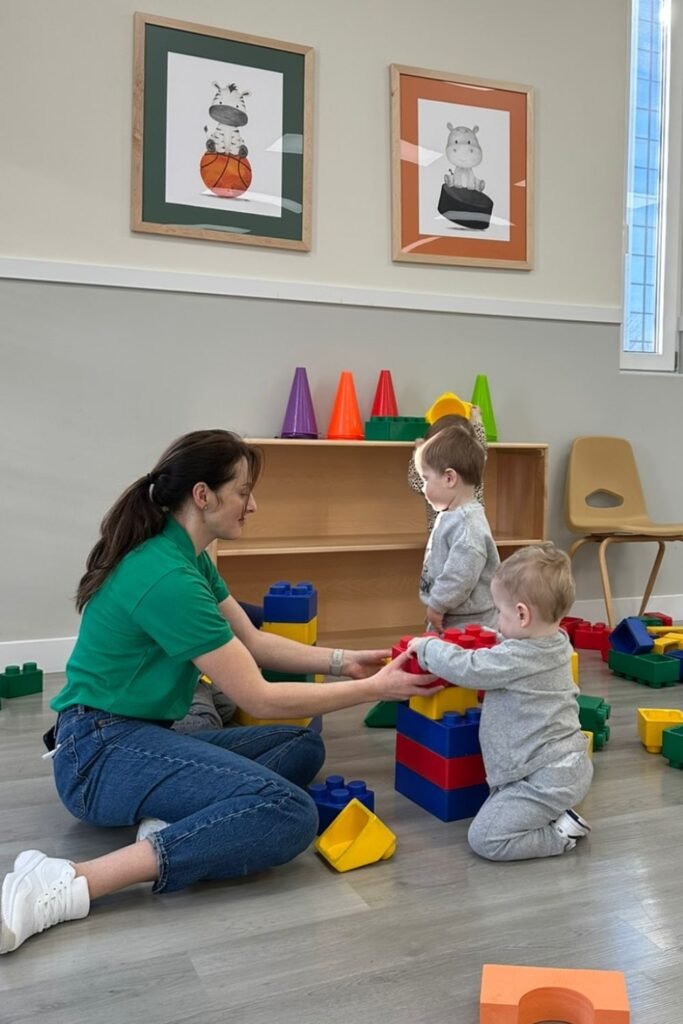
Block Corner
Floor-level building zones work best for younger kids who need space without pressure. Soft mats and chunky blocks create a shared goal without competition.
Daycare settings and playrooms are perfect because they allow adults to guide children with out taking over.
This can be achieved by gathering huge blocks in a designated area encouraging children to stack them together.
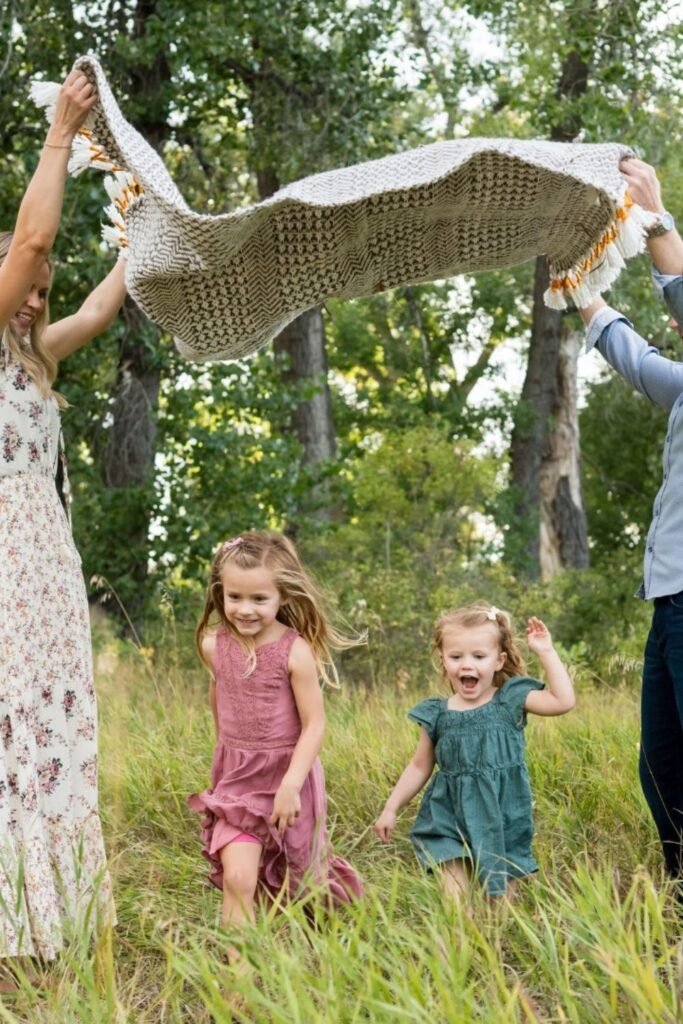
Blanket Run
Loose fabric play adds excitement without needing toys. Open outdoor spaces like backyards or parks work best because kids can move freely without obstacles.
Raise a lightweight blanket and let the kids take turns or all at once running beneath it. The action is fun not a race.
Games like this are a quick way to expend energy and they keep everyone giggling and engaged.
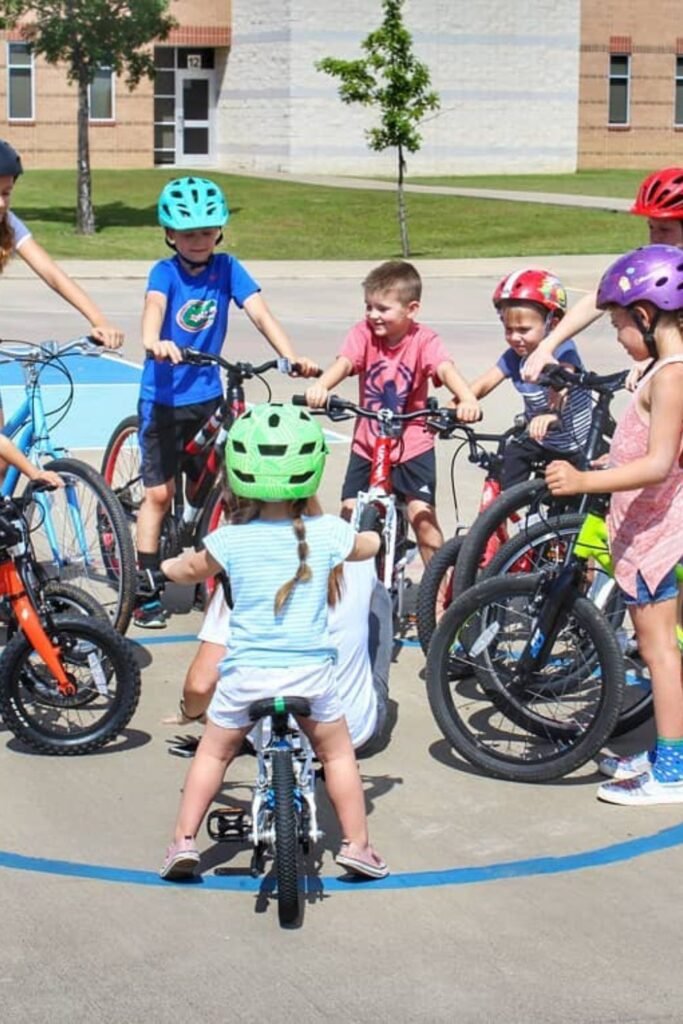
Bike Circle
Riding together works better than racing ahead. Open school yards or empty parking lots give kids space to pedal without pressure.
Form a loose circle, ensuring everyone stays in sight and moves together. Basic guidelines, such as follow the leader or slow laps help maintain safety.
Riding in a group fosters confidence, expends energy and teaches youngsters to be aware of their surroundings, all while retaining the sensation of unstructured play.
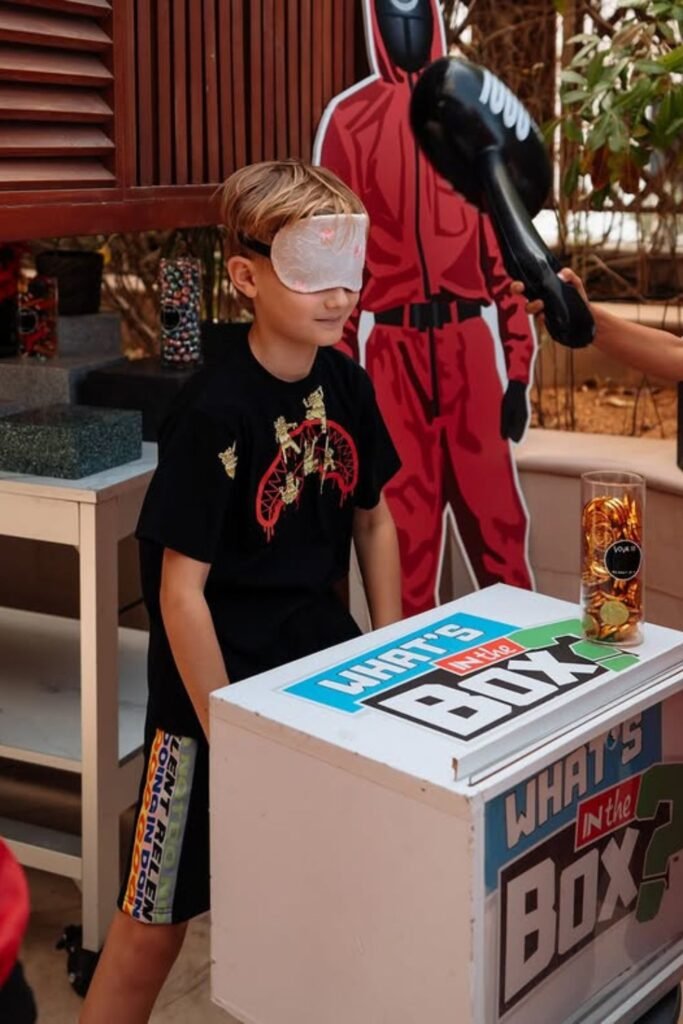
Mystery Box
Curiosity pulls kids in faster than instructions ever will. Party corners or playroom tables work best for this kind of guessing game.
Because everyone can join in without feeling cramped, you can create a fun game. Fill a box with safe, interesting objects that have different textures.
Blindfolds make it more thrilling, and having the whole group guess together helps shy kids participate without feeling singled out.
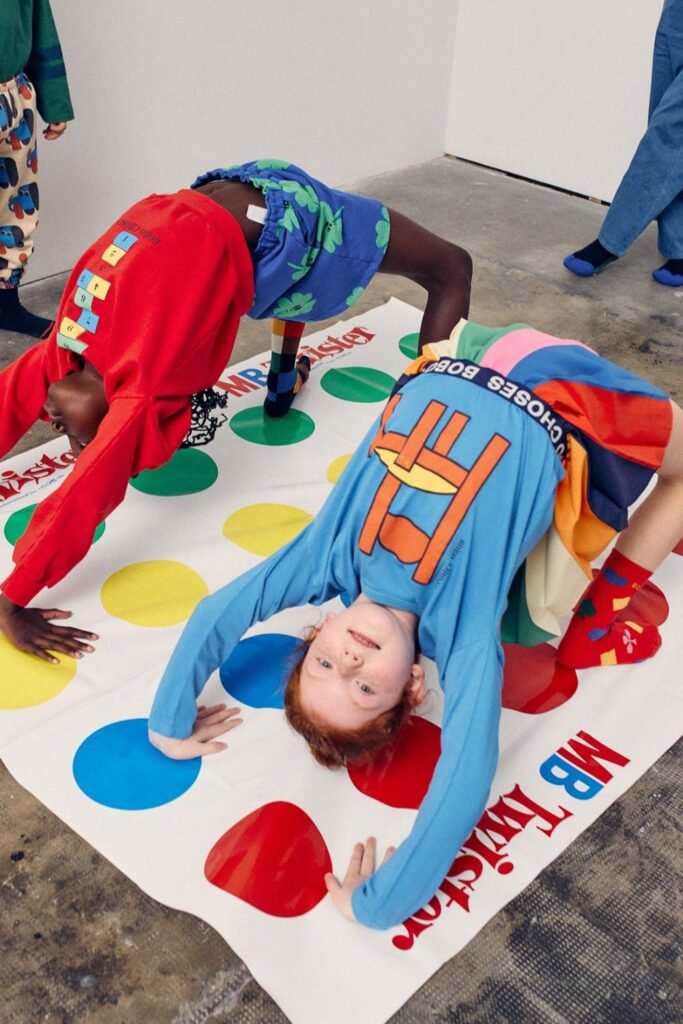
Floor Twist
Body-based games turn indoor floors into instant activity zones. Open living rooms or playrooms work best because kids need space to stretch and balance.
Set out a basic mat or use colored tape to mark locations on the floor, mirroring the original concept.
The act of twisting and stretching expends energy, all the while keeping kids attentive to the instructions and the process of taking turns.
Path Play
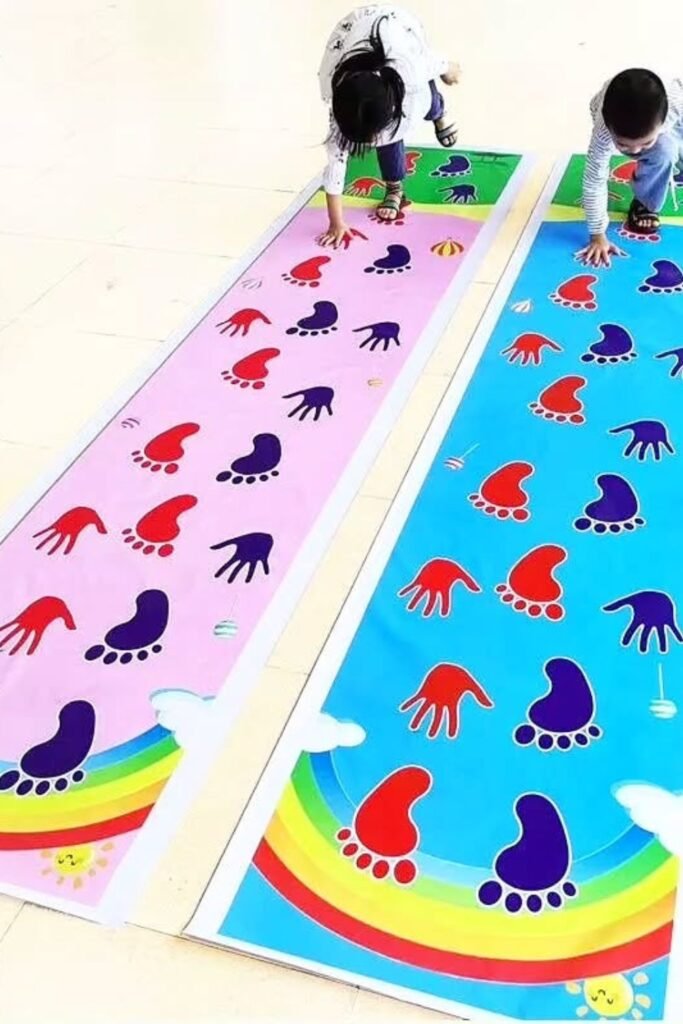
Balance and coordination improve fast when movement feels like a puzzle. Long floor paths work well in hallways, classrooms or open rooms.
A space where children can navigate freely, avoiding collisions, is key. You can easily set this up using printed mats, taped shapes or even chalk markings.
The idea is to let the kids follow the hand and foot patterns, moving at their own speed.
Balloon Toss
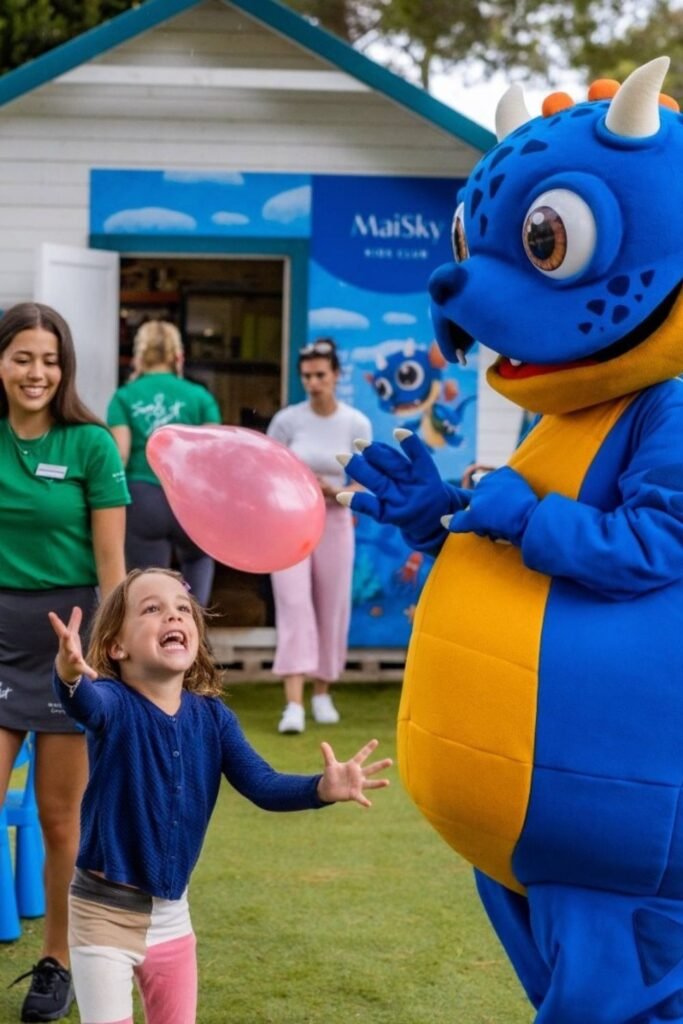
Soft objects keep outdoor group play fun without turning rough. Open lawns or party spaces work well because kids can move freely and reset fast.
Use balloons instead of balls to slow things down and make sure everyone gets involved.
Set easy objectives such as keeping the balloon from touching the ground and work together.
Team Practice
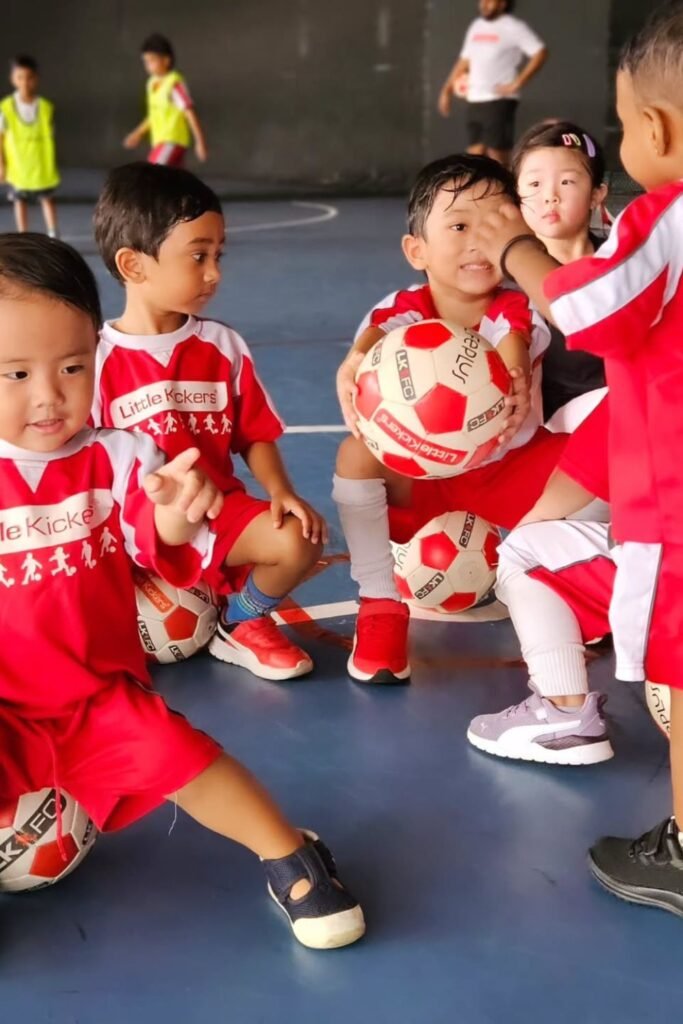
Early sports spaces work best when pressure stays low and movement stays shared. Indoor courts.
Covered play spaces offer a space for young children to practice their abilities without the pressure of a complete game.
Provide each child with a ball and concentrate on basic movements: rolling, stopping, or light passing.
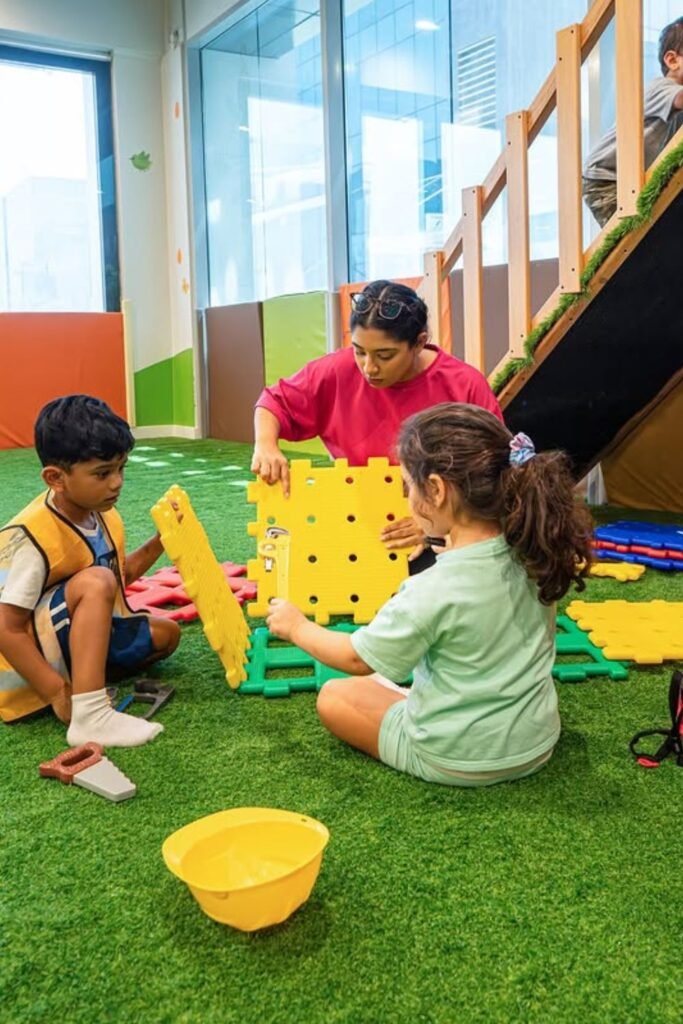
Build Together
Shared building spaces calm kids while keeping them busy. Soft indoor play areas or classrooms with open floor space work best.
Kids thrive when they can sit, stretch and work together at their own pace. Consider using sizable, interlocking pieces or panels that demand teamwork.
This kind of collaborative building fosters patience, encourages communication and cultivates a peaceful, focused environment.
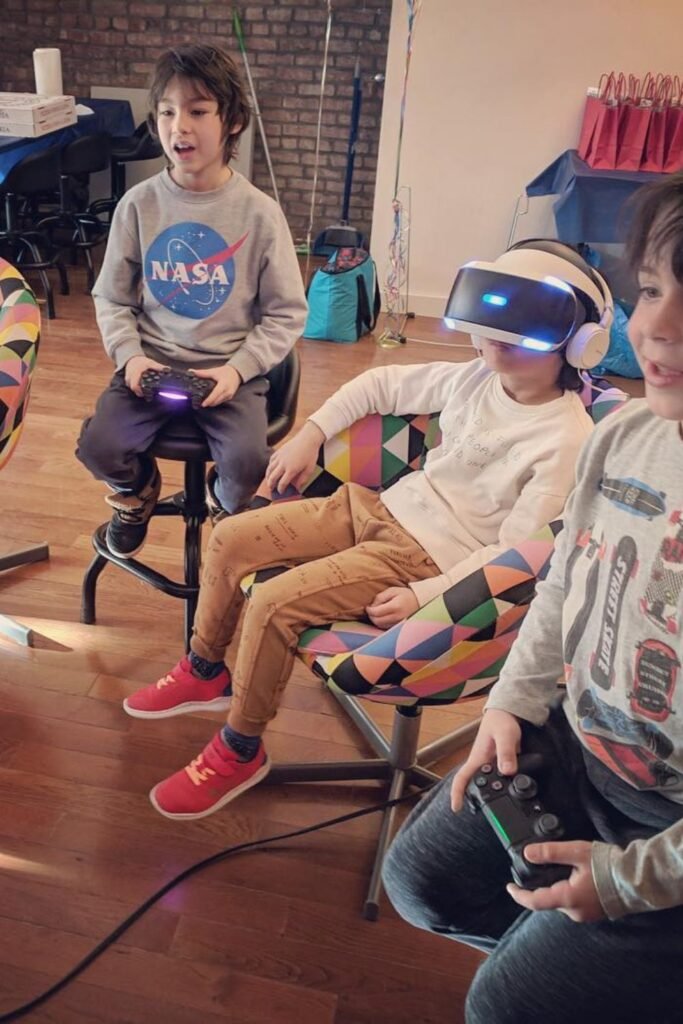
Game Lounge
Shared screen time works better when kids play together instead of taking turns alone. Living rooms or party spaces with enough seating.
Keep everyone engaged. Multiplayer or cooperative games encourage youngsters to interact, respond and share a joke.
Keep play sessions brief and switch controllers frequently to prevent frustration. Group gaming transforms screen time from a solitary experience into a shared one.
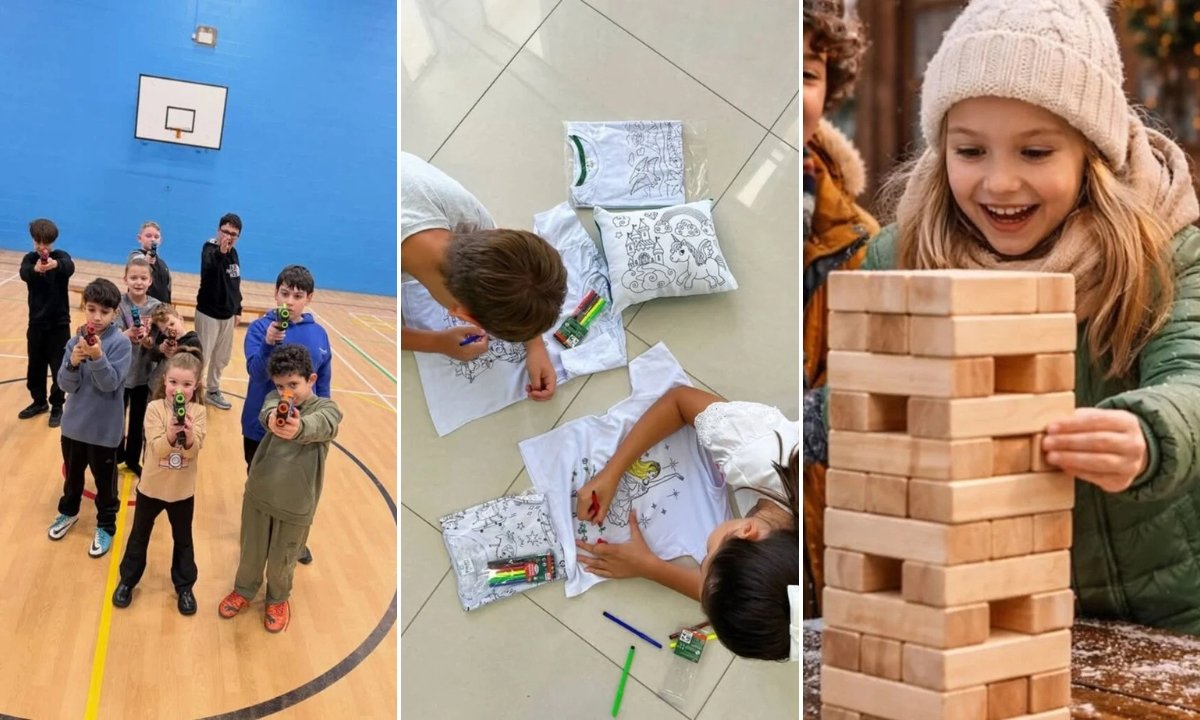
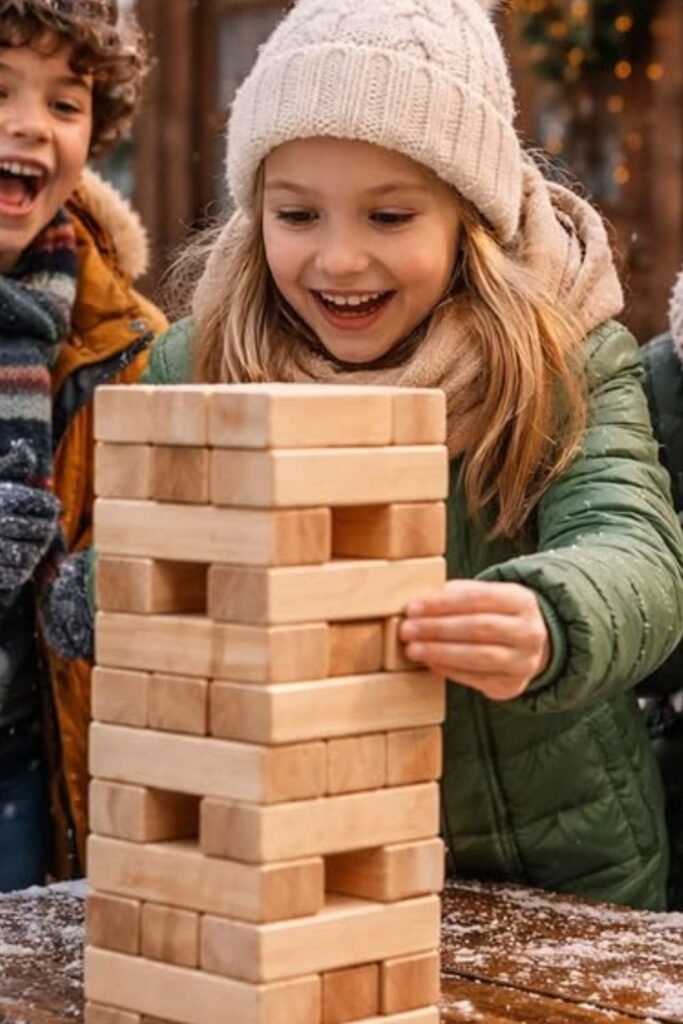
Stack Challenge
Cold weather play gets easier when hands stay busy. Outdoor tables or covered patios work well for blocks stacking and because kids can gather close with out running around.
Employ sizable wooden blocks and robust household objects and have participants alternate between removing or adding pieces.
This deliberate, concentrated activity maintains a high level of engagement all while fostering patience and self control within a social dynamic.
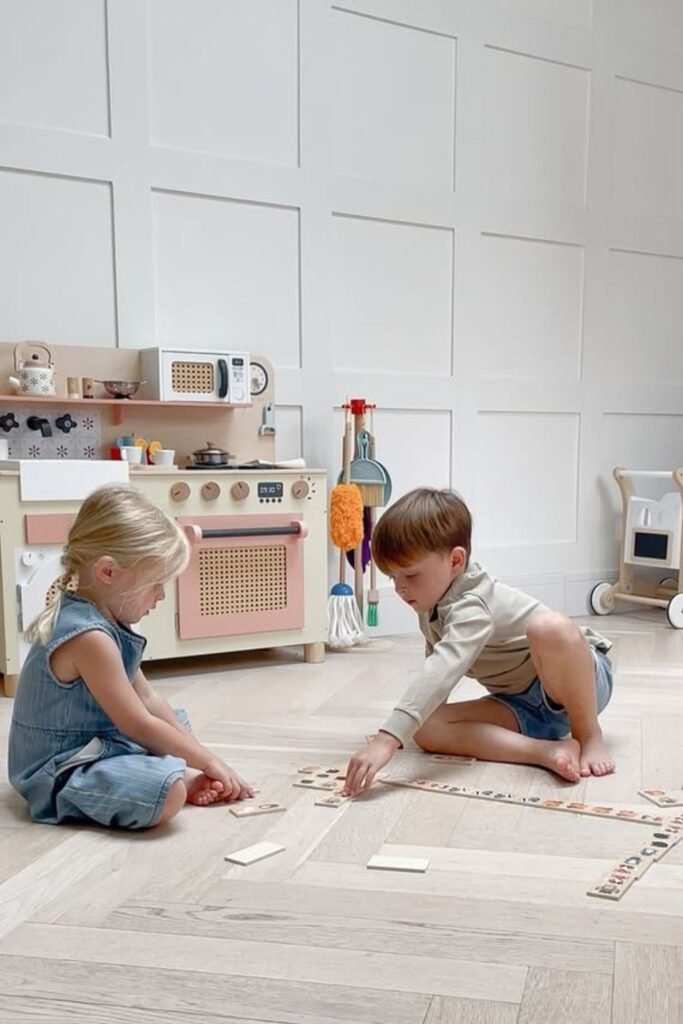
Quiet Tiles
Calm afternoons benefit from floor games that slow everything down. Open playrooms or bedrooms with clear floor space let kids spread pieces without distractions.
Use wooden tiles, dominoes or basic matching cards, arranging them in a low, broad pattern. Sitting on the floor fosters concentration and encourages sharing.
This kind of quiet setup is particularly effective when children need to connect without the distractions of noise or a hurried pace.
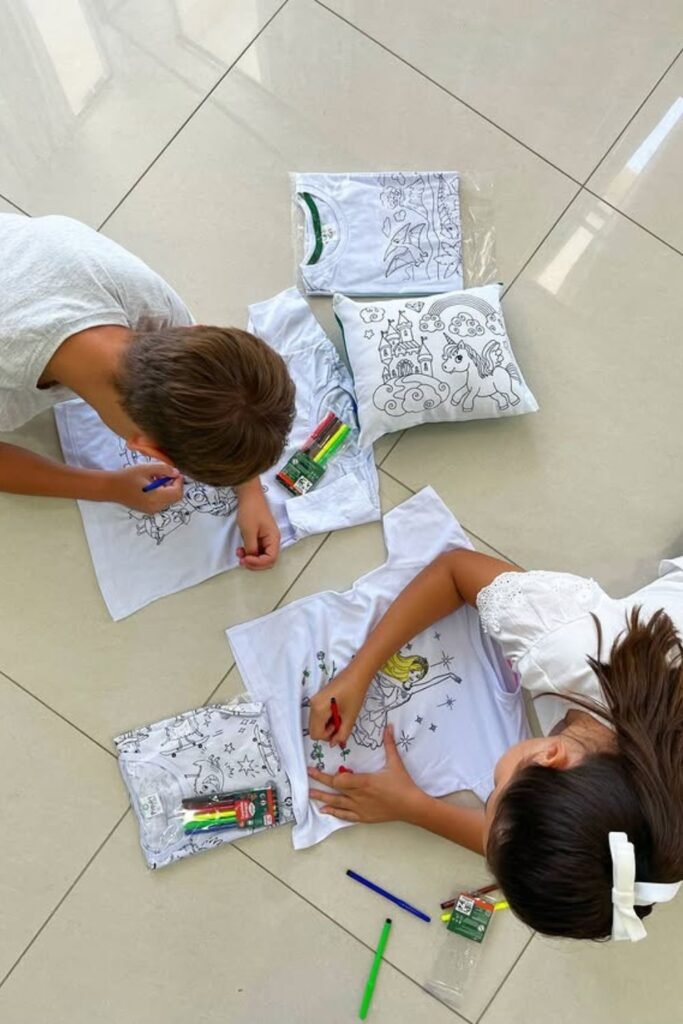
Art Spread
Creative focus lasts longer when kids own their space. Floor-based art works well in living rooms or classrooms.
Because everyone has room to breathe, no elbow jostling. Replicate this by using washable shirts, fabric markers, or paper taped down.
Close quarters foster idea-sharing and busy hands keep youngsters occupied. This kind of group art session helps kids stay calm, interested, and pleasantly focused.
Target Play
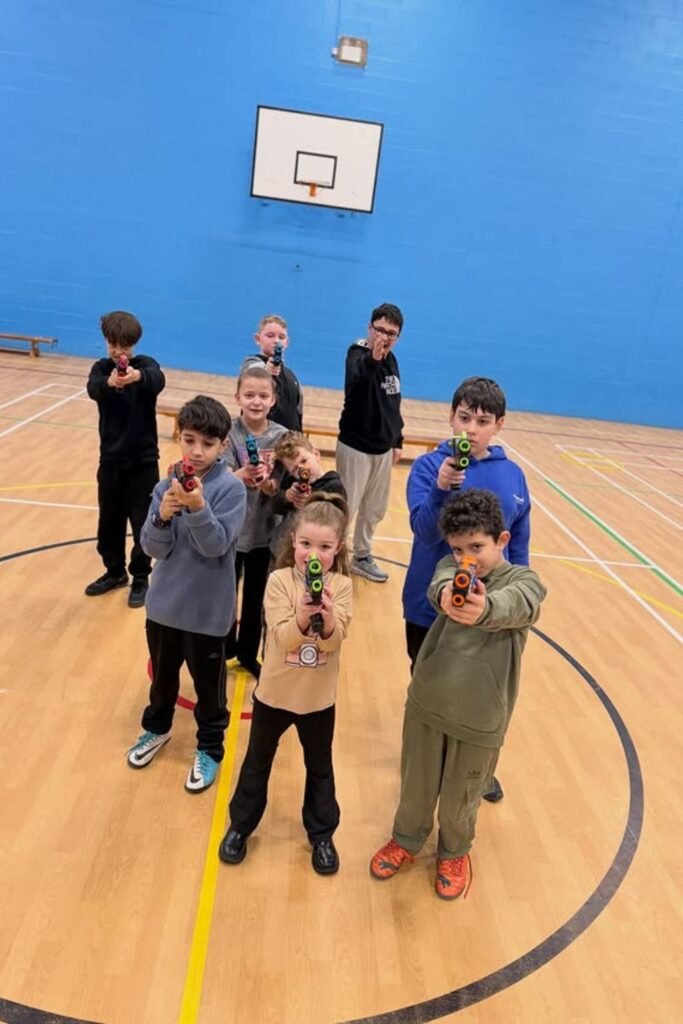
Defined parameters turn pretend action games into something more structured and enjoyable.
School gyms and sports halls are perfect for this since the floor markings naturally create boundaries and spacing.
Use soft targets and instead of having everyone aim for a single person, rotate the task to ensure everyone gets a turn.
Sound Circle
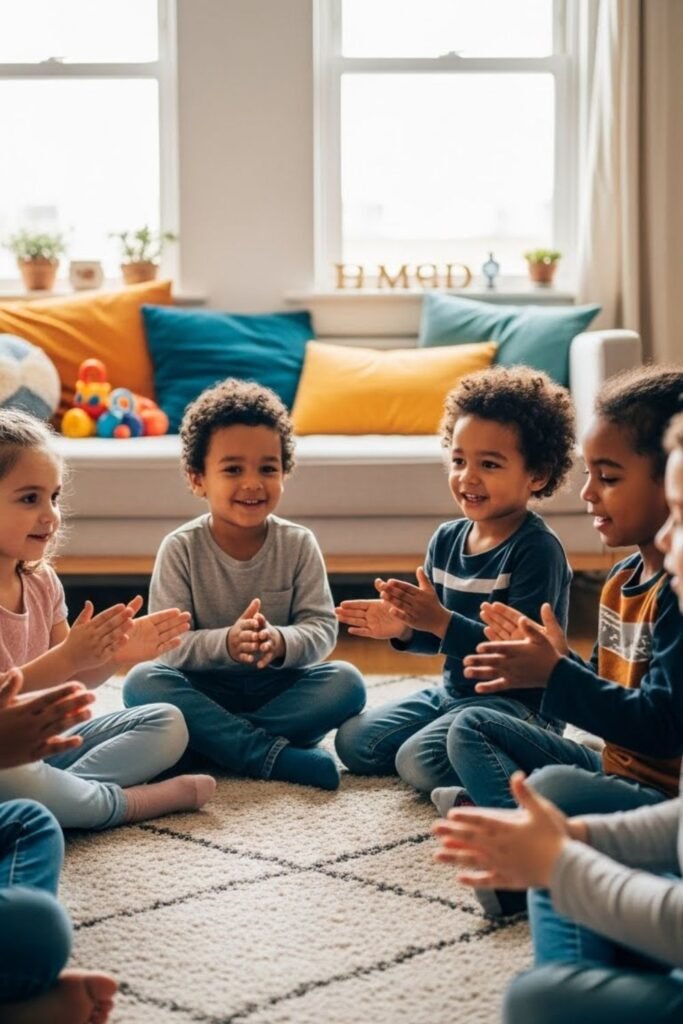
Noise gets fun when kids control it together. Sit everyone in a loose circle and give each child a sound role using claps taps or voice effects.
A child begins and the others imitate gradually building up the sounds. This works best in living rooms or classrooms where echoes are easier to regulate.
Listening as a group helps everyone focus and converts the initial loudness into some thing organized and rather than chaotic.
Shadow Chase
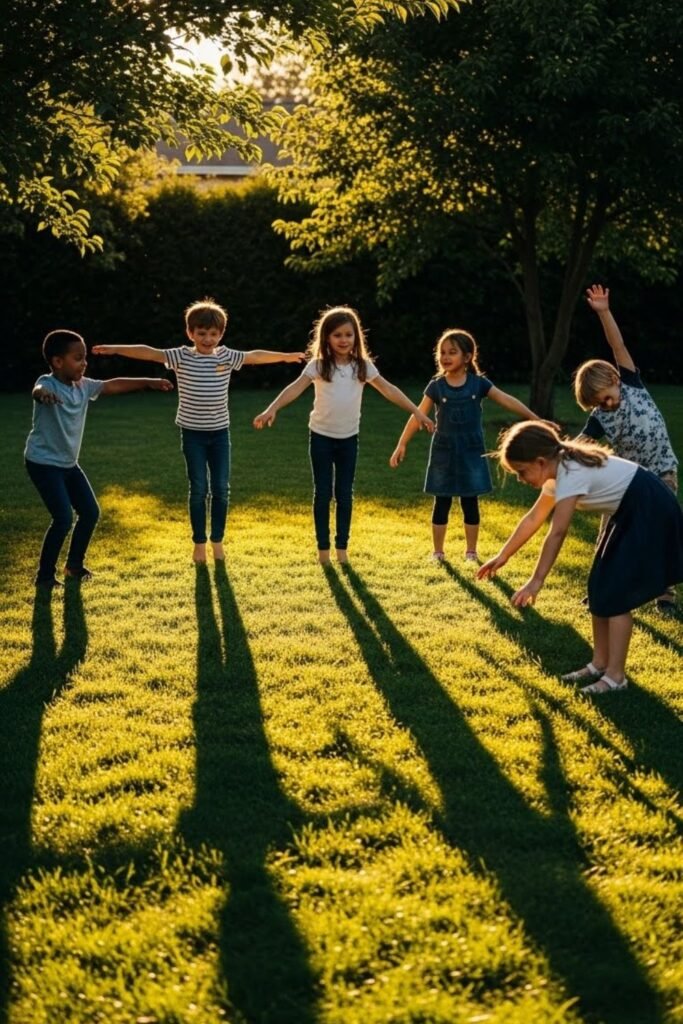
Sunlit spaces create instant play without equipment. Open yards, driveways or rooms with big windows work best for this.
Children take turns demonstrating basic movements with the rest of the group mimicking the resulting shadow forms cast on the ground or a wall.
This focus on following shapes and helps keep every one engaged preventing chaotic running.
Story Relay
Imagination flows better when stories move fast. Seat kids in circle on floor or around a table. One child starts a story with a single sentence.
Then it gets passed around. No corrections no premeditated plans. Living rooms and classrooms are ideal every one remains in sight.
Quick storytelling fosters confidence, sharpens listening abilities and generates shared amusement, all with out any undue stress.
Color Hunt
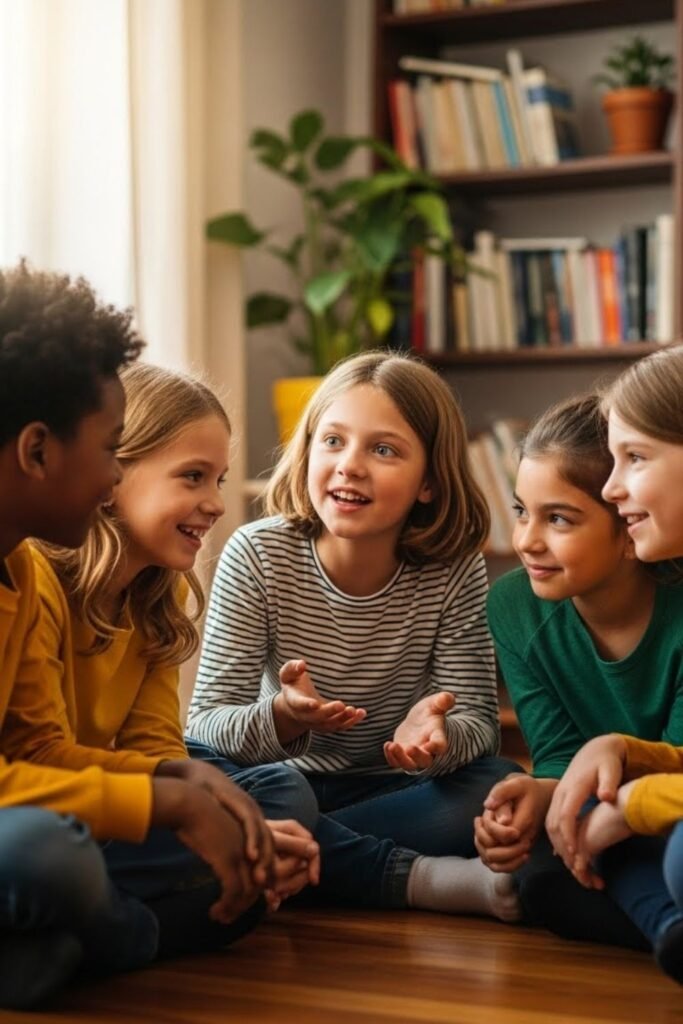
Movement stays focused when kids search with purpose. Choose one room and yard hallway and call out a color.
Children must find and touch an object that matches something before returning to the group.
Quickly switching colors makes the activity energetic with out needing too much space.
Human Maze
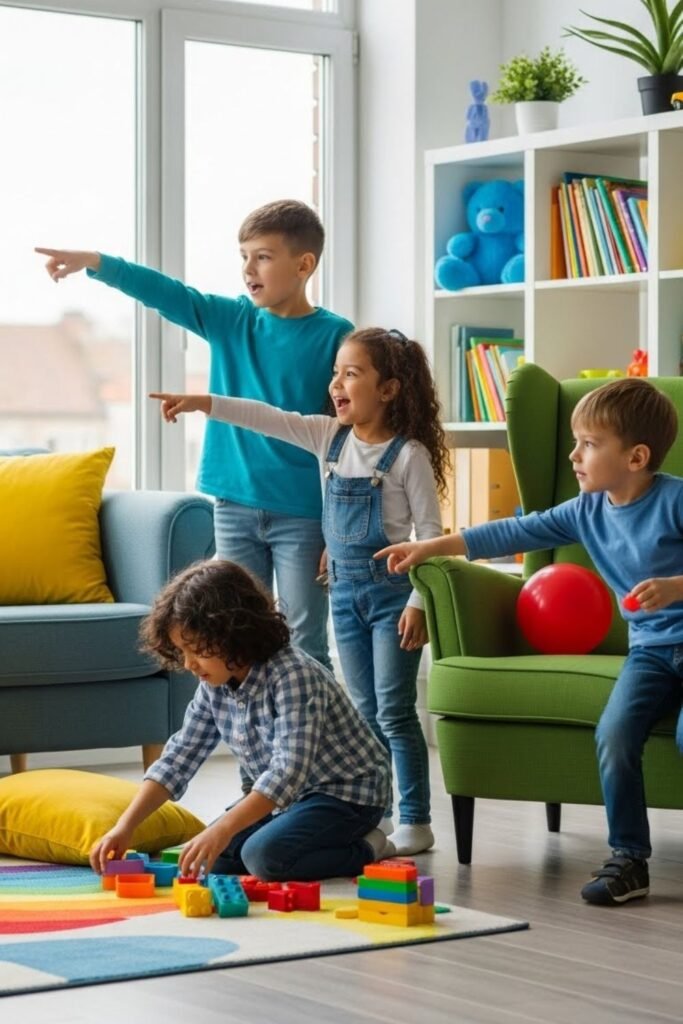
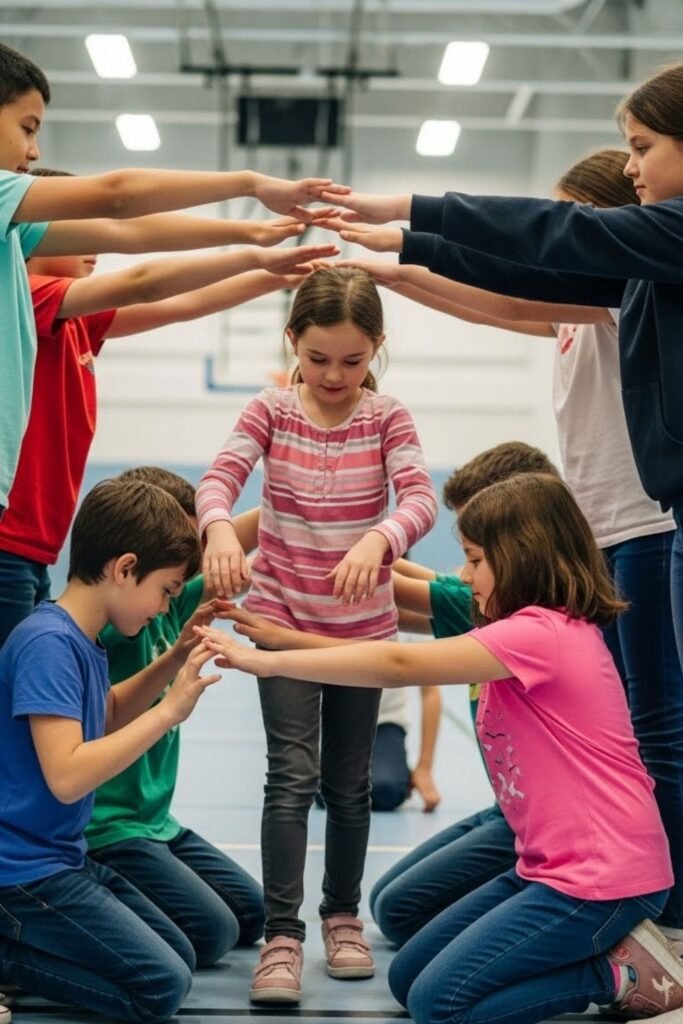
Bodies become obstacles in the best way. Arrange kids standing or kneeling to form safe pathways using arms and legs as “walls.”
A single child moves slowly while others stay still. This works best in gyms, huge rooms, or open areas.
The focus is on working together not how fast they are and which helps kids think, talk, and have fun without being too rough.
Rhythm Walk
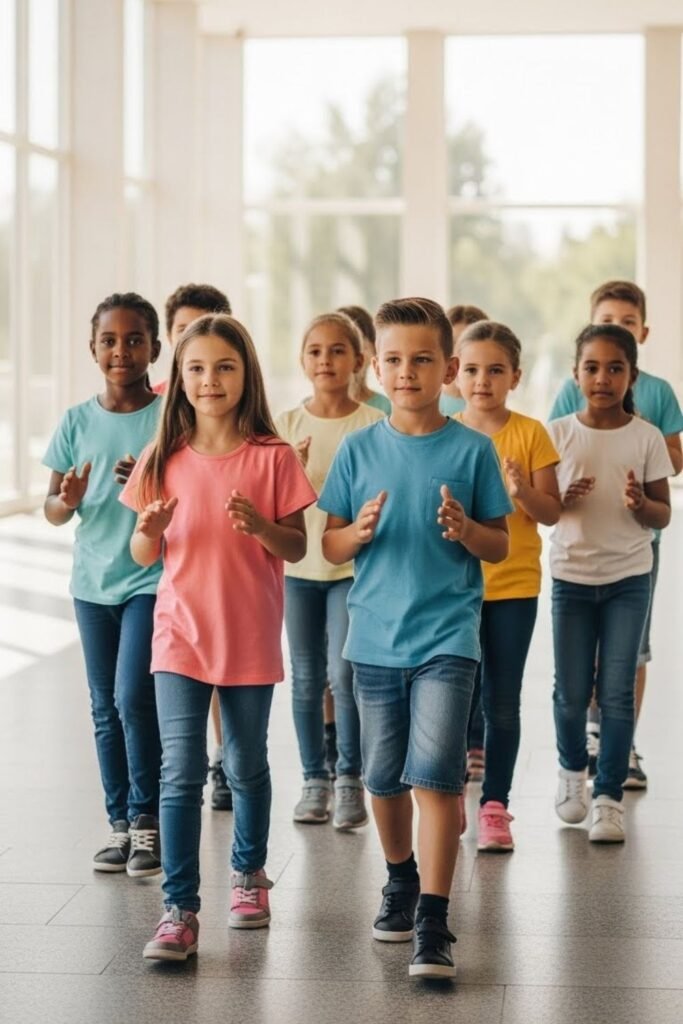
Movement calms down when steps follow a beat. Clear floor space or outdoor paths work well for this.
Clap or tap a consistent beat as children walk, halt, or pivot, strictly adhering to the rhythm. Altering the tempo maintains their focus.
Rhythm walking aids children in managing their energy honing their listening skills, and coordinating their movements rather than scattering in all directions.
FAQs
How do you keep group games from turning loud or chaotic?
Chaos often erupts when children are uncertain about what’s ahead. Establish a single, straightforward rule before the game begins and make each round brief.
If excitement escalates too quickly pivot to a collaborative objective rather than a competitive one. Smooth transitions are more important than flawless rules.
What if kids of different ages don’t want to play the same game?
Flexible roles are key to making mixed age groups operate well. Younger children can take the lead on simpler tasks while older kids can help out or manage timing.
When everyone feels like they are contributing, kids stay focused longer and disagreements happen less often.

Hi, I’m Afaf! I’m a law student who loves writing about everyday life – from home projects and crafts to fashion, beauty, and parenting tips.
I’ve been writing for over a year, sharing ideas that are simple, practical, and easy to try. I write about things I find interesting and useful, whether that’s organizing a space, trying a new DIY, or finding activities to keep kids entertained.
My goal is to share helpful ideas without making things complicated. If it works in real life, I’ll write about it.
When I’m not studying or writing, I’m usually experimenting with new projects or scrolling for inspiration!