
16 Forest School Activities For Kids 2026
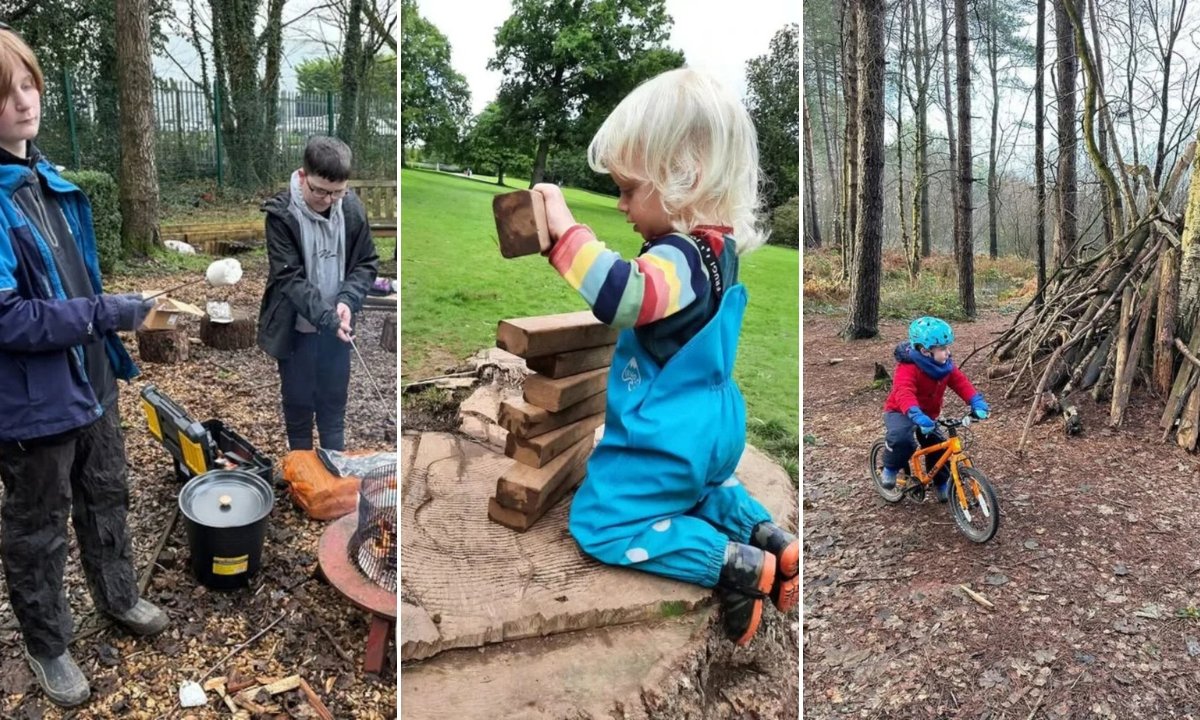
I had the best of intentions when I took the kids to the park last Saturday. Fresh air. No screens. I said, “Let’s do something outside.”
Ten minutes later, kids were bored and asking for snacks. That’s when I learned that just because you want to be outside doesn’t mean you know what to do there.
If you’ve ever been in a field and thought, “What now?”You’re not the only one. The good news is? You don’t need a forest, expensive gear, or training to be a teacher.
You only need to do the appropriate kinds of things that naturally get your creativity and imagination going without making you do it.
In this article, you’ll explore 16 forest school activities ideas for kids that are fun, practical, and home-friendly in 2026.
Let’s jump in!
How Can Forest School Activities Encourage Creativity and Imagination?
When you give a child a plastic toy, it does one thing.
You can give them a stick and it can be anything, like a sword, a fishing rod, a magic wand, or the frame of a secret fort.
That’s the difference. The reason forest school succeeds is that nature doesn’t instruct youngsters what to do.
There are no directions. No buttons. There is no one right method to play. When you give them some space.
Their brains go from “consume” mode to “create” mode. That’s when your imagination truly starts to flourish.
Save this article for later!👇👇👇
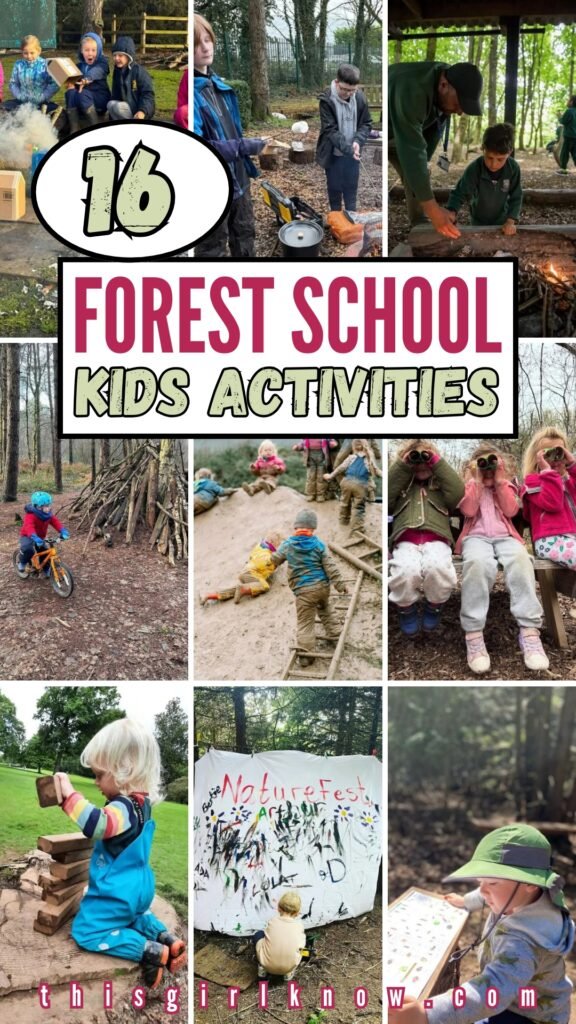
Mud Climbing
Energy explodes the second kids spot a dirt hill. No instructions needed. One climbs straight up, another crawls, someone slides back down laughing.
That’s what makes it beautiful. A simple mound of dirt might become a challenge, a competition, or even a rescue mission.
You may do this anywhere there is a little incline, such a hill in a park, a pile of dirt, or even the edge of a sandy playground.
For variety, give them a wooden ladder or strong sticks and let them work out their own way. Stay close for protection, but don’t tell them what to do all the time.
Climbing on uneven ground helps you get stronger, more balanced, and better at solving problems without feeling like you’re working out.
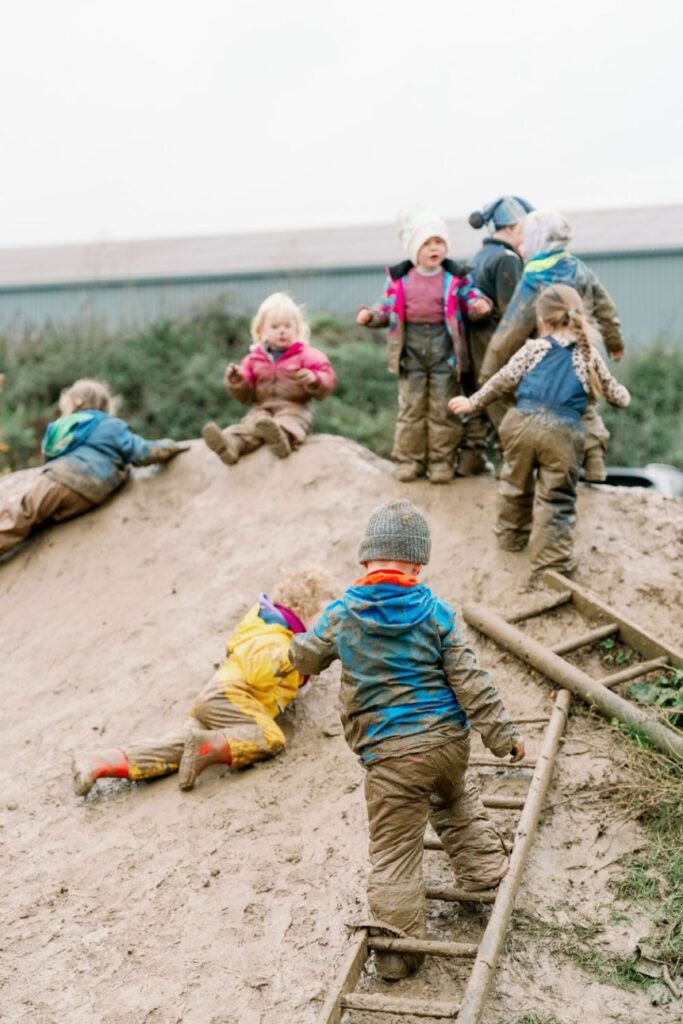
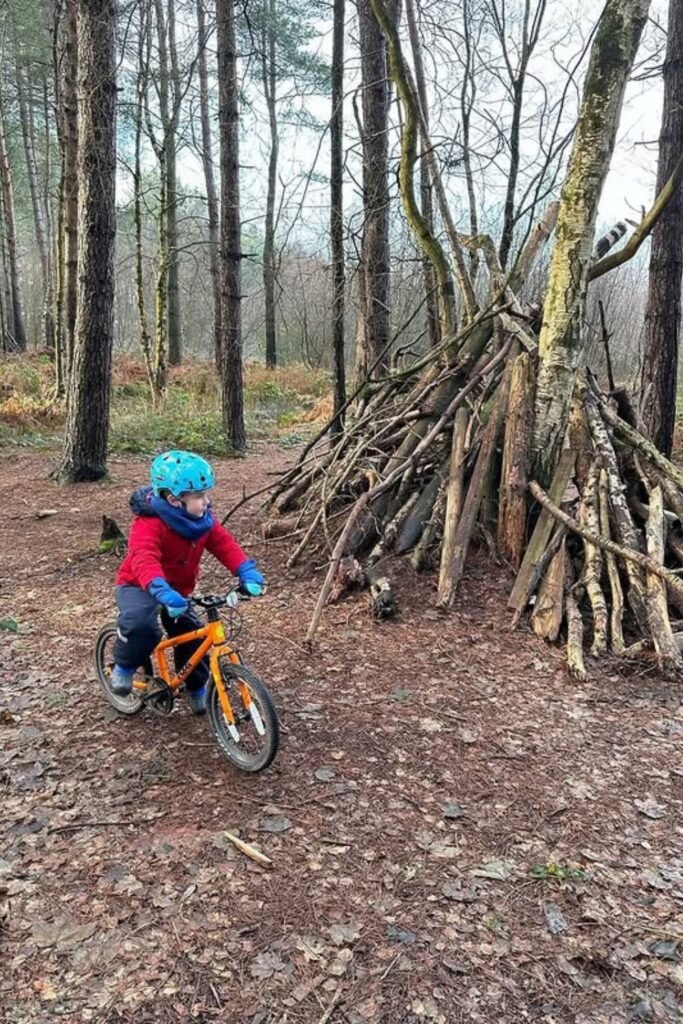
Stick Shelter
Nothing sparks imagination faster than a pile of loose branches in the middle of the woods. One minute it’s just sticks leaning against a tree.
The next minute it’s a secret base, a café in the woods, or a place to hide from made-up dragons.
Pick a calm spot in a park or forest with fallen branches and let the kids build against a strong tree trunk.
First, show them how to lean longer sticks to make a frame. Then, show them how to layer smaller sticks to make walls.
Don’t give in to the impulse to “fix” it. The crooked shelters are part of the enjoyment. Works best for youngsters 4 and up who can securely carry and place branches.
Nature Binoculars
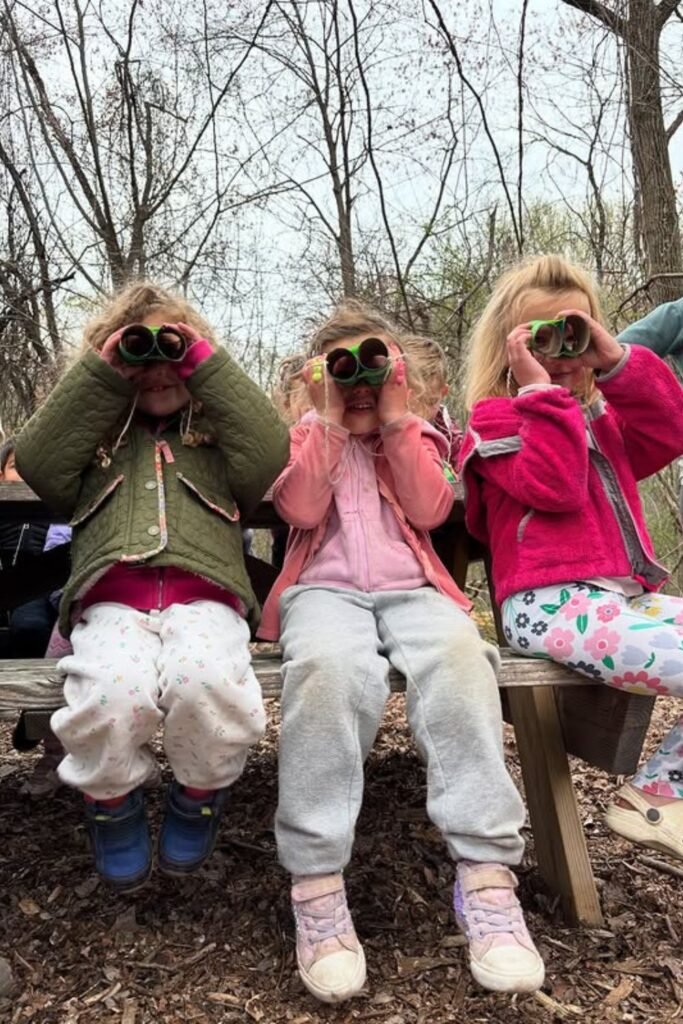
Adventure begins the moment cardboard tubes turn into “real” binoculars. Suddenly every tree hides something worth spotting. Kids slow down.
They look over. They talk in whispers about bugs, birds, and small motions in the bushes. Take two empty toilet paper rolls, tape them together.
And add string so they can hang around your neck. Go to a park, your garden, or a route in the woods and make it a spotting mission.
Ask them to locate five various shapes of leaves or listen for three distinct bird calls. Great for kids ages 3 to 7 who like to play pretend.
Simple props change the focus from racing about to intently watching, and that’s when imagination softly takes over.
Bug Hunt
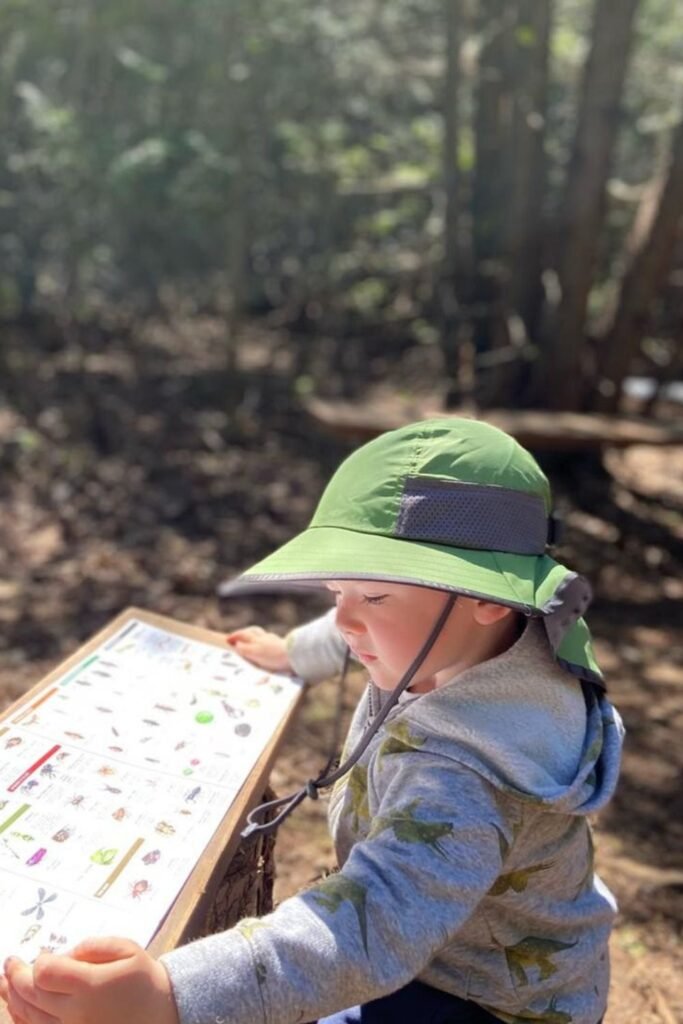
Curiosity skyrockets once a simple chart turns into a treasure map. Every rustle in the leaves feels important.
Every little move is a chance to find something new. Before you go outside, either print out a simple insect guide or make your own list.
A shaded path, the edge of a forest, or simply a garden in your backyard are all great places.
Tell them to gently lift logs, look at tree bark and kneel down so they can see the ground. You don’t have to catch anything; just seeing and naming it is enough.
Younger kids can match photographs, while larger kids can count how many different kinds of animals they see. Instead of restless energy.
Forest Mural
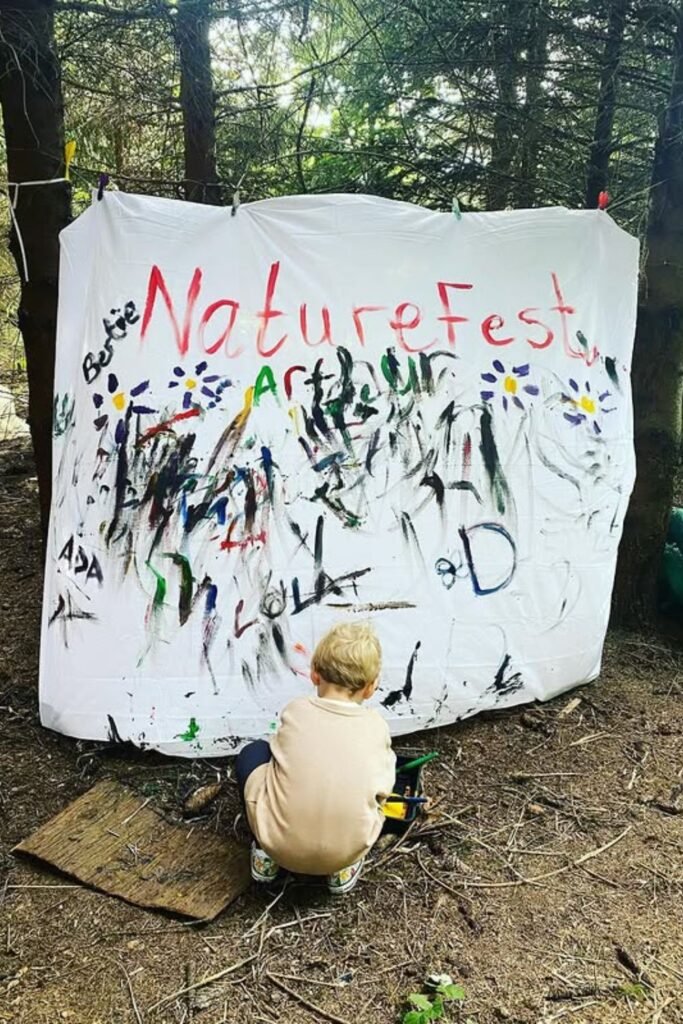
Outside, paint feels different. There are no desks.”Stay inside the lines” is not a thing.
There was only a big blank piece of paper tied between two trees, and you could do.
You could do anything with it. Hang an old sheet or big piece of paper with rope or fasteners.
In between two trunks. Set out paints that can be washed. And let them use their hands.
Brushes, sticks, or leaves. If you use it on the edges of a wooded area or in the shade, the paint won’t run.
Log Building
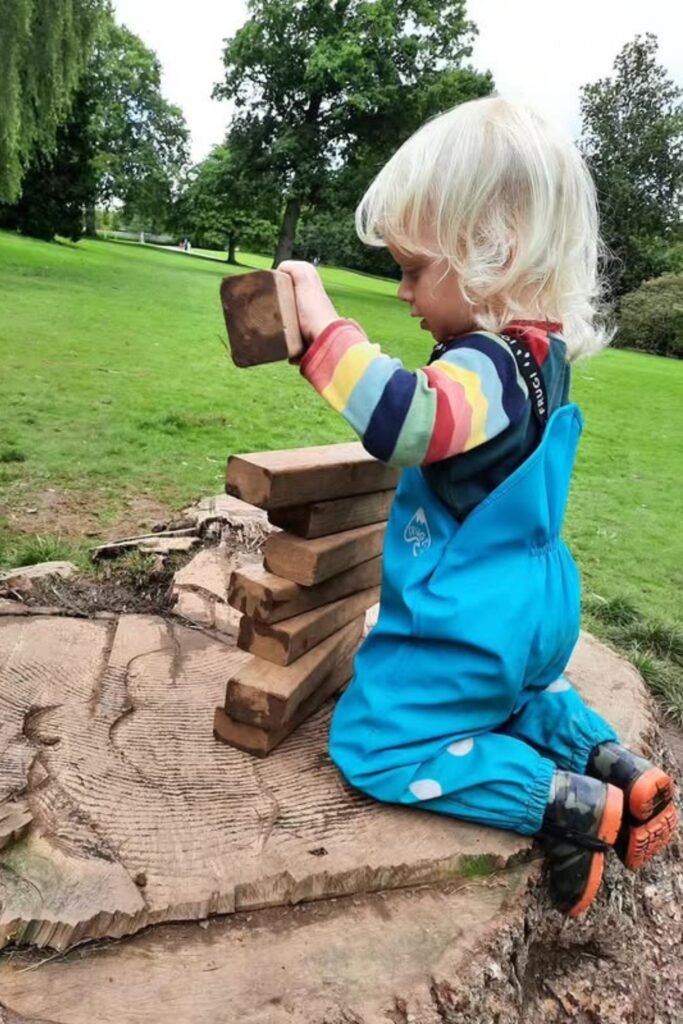
Balance becomes the real challenge here. One wrong move and the whole stack tumbles which is exactly why kids love it.
Get some big wooden blocks, scrap wood, or even flat logs and put them on a tree stump or another low surface.
Park areas or clearings in the woods are great places to do this. Let them try stacking things sideways, in a crisscross pattern, or straight up.
You don’t have to tell them how to construct “right.” Trial and error is a better way to learn than following directions. Older youngsters can make it a height contest.
Younger kids work on having stable hands and being patient. Quiet focus comes in quickly, and each layer you finish makes you feel more sure of yourself.
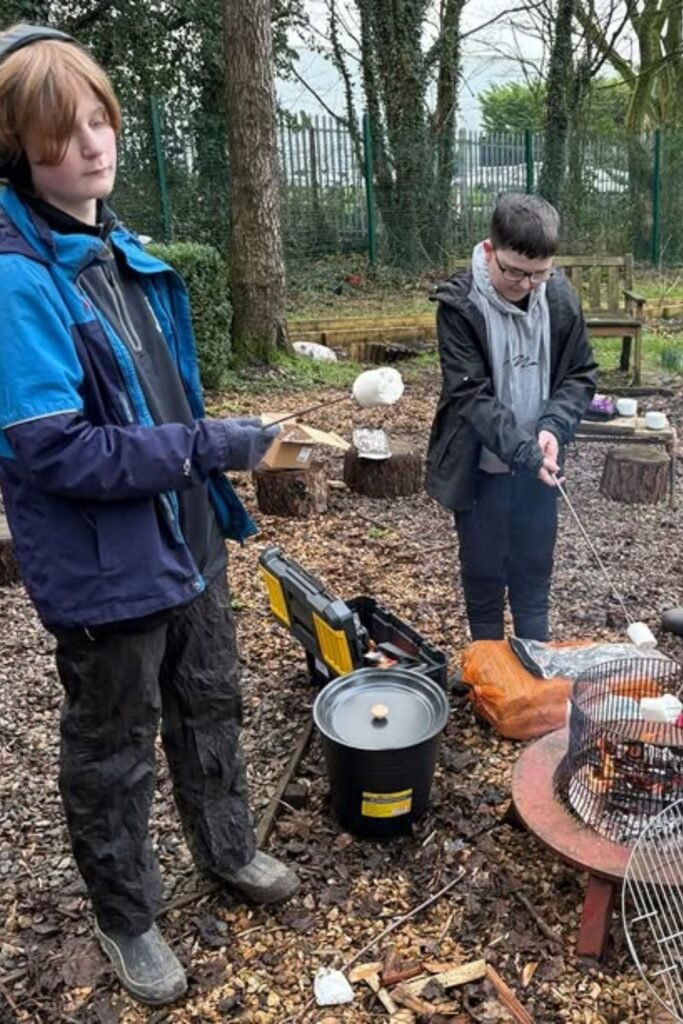
Campfire Cooking
Real responsibility changes everything. Handing kids a roasting stick near a controlled fire instantly raises focus levels. Conversations slow down.
Careful movements happen. People naturally start to care more about safety. Make sure the fire circle is set up correctly with clear limits and adult supervision at all times.
A small, confined fire pit is perfect for a school woods or a big backyard. Don’t make it too complicated. You can toast bread, warm fruit, or prepare soup in a pot.
Go over the regulations for fire safety properly and calmly before lighting anything. Older youngsters can help get the gasoline ready or use the tools with supervision.
Cooking outside is like going on an adventure, but it also teaches you patience, how to cooperate with others, and useful life skills all at once.
Fire Lighting
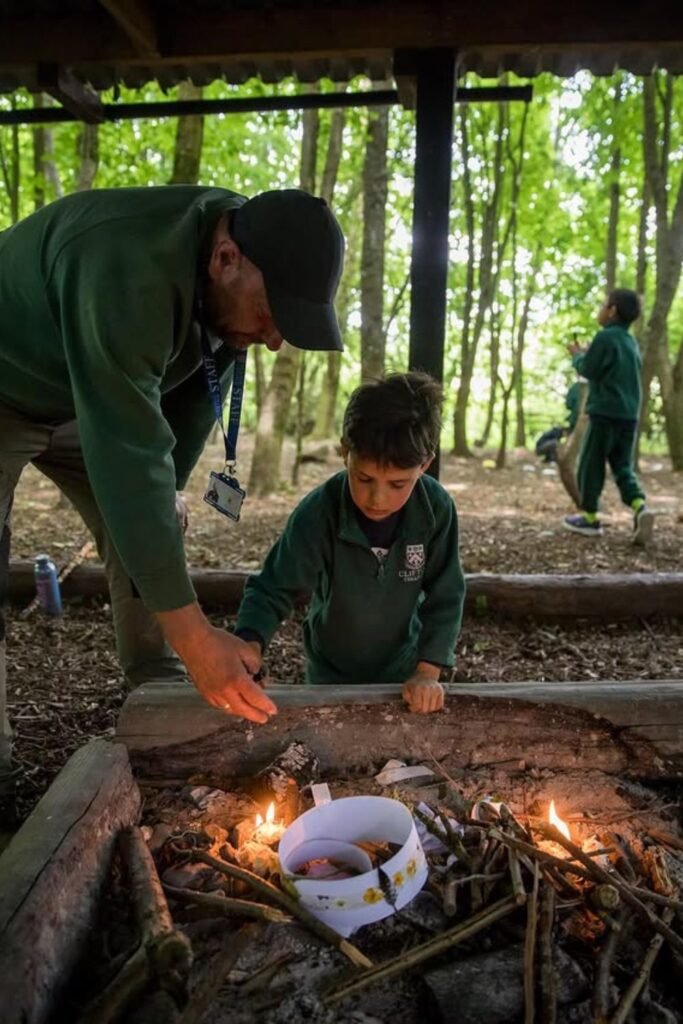
Nothing teaches focus like striking a spark and waiting for flame. Hands steady. Eyes locked in. Breathing slows without anyone telling them to “calm down.”
Pick a good fire pit that is on level ground and doesn’t have any loose material around it.
Keep the groups small so that each youngster can see and understand what to do.
Show how to make a simple teepee shape out of dry sticks, and then show how to light it safely while closely watching.
Instead of rushing to light the kindling yourself let older kids help you set it up. Teaching calmly is more important than teaching quickly.
People here naturally learn to respect tools and limits, and confidence rises as soon as the first flame catches.
Fire Experiment
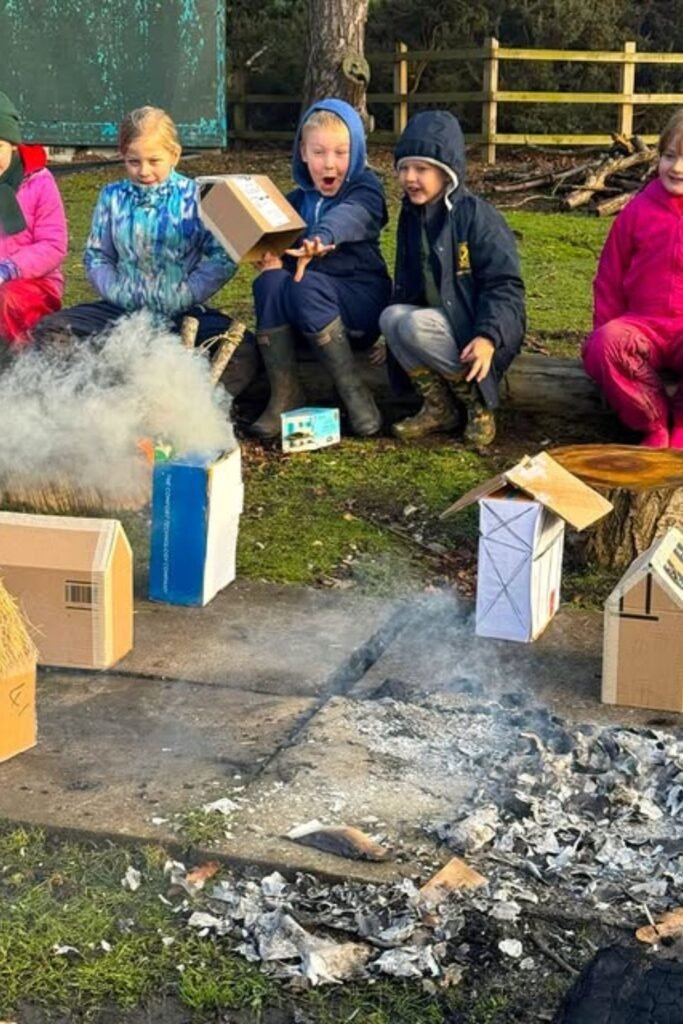
Big reactions make big memories. Cardboard houses, smoke rising, wide eyes watching it all unfold suddenly learning feels exciting instead of forced.
Make this a safe science moment in a real fire circle or a designated outside location. Make little “houses” out of cardboard.
And put them a safe distance away from a controlled flame. Talk about what makes a fire spread quickly and what makes it slow down.
Before anything catches fire, there should be strict supervision and defined limits. Seeing cause and effect in real time is very helpful for older kids.
Fire safety education are much more effective when students see the outcomes instead of just hearing about them.
Mud Play
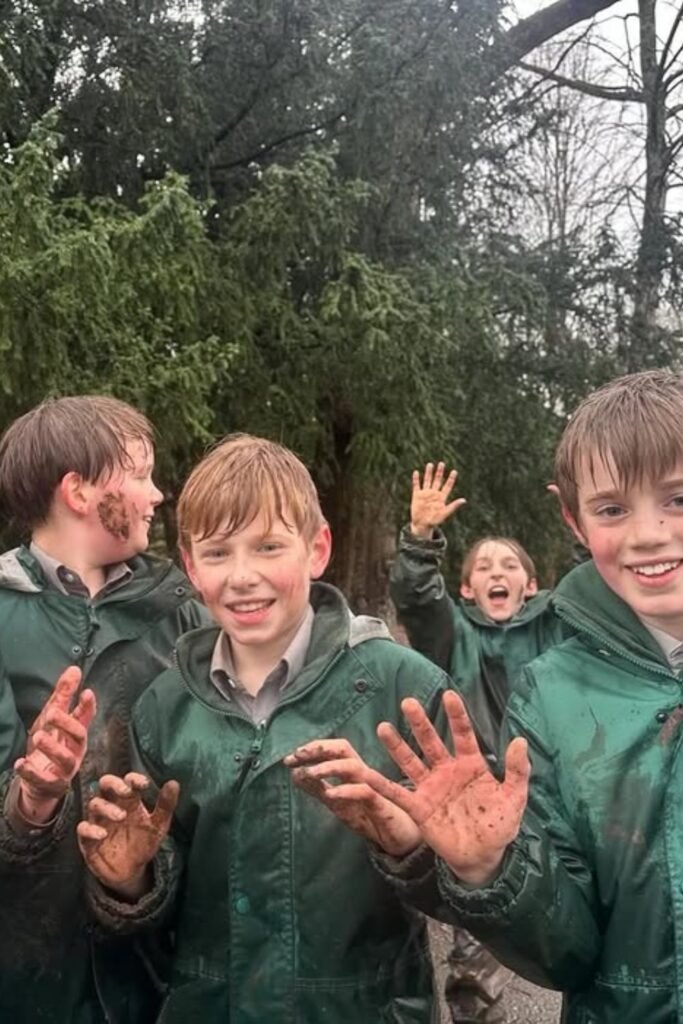
Clean clothes never built strong memories. Laughter gets louder once hands hit the mud and nobody rushes in with wipes.
After it rains, go to a grassy area or make a small mud area in a corner of your yard with soil and water.
Kids can dig, smear, sculpt, and even make “mud recipes.” You can make it look like a bakery or a potion lab by adding sticks, leaves, or stones.
First, make it plain where the muck should stay and where it shouldn’t. Older youngsters like to make small landscapes or walls out of mud.
When your hands are dirty, you are learning through your senses, working with others and building your confidence all at the same time.
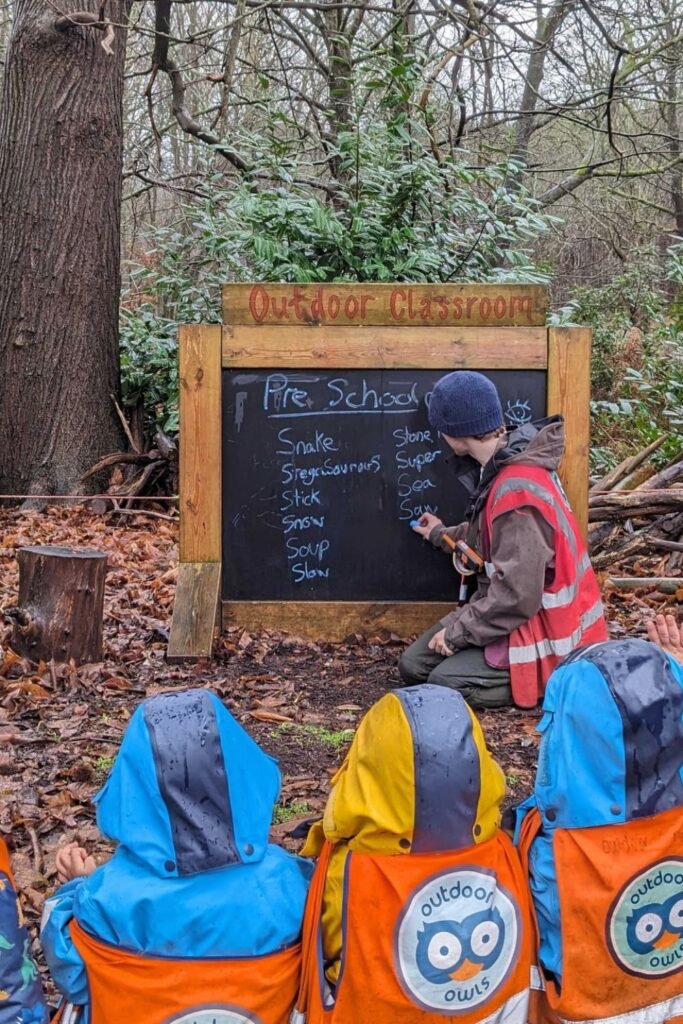
Outdoor Classroom
Fresh air changes how kids listen. Sitting on logs instead of chairs, watching leaves move while learning new words focus feels different outside.
Set up a simple chalkboard between trees or use a portable board in a woodland corner. Keep lessons short and interactive.
Write a few words ask kids to spot something in nature that matches, or turn spelling into a scavenger hunt.
Parks, school grounds or forest clearings work well. Younger children benefit from quick, playful tasks while older ones can journal or sketch what they observe.
Learning does not need four walls. Moving lessons outdoors makes everyday topics feel like an adventure instead of a routine.
Parachute Games
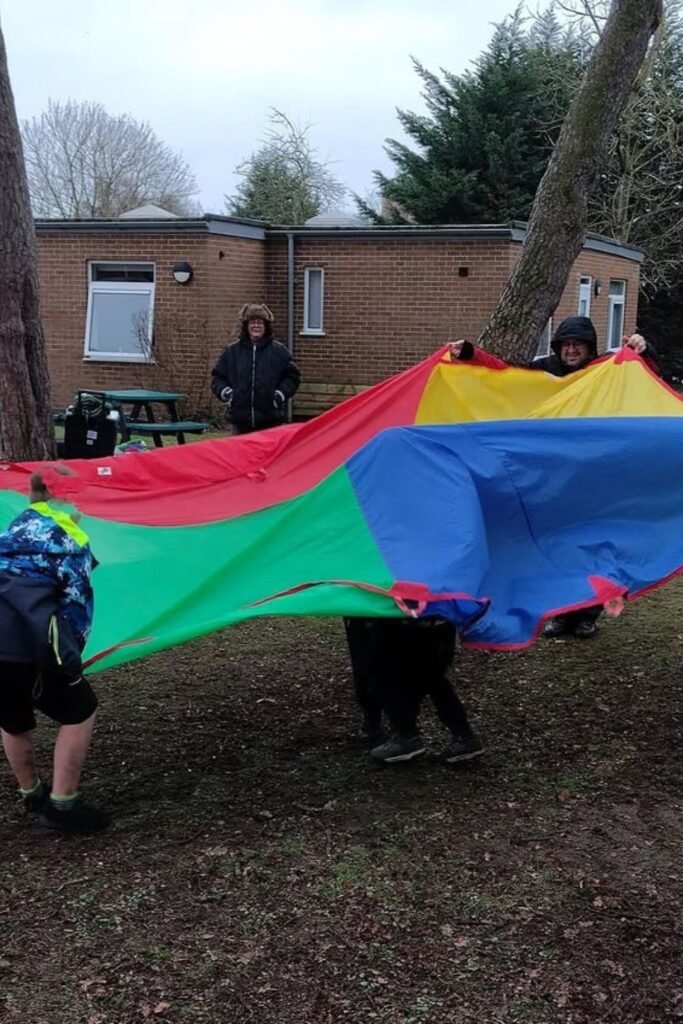
Laughter spreads fast once everyone grabs a corner. One lift sends the fabric soaring another and drop traps giggles underneath like a color full cave.
Bring a big parachute or perhaps a big sheet to a playground or grassy field. Start with easy up and down waves.
Then make them harder by bouncing a ball on top or running under it before it falls.
Timing is important in this case, so make sure everyone makes eye contact and counts along.
Great for kids of all ages because bigger kids can assist lead and younger kids can follow along.
Forest Tea
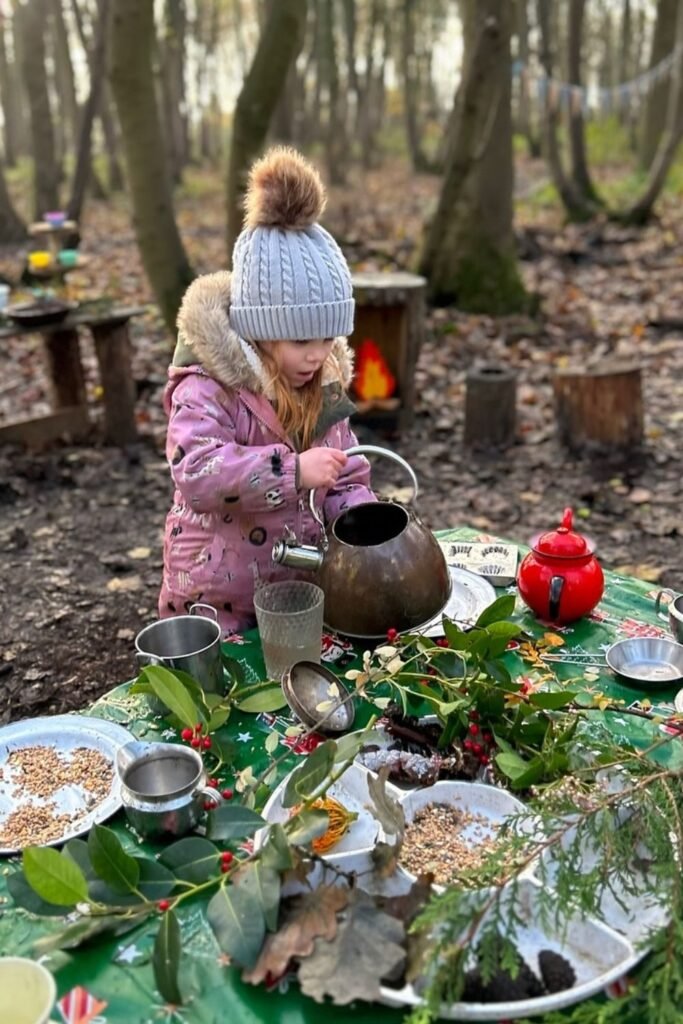
Magic happens around a tiny woodland “kitchen.” A kettle, a few metal cups, scattered leaves and pinecones suddenly you’ve got a five-star forest café.
Put a low table or stump circle in a shady area in the woods. Put in old pots, spoons, and harmless natural things like water, petals, herbs, seeds, and berries.
Don’t add anything that could be dangerous or that you don’t know about. Let kids make meals, pour, stir, and serve. No real heat is needed; your imagination does the work.
Kids younger than five adore mixing things up with their senses, while older kids convert it into role play with prices and clients.
You don’t have to instruct them what to do in open-ended pretend play like this. It helps them tell stories, make friends, and be creative.
Marshmallow Toast
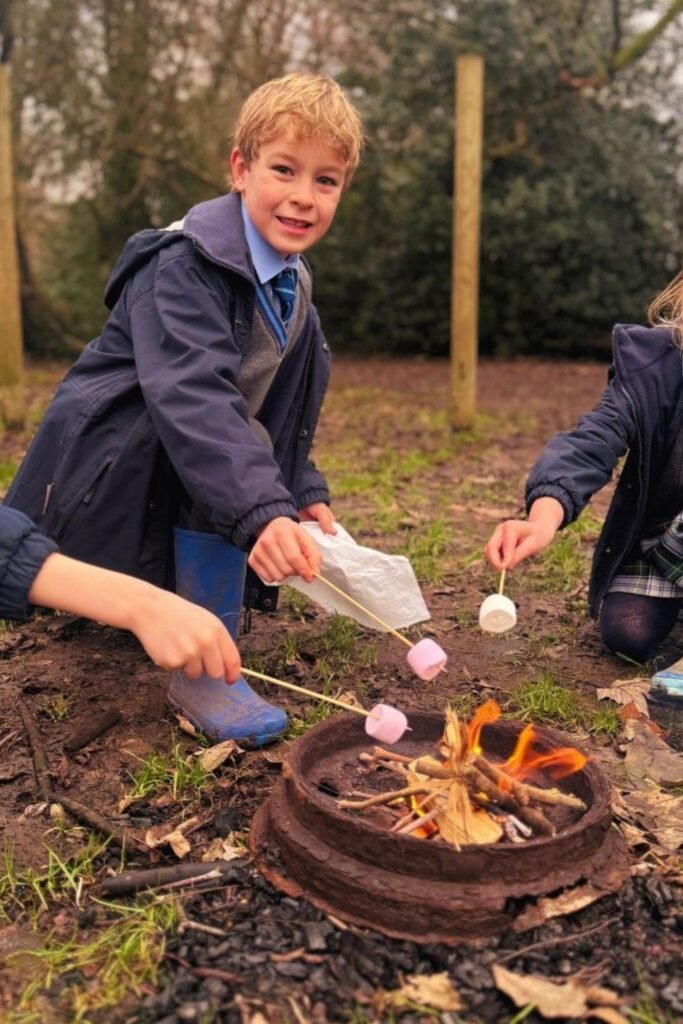
Few things grab attention like a small fire and a stick with a marshmallow on the end. Excitement rises fast but patience becomes the real lesson.
Pick a safe confined fire pit in an open area outside where the edges are clearly delineated before anyone gets too close.
Teach them how to hold their stick steady and stay away from the fire. Instead of hurrying for a rapid burn, turn carefully.
Short turns are better because they give everyone a chance. Even small incentives like this teach kids to respect fire wait their time and regulate themselves.
Talk about what worked and what didn’t at the end. Reflection is just as important as the snack.
Mud Digging
Real discovery starts underground. One push of a spade and suddenly worms, roots, and hidden layers of soil become the main attraction.
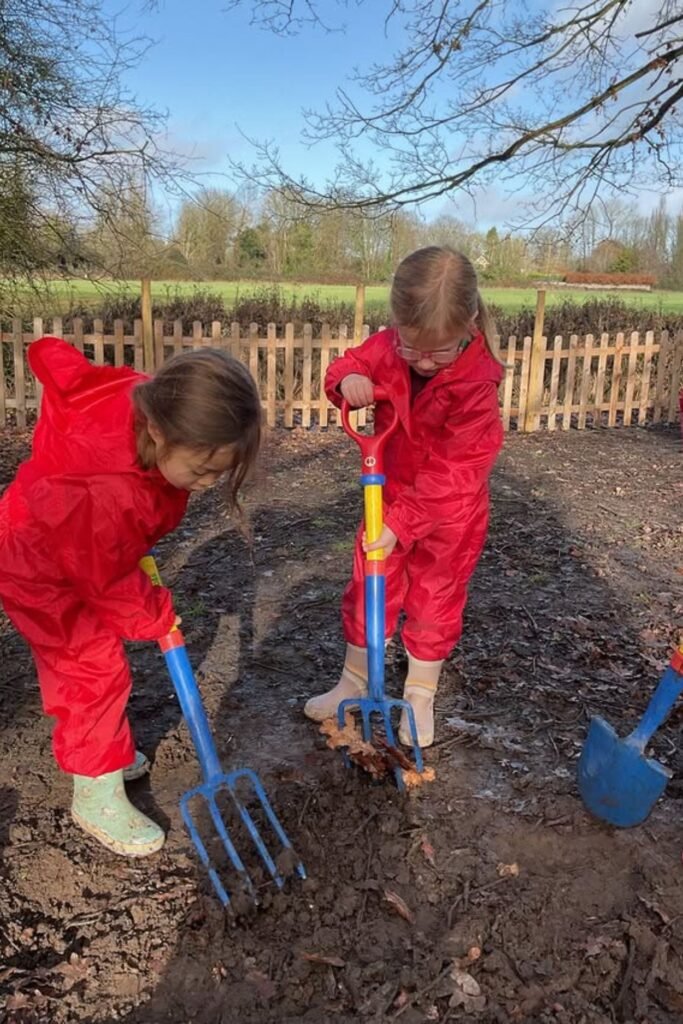
Give them little forks or spades and show them a clear area to dig in a garden patch, at the edge of a forest, or in a muddy section of a playground.
Set a small goal: find three distinct textures, dig up a root, or look for worms and bring them back gently.
There’s no need to hurry or compete. Digging makes your arms stronger, helps you coordinate and teaches you to be patient with out feeling like a lesson.
Waterproof suits make things easy for you and free for them. When they find out that the ground stores mysteries waiting to be found their curiosity naturally develops.
Clay Imprints
Soft clay turns into a storytelling tool the moment small hands press into it. Leaves leave veins behind. Pinecones create patterns. Every mark feels important.
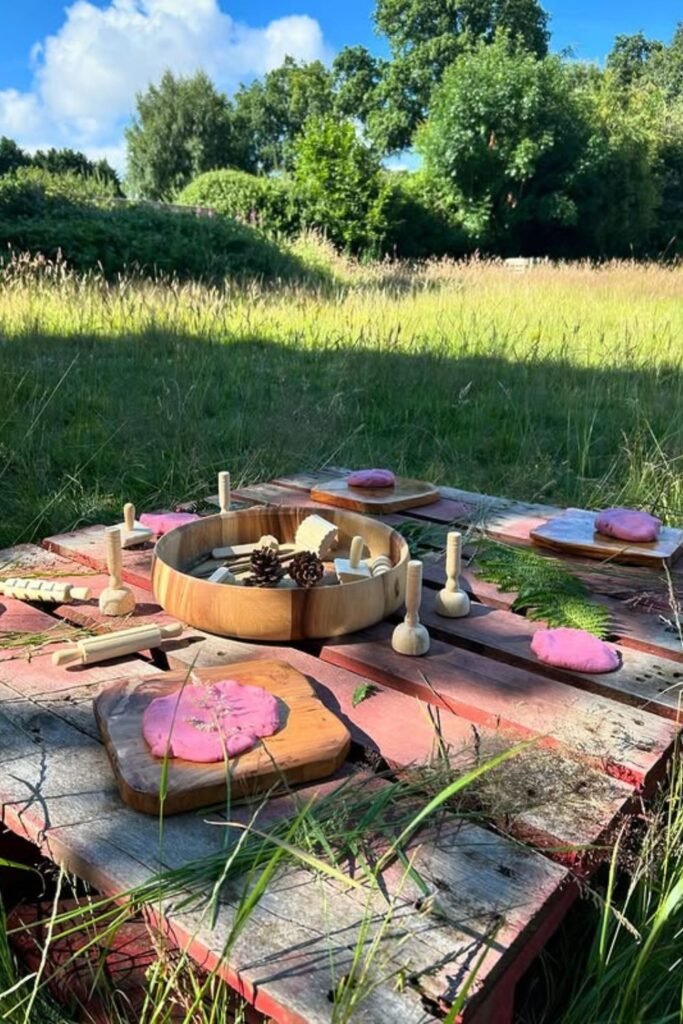
Put a low table outside on a grassy field or a clearing in the woods. Put sticks, feathers, bark, and stones in the middle of the room.
Give each child a little piece of clay and let them play with it by rolling, pressing, and stamping it. You don’t have to tell them.
What to do; their curiosity will lead the way. Older kids can make “nature tiles” with patterns, while younger kids just like how they feel.
The mess is easier to deal with outside, and the finished pieces become memories that remind them of what they found.
FAQs
What if I don’t have access to a forest?
A real forest is helpful, but not necessary. A park, a backyard, a school field, or even a little area of trees behind a playground can do.
The kids’ use of the space is more important than where they are in forest school.
Creativity can still happen if you offer them natural things to play with.
How do I keep forest school activities safe without ruining the fun?
First, there should be clear laws. Then, there should be freedom. Set physical limits, gently explain the regulations for tools or fire.
And show everyone how to behave safely before they start. Stay close, but don’t hover.
When expectations are clear and constant, kids can bear responsibility better.

Hi, I’m Afaf! I’m a law student who loves writing about everyday life – from home projects and crafts to fashion, beauty, and parenting tips.
I’ve been writing for over a year, sharing ideas that are simple, practical, and easy to try. I write about things I find interesting and useful, whether that’s organizing a space, trying a new DIY, or finding activities to keep kids entertained.
My goal is to share helpful ideas without making things complicated. If it works in real life, I’ll write about it.
When I’m not studying or writing, I’m usually experimenting with new projects or scrolling for inspiration!