
25 Drawing Ideas For Kids For 2026
You plop your kid down with crayons and paper, brimming with anticipation, only to be met with, I do not know what to draw. The paper remains a pristine white.
Drawing it seems has suddenly become a monumental task. The reality is children do not exhaust their creative reserves; they simply run out of entry points.
It offers straightforward drawing prompts tailored to your child’s age, designed to get them drawing without the weight of pressure or the sting of disappointment.
This article highlights 25 Drawing Ideas For Kids that are quick to prepare and fun to create in 2026.
Let’s jump in!
How Can Drawing Help Kids Use Their Imagination?
Children’s drawing activities are more than just picture-making; they are acts of decision-making.
Through the process of drawing, children determine the placement of elements the selection of color and the progression of events.
Drawing provides a secure environment for children to experiment with concepts without the fear of error.
The inclusion of unconventional elements such as a dragon with five legs or a purple sun is entirely acceptable.
Save this article for later!👇👇👇

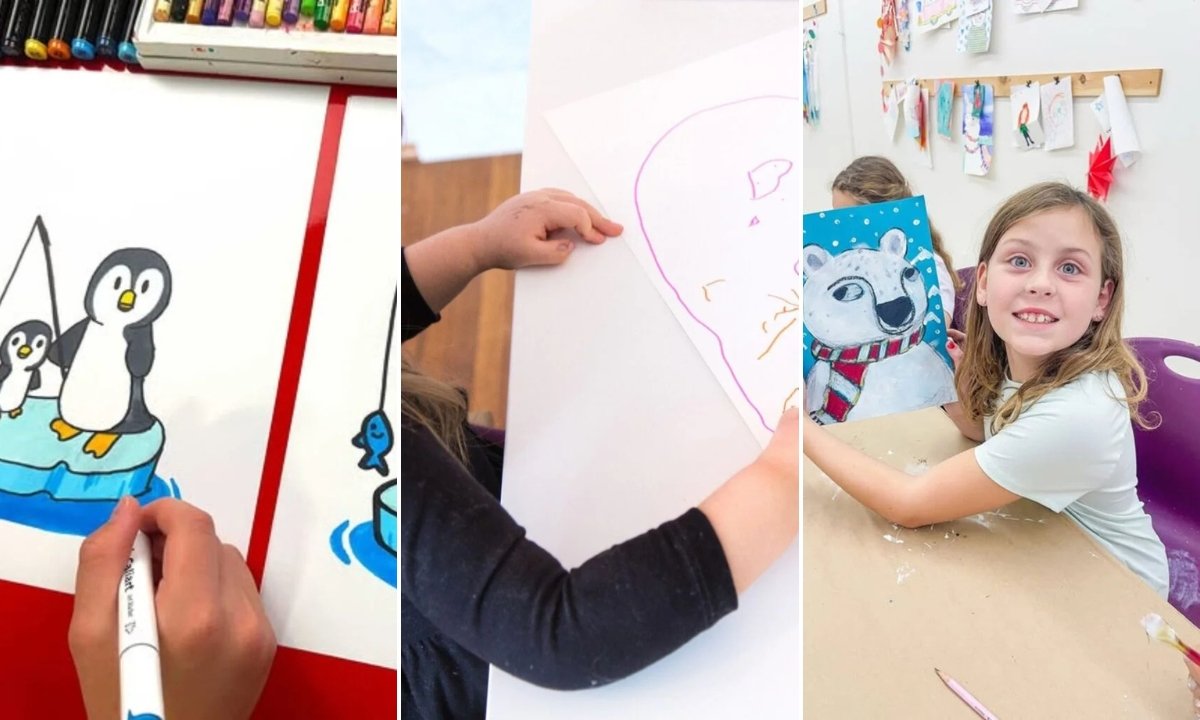
Penguin Pair
Side-by-side drawing turns this into a calm, focused activity especially for playdates or classroom tables.
One penguin can remain straight forward, while the other is given additional features, allowing children to observe their advancement without feeling rushed.
Begin with oval shapes for the bodies and short lines, subsequently incorporating fishing rods and the ripples of water.
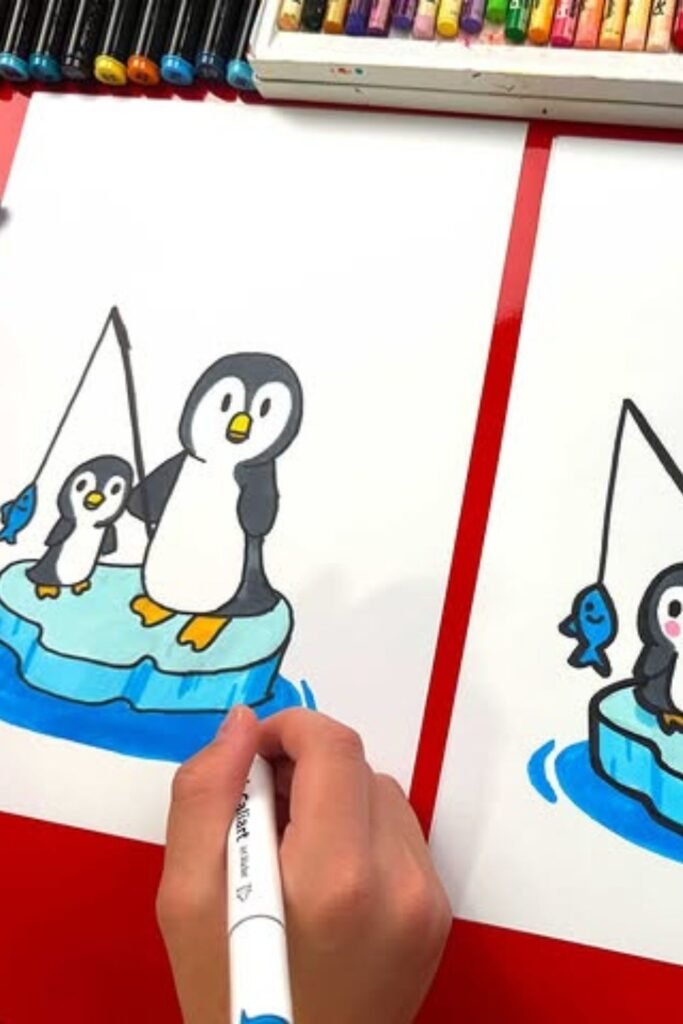
Character Portrait
Confidence shows up fast when kids draw people they admire. Portrait practice fits best for older kids.
Those who relish the art of taking their time, of honing in on the subtleties the eyes, the hair, the very expressions that make a face come alive.
Start with simple pencil outlines and then rather than hurrying construct the features methodically, one at a time.
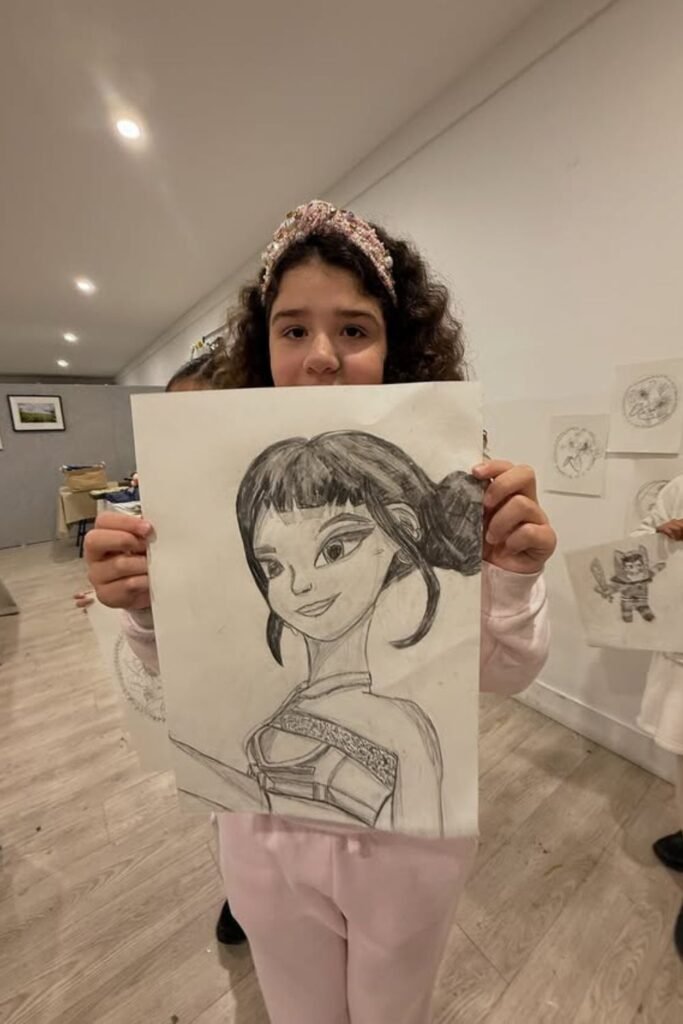
Scribble Faces
Early drawing doesn’t need rules, and that’s why face scribbles work so well for toddlers. Hand them a marker and let the lines go anywhere on the page.
Faces emerge effortlessly from dots, curves, and those delightful little surprises. This exercise is perfect for a calm morning or when your focus is fleeting.
Instead of asking what the face looks like, try asking what its feeling, and suddenly the sketching becomes a playful exchange not just a chore.
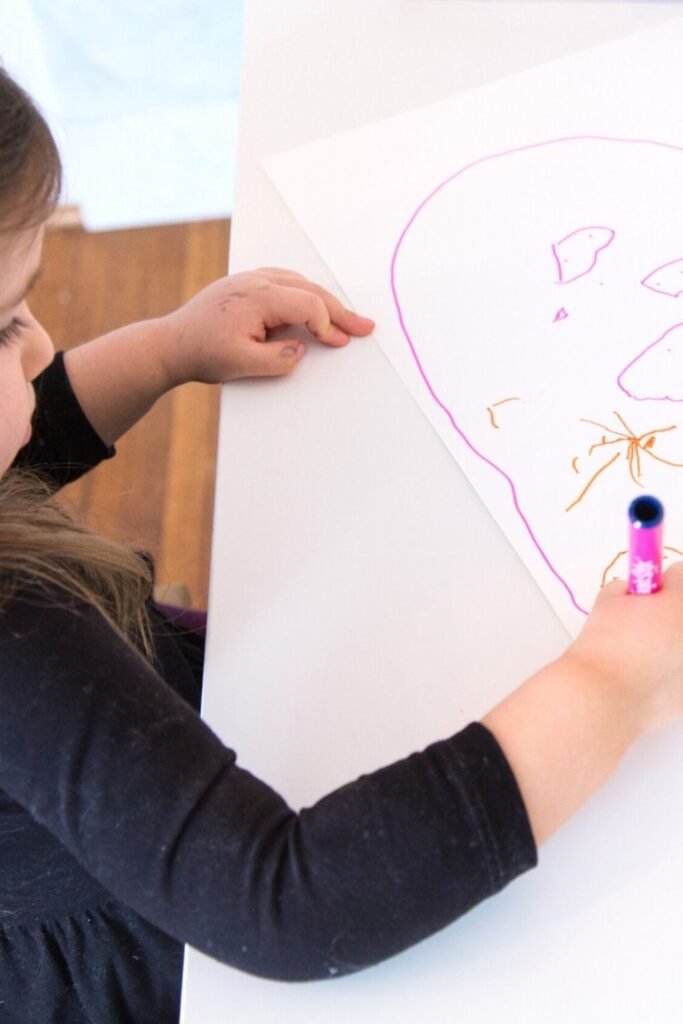
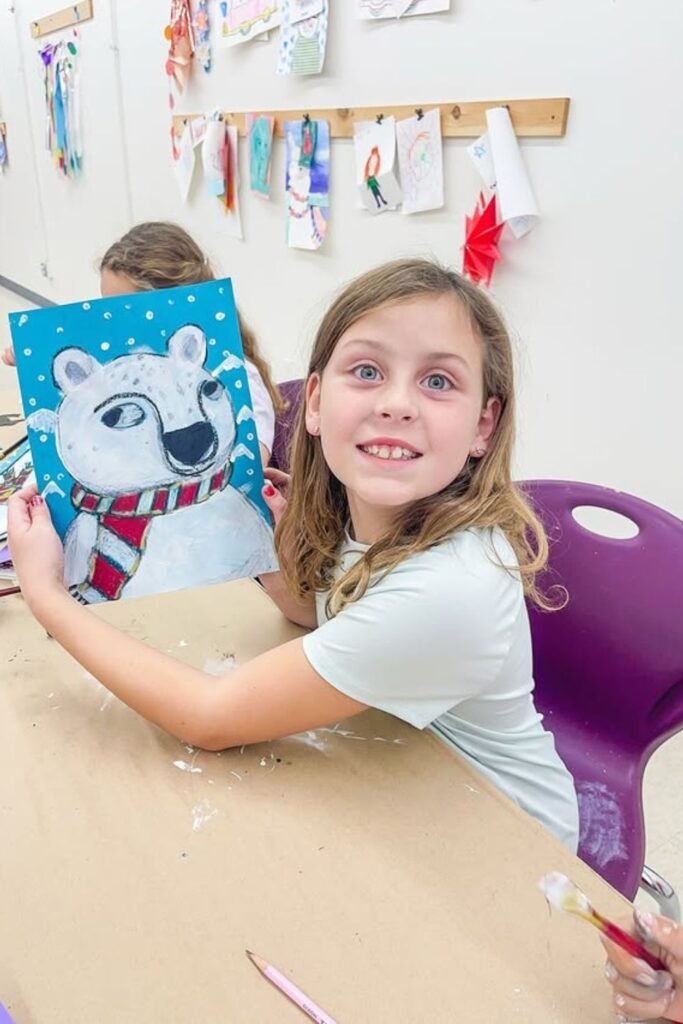
Winter Bear
Paint brings a different kind of focus, especially in group settings like art class or after-school time.
Faces emerge effortlessly from dots curves and those delightful little surprises. This exercise is perfect for a calm morning or when your focus is fleeting.
Instead of asking what the face looks like, try asking what its feeling and suddenly the sketching becomes a playful exchange, not just a chore.
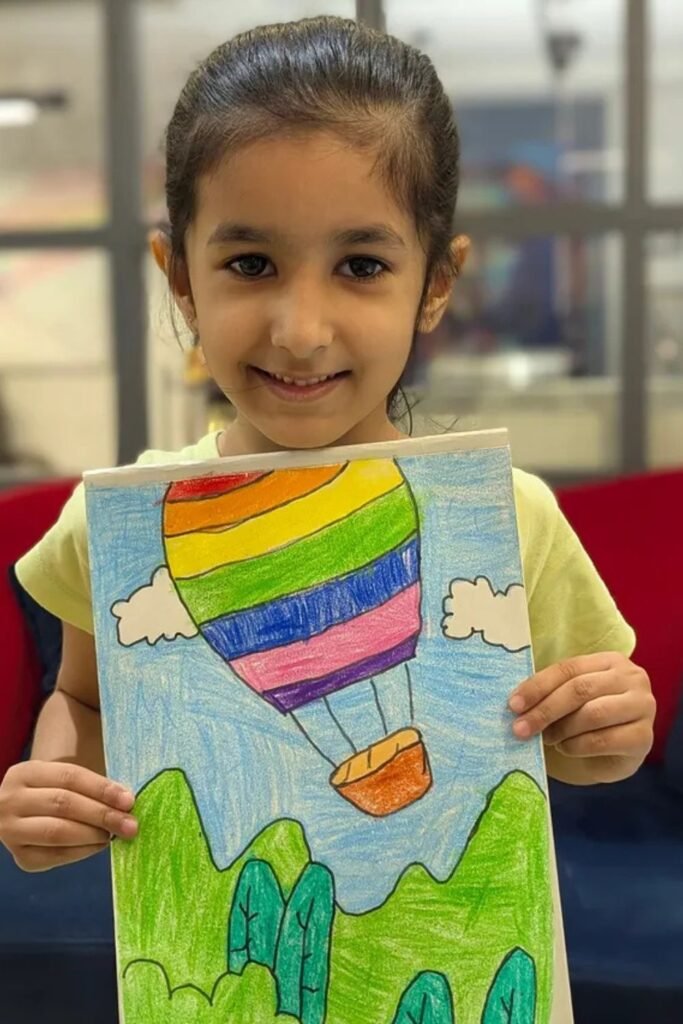
Balloon Ride
Movement on paper keeps kids interested longer, and a floating balloon does exactly that. Start by drawing one big shape in the sky.
Then, add depth to the image by incorporating hills, trees or clouds.
Crayons are a great choice for this, as children can press firmly, create layers of color, and maintain control over their work.
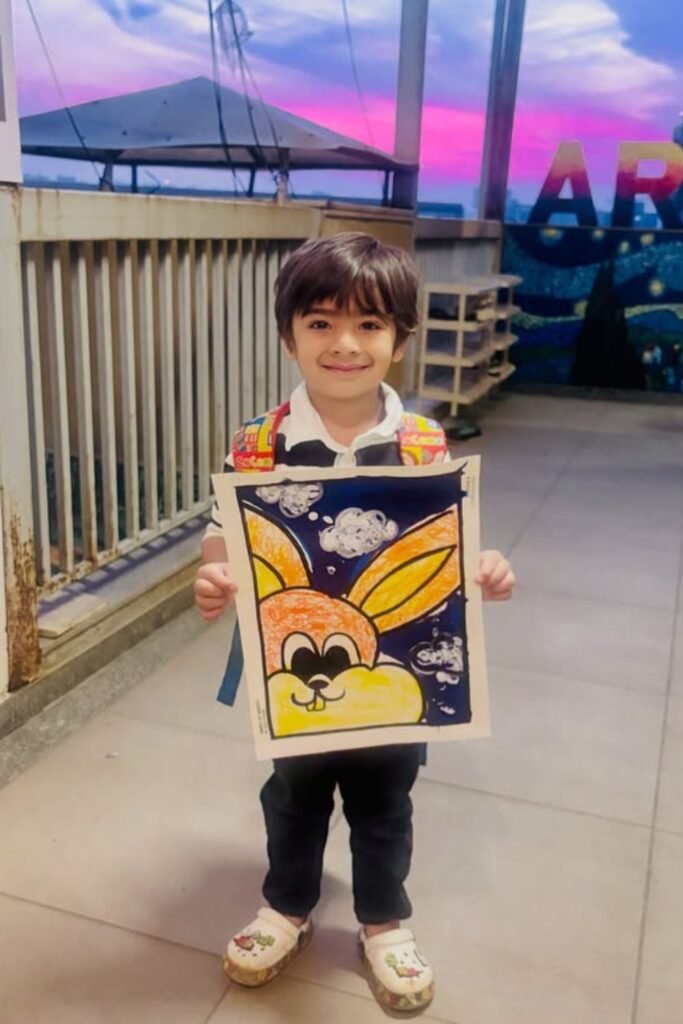
Fox Dreams
Bold faces pull kids in faster than full scenes, which makes this a great choice for short art sessions. Start with a large fox face shape.
Next, paint the backdrop with nighttime hues perhaps stars or clouds. Oil pastels or crayons are ideal.
They allow kids to build up layers of color without fretting over errors. The bold contrast makes the drawing enjoyable and rewarding to complete.
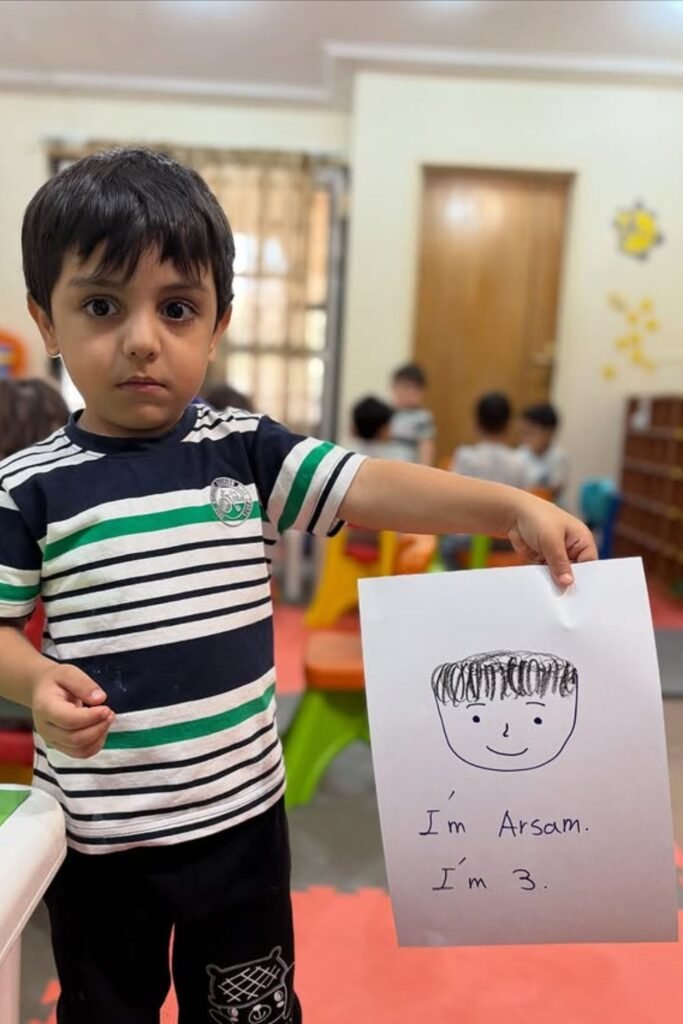
Self Portrait
Names make drawings feel personal, and that’s why this works so well for preschoolers. Invite kids to draw a simple face.
Then, have them write their name or age beneath the drawing, using any method they like. Circles, dots, or simple lines will serve.
It combines drawing with self expression, fostering confidence without requiring advanced artistic abilities.
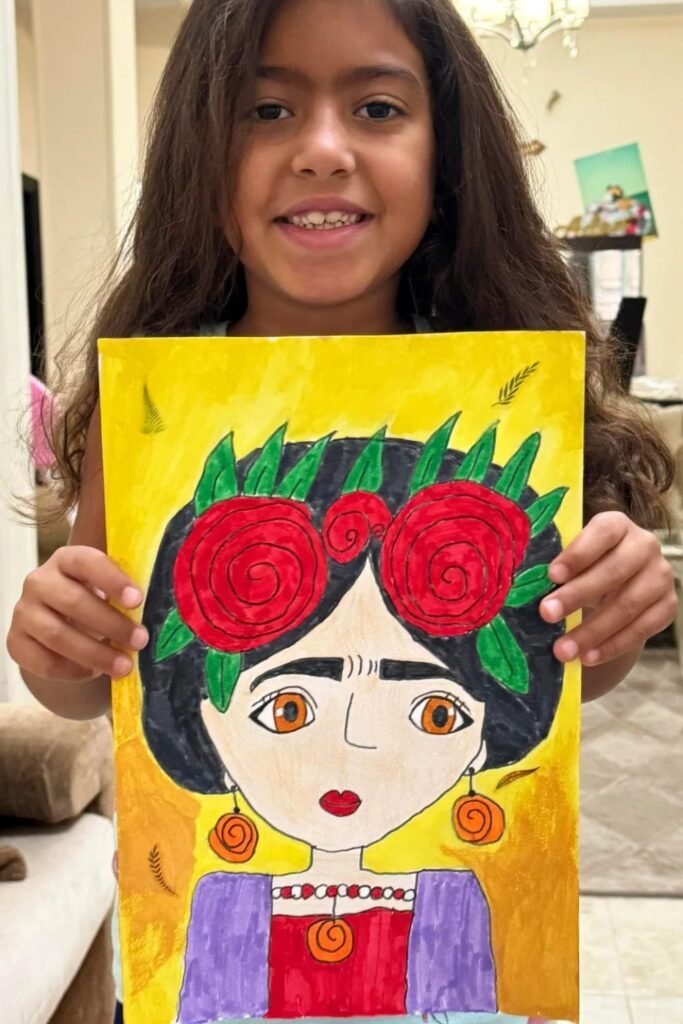
Floral Portrait
Strong colors and bold shapes make this kind of portrait exciting for kids who enjoy expressing personality through art.
Faces remain straightforward, but the real artistry emerges in the flowers, accessories, and settings.
Begin with a basic facial shape and then encourage children to select vibrant self-assured colors.
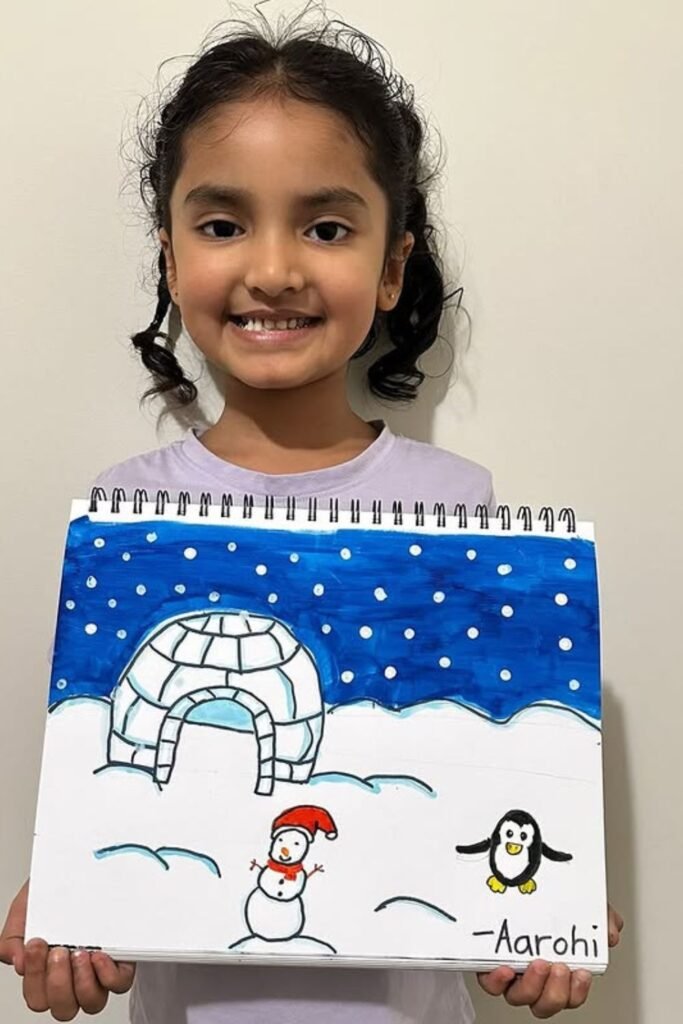
Igloo Scene
Cold-weather scenes slow kids down in a good way and help them think in layers. Snow, sky and ground give a clear order to follow.
To keep the page from becoming overwhelming, begin with the igloo outline. Next, incorporate straightforward characters, perhaps a penguin or a snowman.
This approach is particularly effective during winter themed sessions or on those snug indoor day when children relish the idea of constructing an entire world on paper.
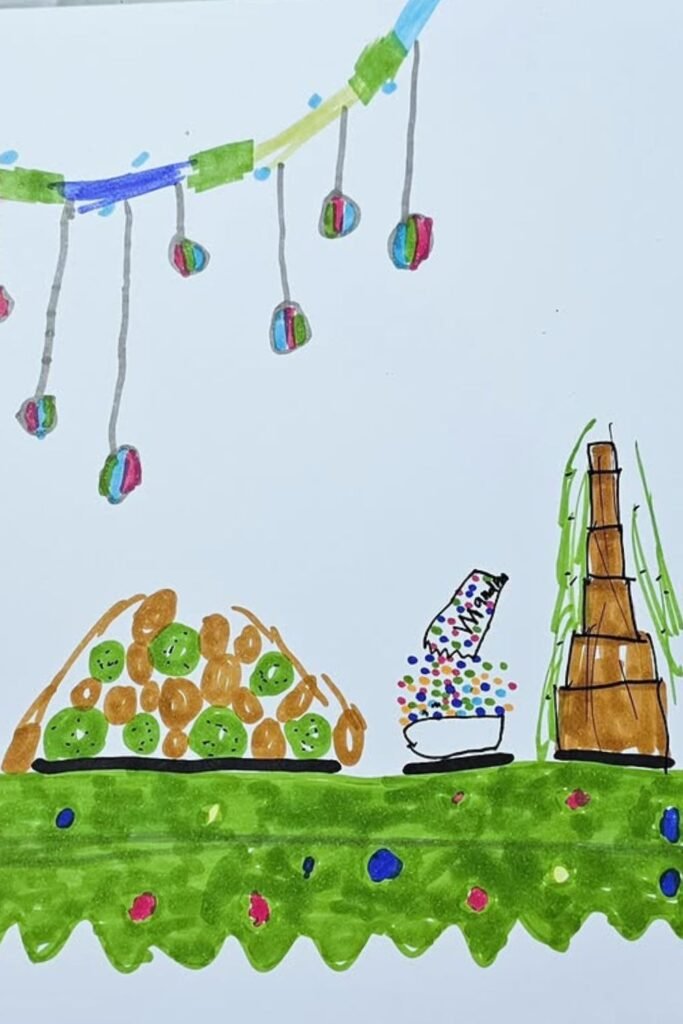
Festival Street
Busy scenes give kids permission to fill the page without worrying about balance or perfection. A festival street works best.
When children create their drawings one element at a time starting with lights, then food, and finally trees or stalls markers prove useful.
The colors remain vibrant and distinct. This approach works well during cultural celebrations or open art sessions, particularly for those children.
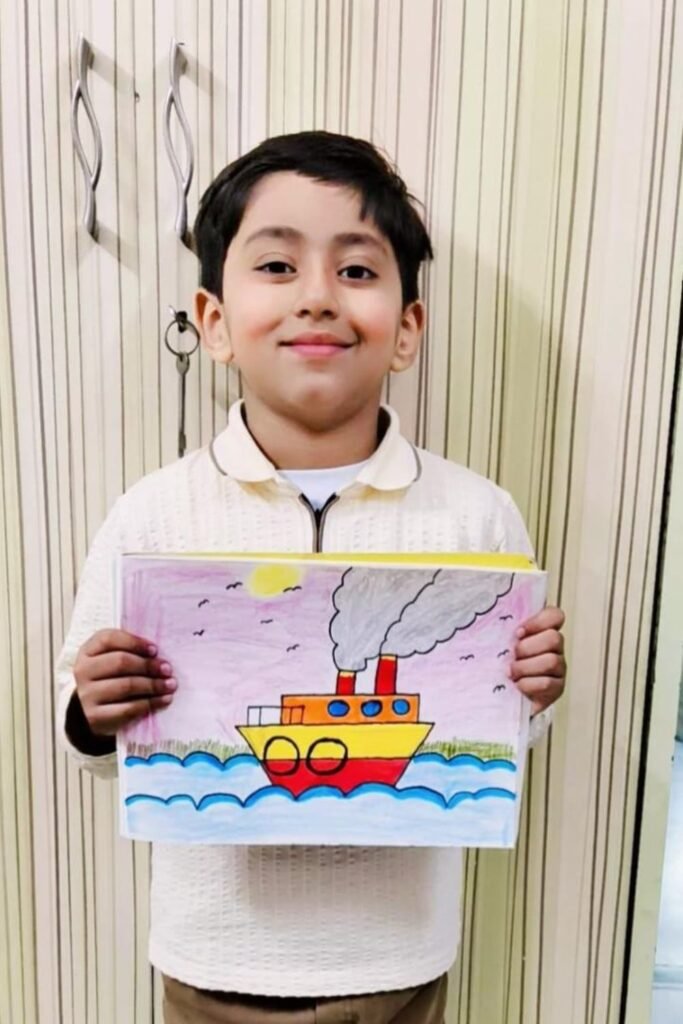
Boat Voyage
Adventure themes help kids stay focused because the scene naturally unfolds from top to bottom. Begin with a simple boat shape in the middle.
Add in some waves, wisps of smoke, a flock of birds, or a setting sun. Crayons or colored pencils are great for keeping things tidy and under control.
It’s a good approach for those peaceful afternoons or school assignments where youngsters like to create a complete scene, piece by piece.
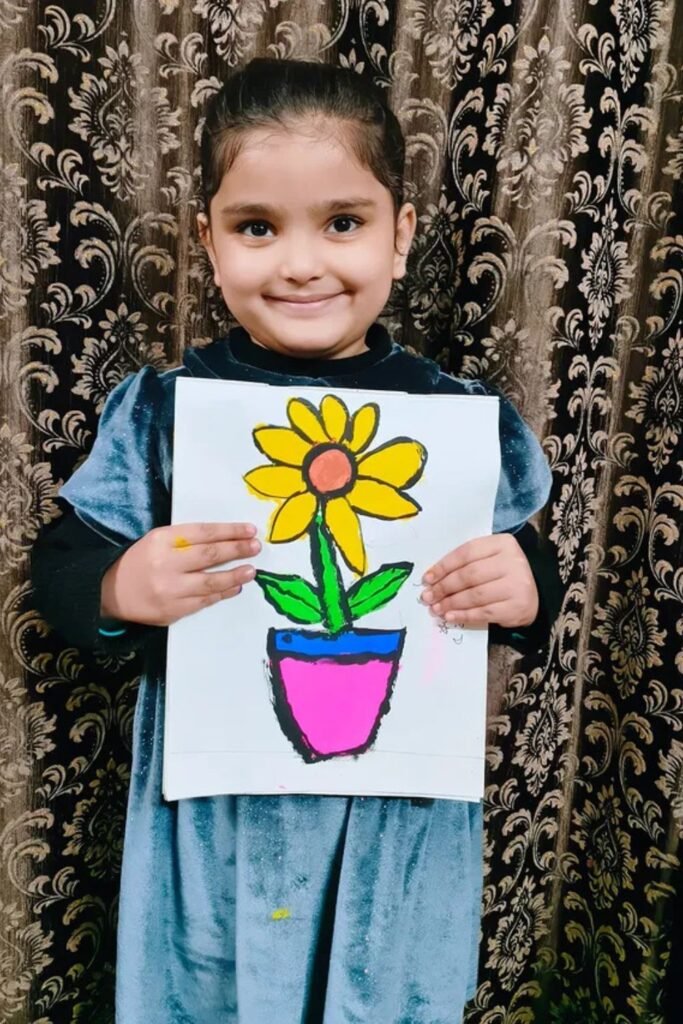
Flower Pot
Simple nature drawings give young kids a quick win, which keeps their interest high. Start with a big flower shape, then add a pot underneath.
The page feels finished, ready. Bright colors are ideal; they help kids keep within the lines without frustration.
This exercise is perfect for early learning sessions or those quiet evenings when you want something creative, yet simple to do.
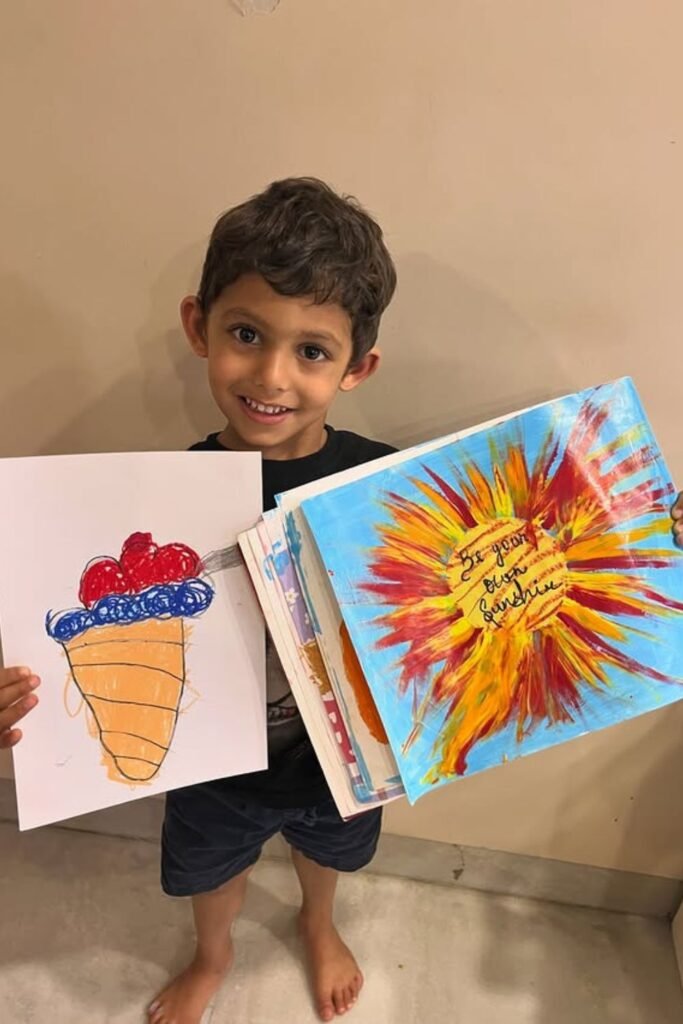
Creative Mix
Switching between simple sketches and bold paint keeps kids from getting bored. One page can stay playful and loose.
One approach encourages children to experiment with bold brushwork and emotions. Provide a variety of art supplies at the same table.
This design is effective both at home and in art classrooms, where the emphasis is on creative expression rather than the completion of a single, flawless artwork.
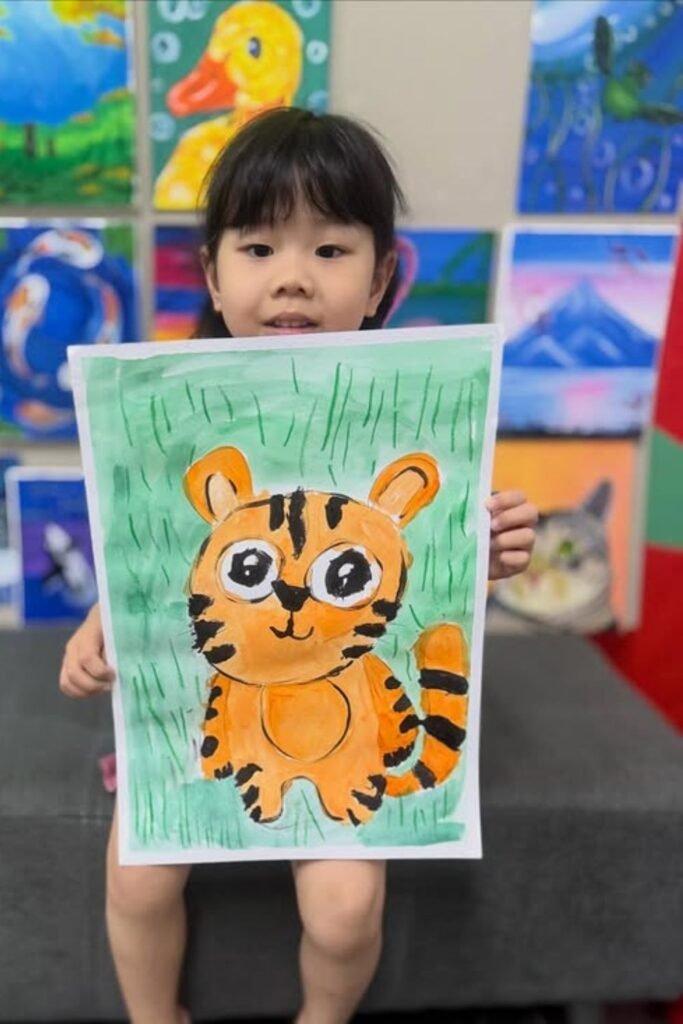
Tiger Buddy
Big eyes and bold stripes instantly grab a child’s attention, which makes animal characters like this easy to start and hard to abandon.
Start with a round face and a plump body then let the stripes appear where they like. Painting is ideal, since any errors vanish into the texture.
This is perfect for art class or playtime when children are looking for something adorable, vibrant and quick to complete.
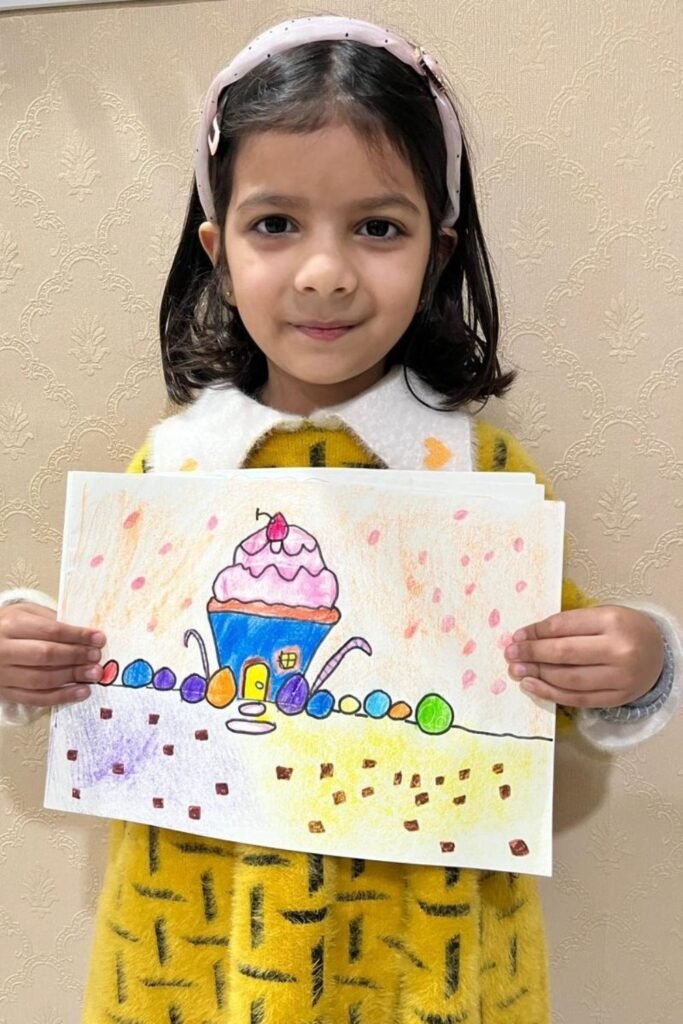
Cupcake House
Sweet drawings lower the fear of “doing it wrong,” especially for younger kids. A cupcake house turns food into a place, which instantly sparks ideas.
Begin with a large cupcake outline. Next, incorporate a door or windows. Finally, use candies to create a path or a fence around the cupcake.
Its a great exercise for those quiet afternoons when children are looking for something fun and imaginative, without needing to get too caught up in intricate details.
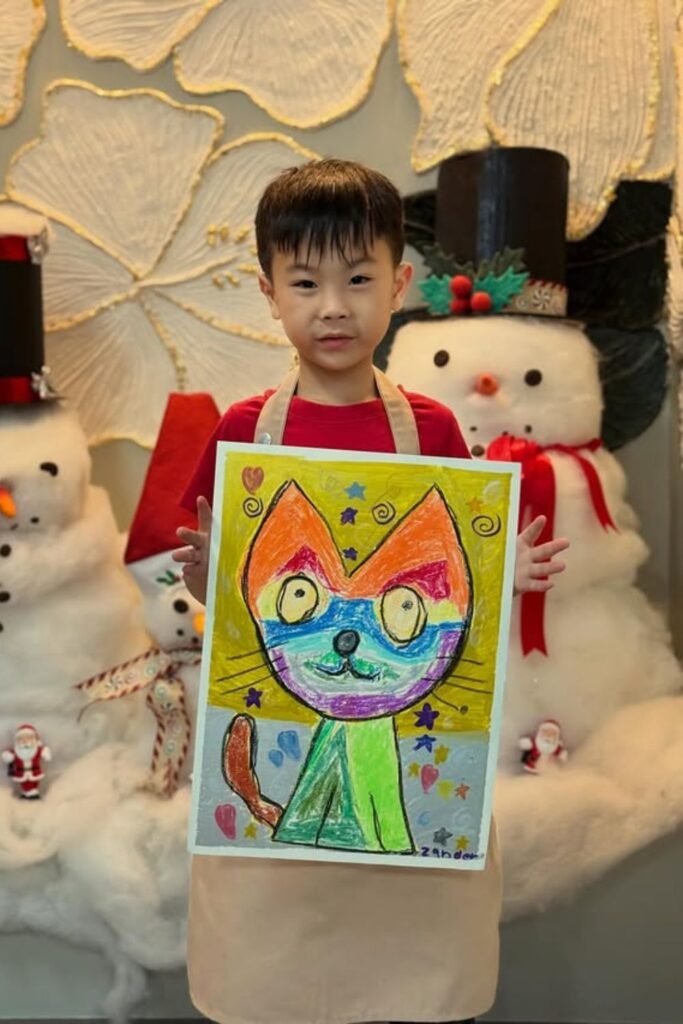
Colorful Cat
Unexpected color choices make this kind of drawing exciting instead of stressful. A cat face gives kids a clear shape.
While the vibrant hues of a rainbow allow for a total departure from realism, the process begins with a basic head and ears.
From there, the artist can freely apply any colors they choose to different portions. Hearts, stars, or other decorative patterns can be added afterwards.
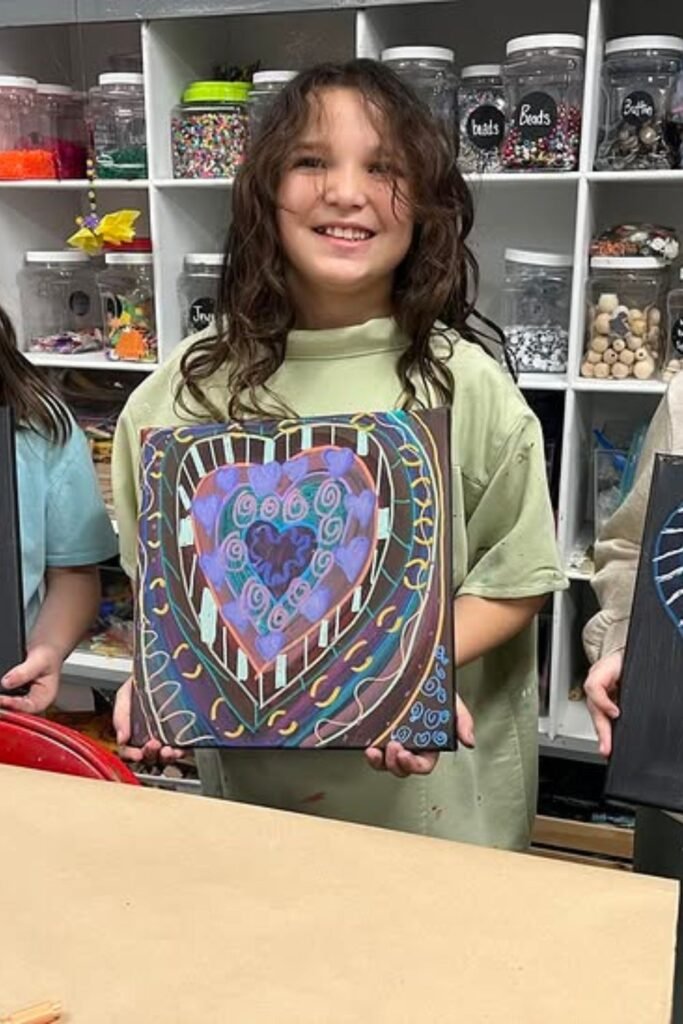
Pattern Hearts
Repetition makes kids feel calm, and layered hearts do exactly that. One heart leads to another, then lines, dots and colors slowly fill the space.
Begin with a single heart at the middle, then expand outward, taking your time. Black paper and vibrant markers are ideal for this.
It’s a great fit for group art sessions, especially when kids appreciate quiet concentration and a striking, personalized result.
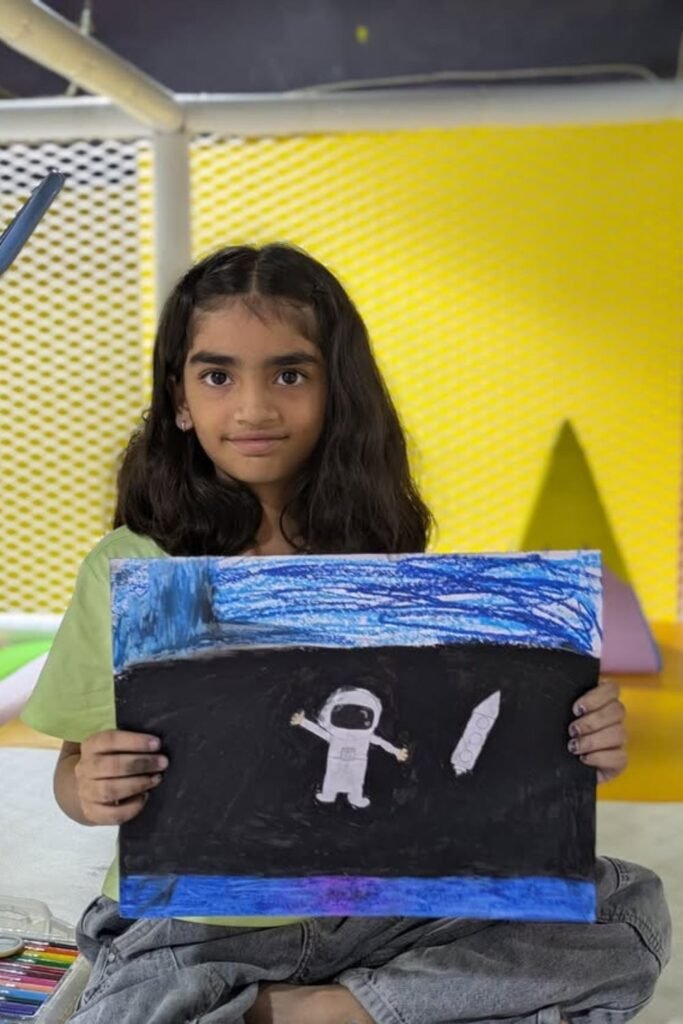
Space Walk
Dark backgrounds give kids permission to be bold, and space scenes make that easy. Fill the page with black or deep blue first.
Place a tiny astronaut at the center it’ll add a touch of drama. Rockets, stars, and planets can be added later, if the inspiration strikes.
Oil pastels or crayons are the way to go. This project is perfect for the older kids who like letting their imaginations run wild, valuing storytelling above precision.
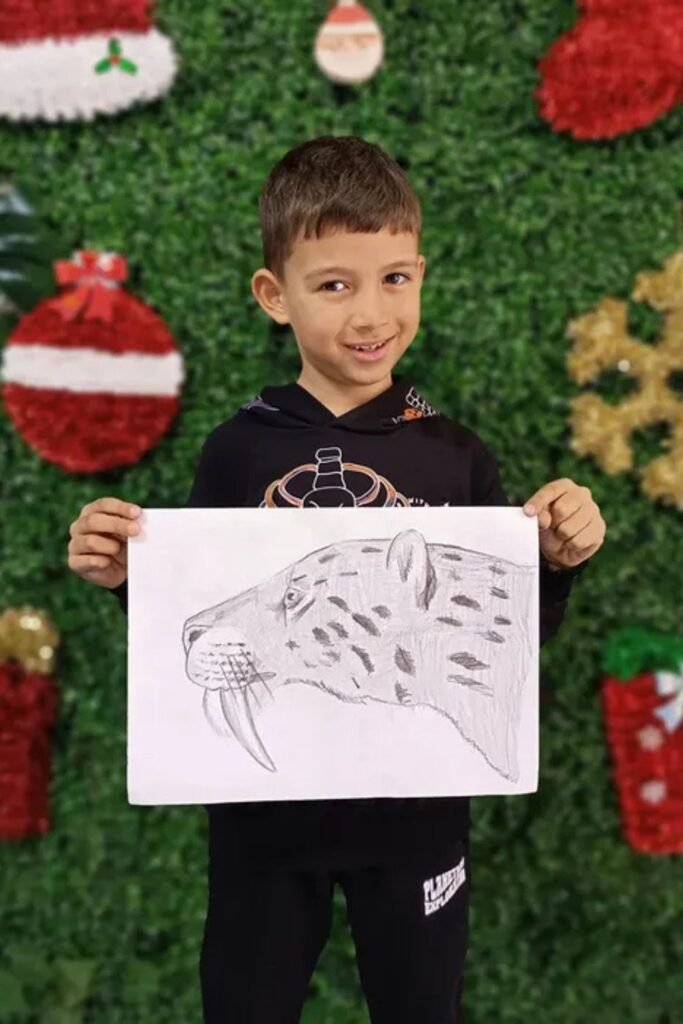
Animal Sketch
Real animals help kids slow down and observe instead of rushing. A side-profile sketch like this works best when kids focus on one feature at a time nose, eyes.
Then comes texture. Pencil is a great choice, allowing for light, easily corrected lines. This exercise works well for older children or during calm classroom periods.
Emphasizing patience, attention to detail and the idea that a strong drawing can emerge from tiny traces.
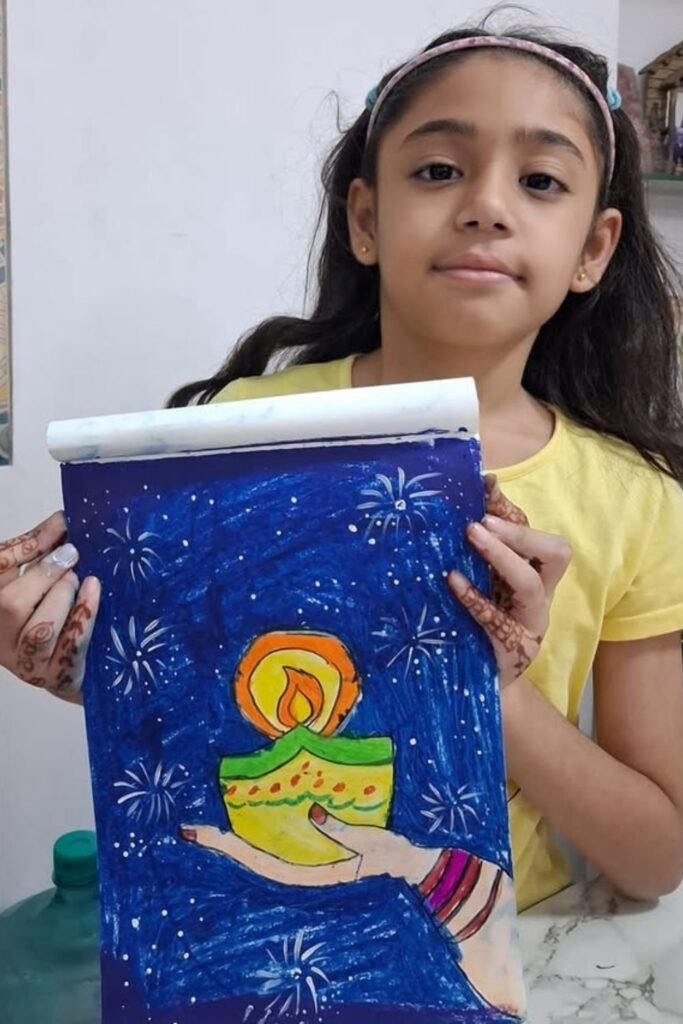
Diya Glow
Light against a dark background instantly changes how kids approach a drawing. Start by filling the page with deep blue.
Place a single, brightly lit diya at the middle to make it pop. For the sparkles and fireworks, fingers, cotton swabs or brushes are all good tools.
This project is perfect for celebrations or cultural studies, offering children a chance to explore contrast while making something both beautiful and soothing.
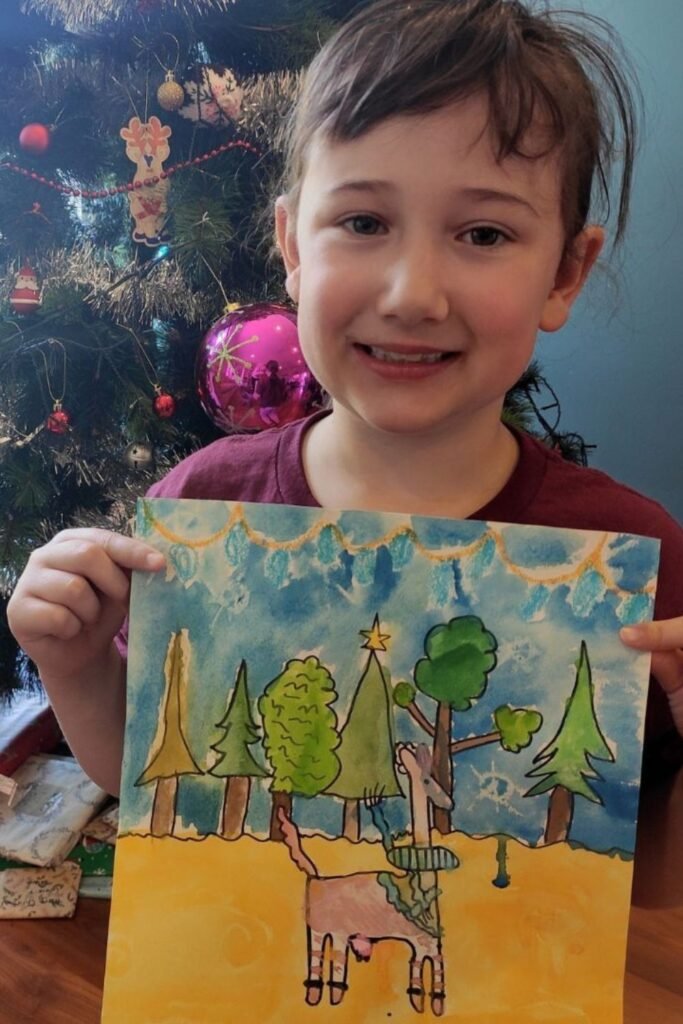
Forest Scene
Nature settings give kids space to relax and let ideas grow slowly. Begin with a simple ground line then add tall trees using different shapes.
The forest should not feel rigid. Animals can be added later, after the area itself feels right. Watercolors or light paints are ideal for creating gentle backdrops.
This exercise is perfect for holiday breaks or those tranquil weekends when children relish the opportunity to spend time on a calming drawing.
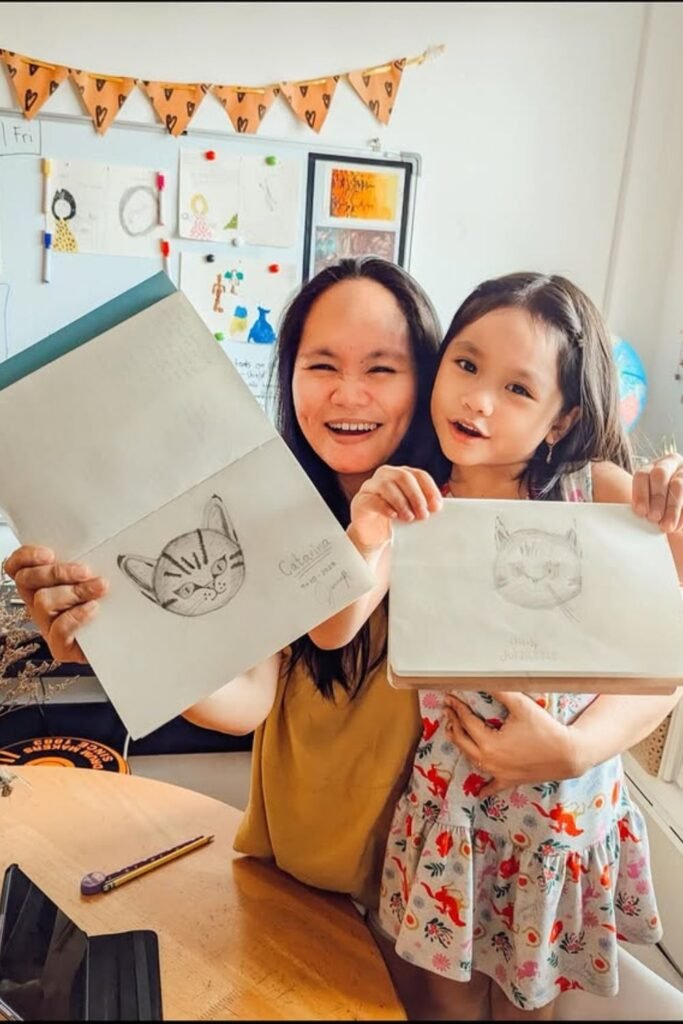
Shared Sketch
Drawing together changes the energy completely and helps kids feel supported. Sitting side by side one person starts a simple shape.
The second part adds details which helps keep things relaxed. Pencils are ideal because they allow for light, easily modified lines.
This exercise is perfect for home or small group settings, where positive reinforcement is key, and children learn best by observing and imitating.
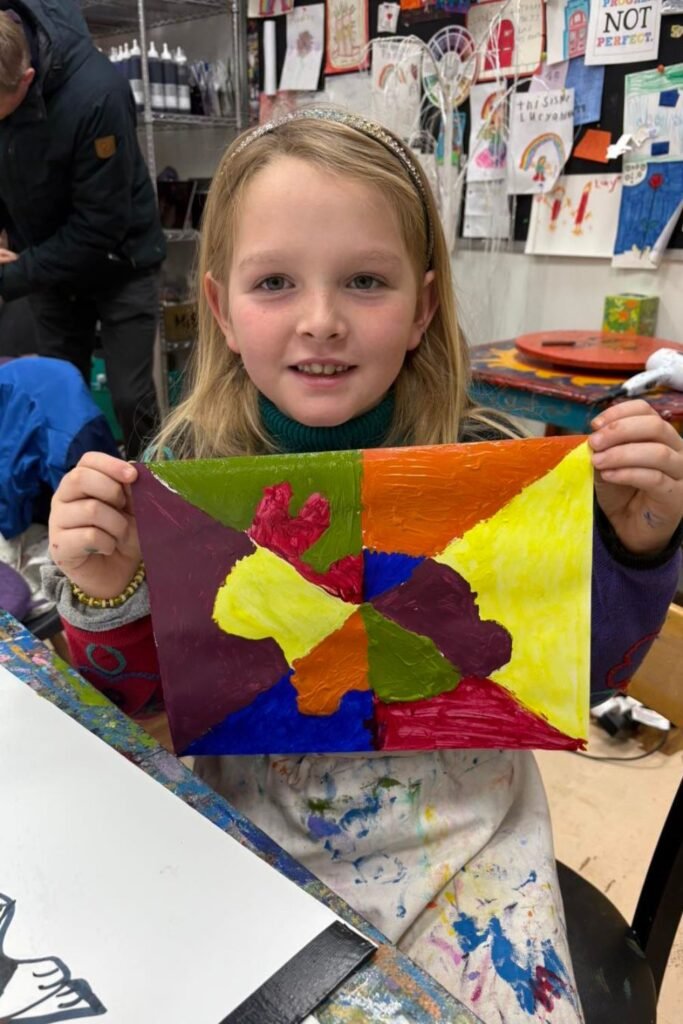
Color Blocks
Paint loses its intimidation factor when there’s no “perfect” outcome to chase. Breaking the page into arbitrary sections provides children with a defined starting point.
Eliminating the need for a preconceived notion. Each individual area then becomes a choice: a warm hue or a cool one a light shade or a dark one.
This exercise is perfect for art classrooms or messy play sessions, where the emphasis is on experimentation rather than representational drawing.
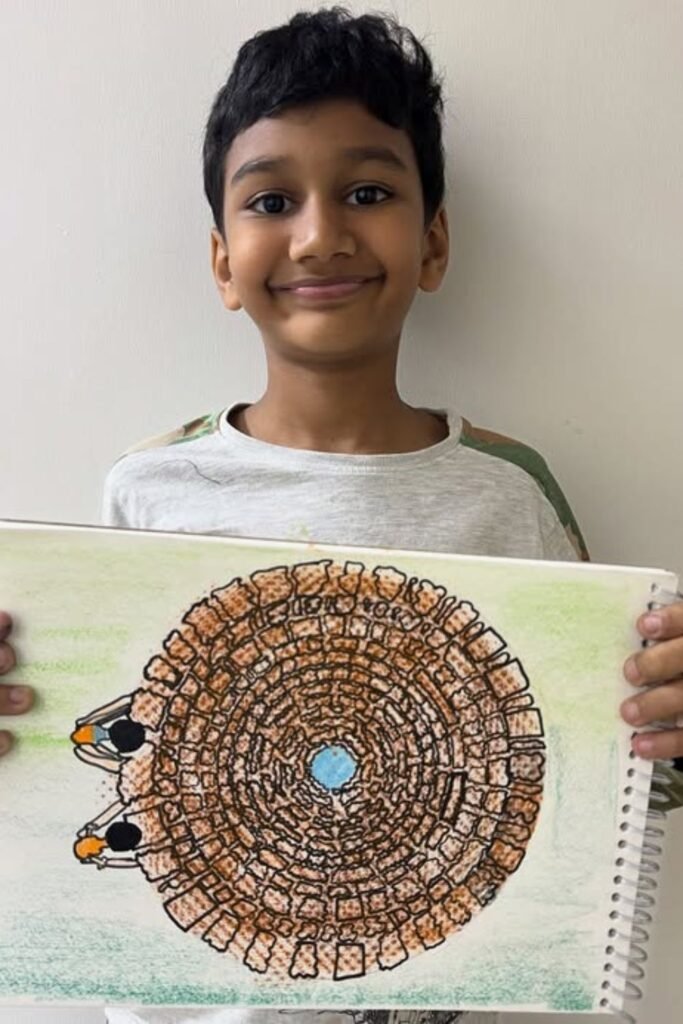
Spiral Animal
Patterns turn drawing into a slow, satisfying process which helps kids stay focused longer. Starting from the center.
Working from the center outward alleviates the strain of envisioning the entire page at the outset. Each tiny shape contribute both texture and a sense of motion.
Its an exercise well suited to older children or for those moments of silent art when patience and focus are just as valuable as act of creation itself.
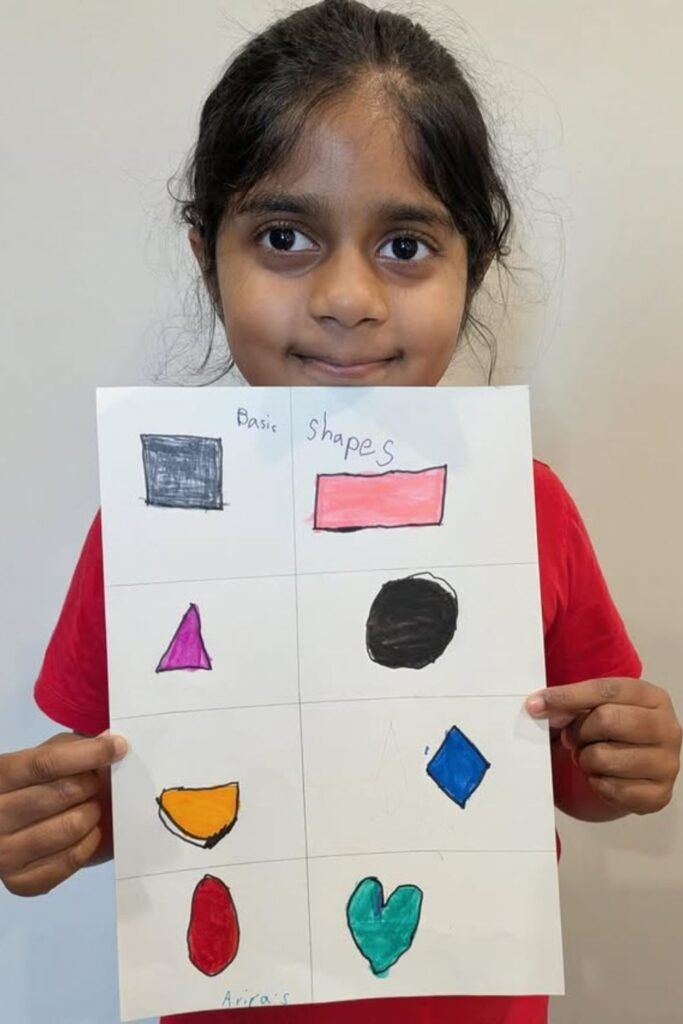
Shape Play
Learning feels easier when drawing looks like a game. Dividing the page into boxes gives kids a clear start and removes confusion.
Each spot is reserved for a single shape, and the coloring step is left till the end to streamline the process. Markers or crayons are perfectly suited for this.
This project is ideal for preschoolers or early learners, particularly while children are building their comfort with shapes before they start incorporating them.
FAQs
How do I help my child start drawing when they feel stuck?
Blank pages can be intimidating for children. Rather than just asking them what they want to create, provide a small nudge.
Suggest they draw a single shape, a line or even just one object. Once that initial mark is made, the ideas often begin to materialize organically.
What if my child says their drawing isn’t good enough?
Instead of trying to improve the picture, ask your child to describe it. When children discuss their creations, they focus on the process, not the final product.
This builds their self-assurance, which often develops more quickly than technical ability, and the skills will come in time.
Hi, I’m Afaf! I’m a law student who loves writing about everyday life – from home projects and crafts to fashion, beauty, and parenting tips.
I’ve been writing for over a year, sharing ideas that are simple, practical, and easy to try. I write about things I find interesting and useful, whether that’s organizing a space, trying a new DIY, or finding activities to keep kids entertained.
My goal is to share helpful ideas without making things complicated. If it works in real life, I’ll write about it.
When I’m not studying or writing, I’m usually experimenting with new projects or scrolling for inspiration!