
24 Charming Curly Hairstyles with Bangs Ideas 2026
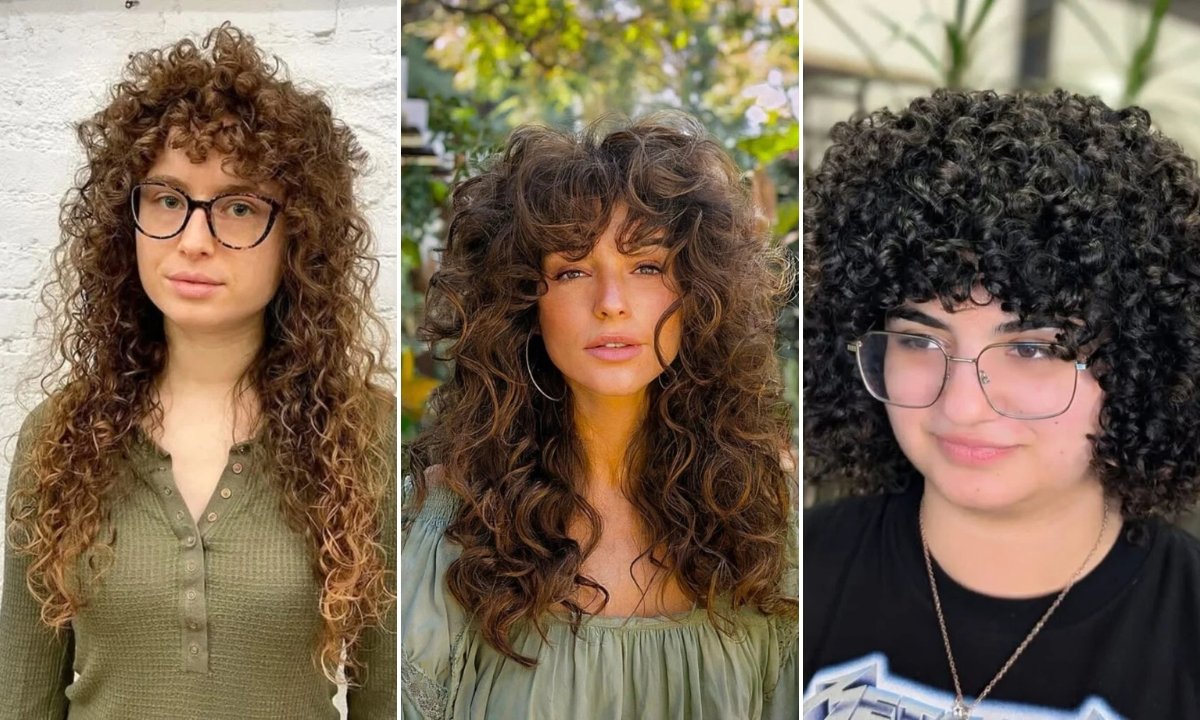
Curly bangs often look fantastic on social media, don’t they. But the thought of actually getting them can be daunting.
What if they shrink up, fall oddly, or require constant maintenance. The truth is, most people don’t end up regretting bangs because of the haircut itself.
The real issue is that no one really explains how curly bangs function in everyday life. If you’re torn between the desire for this look and the fear of a hair disaster.
In this article, you’ll find 24 trendy Curly Hairstyles With Bangs ideas for women that work perfectly for 2026.
How Do You Style Bangs on Curly Hair Daily?
Styling curly bangs each day isn’t about adding more steps; it’s about the right, subtle adjustments.
Messy bangs often signal improper drying, not a lost cause. Begin by wetting just your bangs, leaving the rest of your hair dry.
Apply a small amount of curl cream, then scrunch lightly and allow them to air dry. Avoid touching them.
While they’re drying, as this will cause frizz. For a softer look, break the cast with your fingers once they’re completely dry.
Save this article for later!👇👇👇
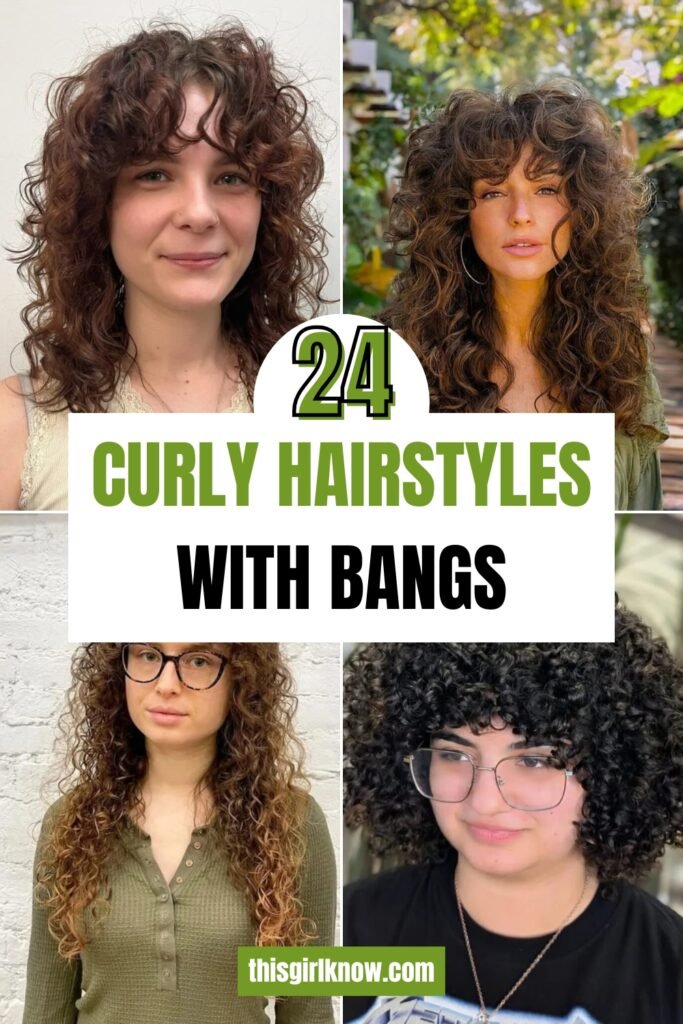
What face shape suits curly hair with bangs?
Curly hair with bangs can be surprisingly flattering and regardless of face shape and provided the bangs are expertly styled.
For those with round faces, longer or side swept bangs can create a more balanced appearance.
Conversely if your face is long, fuller bangs can prevent it from appearing overly elongated. Square faces often benefit from soft, textured bangs, rather than blunt cuts.
The key issue isn’t the shape of your face; it’s the potential pitfalls of overly short or perfectly straight bangs.
Curly Fringe
Bouncy curls across the forehead work best when the rest of the hair stays light and layered.
The key is to let your bangs do their own thing, rather than trying to mold them. This approach is particularly effective if your curls tend to leap forward as they dry.
Then resist the urge to touch them until they’re completely dry, allowing them to fall into place on their own.
Curly Curtain
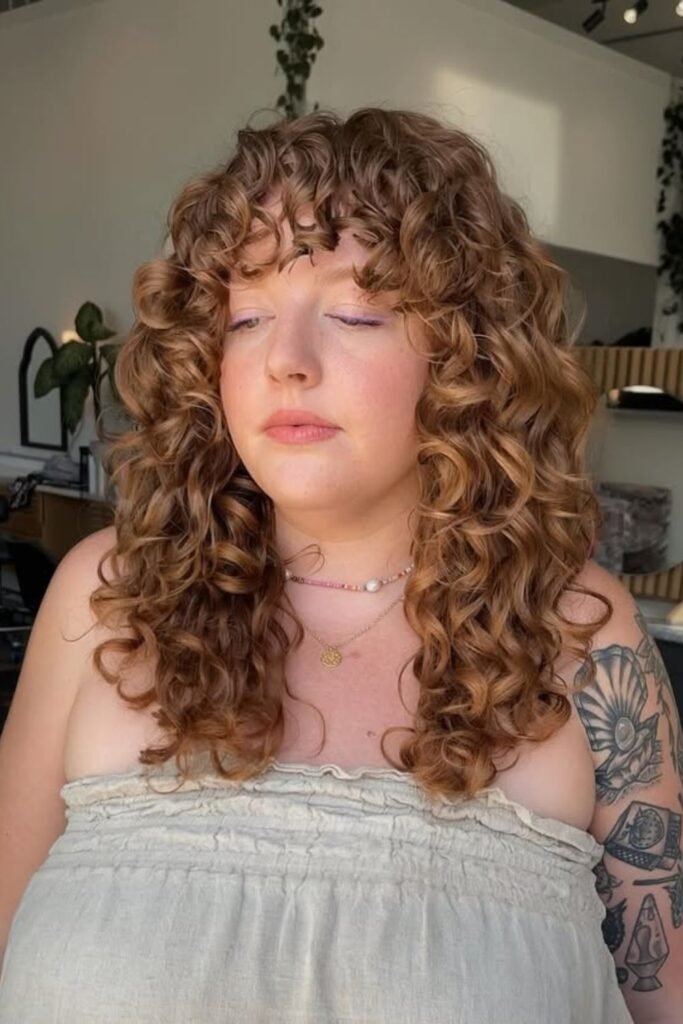
Volume starts at the center and falls outward here, which is why this bang shape feels softer and easier to live with.
The central section allows curls to softly outline the face and rather than lying flat against the forehead.
To achieve this, begin by styling the bangs forward. Once they’re dry, carefully part them to the sides, allowing them to fall naturally.
Tight Bangs
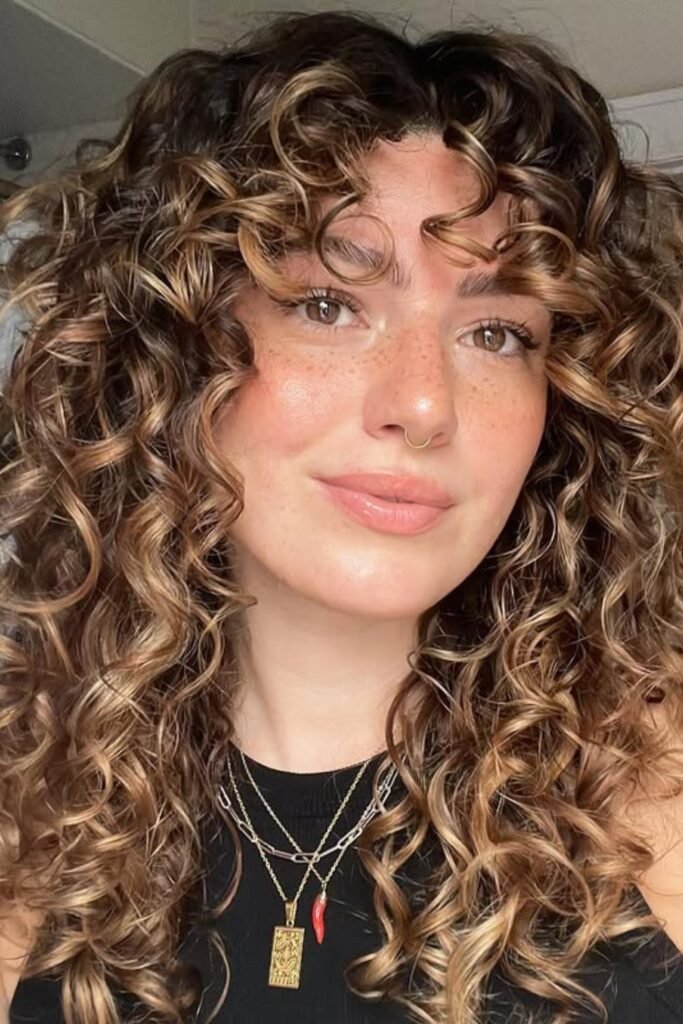
Short coils across the forehead only behave when moisture comes first. Defined curls like these need enough product to clump.
Otherwise, they’ll end up misshapen. This particular bang works best when your curls are tight and uniform from the scalp down.
To get the look, work curl cream through your hair while its still dripping wet, and then let the bangs air dry without any fussing and allowing each curl to form perfectly.
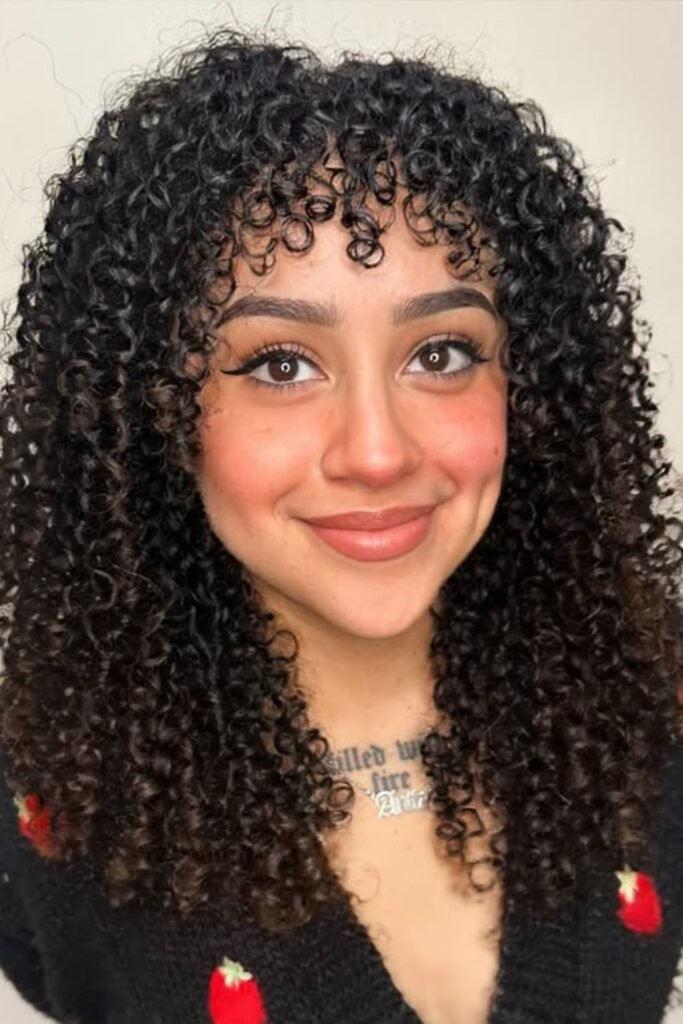
Wispy Bangs
Airy curls falling across forehead work because nothing feels forced or over-shaped. Light, separated bangs like these stay flexible on busy days and don’t collapse after sleep.
Ideal if your curls tend to relax a bit as they gain length. To get this look, request a cut with low tension.
Keep the styling straightforward just water, a bit of curl cream, and then let your hair’s natural curl pattern and gravity take over.

Full Volume
Big curls paired with a dense fringe only work when the bangs blend into the rest of the hair instead of sitting on top of it.
The volume remains consistent since the layers begin high and extend throughout. This cut is ideal for thick curls and providing structure without collapsing.
To achieve this look or dry your bangs first then diffuse the remaining hair to prevent the front from being weighed down.

Micro Fringe
Short curls take control when the fringe stays compact and intentional. A tight, rounded bang like this keeps coils from dropping into the eyes.
It’s a good option if you wear spectacles or just don’t want to fuss with your hair all the time. This style works best with thick, bouncy curls that already have a natural shape.
To get the look, focus on keeping your hair hydrated and don’t pull on the bangs; the definition is what really counts, not the length.

Soft Shag
Movement matters more than length here. The bangs melt into the top layers, which keeps the curls from sitting flat or looking cut off.
This style shines when your hair has medium to loose curls that crave definition, not added volume. To get the look request face framing layers that begin higher on the head.
The bangs should be left long enough to seamlessly blend in once your curls have completely dried.
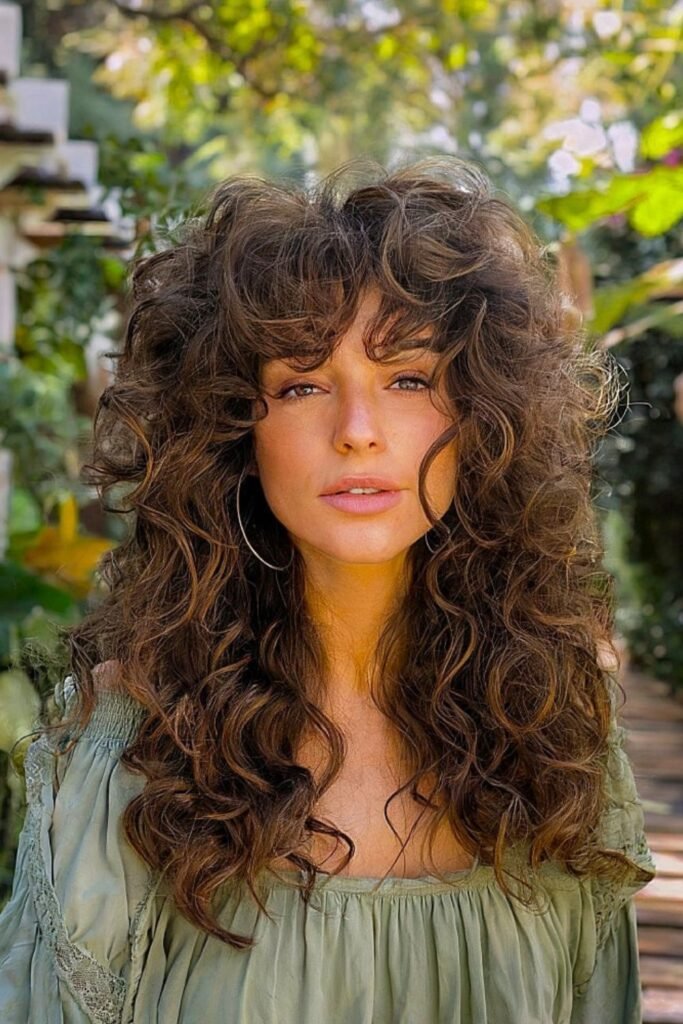
Curly Crop
Balance comes from keeping the bangs compact while letting the sides hold length. The shorter fringe opens up the face.
It’s a particularly good choice if you wear spectacles or simply can’t stand hair in your face.
This style works best with tight to medium curls, ensuring they stay defined throughout the day.

Layered Fringe
Messy curls fall into place here because the bangs aren’t trying to be perfect. Uneven length lets the curls land wherever they want.
It simplifies style on those days when you just can not be bothered. This technique is ideal if your curls have a natural bounce but tend to flatten out with a blunt cut.
To get this look, avoid harsh lines. Instead, request point-cutting, allowing the fringe to fall naturally as it dries.

Rounded Bangs
Curves across the forehead soften the whole haircut and keep tight curls from looking harsh.
The ideal rounded shape emerges when curls shrink uniformly and spring back with vigor. Here definition takes precedence over sheer length, making wetness the key.
To get this look and style your bangs while they’re still sopping wet. Allow them to dry forward ensuring the shape locks in place before the rest of your hair falls into place.

Curly Mullet
Length stays intentional here because the fringe controls the focus. Short, defined curls at the front stop long hair from dragging the face down.
This technique is ideal if your curls tend to relax as they reach the tips, while remaining tightly coiled at the scalp. To get this look, start by defining and shaping the bangs.
Then, allow the rest of hair to grow out naturally. This approach creates a sense of equilibrium, rather than a disheveled appearance.

Soft Curtain
Loose curls falling apart at the center keep the forehead open without committing to a full fringe.
The gentle look works because the bangs aren’t designed to be rigid. Its ideal if your curls have a bit of a bend rather than a tight coil, allowing them to move freely as they dry.
To achieve this, style the bangs forward while they’re still wet. Once they’re dry, part them softly and letting them fall naturally rather than forcing them into place.
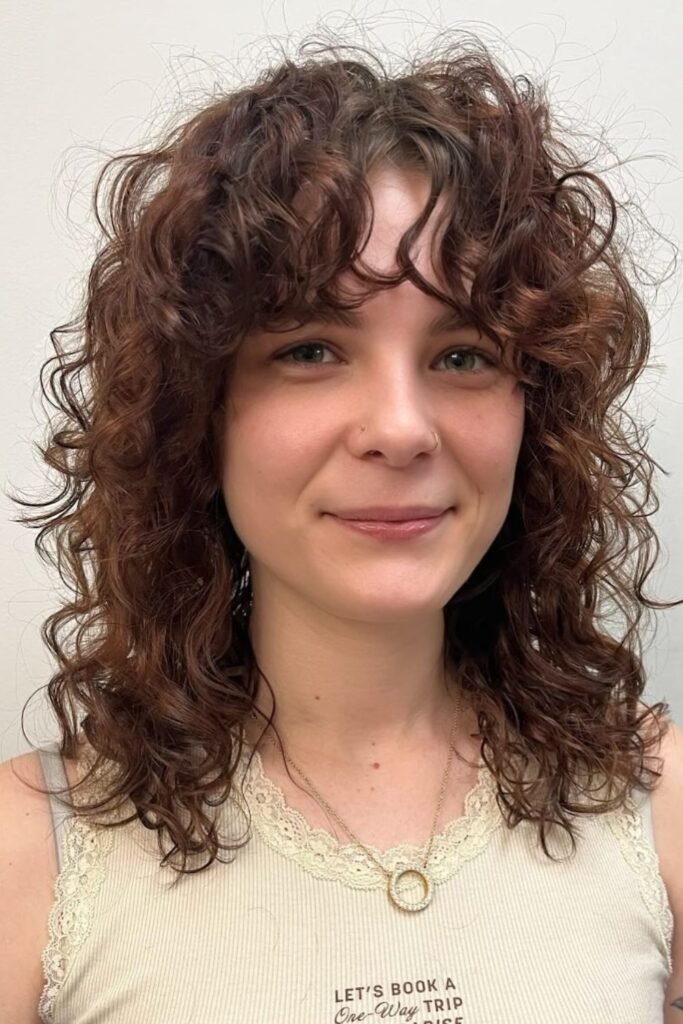
Curly Bob
Short length changes how bangs behave, and that’s the advantage here. Curls bounce up instead of dragging down.
The fringe maintains its form without constant upkeep. Its ideal for those with tight curls that retain their definition throughout the day.
To achieve this look and keep the bob’s shape rounded avoiding a blunt cut. Style the bangs first allowing them to set before you add volume to the rest of your hair.
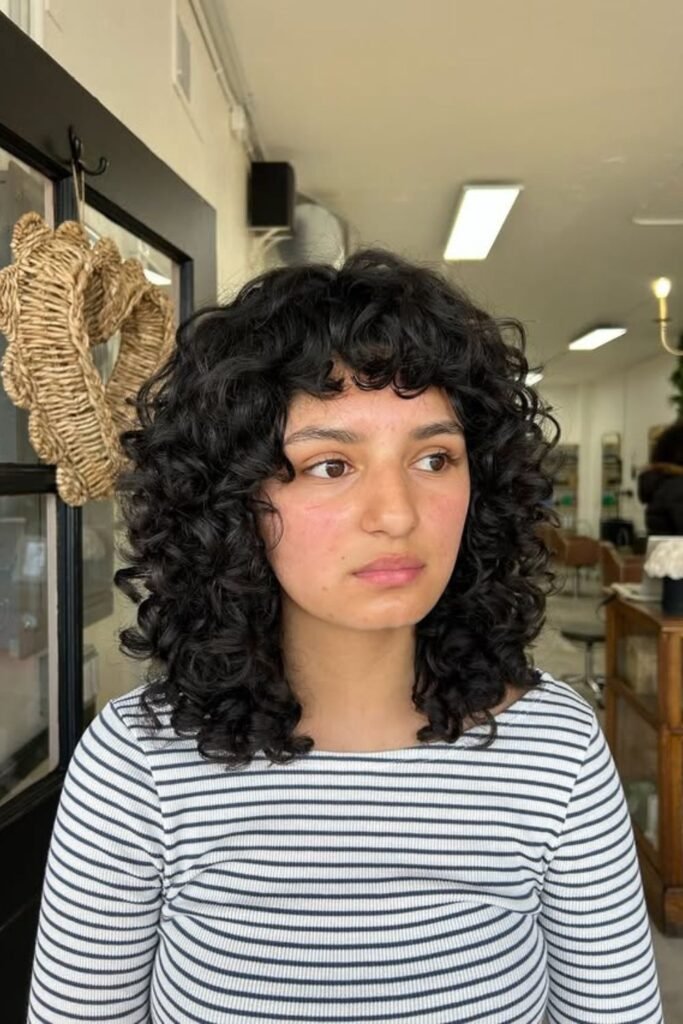
Airy Fringe
Loose curls falling forward create softness without hiding your face. The fringe stays light because the curls separate naturally instead of clumping together.
Ideal for hair that’s neither too thick nor too fine, especially if it tends to go frizzy with a blunt cut.
To achieve the look and use product sparingly and resist the urge to over scrunch the bangs.
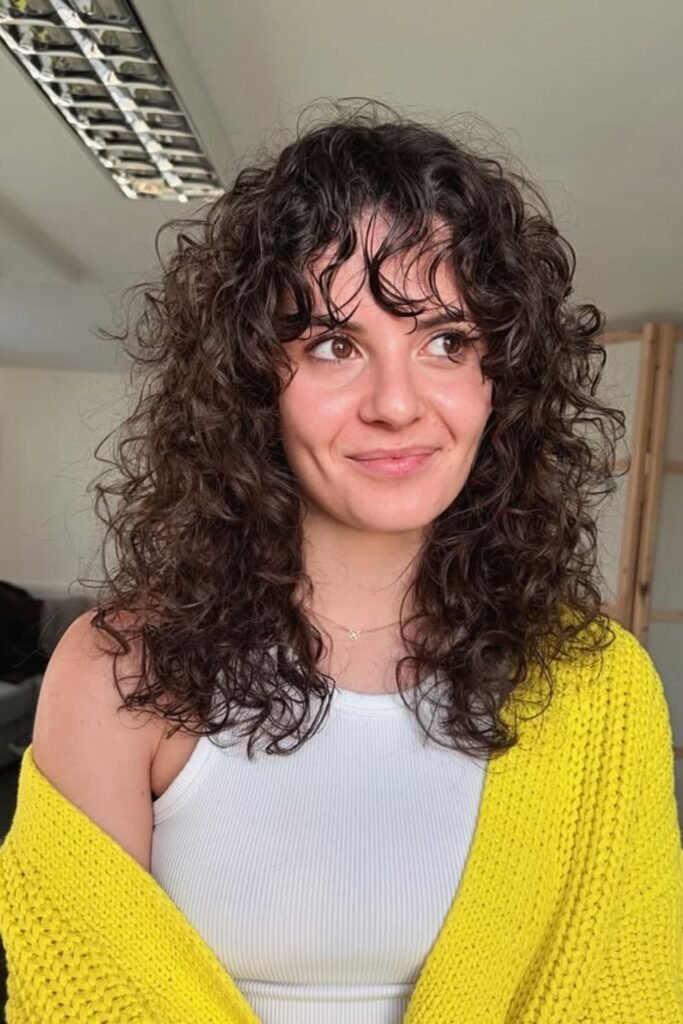
Side Fringe
One curl dropping slightly off center can change how the whole face reads. The side placement softens strong features.
It also prevents bangs from looking weighed down or overly structured. This style works best when your curls are a mix of sizes and don’t lay flat across your forehead.
To achieve this look, part your bangs while they’re still damp. Allow them to air dry in that position, which helps the form develop organically, avoiding a forced.
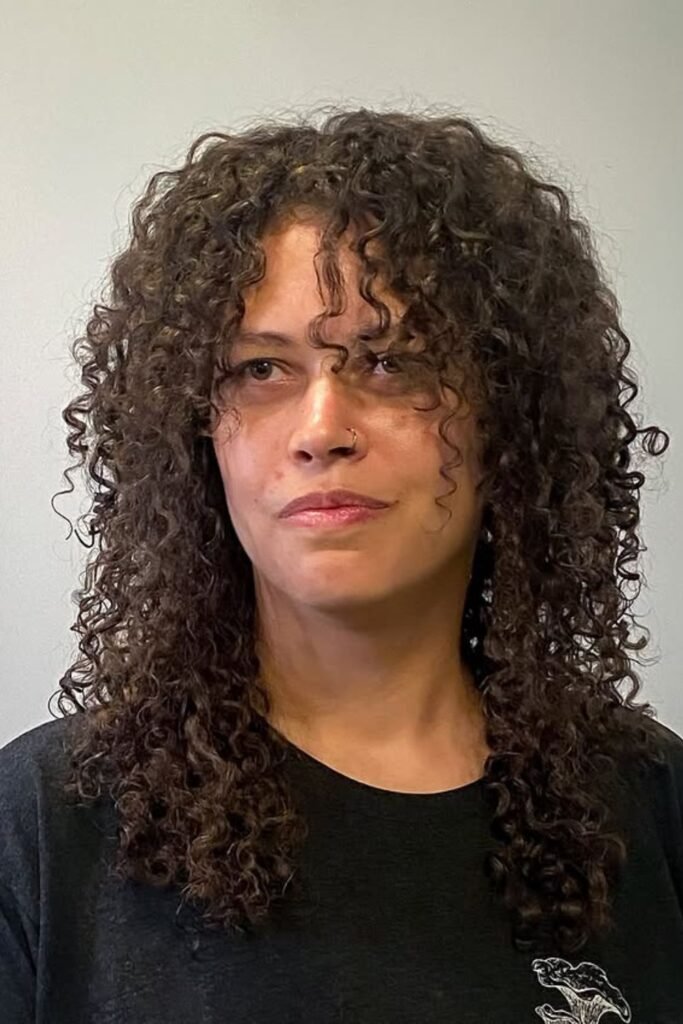
Short Fringe
Short curls sitting high on the forehead work when the haircut keeps everything playful, not precise.
The fringe is a breeze, really, as the curls don’t battle gravity. It’s perfect if your hair shrinks uniformly and sets quickly.
To get the look, let the bangs be a little longer at the edges, and don’t overdo it with the product. The key is the natural curl; that’s what keeps it from looking forced or strange.
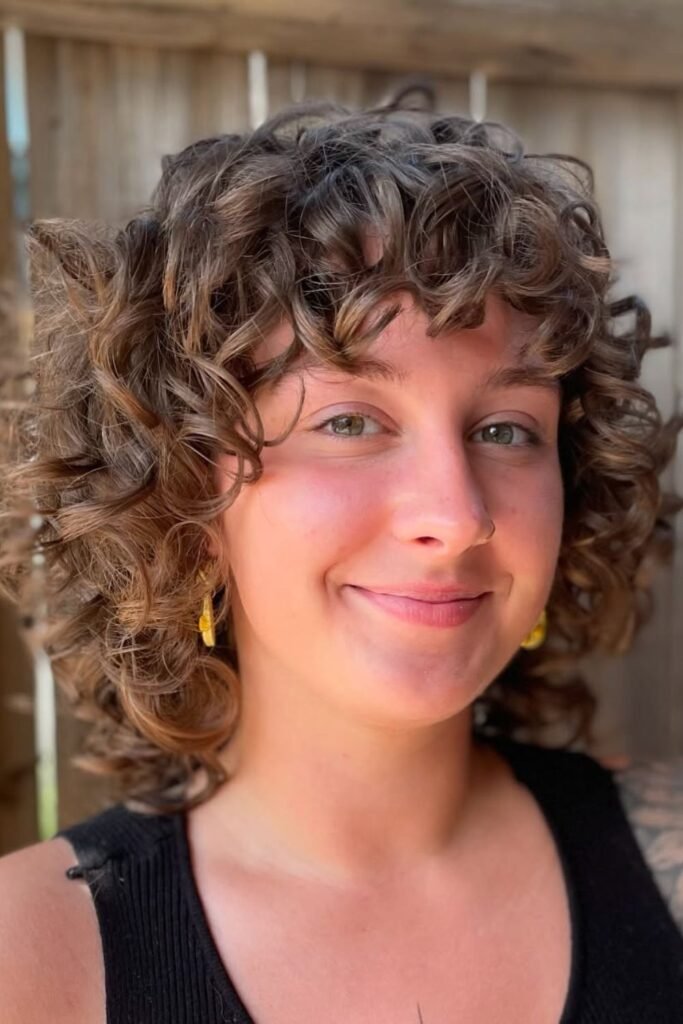
Soft Fringe
Gentle curls brushing the brows give shape without stealing attention from the rest of the hair.
The fringe has a certain give, which is a blessing when you’re rushing out the door. It’s ideal for curls that are medium in size and don’t spring up too much at the scalp.
To get the look, leave the bangs a touch longer and use less styling product on them than you would elsewhere.

Curly Layers
Volume leads the look here not the bangs. The fringe blends into full, rounded layers so nothing feels separate or heavy at the front.
Ideal for those with voluminous curls that really puff up when they dry. To get the look, integrate the bangs.
The haircut itself, not as an afterthought. Diffuse the hair evenly, ensuring the front maintains the same height as the sides.
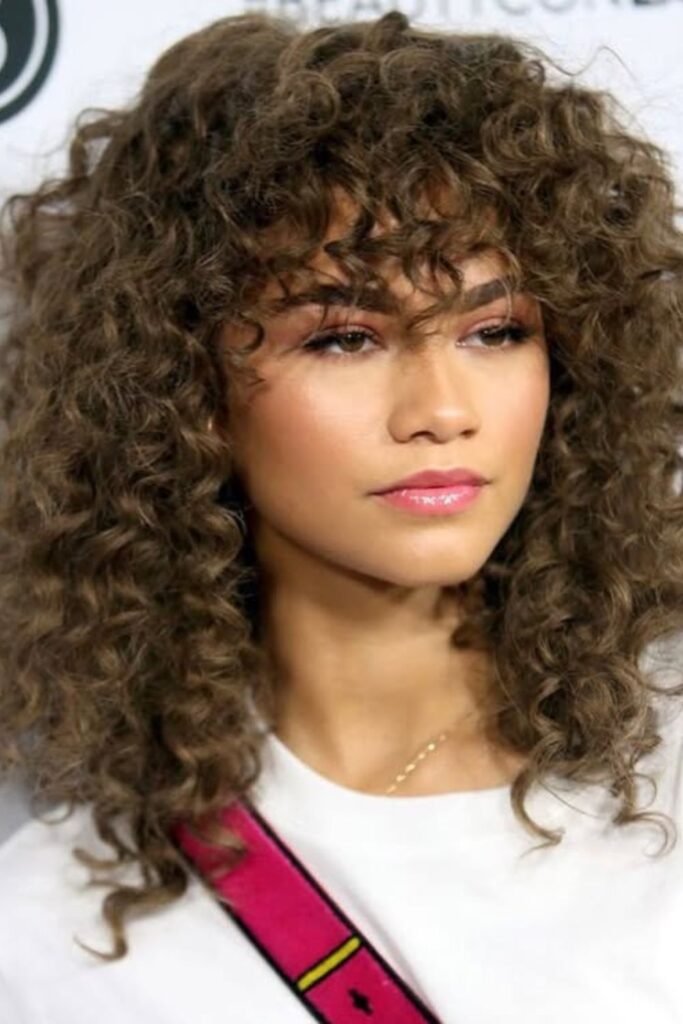
Curly Halo
Curls crowding the forehead like this only work if the shape stays round, not triangular. The bangs blend because the volume starts at the roots.
And it wraps forward, rather than just hanging down. This is ideal for tightly coiled curls that already have a natural lift.
Also, skip the heavy products on your bangs you want the curls to retain their airiness and bounce not weigh them down.

Curly Bangs
Curls sitting just above the frames change how the whole face feels. Keeping the fringe slightly separated stops it from pressing into glasses or losing shape by midday.
The ideal look is defined curls without a lot of product weighing them down. To achieve this, start with the bangs.
Style them first and allow them dry completely before putting on your glasses. This way, the curls will set in an upward direction, rather than flattening on your forehead.

Long Fringe
Short bangs paired with long curls work because the contrast keeps the face from feeling weighed down.
The fringe, with its upward focus and contrasts beautifully with the soft, flowing length. This style works best when your curls naturally elongate.
Steer clear of heavy products around the roots this will help maintain that lifted appearance at the front, preventing it from merging with the rest of the hair.

Dense Fringe
Density does the work here, not precision. A full fringe like this frames the face because the curls pack together instead of spreading out.
Ideal for those with thick hair that maintains its shape throughout the day. To achieve this look, let the bangs grow a bit longer and blend them into the sides.
Use a good amount of product to keep the curls defined and in place, preventing them from becoming frizzy and expanding.
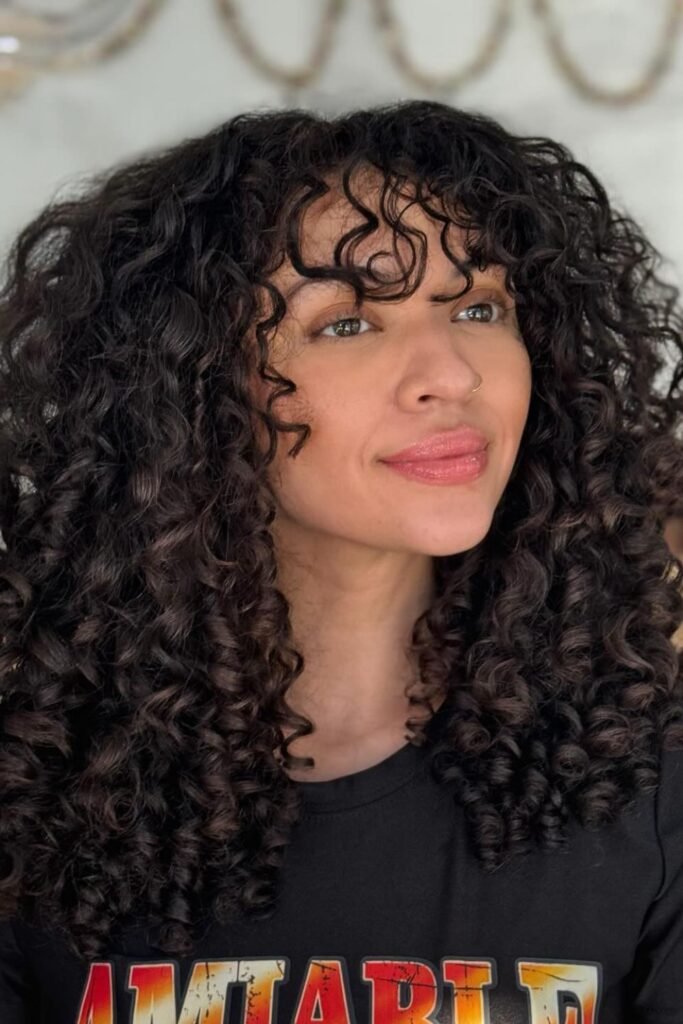
Curly Bob
Chin-length curls change how bangs sit because there’s nowhere for weight to hide. The fringe works here because the curls curve inward instead of spreading out.
Perfect for those who prefer their hair to maintain its form without excessive product. To get this look and ensure the bob retains its rounded shape.
When cutting bangs, leave them a touch longer than you first intended; this compensates for any shrinking that occurs as the hair dries, preventing them from sitting too high.

Textured Fringe
Contrast is key. Those short, choppy bangs draw the eye up, while the rest of the hair is left loose and casual.
The fringe’s appeal lies in its imperfection it’s meant to be a bit messy. It’s ideal for loose curls or waves that aren’t too tightly wound.
To get the look, have the bangs dry-cut and texturized, then let the rest of the hair air-dry. This keeps the front looking fresh without appearing overly styled.

FAQs
Can curly bangs work if your curls don’t behave the same every day?
Absolutely, but the key is to cut the bangs with some movement and leave them a bit longer. Curls that aren’t uniform need space to breathe.
If the bangs are too short or cut straight across, any unruly curl day will be glaringly apparent.
A slightly longer length allows you to part, pin, or reshape them when the curls decide to misbehave.
How long does it take to grow out curly bangs if you change your mind?
Curly bangs frequently appear deliberate after a few months, thanks to shrinking that conceals any awkwardness.
Keeping them layered and steering clear of abrupt cuts helps them merge with face framing curls and more quickly than the straight bangs would.
The trick is to resist the temptation to constantly fix them during the growing-out phase.
Hi, I’m Afaf! I’m a law student who loves writing about everyday life – from home projects and crafts to fashion, beauty, and parenting tips.
I’ve been writing for over a year, sharing ideas that are simple, practical, and easy to try. I write about things I find interesting and useful, whether that’s organizing a space, trying a new DIY, or finding activities to keep kids entertained.
My goal is to share helpful ideas without making things complicated. If it works in real life, I’ll write about it.
When I’m not studying or writing, I’m usually experimenting with new projects or scrolling for inspiration!