
17 Butterfly Craft Ideas for 2026
You give a child some colors and a butterfly outline, and in five minutes, everything is mixed up, rushed, and untidy.
You intended them to learn about colors and patterns, but they just ended up coloring randomly again.
You’re not doing anything wrong if that sounds familiar; you just need more organization.
If you use butterfly crafts with a defined goal, they can be a great way to teach colors and patterns.
In this article, you’ll discover 17 simple Butterfly craft ideas kids can enjoy without complicated supplies.
Let’s jump in!
How Can Butterfly Crafts Be Used For Learning Colors And Patterns?
Butterflies are inherently symmetrical, so butterfly crafts are a great way to teach colors and patterns.
When you employ that on purpose, kids don’t just color; they start to pay attention. They notice balance if you use the same hue on both wings.
They can tell the difference if you modify the pattern. They don’t guess; they compare.
Patterns stop being complicated and start making sense when you help children pick colors in a basic order.
That’s why butterfly crafts are more than just enjoyable things to do they are also a great way to teach kids about colors and pattern without making it feel like school.
Save this article for later!👇👇👇
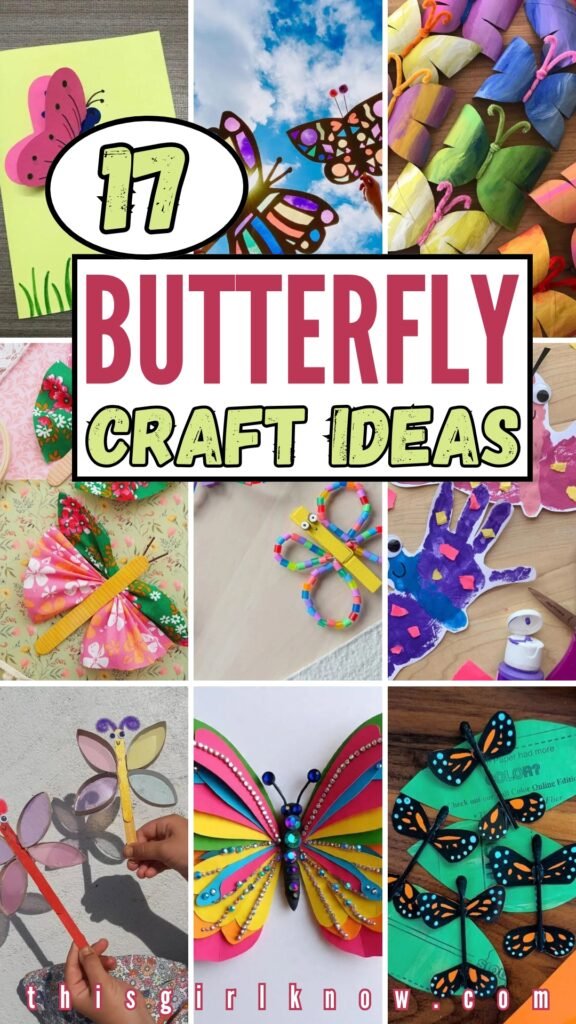
Color Balance
Bright wings like these make color learning feel natural instead of forced. This activity works best.
when you want youngsters to know how two sides can fit together without going too far. Tell them to paint one wing first.
Then stop and examine before they touch the other side. Learning happens during that break.
The right wing should follow the same order as the left wing if they employ yellow and green.
Pipe cleaners give kids something to do with their hands and keep them busy while the paint dries.
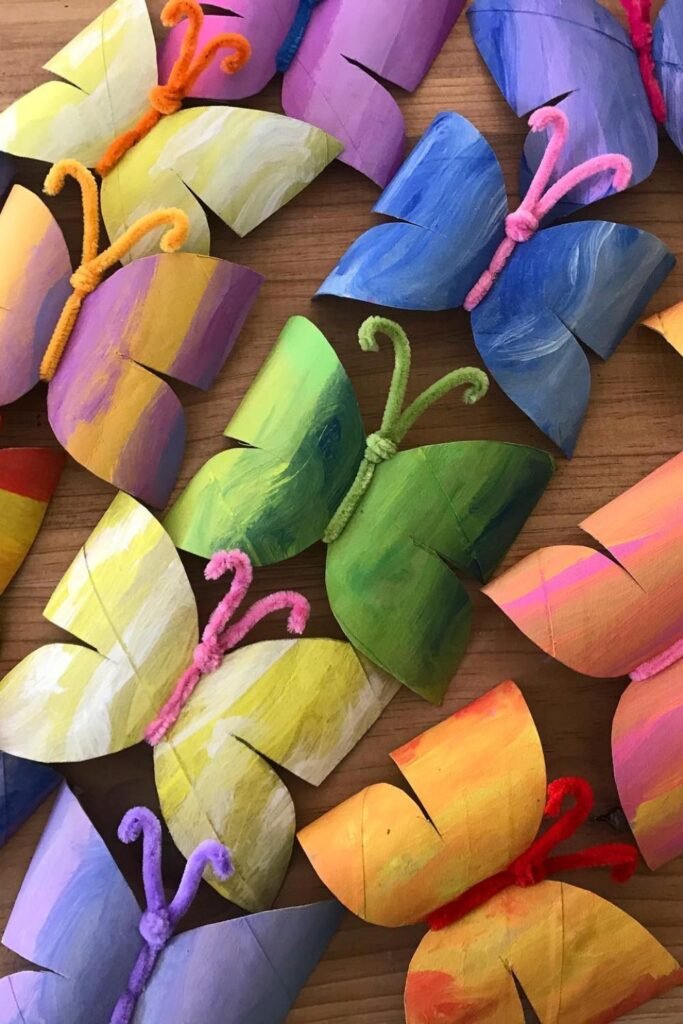
Shape Windows
Light changes everything here, which makes this craft perfect for teaching patterns without sitting kids down for a lesson.
First, cut out bold forms for the wings. Then, let the youngsters fill in the spaces with colorful paper or tissue.
If they put a circle on the left wing, tell them to put the same shape on the right. Let the butterfly check.
Their work with light instead of words by holding it up to a window. Kids can discover how shapes.
And colors repeat by moving, lifting, and comparing things in classrooms, playrooms, or sunny corners of the house.
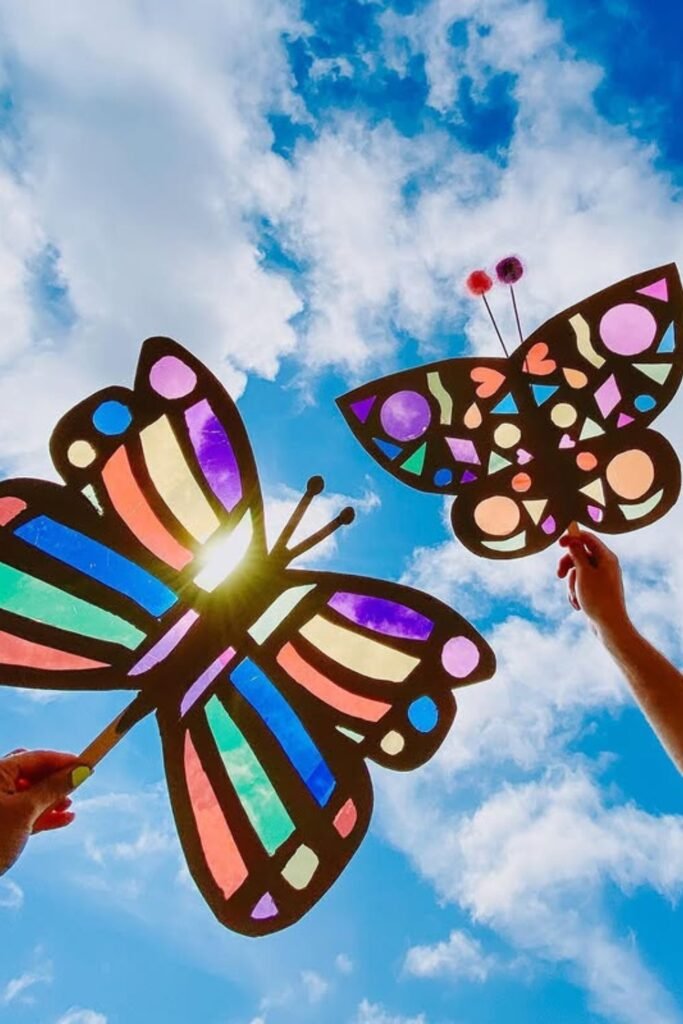
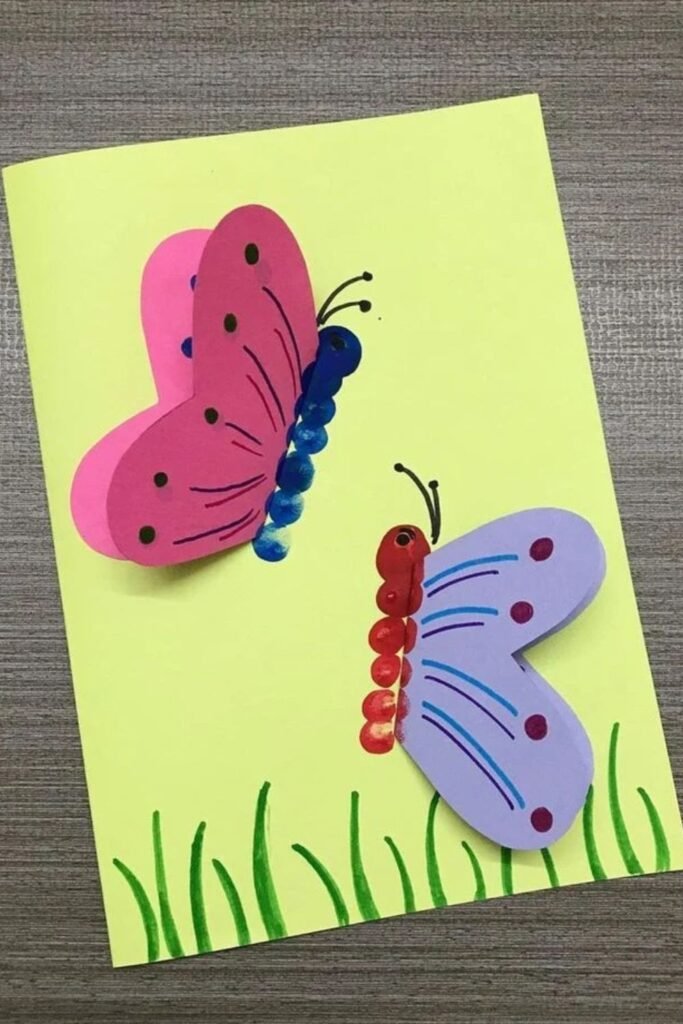
Dot Patterns
Small dots turn this craft into an easy way to teach pattern flow without overwhelming kids. Start with the butterfly body.
Then let them add dots one at a time, moving in a straight line. After they finish one side, tell them to do the same color and spacing on the wings.
If red dots go from top to bottom on one wing, they will go from top to bottom on the other wing as well.
This is great for preschoolers and early learners since the dots slow them down and help them learn how to manage their movements.
It’s a terrific activity for calm times in the classroom or at home when speed isn’t as important as attentiveness.
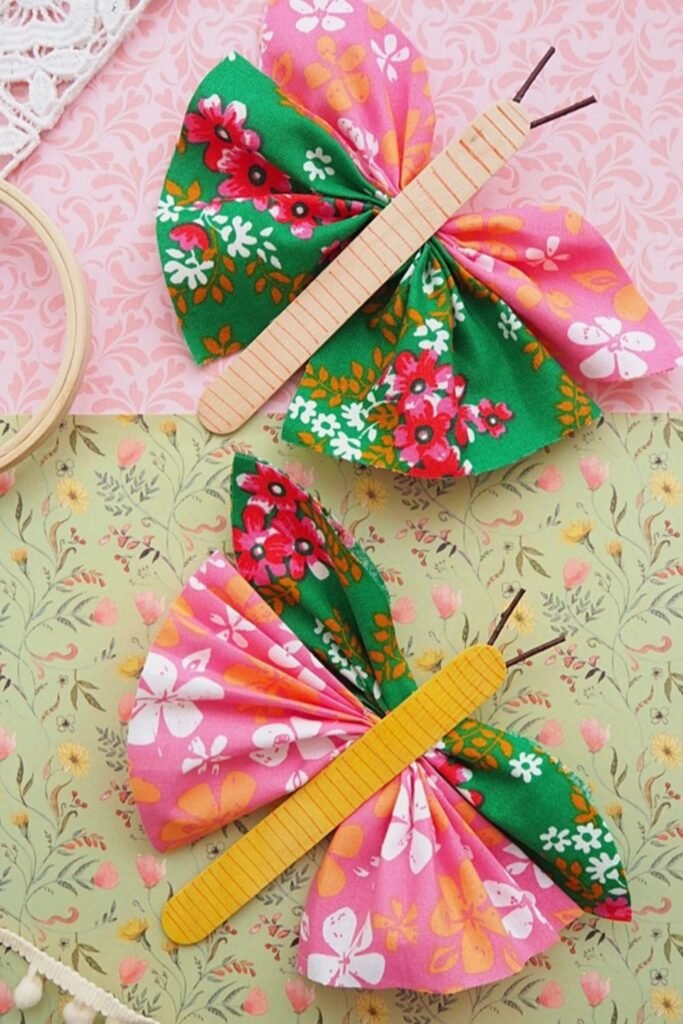
Fabric Symmetry
Fabric instantly changes how kids think about patterns because prints already carry structure.
They can look at floral shapes, repetitive leaves, or tiny dots before they even start folding.
Let the kids pick out two pieces of fabric that match and push them together in the middle.
Then, ask them to see if both sides feel the same. The other wing should point in the same direction as the one with flowers on it.
This is great for youngsters who are a little older and want to take their time with things. It works well for craft clubs.
Quiet classroom stations, or weekend tasks where being patient and paying attention are more important than getting things done quickly.
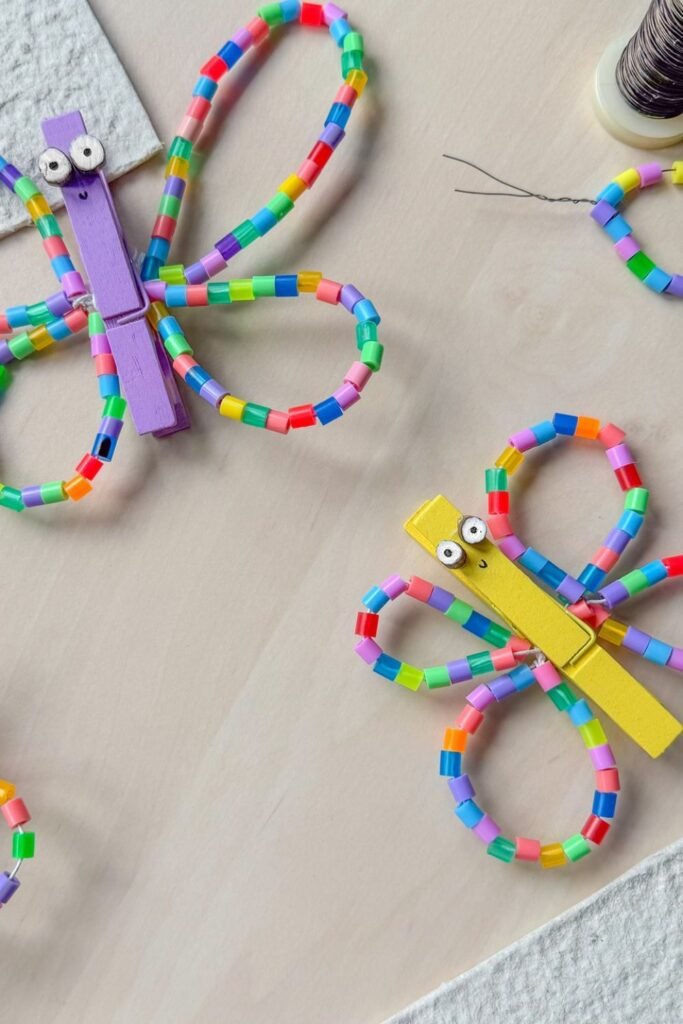
Bead Loops
Color order becomes the lesson here, not the decoration. Stringing beads forces kids to slow down and think about what comes next.
Pick a basic pattern, like red, blue, or yellow, and have them repeat it on both wings. They’ll notice right away.
If the sequence breaks on one side since the loop won’t match the other wing. Clothespins are great for bodies.
Since they keep everything in place without glue. This craft is great for youngsters to do at home.
In small groups at school so they can focus, count beads, and mend mistakes on their own while learning how patterns recur.
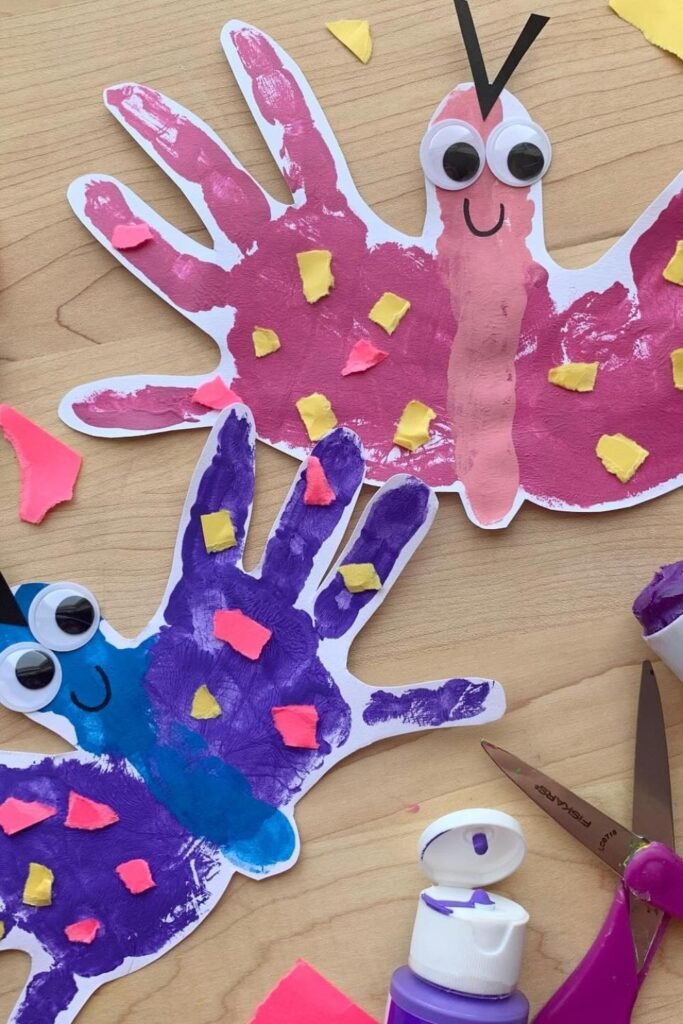
Hand Prints
Messy hands actually help learning here because kids slow down without realizing it. Pressing one hand first.
Putting it on the other side makes symmetry clear, not abstract. Make the palm look like a body and each handprint look like a wing.
Before you add paper scraps or dots, stop and remind the youngsters to put the same color on both sides.
Yellow goes on both wings if it goes on one. This is great for toddlers and preschoolers who learn best when they move around.
It works great for daycare, art days, or any other time you want to learn by doing instead of listening to instructions.
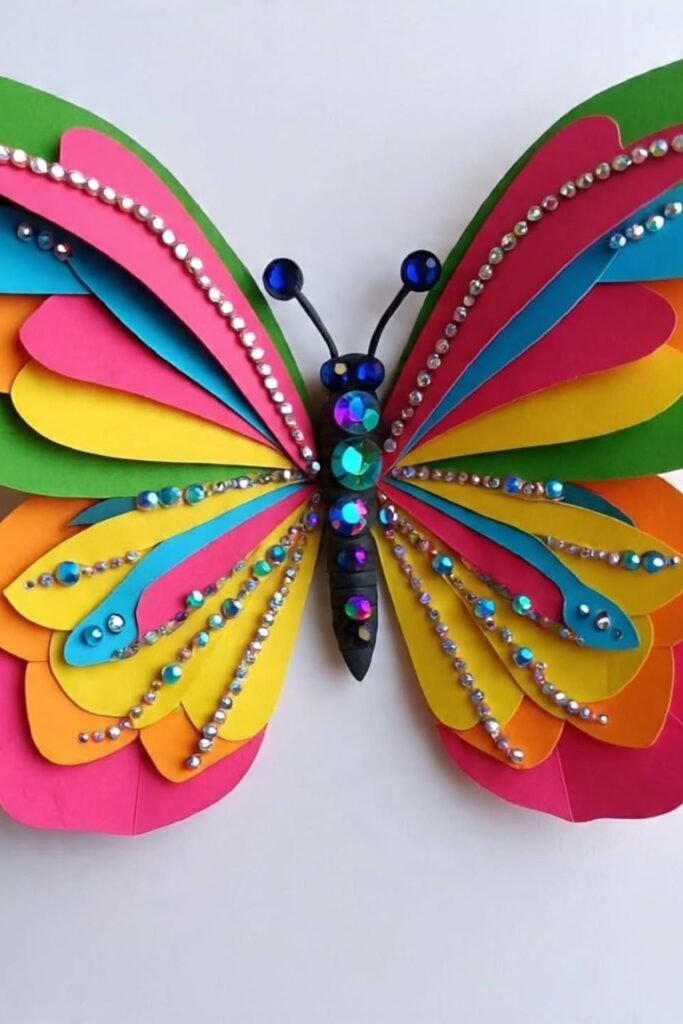
Layered Wings
Stacking colors like this turns pattern learning into a visual game kids actually enjoy. Start by cutting wing shapes in different sizes.
Let the youngsters put them in order from biggest to smallest before they glue anything down.
If pink is on top on one side, it needs to be on top on the other side as well. The sparkles help kids follow lines.
And see patterns without having to be reminded to “check symmetry.” This is great for older kids who enjoy to decorate and pay attention to details.
It’s a great choice for classroom exhibits, art projects, or quiet time to be creative when you plan before you glue.
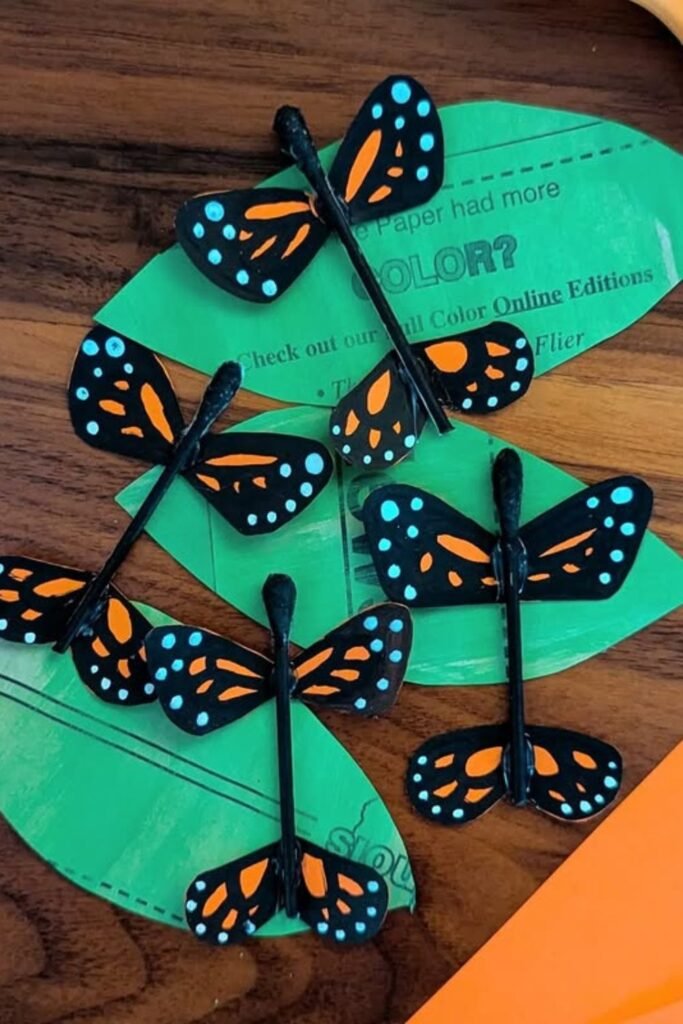
Monarch Marks
Bold contrast makes pattern rules clear here, which is why this craft works so well for teaching repeating designs.
Begin with a dark foundation color and add only one or two bright colors for the marks. Kids soon see that the dots.
And lines on both wings are in the same place. Tell them to finish one wing entirely before touching.
The other so their eyes may learn to compare. Using cotton swabs or little brushes helps you keep the details in check.
This project is great for science modules, nature themes, or classrooms that are talking about bugs, where recognizing patterns is more important than free painting.
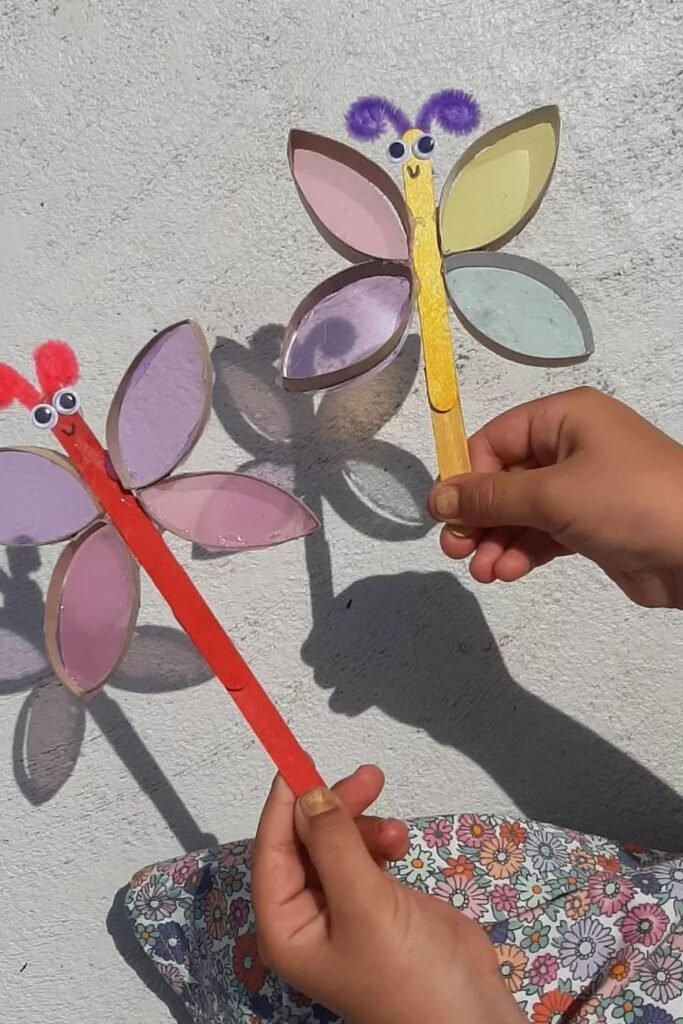
Stick Balance
Movement turns pattern learning into something kids can feel, not just see. Holding the butterfly by a stick.
Allows kids turn it and see right away when the colors don’t match on both sides. First, paint one set of wings.
Then, turn the stick over and paint the other pair the same colors and in the same order. Purple needs.
To stay on the left if it is on top. This project works best outside or near a window so youngsters can see.
How light and shadow change shapes. It’s wonderful for people who study best when their hands are busy.
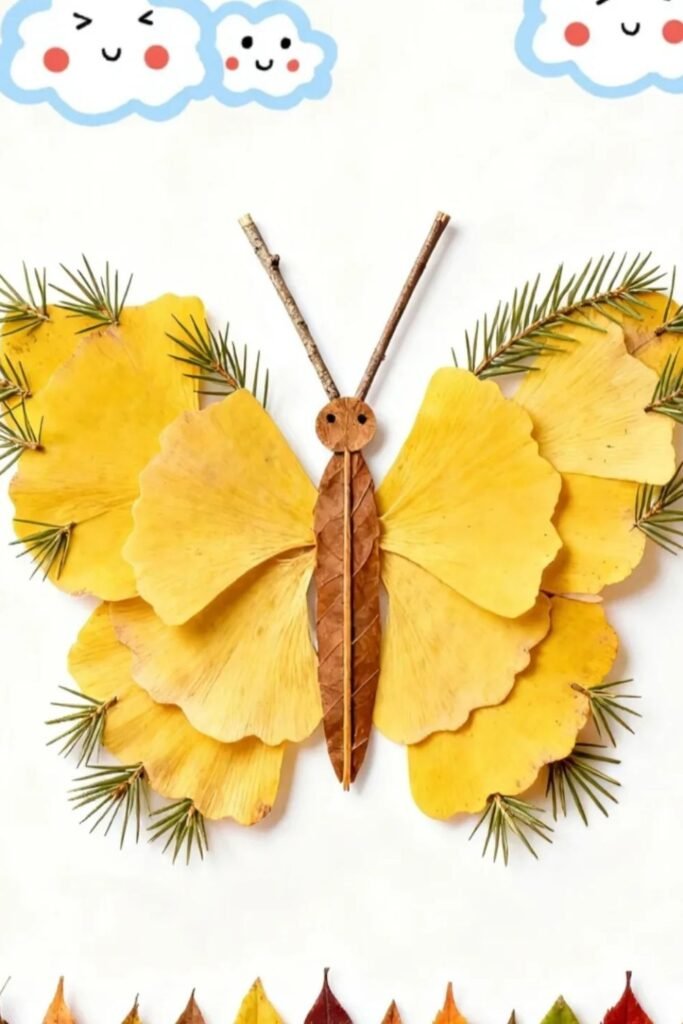
Nature Match
Real leaves teach pattern balance better than any worksheet because nothing here is perfectly identical.
First, lay out the leaves and have the youngsters match up shapes before gluing. If a wide leaf goes on the left.
They need to look for one that feels good on the right. That choice is the time to learn. Small twigs or pine.
Needles are good for repeating features around the edges. This craft is perfect for lessons outside, nature hikes, or fall activities.
When kids are already gathering things. It helps children realize that patterns don’t have to be perfect to feel balanced.
Texture Play
Different surfaces do the teaching here without you having to explain much. Mixing smooth cardboard, soft pom-poms, fabric scraps.
And dried flowers let kids see patterns by touching them first and then seeing them. Tell them to use two different textures.
To decorate one wing and then do the same thing to the other wing. If feeling is on the left, it should be on the right as well.
That one rule makes patterns easy to see. This exercise works best when kids are doing crafts, sensory stations, or small group activities.
So they can take their time and look about at the things. It helps kids who learn better by touching things than just looking at them.
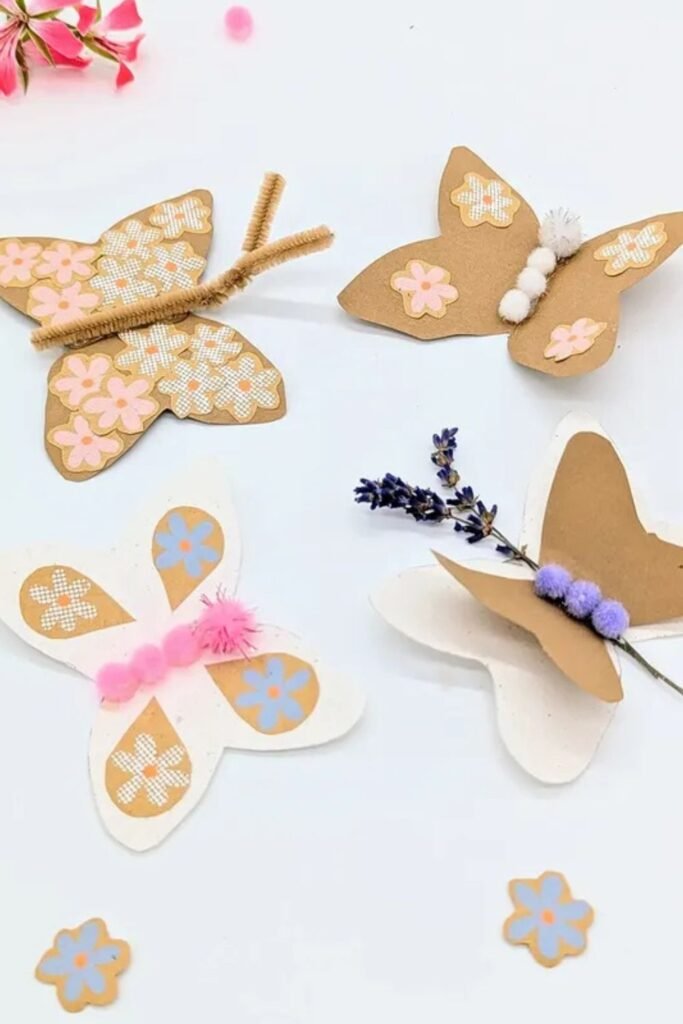
Rainbow Fold
Folding does most of the teaching here because every crease forces colors into order.
Start with a simple rainbow strip and fold it accordion-style before opening it into wings.
Kids can observe right away how red turns into orange, then yellow, without you having to explain anything.
When both wings open the same manner, the color order works naturally. Paper doilies offer an added layer of symmetry.
That makes the colors stand out. This craft is suitable for preschoolers and early elementary school youngsters.
Who are ready to follow directions. It’s great for table work, color classes, or quiet creative times when accuracy is important.
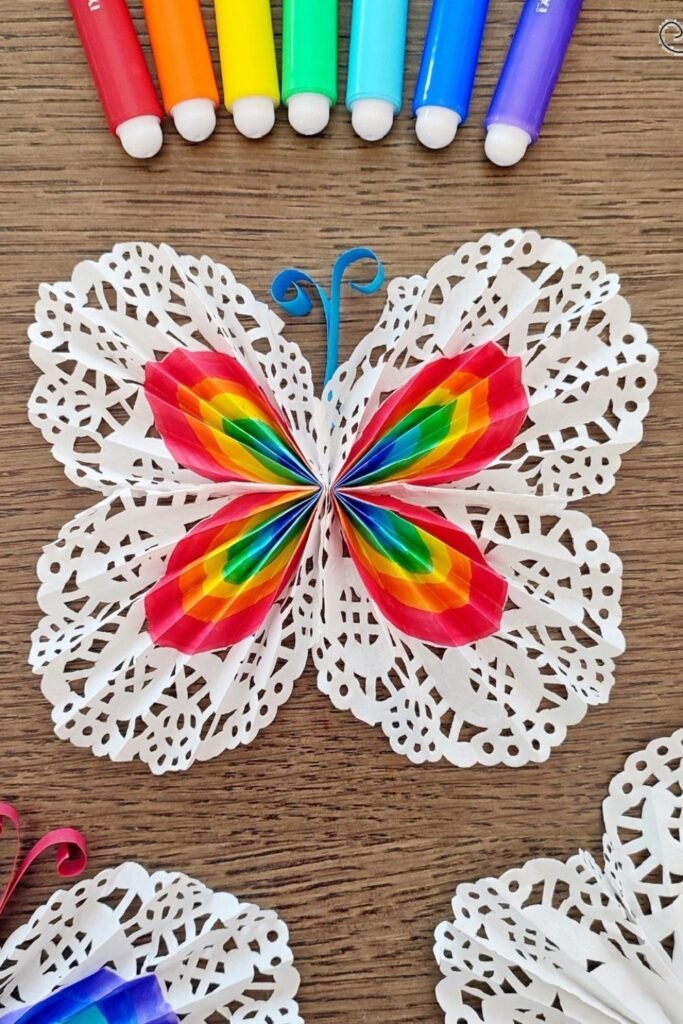
Hanging Wings
Decor pieces like these quietly teach pattern balance without feeling like a kids’ lesson. Painting soft strokes on one wing.
And doing the same thing on the other side helps kids learn that patterns don’t always have to have precise lines.
If there are gold dots at the edge on one side, they should also be there on the opposite side.
The way it hangs makes it easy to stand back and see if everything is symmetrical from a distance.
This is great for older kids, group projects, or seasonal displays where crafts stay up for a while. It’s an excellent choice if you want to learn slowly and using pictures, not quickly.
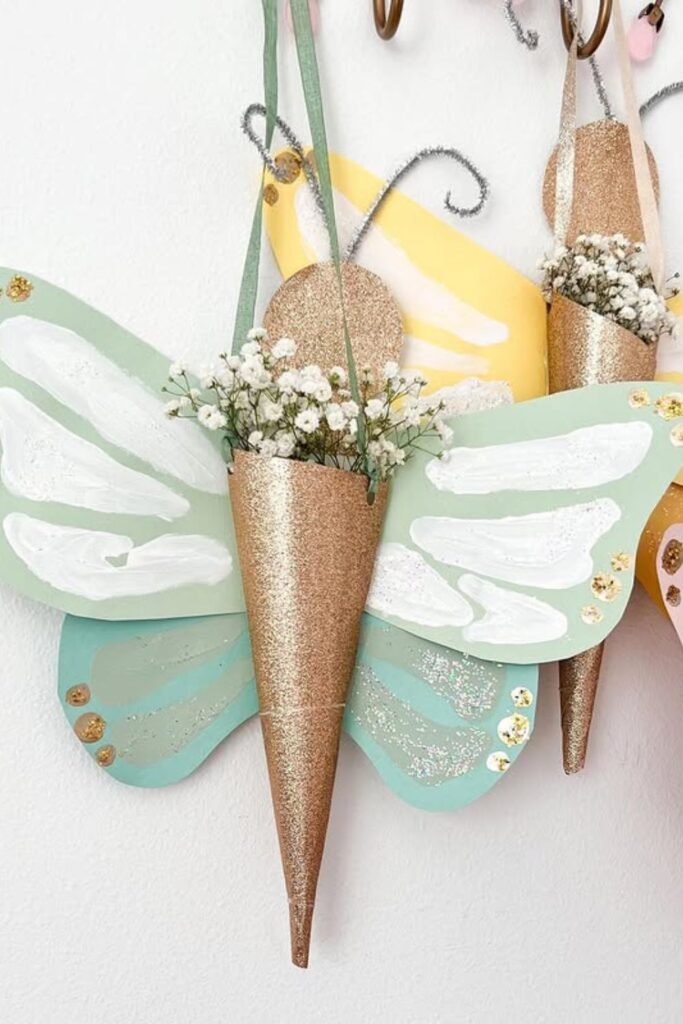
Heart Motifs
Repeating one simple shape makes patterns easier to understand, and hearts do that job really well here.
Tell the kids to put the heart form in the middle first, and then build everything else around it. If there are pink hearts in the middle of one wing.
There should be pink hearts in the middle of the opposite wing as well. Dark backgrounds let the colors stand out and make it easier to find and rectify faults.
This craft is appropriate for youngsters in early elementary school who are ready to think about where things go, not merely color them.
It’s a terrific choice for lessons about Valentine’s Day, peaceful painting time, or small group activities that emphasize on symmetry and repetition.
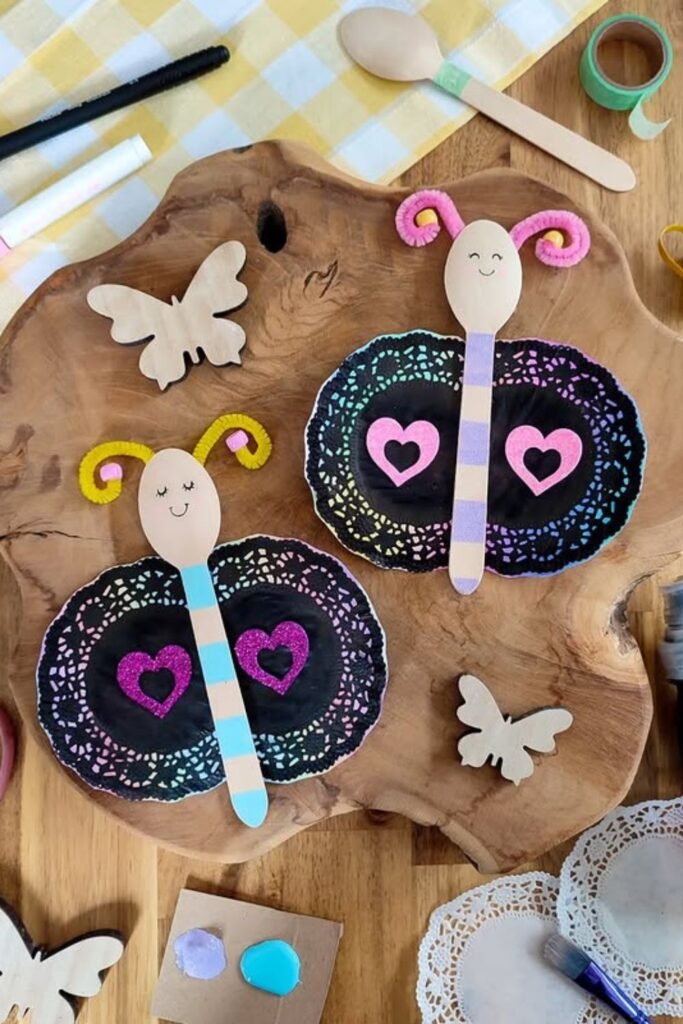
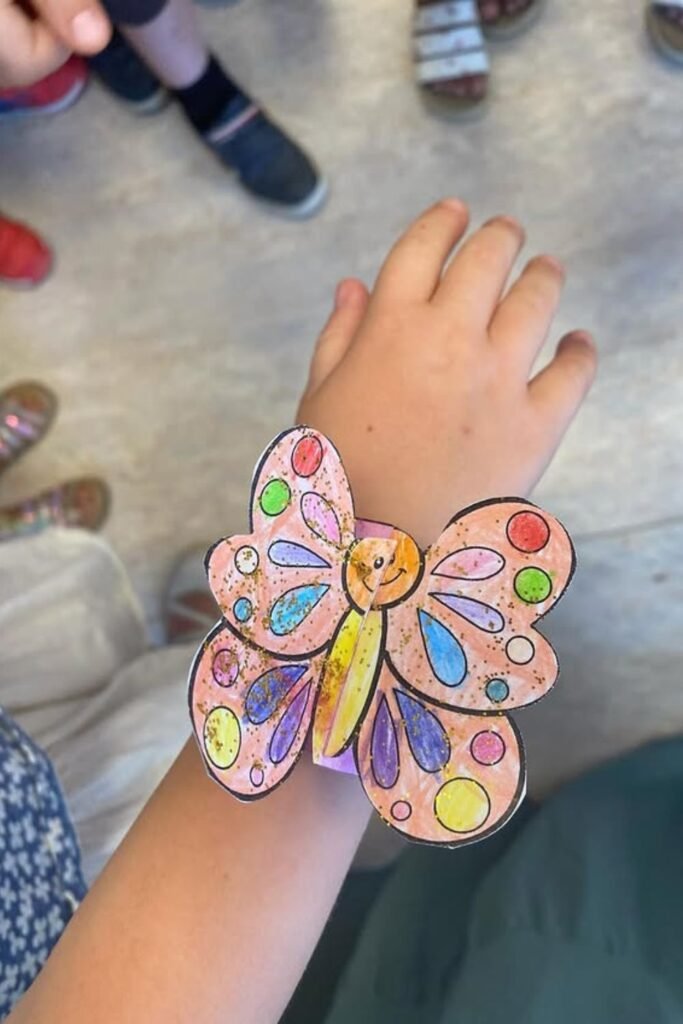
Wrist Wings
Wearing the craft changes how kids look at patterns because they carry it with them. Before turning it into a bracelet, guide them to finish one wing completely.
The dots, lines, or objects that are added on the left should be in the same order on the right.
Kids will instinctively twist and compare both sides of the bracelet once it’s on their wrist, even if you don’t tell them to.
That movement helps you remember patterns over and over again. This idea works well for group activities, classroom parties, or crafts.
Where kids go about and show off what they’ve made. It’s especially helpful when you want youngsters to remember what they’ve learned without having them sit at a table.
Finger Fans
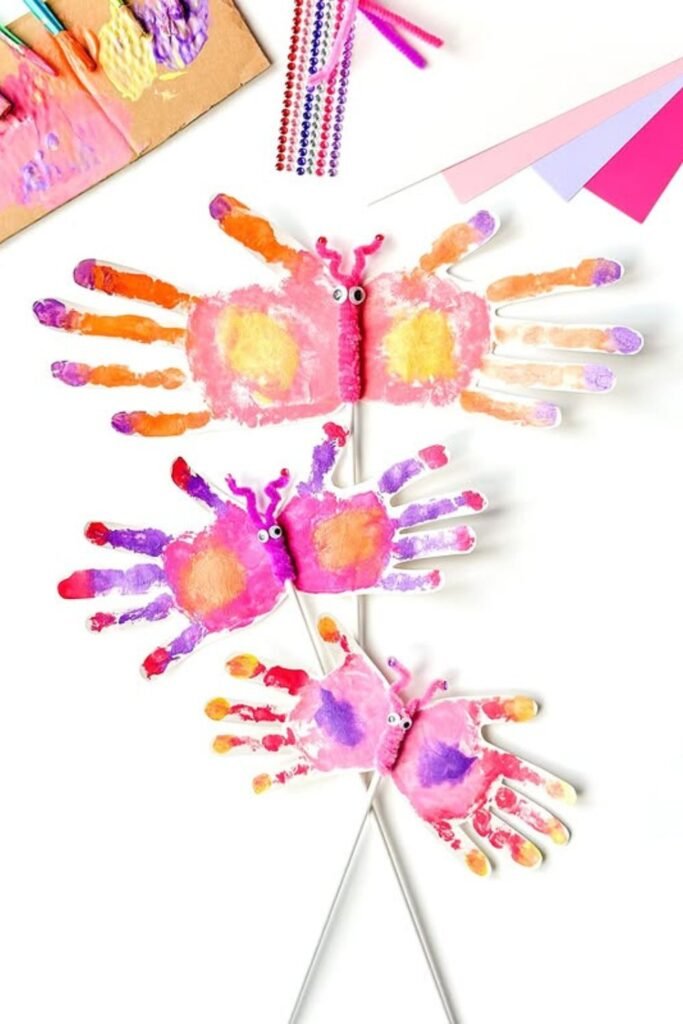
Painting with fingers slows kids down in the best way possible. Each fingertip becomes a chance to repeat color placement without rushing.
For the first wing, dip one hand and press it down then stop before doing the second hand.
Ask kids to match the colors of their fingers one at a time so that both wings tell the same color story.
The stick handle makes it easy to pick up, compare, and repair little problems. This exercise is great for art time or sensory play time in preschool.
When kids learn by moving about. It’s a good choice if you want to teach kids about color through touch instead of words.
Milk Magic
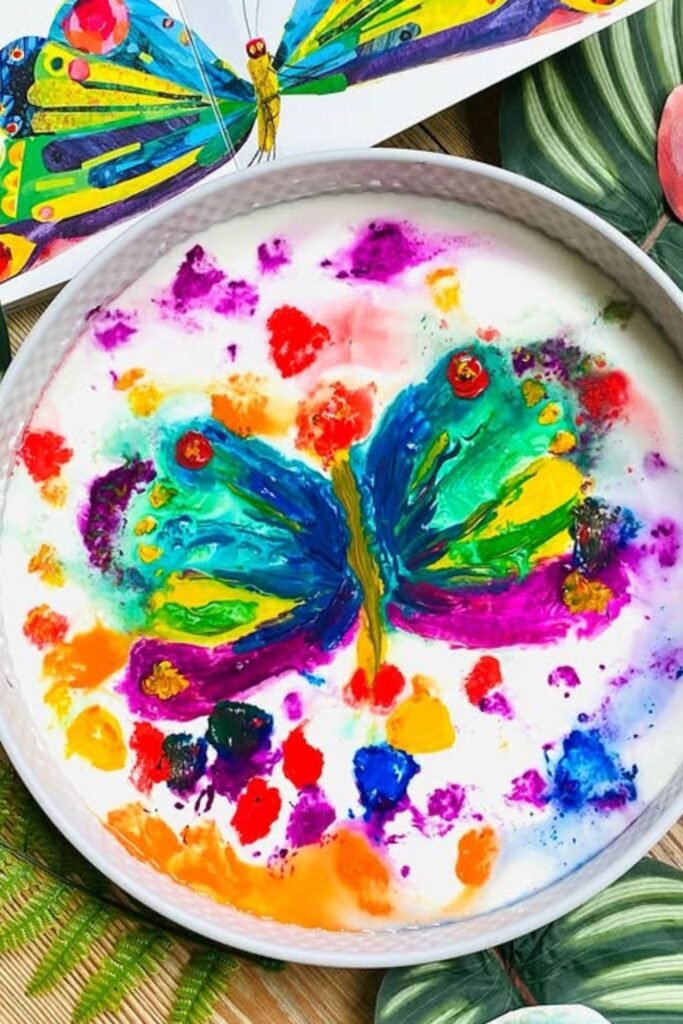
Liquid paint does something paper can’t it forces kids to watch colors react in real time. Drop color gently on one side first.
And let it spread out before you add anything to the other wing. After students observe how blue moves into yellow, have them do the same drops on the other side.
They have time to think instead of rushing. Using a cotton swab to swirl things around shows how patterns.
Can match even when they look fuzzy and jumbled. This activity is great for supervised craft time at home or in small groups.
Where the purpose is to explore. Its great for teaching kids how to mix colors and keep things in balance with out tight limits.
FAQs
Can butterfly crafts really help kids learn colors, or are they just for fun?
Yes, they work when you tell them what to do. Kids start comparing without being prompted to because butterflies have two sides that match.
When you ask them to say the colors or shapes on both wings again, they work on recognizing colors, ordering them, and balancing them.
What if my child doesn’t copy the pattern correctly?
That’s part of the process of learning. Instead than trying to fix it, just ask simple inquiries like, “What’s different on this side?” Let them find the mistake on their own.
When kids fix patterns on their own, they learn colors and repetition better than when an adult does it too quickly.
Hi, I’m Afaf! I’m a law student who loves writing about everyday life – from home projects and crafts to fashion, beauty, and parenting tips.
I’ve been writing for over a year, sharing ideas that are simple, practical, and easy to try. I write about things I find interesting and useful, whether that’s organizing a space, trying a new DIY, or finding activities to keep kids entertained.
My goal is to share helpful ideas without making things complicated. If it works in real life, I’ll write about it.
When I’m not studying or writing, I’m usually experimenting with new projects or scrolling for inspiration!