
24 Bunk Bed Ideas For Kids 2026

If you’re attempting to squeeze two children into a cramped bedroom, you’re likely familiar with the stress it brings.
Toys seem to multiply, space is at a premium, and every furniture choice feels like a gamble particularly when safety is a concern.
A bunk bed might seem like the answer, but selecting the wrong one can lead to more headaches than it alleviates.
The upside is that the right bunk bed, tailored to your room and your children’s needs, can completely transform the space.
In this article, I will highlight 24 Bunk Bed Ideas For Kid ideas that are practical and kid-friendly for 2026.
What Materials Are Best for Kids’ Bunk Beds?
The material of a bunk bed is the real deal, far more important than its appearance. Solid wood is a solid investment, offering both strength and longevity.
It’s built to withstand the rigors of children climbing, jumping, and simply growing up. Metal bunk beds are often more affordable and can be perfectly suitable for older kids.
Though they may develop a bit of a wobble if the frame is on the thinner side. Steer clear of inexpensive particle board, particularly for the top bunk.
As it tends to lose its grip on screws over time. For a bed that’s both safe and built to last, always pay attention to the frame’s thickness and the quality of the connections.
Save this article for later!👇👇👇

Which Bunk Bed Styles Work Best for Small Kids’ Rooms?
If the space is already cramped, the wrong bunk bed can exacerbate the issue. Lofted bunks are a smart choice, as they maximize floor space for other uses, like a desk.
L-shaped bunks are also a good option, tucking neatly into corners and creating a more open feel.
When storage is a concern, consider bunk beds with integrated stairs or drawers, rather than a large dresser.
Low profile frames and clean lines are essential they make small rooms feel less chaotic and more inviting.
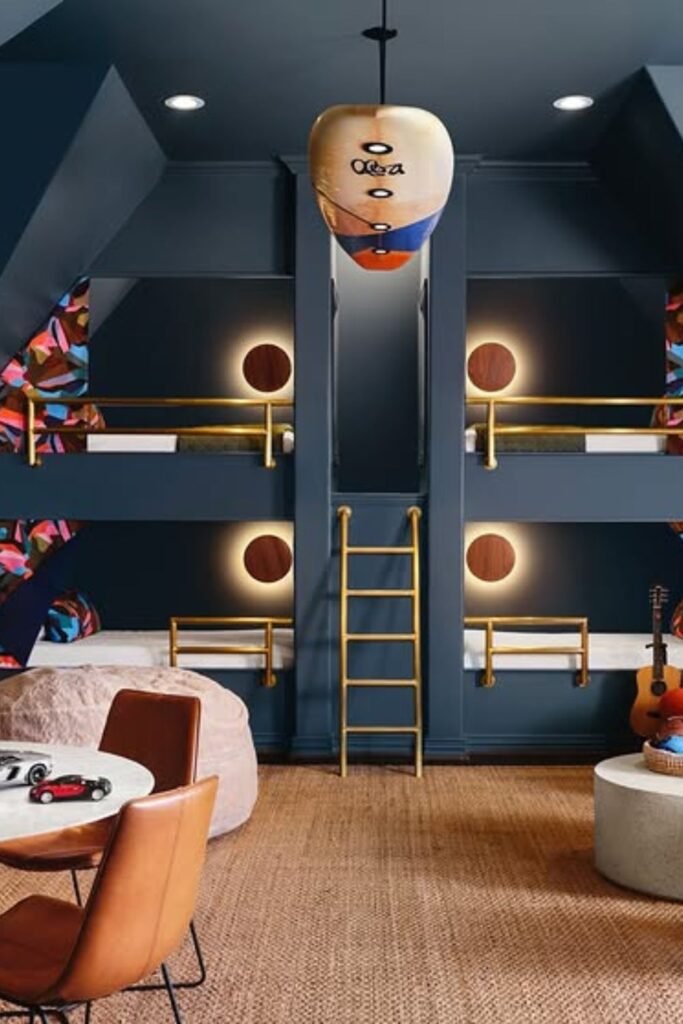
Shared Balance
Providing a consistent environment for each child can reduce a lot of daily stress.
Bunks were constructed on opposite sides, establishing distinct personal zones and ensuring everyone felt equally accommodated.
A centrally placed ladder ensures everyone has equal access while wall mounted lighting and the tiny ledges give children a sense of the ownership over their sleeping area.
Quiet Nooks
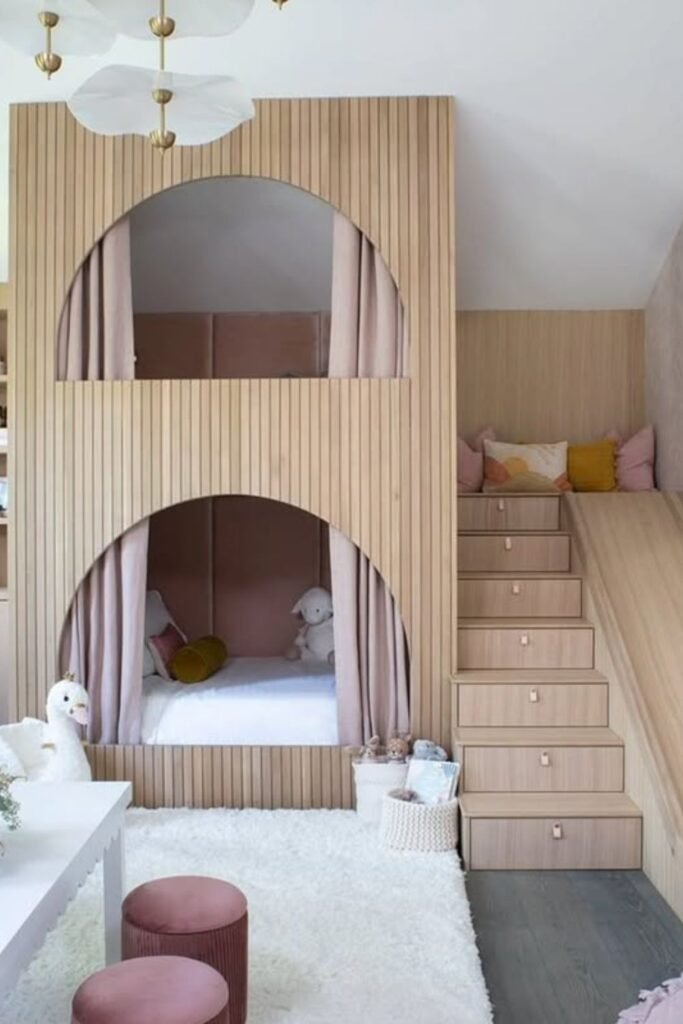
Privacy becomes a lot easier when each bunk feels like a small hideaway. Arched openings and soft curtains turn shared sleeping into personal downtime.
This design is ideal for youngsters who benefit from a peaceful bedtime routine.
The integrated steps, with drawers, eliminate the need for cumbersome storage solutions.
Gentle Start
Moving a young child into shared sleeping works better when the bed feels low and safe.
A floor-level bunk, complete with built-in rails, eliminates the worry of tumbles, making the whole bedtime routine smoother.
The pull-out lower bed offers versatility for siblings or guests, and it doesn’t hog space when it’s not in use.

Soft Hideout
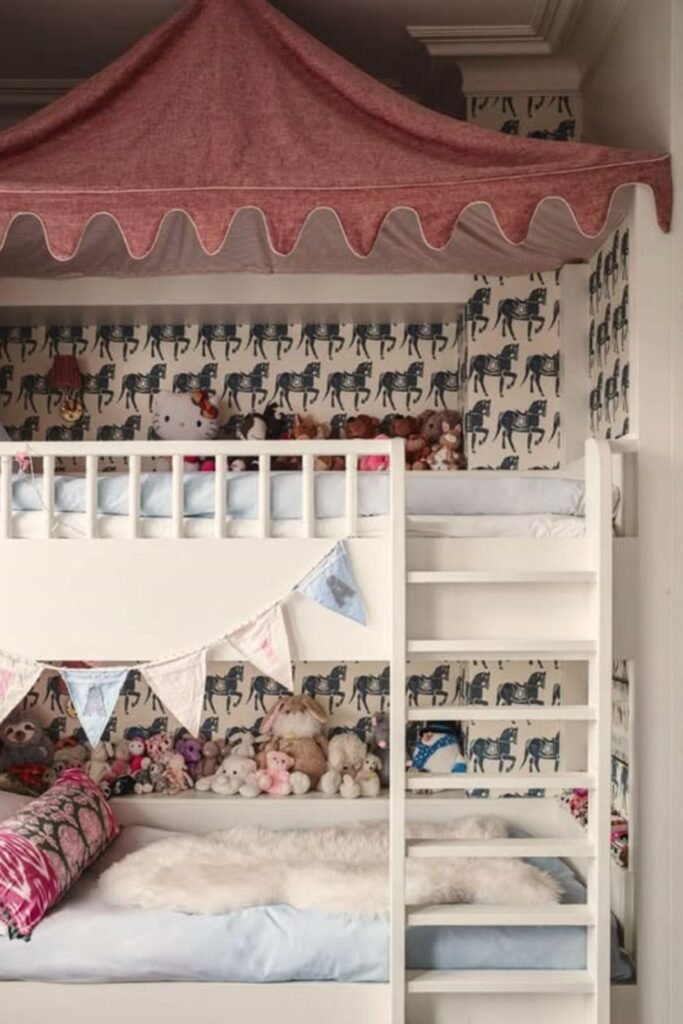
Some kids settle better when their bed feels like a small world of its own. A fabric canopy over the top bunk creates that sense of comfort without blocking light or airflow.
The lower bed’s open design makes it easy for younger siblings to go in and out. This setup is perfect for shared rooms, offering a snug haven for one child.
While keeping the space open for another. You can build it yourself using a basic frame and fabric panels that can be taken off when needed.
Hidden Corners
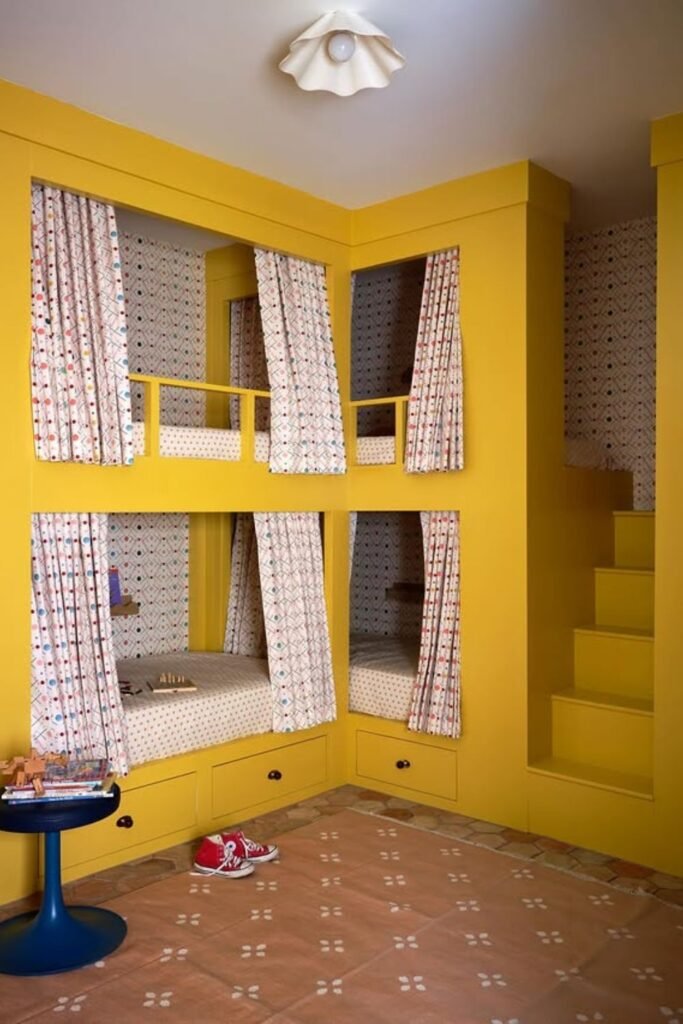
Rooms with awkward layouts often feel impossible to organize, but built-in bunk beds turn those corners into something useful.
Tucking each bed into its own little space offers children a feeling of seclusion, all while maximizing available space.
Curtains and add a touch of softness or can a real boon for getting kids settled down at night particularly in rooms they share.
Playful Shelter
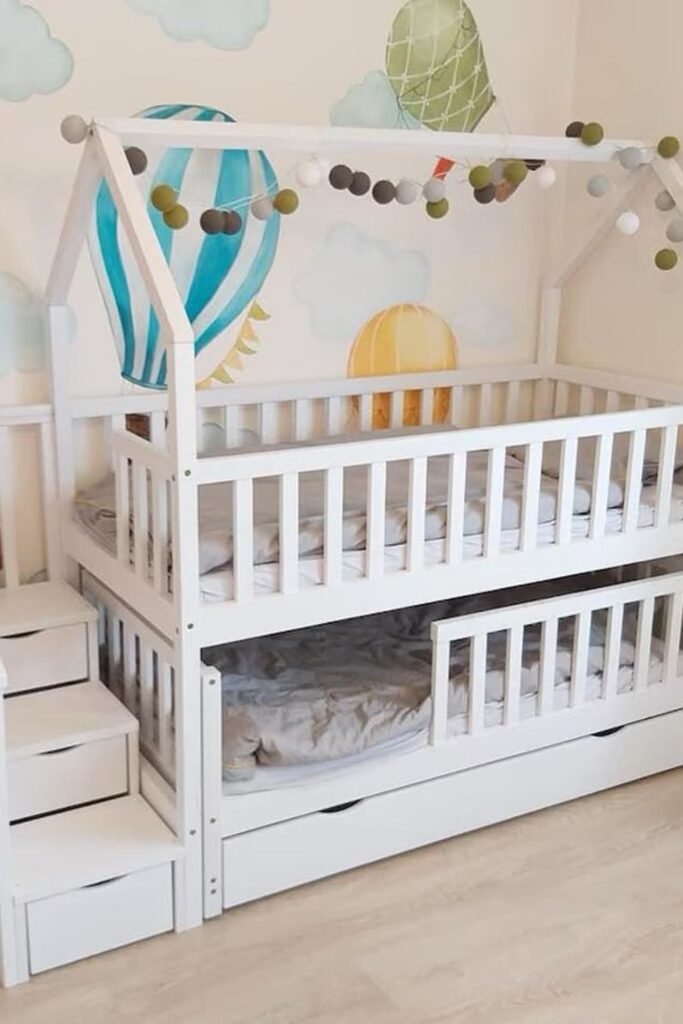
Some kids sleep better when their bed feels like part of playtime, not the end of it. A house-frame bunk blends imagination with structure.
Transforming nighttime from a chore into a decision. The integrated stairs provide security for little ones while the pull out bed below offers versatility.
This method really works best in bright rooms, especially when wall art or decals can provide a mood without making the space feel cluttered.
Built-In Fun
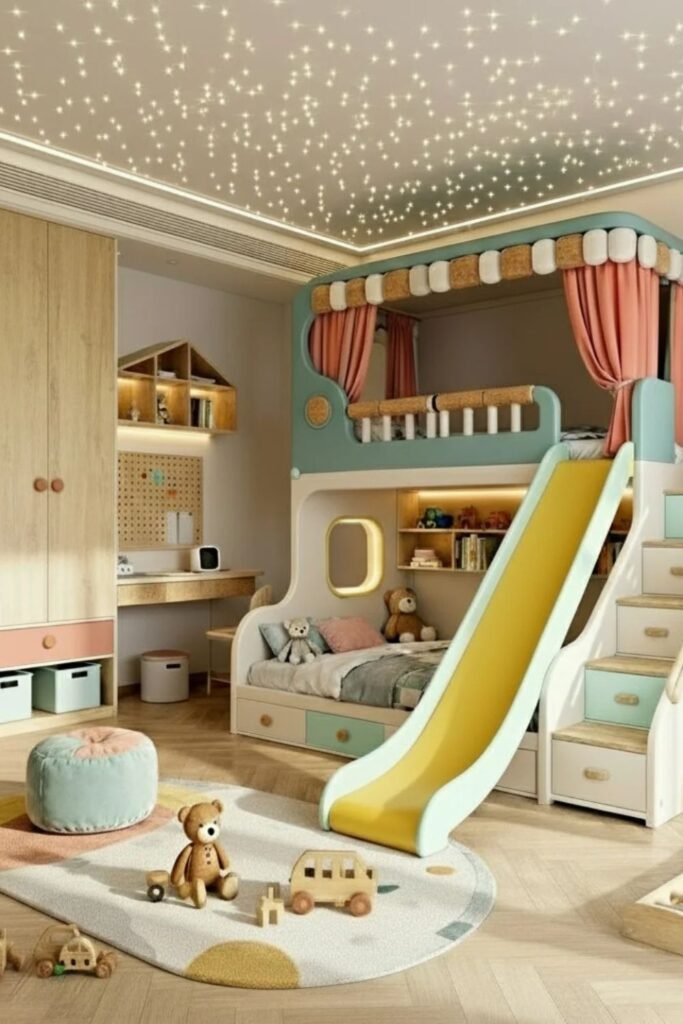
Bedtime resistance drops when the room doubles as a play zone. A bunk with a slide turns climbing down into part of the routine instead of a fight.
Storage stairs offer a blend of security and utility and the bottom bed remains accessible.
It’s most easily implemented with bespoke or modular furniture, specifically intended to accommodate both sleeping and active pursuits.
Bright Bunks
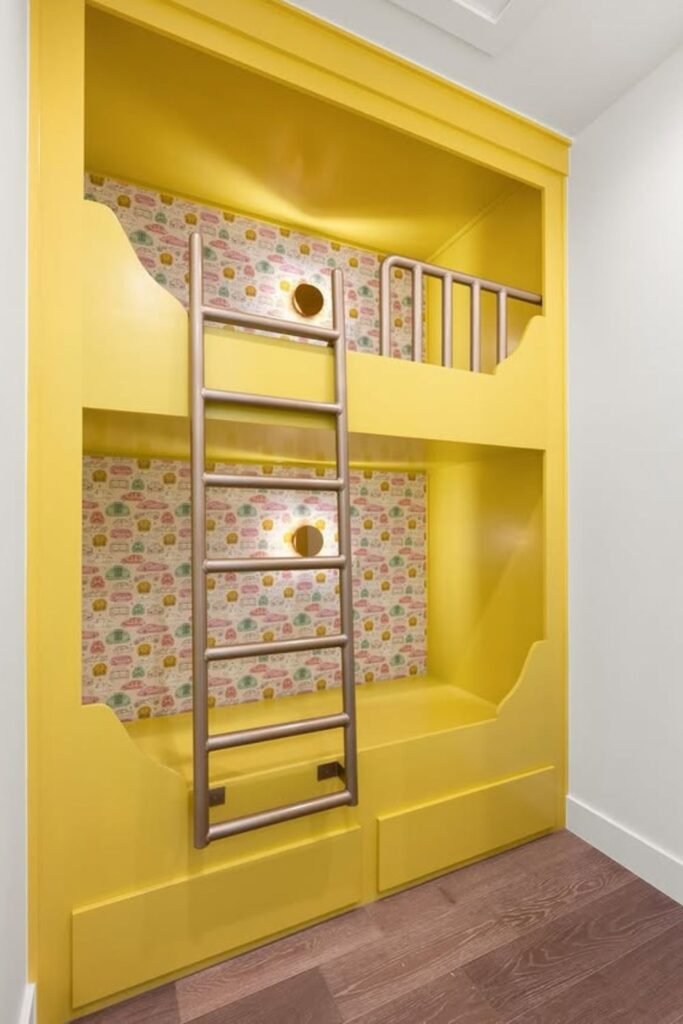
Color can do a lot of the work in a small kids’ room. A bold built-in bunk like this turns one wall into a clear focal point, so the rest of the space can stay simple.
The straight ladder is ideal for older children who are comfortable with climbing.
Recessed sleeping spaces create a snug, compact feel, avoiding a bulky appearance.
Calm Layers
Busy kids do not always need a busy room. Soft colors and open space make shared sleeping feel lighter and less overwhelming.
Rounded rails offer a safety boost without the feeling of confinement a boon for active little ones.
This style is ideal for families who prioritize tranquility and a minimalist approach. Choose bedding in neutral tones and avoid keeping toys on the bed.

Everyday Ease
Life gets simpler when the bed just works without extra effort. Clean lines full guardrails and the sturdy ladder make this kind of bunk easy to the live with day after day.
Both sleeping arrangements offer a similar sense of security, which should help sidestep the typical top bunk disputes.
This design is perfect for families looking for a practical solution that won’t quickly become obsolete.

Ground Comfort
Not every shared room needs height to work well. A low bunk keeps both kids close to the floor which feels safer and calmer for younger ages.
Built-in drawers keep toys and clothes organized eliminating the need for additional furniture and maintaining an open play area.
This design works and particularly well in rooms with lower ceilings or for families seeking a Montessori inspired environment that independent climbing and exploration.

Smart Split
Sharing a room feels easier when sleeping and storage work together instead of competing for space.
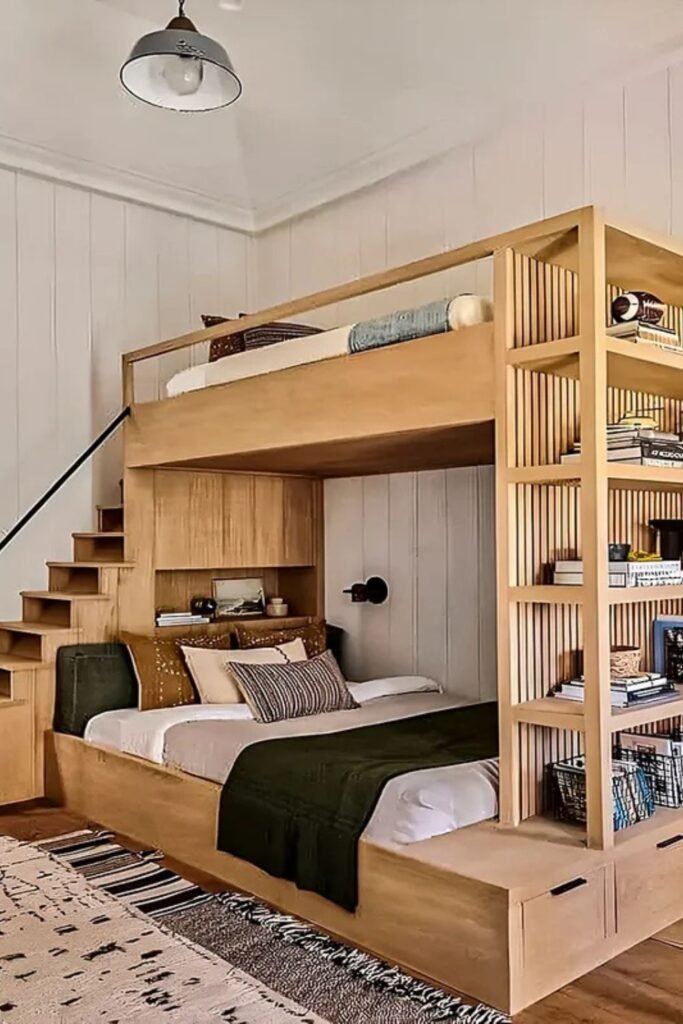
A bunk bed with open shelves offers a practical solution placing books, toys and everyday items within easy reach of children.
The staircase provides safe access and cleverly conceals additional storage, maximizing space efficiency.
Light Layers
Natural light transforms the atmosphere of a shared space, and this design capitalizes on that effect.
The bunks design, with its open sides and uncluttered framing, ensures that it does not obstruct any windows.
The aim is to maintain an open, airy environment, avoiding any sense of confinement.
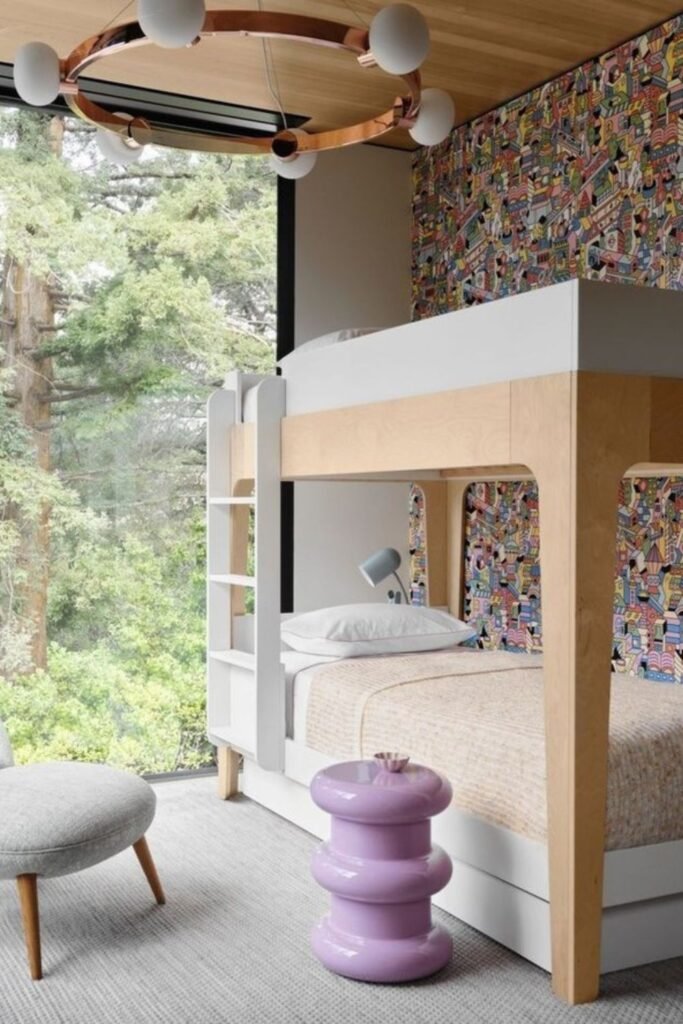
Safe Steps
Nighttime trips feel less stressful when climbing does not feel risky. Wide stairs with solid rails give kids confidence and cut down on slips, especially for half asleep climbs.
Built in drawers beneath the lower bed provide a tidy solution for clothes and toys and eliminating the need for additional furniture.
This design is a good fit for families with little children or siblings of different ages, when safety is the top priority, even if it means sacrificing some space.

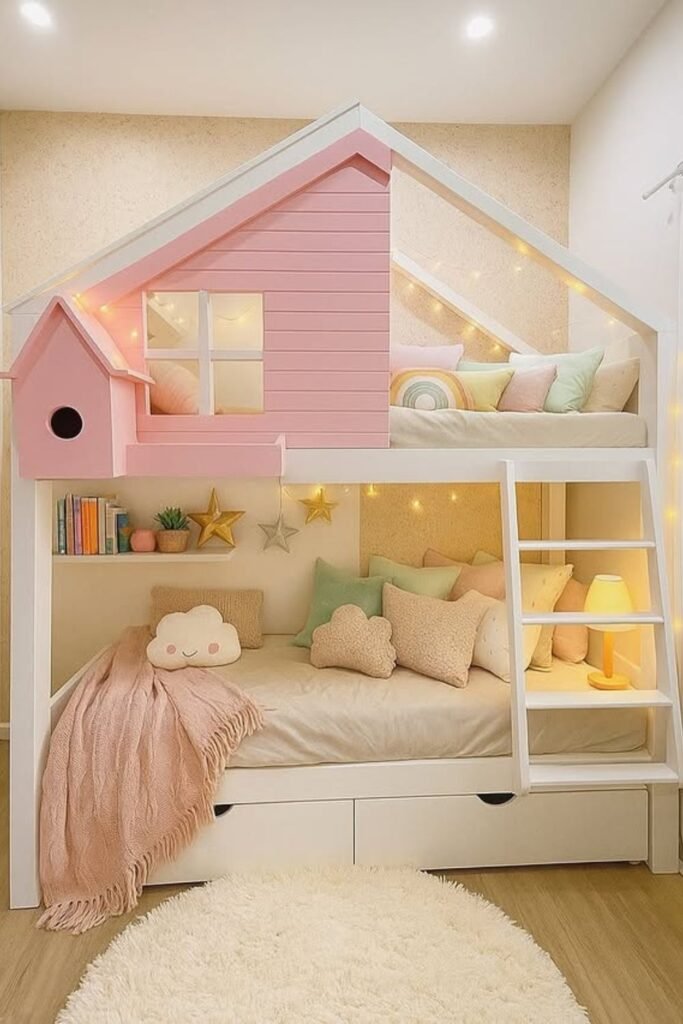
Dream House
Bedtime feels easier when the bed looks inviting instead of practical. A house shaped bunk turns sleeping into something kids look forward
Especially in compact spaces where play area is at a premium, this design shines. The open ladder provides easy access, and soft lighting.
Along with built-in shelves, keeps books and comfort items organized, eliminating clutter.
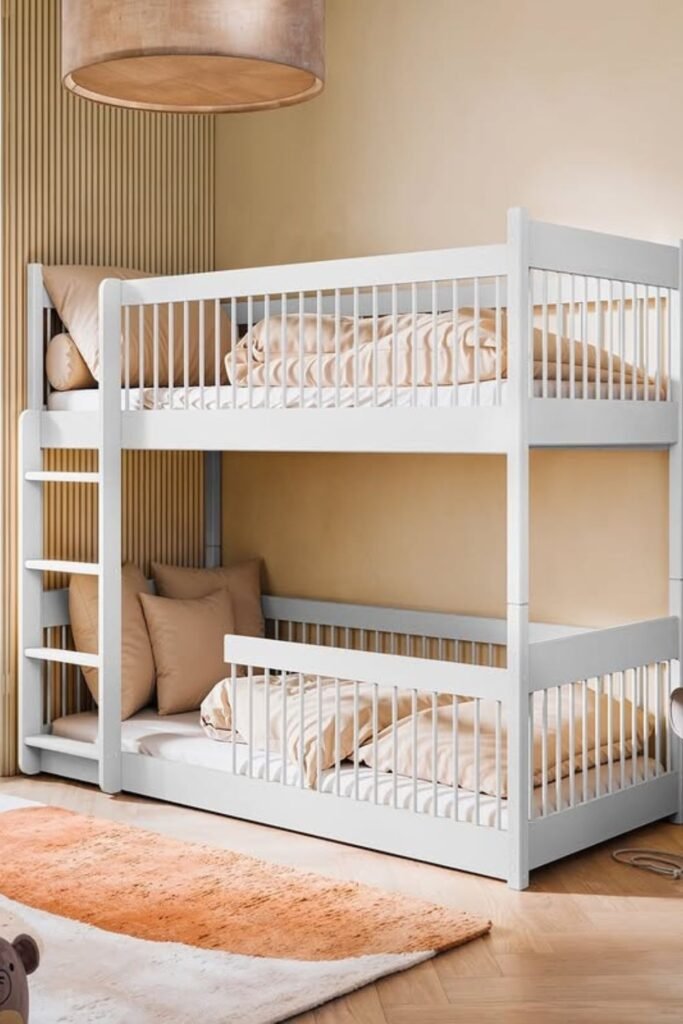
Simple Comfort
Less visual noise often leads to better sleep. A clean bunk with slim rails and soft bedding keeps the room calm, even when two kids share it.
The straight ladder design is a space-saver, ideal for children who have mastered balance.
It’s a good match for smaller to medium-sized rooms, especially if you prefer the bed not to be the rooms focal point.
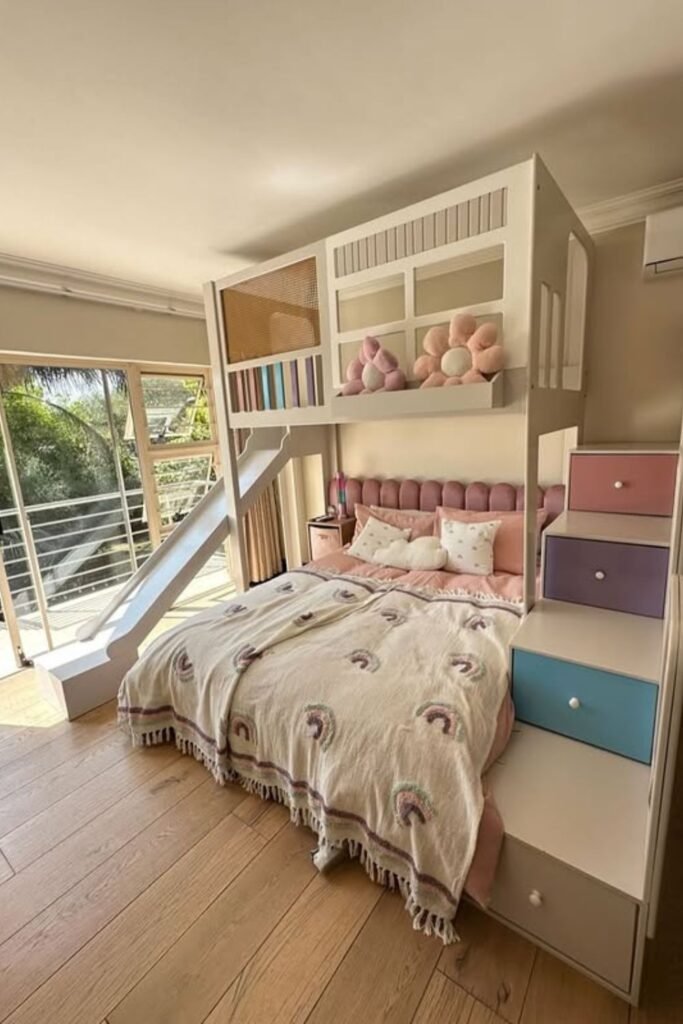
Playful Height
When sleep and play have similar structures, the energy we have in the morning may be used effectively.
A built in slide offers a playful descent, and storage levels help keep things tidy.
The lower bed, still readily available offers a welcome contrast to the lively atmosphere.
Calm Zones
Shared rooms feel less crowded when everything has a clear place. Built in bunks paired with open shelving keep sleep storage or play neatly separated without adding furniture.
The elevated bed design opens up area underneath for storage and peaceful play and contributing to a more ordered space over time.
This arrangement is particularly effective in medium sized rooms especially when aiming for a light open atmosphere and a flexible layout that adapts as children mature.
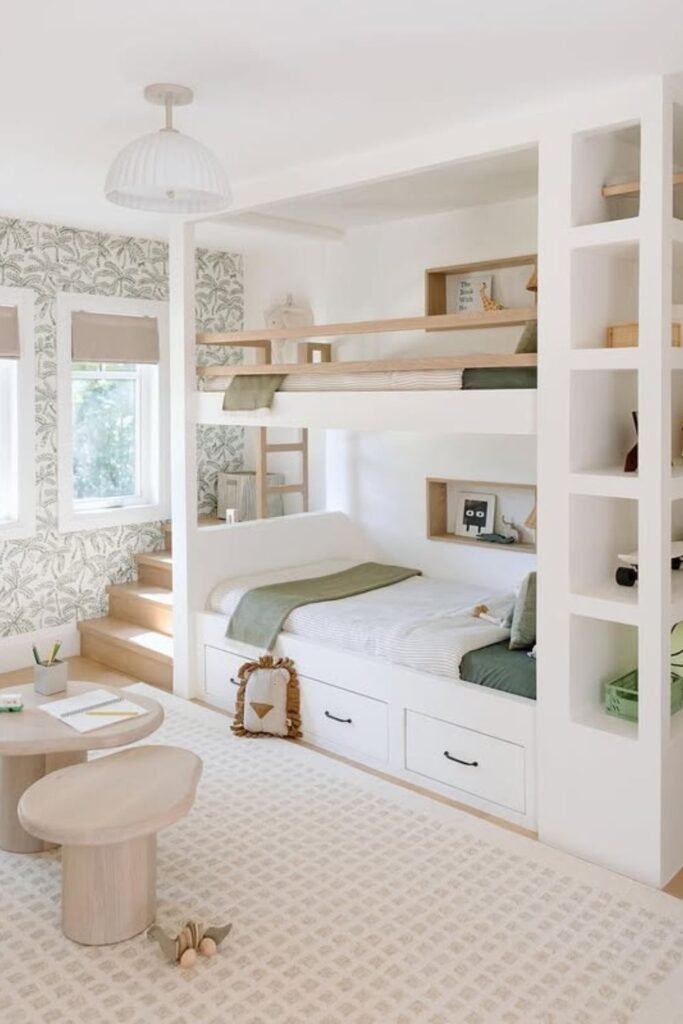
Sleep Shift
Growing kids do not always need the same sleep setup year after year.
A rotating bunk design lets the beds switch positions over time so no one gets stuck same spot forever.
This arrangement really shines in families with kids close in age where a sense of justice is key.
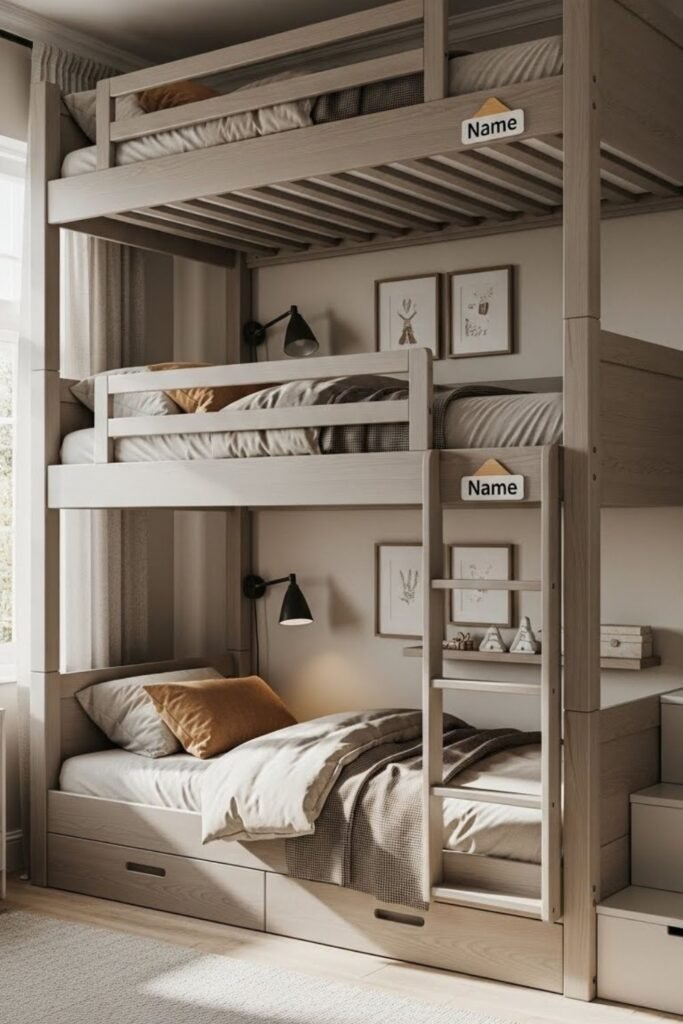
Reading Rise
Quiet kids and often struggle to find space for calm moments in shared rooms. A bunk bed that incorporates a reading nook directly into its structure either on the side.
Bookshelves positioned at eye level encourage a love of reading while also keeping things tidy.
This approach works especially well for kids who struggle to wind down when its time to sleep.
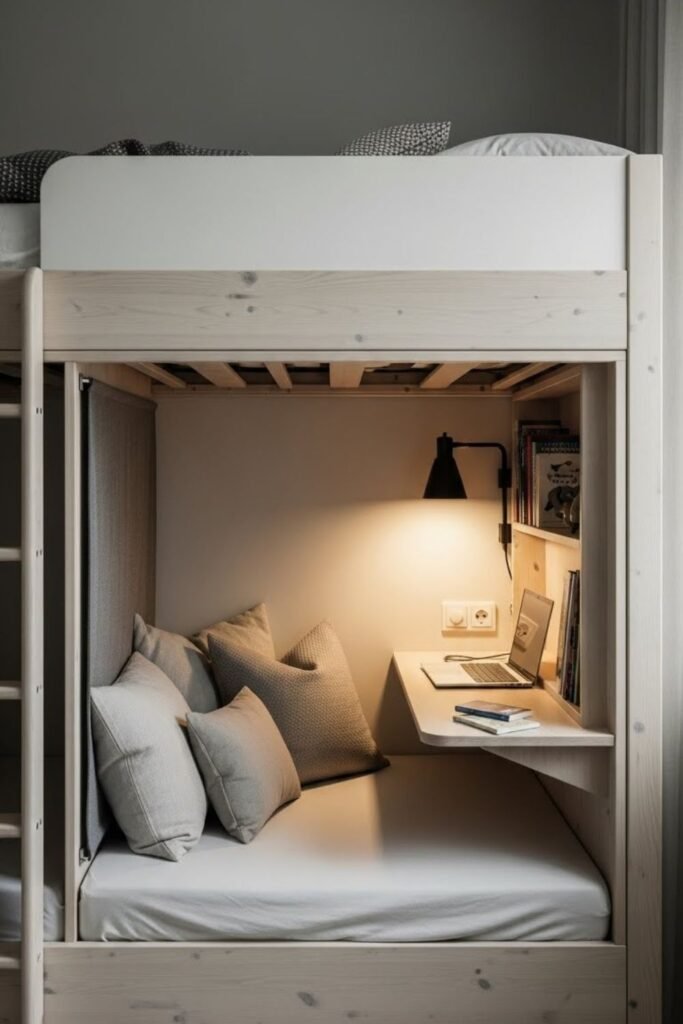
Morning Flow
Mornings, with two kids in the same space may quickly devolve into a whirlwind. A bunk tailored to morning rituals can alleviate that strain.
Bookshelves at eye level encourage reading while also keeping things organized. This approach works especially well for kids who need a little extra time to wind down.
Adding soft lighting and a slender ledge for water bottle or bookmark turns the bed into a haven for unwinding not just sleeping.

Calm Reset
Some kids need help switching from play mode to rest mode. A bunk bed designed with a visual reset zone helps signal that change.
Color, texture and lighting subtly transition from lively zones to more tranquil sleeping quarters.
Lower bunks remain accessible and dynamic, whereas upper bunks offer a sense of calm and privacy.
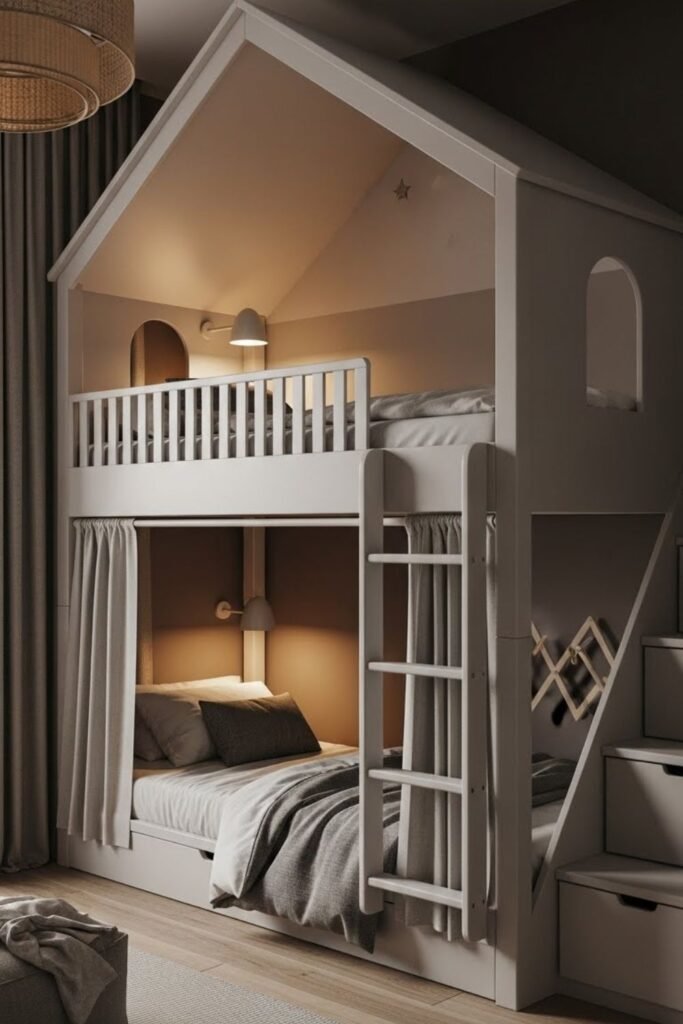
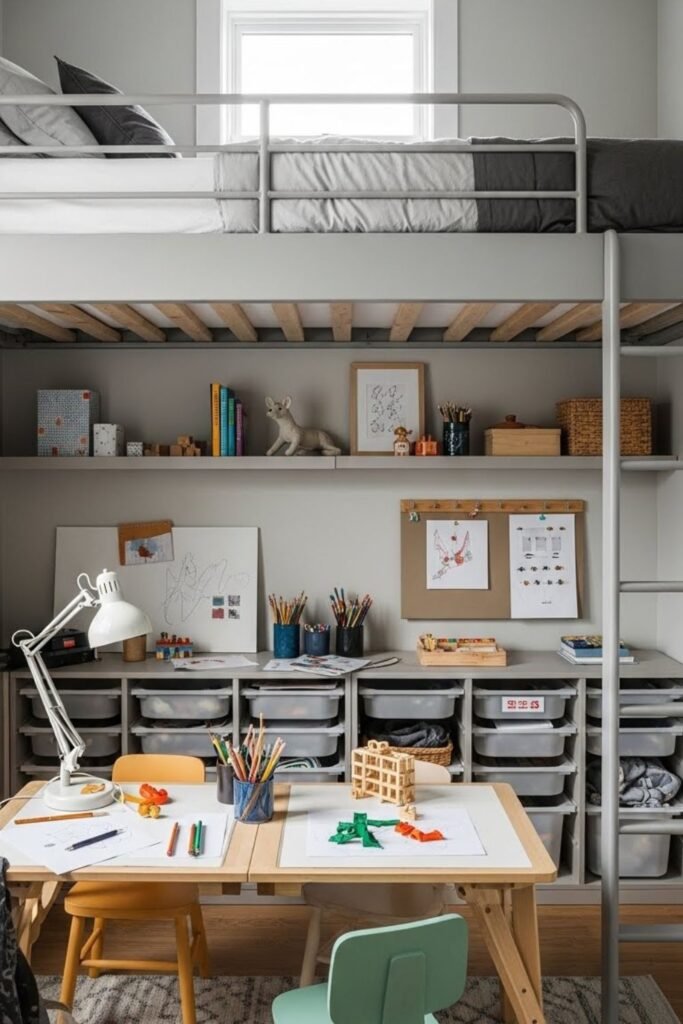
Shared Studio
Creative kids often fight over desk space more than sleeping space. A bunk that treats the room like a shared studio solves that.
Sleeping arrangements remain upright, and the floor transforms into a communal space for artistic endeavors like drawing, construction, or other crafts.
Storage is kept unobtrusive, allowing projects to be easily added or removed without cluttering the area.
Quiet Swap
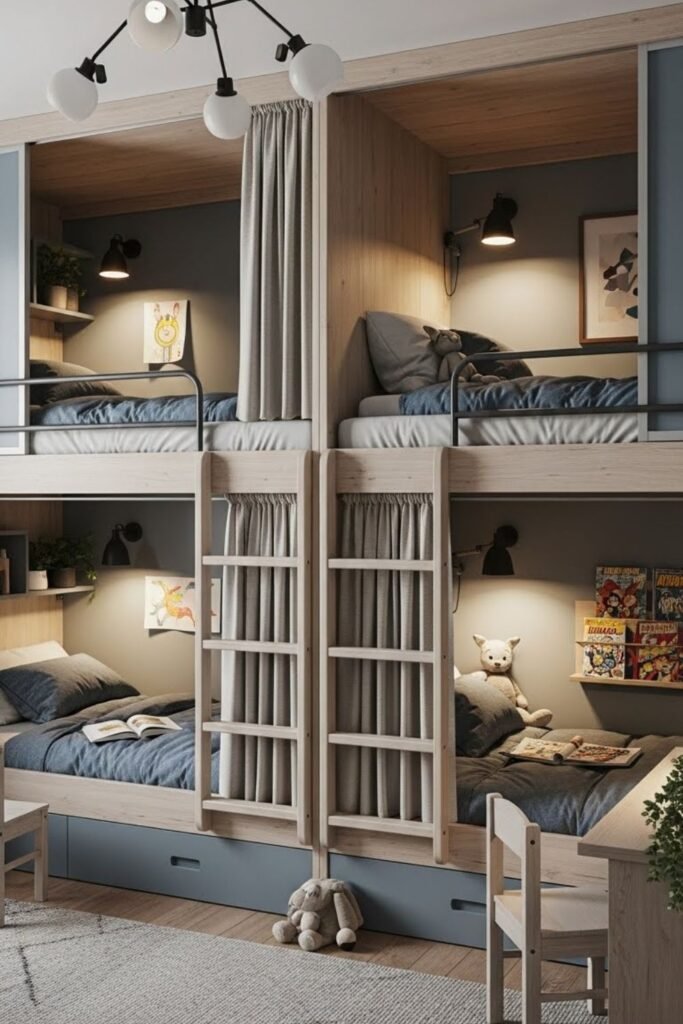
Sibling needs change depending on mood, age, or even the day. A bunk layout that allows quick role switching sleep, rest, alone time gives flexibility without moving furniture.
Curtains, sliding panels, or even partial walls offer children the ability to select privacy or openness, depending on their needs.
This approach is particularly effective for siblings who share a room but have distinct personalities.
FAQs
Is it better to buy a bunk bed now or wait until my kids are older?
If your children are already sharing a room and things are getting cramped putting off a solution often makes the situation worse.
Younger children tend to adjust to bunk beds more readily, particularly when the arrangement feels secure and uncomplicated.
The trick is selecting a design that offers flexibility down the road something that can be separated into two beds or that accommodates both younger and older children.
How do I stop kids from fighting over the top bunk?
Disagreements often emerge when one bunk bed is seen as better than another. Maintaining balance is more important than strictly following set rules.
Reducing envy can be helped by using consistent lighting providing same bedding, and assuring fair access to common facilities.
Some families have discovered that changing their sleeping arrangements every three months works well.

Hi, I’m Afaf! I’m a law student who loves writing about everyday life – from home projects and crafts to fashion, beauty, and parenting tips.
I’ve been writing for over a year, sharing ideas that are simple, practical, and easy to try. I write about things I find interesting and useful, whether that’s organizing a space, trying a new DIY, or finding activities to keep kids entertained.
My goal is to share helpful ideas without making things complicated. If it works in real life, I’ll write about it.
When I’m not studying or writing, I’m usually experimenting with new projects or scrolling for inspiration!