
19 Stunning Bangs Hairstyles For Black Women 2026
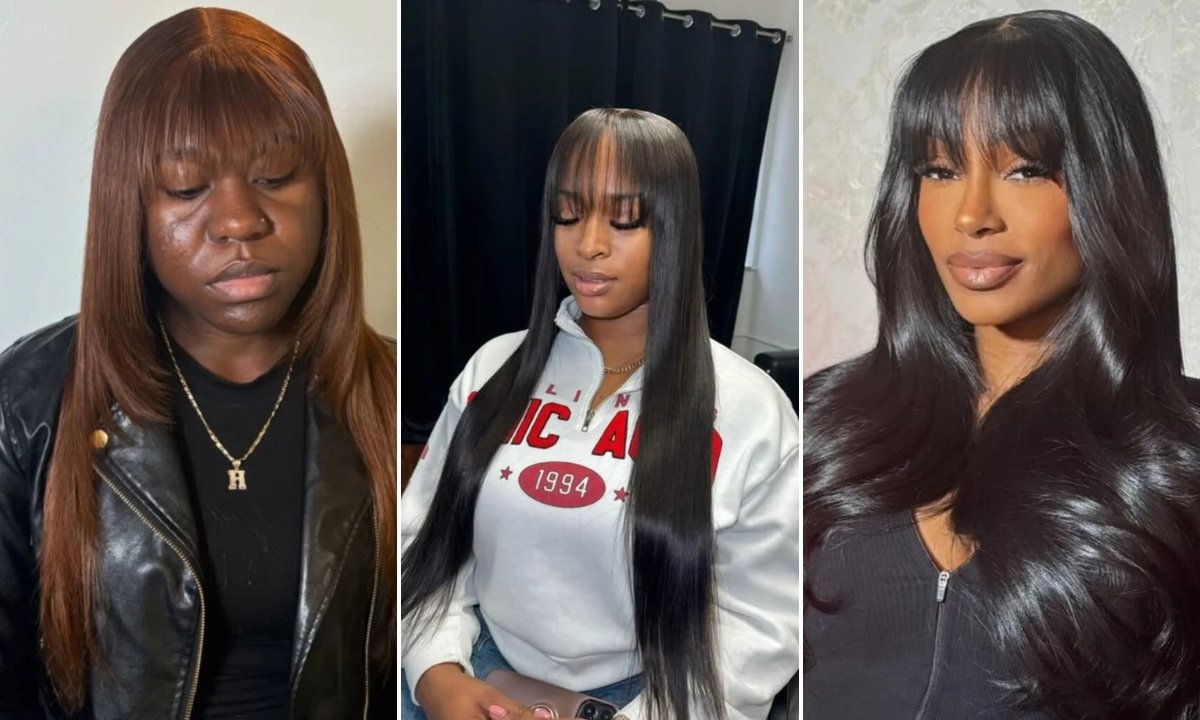
You’ve likely admired a few bang hairstyles and only to halt yourself with the familiar refrain. This won’t suit my hair.
Perhaps you are concerned about shrinkage the daily upkeep or the fear of a regrettable haircut.
Much of the online advice glosses over these realities, particularly when it comes to natural Black hair.
Consequently, bangs can seem more like a gamble than a style choice.
In this article, you’ll explore 19 eye-catching Bangs Hairstyle ideas designed for Black women in 2026.
Can Black Women Wear Bangs with Natural Hair?
Absolutely, Black women can rock bangs with their natural hair, but it’s all about understanding your hair’s unique characteristics.
Natural hair has a mind of its own, shrinking, shifting, and morphing as it dries. If you simply chop bangs like you would on straight hair.
You’re likely to end up with a look that’s either too short or just plain wonky. The trick is to select a bang style that complements your curl pattern, not fights against it.
If your hair tends to shrink significantly, longer, layered, or curly bangs are a better bet than a blunt cut.
Save this article for later!👇👇👇

What Type of Bangs Suit Black Women’s Face Shapes?
Choosing the right bangs is not just about what you find appealing it’s about what suits your face shape.
For those with round faces and longer or side swept bangs can create a more balanced appearance.
Conversely, if your face is longer, fuller bangs can add width and soften the overall look. Thicker bangs are a good choice for wider foreheads, providing better coverage.
Whereas wispy or layered bangs are more flattering on smaller foreheads. The most common error. Imitating a style without considering how it will actually look on you.
Curtain Bangs
Softly split bangs like these work well when you want framing without full forehead coverage.
The midsection of the hairstyle offers versatility you may wear it loose, pinned back, or casually brushed to the side.
To achieve this look, begin with longer bangs that fall just below the eyebrows, then combine them into layers that frame the face.

Full Fringe
Heavy bangs paired with long waves make sense when forehead coverage is the goal without flattening the face.
The added volume along the lengths prevents the bangs from being overly severe or rigid.
Opt for a layered wig or a sew in and then trim the fringe a bit longer than you initially envision.
Feathered Bangs
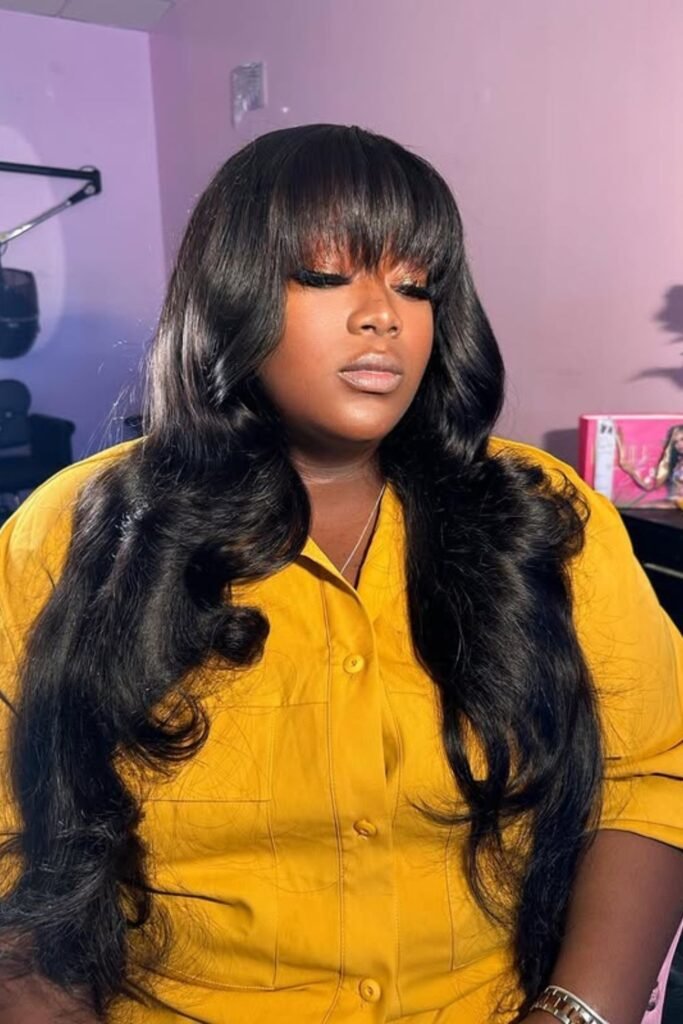
Soft movement across the forehead keeps this fringe from feeling heavy or boxed in.
Slightly tapered ends allow the style to merge seamlessly with longer layers, a great option if you prefer volume without a harsh, defined line.
Request bangs that are thinned at the tips, avoiding a blunt cut. A gentle blow-dry with a round brush will maintain a smooth shape, while still allow for movement.
Blunt Bangs
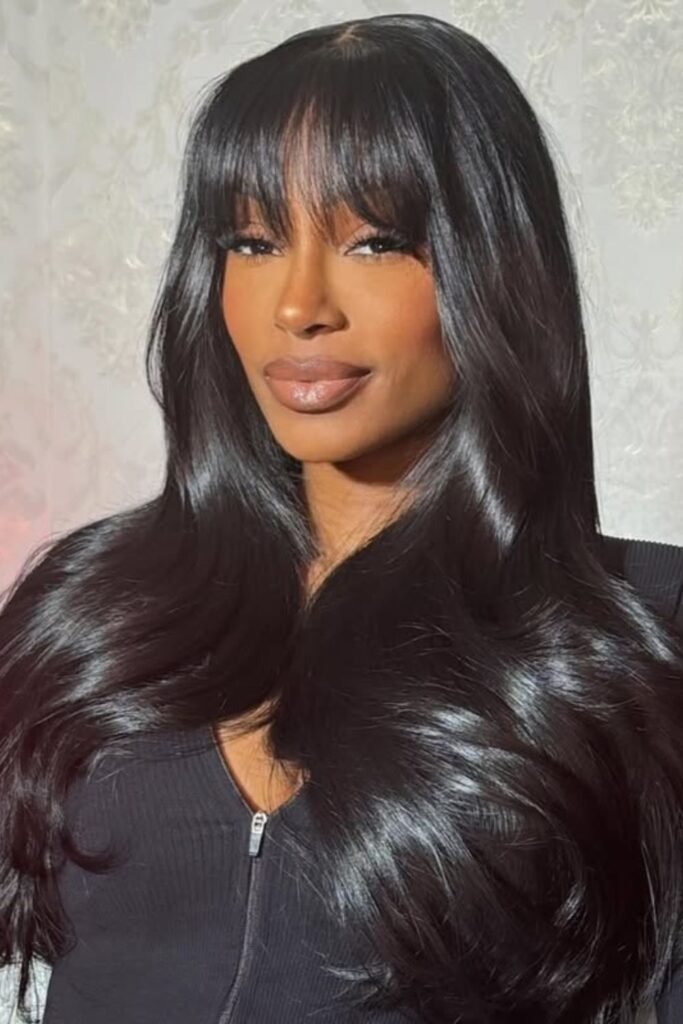
Sharp, straight-across bangs like these work best when you want clear structure and full forehead coverage.
The clean cut is a good choice for longer face shapes, drawing the eye upward. To achieve this look and start with a silk pressed natural base or a straight wig.
Then, cut the bangs on dried hair to manage the length. Frequent cuts are key, as blunt bangs reveal any growth quickly.

Sleek Fringe
Precision is what makes this bang work. Ultra-straight strands with a thin fringe give a polished look that fits work settings or clean everyday styling.
Get the look with a flat-ironed wig or silk-pressed hair. Then, give the bangs a subtle trim, just enough.
So they barely touch the brows, rather than being heavy. To keep things sleek, not oily, use a heat protectant and a light serum.
Soft Layers
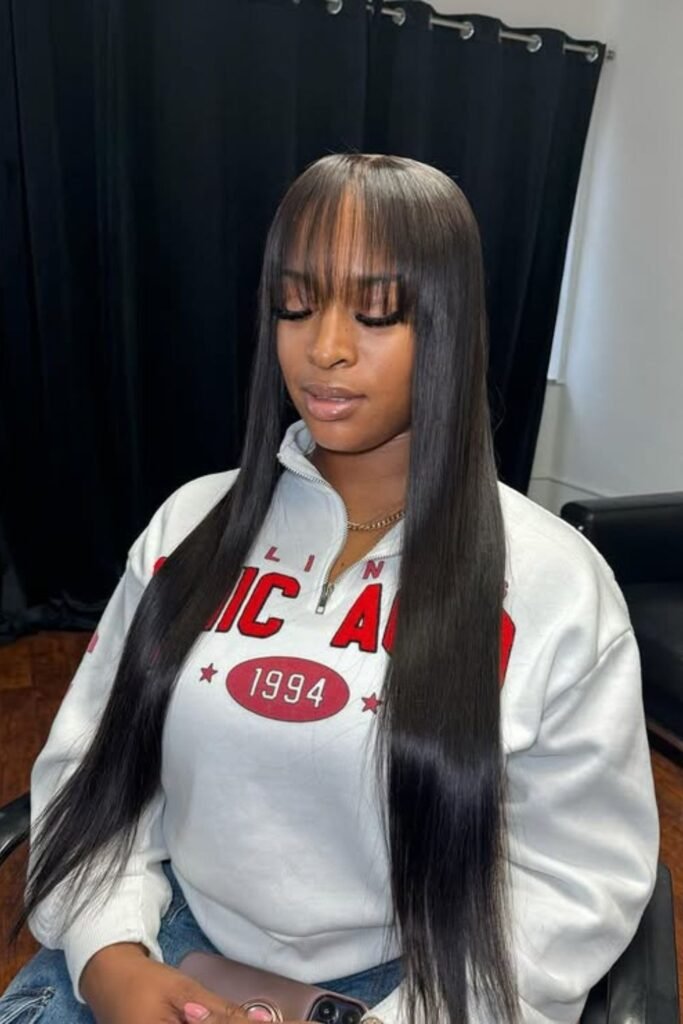
Movement through the front keeps bangs from overpowering the face while still giving shape.
The subtle curve at the ends gives the hair a more natural look, rather than a stiff, flat appearance.
A loose blowout or the use of a large curling iron creates movement, making this style simpler to manage on non-styling days.

Blunt Cut
Clean lines give this bang its power. The straight edge across the forehead works best when the rest of the hair stays equally sharp and smooth.
For a sleek, polished style, start with a silk-pressed base or a perfectly straight wig. When you are ready to cut the fringe and make sure your hair is completely dry.
This gives you the most control over the length. To keep the ends looking sharp and prevent any heaviness, regular trims and a flat iron are essential.
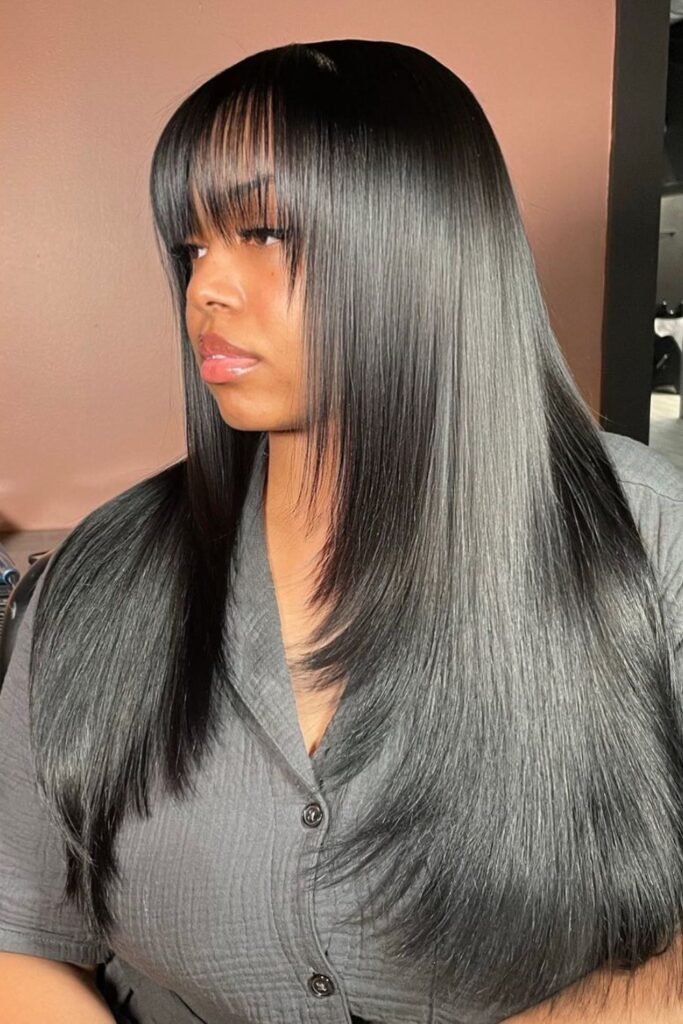
Curtain Layers
Volume does most of the work here. The parted bangs open up the face while the curls add softness and balance.
Especially if your forehead is on the broader side, consider this let the fringe grow long enough to seamlessly integrate with the front layers, rather than cutting it off sharply.
Large barrel curls or a roller set can be a game changer giving the bangs a natural fall without the constant need for trimming and excessive heat styling.
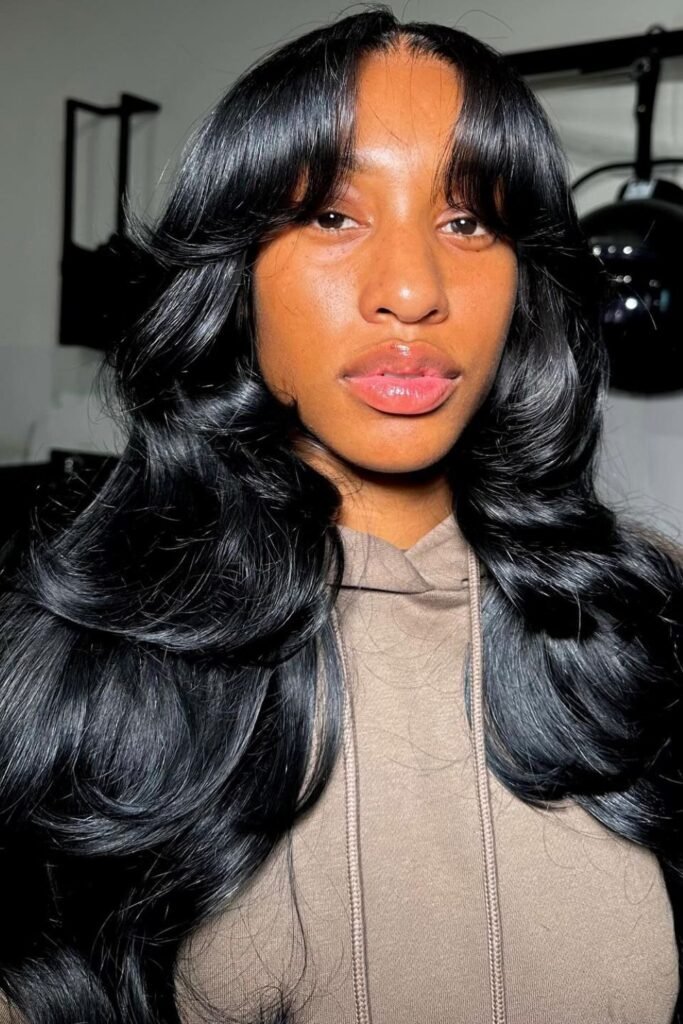
Side Sweep
Drama comes from direction here. Bangs pushed across the forehead soften strong features while creating instant shape without needing a full fringe.
The sweep looks its best when the hair is either straight or has only a hint of layering, keeping the front in check. Request longer bangs, trimmed on an angle.
Then, use a flat iron, adding a subtle curve to the hair. This way, it moves, rather than just hanging straight down.

Wispy Fringe
Light bangs like these work when you want coverage without committing to a thick cut. The thin texture keeps the forehead visible.
This works particularly well if your face is the already petite or has a narrow shape. Opt for a straight wig or sleek and pressed hair.
Then, instead of a blunt cut, point cut the bangs. That subtle technique keeps the fringe light and allows it to seamlessly integrate with rest of your hair.
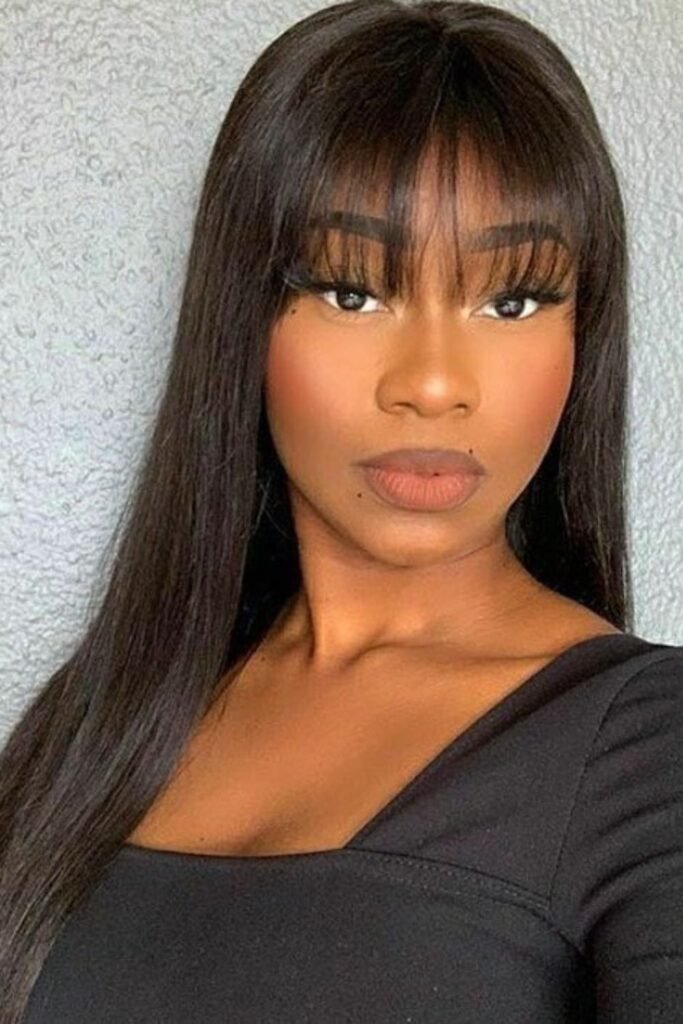
Side Bangs
A deep sweep instantly changes how bangs behave, especially if straight-across styles feel too heavy.
The slanted front of the haircut gently softens the forehead, drawing the eye to the cheekbones and eyes.
To achieve this look, cut the bangs longer on one side, then integrate them into face-framing layers.
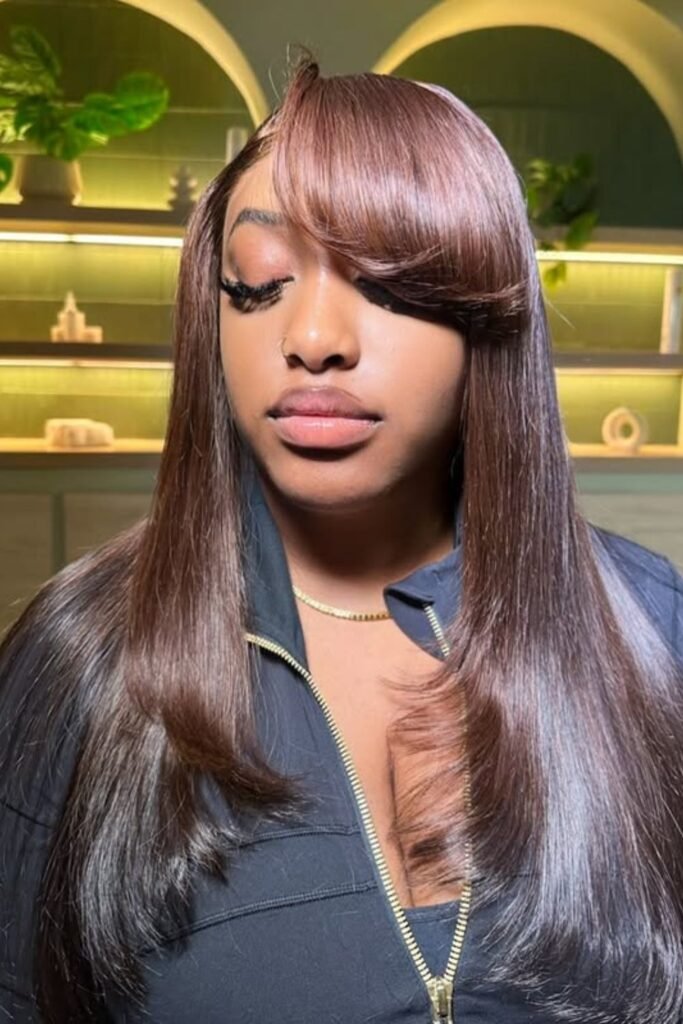
Rounded Bangs
Balance is the reason this fringe works. The slight curve at the ends softens straight hair so the bangs do not look stiff or helmet-like.
Letting the front sections of your hair hang a little longer than the rest helps them blend seamlessly.
Using a round brush during blow drying creates a natural bend and streamlining your daily routine and maintaining a polished appearance without frequent adjustments.

Curly Bangs
Natural movement makes this option feel less risky than straight cuts. Loose curls in the front blend easily with the rest of the hair, so mistakes don’t stand out as much.
Overestimate the length you want, then trim the bangs when your hair is completely dry.
A curling wand or flexi rods can assist replicate the curl pattern and prevent the front from becoming too short.

Curved Fringe
Soft curves across the forehead change how full bangs feel. Instead of sitting flat, the slight bend helps the fringe blend into loose waves.
This approach prevents the style from appearing weighed down. Longer bangs, cut in a soft curve are ideal.
Employ a round brush or large rollers at the front to encourage the hair to fall forward naturally and eliminating the need for frequent heat styling or adjustments.
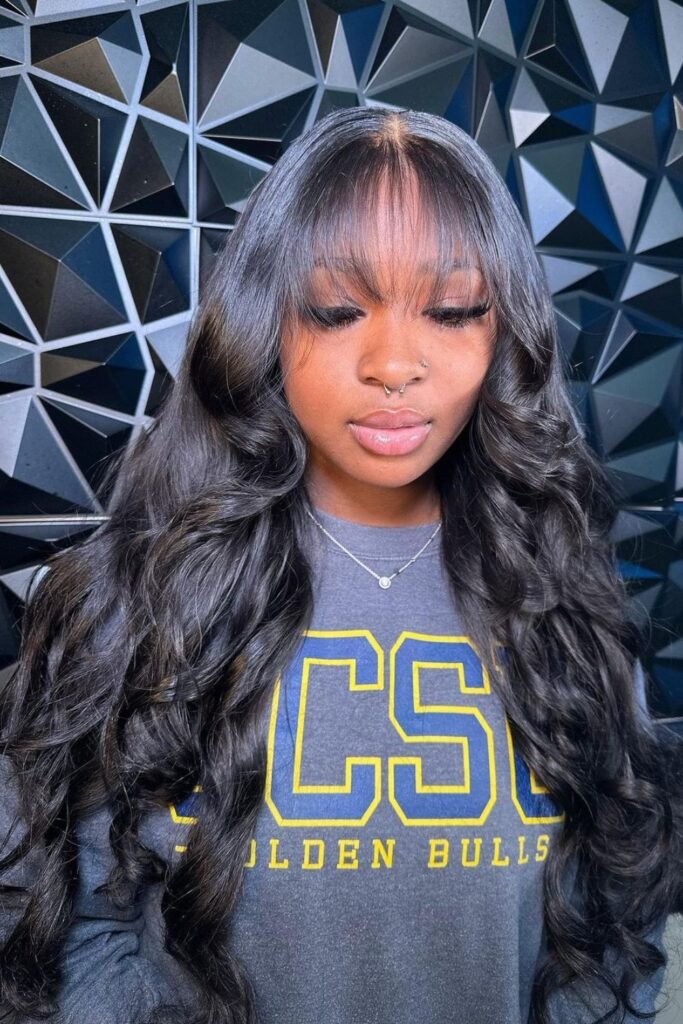
Bob Bangs
Short length changes how bangs behave, and that’s the advantage here. The blunt bob keeps everything controlled.
The fringe softens the look around the eyes. Precision is key, making this style ideal for straight wigs.
Or hair that’s been silk-pressed. To avoid a weighed-down appearance, keep the ends of the bangs a bit textured.
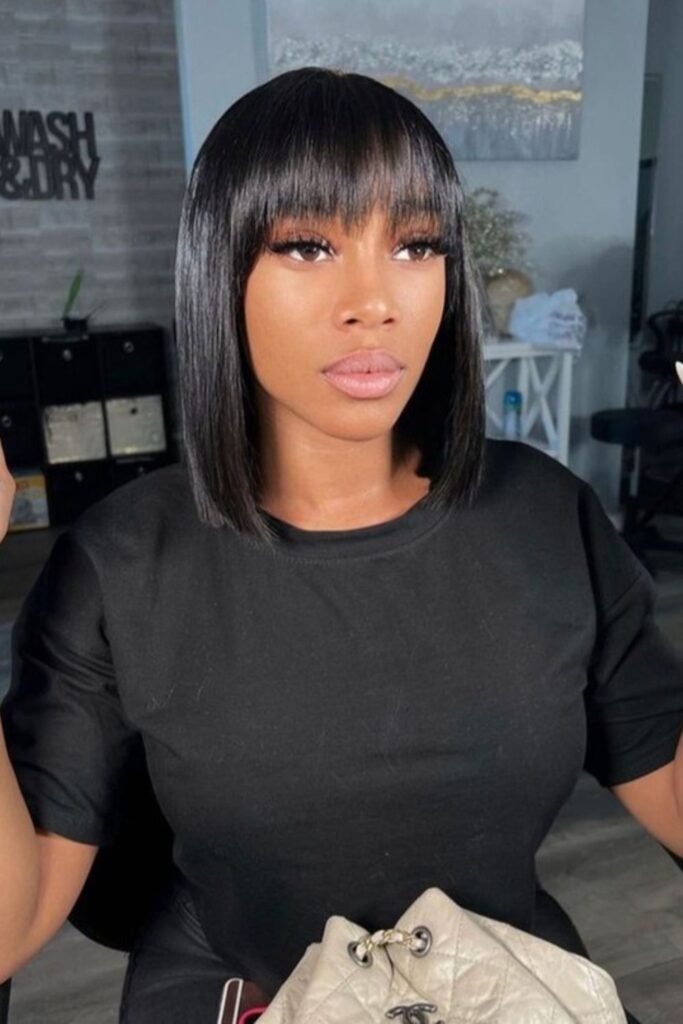
Airy Fringe
Lightweight density keeps bangs like these from taking over your face. The thin, see-through finish works best.
If you’re after coverage without sacrificing your natural look, consider a fringe. Request a softly thinned style, with the sides a bit longer to seamlessly integrate with straight hair.
To maintain a sleek appearance and use a flat iron on a low setting and finish with a light application of smoothing serum.
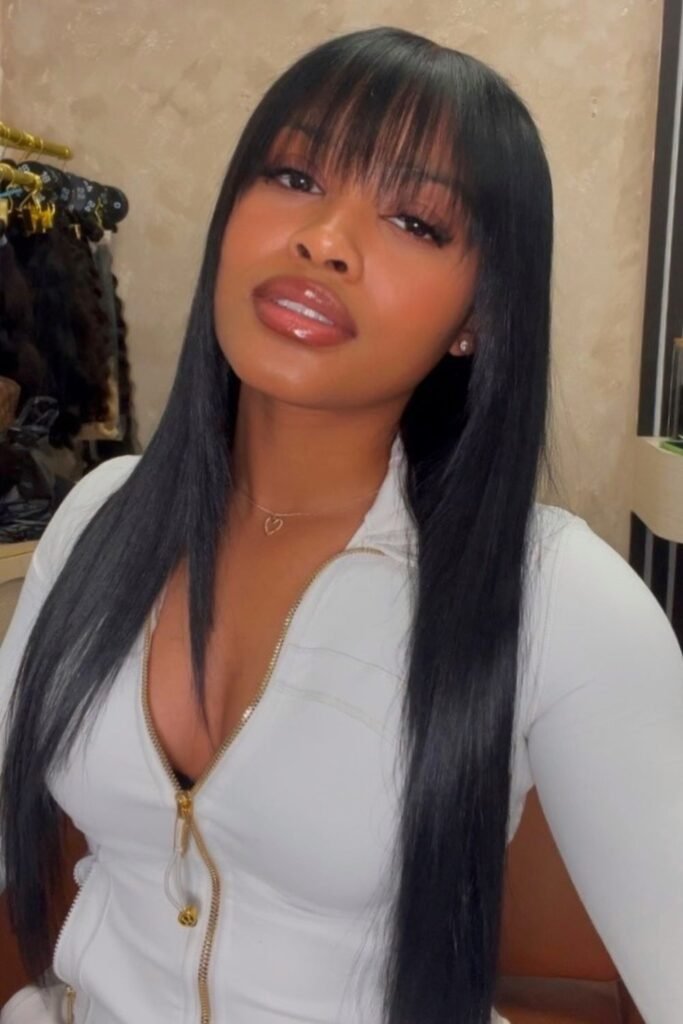
Volume Layers
Lift at the crown changes how bangs sit, especially on fuller styles like this. The added height keeps the fringe from collapsing into the face.
And helps balance longer lengths. Request bangs that seamlessly integrate with layered waves, avoiding a harsh and blunt cut.
A roller set or a round brush blowout provides the necessary foundation allowing the bangs to drape forward effortlessly, eliminating the need for frequent restyling.
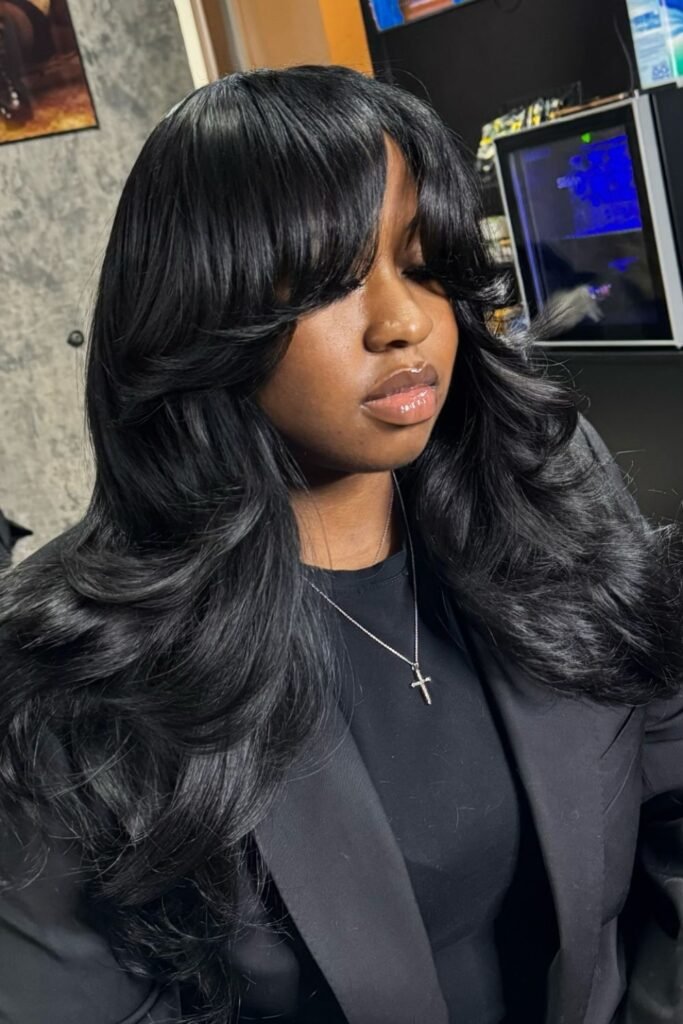
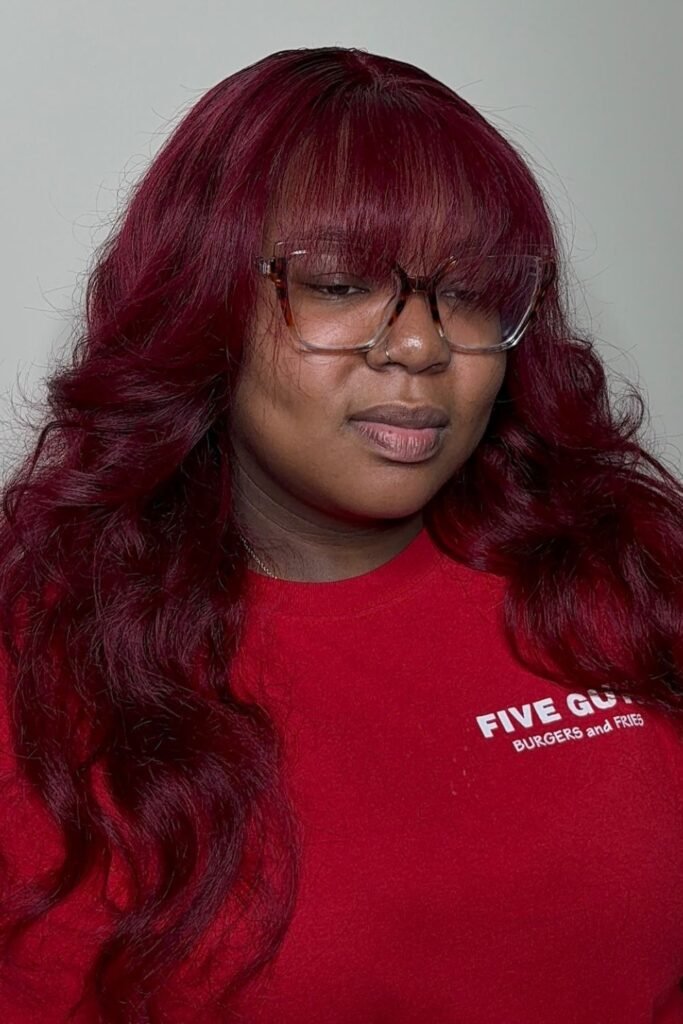
Colored Fringe
Color shifts the focus here, which makes fuller bangs feel intentional instead of heavy. The rich red draws attention upward so the fringe blends into the waves.
Instead of a blunt fringe, choose for bangs that are a bit longer and layered at the tips.
This prevents a harsh and boxy appearance. Loose curls are a great way to blend the color and form and creating a more cohesive style.
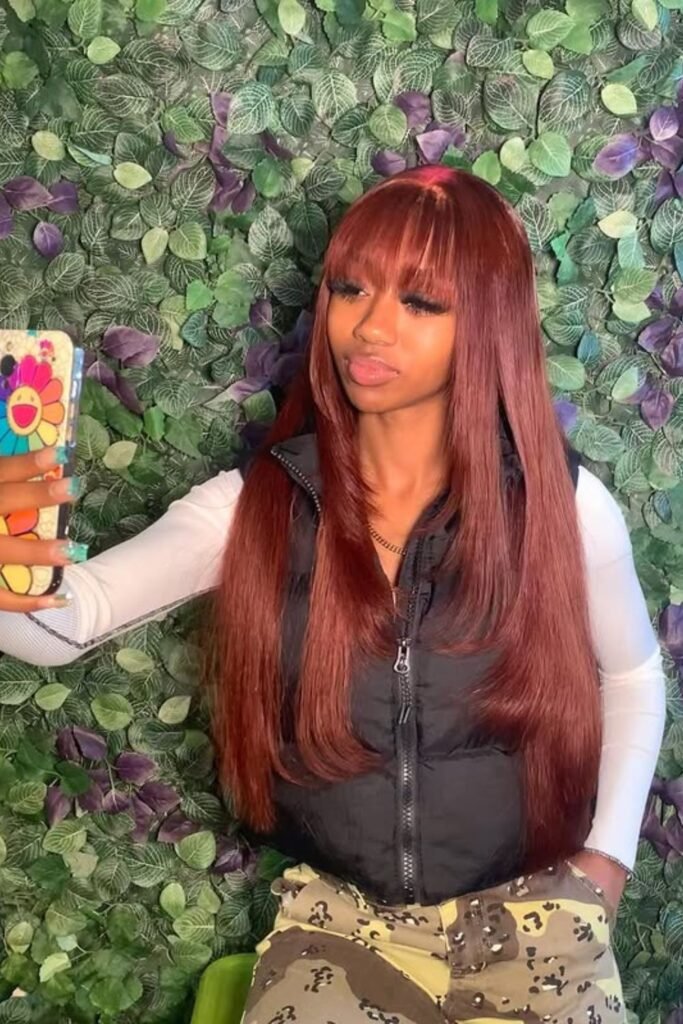
Straight Bangs
Length does the balancing here. Long, sleek strands keep the fringe from feeling too bold while still giving full forehead coverage.
This is a great option if you’re after bangs but still want to keep your styling options open.
Request bangs that are cut just below your eyebrows, seamlessly blended into straight layers.
FAQs
Do bangs make Black hair harder to maintain?
Bangs aren’t a guaranteed hassle, but they do require a bit more upkeep than the rest of your hair.
Since they frame your face, they’re the first to show the effects of sweat, humidity, and oil.
If you’re after something low-maintenance, longer or wispy bangs are generally easier to style than a blunt, heavy fringe.
Should bangs be cut on wet or dry hair for natural textures?
Dried cutting is a better bet for natural hair. When hair is wet, shrinkage is concealed, and that’s how bangs might end up drastically shorter than you envisioned.
By cutting on dried styled hair you see the actual length allowing for gradual adjustments rather than a frantic correction down the line.
Hi, I’m Afaf! I’m a law student who loves writing about everyday life – from home projects and crafts to fashion, beauty, and parenting tips.
I’ve been writing for over a year, sharing ideas that are simple, practical, and easy to try. I write about things I find interesting and useful, whether that’s organizing a space, trying a new DIY, or finding activities to keep kids entertained.
My goal is to share helpful ideas without making things complicated. If it works in real life, I’ll write about it.
When I’m not studying or writing, I’m usually experimenting with new projects or scrolling for inspiration!