
26 Backyard Activities For Kids For 2026
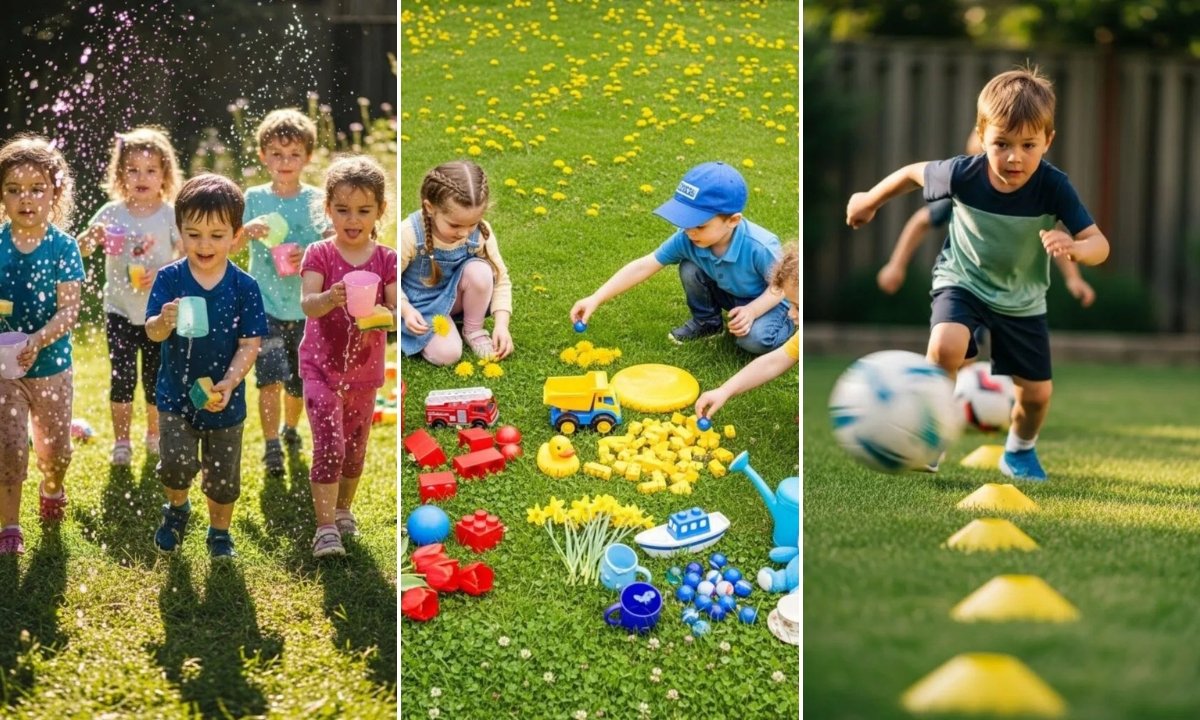
You usher the kids outdoors, hoping to quell their “boredom,” only to have them back inside within minutes, grumbling once more.
Or, perhaps, they’re outside squabbling, meandering aimlessly or giving you that look, the one that silently begs for a solution.
Many backyard endeavors falter because they simply don’t align with your child’s age, their current energy level or the physical limitations of your yard.
In this guide, you’ll find 26 backyard activities for kids designed for safe and practical home play in 2026.
Let’s jump in!
What Backyard Activities Work for Different Age Groups?
If an activity fizzles out quickly, its often because it’s not suited to your child’s developmental stage. Toddlers thrive on simple actions and repetition.
Provide them with room to run, toss or push objects freely, without any constraints. Preschoolers, on the other hand, enjoy brief challenges.
Introducing a goal, such as Can you reach the cone, will likely keep their attention for a longer period. School-age children, however, crave autonomy.
Allowing them to modify the game or compete against their own previous performance will encourage sustained engagement.
Save this article for later!👇👇👇

What Easy Outdoor Activities Can Kids Do in a Small Backyard?
A compact backyard can be a real gem if you stop trying to cram everything into it. Choose a single activity and let it dominate the scene for a spell.
Think of games that keep them in one place such as chalk targets, water play stations, or straightforward obstacle courses that circle back on themselves.
If the space feels cramped, consider rotating activities rather than trying to set up everything simultaneously.
By working with the space you have, kids will play longer and yo will spend less time trying to keep things from descending into chaos.
Giant Strategy
Friendly competition keeps kids engaged longer than free play ever will. A large connect-style game works best in shared spaces.
Where siblings or friends play together with out running. Place it on level ground and make the rules straightforward for younger children.
Taking turns fosters patience and the scale of the setup draws kids in, eliminating the need for regular reminders to stay on task.

Balance Path
Stepping from shape to shape turns simple movement into a focus game. Soft balance stones work well on grass and let kids test coordination without hard falls.
Scatter them do not line them up so little feet have to navigate not just dash. A crawl tunnel adjacent offers a breather and the kids get a burst of energy.
This setup work best in the smaller yards when the goal is to channel movement not just encourage a sprint.

Sandbox Hub
Messy play works best when everything stays in one zone. A raised sandbox placed near a play structure lets younger kids dig while older ones climb and slide nearby.
Keeping all the scoops, buckets, and molds contained within the box prevents a messy yard cleaning.
This arrangement is ideal for families with children of varying ages it keeps everyone nearby and eliminates the need to compete for the same toys.

Sky Makers
Wind instantly turns waiting into excitement. Hand-decorated kites give kids ownership before the play even starts, which keeps them invested longer.
Open driveways, peaceful streets or expansive yards are ideal for a smooth launch. Encourage kids to experiment with various string lengths and angles.
Rather than immediately stepping in to correct them. This process of trial and error transforms into a source of enjoyment, rather than a source of annoyance.

Toss Practice
Shared play builds confidence faster than solo games at this age. Soft flying discs work well for toddlers because the motion stays simple and slow.
Get in close, keep your aim low, and make your throws short to see results fast. Open fields are your friend.
Helping to sidestep any potential for annoyance. Also, stepping in for a few throws keeps everyone engaged without monopolizing the game.

Focus Drills
Fast feet beat fancy goals at this stage. Short soccer drills using cones and close ball control help kids stay engaged with out needing a full field.
Tight quarters can actually be an advantage since they demand focus and equilibrium.
Swapping players in and out for brief drills maintains a high energy level and sidesteps the disorder that sometimes accompanies full scale scrimmages.

Team Tension
Pulling together shifts energy fast. Tug of war works best on soft ground where kids can dig in without slipping.
Divide the teams evenly, then establish a clear center line to define the objective. Keeping the rounds brief helps manage emotions and maintain a high energy level.
This game is perfect for group playdates or parties offering structure while yet allowing for boisterous, active play.

Nature Sorting
Curiosity slows kids down in the best way here. A shallow tray filled with sticks, grass, and hidden objects invites hands on exploring without running or noise.
Sorting eggs or matching cards can be a hit in smaller backyards, especially when a peaceful atmosphere is key.
Keep everything organized to maintain focus on exploration, not chaos, and allow children to choose their own approach.

Cone Targets
Chasing a clear goal keeps older kids moving even in cold weather. A simple cone setup turns running into a purpose-driven game instead of random laps.
Spacing targets on grass is a great option for larger yards or open spaces. To keep things interesting.
Without needing to put up new equipment, incorporate soft balls or hoops to adjust the difficulty level.

Sensory Trays
Hands-on play keeps little kids grounded longer than open-ended running. A shallow water tray with textured shapes or pictures.
Let fingers roam freely, keeping the mess to a minimum. Indoors or under a sheltered outdoor area is ideal, as it helps contain any splashes.
Changing the theme animals, colors or seasons keeps things interesting without requiring a complete overhaul of the setup or the need for new supplies.

Paint Time
Creative focus settles toddlers faster than structured games. Outdoor painting on a blanket give freedom with out worrying about spills.
Thick brushes and big sheets of paper make it easier for the small hands to succeed rather than feel defeated.
Shaded grass is ideal allowing children to sit comfortably and paint for extended periods.

Hammock Hangout
Layered hammocks turn downtime into shared play without running or noise. Hanging them low and close.
It lets youngsters explore and climbing in or out with a sense of the adventure but safely. The distance between the trees is key and keeps lines taut to minimize sag.
This setup works best during quieter time and the kids enthusiasm wanes but they still want to stick together instead of wandering off.

Risk Balance
Careful challenge builds confidence without loud chaos. A low plank resting on tires lets kids practice balance while feeling brave not scared.
The walkway stretches on its uneven stepping stones deliberately designed to slow things down. This works nicely in a backyard, perhaps along a garden’s edge.
The key is to keep everything low to the ground that way, any slips become opportunities for learning, rather than trips to the emergency room.

Swing Pause
Gentle motion resets energy when kids feel overstimulated. A round platform swing gives room to sit, twist or sway without needing speed.
Keeping the swing low makes playtime safer and more inviting. Areas with trees are ideal; they encourage kids to stay and play, rather than hurrying away.
Those peaceful swinging moments can easily extend play with out need to introduce something new.

Family Ride
Kids stay engaged longer when they’re moving together, rather than just doing laps on their own.
Easy-going bike rides are ideal on quiet routes or long driveways, where the pace may be leisurely.
A few simple rules and helmets are all it takes to keep things safe without spoiling the fun. Pedaling in a group transforms a work out into a shared experience.

Build Zone
Purposeful mess keeps kids locked in longer than open digging. Construction trucks inside a defined sand box and give play a direction without any rules.
The elevated sides keep sand and tools from spilling over, which makes for a more believable cleanup.
Placing the sandbox in a corner of the yard is ideal it keeps vehicles from drifting away.

Play House
Ownership changes how long kids stick with an activity. A paintable cardboard house gives toddlers a space that feels like theirs, not another toy.
Corner areas in the yard are ideal they keep the walls stable while kids get busy. Allow the paint to dry on its own, and leave the home out for more fun.
This way, decorating becomes a part of the pretend play, eliminating the need to start over.

Hop Challenge
Laughter comes easily when the action is playful, not stiff. Sack hopping is ideal on forgiving grass perfect for tumbles.
The game then resumes, maintaining its momentum. Keeping the hops short keeps the things energetic not a chore.
Numbered bags add a dash of excitement and no prizes are needed. Quick reset keep everyone involved while preventing anyone from getting bored.

Dig Circle
Defined edges help play last longer without constant reminders. An enclosed sand pit keeps tools, rocks and digging contained.
Let youngsters concentrate on constructing not becoming distracted.
Incorporating different textures, such as sand and gravel and keeps things engaging without requiring toys.

Water Dash
Hot days need movement without rules. A simple sprinkler setup turns running into instant fun with almost no prep.
Open grass is ideal it minimizes slips and keeps the game flowing.
Inflatable bumpers offer a convenient spot for kids to catch their breath before diving back into the action.

Shadow Chase
Late afternoon sunlight turns the ground into a game board. Kids follow, stretch, or outrun their own shadows without needing props or rules.
Flat surfaces such as patios or driveways, are ideal for keeping shapes distinct. The movement is more playful than contrived.
And the shifting shadows maintain interest, eliminating the need for adult supervision.

Sound Hunt
Quiet curiosity can be just as powerful as running. Kids pause, listen, and name every sound they hear birds, leaves, distant cars, footsteps.
Backyard corners and garden margins can help reduce distractions. Shortening the activity minimizes boredom.
And doing it on several days allows children to notice new things without it feeling like a lesson.

Path Builder
Loose sticks, stones, and leaves become tools instead of clutter. Kids create walkable paths or patterns directly on grass or dirt.
Long, slender spaces are ideal; they encourage designs to extend outward, rather than sprawling.
Constructing the path before traversing it effectively doubles playtime, all without requiring more materials or the hassle of cleanup.

Water Carry
Spilling becomes part of the challenge here. Small cups or sponges move water from one container.
To another across short distances. Grass absorbs spills, preventing a quick shift to mud.
Lightweight containers allow children to adjust their actions independently reducing the need for adult intervention and extending playtime.

Color Patrol
One color leads the whole activity. Kids search the yard for objects matching the chosen shade and place them in one spot.
Lawns, with their mix of plants, toys and outdoor furniture, provide a natural sense of variety.
A simple change in hue can immediately rekindle attention, especially when energy is dispersed rather than agitated.

Time Trials
Speed matters less than focus here. Kids repeat one simple action jumping, tossing, stepping for a short timed round.
Open yard parts are a good way to prevent crashes. When the focus shifts from competing against one another to racing against time.
It cuts down on disagreements and fosters internal motivation. This often leads to longer play sessions compared to games where everyone is trying to win.

FAQs
Do backyard activities need to be planned to keep kids interested?
Not really. Kids often switch off when things seem too contrived. Simple setups with clear limits work well they let kids dive in and start playing immediately.
If an activity is not working, do not push it just switch things up. Short flexible play sessions frequently hold their interest longer than a single, tightly structured one.
What if kids fight or quit during backyard play?
When kids grow frustrated, its typically because the activity isn’t suited to their age or the environment.
A simple reset, such as swapping roles or altering the challenge, frequently resolves the issue without needing to intervene or stop the fun completely.

Hi, I’m Afaf! I’m a law student who loves writing about everyday life – from home projects and crafts to fashion, beauty, and parenting tips.
I’ve been writing for over a year, sharing ideas that are simple, practical, and easy to try. I write about things I find interesting and useful, whether that’s organizing a space, trying a new DIY, or finding activities to keep kids entertained.
My goal is to share helpful ideas without making things complicated. If it works in real life, I’ll write about it.
When I’m not studying or writing, I’m usually experimenting with new projects or scrolling for inspiration!