
26 Baby Boy Nursery Room Ideas For 2026
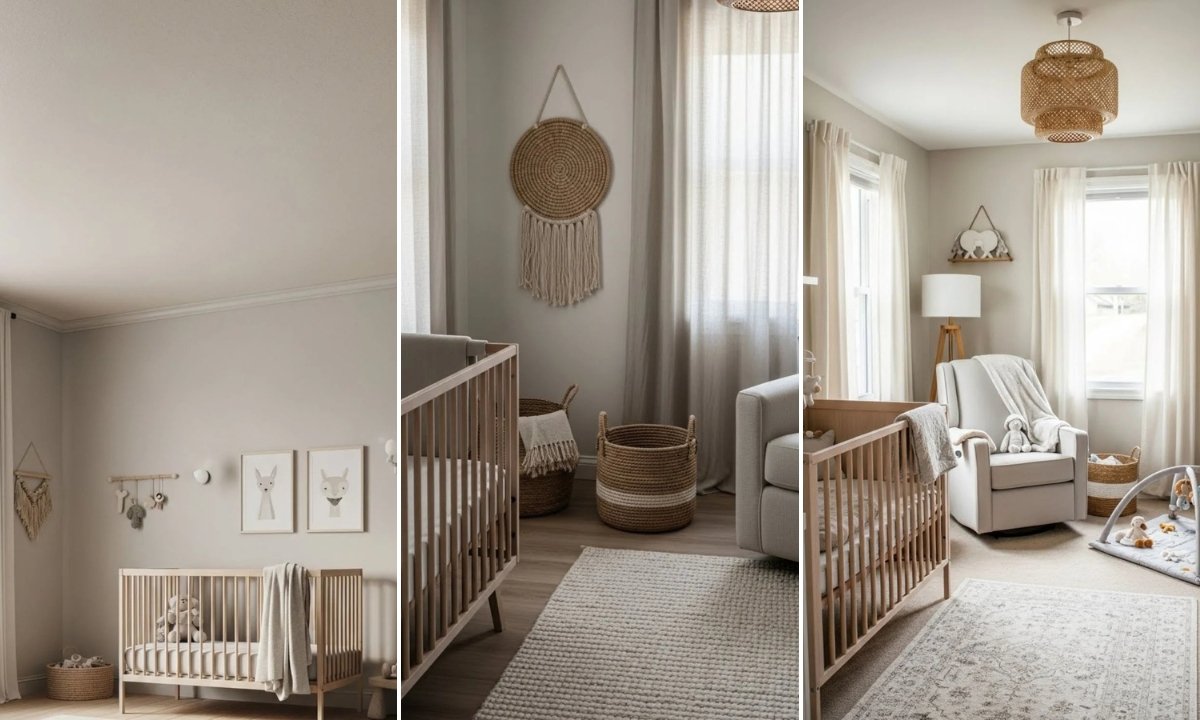
You step into the nursery, and the thrill evaporates. The space is cramped. The online inspiration. It’s just too much.
Everything seems either garish, overly simplistic or priced out of reach. You don’t want to make a mistake, and the thought of a complete overhaul in a year is unappealing.
This article simplifies the process, offering practical advice to help you create a baby boy’s nursery that suits your room, promotes tranquility, functions well in the real world.
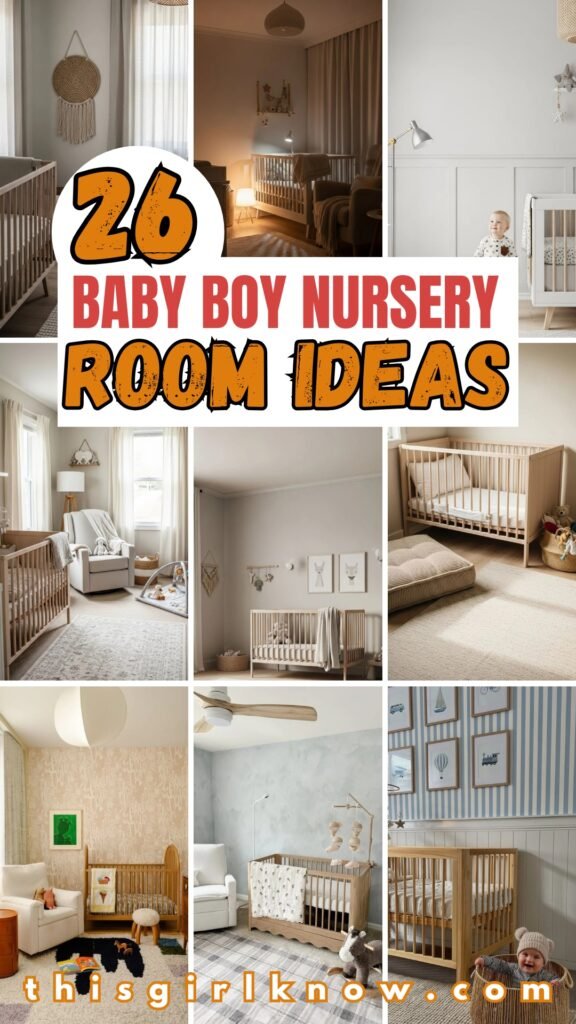
In this article, I’ll show you 26 Baby Boy Nursery Room ideas parents actually use in 2026.
How Can You Decorate A Small Baby Boy Nursery?
In a compact room, every decision carries weight. Begin with the essentials, and resist the urge to overcrowd.
Select the crib first positioning it to allow for easy movement. Repurpose the dresser as a changing table eliminating the need for additional pieces.
Maintain a clear floor, utilizing walls for shelves or minimalistic decor. Light hues create an airy feel while a less cluttered environment fosters tranquility.
Save this article for later!👇👇👇
What Lighting Is Best For A Baby Boy Nursery?
Lighting needs to work, day or night. Choose soft, mellow lighting over stark white lights to cultivate a more relaxing environment.
A ceiling light works fine during the day, but think about adding a small lamp or wall sconce for those late-night feedings and diaper changes.
Position it away from the crib to avoid shining directly in your babys eyes. Dimmer switches are a bonus.
Thoughtful lighting design simplifies those late night hours and can help your baby drift off more quickly.
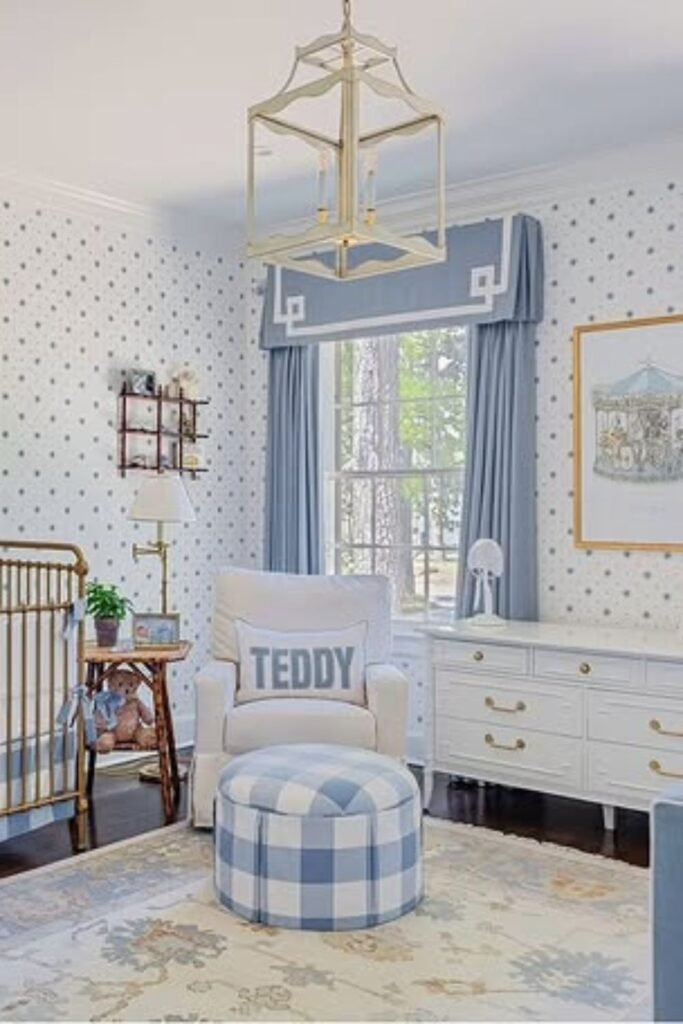
Soft Blues
Tiny star patterns bring movement into the room without overwhelming it. Soft blue works especially well in nurseries with large windows.
Daylight breathes life into a space making it feel light rather than oppressive.
To capture this essence combine patterned walls with straightforward furniture and uncluttered lines.
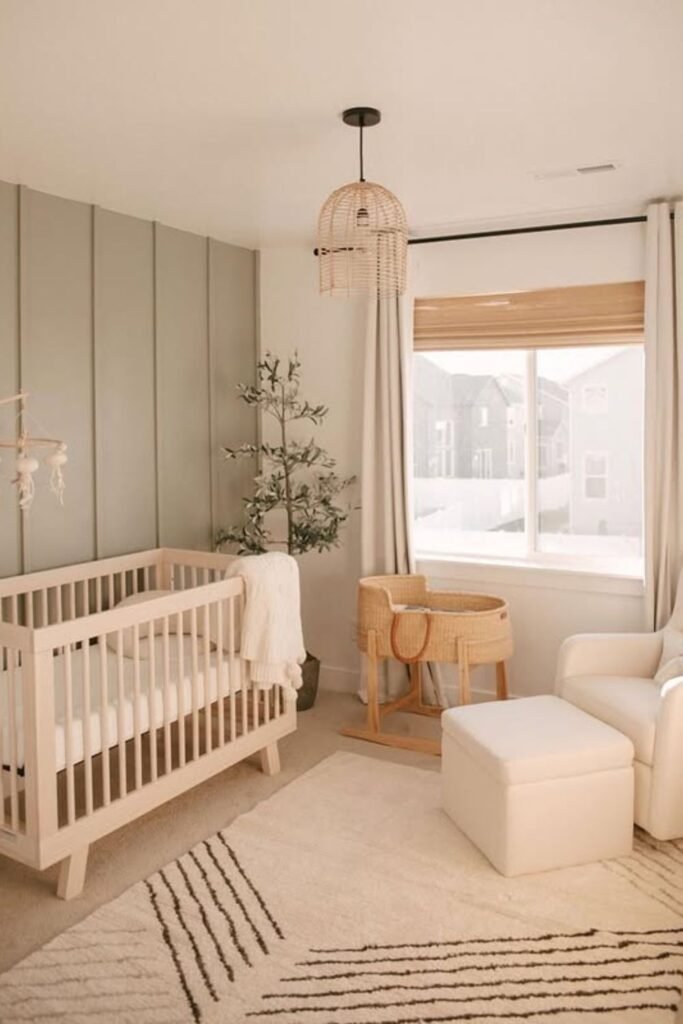
Calm Neutrals
Warm neutrals create breathing room especially in homes where the nursery shares space with the rest of the house.
Soft beige, warm wood and inviting textures maintain a sense of airiness throughout the day.
This approach is ideal for parents seeking a tranquil environment, from bold hues.
Deep Blues
Moody blue walls can add a sense of depth to a nursery, if they’re balanced correctly without making the space feel too dim.
Vertical paneling creates an illusion of height making spaces that are medium-sized or narrow seem more spacious.
This method is perfect for parents who want a refined look that won’t go out of style anytime soon.

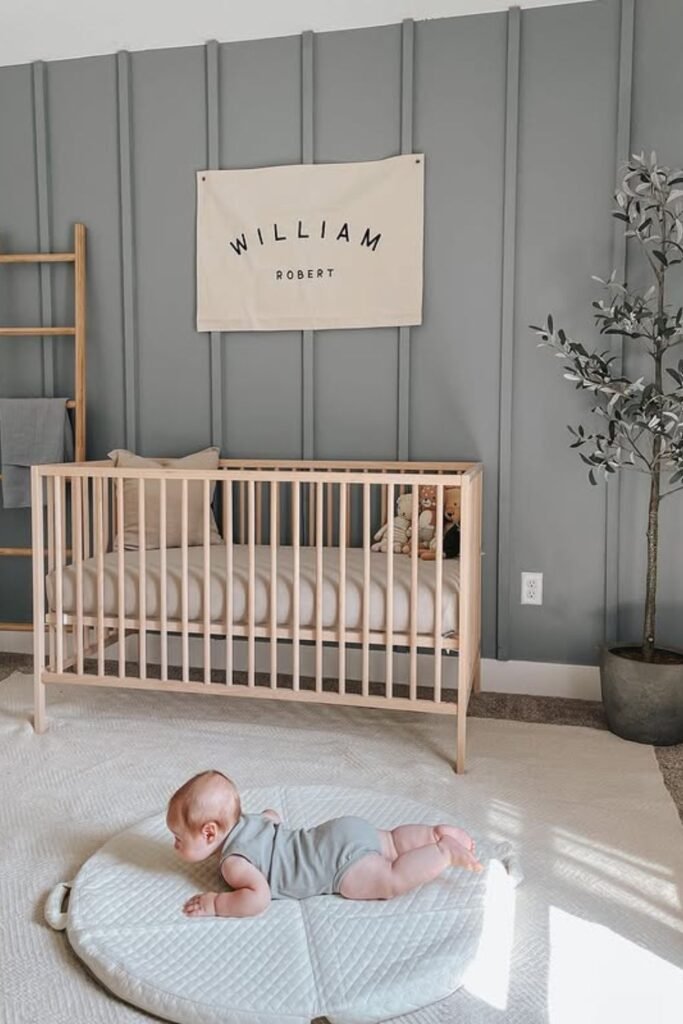
Soft Paneling
Wall paneling adds structure without stealing floor space, which makes it ideal for nurseries that need to stay open and flexible.
Vertical lines can trick the eye making a space seem more spacious, even if the furniture is on the shorter side.
To get this effect, choose a subdued panel color and complement it with light wood furniture.
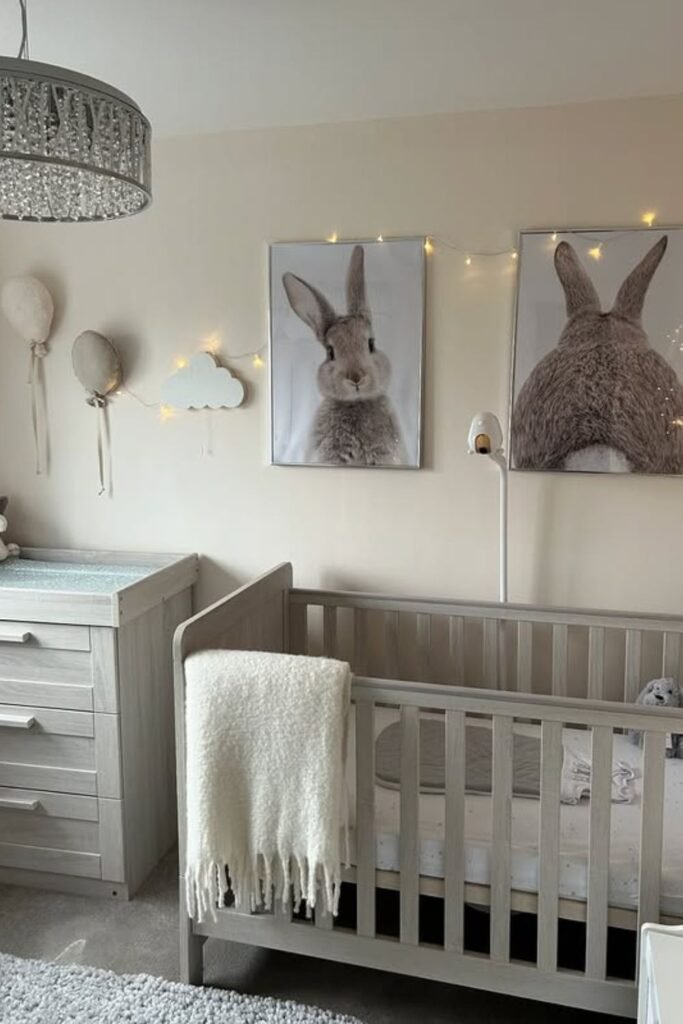
Gentle Whimsy
Soft animal artwork adds a touch of coziness to a nursery, avoiding the overly cutesy vibe. This method is especially effective in small areas.
where a minimalist aesthetic is key to avoiding visual overload. Choose simple frames and hang the artwork just above the cot to create a balanced look.
String lights or bulbs with a warm hue may instantly transform a space casting a gentle glow that make and evenings feel more inviting.
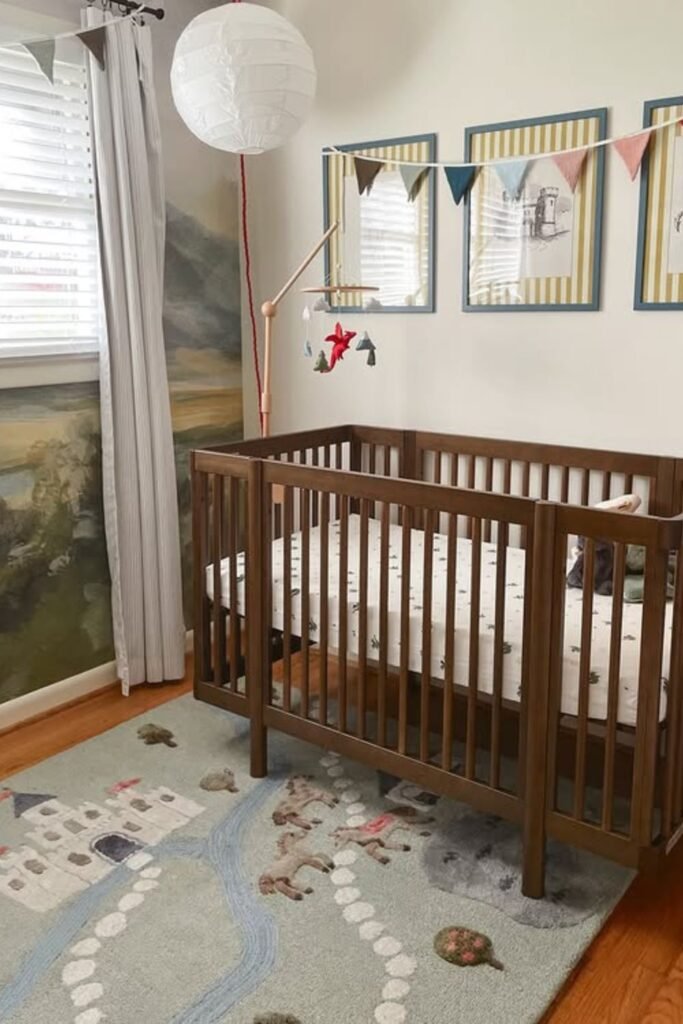
Playful Layers
Movement in the room comes from mixing soft patterns instead of loud colors. A scenic wall illustrated rug or the simple bunting that create interest without crowding the space.
This method is particularly effective in nurseries, where a sense of playfulness, tempered by tranquility is desired.
From there, infuse character through fabrics and wall accents elements that can easily be updated as your kid matures.
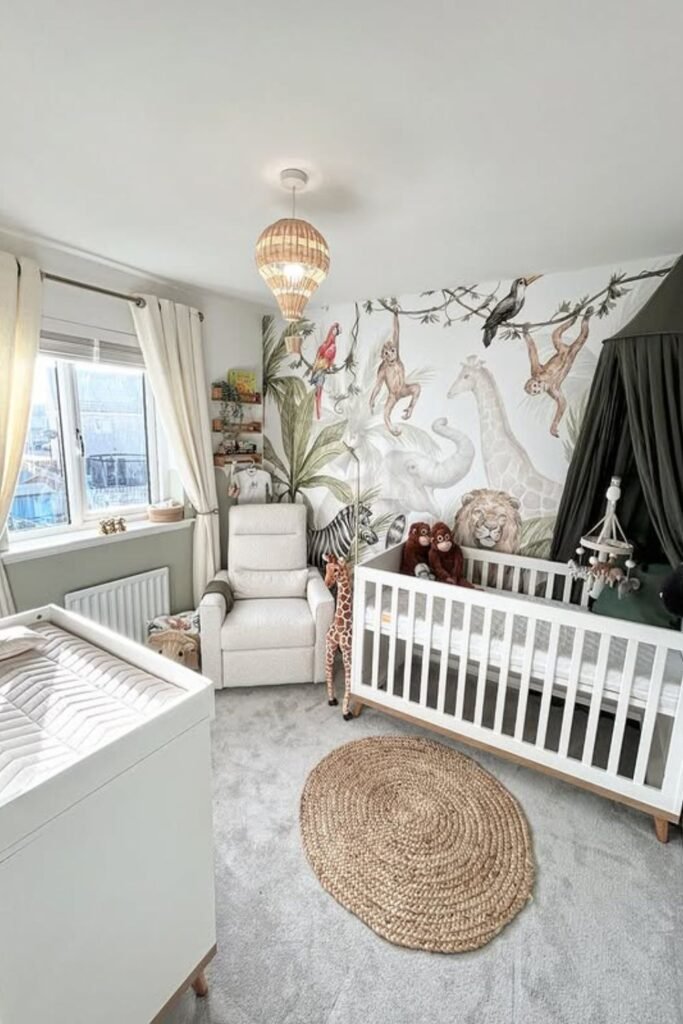
Jungle Calm
Bring nature in without making the room feel loud by letting one mural set the mood. Animal artwork works best on a single wall, especially behind the crib.
To keep the rest of the room serene, balance vibrant images with soft carpeting and uncomplicated furniture.
Woven rugs, understated storage solutions and soft lighting contribute to a place that feels both lively during the day and tranquil enough for sleep at night.
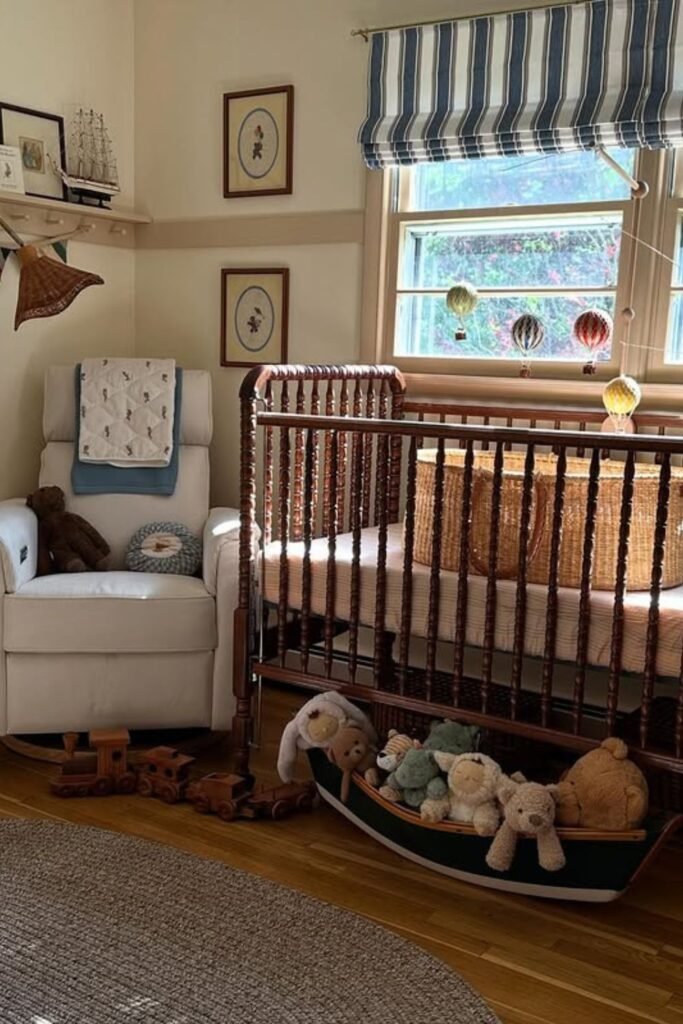
Cozy Nautical
Warm wood and soft stripes give the room a story without turning it into a theme park. This kind of setup works beautifully in older homes or nurseries with natural light.
Keep the crib simple, and then inject personality with subtle touches. Think window shades, playful hanging toys or a storage piece that echoes a boat’s design.
The result is a setting that seems curated and serene, not unduly fussy, which is a blessing for daily life.
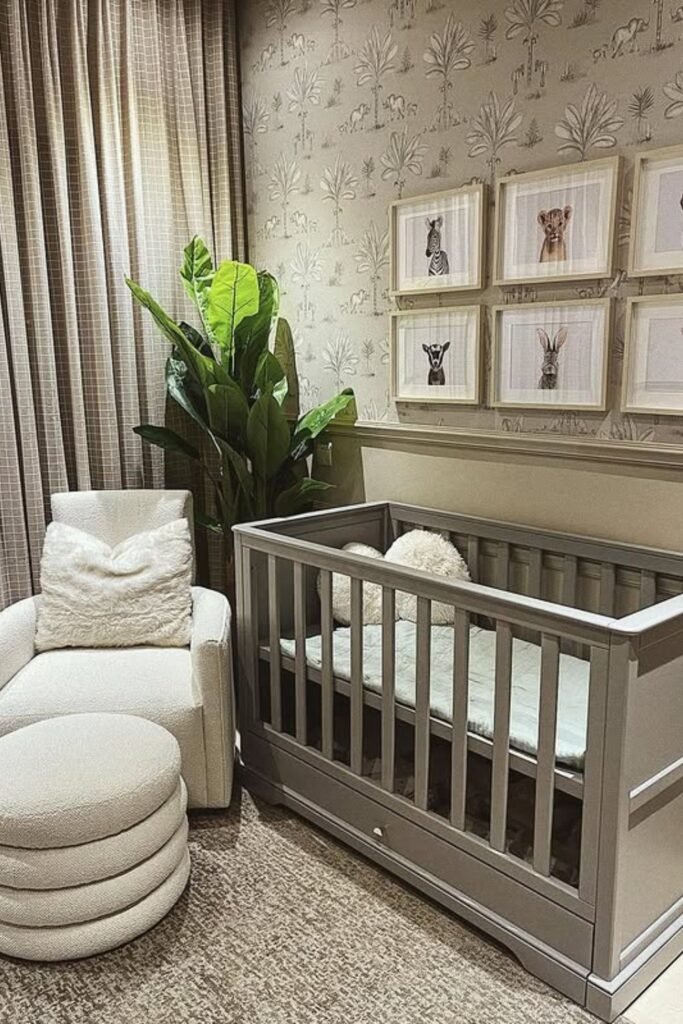
Quiet Safari
Earthy animal prints bring warmth into the nursery without pushing it into bright or playful territory.
This approach is ideal for homes aiming for a seamless flow between the baby’s room and the rest of the living space.
Opt for wallpaper thats both subtle and intricate and then ground the room with sturdy furniture and inviting textiles.
Soft Vintage
Gentle patterns and warm wood create a nursery that feels lived-in from day one.
This kind of space works well if you love a classic look but still want it to feel light and comforting.
Opt for understated wallpaper and complement it with uncomplicated paneling to avoid a cluttered appearance.

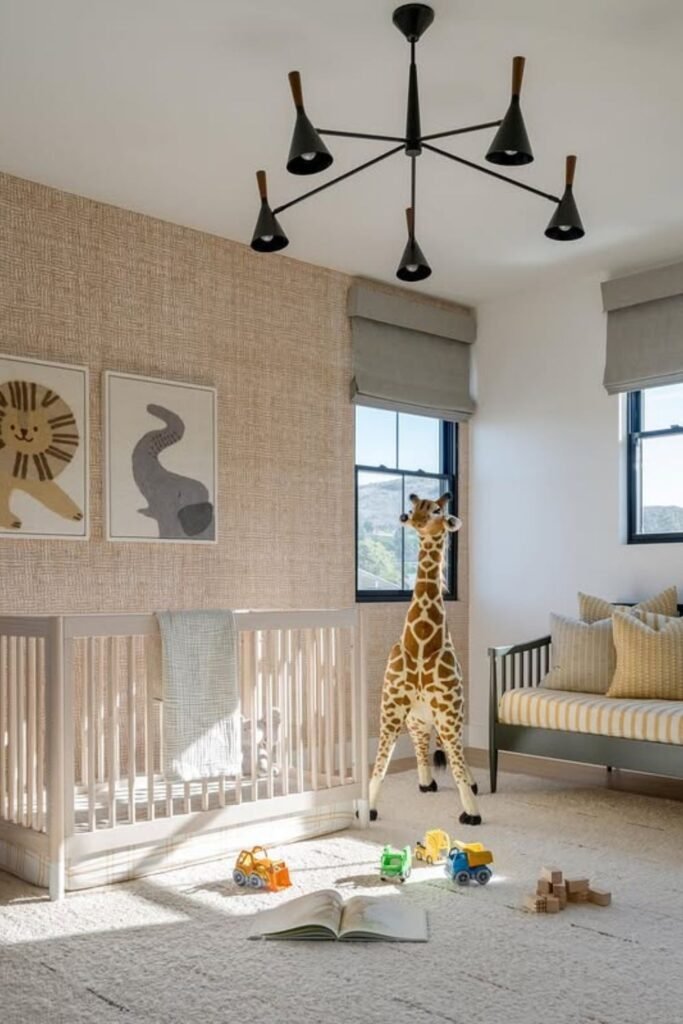
Modern Safari
Bold animal touches bring personality without turning the nursery into a theme-heavy space. A neutral base keeps the room calm.
A touch of whimsy is welcome as your child gets older. And this approach shines in spacious areas where you can incorporate a few standout items.
Opt for textured, understated walls select uncomplicated furniture, and let toys and artwork inject the personality and rather than letting them dominate the space.
Smart Storage
Bookshelves on the wall solve two problems at once by freeing up floor space and keeping everyday items within reach.
This setup really excels in smaller or shared spaces, when visibility and easy access are paramount.
Keep the heavier stuff on the bottom shelves and the change out books as your youngster grows.
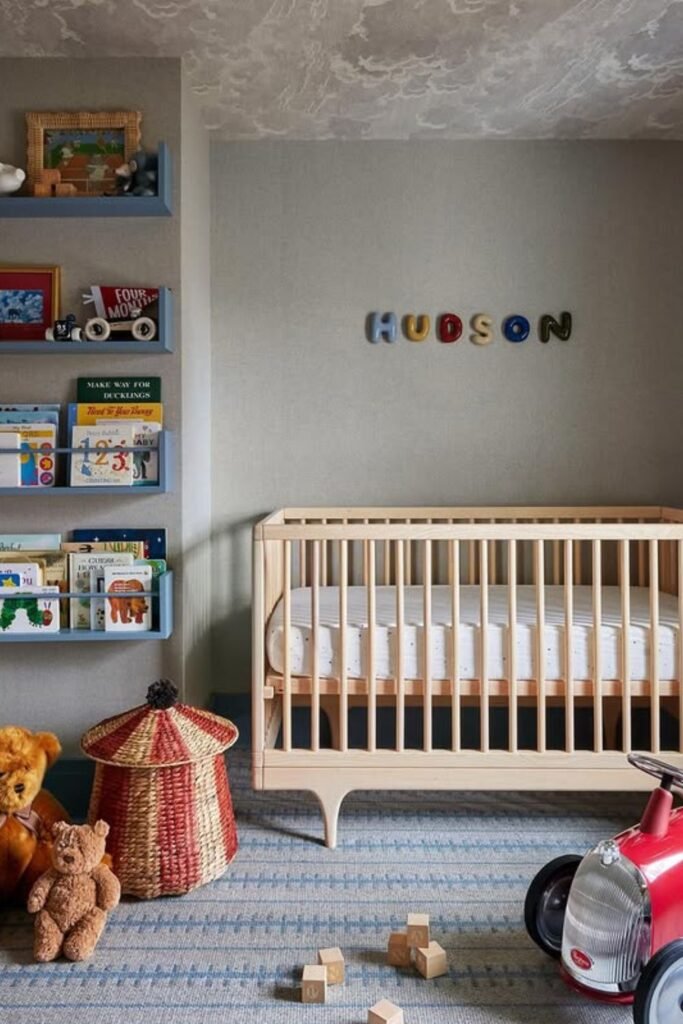
Color Balance
Strong patterns work best when they stay contained. A bold rug and playful wall art add energy without taking over the whole nursery.
This arrangement works well in urban flats or rooms with lofty ceilings where a bit of character can make the space feel inviting.
Stick with primarily light colored walls then introduce one or two vibrant areas to provide focal points.
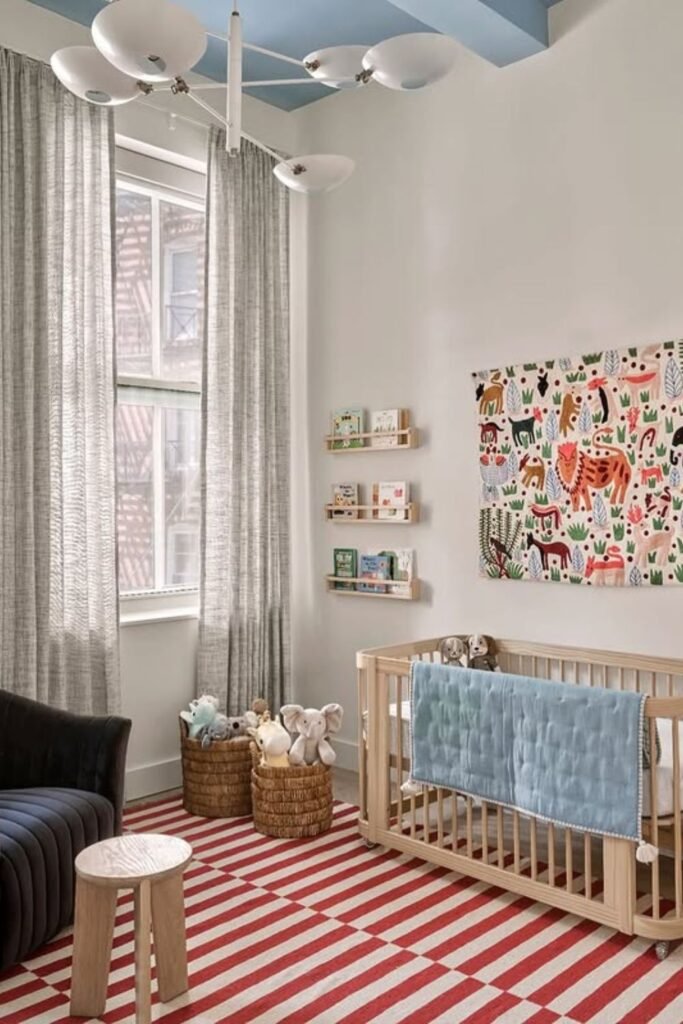
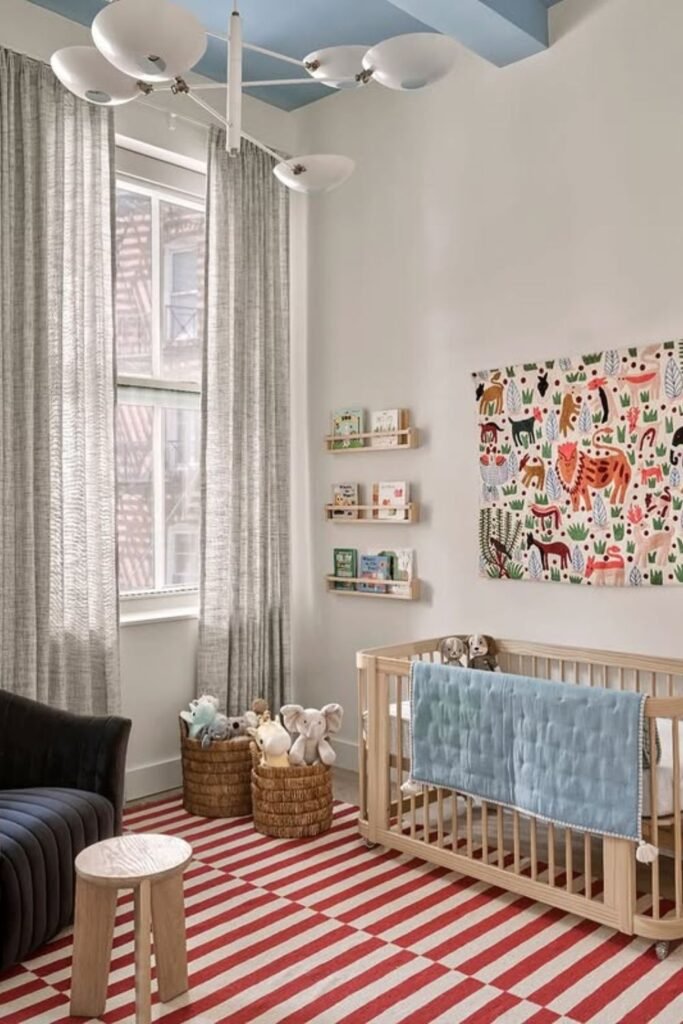
Soft Panels
Calm starts at the walls, and gentle paneling does that job quietly. Pale blue keeps the room fresh without feeling cold.
It’s a good fit for tiny nurseries, where you want light to play off the surfaces. The paneling adds dimension, preventing the room from feeling one-dimensional.
Even if you keep the decorations simple. Pair this with a simple, inviting rug or a single warm light to keep everything feeling pleasant.
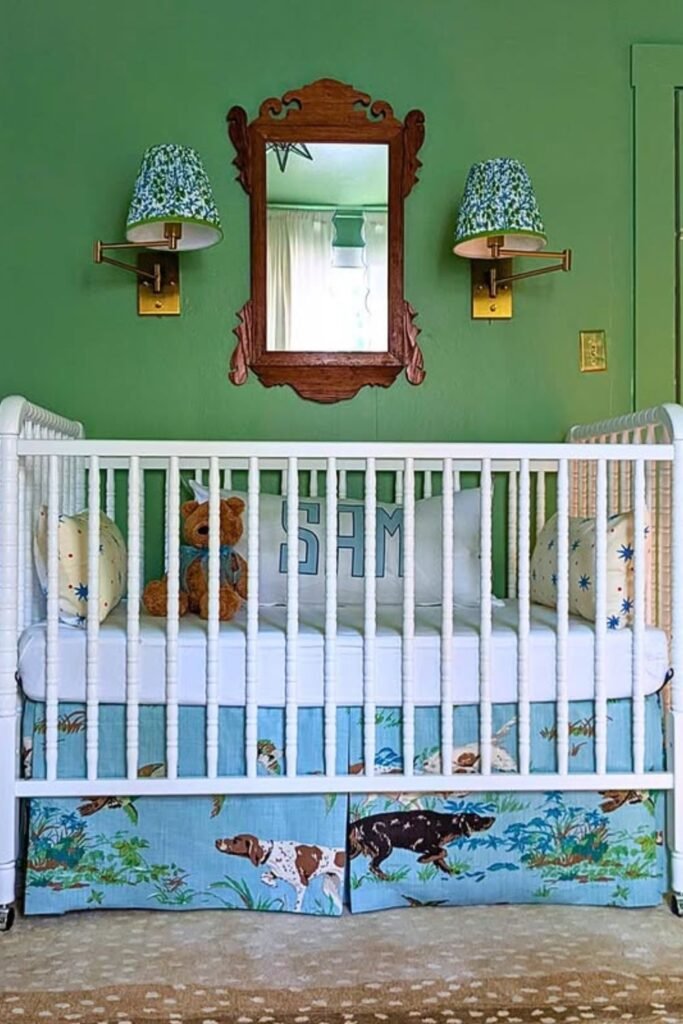
Heritage Green
Deep green walls give the nursery a grounded, settled feel that works beautifully in older homes or rooms with character.
To maintain a breezy atmosphere consider pairing it with a white crib. Add a touch of coziness with old lights or wooden accents.
Keep the bedding simple and avoid busy patterns. This approach allows the color to shine, rather than overwhelming the room.
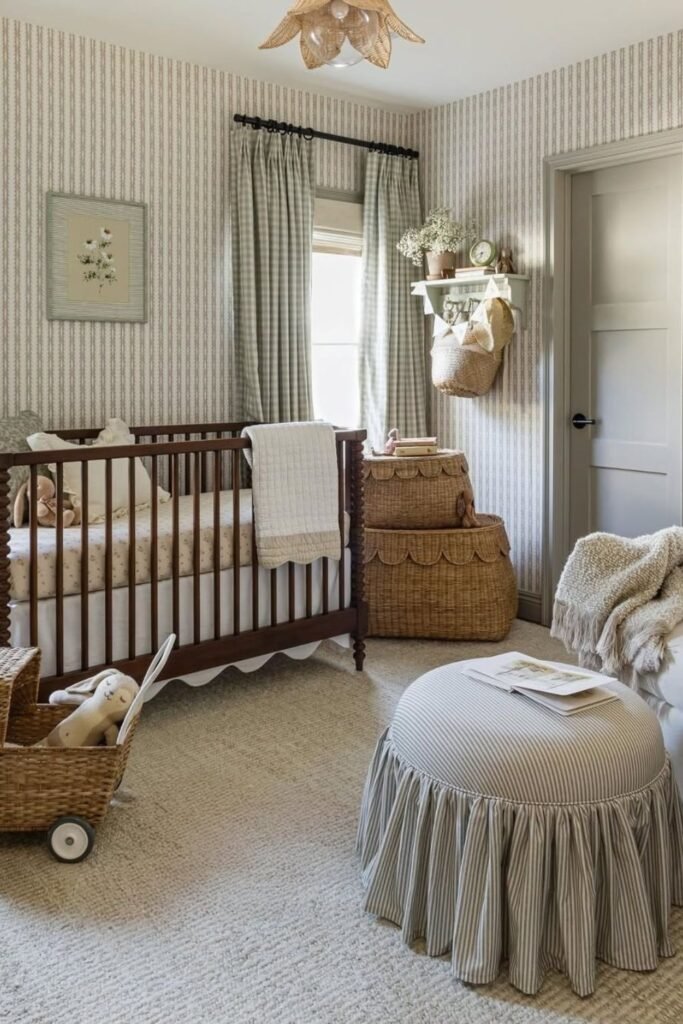
Soft Stripes
Vertical patterns quietly stretch the room, which helps smaller nurseries feel taller and more open.
This strategy functions best when you’re going for texture not a burst of color. Opt for thin or subtle stripes the aim is for them to blend in or not take center stage.
To promote a more pleasant weather and pair the stripes with warm wood furnishings and woven storage options.
Reading Corner
Late nights feel easier when one spot is built for comfort. A supportive chair, soft lamp, and nearby shelves turn feeding and story time into a calm routine instead of a chore.
This arrangement is ideal for nurseries and provided there enough for a peaceful nook separate from the cot.
Use soft, warm lighting and have a selection of beloved books nearby. The remainder of the room should remain uncluttered, creating a location that seems like a gentle retreat.
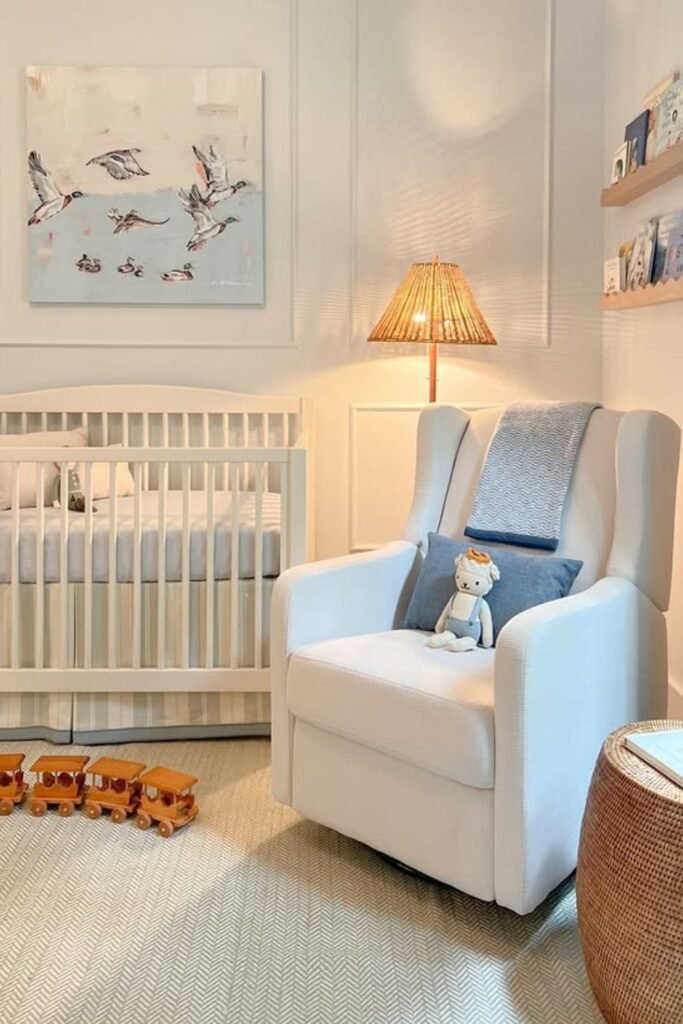
Soft Texture
Walls don’t need color to feel interesting. A light plaster style finish adds depth while keeping the nursery calm and airy.
This approach is ideal for spaces where you crave a soft aesthetic and free from the distraction of patterns or prints.
Combine textured walls with warm wood furnishings and uncomplicated fabrics the goal is to create and a harmonious environment where nothing fights for your gaze.
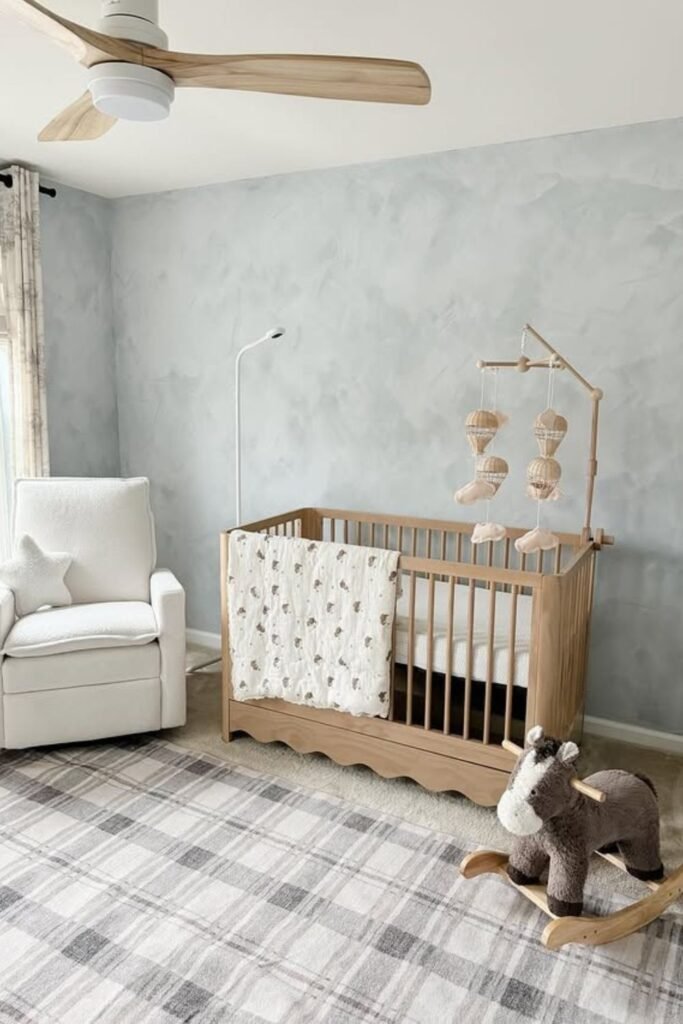
Warm Patterns
Personality comes from texture and tone working together not from bright colors. Soft wallpaper paired with warm wood makes the nursery feel cozy and settled.
This method appeals to parents seeking a sense of personality without overwhelming clutter. Opt for uncomplicated furniture.
Allowing the rug to provide a cozy foundation and use one or two whimsical touches to create a welcoming atmosphere that remains relevant as your child matures.
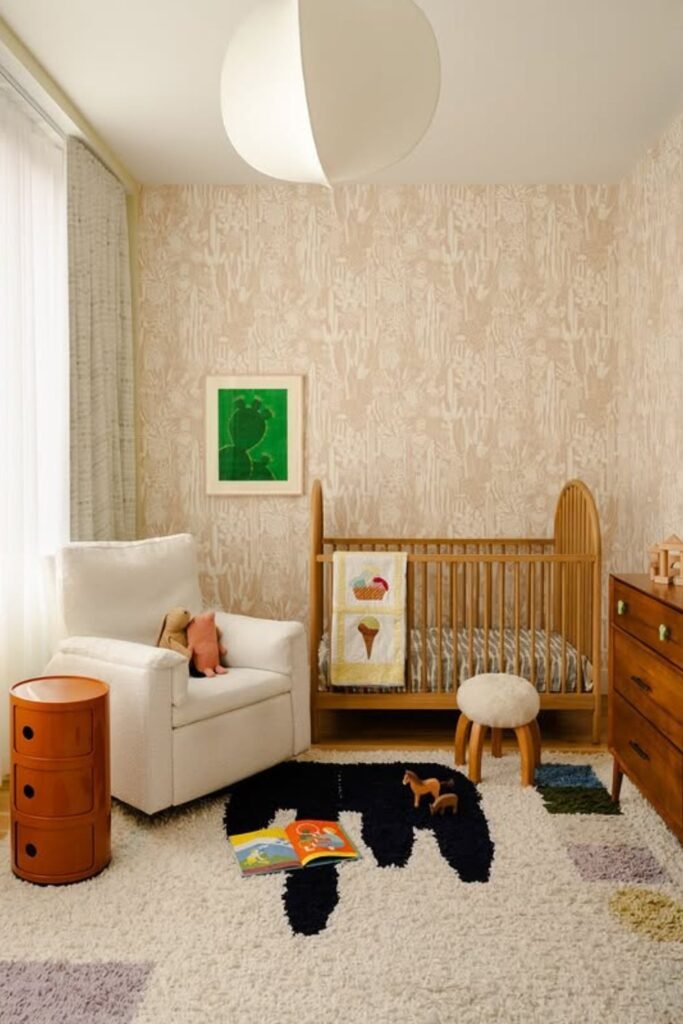
Classic Stripes
Clean lines bring order to a nursery without making it feel stiff. Vertical stripes paired with simple paneling help the room feel taller and more structured.
This method works very well in places that are not too wide. Choose a soft color scheme to foster a tranquil environment.
Natural wood furniture adds a cozy feel while framed art contributes personality and without clashing with the existing decor or makes the spaces feel busy.
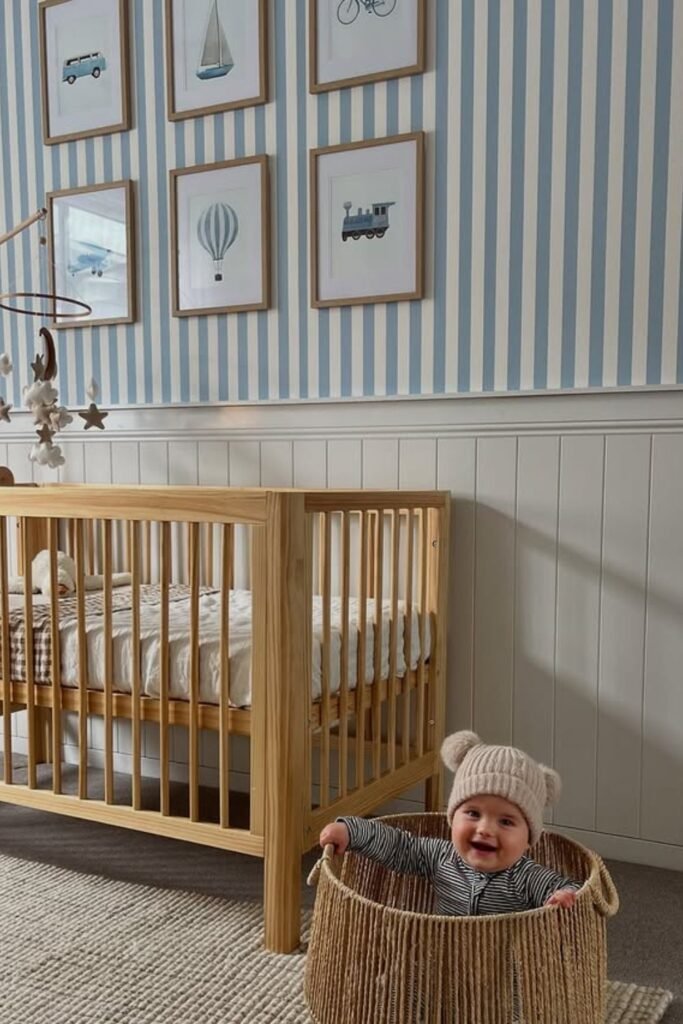
Routine Zones
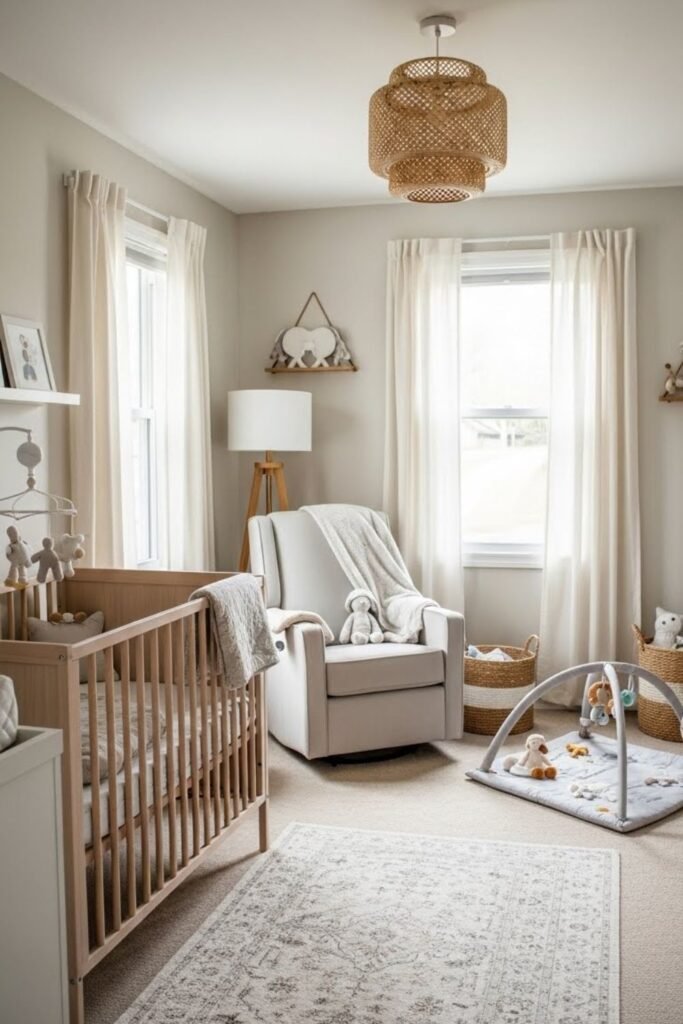
Daily life with a baby runs smoother when the room quietly supports your habits. Dividing the nursery into simple zones helps without adding walls or clutter.
One space is designated for sleep another for meals, and a little nook for play or tummy time.
This approach is particularly effective in rooms of moderate size and where everything tends to blend.
Ceiling Interest
Nurseries often overlook the ceiling, even though infants spend a lot of time looking up.
And introducing subtle graphic elements fosters a sense of calm concentration avoids any over whelming distractions.
A little shift in paint hue or the inclusion of discreet ceiling details can transform a room adding visual interest without overwhelming the senses.
Flexible Corners
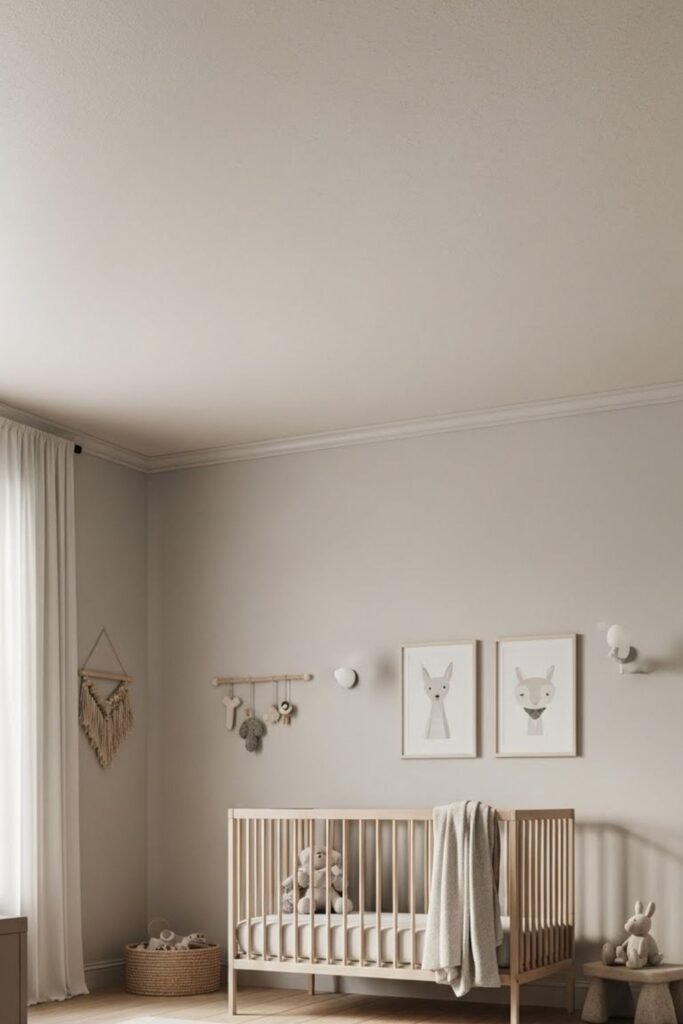
Nurseries change fast so locking every corner into one purpose often backfires. Leaving one flexible area open gives you room to adapt as your baby grows.
Initially, it might serve as a floor mat or a place for baskets. As time goes on it transforms into a cozy reading nook or a play area.
This method works especially well in smaller homes and if the nursery needs to be flexible and avoid constant redesigns.

Texture Layers
Calm doesn’t come from color alone. Texture does just as much work, sometimes more. Mixing soft rugs woven baskets smooth wood.
This approach works well for parents who prefer understated color schemes yet desire a space that feels both inviting and layered.
In smaller settings tactile aspects should be prioritized above patterns. Layering textures keeps the nursery from feeling flat ensuring a peacefull weather.

Night Comfort
Late-night caregiving is a bit less daunting when the environment is kind to weary eyes and sluggish limbs.
Designing a nursery with nighttime in mind fundamentally alters its after-dark functionality.
Soft pathway lights and low wattage lamps and the play of gentle shadows help avoid fully waking up all while maintaining safety.

Visual Rest
Babies need stimulation, but they also need places for their eyes to rest. Creating one visually quiet wall helps balance patterned or decorated areas elsewhere.
Neutral paint, uncomplicated paneling or just bare walls can open up a room.
This approach is particularly effective in nurseries, where art, books and tactile items are already present.
FAQs
Can a baby boy nursery stay stylish without feeling “too grown-up”?
Absolutely, balance is the secret. Choose furniture that won’t go out of style, and opt for soothing colors.
Then, bring in softness with textiles, artwork, or little touches. A room can be both elegant and inviting if it incorporates comfort, texture and soft lighting.
How early should you finish setting up the nursery?
Getting the essentials sorted before your little one shows up can ease the pressure, though aiming for flawless is not the goal.
Prioritize the items you’ll rely on every day the crib adequate lighting, and a cozy chair. The finishing touches and decorative elements can wait.

Hi, I’m Afaf! I’m a law student who loves writing about everyday life – from home projects and crafts to fashion, beauty, and parenting tips.
I’ve been writing for over a year, sharing ideas that are simple, practical, and easy to try. I write about things I find interesting and useful, whether that’s organizing a space, trying a new DIY, or finding activities to keep kids entertained.
My goal is to share helpful ideas without making things complicated. If it works in real life, I’ll write about it.
When I’m not studying or writing, I’m usually experimenting with new projects or scrolling for inspiration!