
20 Letter E Craft Ideas for Toddlers
Getting your toddler interested in the letter E can feel tricky when tracing pages lose their attention and complicated crafts leave you doing most of the work.
You also don’t want to buy special supplies for one alphabet activity. Simple items already around your home can make learning much easier.
Paper, paint, cotton balls, stickers, egg cartons, and other everyday materials can turn the letter E into something your toddler can touch, decorate, and remember.
Which Everyday Items Can Toddlers Use for Letter E Crafts?
You probably already have most of the supplies you need for Letter E crafts sitting around your home.
Start with paper, cardboard, crayons, washable paint, glue sticks, stickers, cotton balls, or tissue paper.
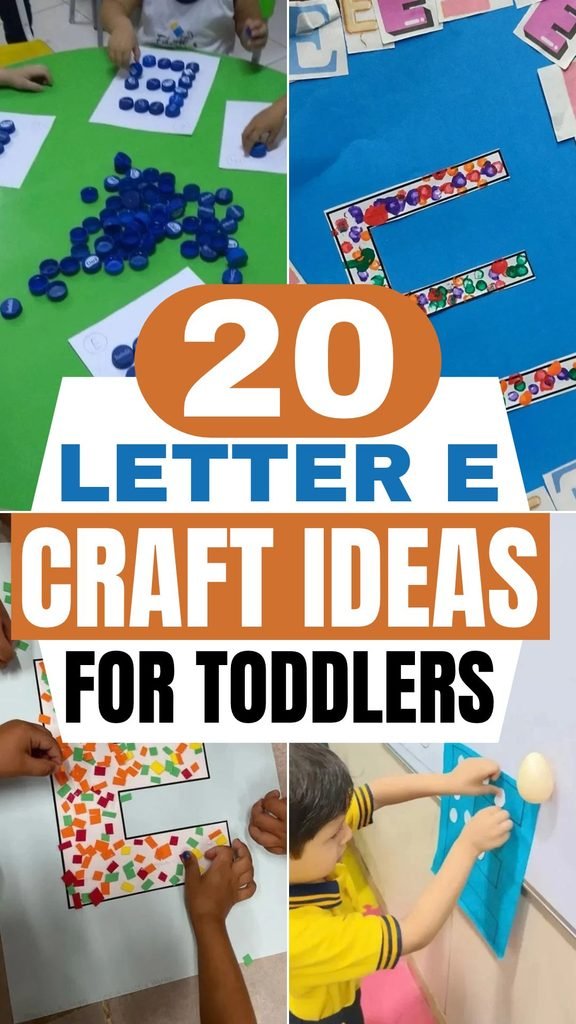
Your toddler can tear paper and glue it inside a large E, press fingerprints along the letter, or cover it with stickers for easy fine motor practice.
You can even use cereal, pasta, leaves, or other safe household materials for a textured E collage.
Pre-cut difficult pieces when needed, then let your toddler handle the decorating, placing, and gluing so they stay involved in the activity.
Colorful E Collage
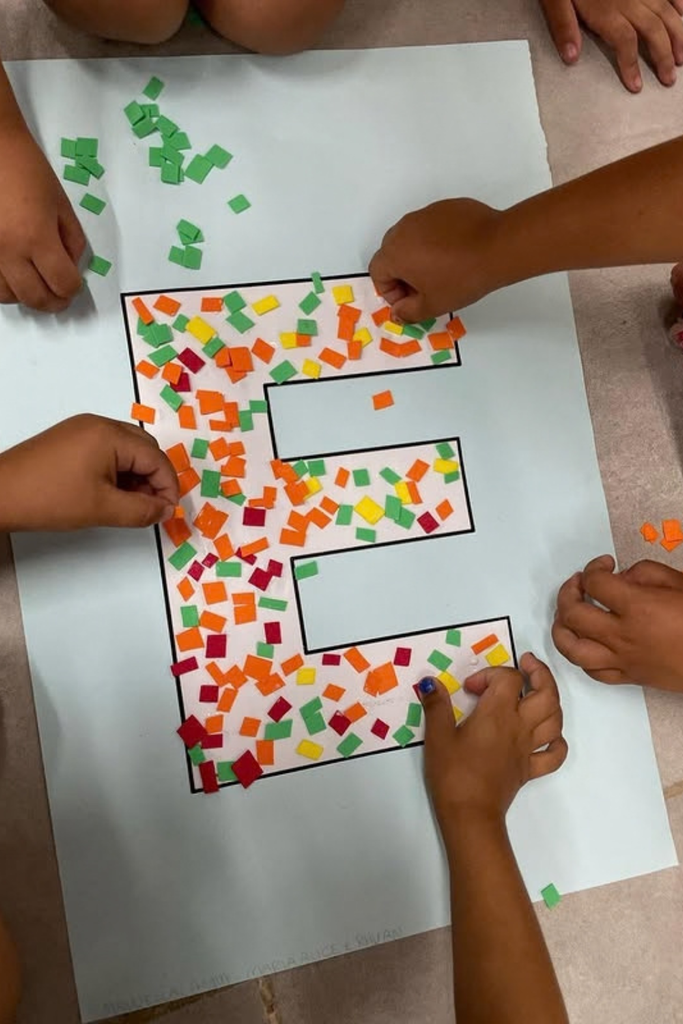
Turn letter practice into a shared craft by drawing one large E and giving toddlers small colorful paper squares to glue inside.
This works well for preschool tables or group learning because several little hands can decorate the same letter together.
Pre-cut the pieces for younger toddlers, then let them choose, place, and press each square themselves.
The repeated placement builds fine motor control while the bold outline helps them notice the shape of uppercase E.
Donkey Letter E
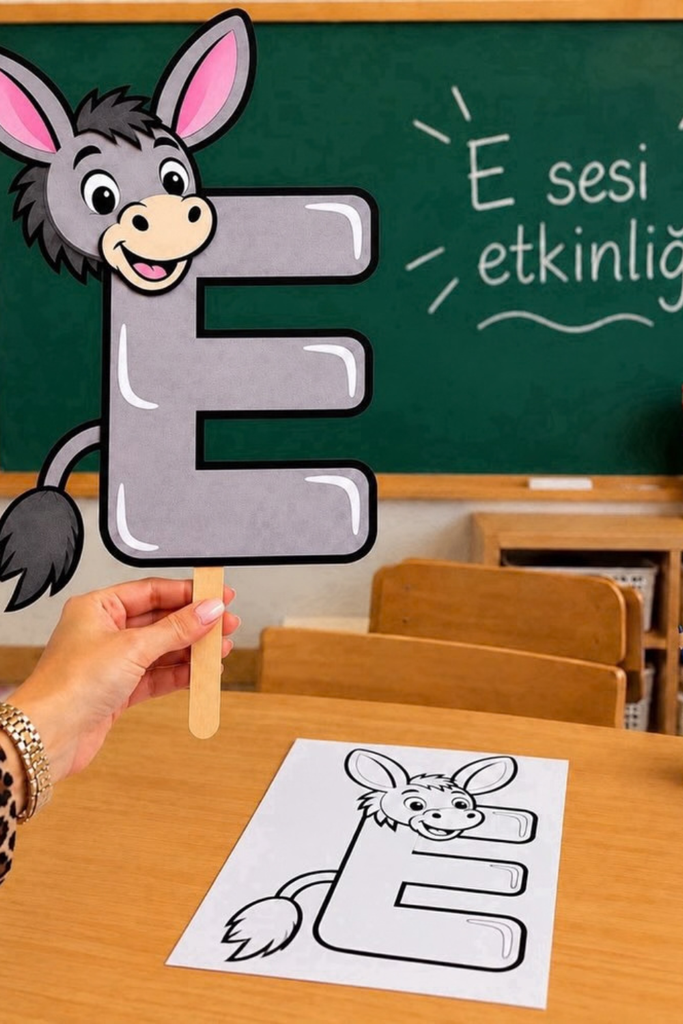
Bring an animal connection into letter practice by turning the uppercase E into a friendly donkey.
Give toddlers a simple printed outline to color, then help them attach the ears, face, and tail if those pieces are separate.
Mounting the finished E on a craft stick can turn it into a puppet for classroom alphabet games. Say the letter name together.
Bottle Cap E
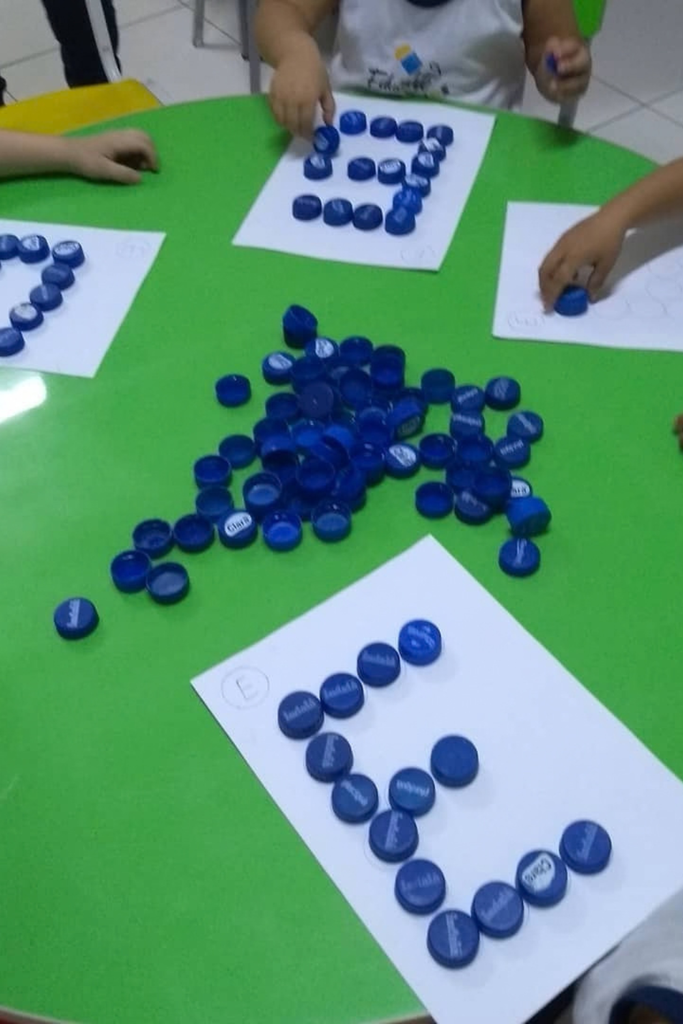
Reuse clean bottle caps for a hands-on letter activity that works well at a preschool table or during quiet learning time.
Draw a large E outline first then let your toddler place caps along each line until the whole shape appears.
Picking up and positioning each cap gives little fingers useful practice while helping your toddler follow the straight lines that form uppercase E.
Egg Matching Game
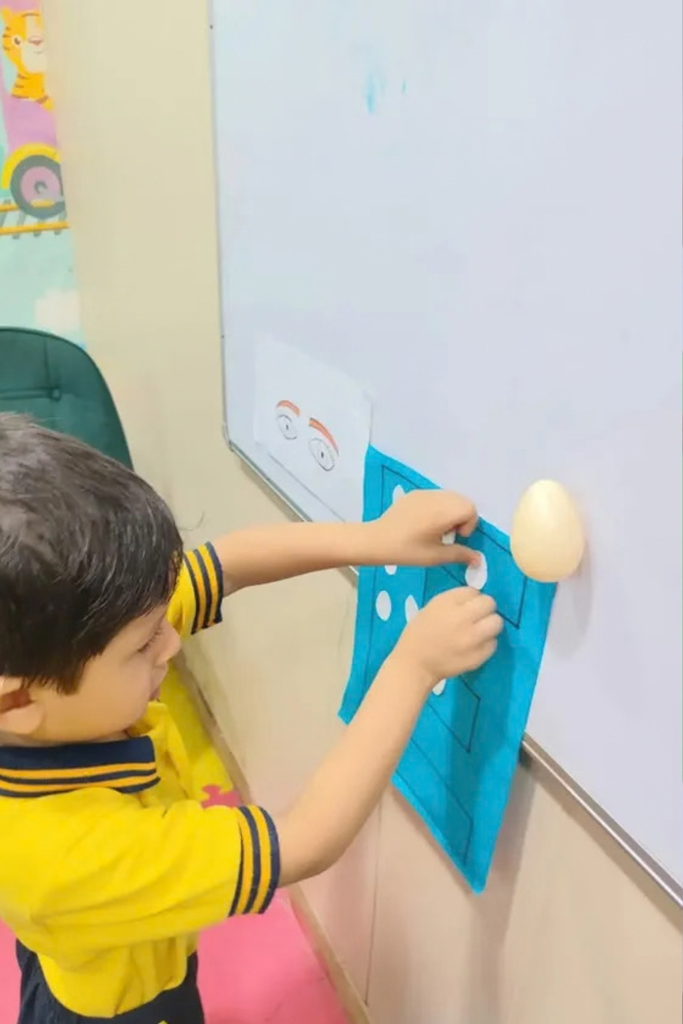
Turn Letter E practice into a simple matching challenge by pairing a large egg cutout with an E-shaped activity board.
Mount the pieces on a wall or board so your toddler can stand, reach, and place them instead of sitting through another worksheet.
Saying “E is for egg” each time they match the piece adds an easy letter-sound connection while they work.
E Envelope Sort
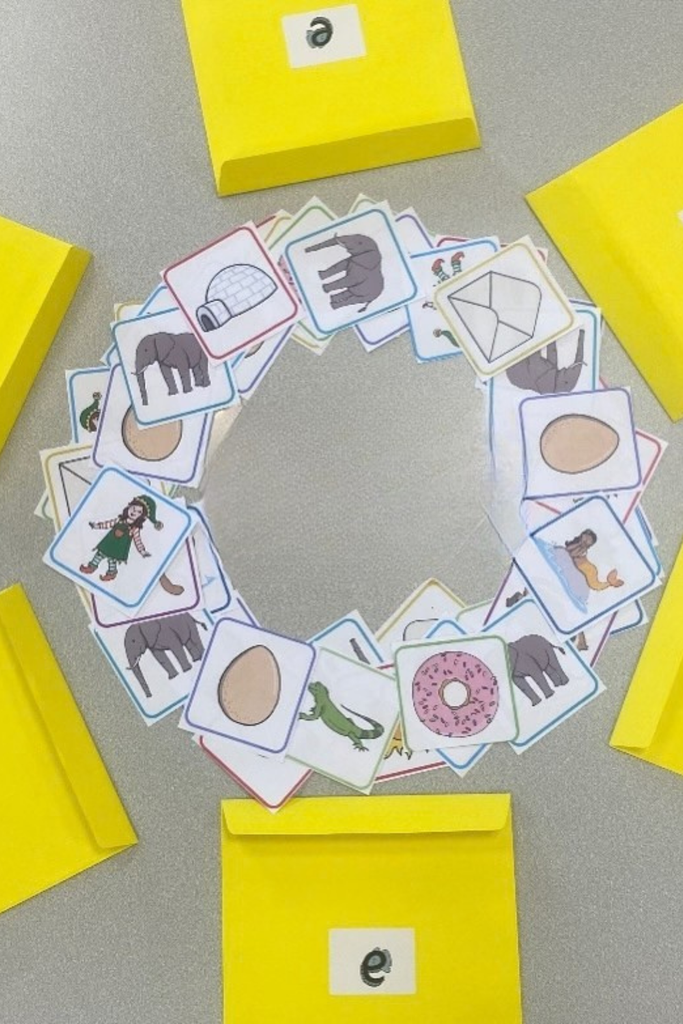
Add a sorting game to your Letter E lesson by giving toddlers picture cards and envelopes marked with lowercase e.
Ask them to find familiar E words, such as egg, elephant, or envelope, then slide the correct cards inside.
Use only a few clear pictures at first. Opening, picking, and posting the cards also gives little hands extra fine motor practice.
Fingerprint Letter E
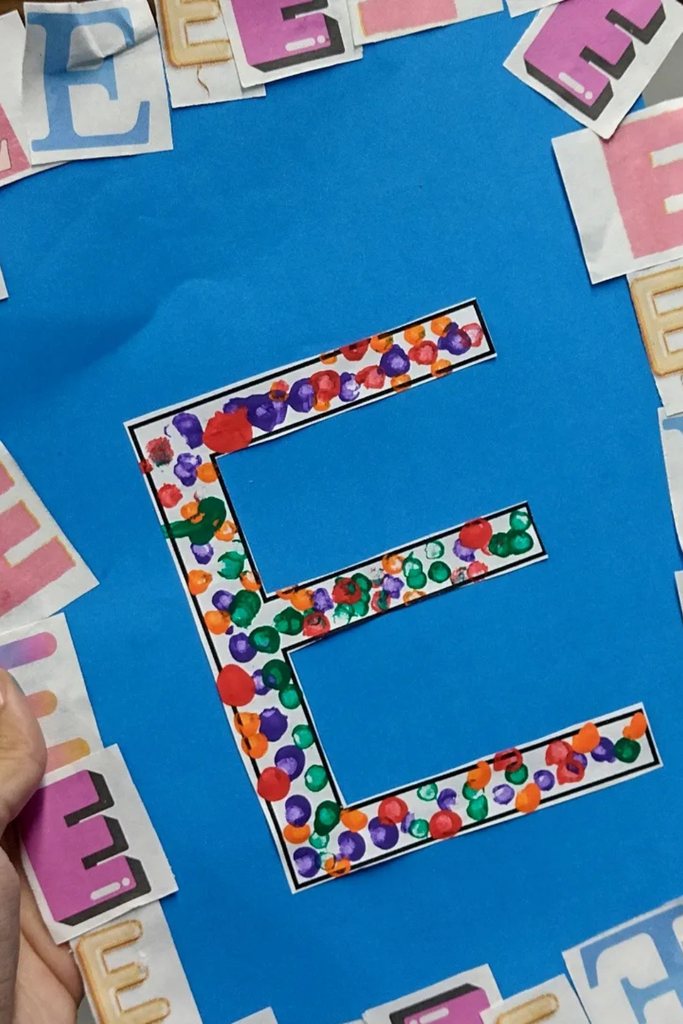
Washable paint makes it easy to set up at home or at a preschool art table, while several colors make every print stand out.
Guide their finger along the vertical and horizontal strokes rather than filling the page randomly.
Following those lines helps them become familiar with how uppercase E is formed while enjoying messy play.’
Torn Paper Elephant
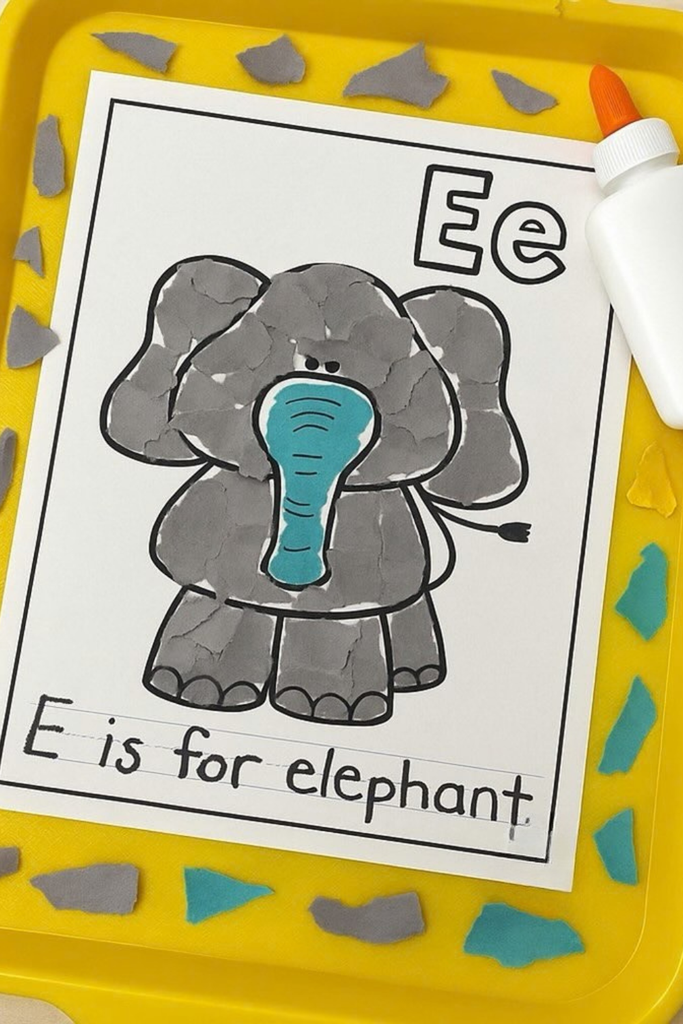
Allow your child to cut little pieces of gray paper and then glue them over an outline of an elephant to give little fingers additional work.
You want to practice E without requesting scissor skills, this works well on a quiet craft table. For contrast, add blue paper to the trunk.
Repeat “E is for elephant” as they work. Tearing and pressing each piece also builds finger strength and coordination.
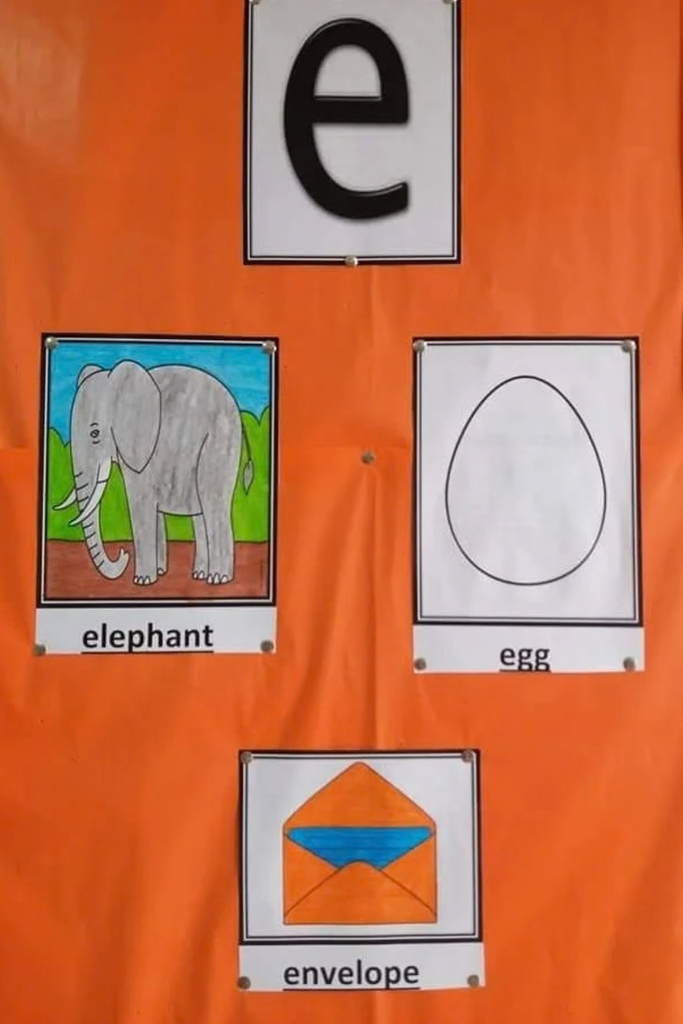
E Word Board
Build vocabulary alongside letter recognition by pairing lowercase e with simple pictures your toddler already knows.
Works well on a preschool wall. Point to the letter first, then name each picture slowly and let your toddler repeat it.
Coloring the picture cards beforehand can turn the learning board into an easy hands-on craft too.
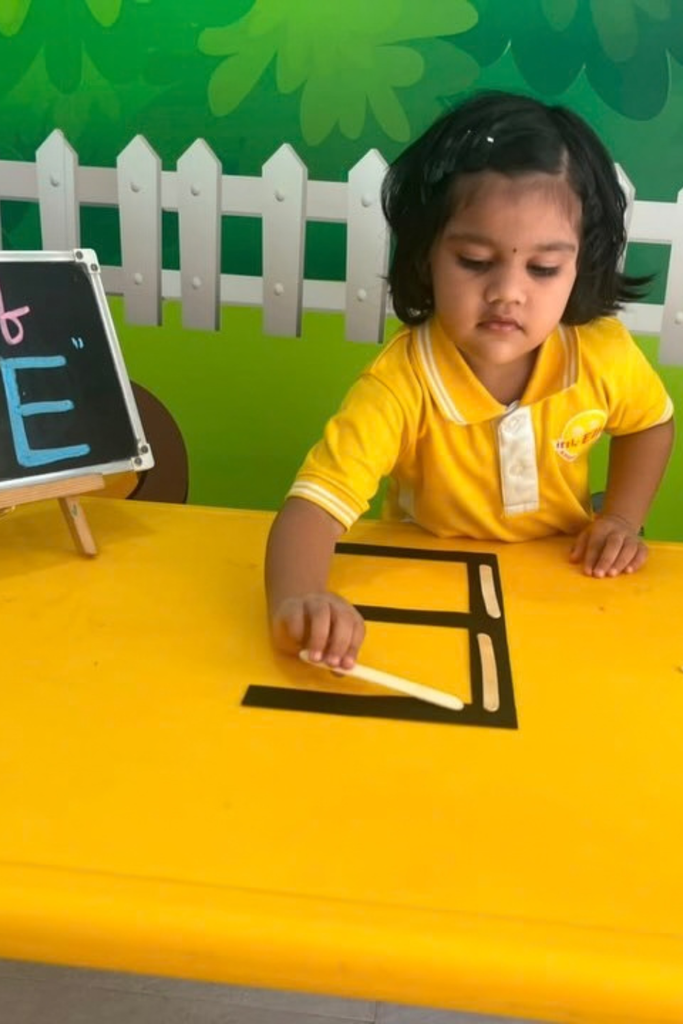
Craft Stick E
Make letter building feel more like a puzzle by giving your toddler four craft sticks and a bold E outline to follow.
This is a useful preschool table activity when you want to teach how the letter is formed without asking children to write it yet.
Add three shorter horizontal pieces. Rebuilding the E several times helps its basic shape become easier to recognize.
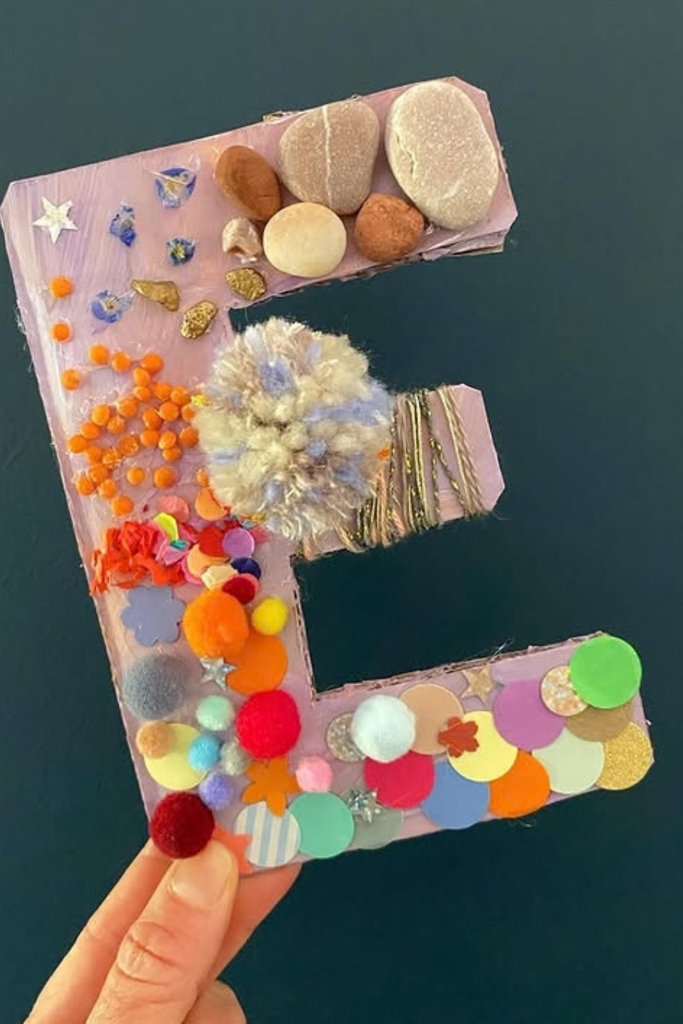
Texture Letter E
Turn one cardboard E into a touch-and-feel craft by covering different sections with pebbles, pom-poms, yarn, paper circles, and soft fabric scraps.
Best for sensory play because your toddler can explore smooth, fuzzy, rough, and bumpy surfaces while reviewing the letter.
Use larger materials for younger children and secure everything firmly. Let them choose where each texture goes.
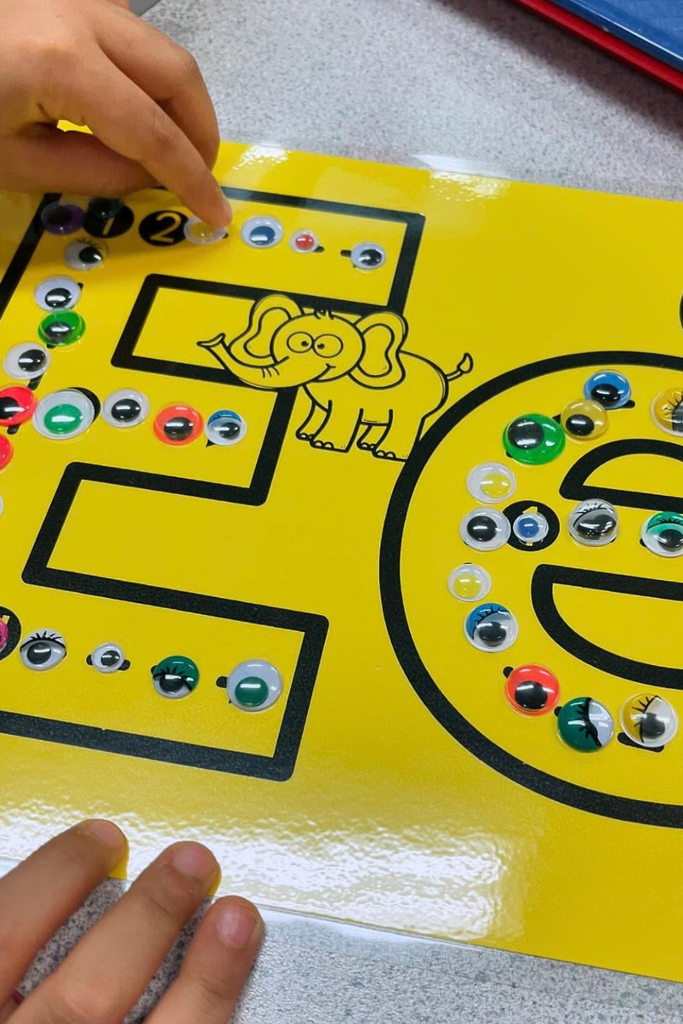
Googly Eye E
Make uppercase and lowercase E more memorable by letting your toddler line both letters with colorful googly eyes.
Works nicely after introducing the two letter forms because children can decorate each one while noticing how different they look.
Add glue dots along the outlines. Larger googly eyes are easier for toddlers to handle and turn the activity into useful fine motor practice.
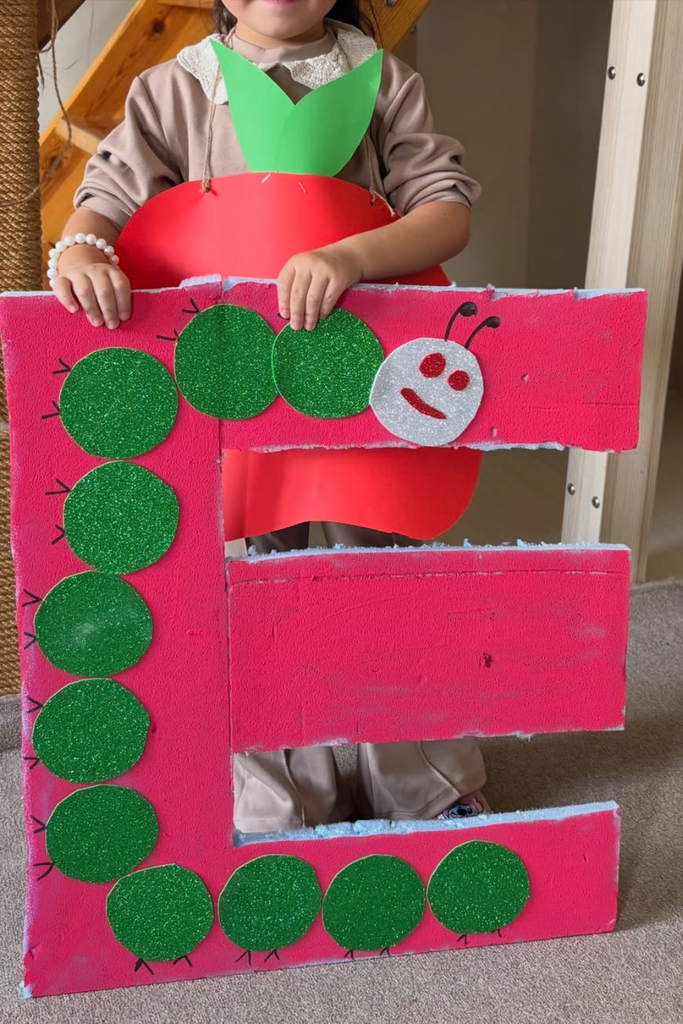
Caterpillar Letter E
Go bigger with letter practice by cutting an oversized E from sturdy cardboard or foam board and letting your toddler help decorate it.
Add green circles around the edges to build a caterpillar then draw tiny legs and finish one circle with a friendly face.
Works best for a preschool display or Letter E week because the finished craft becomes part of the room while reinforcing the letter’s shape.
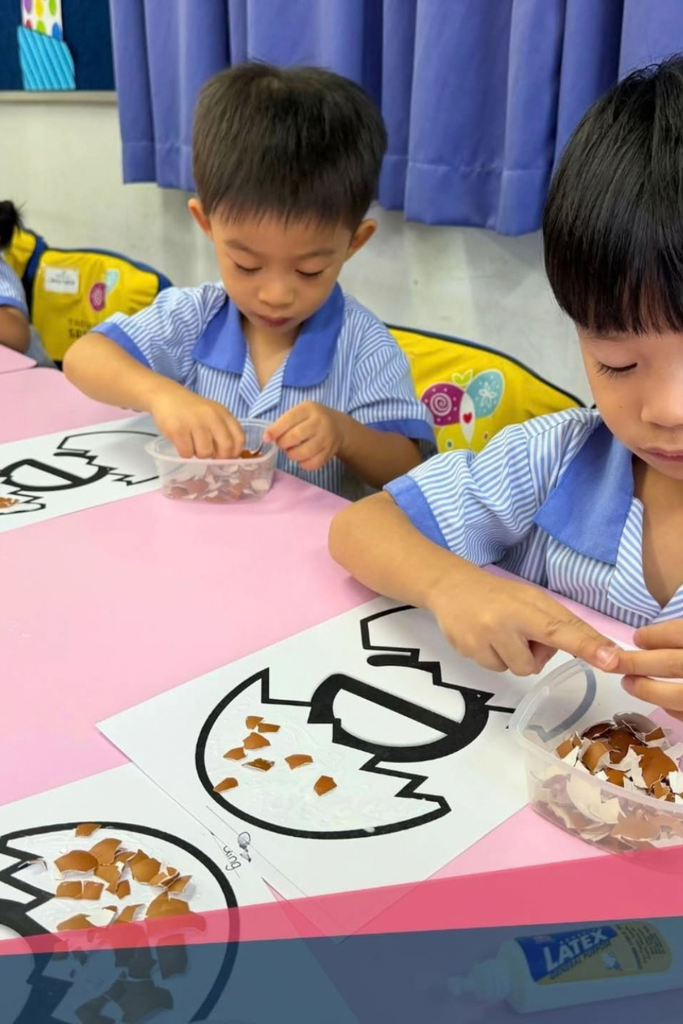
Eggshell Collage
Save clean, dry eggshells for a Letter E activity that gives toddlers a different texture to explore. Draw or print a large cracked egg.
Add glue inside the shell area, then let your toddler press small eggshell pieces onto it. This works nicely for an egg-themed E lesson.
Use larger, smooth pieces and supervise closely while little fingers pick, place, and press them down.
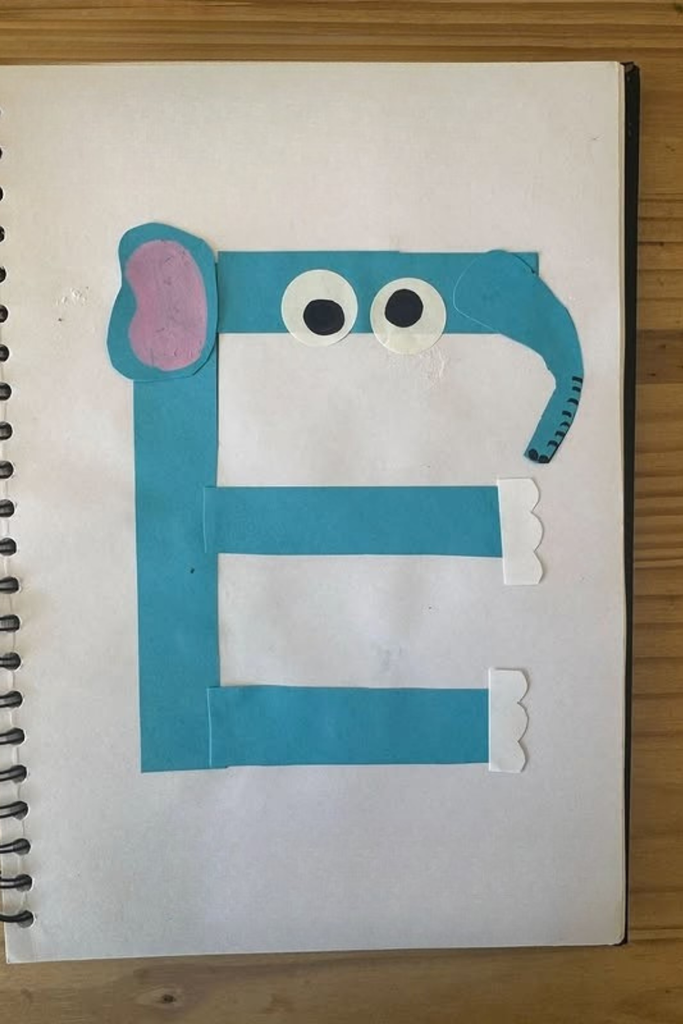
Elephant Letter E
Turn the letter itself into an elephant to begin an E lesson with an animal that young children may identify.
Cut a large E from colored paper, then let your toddler add a curved trunk, floppy ear, eyes, and simple feet.
This works well in an alphabet scrapbook because each finished craft can become a page to revisit later.
Naming both “E” and “elephant” while assembling the pieces strengthens the connection between the letter and word.
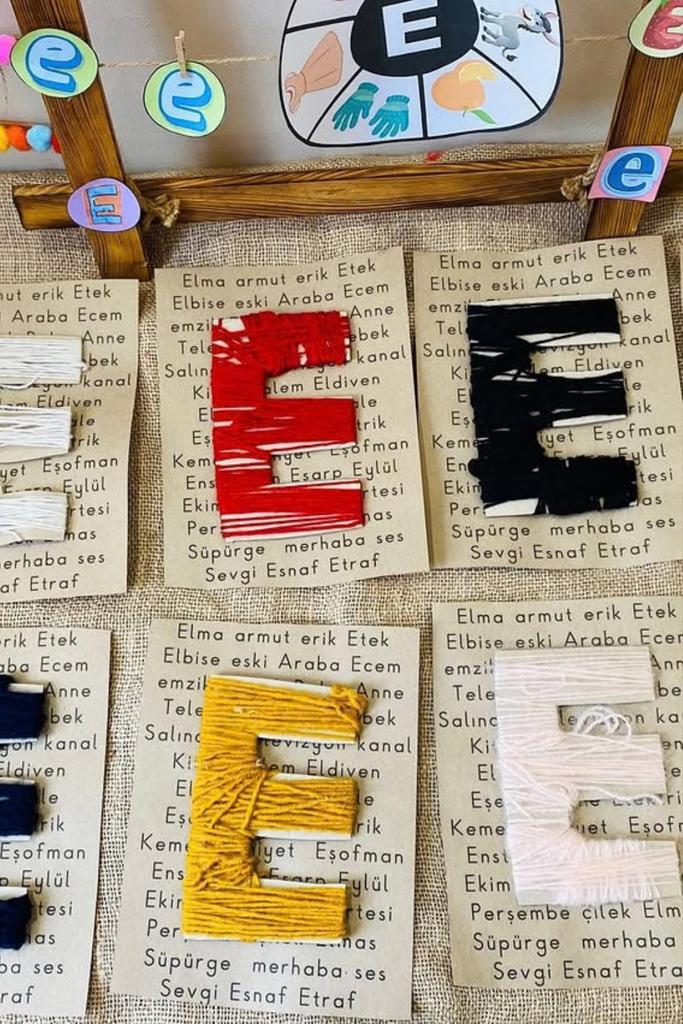
Yarn Wrapped E
Bring a simple threading-style activity into Letter E practice by wrapping chunky yarn around a sturdy cardboard E.
This works well for toddlers who enjoy hands-on materials and need extra finger coordination practice.
Secure one yarn end first, then let your toddler wind, pull, and overlap the strands with help when needed.
Try different yarn colors across several letters so each finished E can become part of a classroom alphabet display.
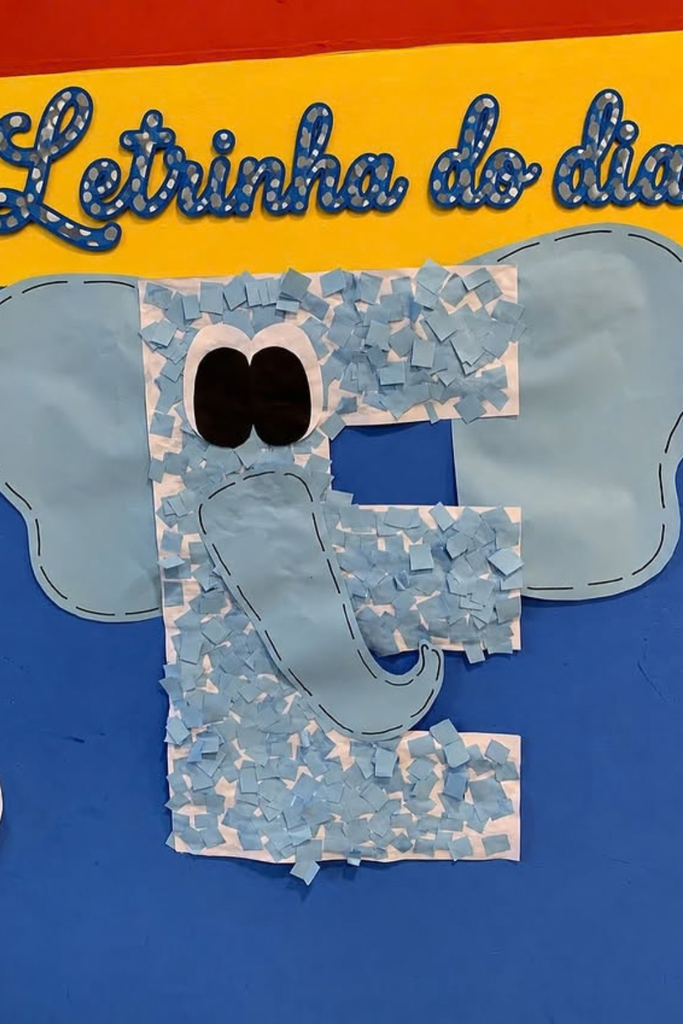
Mosaic Elephant E
Give the classic elephant craft more texture by filling a large E with small torn or cut paper squares.
Works for a preschool Letter E display because toddlers can decorate the main letter while you prepare the ears, trunk, and eyes.
Spread glue over one section at a time. Pinching and pressing each square also adds fine motor practice to the alphabet lesson.
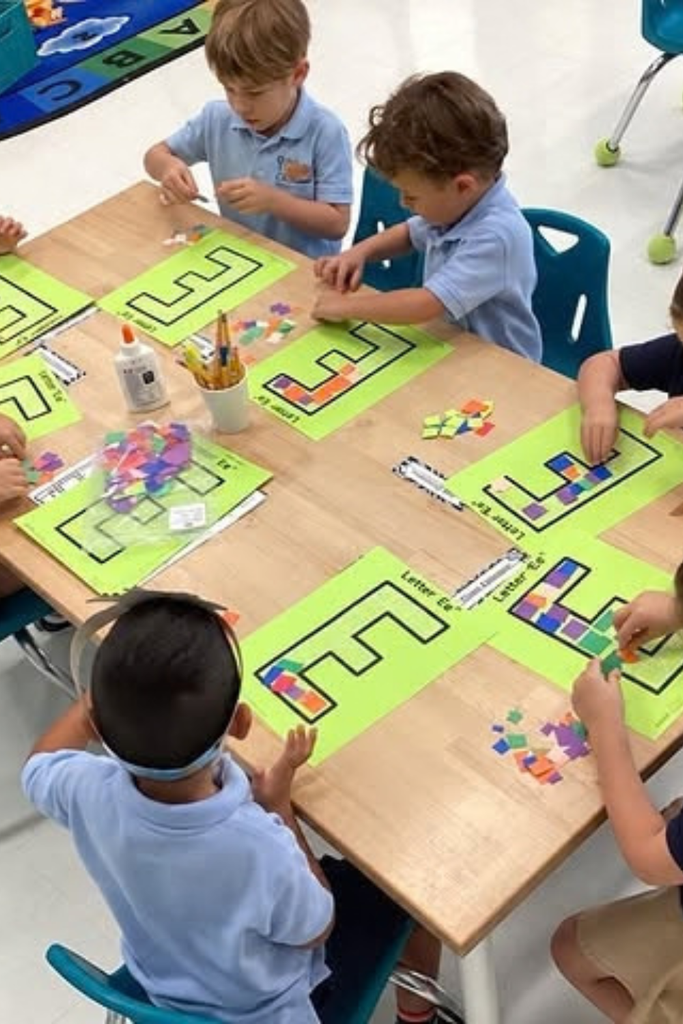
Square Mosaic E
Set up an easy group activity by printing large outlined E letters and giving each toddler a pile of colorful paper squares.
Let them glue the pieces inside the lines in any pattern they choose rather than aiming for a perfect finish.
This works well at preschool craft tables because everyone follows the same letter while creating a different design.
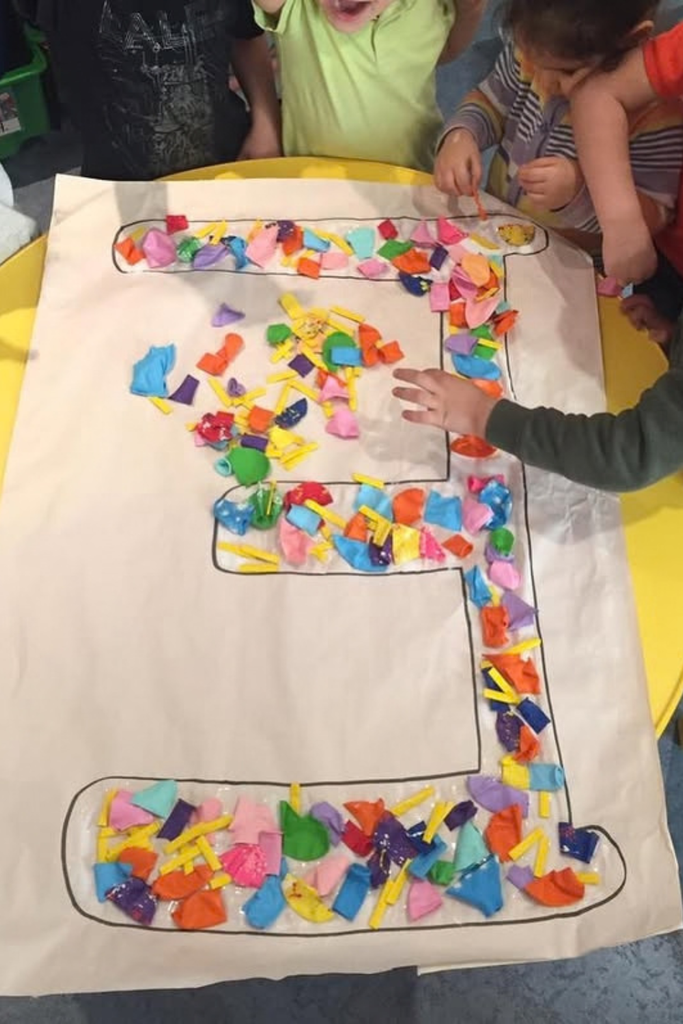
Mixed Texture E
Invite several toddlers to build one oversized E together using colorful fabric scraps, paper pieces, foam shapes, and other lightweight craft leftovers.
Draw a thick outline on poster paper, spread glue through each section, and let children choose where their materials go.
Best for a classroom collaboration because everyone can contribute. Mixing shapes and textures also makes the finished letter more interesting.
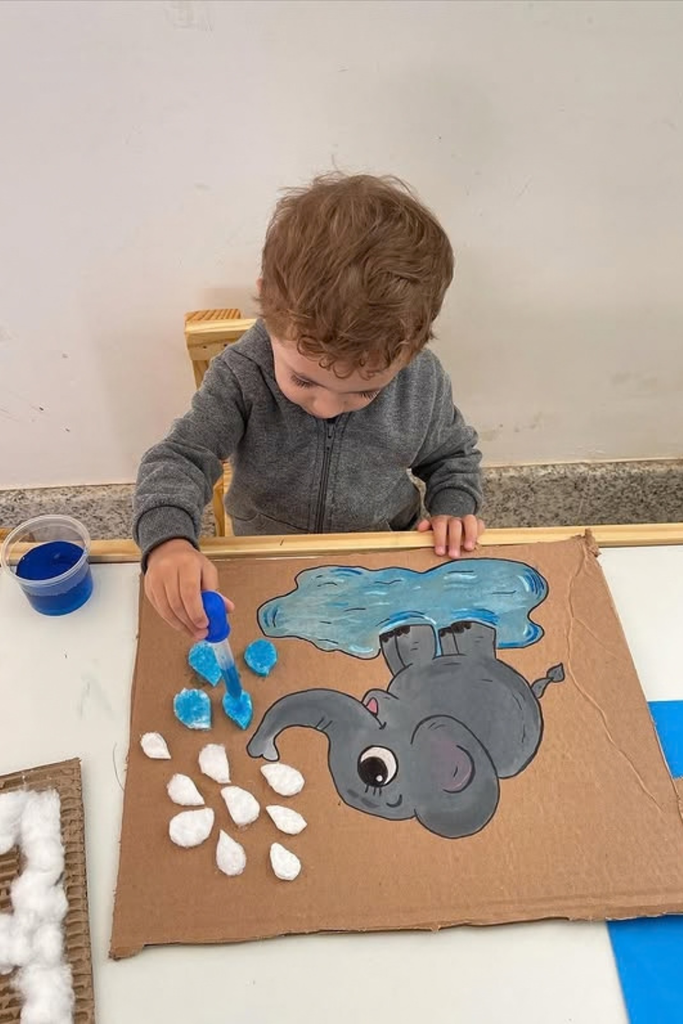
Cotton Cloud Elephant
Bring a weather element into the elephant theme by pairing a simple elephant drawing with soft cotton clouds and blue paint.
Works well for toddlers who enjoy sensory materials because they can dab paint for rain, then press cotton pieces underneath the cloud.
Draw the main scene beforehand. While they work, repeat “E is for elephant” to connect the creative activity back to letter learning.
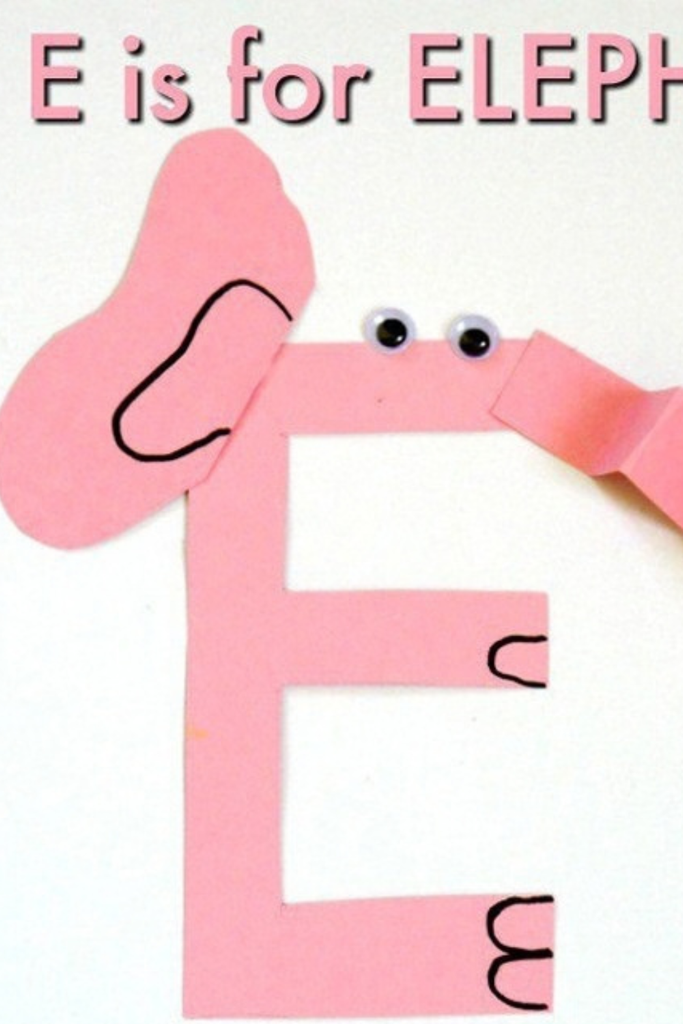
Accordion Trunk E
Give the elephant E a playful moving detail by folding a strip of paper back and forth to create an accordion trunk.
Cut the main E and ear beforehand, then let your toddler glue on the ear, googly eyes, and folded trunk.
This works well for an alphabet craft wall because the E stays easy to recognize while the elephant adds interest.
FAQs
How Can I Make Letter E Crafts Easier for Younger Toddlers?
Pre-cut tricky shapes and give your toddler the parts they can handle themselves, such as stickers, torn paper, chunky crayons, or large craft pieces.
Use a glue stick or add the glue yourself and let them press everything into place. The goal is participation and letter recognition, not a perfectly finished craft.
Should I Teach Uppercase E or Lowercase e First?
Start with whichever form appears in your toddler’s current alphabet activities, but introduce both over time.
Uppercase E can be easier to build because it uses straight lines, while lowercase e has a very different shape.
Place both letters beside each other during crafts and name them together so your toddler gradually learns that they represent the same letter.
Hi, I’m Afaf! I’m a law student who loves writing about everyday life – from home projects and crafts to fashion, beauty, and parenting tips.
I’ve been writing for over a year, sharing ideas that are simple, practical, and easy to try. I write about things I find interesting and useful, whether that’s organizing a space, trying a new DIY, or finding activities to keep kids entertained.
My goal is to share helpful ideas without making things complicated. If it works in real life, I’ll write about it.
When I’m not studying or writing, I’m usually experimenting with new projects or scrolling for inspiration!