
22 Small Playroom Ideas
A small playroom can run out of space fast once toys, books, tables, and larger play pieces start competing for the same floor.
Smart furniture placement, wall storage, hidden baskets and flexible activity zones can change how the whole room works.
In this article, you’ll find 22 Small Playroom ideas that help you use overlooked space, and control everyday clutter.
Let’s jump in!
Could Wall-Mounted Storage Free Up Floor Space for Playing?
When floor space is already tight, adding another cabinet or bookshelf can leave even less room for building blocks, puzzles, and active play.
Floating shelves can hold books and display toys while wall-mounted cubbies, baskets, and pegboards can organize smaller items.
Place everyday toys at a height your child can reach then use higher shelves for supplies or toys you rotate.
You can also mount storage above a small art table or reading corner so one area handles two jobs.
Too much visible storage can make a tiny playroom appear crowded so cover every wall with toys.
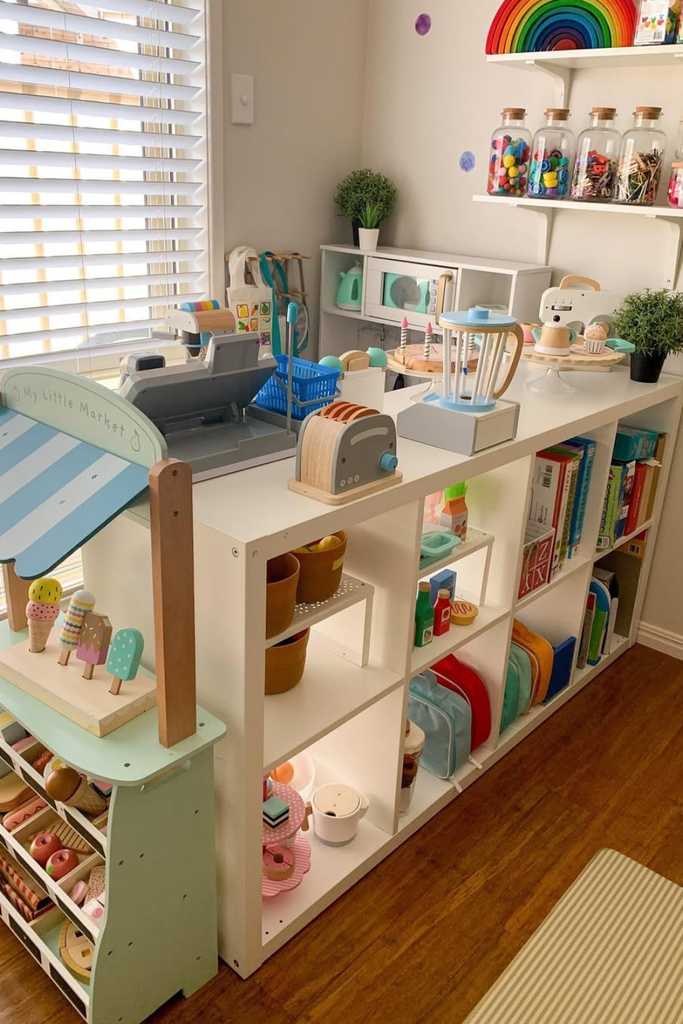
Market Play Corner
To keep imaginative play limited rather than spreading everyplace, turn one half of a tiny playroom into a pretend market.
Keep the counter beside low cubbies where your child can grab play food, baskets and books without help.
Wall shelves above can hold craft supplies and smaller pieces, leaving the surrounding floor clearer for moving and playing.
Active Play Wall
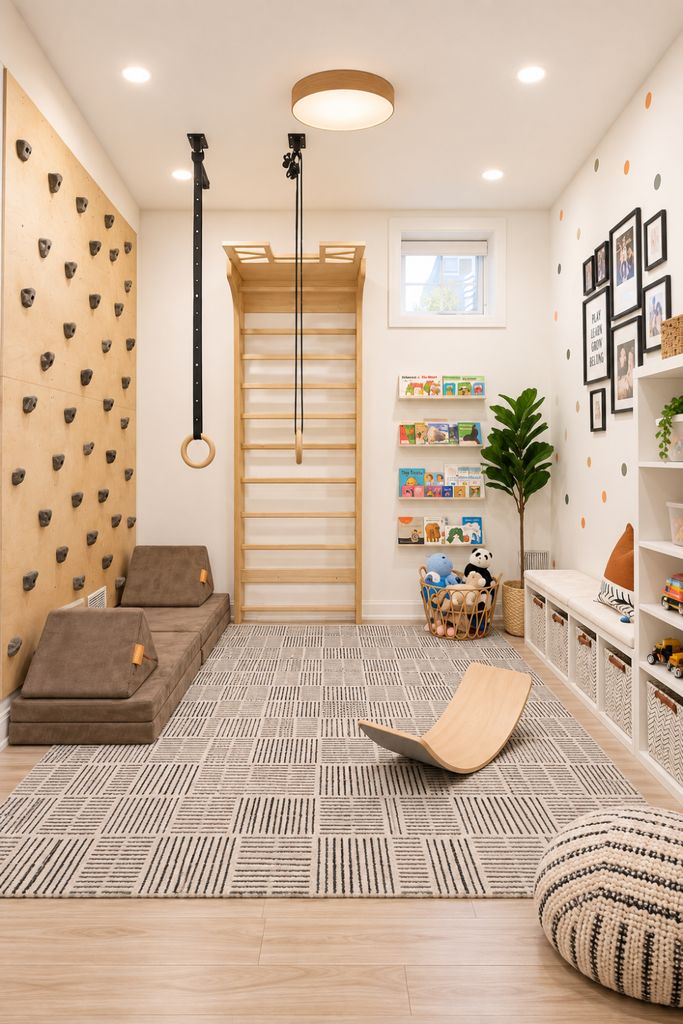
Give active play its own wall when a small room cannot handle bulky climbing equipment across the floor.
Mount climbing holds and gym bars securely along the perimeter then keep a padded landing area underneath.
Slim book ledges and low toy baskets can fill nearby wall space while keeping the middle open for rocking building.
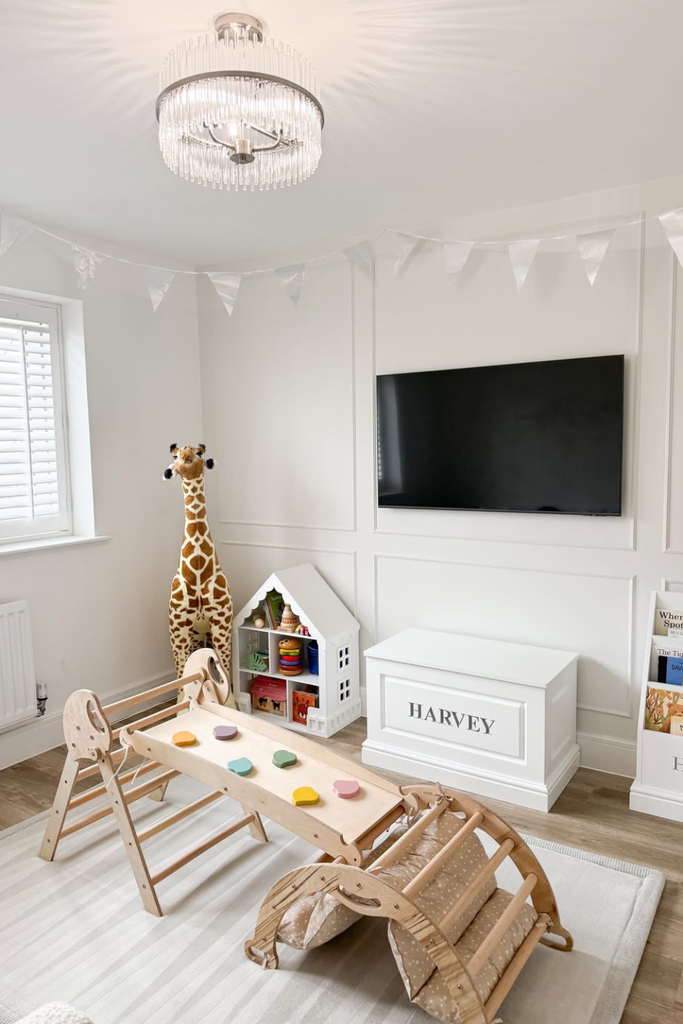
Compact Activity Zone
Nearby wall space can be filled with low toy baskets and slim book ledges, leaving the center available for rocking construction.
Place books and toy baskets against the walls then reserve the center for compact climbing equipment and movement.
A soft rug creates a comfortable play boundary while bright overhead lighting keeps the whole room useful even.
Shared Play Space
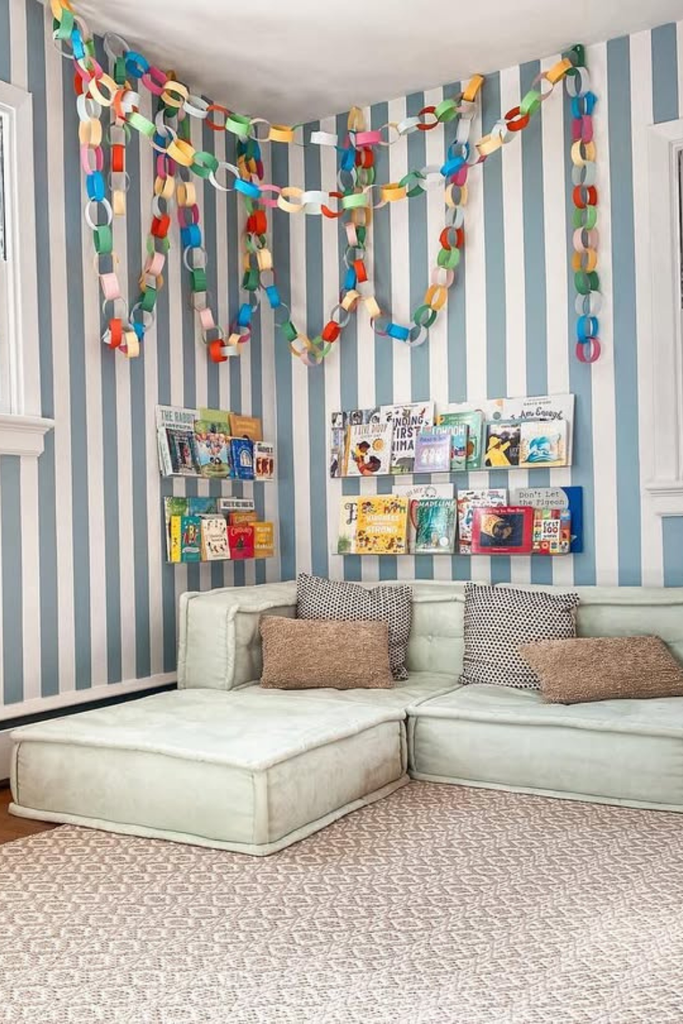
Instead of filling the entire space with toys, combine the play area with a guest bed to make a small playroom work harder.
To give kids a cozy place to read without heavy chairs, place floor cushions and books along one wall.
Open baskets can handle everyday toys while the storage bench helps hide extra items when you need to quickly turn the room back.
Creative Workstation
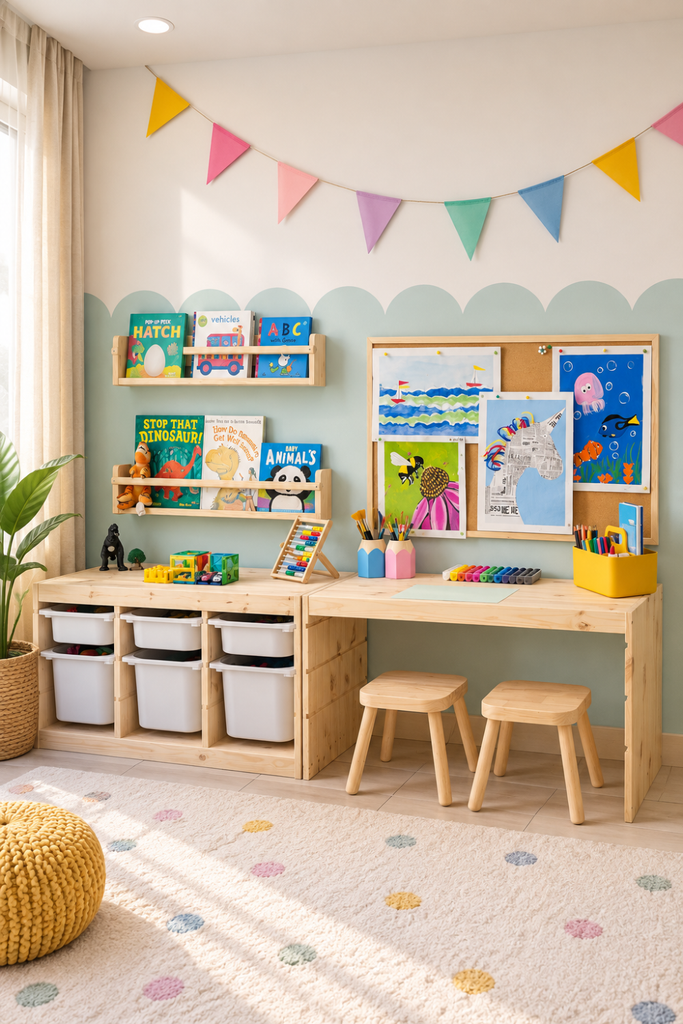
Combine crafts, books, and toy storage along one wall when you cannot spare room for separate activity stations.
Keep pull-out bins under the tabletop for supplies, then mount slim book ledges above so books never crowd the work surface.
A corkboard gives finished artwork its own display spot, while two small stools can tuck underneath and leave more floor.
Hidden Toy Storage
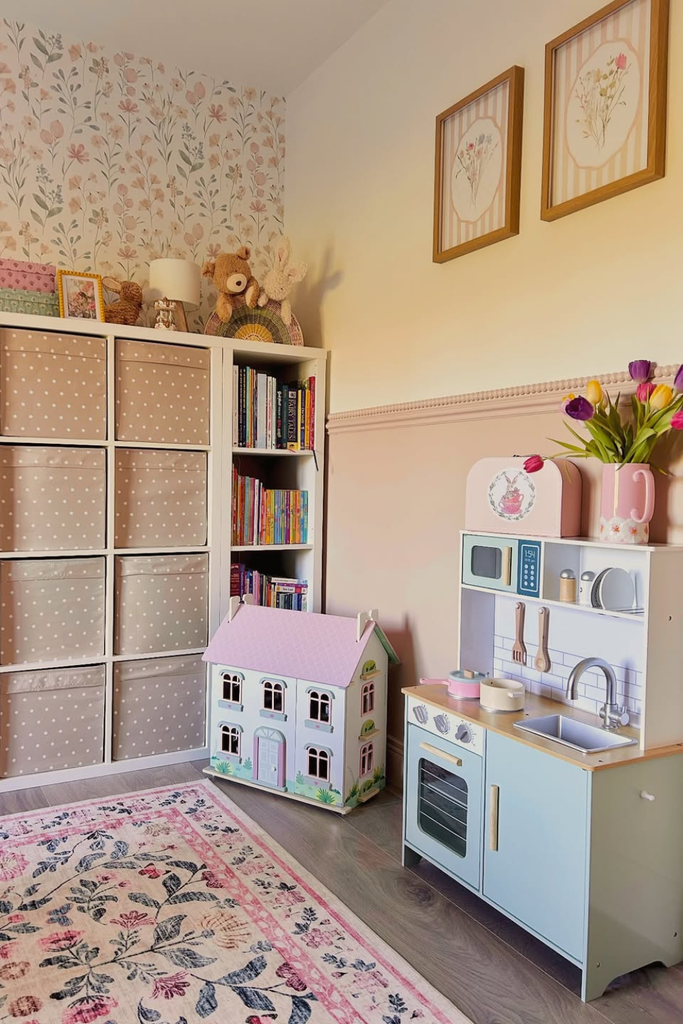
Cut down visual clutter by using matching baskets for the small toys that usually make a compact playroom feel messy.
Keep the storage unit against one wall and group toys by type so cleanup stays simple. A child sized table can handle crafts.
Puzzles in the center, while the play kitchen fits neatly beside the storage instead of taking over another wall.
Storage Media Wall
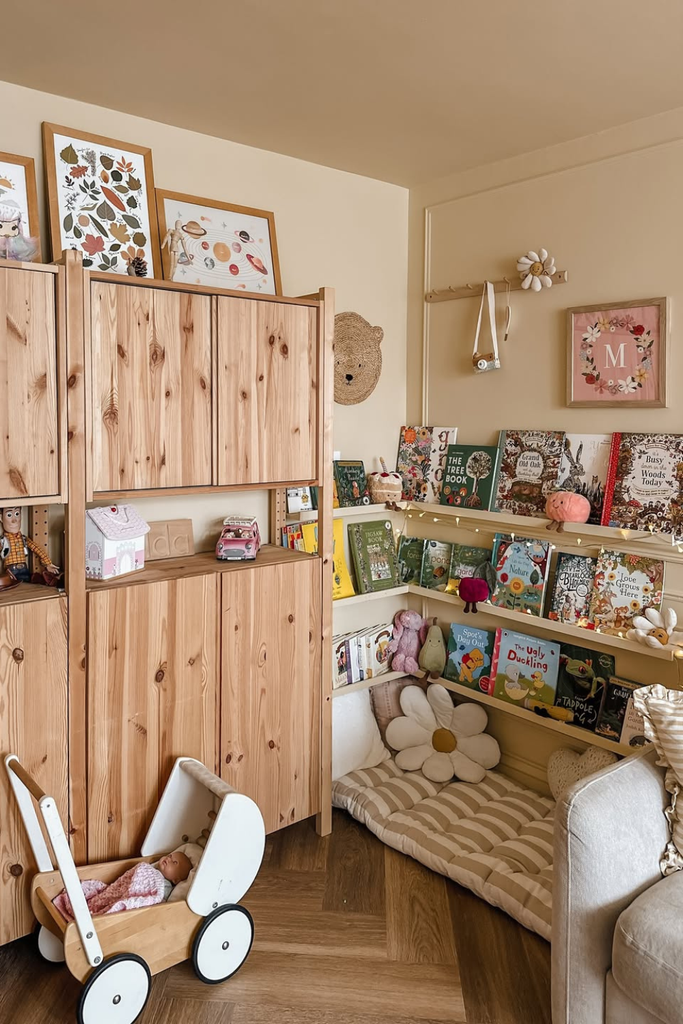
Use one full wall for entertainment and toy storage when several smaller units would make the room feel more scattered.
Tall cubbies can hold less-used toys higher up, while lower baskets keep everyday pieces easier to reach and hide after playtime.
Leave books visible on one side for quick access then keep the center floor open with only a small table for crafts, tea parties or puzzles.
Low Storage Wall
Run low storage along one wall when you want plenty of toy space without making a small playroom feel boxed in.
Use labeled pull out bins so children can find and return toys without emptying several baskets first.
Keeping the units low also leaves room, while recessed ceiling lights spread light evenly across the open play area.
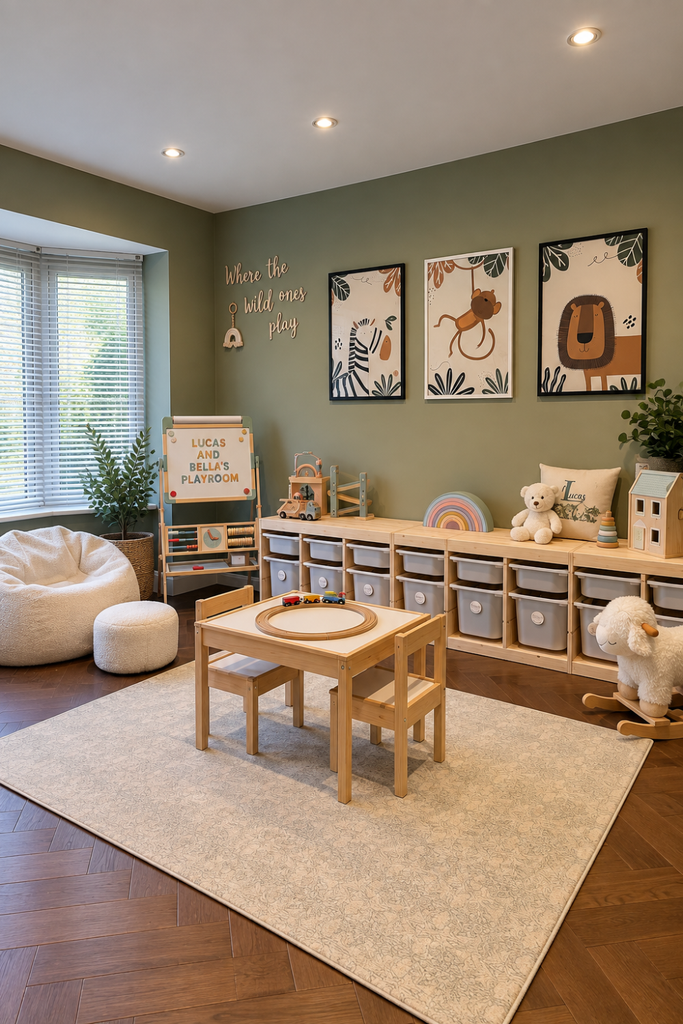
Corner Storage Hub
Put an empty corner to work by wrapping low storage around both walls instead of adding cabinets across the open floor.
Sort toys into labeled pull-out bins underneath, then mount extra bins higher for pieces your child uses less often.
Slim book ledges and a paper-roll holder turn the surrounding walls into useful activity space while keeping the center clear.
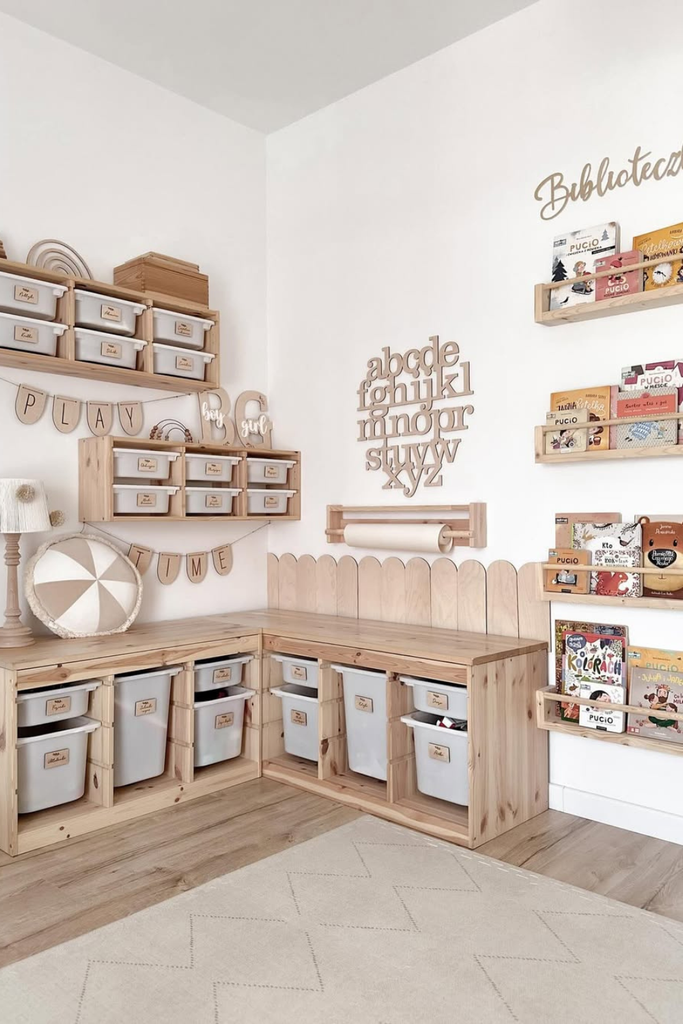
Movement Play Zone
Save one side of the room for low toy storage so the remaining floor can handle bigger movement activities.
Pull out bins make everyday toys easy to sort while the long top gives stuffed animals and learning toys a home.
Soft climbing blocks work well in the open center because you can rearrange or stack them away whenever.
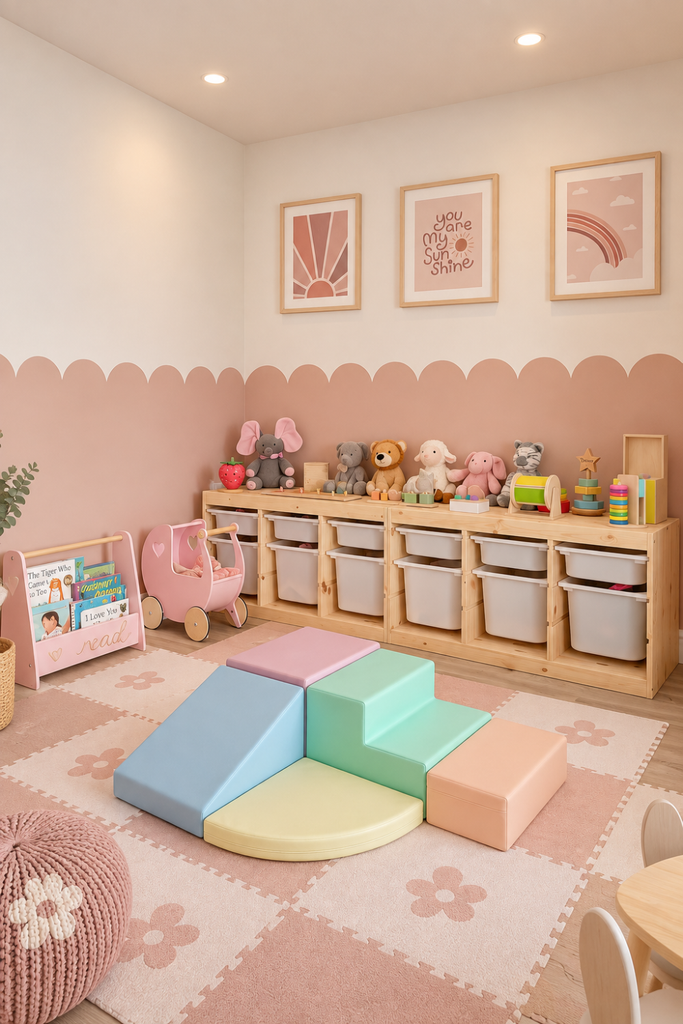
Reading Play Corner
Quiet corner into a reading spot by keeping books, pretend-play toys, and a small chair close together.
Use forward-facing shelves for favorite books so your child can choose one quickly, then keep extra titles upright beside them.
Placing larger furniture against the walls protects the round rug in the middle for reading, puzzles, or relaxed floor play.
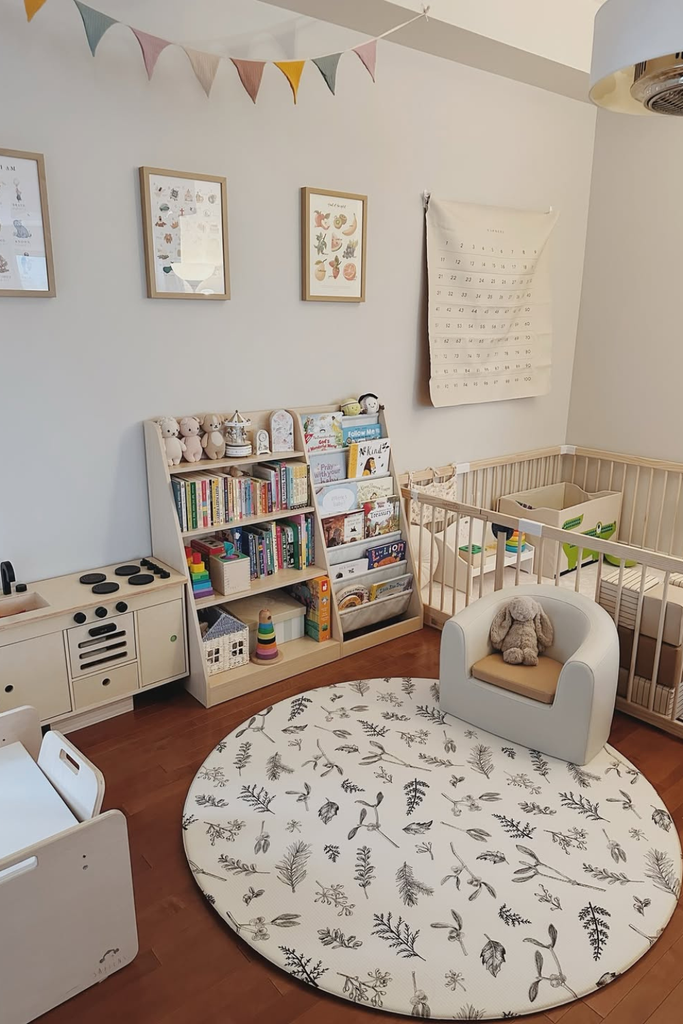
Multiuse Play Table
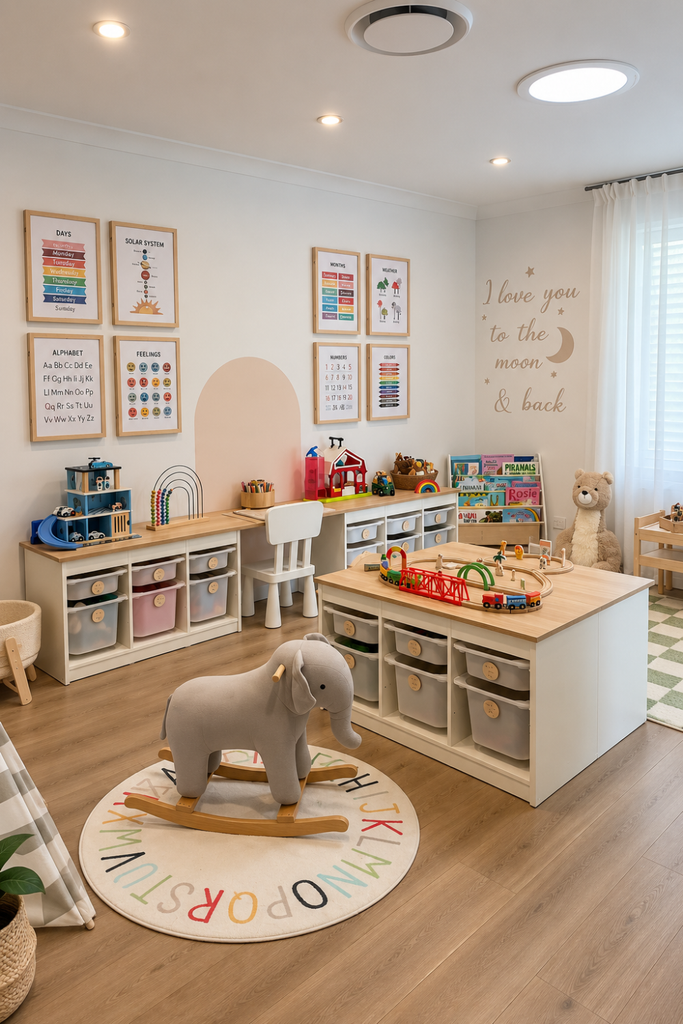
Choose a play table with built-in storage when trains, blocks and small toys usually spread across the whole room.
Keep labeled bins directly underneath so pieces can go back as soon as play ends then use matching low storage along the wall.
Bright ceiling lights and daylight keep the different play zones well lit without adding floor lamps that would take up walking space.
Pretend Shop Setup
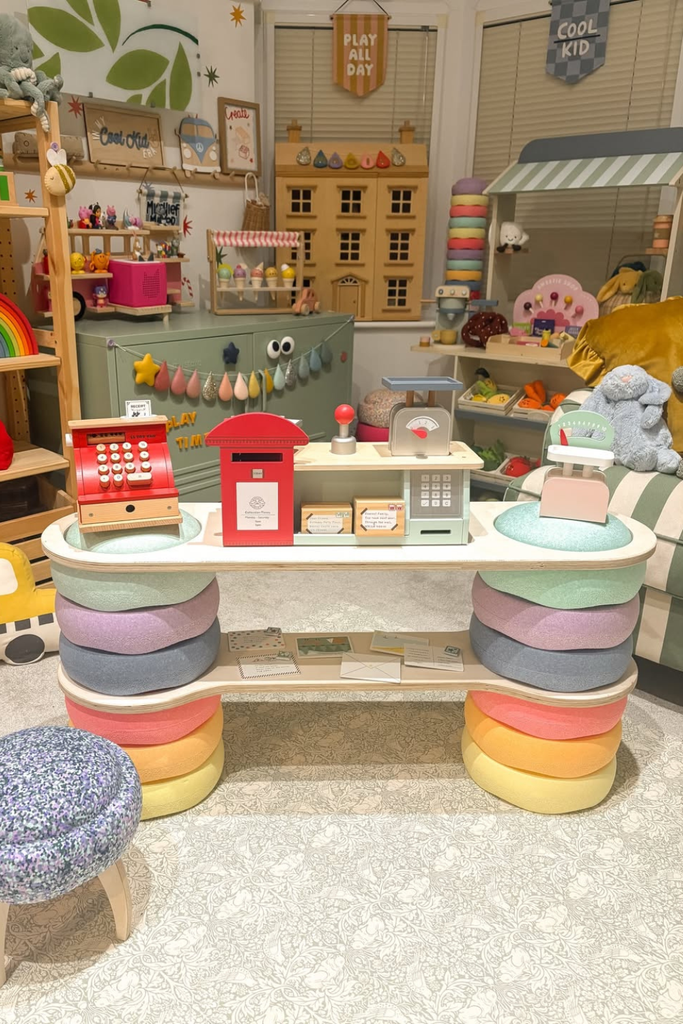
Create one focused pretend-play station when a small playroom cannot fit several separate role-play toys comfortably.
Group the checkout counter, shop stand and play food close together so children can move between activities.
Use nearby shelves and closed cabinets for extra accessories, keeping only the current shop supplies visible and easier to manage.
Reading Storage Bench
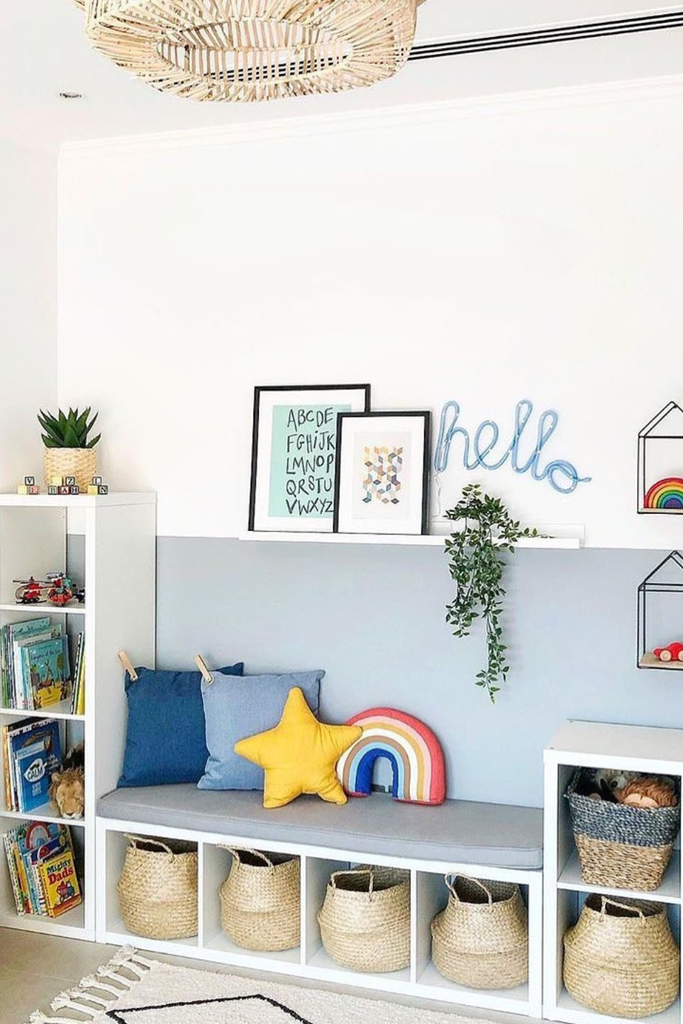
Turn one wall into a reading nook by combining seating, books and toy storage instead of using three separate furniture pieces.
Keep favorite books on shallow shelves where covers stay easy to spot then slide baskets beneath the bench for toys.
A cushioned seat creates a comfortable reading spot while the storage underneath uses space that would otherwise sit empty.
Stacked Toy Storage
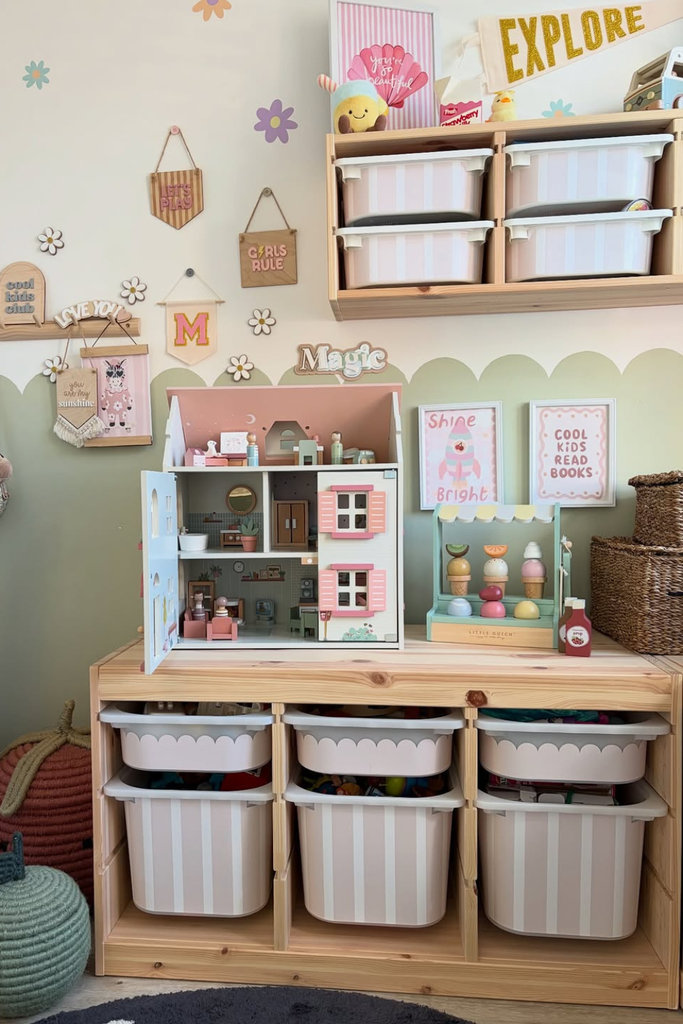
Use the wall above low cubbies when your toy collection has outgrown the storage you can fit across the floor.
Keep larger everyday toys in deep bins below then mount extra bins higher for rotation toys or pieces that need supervision.
Leaving the middle section open or pretend-play set creates another activity spot without adding a separate table.
Cozy Storage Nook
When a small playroom requires a quiet place, include seats into your storage arrangement without adding an additional chair.
Put a couch over one area for reading and arrange low cubbies along the wall to conceal loose toys within matching baskets.
Keeping the furniture around the edge leaves a generous soft area in front where your child can spread out books or puzzles.
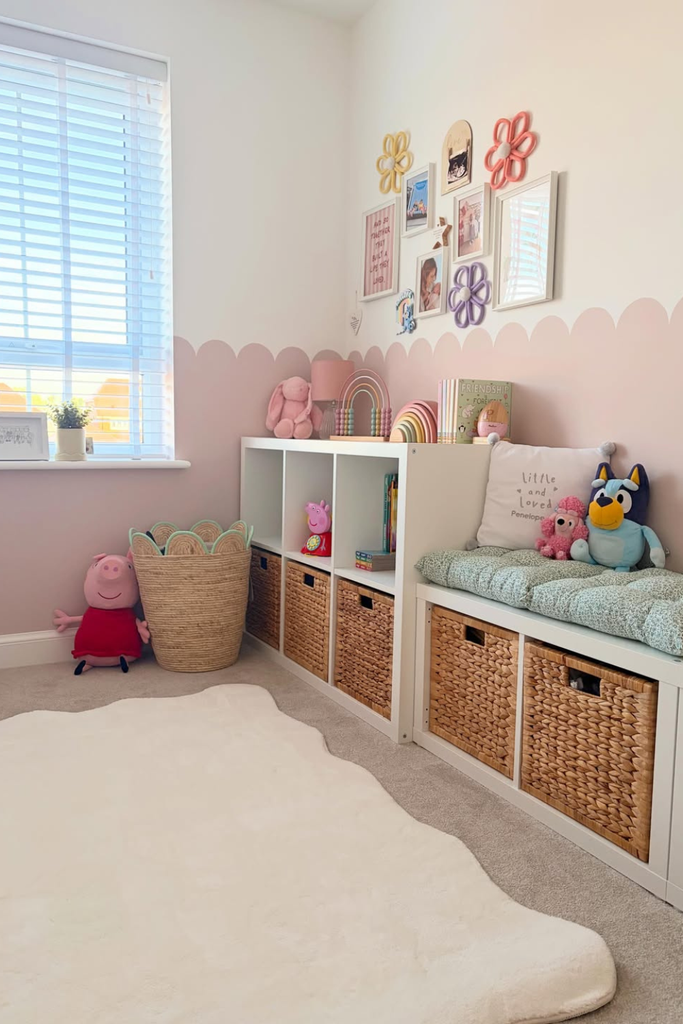
Cube Storage Zone
Choose cube storage when toys come in different sizes and you need one unit to handle them without extra furniture.
Keep bulky playsets in the open cubes, then use fabric bins below for smaller pieces that quickly create clutter.
Placing the unit against the wall leaves the top available for favorite toys while keeping more floor open beside it.
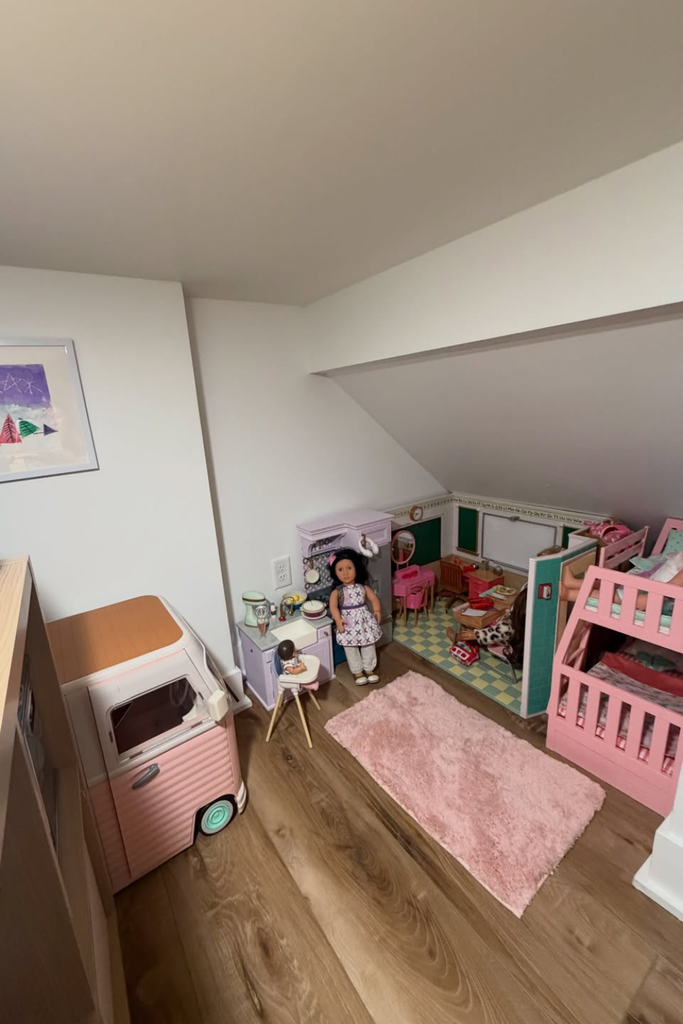
Hidden Storage Cabinet
Hide busy toy collections behind closed doors when open cubbies make a small playroom feel crowded even after cleanup.
Use a slim cabinet along one wall for games, craft supplies and toys you do not need constantly visible.
The center simple with a child-sized table and movable seating gives your child room for crafts, pretend meals, and floor play.
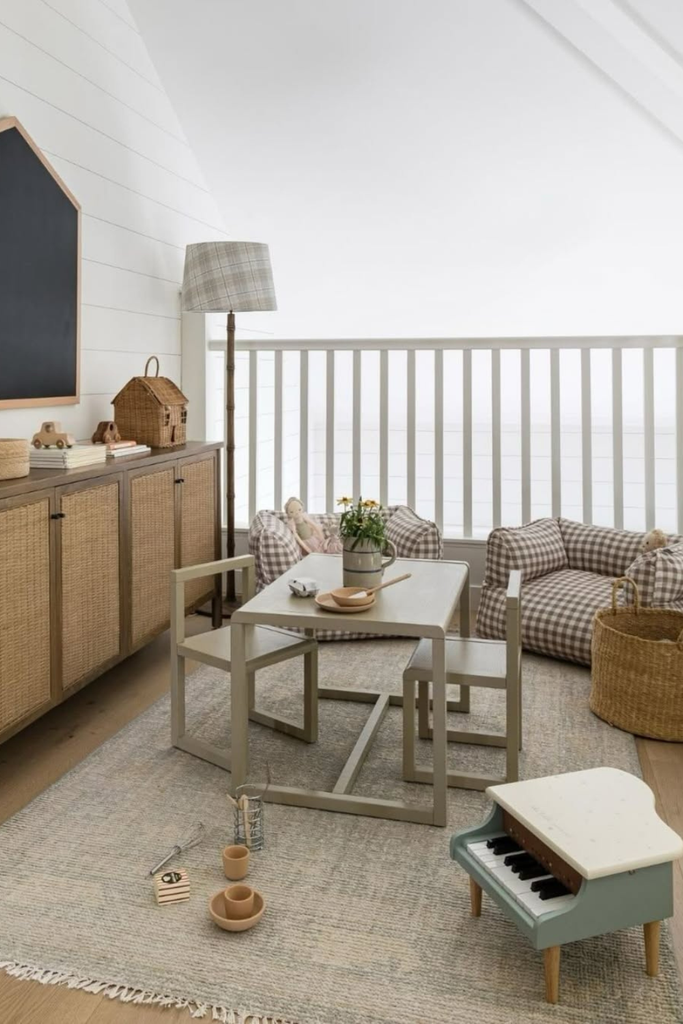
Under-Stair Nook
Turn the awkward space beneath a staircase into a compact play nook instead of letting the sloped area go unused.
Fit shelves to the changing ceiling height for books, stuffed toys, and small activities, then keep a soft seat below.
Built-in shelf lighting brightens the deepest part of the nook while keeping lamps off the limited floor space.
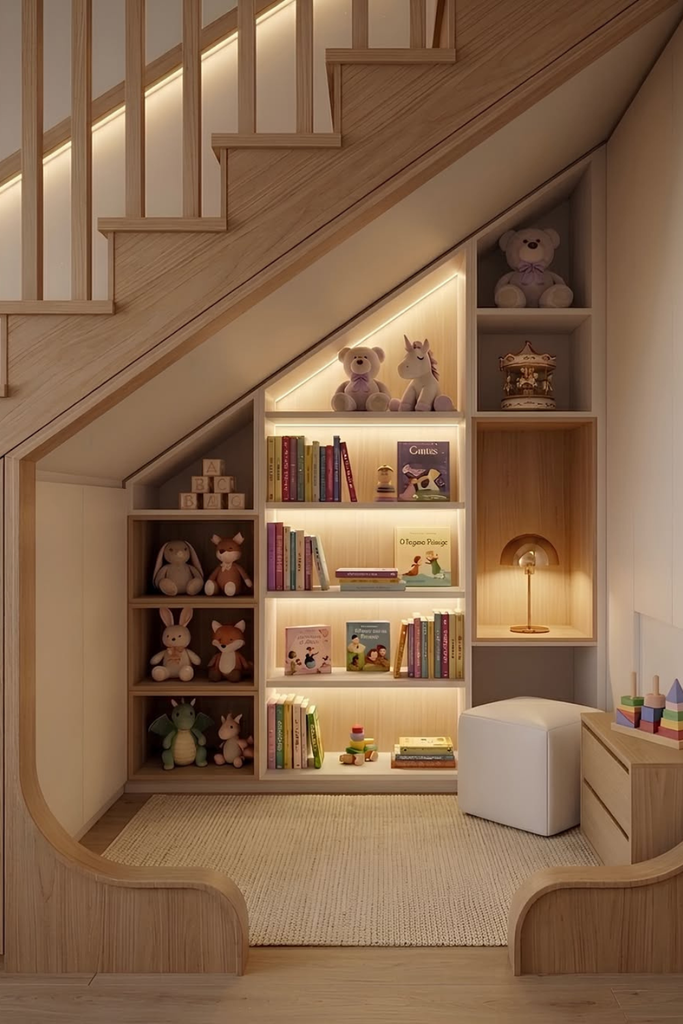
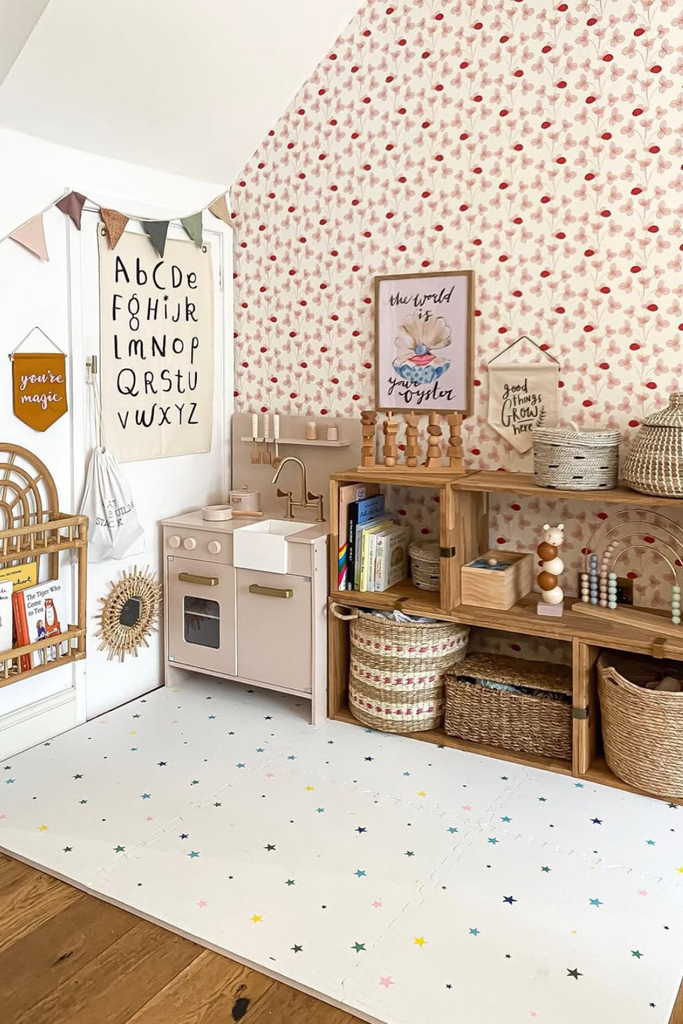
Pretend Kitchen Corner
Fit pretend play into a narrow corner by placing the kitchen and toy storage against adjoining walls instead of spreading them.
Keep play food and small accessories inside baskets below while open cubbies can hold books and toys your child reaches.
A wall-mounted book rack adds useful storage without touching the floor, leaving the soft center area free for play.
Overhead Toy Storage
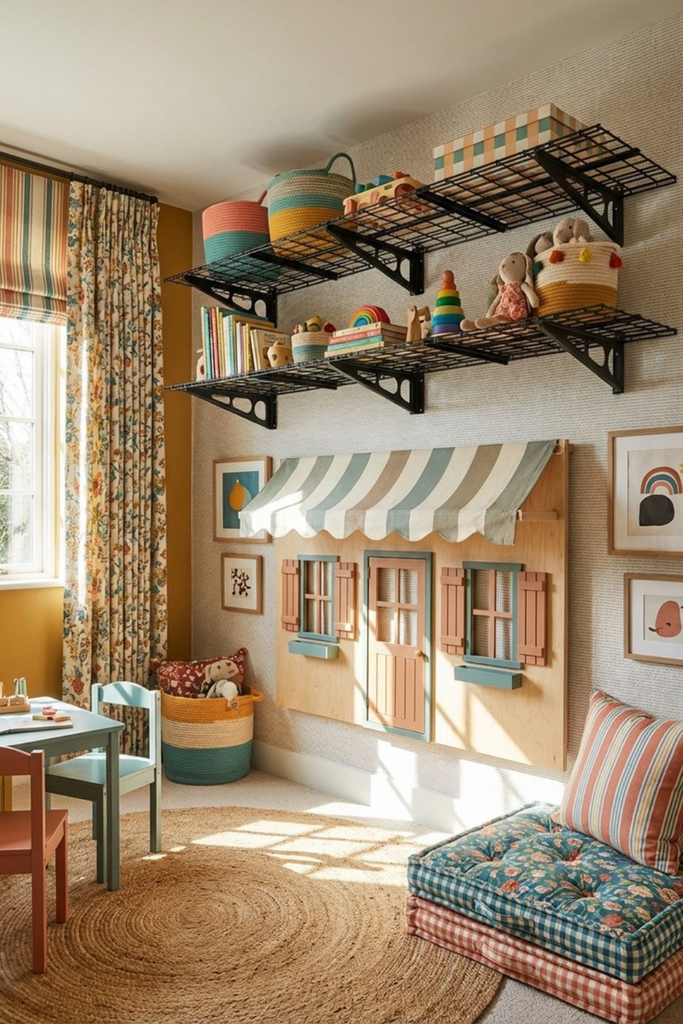
Use the upper wall when floor storage is already competing with tables, seating and pretend-play pieces.
Mount sturdy shelves high enough to keep baskets, books, and rotation toys out of the main play zone.
Keeping storage overhead leaves room underneath for a playhouse feature, giving the wall two useful jobs.
Vertical Play Loft
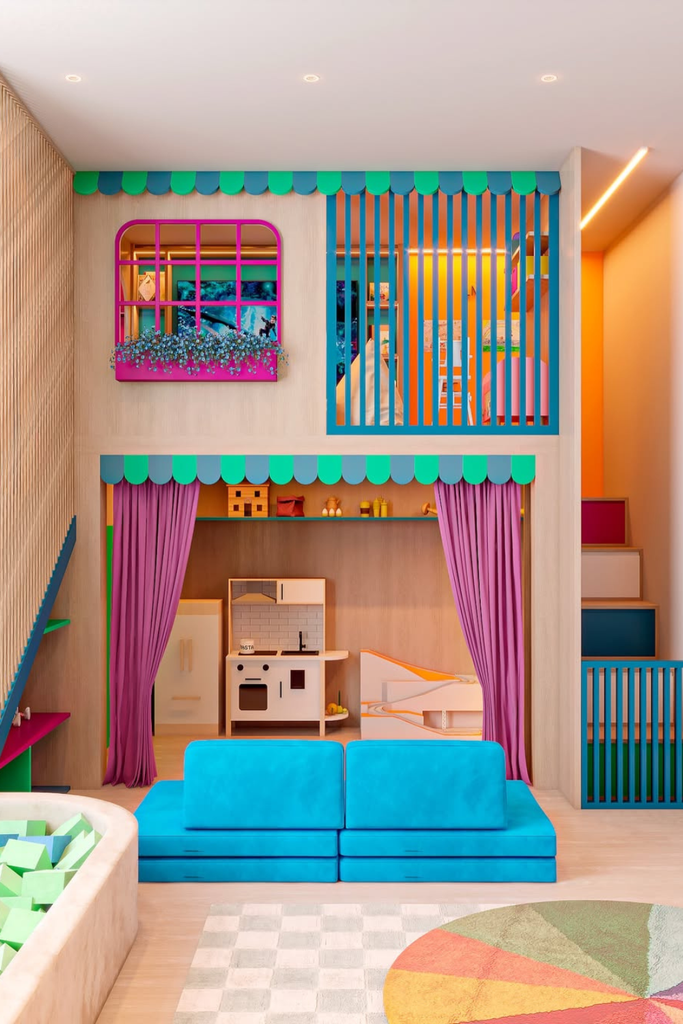
Use ceiling height when a small playroom has more vertical space than open floor. Build an upper play loft for quieter activities.
Use the area underneath for a compact pretend kitchen or playhouse. Keep stairs and storage tight against the walls.
The center stays open, while recessed ceiling lights and built-in lighting brighten both levels without adding floor lamps.
FAQs
How Can You Make a Small Playroom Feel Bigger?
Keep bulky furniture against the walls and protect as much open floor space as possible. Low storage, wall-mounted shelves, and furniture.
One job can stop the room from feeling packed. Limiting how many toys stay out at once also makes a noticeable difference.
What Furniture Works Best in a Small Playroom?
Choose pieces that earn their floor space. Storage benches, tables with built-in bins, low cubbies, and small stools give you function.
Look for lightweight pieces you can move easily when your child needs more space for active play.

Hi, I’m Afaf! I’m a law student who loves writing about everyday life – from home projects and crafts to fashion, beauty, and parenting tips.
I’ve been writing for over a year, sharing ideas that are simple, practical, and easy to try. I write about things I find interesting and useful, whether that’s organizing a space, trying a new DIY, or finding activities to keep kids entertained.
My goal is to share helpful ideas without making things complicated. If it works in real life, I’ll write about it.
When I’m not studying or writing, I’m usually experimenting with new projects or scrolling for inspiration!