
17 Whimsical Playroom Ideas
Creating a whimsical playroom sounds easy until colorful toys, busy walls, and cute decorations start competing for attention.
You want the room to feel magical, but it still needs open play space, practical storage, and corners your child can actually use.
In this article, you’ll find 17 Whimsical Playroom ideas that can assist you in creating a space that feels unique.
Let’s jump in!
Can Storybook Details Make a Whimsical Playroom Feel Magical?
Storybook details can make a playroom feel magical, but you don’t need to turn every corner into a fantasy scene.
Start with one feature that catches attention, such as a woodland mural, painted clouds, a fabric canopy, or a small playhouse.
If you have a reading corner, add low book ledges, soft floor cushions, and warm lighting to make it feel like a little hideaway.
You can also bring in mushrooms, stars, flowers, butterflies, or tree shapes through artwork and small decorations instead of covering every wall.
Leave enough open floor space between these details so children can move, build, read, and play without the magical look getting in their way.
Storybook Shelves
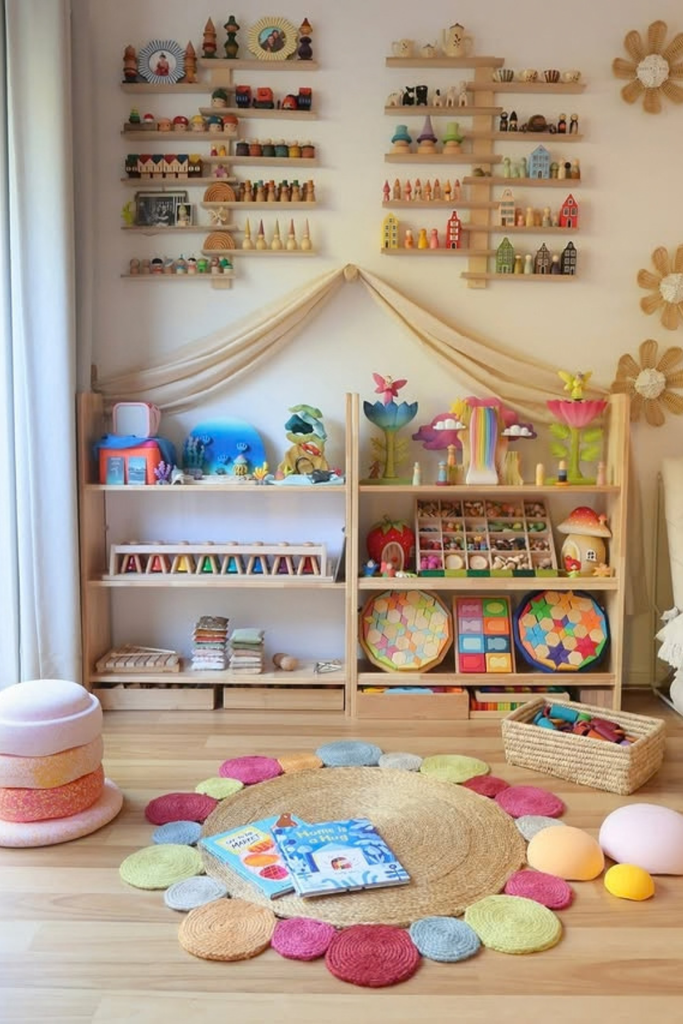
Turn one quiet playroom wall into a little discovery zone by keeping colorful wooden toys, books and loose parts within easy reach.
Low open shelving works especially well for younger kids, while floating shelves above can display smaller storybook pieces.
Soft daylight keeps the colors cheerful and a fabric canopy adds a cozy layer that makes floor play feel more magical.
Rainbow Kitchen
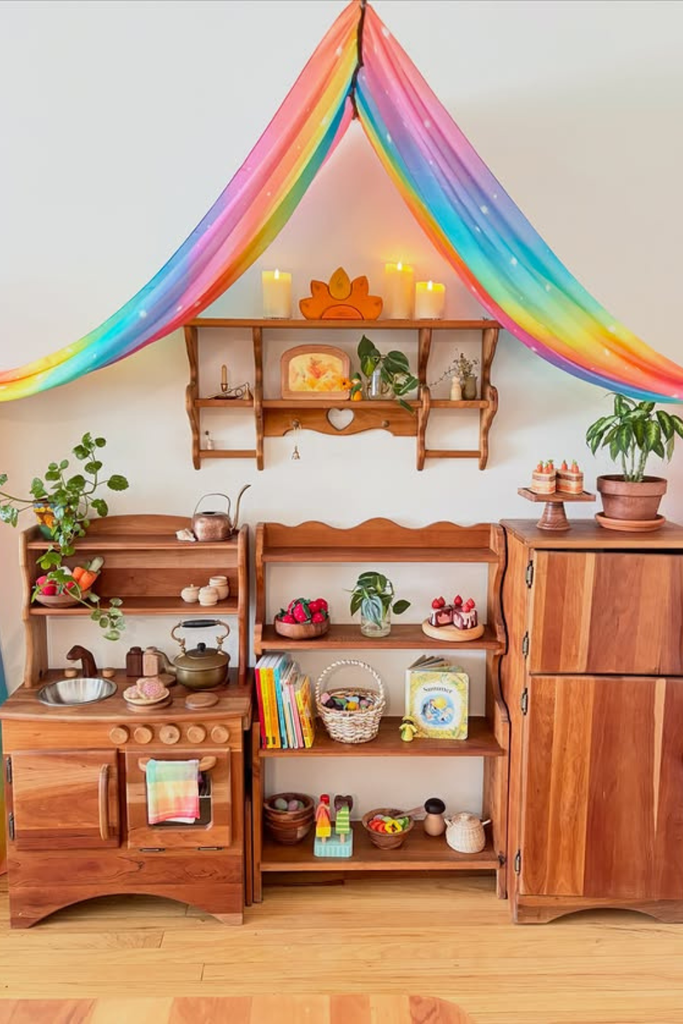
Give a pretend kitchen its own storybook corner by draping rainbow fabric overhead instead of filling the surrounding walls with decorations.
Wooden furniture keeps the bright canopy from becoming overwhelming, while plants, play food, and books encourage different kinds of pretend play.
Warm battery candles add a gentle glow above the setup, while nearby daylight keeps the cooking and activity area clear for daytime play.
Dollhouse Corner
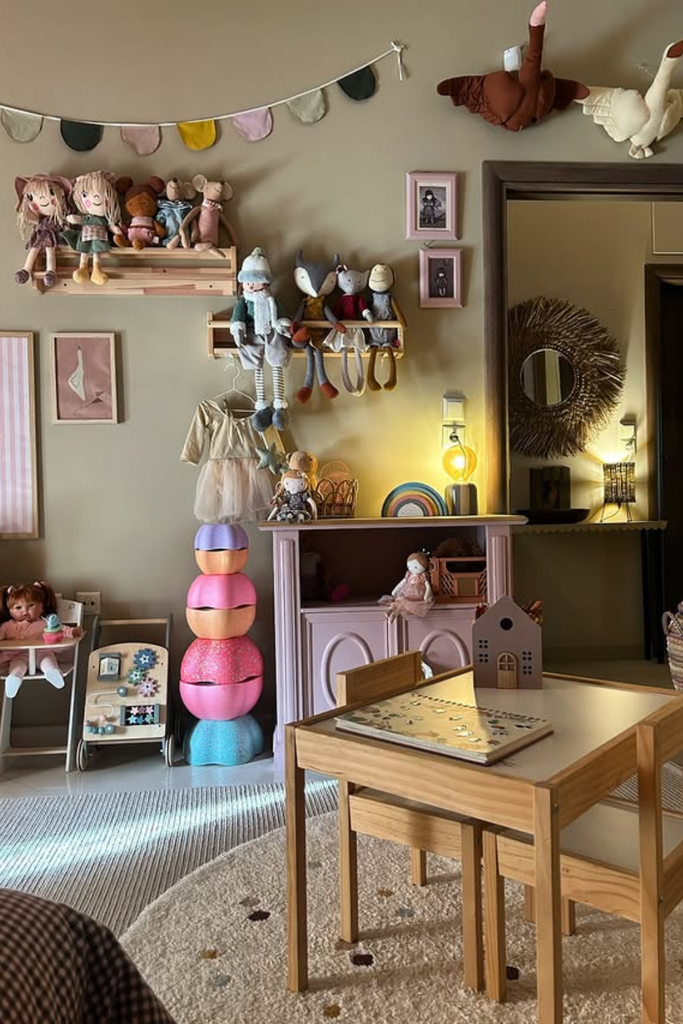
You want a whimsical area that nevertheless provides clear homes for dolls, costumes, and tiny toys, combine pretend play with display storage.
A kid-sized table keeps crafts and puzzles nearby while wall shelves free up the floor by positioning beloved characters at eye level.
For a comfortable evening glow, place a warm bulb close to the playhouse; for everyday play, use the natural light in the room.
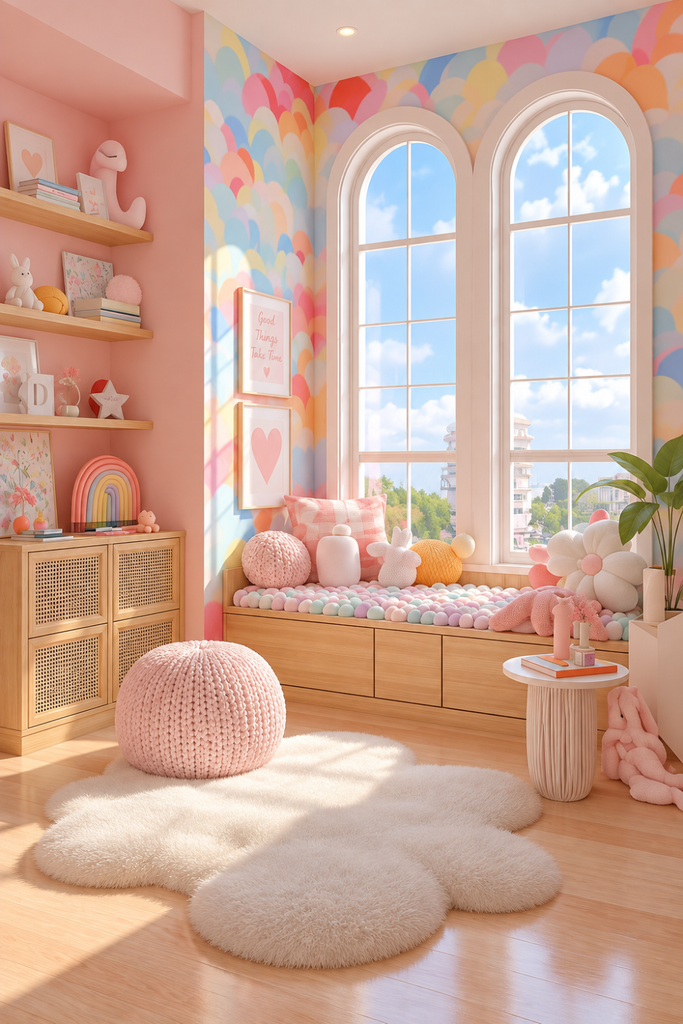
Cloud Window
Use a sunny window corner for quiet play then frame it with soft cloud shapes and pastel colors to create a dreamy storybook mood.
Built-in bench drawers can hide extra toys, while cushions turn the top into an inviting spot for reading or resting.
Gloomy afternoons or nighttime story time keep additional lighting soft and warm because strong daylight does most of the work here.
Storybook Niches
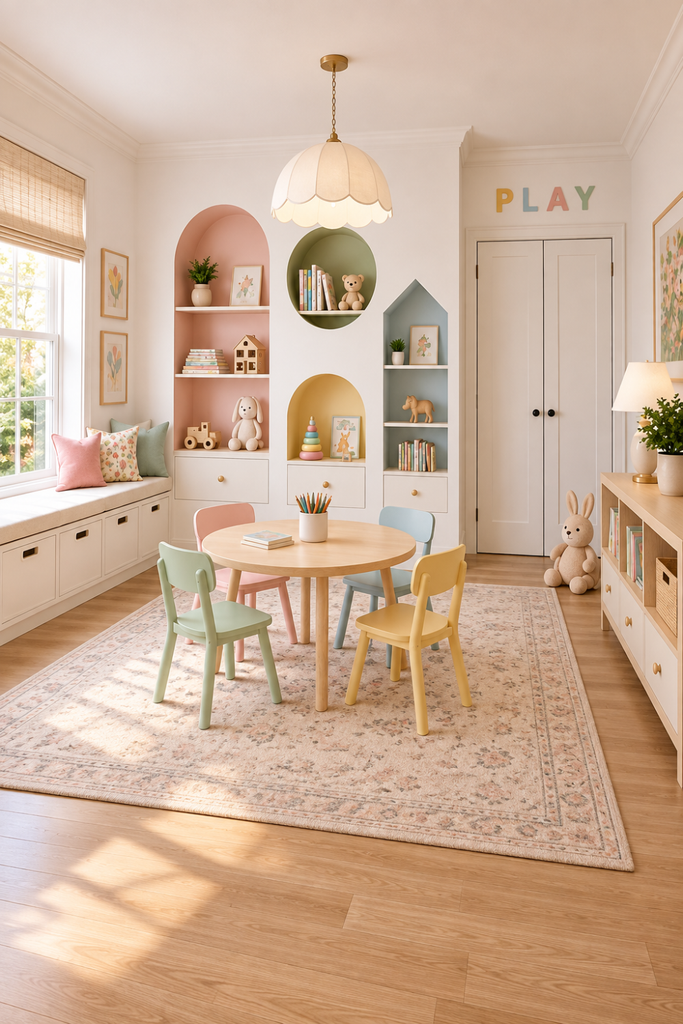
Build playful shapes into storage when you want practical shelving to feel more like part of the room’s story.
Arched and house-shaped niches give books, toys, and artwork separate little homes while keeping the central floor open for activities.
Place a child-sized table beneath the main pendant for crafts. Window light and a nearby lamp soften the room throughout the day.
Giant Garden
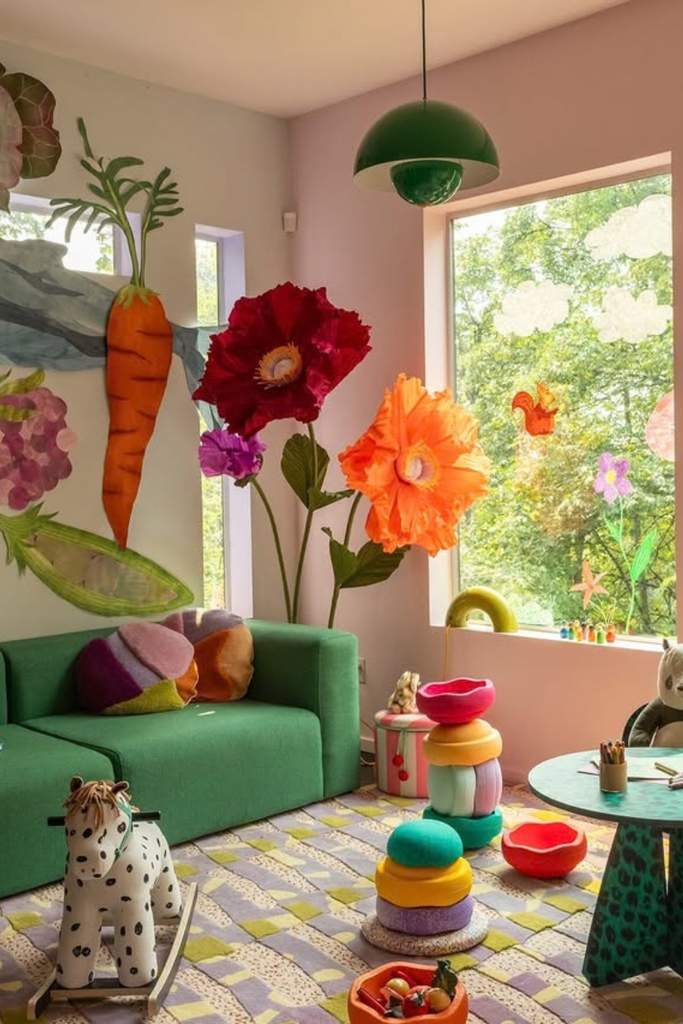
Go oversized with flowers, vegetables, and playful nature shapes when you want the playroom to feel like a child has stepped into another world.
Keep larger decorations around the room edges so the center stays open for rocking toys, building pieces and creative table activities.
Big windows supply bright daytime light while a bold pendant adds focused illumination and continues the playful garden theme overhead.
Storybook Wallpaper
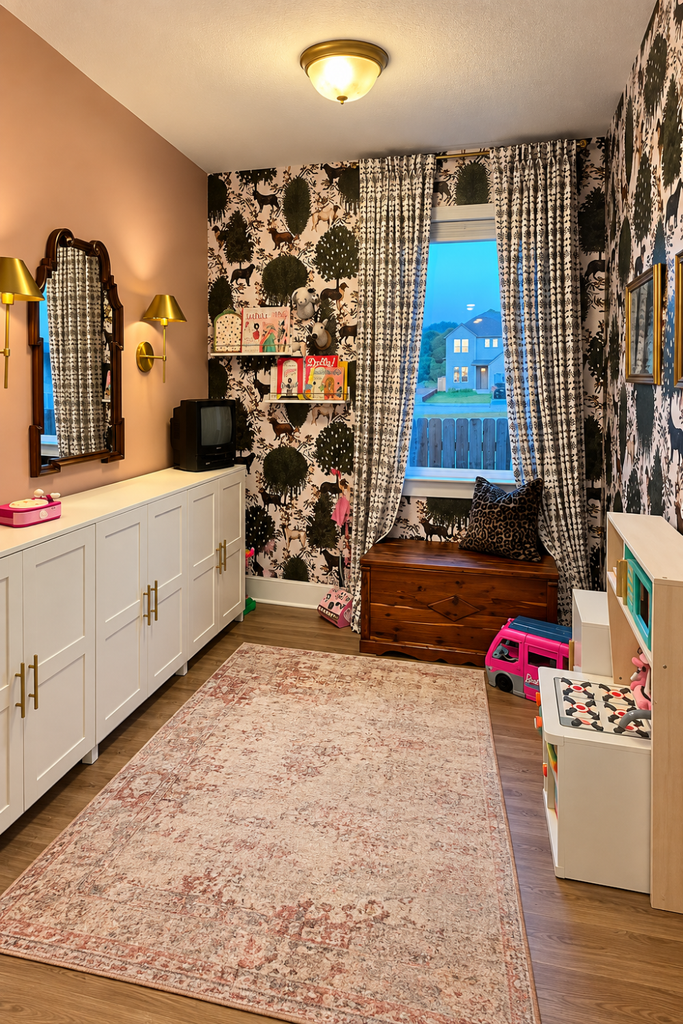
You want a smaller playroom to be innovative without adding a ton of decorative furnishings, use one bold graphic wallpaper.
While narrow book ledges keep beloved stories visible and free up crucial floor space, built-in cupboards can conceal large toys.
Wall sconces add lovely light to the storage area while the window controls daylight play and keeps the darker pattern from appearing burdensome.
Pretend Café
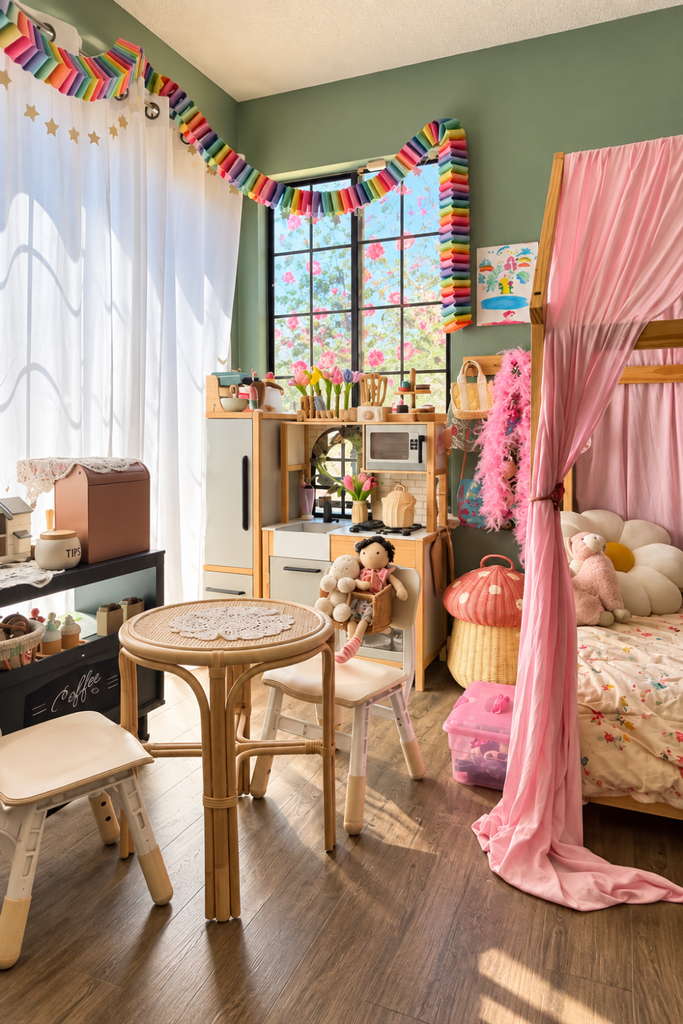
Tiny area can be turned into a makeshift café by adding a toy kitchen and a small table where kids can serve their food.
Playful garlands and plush accessories provide storybook charm, and a nearby canopy can serve as a comfortable lounging area.
Sheer curtains filter strong daylight for daytime play, so a simple warm ceiling light is enough once the room gets darker.
Vintage Play Corner
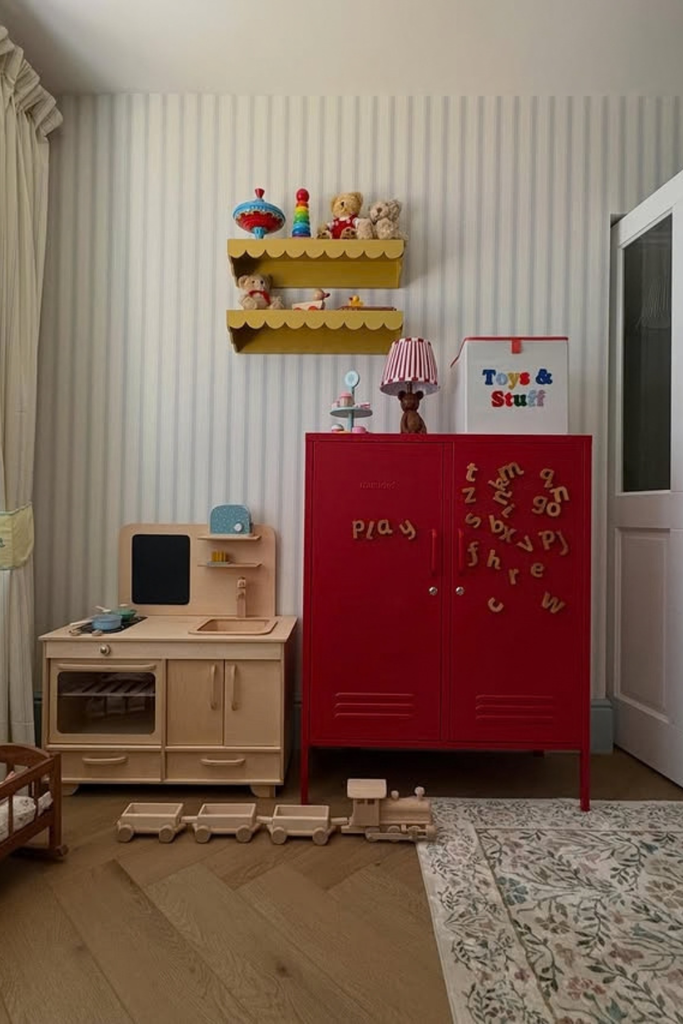
Bring vintage charm into pretend play by mixing a wooden kitchen, toy train and bold storage cabinet.
Scalloped shelves can hold favorite toys above, while closed storage hides the extras that usually make a small playroom feel crowded.
Position the play kitchen near a window for natural light then use warm overhead lighting to keep the corner comfortable after sunset.
Mushroom Hideaway
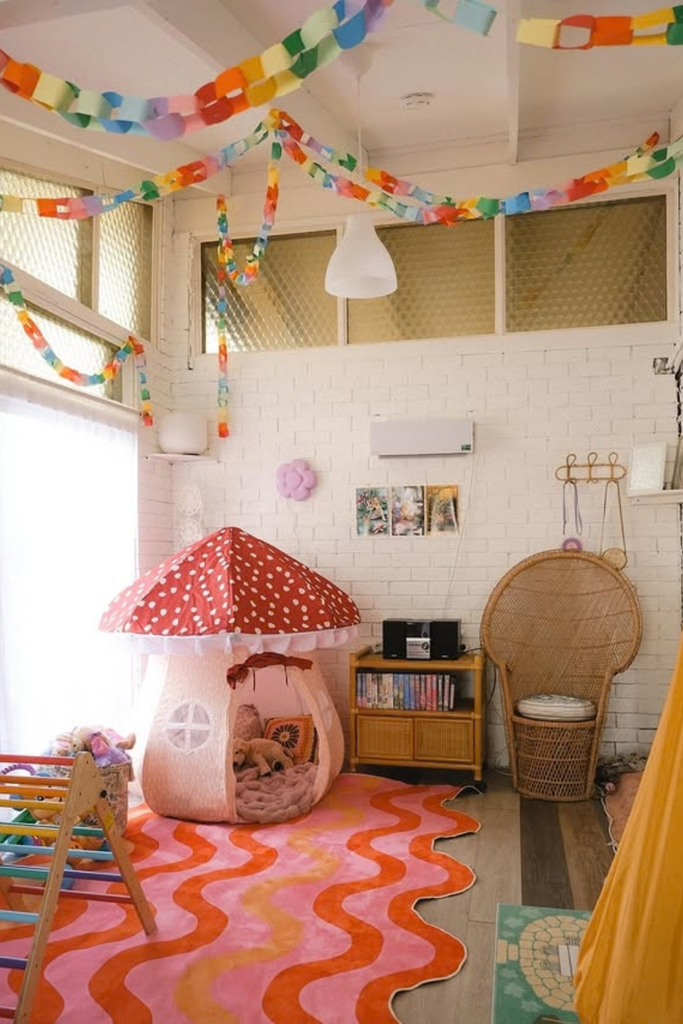
Create one playful retreat inside an open playroom with a mushroom-shaped tent where kids can read, cuddle toys, or invent little stories.
Keep active pieces nearby, such as a climbing frame and open rug, so quiet and energetic play each have their own space.
Daylight brightens the hideaway from the side, while a simple pendant provides even overhead light.
Window Village
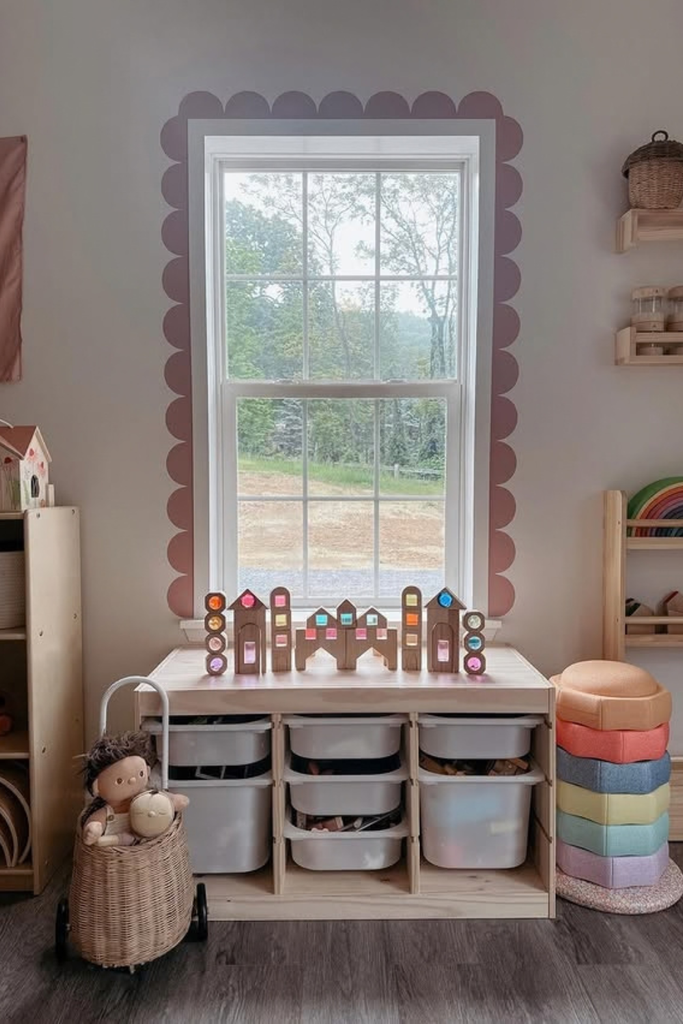
Use building blocks and wooden structures to create a vibrant fantasy village in the area under a light window for small-world play.
While adjacent open shelves keep favored toys visible, spacious drawers underneath make housekeeping easier.
Natural window light gives the play surface plenty of brightness, so softer room lighting can take over later.
Flower Craft Zone
Center the room around a child-sized table when drawing, puzzles and hands-on projects are the activities your kids reach for most.
Flower rugs, playful wall patterns, and soft seating bring in whimsy while baskets and low bins make supplies easier to put away.
Cloud pendant creates the storybook moment overhead, with recessed lights and shelf lighting adding useful brightness around the activity zones.
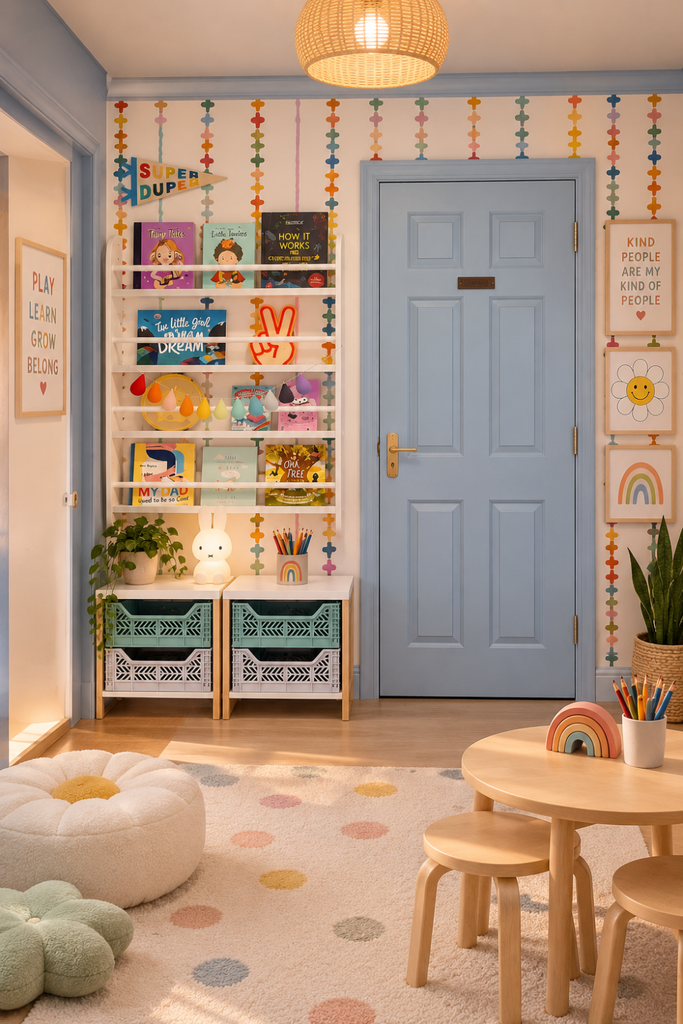
Garden Market
Combine a pretend market, play kitchen, and reading table when you want one corner to support several kinds of imaginative play.
Floral wallpaper and a bold flower rug tie the separate stations together, while a small canopy gives kids a quieter place between activities.
Window light keeps the room naturally bright and softer overhead lighting can fill the space later.
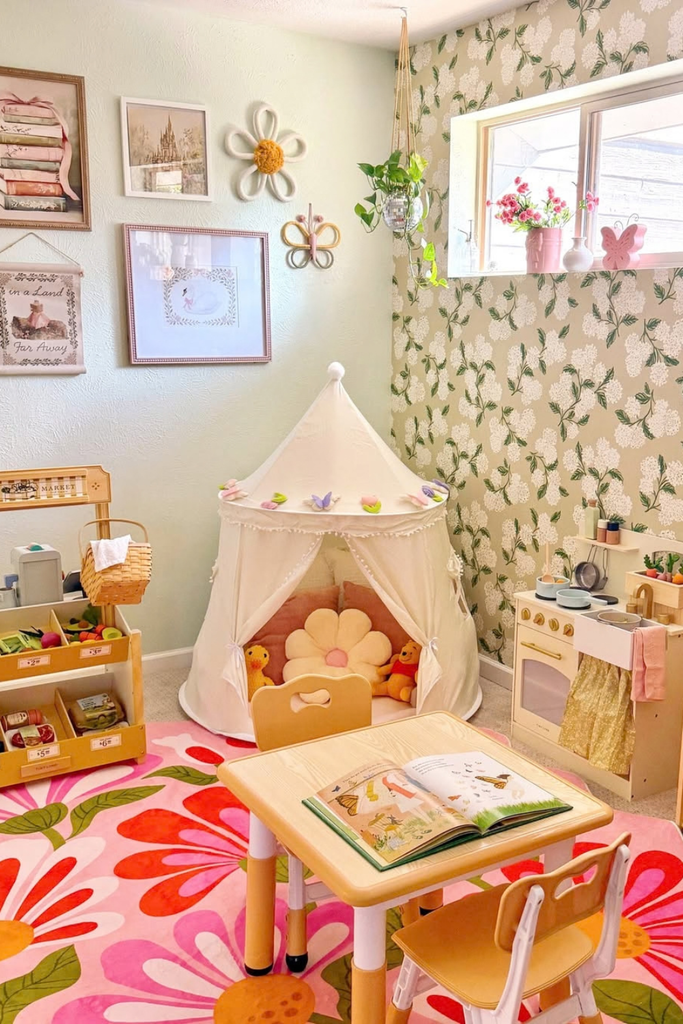
Chalkboard Nook
Set aside one wall for drawing when you want kids to create freely without covering the room with permanent colorful decor.
Make it easy to switch between drawing and peaceful reading in the same spot, place the chalkboard next to a comfortable chair and some books.
Keep the board near natural or overhead lighting, and use light-colored walls to reflect light into this more tranquil area.
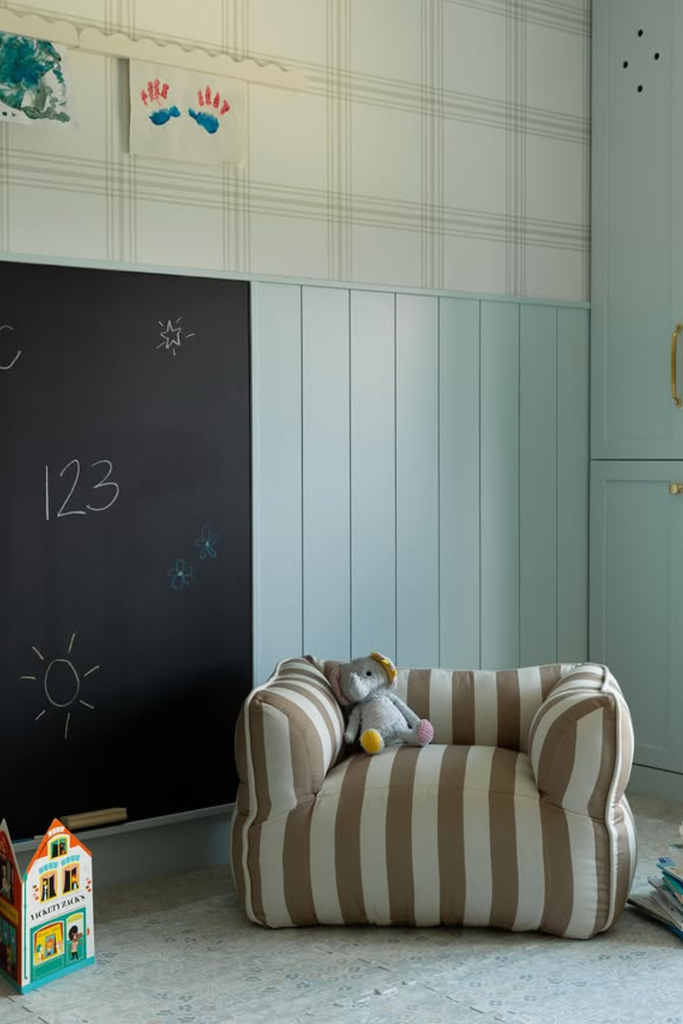
Storytelling Shelves
Create a small-world storytelling station on open shelving by arranging animals, castles, trees, rainbows, and characters into settings that children can alter.
Smaller display pieces can be placed higher to keep the arrangement neat, while loose bits should be kept on lower shelves for easier play.
Soft overhead lighting is ideal because even light makes it easier for children to observe little details while creating their own evolving narratives.
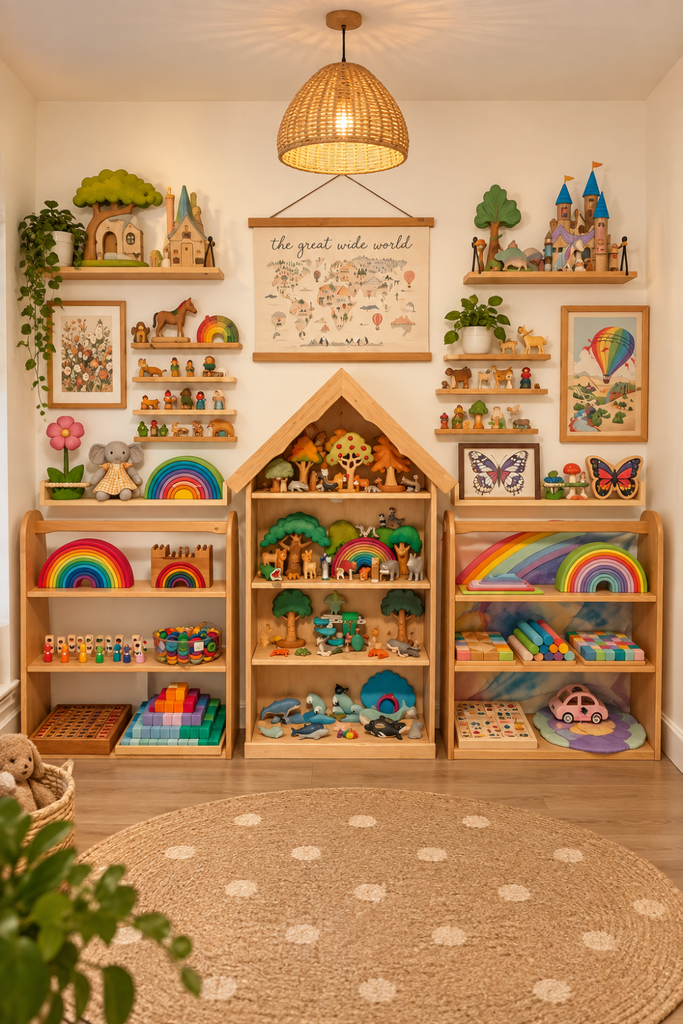
Tea Party Corner
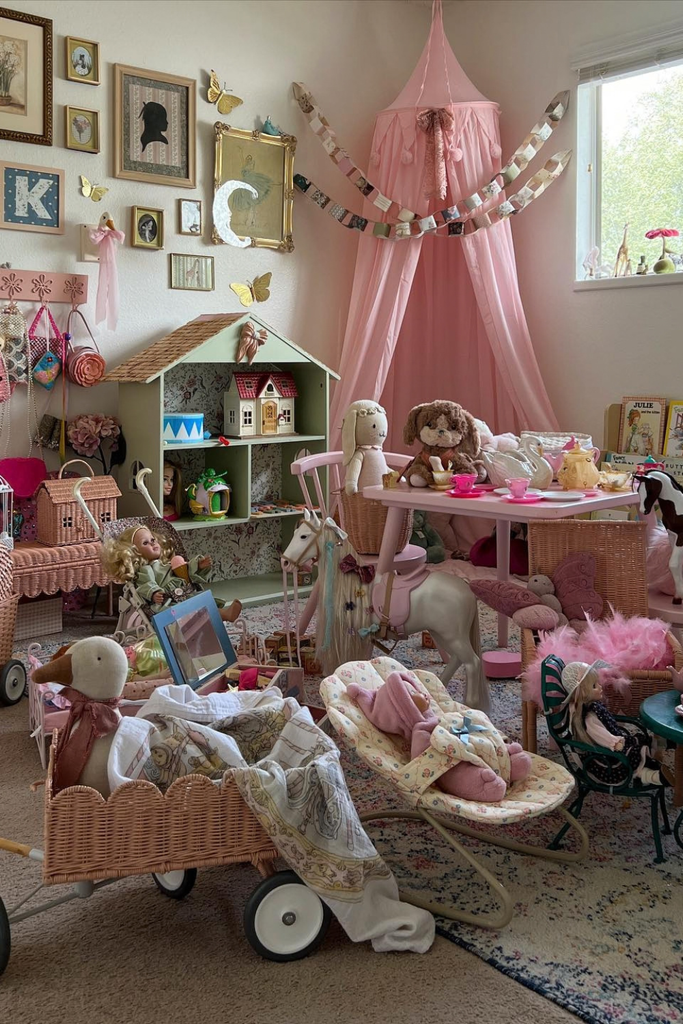
Build a make-believe social corner with a child-sized table, dolls, and tea pieces so kids can invent parties, cafés and family stories.
Tall pink canopy gives the busy setup one clear focal point while dollhouses and baskets keep different pretend-play pieces grouped nearby.
Place this zone beside a window for bright daytime play then add warm ambient lighting for softer story sessions later.
Safari Storyland
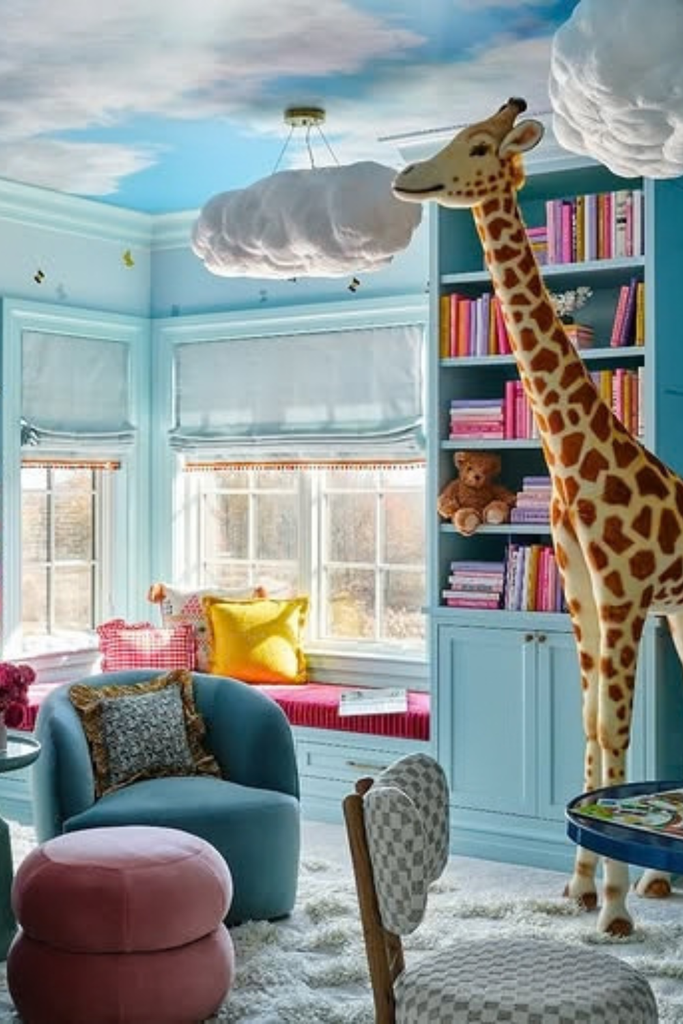
Take one animal theme beyond small decorations by adding an oversized safari figure that instantly gives the playroom a sense of adventure.
Floral walls, butterfly details and built-in bookshelves soften the theme, while window seating creates a quieter spot away from active play.
Large windows provide strong natural light, while cloud-shaped ceiling fixtures spread soft overhead light and continue the imaginative scene above.
FAQs
How Can I Make a Whimsical Playroom Without Making It Feel Cluttered?
Choose one or two storybook features to lead the room, such as a canopy, mural, playful wallpaper, or unusual reading nook.
Let simpler storage, furniture, and open floor space surround those details so toys and decorations do not compete for attention.
Which Colors Work Best for a Whimsical Playroom?
Soft pink, sage green, warm cream, dusty blue, lavender, and earthy tones all work well, but you do not need one fixed palette.
Pick two or three main colors first then bring brighter shades through rugs, cushions, artwork, and toys so you can change them easily later.

Hi, I’m Afaf! I’m a law student who loves writing about everyday life – from home projects and crafts to fashion, beauty, and parenting tips.
I’ve been writing for over a year, sharing ideas that are simple, practical, and easy to try. I write about things I find interesting and useful, whether that’s organizing a space, trying a new DIY, or finding activities to keep kids entertained.
My goal is to share helpful ideas without making things complicated. If it works in real life, I’ll write about it.
When I’m not studying or writing, I’m usually experimenting with new projects or scrolling for inspiration!