
21 Kids Bookshelf Ideas for 2026
One day you neatly put your child’s books on a shelf and somehow two days later half of them are under the bed, jumbled with toys or piled up in random locations.
If that rings a bell, you are probably not seeking for only cute kids bookshelf ideas. You need something that keeps the books accessible.
Something that encourages your youngster to actually pick up a book and doesn’t become another dirty location in the room.
In this article, I will show you 21 Kids Bookshelf Ideas that help turn any corner into a fun, creative, and functional play area.
Let’s jump in!
How To Make A Kids Bookshelf Feel Fun Instead Of Messy?
If your kid treats the bookshelf like a dumping ground, the books aren’t the problem.
Most of the time it’s an arrangement that makes it hard for kids to stay interested or put things away.
Save this article for later!👇👇👇
Children cease pulling them out if books are stuck on high shelves or tossed into a random toy box.
First, make books easy to find and easy to pick up. Small baskets, modest storage and front facing shelves go a long way.
You don’t have to show all the books at the same time. Limiting the number of favorites typically makes reading easier, cleaner and considerably more exciting for children.
Book Display
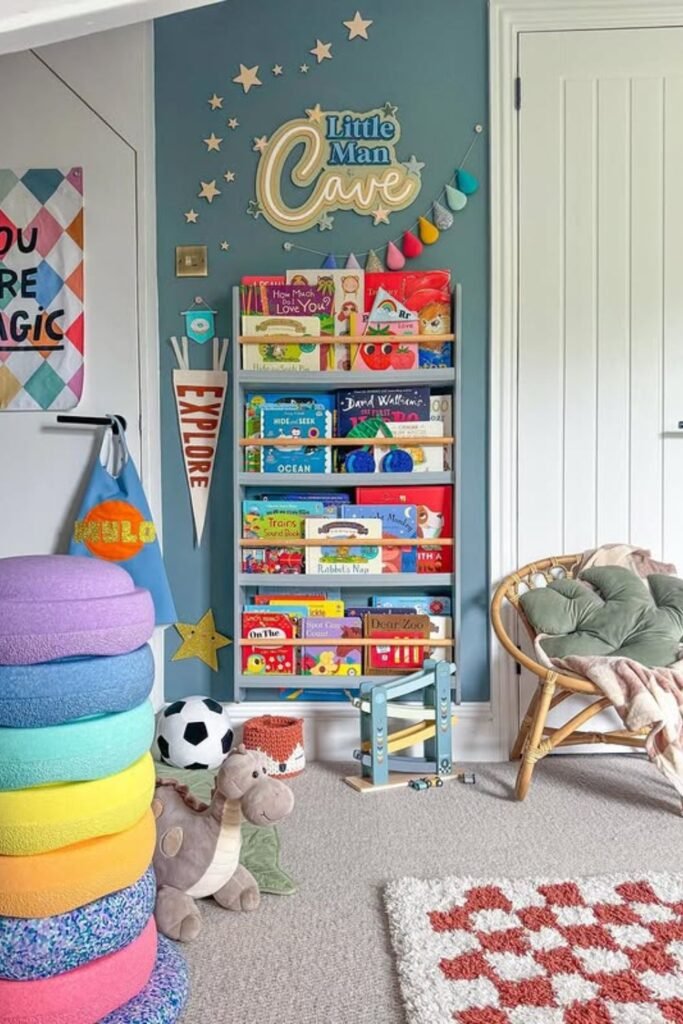
Books feel far more exciting when covers face forward instead of getting hidden on a crowded shelf.
This is especially great for toddlers or younger kids, since suddenly it is easy and not frustrating to grab a bedtime favorite.
A short corner can become a reading nook with shelves put on a front wall without taking over the area.
Having a mix of favorite books out and nothing else helps prevent visual clutter before it starts.
Playful accents around the shelf keep the area feeling fun without taking away from the books.
Reading Corner
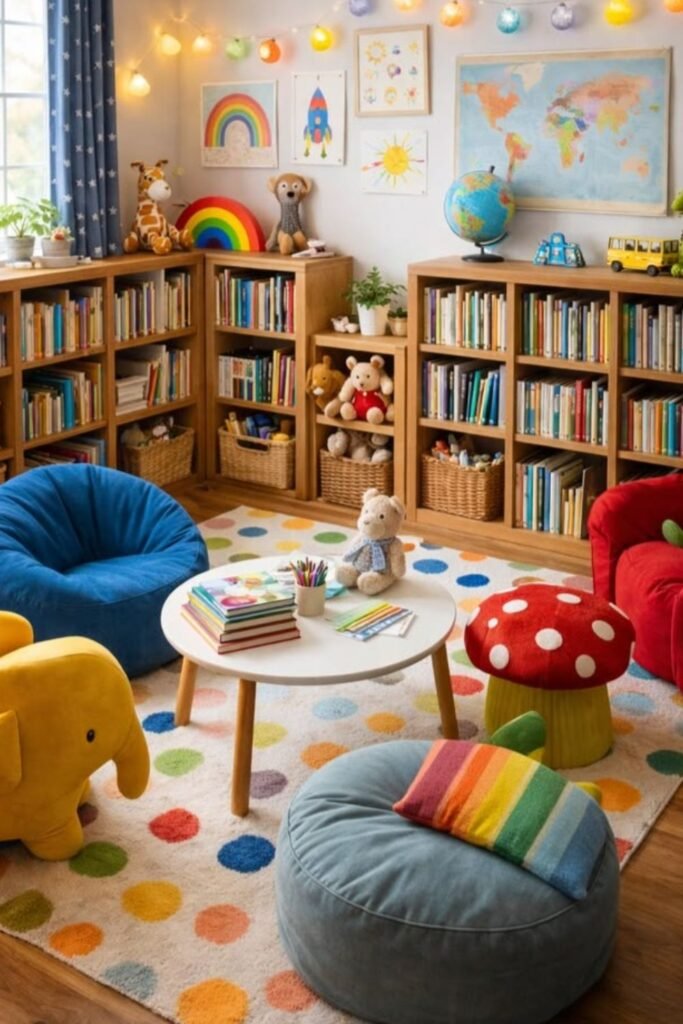
Busy rooms often feel calmer once books get their own little zone instead of spreading across every shelf in the house.
These long, low bookcases are perfect for playrooms or shared kid spaces, because youngsters can reach for books without climbing or asking for help.
Those extra bins underneath quietly tackle another problem, hiding toys, craft bits or random clutter before the room starts to feel messy.
The colorful seating nearby makes the bookshelf feel less like storage and more like a place youngsters genuinely want to spend time.
Add a nice chair, floor cushion, or small table near the books to make reading a natural part of play.
Storage Shelf
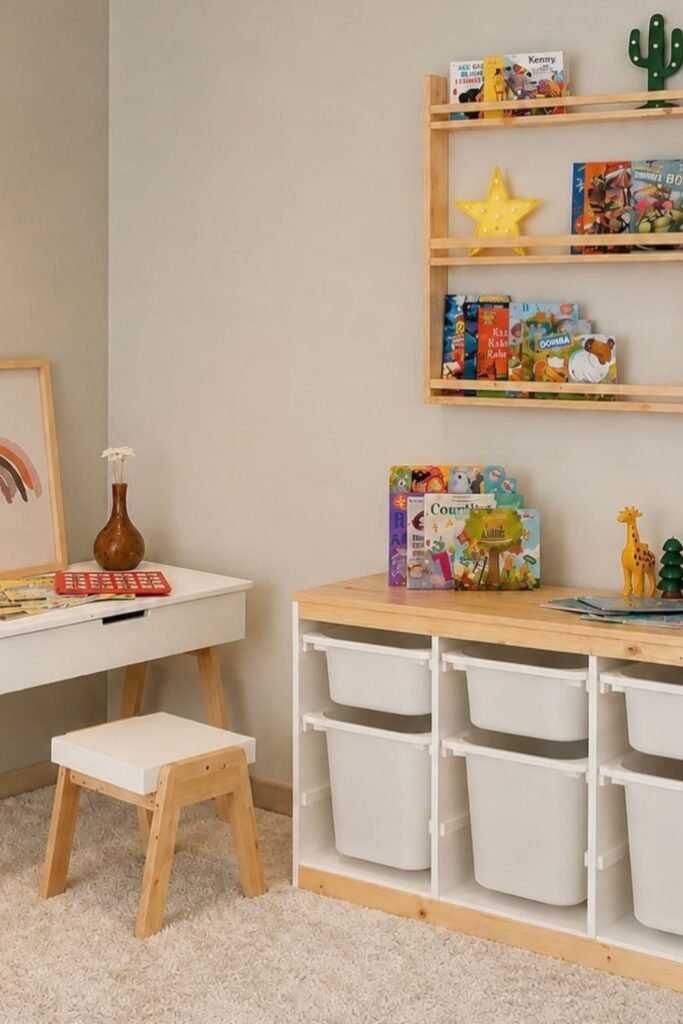
Less mess usually starts with giving books and toys separate homes instead of letting everything compete for one shelf.
This kind of design is perfect for tiny bedrooms, playrooms or study corners, with the books within easy reach.
And the containers underneath discreetly hiding the everyday debris youngsters somehow accumulate.
Front-facing wall shelves highlight treasured books, often prompting younger kids to choose one out on their own.
Book storage next to a tiny desk also offers a setting that grows with your child, effortlessly transitioning from story time to coloring and homework later on.
Cozy Shelf
Reading feels much more inviting when books sit inside a space kids already want to hang around in.
A quiet small reading zone can be made of a nook without a full makeover with the help of low shelves and soft couches.
Bedrooms or nursery corners are usually the greatest place for this, particularly in a spot with natural light, which adds to the coziness of story time.
The shelves look less serious and less cluttered if you mix books with little boxes of toys.
Young kids are more likely to stay interested when their favorite books are at eye level rather than being shoved up higher shelves.
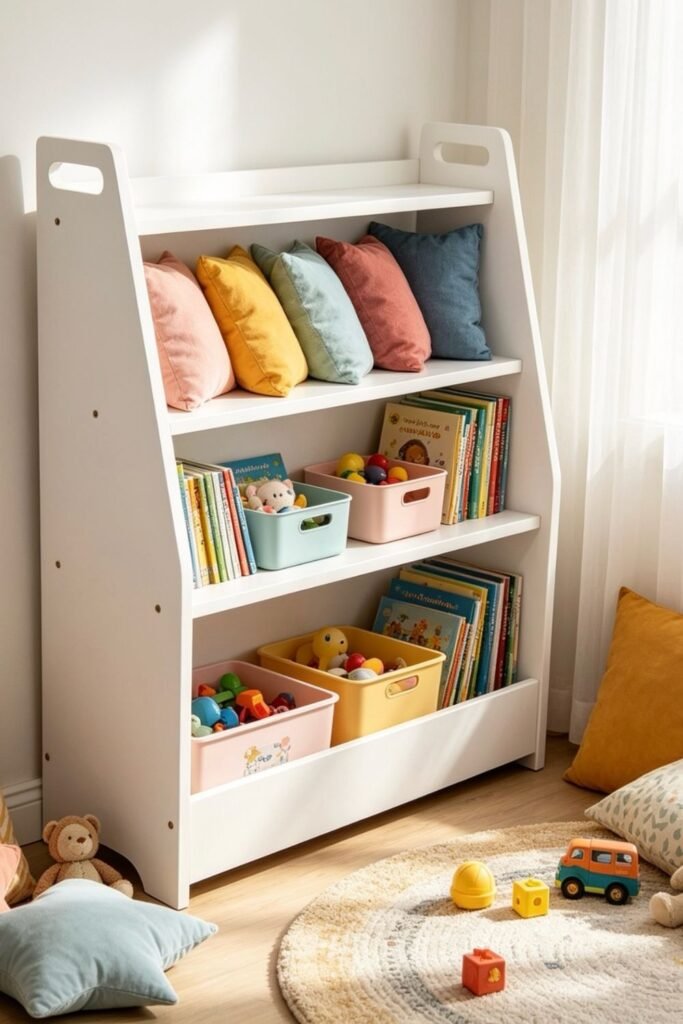
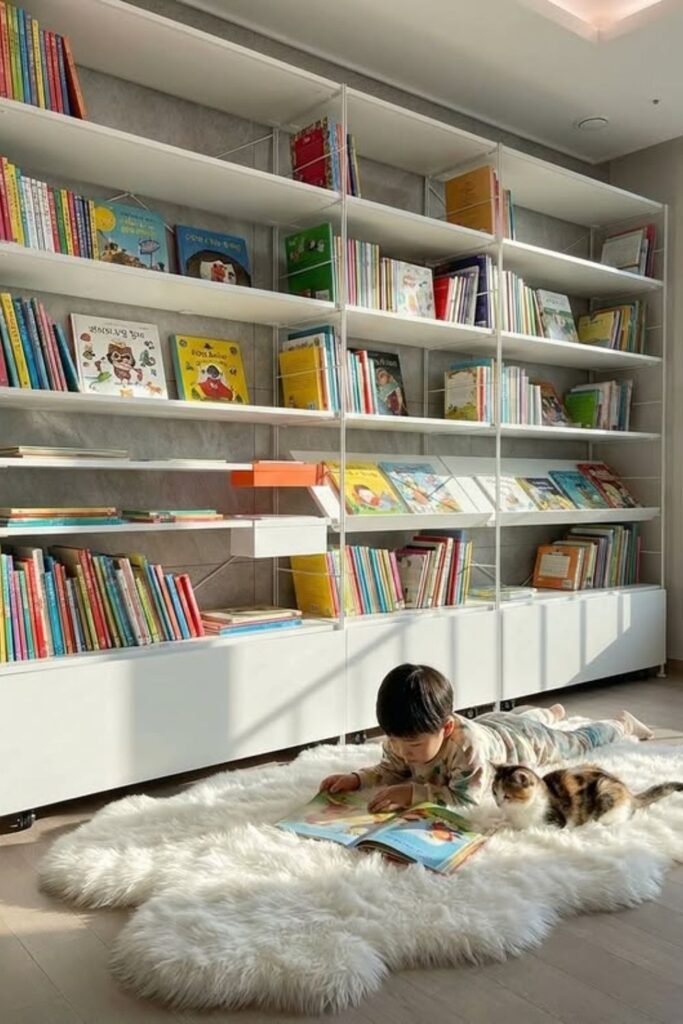
Library Wall
Books stop feeling like clutter once they become part of the room instead of getting squeezed into random corners.
Floor-to-ceiling shelves like this are perfect in larger bedrooms, playrooms or shared family spaces when books can really start to build up.
Shorter shelves with forward-facing covers make it easier for younger children to find their favorites, while taller shelves can be used for seasonal titles or extras.
Soft floor sitting adjacent subtly affects the whole feel of the place. A plush rug, floor cushions or reading mat.
Give kids an incentive to calm down and truly open a book instead of bolting away after grabbing one.
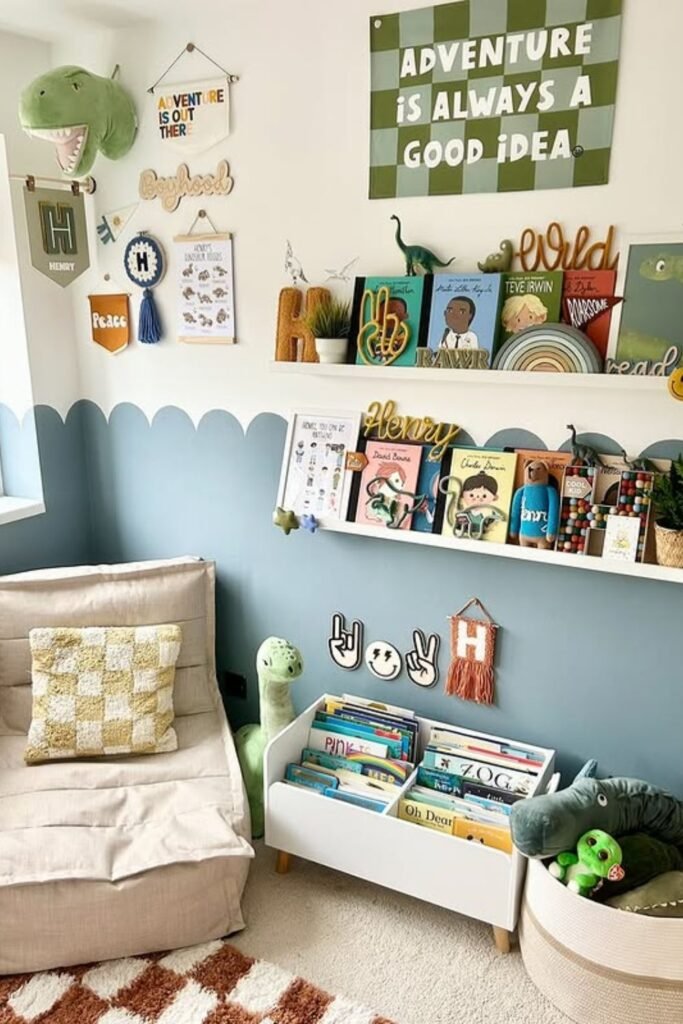
Wall Ledges
Books often get ignored when they disappear inside crowded shelves but wall ledges like these quietly turn covers into part of the room decor.
This kind of design works especially well in themed rooms or compact spaces that already feel crowded with floor storage.
Story time is easier if kids can see what they want without taking everything out. Keeping favorite books face front helps.
The bookcases are mixed with colorful decor and books, which helps the area feel personal and not excessively styled.
Animal toys or name signs or little themed pieces can relate easily to the book shelf without making the wall crowded.
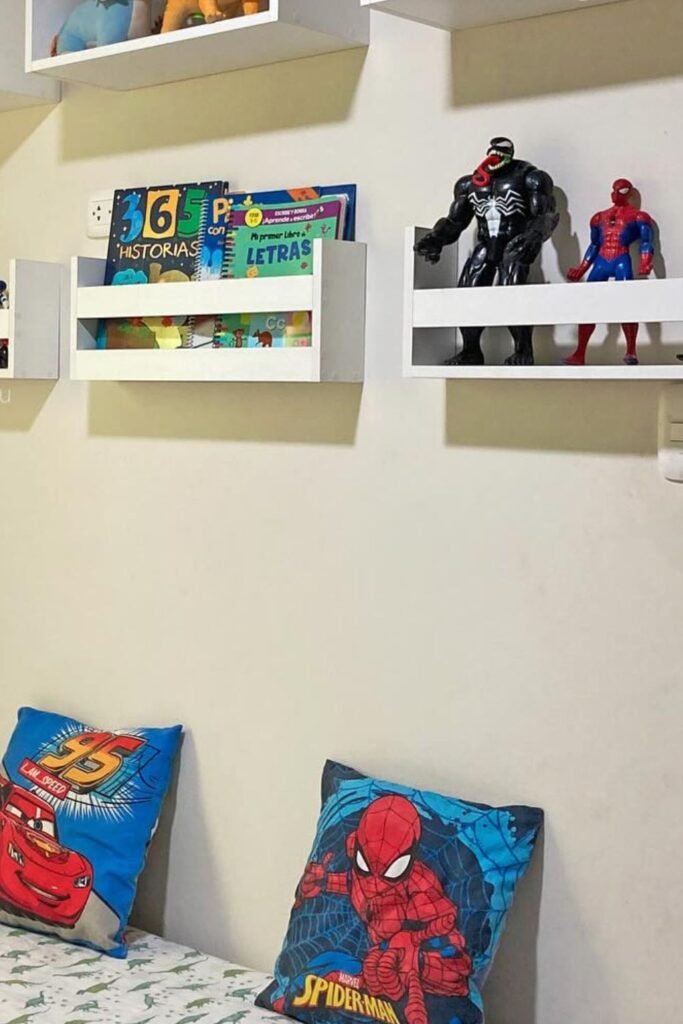
Theme Shelf
Favorite characters usually deserve a spot too, especially in rooms where books compete with toys for attention.
Floating wall shelves like this work surprisingly well in smaller bedrooms since they take up floor space while still keeping bedtime reading simple to reach.
Mix books with superhero figurines or plush animals to make reading feel connected to what your child already likes, not apart.
Higher shelves hold collectibles or big plush toys, while lower ledges are excellent for books kids grab every day.
This kind of set up seems especially useful for themed bedrooms where the whole area already follows one interest.
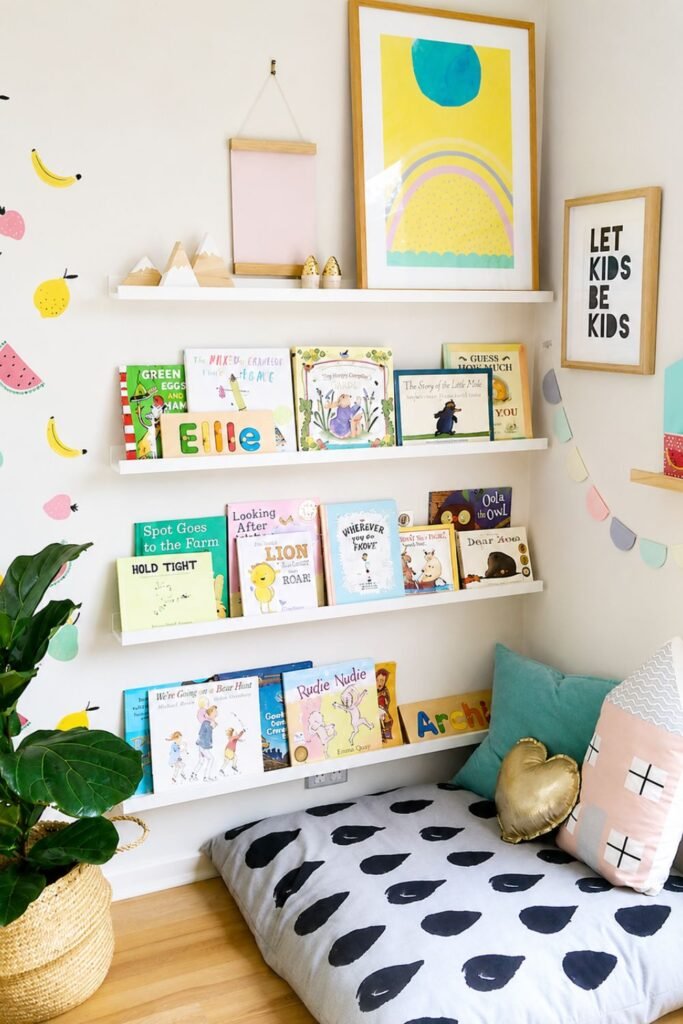
Book Nook
Story time feels much more inviting when books sit beside a soft place to land instead of staying packed on a crowded shelf.
Such wall ledges are perfect for bedroom nooks, nurseries or peaceful spaces in a playroom where you want reading to feel tranquil instead of rushed.
If you keep the book covers facing forward, it also makes it more likely that smaller kids will pick something on their own because the choices are simpler to view.
Soft floor cushions turn the entire setup from storage to a pleasure, and with no noise added.
Sometimes a comfy mat, a few pillows and a few of beloved books work better than overstuffed shelves with everything at once.
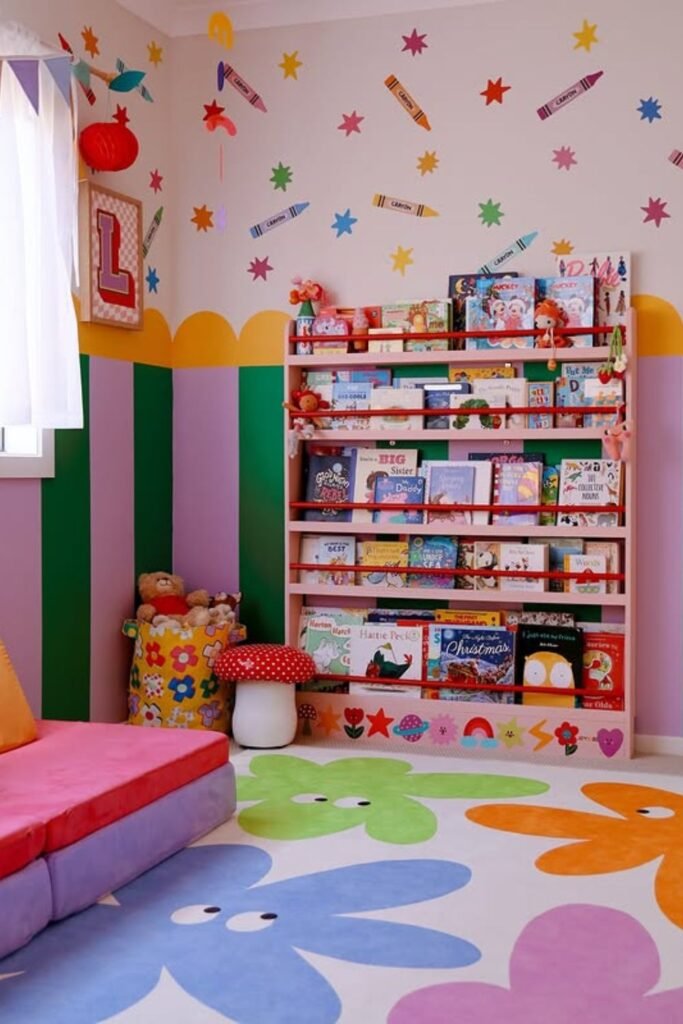
Color Corner
Reading corners do not always need calm colors to work. Bright playful spaces like this can actually make books feel more exciting.
Especially for the little ones who already adore colorful toys and creative environments.
Front-facing shelves full of visible covers help eliminate the problem of pulling out every book endlessly.
Transform that bookcase from just another thing kids see on the way to bed to part of playtime by adding interesting rugs and soft chairs adjacent wall decorations.
This layout works best in smaller bedrooms or playrooms, where one wall is the “book zone.”
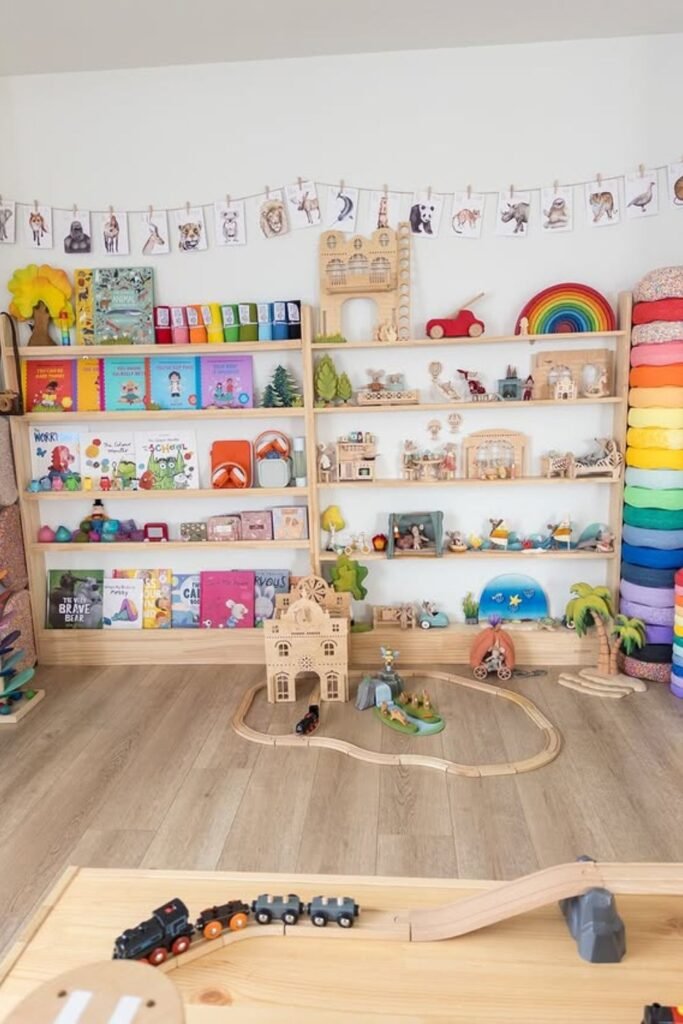
Play Library
Books tend to get used more when reading feels connected to play instead of feeling separate from it.
Open shelves like these work beautifully in bigger playrooms where books, toys, and imagination already live together.
Keeping books on one side and pretend-play pieces nearby helps kids move naturally between activities without creating one giant mess.
Wooden shelves also make it easier to keep everything visible which matters when younger kids forget what they own the second it disappears inside bins.
Rotating a few favorite books every week can keep the setup feeling fresh without buying anything new.
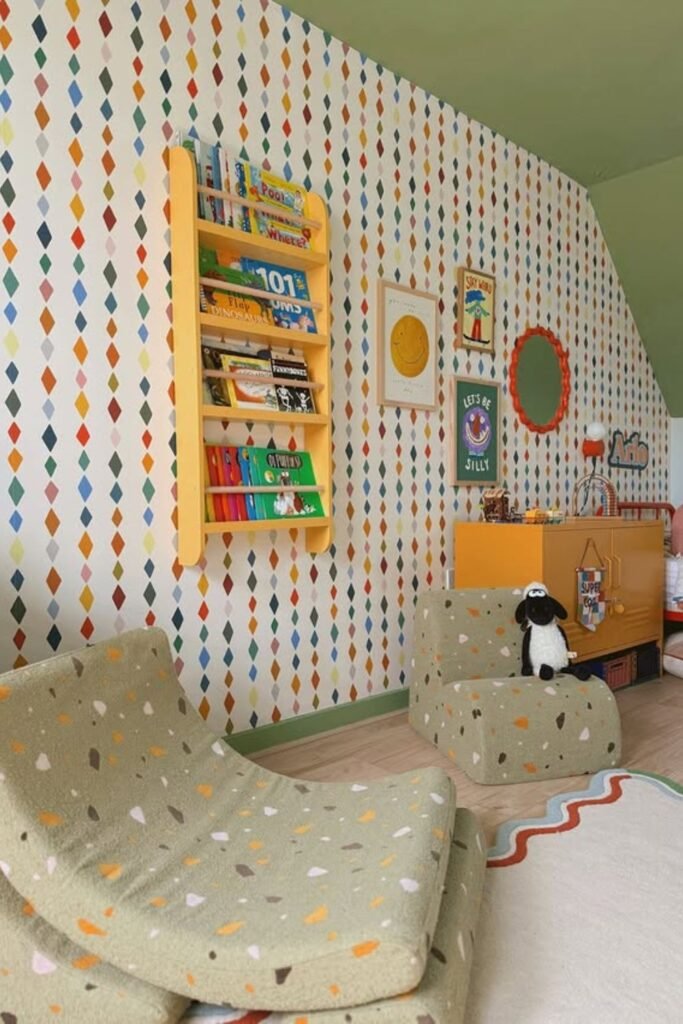
Wall Rack
Floor space disappears fast in kids rooms, which is exactly why wall-mounted book racks can work so well.
A vertical way of hanging books like this converts an empty wall into storage without cluttering the room.
Smaller bedrooms or shared areas are best for keeping books accessible but also giving space for toys and activity.
Playful wallpaper and soft sitting softly let the bookcase feel like a part of the neighboring room, rather than looking like simple storage slapped on a wall.
A smaller collection of favorite books to display also allows for much easier housekeeping because kids can actually see where everything is supposed to go.
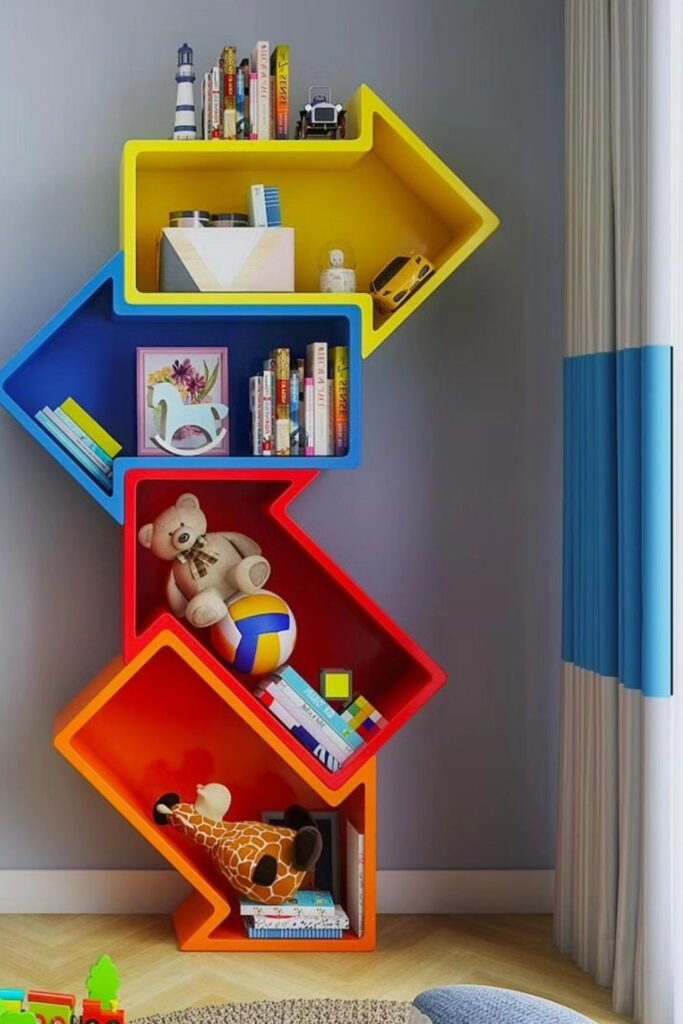
Fun Shapes
Ordinary bookshelves do not always grab a child’s attention, but playful shapes like this can turn storage into something kids actually notice.
Bold shelves work especially well in modern bedrooms or playrooms, where you want the bookcase to seem a part of the fun, rather than plain furniture sitting in a corner.
Including favorite toys also helps to make the place feel more personal without losing functionality.
Bright colors are already a strong statement here, meaning that keeping the rest of the room basic can help prevent things from being too overwhelming.
This layout tends to work best for smaller book collections, since open shelves look cleaner with a mix of books and decor rather than cramming every area full.
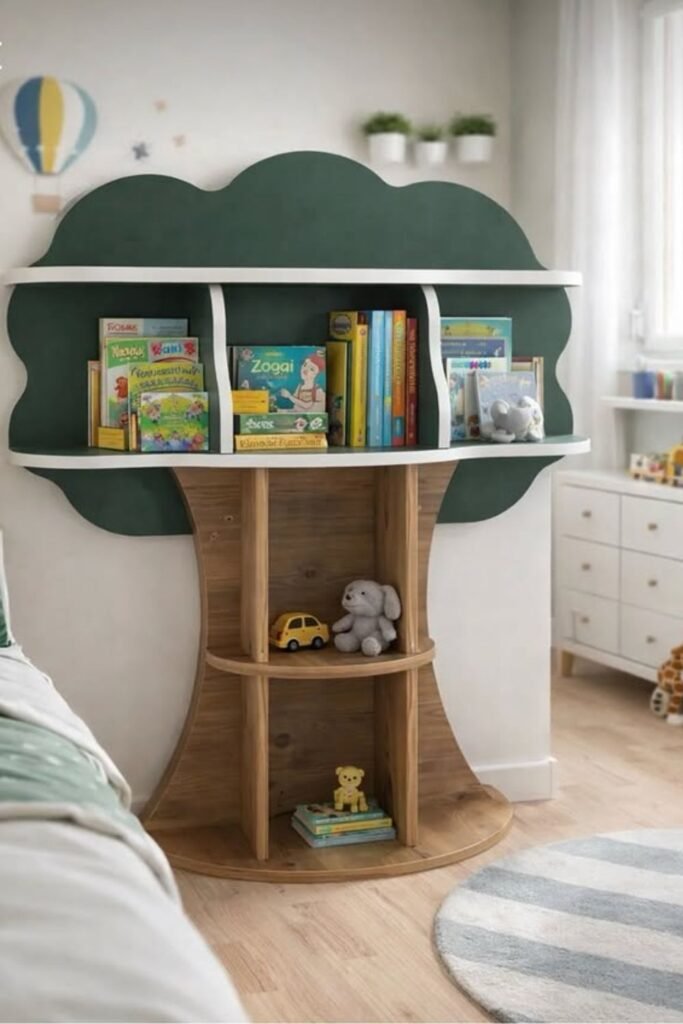
Tree Shelf
Story time feels a little more magical when the bookshelf doubles as part of the room design.
These tree-shaped shelves are great in woods, nature-inspired or quiet neutral bedrooms where you want books to feel fun without introducing too much colour.
Open sections also let kids who are younger find covers faster instead of having to struggle through packed shelves.
Favorite books are on the top shelf, a few toys or comfort objects are on the bottom. It helps the set-up feel balanced instead of congested.
Bedrooms with an empty area near the bed are usually the ones that mimic this notion best, keeping books close for bedtime reading without eating up precious floor space.
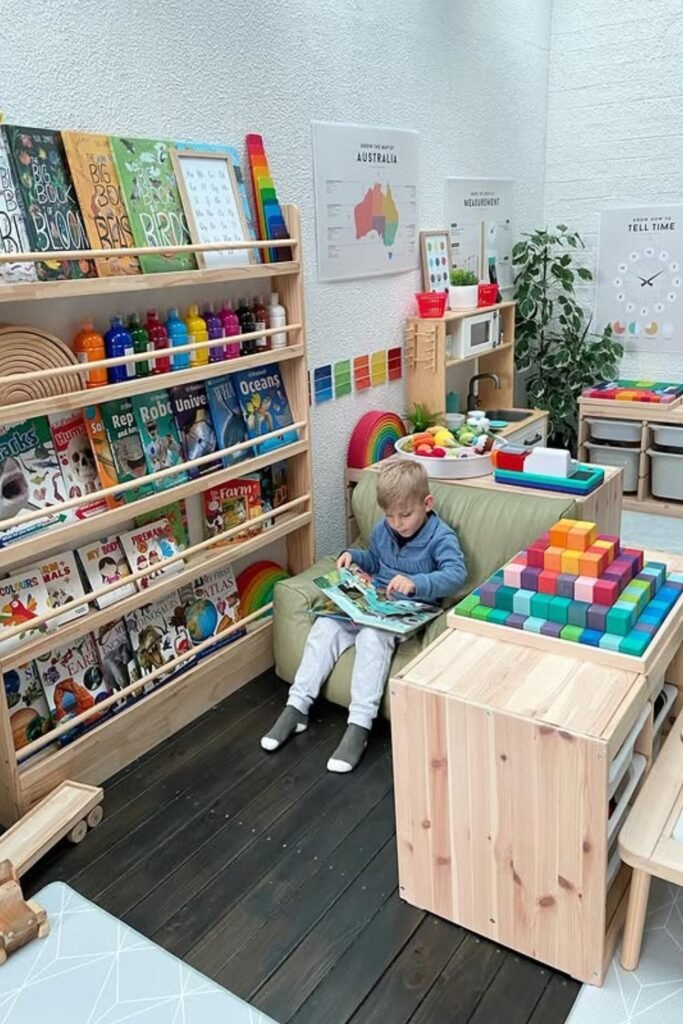
Learning Space
Books start getting used more when they sit inside everyday play instead of staying in a separate corner no one visits.
This front-facing bookshelf works great in learning rooms, playrooms or homeschool areas since it allows kids to rapidly spot themes they already feel curious about.
When you can see the covers it’s so much easier to get animal books, scientific books, or beloved stories.
The area feels functional without being overbearing, thanks to wood shelves with activity tables nearby.
On one side, books can be held, while trays, blocks, or painting supplies beside silently encourage solitary play.
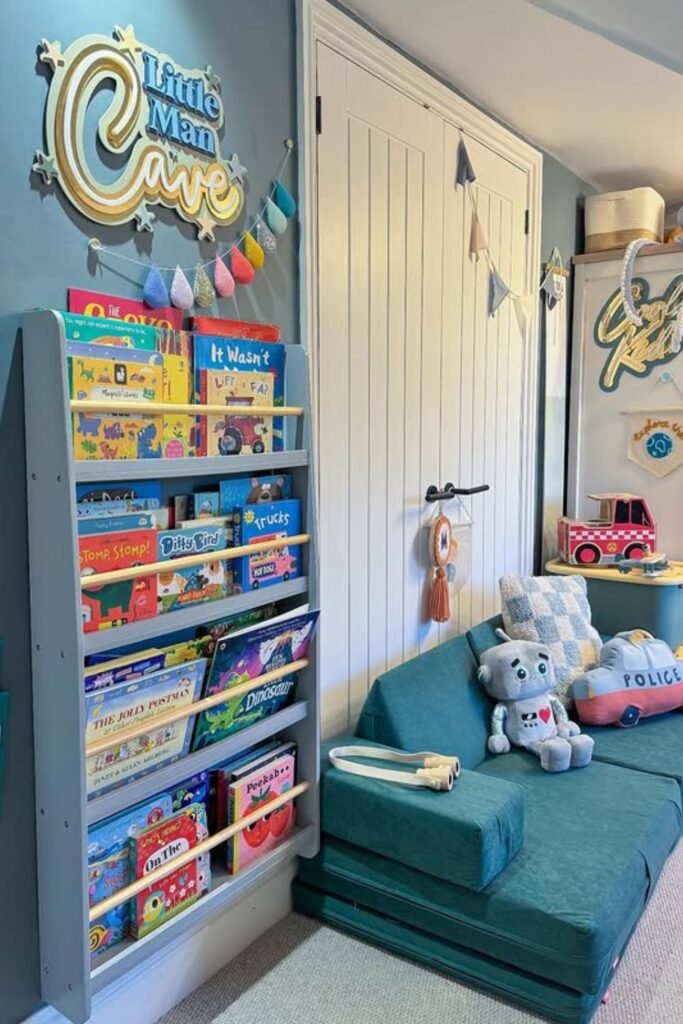
Bedside Books
Bedtime reading becomes much easier when books live right beside the bed instead of across the room.
Narrow front-facing shelves like this work great in smaller bedrooms when space is tight, especially.
Younger kids also get to find favorites faster on their own, since they see covers instead of spines.
Nearby, a soft reclining area softly transforms the bookcase into a comfortable small stop for reading before sleep.
Picking shelf colors that match the theme of the space can help things feel put together with out trying too hard.
Story Shelf
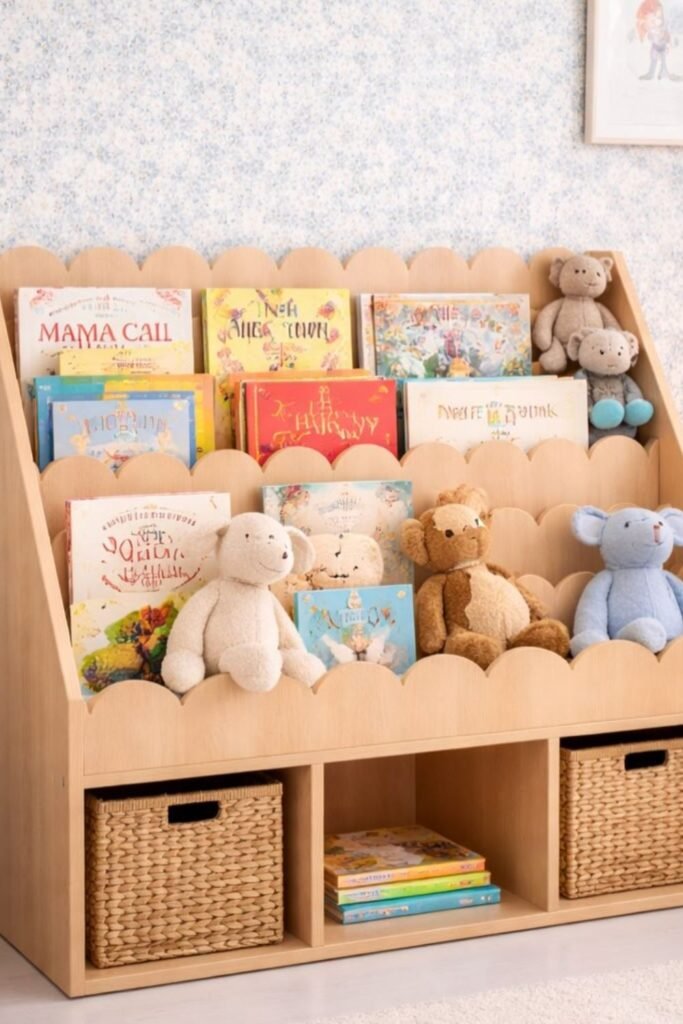
Little kids usually stay more interested in books when covers face forward and favorite toys sit nearby instead of everything feeling too grown up.
These soft wood shelves are perfect for nurseries or toddler rooms as books are simple to grab and baskets underneath silently stash extra toys, blankets or bedtime rubbish.
Rounded edges and less storage can make the whole setup feel calmer and safer for young kids.
Placing plush animals among the books can make story time seem more attractive, especially to toddlers who prefer to have familiar comfort objects nearby.
Bedrooms with one blank wall near the crib or reading corner tend to best reproduce this effect.
Toy Library
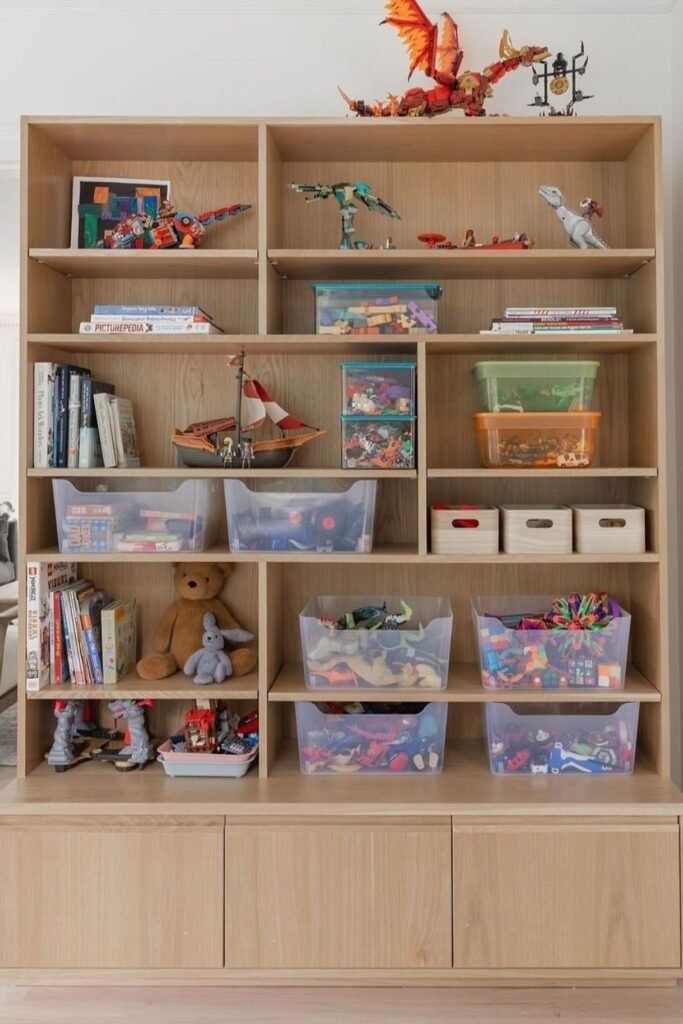
Books and toys usually fight for space in kids rooms, which is why mixed storage setups like this can make life much easier.
Open shelving with clear bins is a great solution for larger bedrooms, shared spaces, or playrooms where collections outgrow expectations.
Having all of your books, building toys and favorite figures together can also make clean-up less daunting, as everything has a place to live.
Another typical problem is silently solved by clear containers. Kids can see what they want without spilling every package on the floor.
If you want a shelf to stay orderly longer keeping books lower for daily reading and showcase toys higher often works best.
Tall Shelf
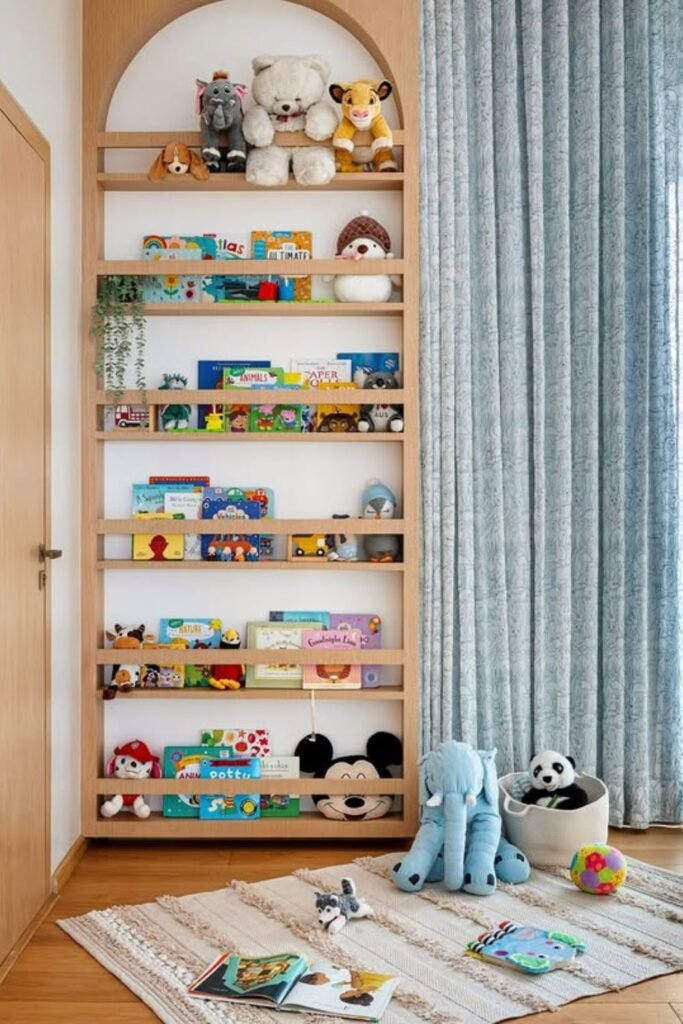
Awkward empty corners can become surprisingly useful once books move upward instead of spreading across the room.
These tall narrow shelves are great next to windows, closets or other underused wall spaces that may feel too cumbersome for a big bookshelf.
Front-facing books on every level help the younger kids make decisions because they can see the cover without crawling through stacks.
Soft toys scattered between books can make the shelf feel comfortable instead of too ordered.
Keep favorite bedtime stories lower ornamental objects higher to keep the setup feeling balanced, while still keeping it kid-friendly.
Nature Books
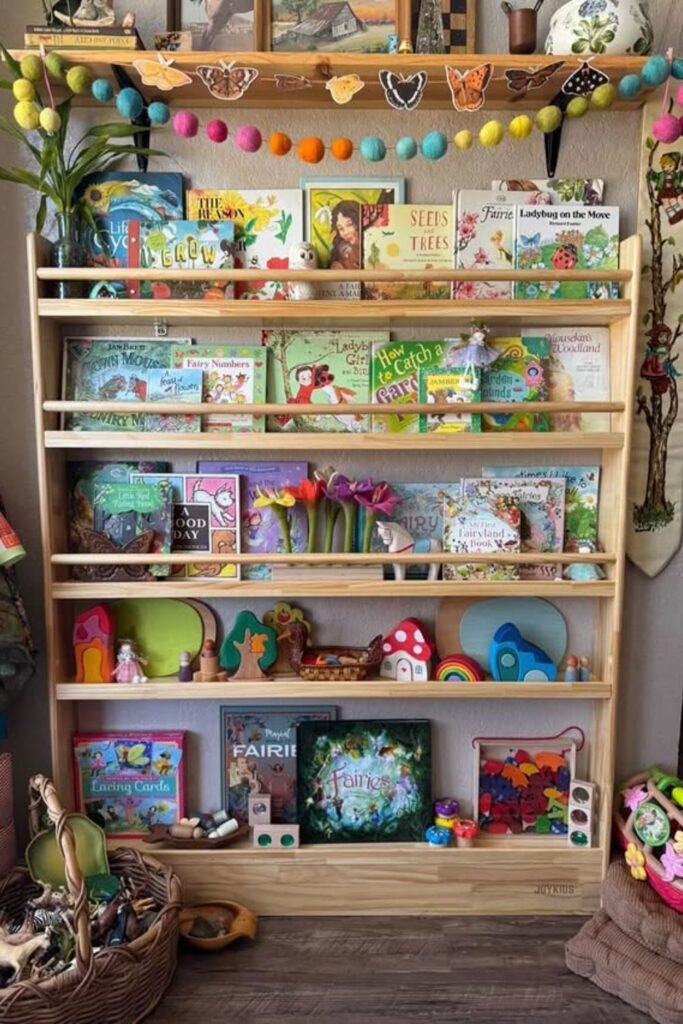
Reading feels extra magical when the bookshelf matches the kind of stories sitting on it. Warm wooden shelves like this work beautifully in woodland bedrooms.
Playrooms that are inspired by nature or comfortable reading areas where the books themselves have a gentle, whimsical sensation.
The forward facing covers make it much easier for smaller kids to see their favorite stories without having to pull half the shelf apart first.
Small accent pieces surrounding the books can very softly make the whole space more welcoming without cluttering it up.
Wooden toys, gentle hues or nature components allow the bookshelf to be part of playtime, rather than apart.
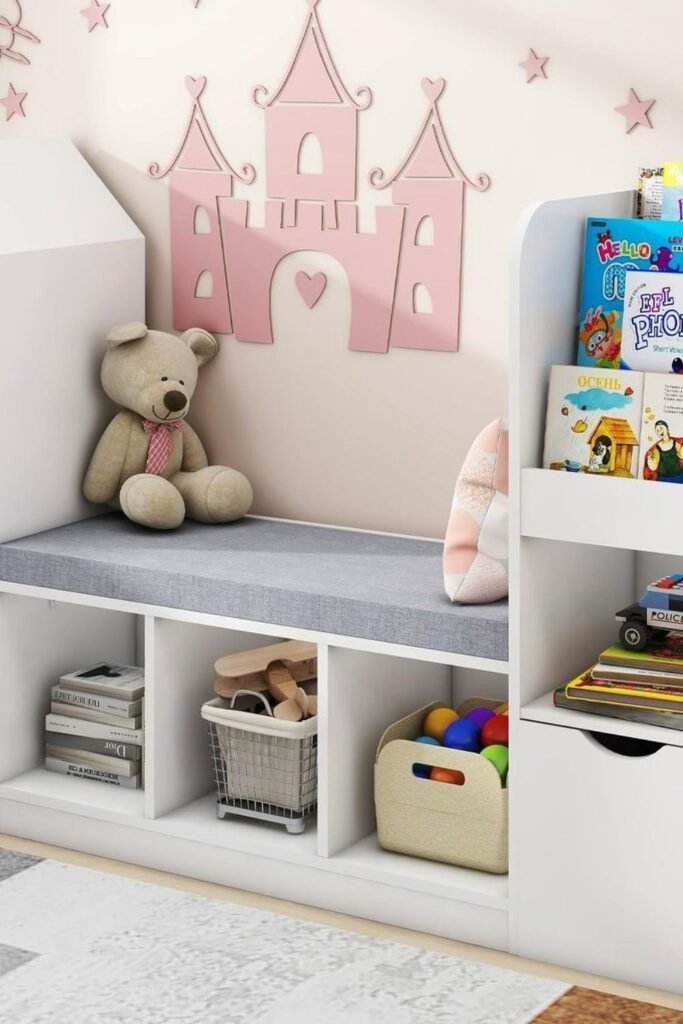
Reading Bench
Quiet little corners often become a child’s favorite spot once books and seating live in the same place.
This combined solution is great in smaller bedrooms because one piece discreetly does reading, toy storage and seating without taking up any additional space.
The front-facing shelves on the side also make books easy to select, especially for the younger youngsters who like to view covers instead of spines.
Storage underneath helps keep toys from taking over the room by offering everyday goods an easy landing spot.
Add soft cushions on top and the shelf becomes a nice reading stop, especially if it is near windows or in quiet areas.
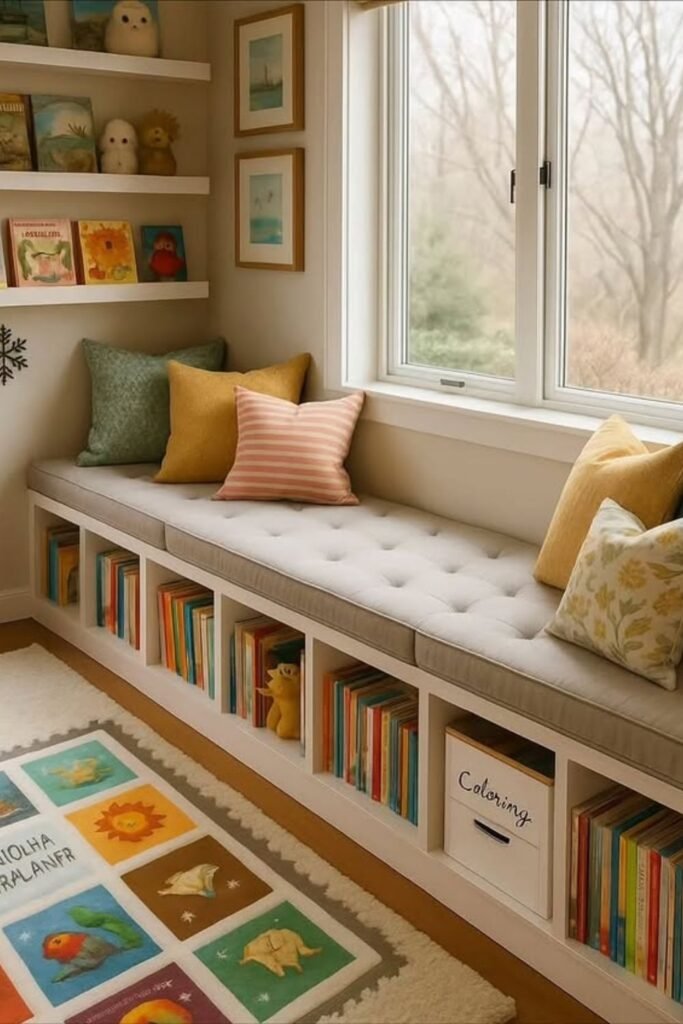
Window Seat
Rainy afternoons somehow feel better when books sit beside a cozy place to pause for a while.
A window bench like this is perfect for bedrooms with excess wall space because it silently brings seating, storage and a reading corner all together in one spot.
Open cubbies below help make beloved books easily accessible without crowding shelves.
Soft pillows make the whole thing a place kids like to hang out after play or before bed.
Keeping seasonal books on nearby wall ledges, while keeping everyday favorites down below, typically helps keep the area tidy for longer.
FAQs
How Many Books Should A Kids Bookshelf Have At One Time?
More books don’t automatically mean more reading. Too many shelves might be a problem since kids can be overwhelmed by the choices.
Especially for smaller kids, it’s much better to have roughly 10 to 20 favorite books in close reach.
Also, trading books every few weeks can make old novels fascinating again without buying anything new.
What Is The Best Way To Organize A Kids Bookshelf Without Making It Look Messy?
Convenient access beats beautiful styling. The ideal option is usually a front-facing bookshelf.
So that kids can notice covers instead of pulling everything out looking for one story.
Books grouped by size, theme or bedtime favorites can help keep shelves peaceful, while baskets below can gently hide additional books, toys or ordinary clutter.
Hi, I’m Afaf! I’m a law student who loves writing about everyday life – from home projects and crafts to fashion, beauty, and parenting tips.
I’ve been writing for over a year, sharing ideas that are simple, practical, and easy to try. I write about things I find interesting and useful, whether that’s organizing a space, trying a new DIY, or finding activities to keep kids entertained.
My goal is to share helpful ideas without making things complicated. If it works in real life, I’ll write about it.
When I’m not studying or writing, I’m usually experimenting with new projects or scrolling for inspiration!