
18 Kids Room Divider Ideas 2026
Sharing a kids room is easy until one child needs calm and the other throws toys everywhere and suddenly every bedtime is a fight about space.
A wall feels pricey heavy furniture makes tiny rooms feel smaller and most parents want an arrangement that works and doesn’t turn the room upside down.
If you choose wisely, you may create a little place for each child, offer seclusion, reduce mess and make the room feel more orderly without making it appear smaller.
In this article, I will show you 18 kids rooms divider ideas designed to balance play areas and sleeping areas in a smart way.
Let’s jump in!
How Do You Divide A Kids Room Without Building Walls?
You don’t have to build a wall to create a shared kids room that feels more orderly and tranquil.
In fact, large walls can make a tiny bedroom appear smaller and can block out natural light.
Save this article for later!👇👇👇
A simple divider might do wonders if your kids are always fighting for space or the room always looks cluttered.
Or you may use curtains for privacy, open shelves for storage or you can even place furniture in a better way to create different zones.
The goal is to find something that offers each youngster their own space without crowding or closing the room in.
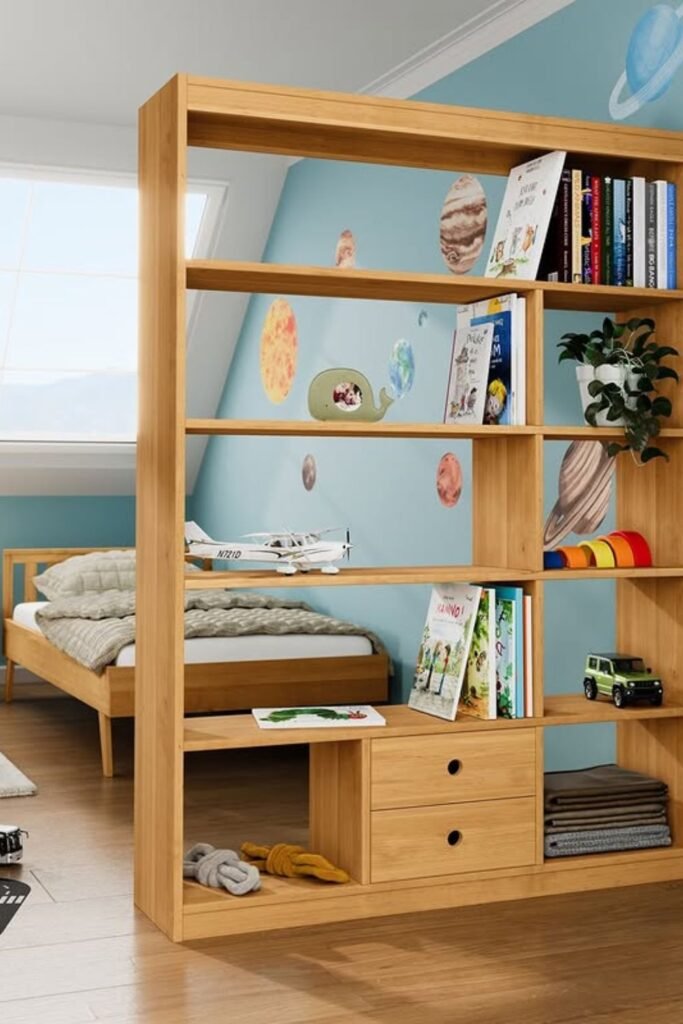
Shelf Divider
Privacy does not always need curtains or walls. An open bookshelf divider like this creates two separate kids spaces while keeping the room bright and connected.
One side can be for sleeping and the outside side can be for books, toys and display items, which makes the whole room look more ordered without sacrificing floor space.
Natural wood shelves are great for shared rooms, where there’s never enough storage space.
Fill the lower parts with baskets, folded blankets or toys, and leave a few upper shelves open so light may pass across the space.
Planet-themed wall decals and minimal decor delineate the sleeping zone without closing it off.
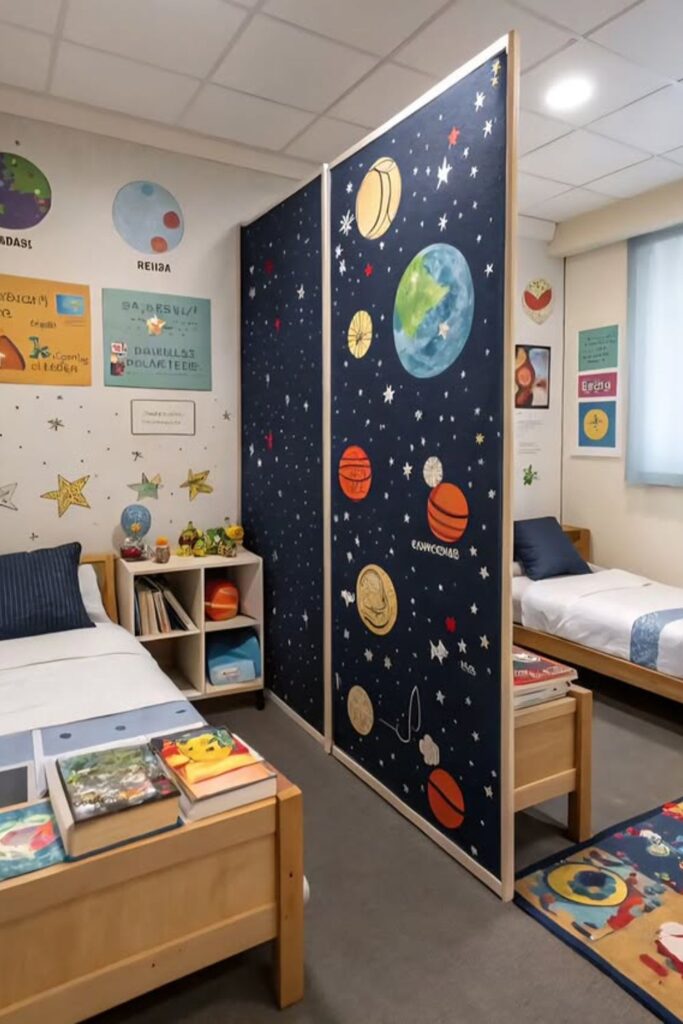
Galaxy Screen
Bedtime feels more personal when each child gets a space that feels like their own little world.
A fun-themed folding screen provides immediate separation between beds without making permanent modifications to the room.
Space themed panels are great for kids that like planets, stars and adventure themed decor.
Put a divider in the middle of the room so each child has their own little space, but maintain the arrangement symmetrical.
Matching beds and furniture like that help the room seem equitable, while individual wall art on either side allows personalities to come out.
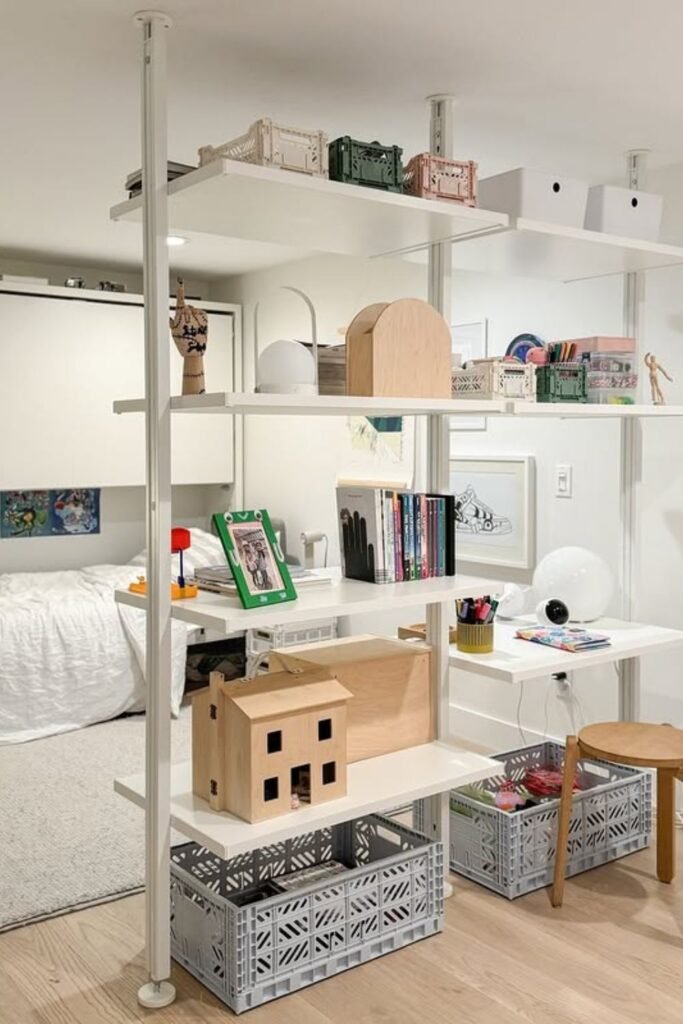
Study Split
Homework becomes much easier when learning space and sleeping space stop competing with each other.
This open shelving divider creates a natural separation between the bed space and the study zone.
While yet keeping the whole room feeling bright and spacious. Kids can concentrate at the desk and not feel totally isolated from the room.
Floor-to-ceiling metal shelving is a good idea for modern bedrooms where every inch has to be functional.
Books, art supplies, storage crates, and display items all become part of the divider rather than additional furniture around the space.
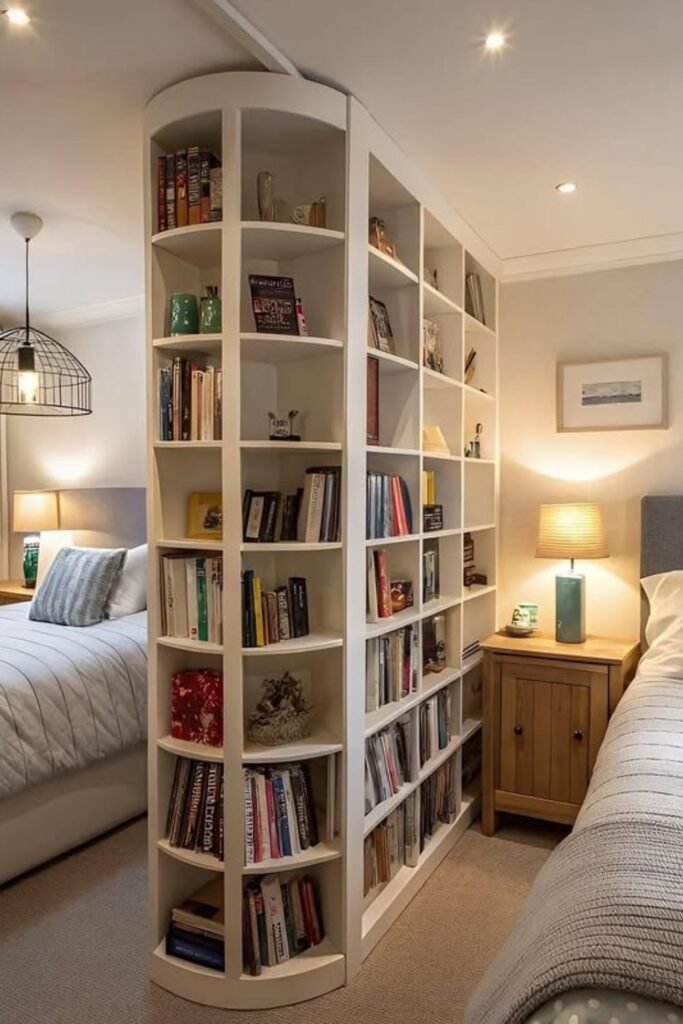
Library Wall
Personal space starts feeling real when each child has a clear boundary without losing the connection of a shared room.
Instead of wasting space, this full-height bookshelf divider creates a practical feature in the middle of the room.
Books, souvenirs and beloved design pieces help define both sides while creating a natural visual separation between beds.
In bigger shared bedrooms, where you desire more solitude than an open shelf can offer, built-in shelving is optimal.
The rounded corners give the structure a gentler feel and the storage on both sides makes the divider handy from any aspect.
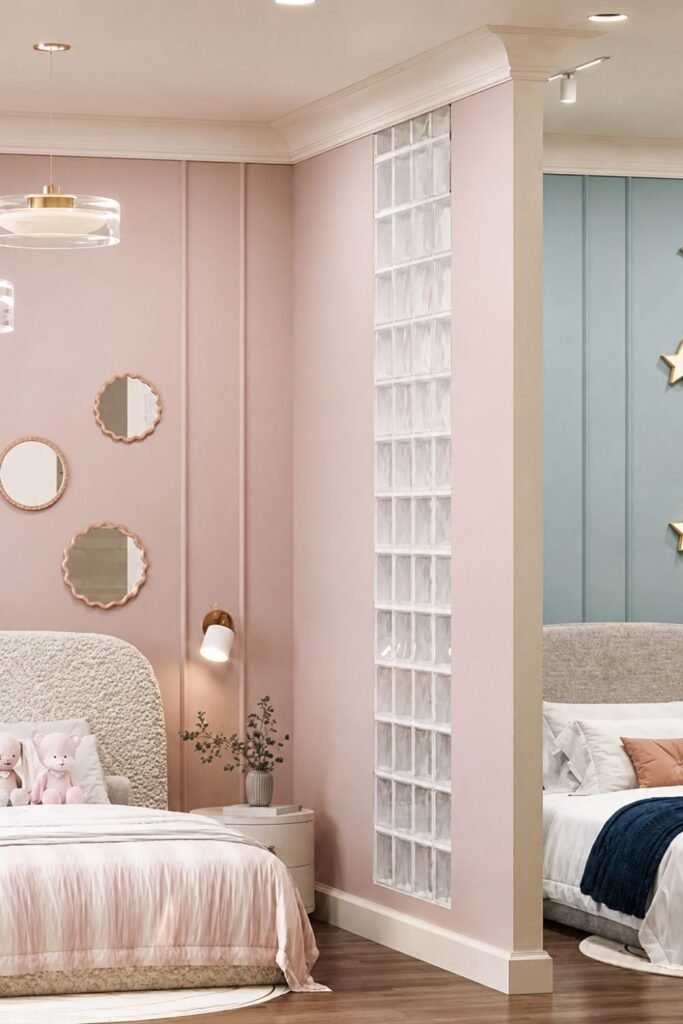
Glass Divide
Separate spaces can still feel connected when natural light moves freely between both sides of the room.
A glass block divider like this establishes a definite border between two kids areas without making either side feel locked in.
Each child has a personality of soft pink on one side and a subtle blue on the other, but still keeping the entire design balanced.
Color zoning is great for siblings who prefer distinct styles yet share the same bedroom. The beds, rugs and study desks all match and help the room feel equal.
The divider is a quiet way to mark where one space stops and the other begins. Glass blocks are a good alternative for basement bedrooms or rooms with few windows.
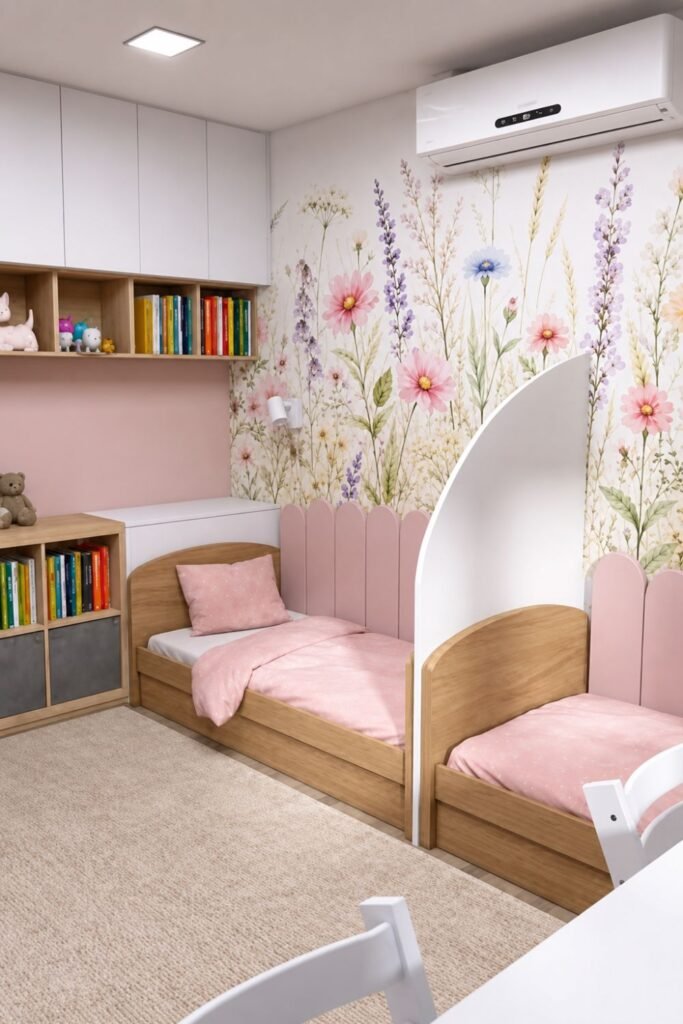
Bed Nook
Quiet little corners often work better than large dividers when younger siblings share a room.
Between the beds is a curving barrier that offers a sense of personal space without splitting the bedroom in half.
Every child has their own cozy sleeping place but they all have fun together. Soft floral walls and matching bedding.
Plus built-in book storage make this space feel serene and tidy, not cluttered. Curved panels like this are great for narrow bedrooms.
When a complete bookshelf divider would be too much of a space hog. “The divider is low and lightweight so parents can keep an eye on them.
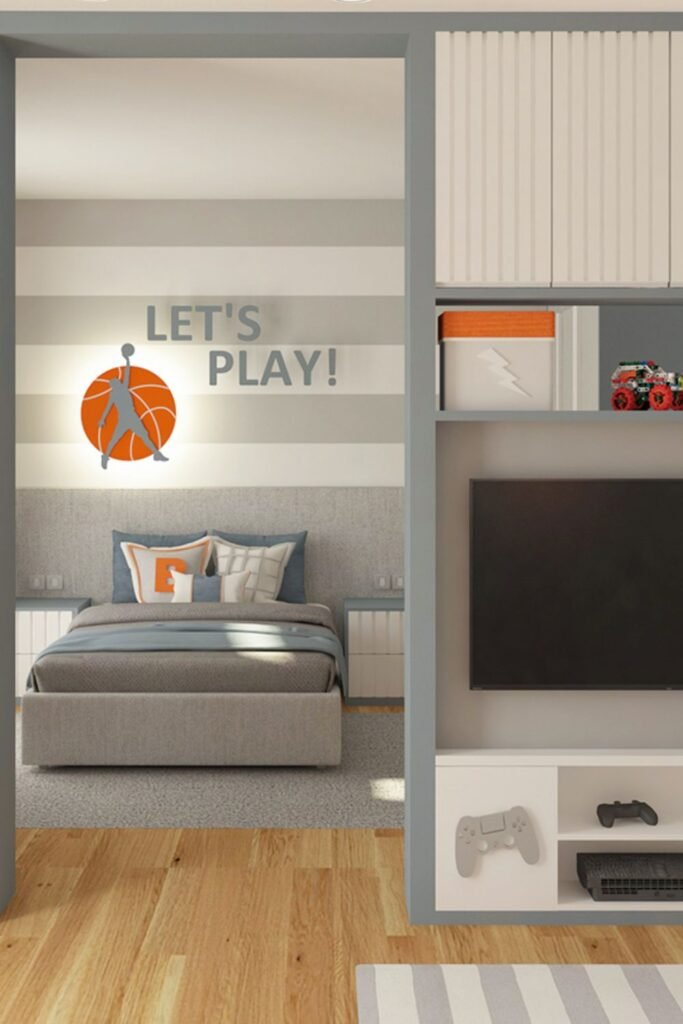
Media Divide
Game consoles, books, and sleep schedules do not always mix well in the same space. A built-in divider like this helps create a clear transition.
Between a place for entertaining and a place for sleeping without closing off the room.
One side has open shelving for easy access to beloved books and mementos, while the central opening maintains sightlines throughout the room.
Custom storage partitions are ideal for older children who require separate spaces for sleeping, studying and relaxation.
Observe how the bed is tucked into its own little corner, providing a secluded hideaway yet still remaining part of the rest of the bedroom.
Slat Privacy
Growing kids often want a little personal space without feeling completely separated from a sibling.
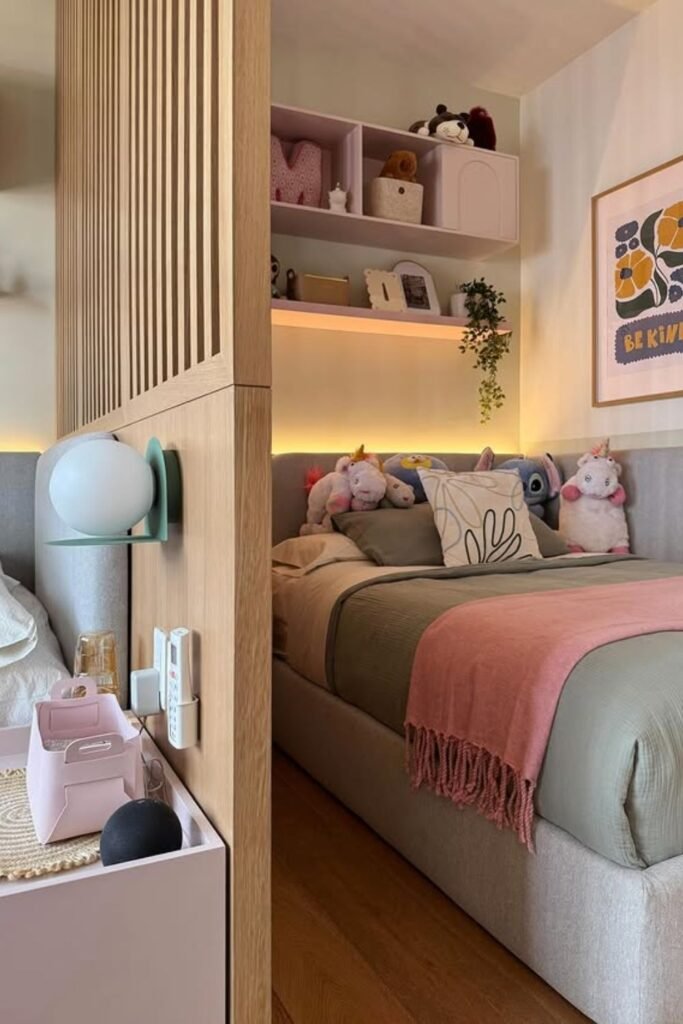
That is brilliantly done with a wooden slat divider, which creates a visual border but yet allows light and air to circulate through the room.
Each side gets soft pink storage, comfortable bedding, and warm lighting, so each side feels like its own refuge and not just half of a shared bedroom.
Vertical slats are perfect in modern kids rooms where chunky furniture would take up too much space.
Add matching wall shelves and hidden storage on either side of the partition so both kids have a place for their books, toys and much-loved treasures.
Cube Storage
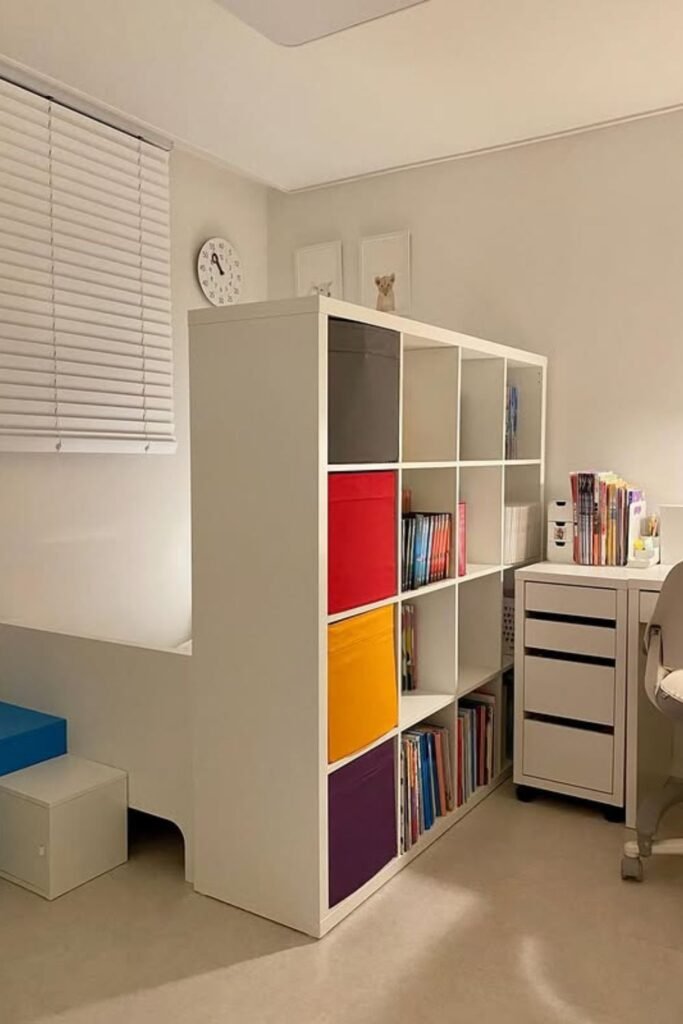
Shared bedrooms work much better when storage becomes part of the room divider instead of taking up extra space.
This cube organizer provides a clean boundary between a study corner and the rest of the room and makes it easy for kids to access books, supplies and favorite items.
Colorful bins also speed up cleanup because everything has a home. This is the best solution for little bedrooms, solving two problems at once.
One side can be a schoolwork zone with a desk and chair, and the other side can be a bed, reading nook or play space.
Open cubes create an airy atmosphere in the area while thick cabinets obstruct light.
Bed Separator
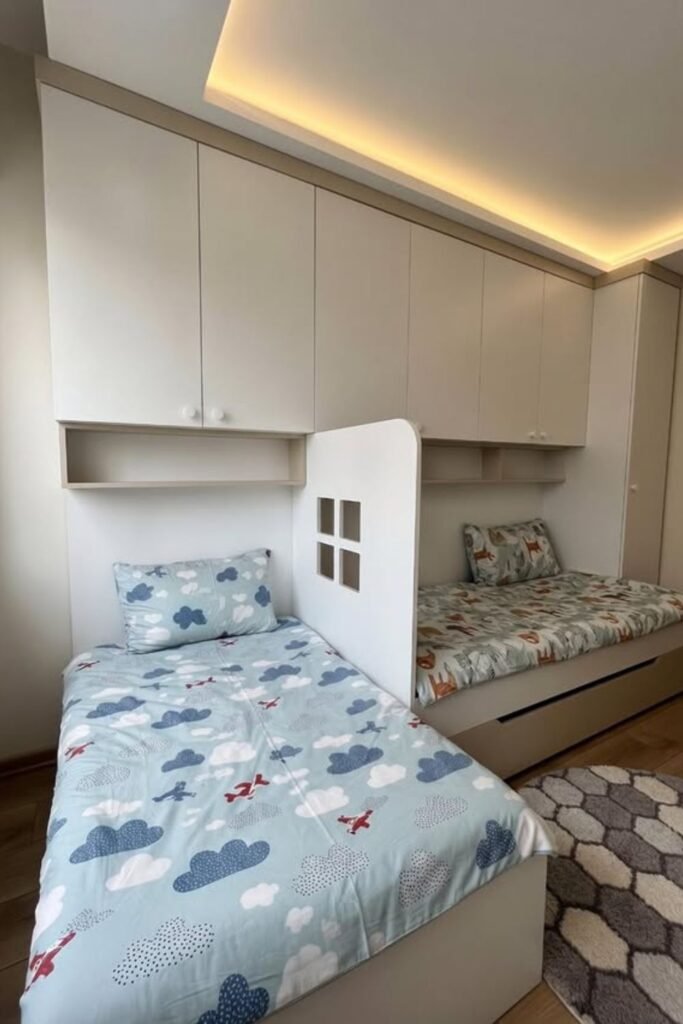
Nighttime routines become much smoother when each child has a defined sleeping area instead of feeling like they are sharing one large space.
A tiny divider between two beds provides just enough seclusion for reading, relaxing or falling asleep, without dividing the room into different portions.
This is good for smaller bedrooms as it keeps things simple but still allows both kids to have some ownership of their side.
Notice how the partition is low enough to keep the space open but blocks direct lines of sight between beds.
Built-in wardrobes above maximise vertical storage, leaving more floor space open for play and movement.
Shared Nook
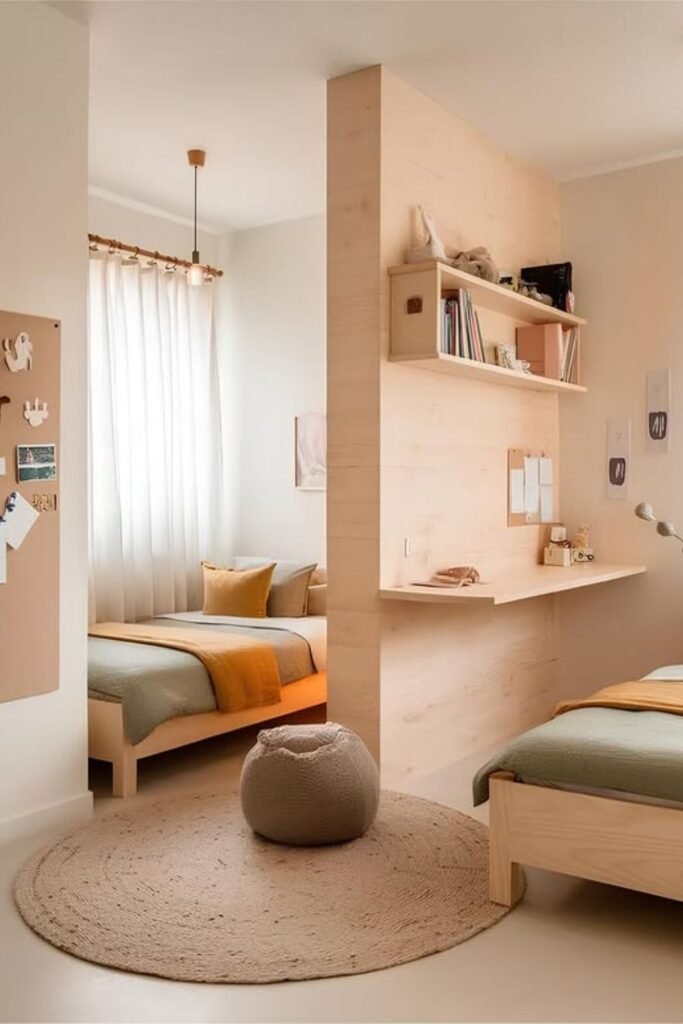
Personal space feels much more natural when each child gets their own corner instead of simply placing two beds side by side.
So a central wooden wall creates two nice sleeping areas, plus provides useful shelving and a tiny workplace in the middle.
Soft neutral colours, matching bedding and minimal furniture make the space feel tranquil rather than busy.
Enhance the partition with floating shelves for books, treasured memories or bedtime needs.
Scandinavian and minimalist kids rooms work particularly well with natural wood treatments as they maintain the area light and ageless.
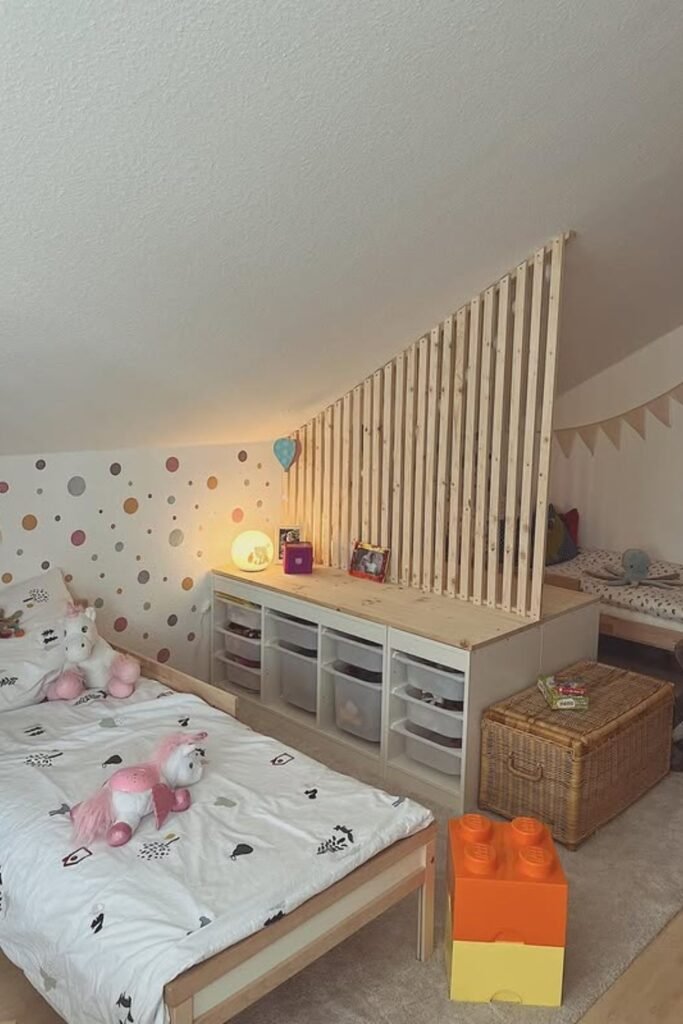
Slatted Storage
Sibling bedrooms often feel less chaotic when the divider also handles storage. A slatted wood partition like this creates two separate kids spaces.
And the cabinets and bins underneath hide away toys, crafts and ordinary debris. Privacy is improved without sacrificing precious floor area.
This set-up is ideal for playrooms and shared bedrooms since it keeps sleep areas separate but ensures both sides are easily reachable.
The wooden slats make the area feel more open and bright than a complete wall would which is particularly useful in rooms with not too much natural light.
Soft wall decals, braided baskets and modest bedding give charm without competing with the divider.
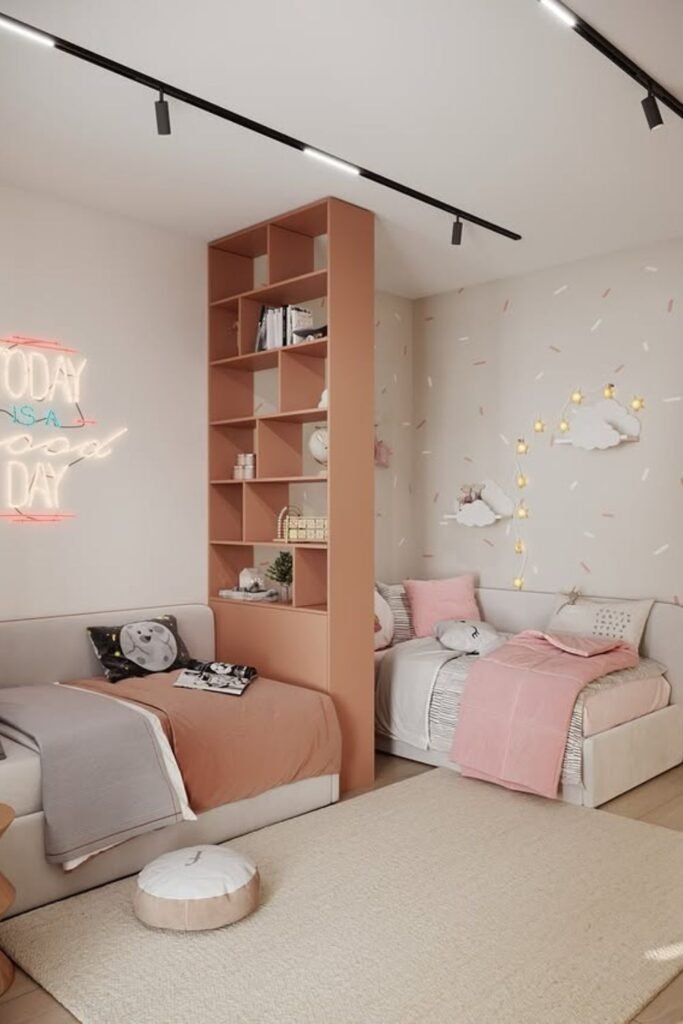
Shelf Divide
Personal space does not have to come from a solid wall. A tall open shelf placed between two beds creates a natural boundary.
And keeping the room light, welcoming and connected. Books, baskets, and favorite decorations help define each child’s side without shrinking the space.
Both sleeping rooms are warm and inviting with soft pink tones and comforting bedding.
The shelf also gives some much needed storage that would otherwise need extra furniture.
Open divisions work particularly well in shared bedrooms, as the separator can be used by children from either side.
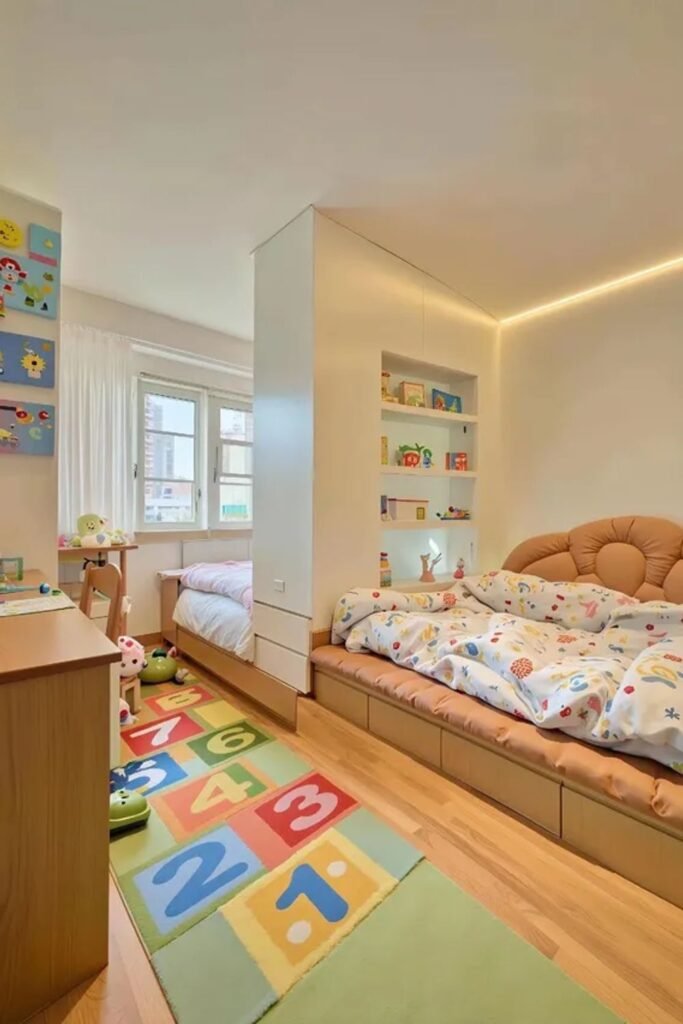
Room Core
Shared bedrooms feel much calmer when one central feature quietly separates activities instead of completely splitting the room.
A built-in divider like this creates a designated sleeping area on one side, while leaving space for play, learning and movement on the other.
Kids gain a sensation of seclusion without feeling cut off from the rest of the room.
Inside the partition, built-in shelves turn an ordinary divider into a showcase place for books, toys and favorite keepsakes.
The soft surrounding illumination helps define the sleeping space and makes for a more soothing nighttime.
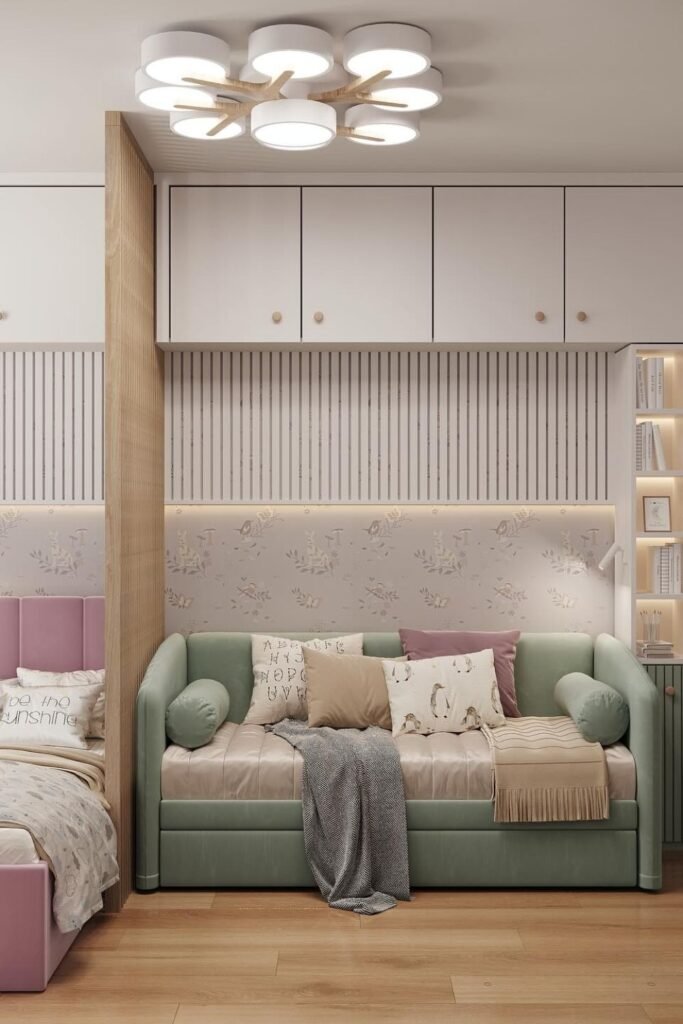
Cozy Corner
Growing families often need one room to handle more than just sleeping. A slim wooden divider like this creates a tucked-away bed nook on one side.
On the other there is space for resting, reading or silent play. It looks more like two intentional areas than one cluttered bedroom.
Even though the rooms have diverse functions they are unified through the soft pastel colours.
Raise storage off the floor with floor-to-ceiling cabinets above, a particularly good idea in smaller kids rooms where every inch counts.
The warm glow behind the bed provides a sense of solitude without a complete wall, and the daybed is a perfect place for story time, visitors, or simply relaxing after school.
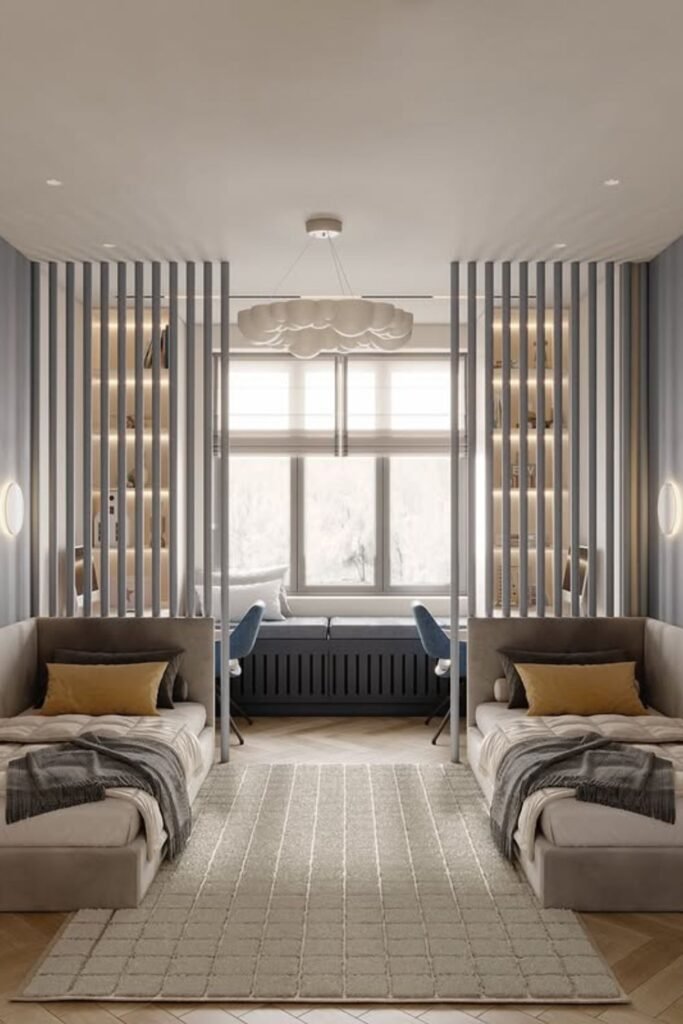
Slat Symmetry
Fairness matters in a shared bedroom, and a balanced layout like this makes both kids feel like they have an equal space to call their own.
The vertical slat dividers form a soft boundary for each bed, with the middle open to a common study space filled with natural light.
Twin desks work especially well for siblings that are close in age, because both youngsters enjoy equal workspace, storage space and privacy.
Open slats provide for good sightlines and eliminate a boxed-in feeling, which is vital in long, narrow bedrooms.
The built-in shelves behind the dividers offer storage space for books, dcor, and school supplies without requiring additional furniture.
Mountain Shelf
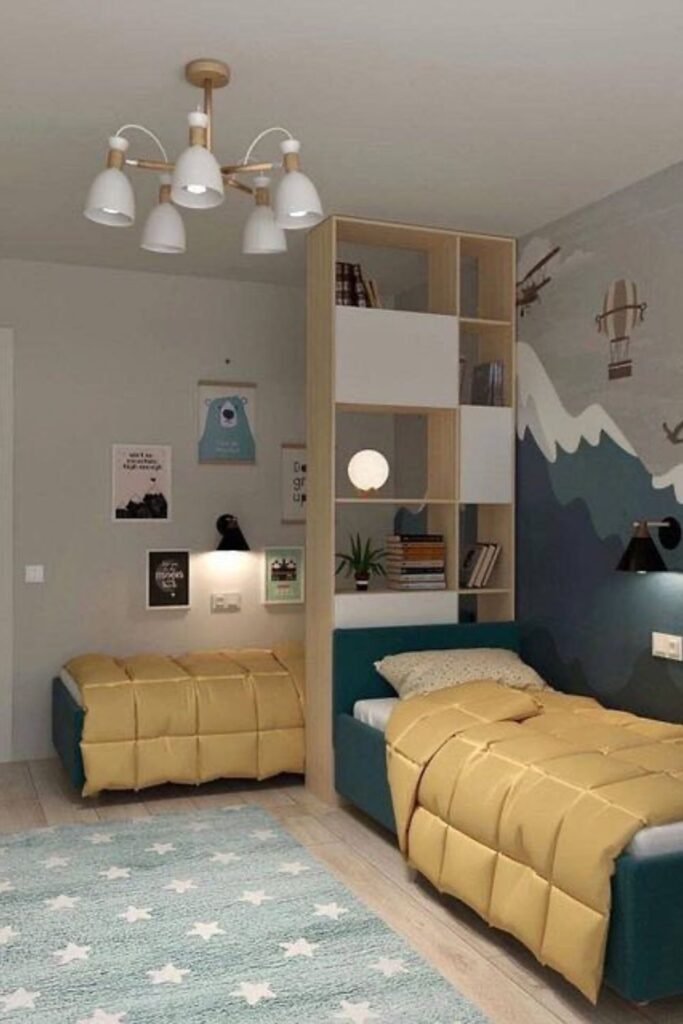
Sibling bedrooms feel more comfortable when privacy comes with extra storage instead of taking away space.
A thin bookshelf barrier between two beds makes separate sleeping zones, while providing both youngsters a location for books, decorations and bedtime needs.
Those open portions make the space feel bright and linked, not like two disconnected spaces.
The divider is not an extra partition but part of the main design, aided by wall paintings and bedding with an adventure theme.
This is great for medium sized shared bedrooms since the shelf gives adequate division without getting in the way of traffic through the room.
Playhouse Divide
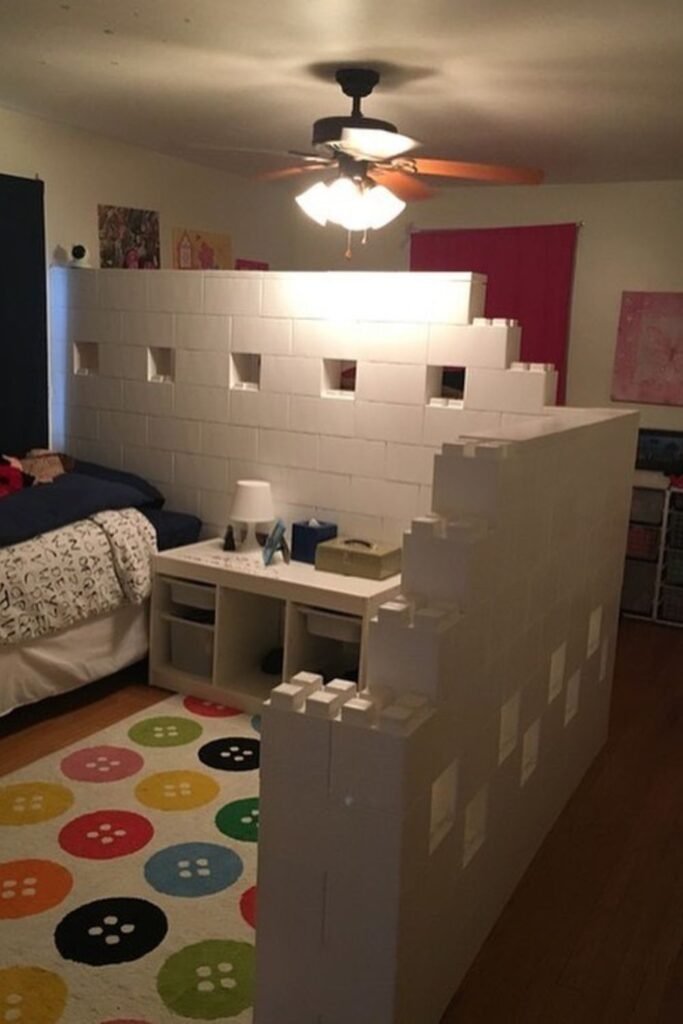
Turning a room divider into something fun can make shared bedrooms feel much less restrictive.
A playhouse-style barrier like this creates a distinct separation between kids spaces and adds a whimsical aspect that feels made for children.
As opposed to just separating a room. Small holes at the top let light and connect both sides together.
This layout works best in a larger bedroom because the separator becomes a focal point instead than just a boundary.
Notice how the construction creates a secluded zone behind the wall, but allows for a workstation, storage unit or reading corner in front.
FAQs
What Is The Best Kids Room Divider If You Need More Storage?
If storage is important, bookshelf dividers and cube storage units are usually your best bet.
They give you room for books, toys, baskets and school supplies and provide a clear divide between kids rooms.
If the bedroom is already tight, opt for a divider that also serves as storage so the room doesn’t feel cluttered with more furniture.
How Can You Give Kids Privacy In A Shared Room Without Making The Room Feel Smaller?
Solid walls are not the answer for smaller bedrooms; open shelves, wooden slat separators, and partial partitions are far more effective.
They give each youngster his own place, but they still let the light come through.
Leaving the partition open or semi-open can make the bedroom feel bright, expansive and pleasant, rather than locked in and crowded.

Hi, I’m Afaf! I’m a law student who loves writing about everyday life – from home projects and crafts to fashion, beauty, and parenting tips.
I’ve been writing for over a year, sharing ideas that are simple, practical, and easy to try. I write about things I find interesting and useful, whether that’s organizing a space, trying a new DIY, or finding activities to keep kids entertained.
My goal is to share helpful ideas without making things complicated. If it works in real life, I’ll write about it.
When I’m not studying or writing, I’m usually experimenting with new projects or scrolling for inspiration!