
18 Lego Display Ideas Kids Rooms 2026
If you have ever cleaned a kids room, only to find Lego sets spread across shelves, dressers, desks and sometimes even the floor the next day.
You know how quickly things can start to feel cluttered. Kids want to show off their favorite builds.
But it’s difficult than it should be to gather everything into one spot without it being cluttered.
In this article, I will show you 18 lego display ideas kids rooms perfect for keeping collections organized.
Let’s jump in!
How Do You Display Lego In A Kids Room Without Making It Look Messy?
The biggest error people make is trying to put all the Lego builds in one spot. That often leads to a quick mess of crowded shelves.
Start by selecting a few favourite sets that your youngster truly likes to show off and give them an appropriate place.
Save this article for later!👇👇👇
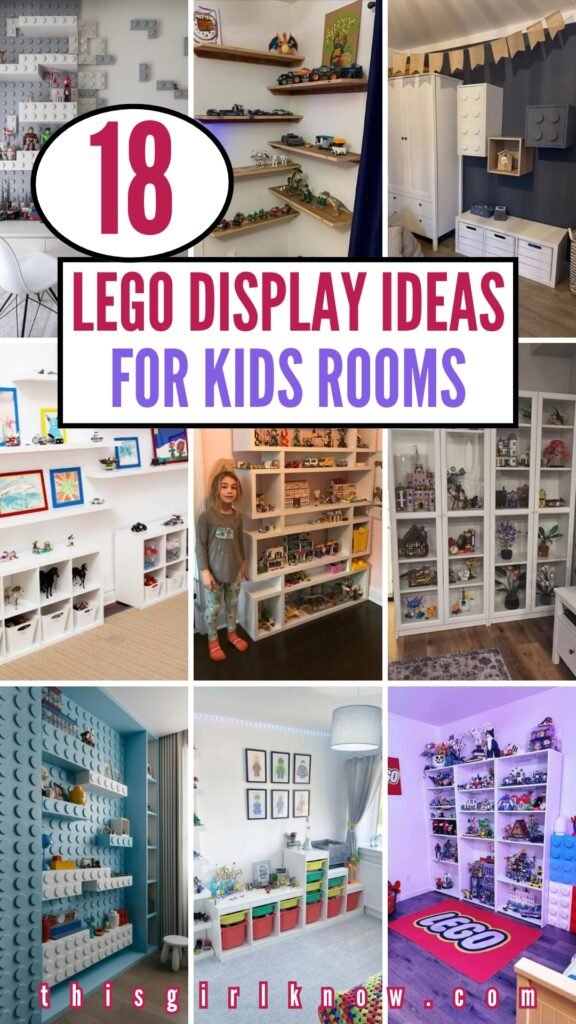
Floating shelves are a good option if you want to preserve floor space but open cubbies are a better choice for kids who still play with their creations on a daily basis.
One easy approach that makes a great difference: leave little gaps between bigger sets, instead of pushing everything together.
But the shelves can be pricey, and if the room is crowded, the display can soon seem chaotic.
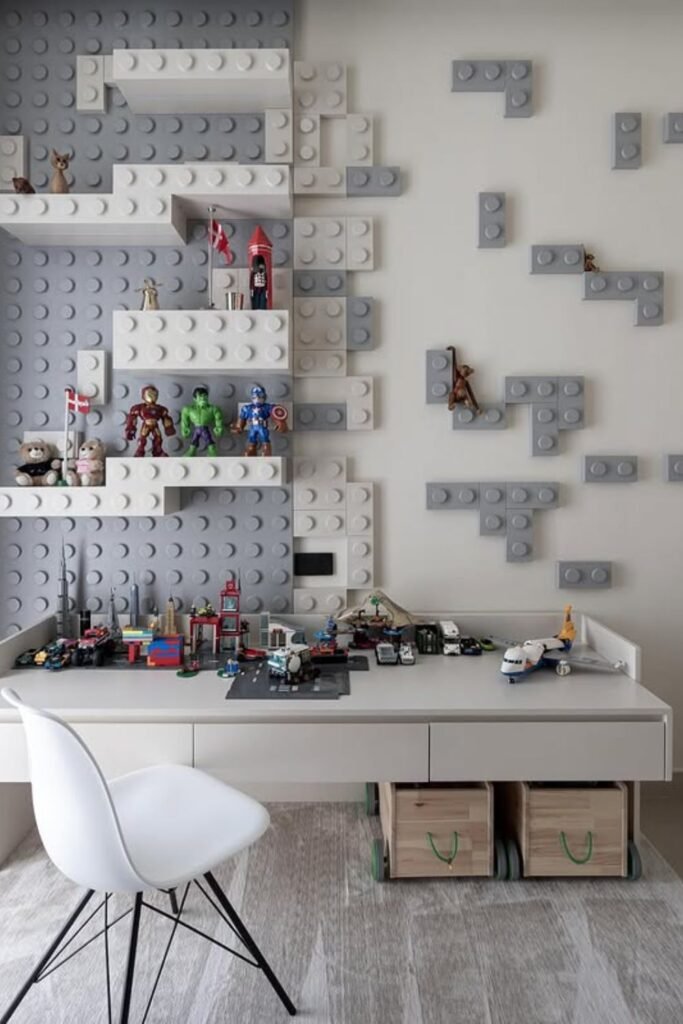
Brick Wall
Stepping into a room like this instantly makes Lego feel like part of the decor instead of another toy collection fighting for space.
The oversized brick panels across the wall create built-in display zones and the floating shelves allow beloved figures and exceptional projects a chance to stand out.
This type of setup is very effective for youngsters who have their sets up for months at a time, instead of rebuilding every week.
You can see that the space doesn’t feel cramped because of the clean workstation, discreet storage boxes and neutral colours even with dozens of Lego pieces on display.
Recreate the idea by making one feature wall behind a desk or play station and adding a few staggered shelves instead of filling every inch with storage.
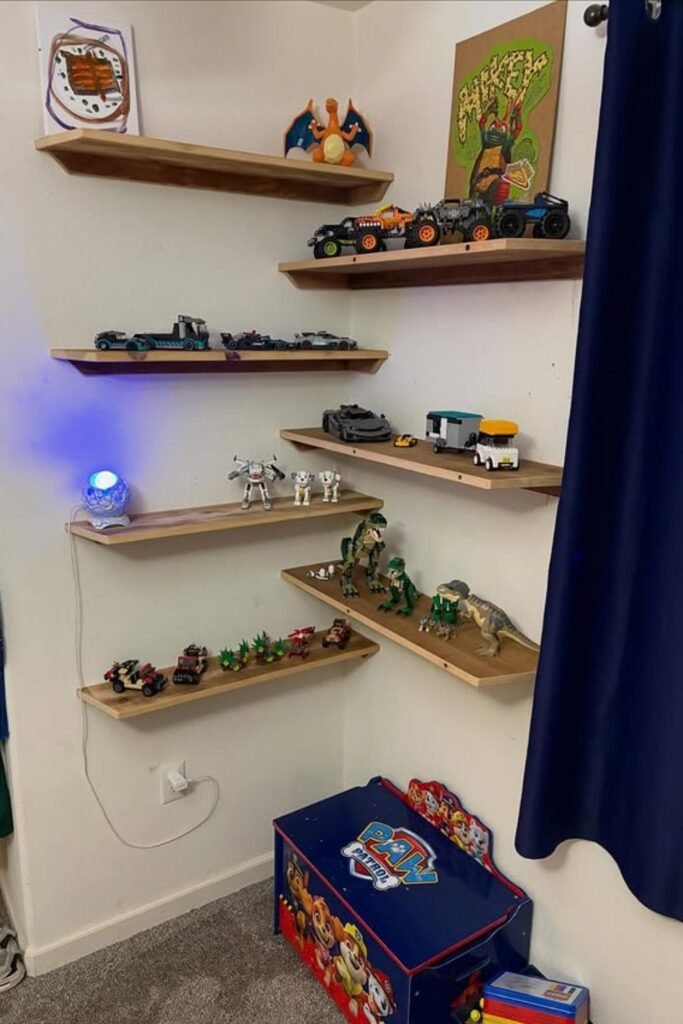
Corner Shelves
Unused corners often become wasted space, but a staggered shelf layout like this turns an awkward bedroom corner into a dedicated Lego gallery.
Different shelf lengths mean it’s easy to split collections so vehicles can stay together.
Dinosaurs get their own section and favourite character constructions never get lost behind larger sets.
This kind of layout is good for growing collections because it feels natural to add that one more shelf later on, instead of cramming everything onto a whole bookshelf.
Warm wood shelves also soften the design and make multicolored Lego pieces pop without making the area feel cluttered.
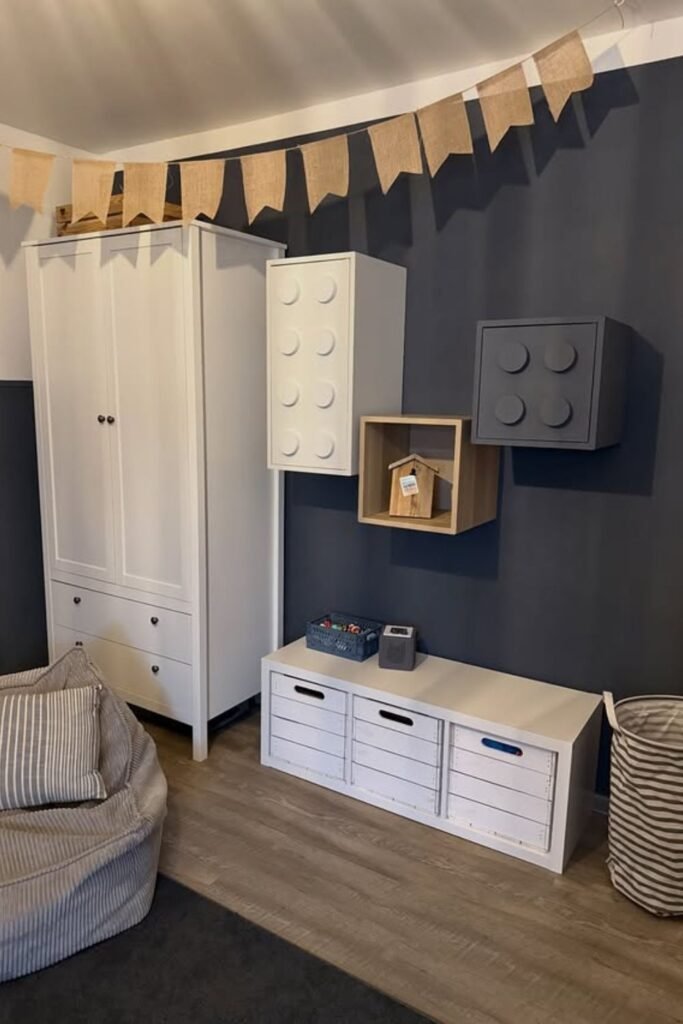
Brick Cabinets
Wall displays do not always need open shelves to make an impact. Oversized Lego-inspired cabinets like these bring the theme into the room.
Kids who adore Lego but can’t keep small parts arranged will love an arrangement that combines exhibition and storage all in one place.
Dark accent walls help the brick-shaped units pop, and the short storage bench keeps spare sets, instruction books and loose bricks close at hand.
This is best recreated in modern kids bedrooms when you want the Lego motif to be subtle rather than overbearing.
Mixing one or two statement cabinets with plain furniture keeps the look of the room tidy, and keeping space around each wall unit prevents the display wall.
Display Grid
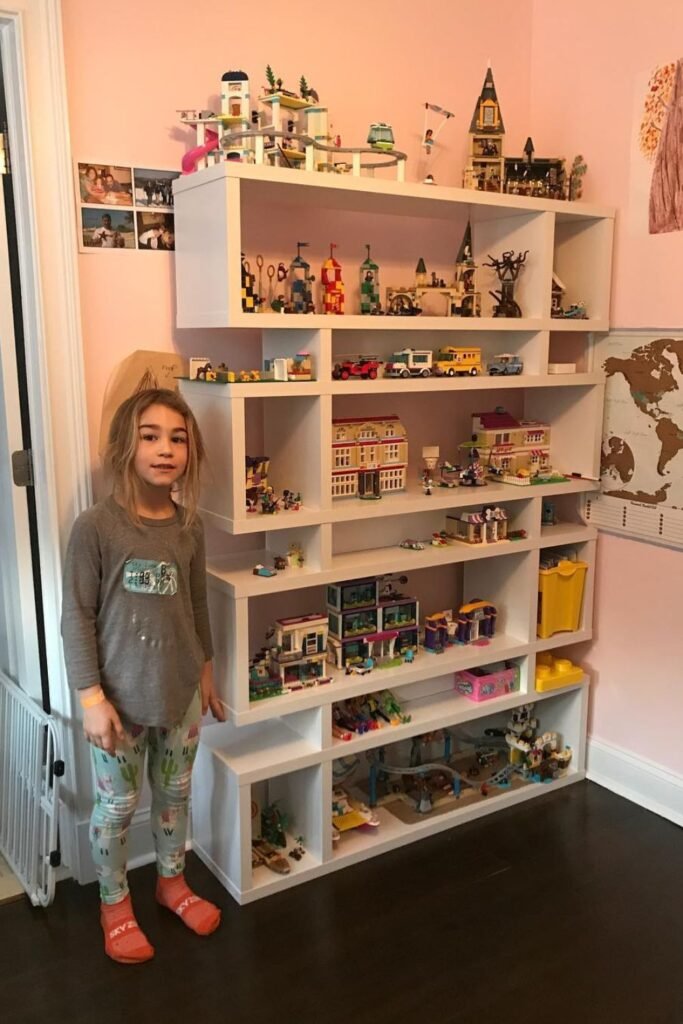
Growing Lego collections need structure before they take over every shelf in the room. A large cubby display like this gives each build its own home.
Much easier for youngsters to find their favorite sets without changing everything around.
Castles, automobiles, residences and little scenarios are all naturally allowed with distinct portions that keep the show looking structured.
If your child likes to maintain their finished projects instead of knocking them down after each build, wall-to-wall shelving is especially good.
The white shelves make the brightly colored Lego parts stand out, and the cubby sizes vary to hold projects of all sizes.
Gallery Shelves
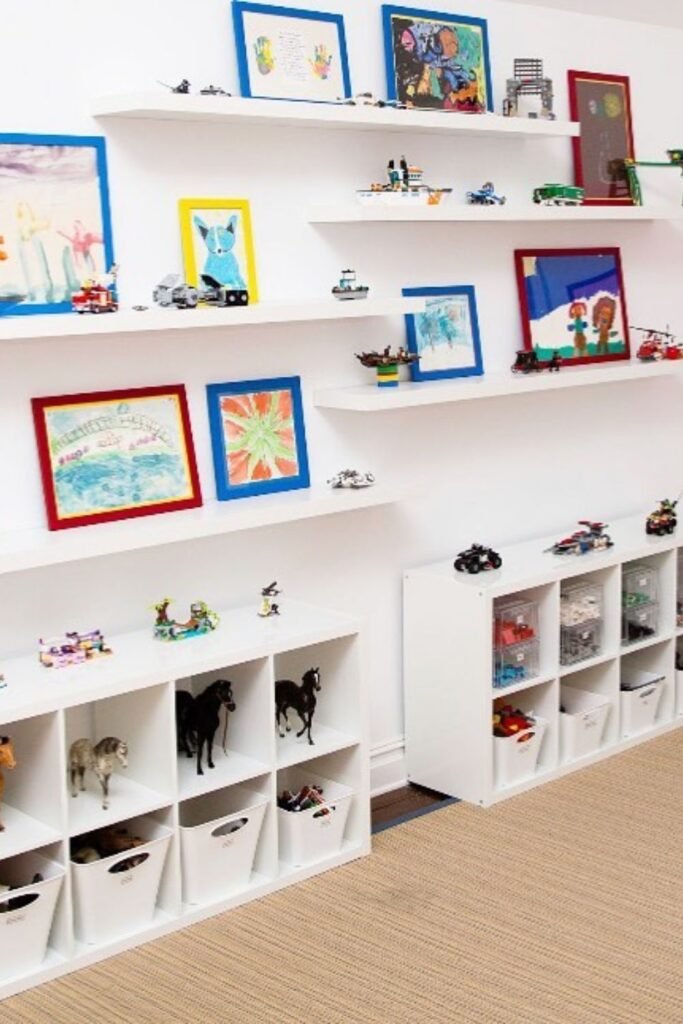
Favorite Lego builds deserve more than a crowded toy bin, especially when kids are proud of what they have created.
Floating shelves with art make the display part of the room design, but still leave plenty of area for collections to grow.
Mini buildings, small vehicles and special builds fit in nicely between framed art, without making the wall seem overstuffed.
Open wall shelves work well in playrooms, creative spaces or bedrooms where you want Lego to be personal not just attractive.
See how the bottom cubbies are for storage and the top shelves are for show. Don’t attempt to demonstrate it everything at once.
Glass Showcase
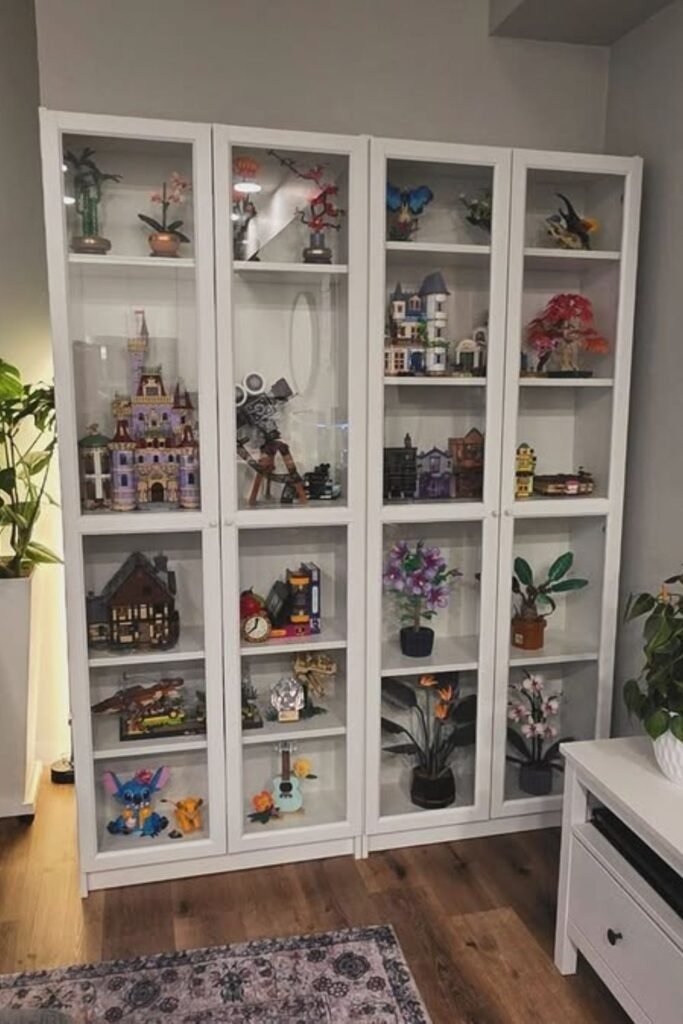
Dust and accidental bumps become a real problem once Lego collections start getting bigger and more detailed.
Glass top cabinets answer both of these and still allow every build to be visible.
Big castles, mansions, seasonal decorations and display pieces all have their own protected place without over-crowding the room.
Natural light, plants and basic furniture balance a display like this to feel more like a part of the room than a gigantic toy storage unit.
This will be especially valuable for families with older kids who appreciate collecting and maintaining finished constructions.
Lego Library
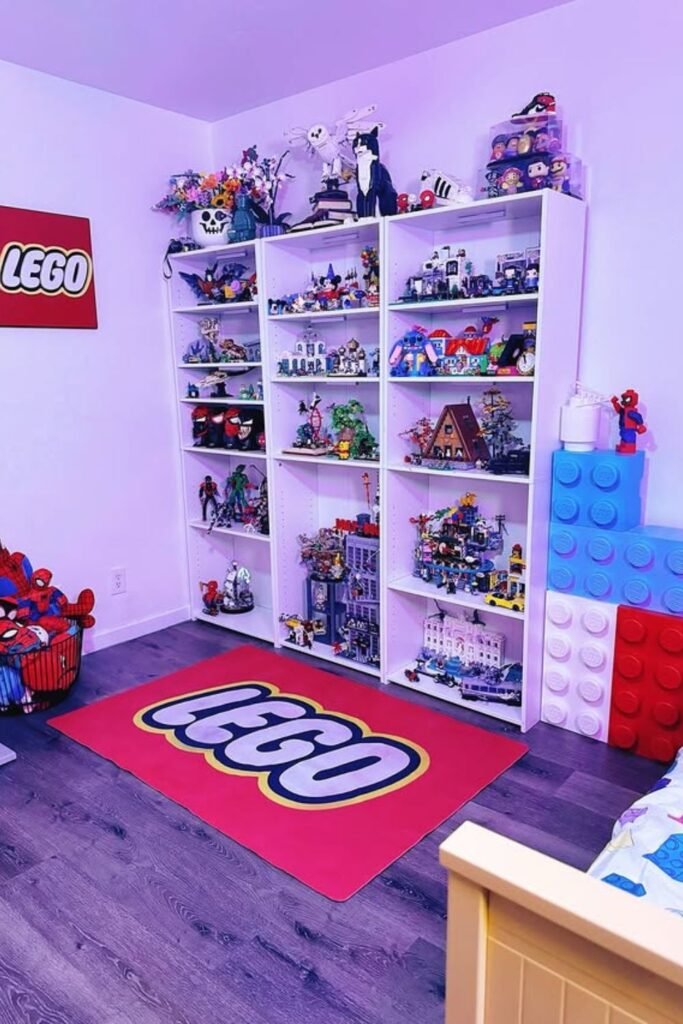
Walking into a room where every shelf has a purpose makes even a large Lego collection feel organized.
Bookcases this tall provide larger sets enough room to remain completed, while keeping favorite themes together.
Each component has its own category, making it easy to identify superheroes, city projects, seasonal sets and collectible models.
The bright Lego-themed decor works nicely here because the shelves already provide structure and keep the area from feeling messy.
A design like this will give kids who love to collect and show off completed builds lots of mileage, especially as additional sets are introduced over time.
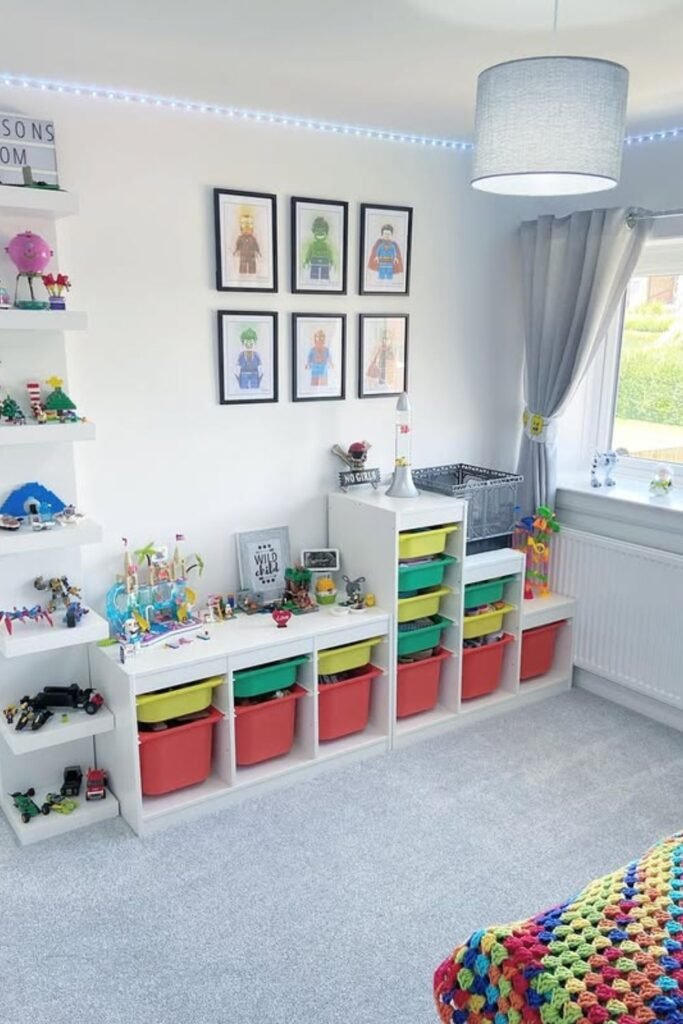
Display Tower
Watching kids pull pieces from storage bins while finished builds stay safely on display becomes much easier with a setup like this.
Vertical shelves take up very little floor space, but provide plenty of capacity to keep beloved Lego creations on display every day.
Each model gets its own spotlight; less models on one shelf makes them feel more special.
Colorful storage bins below take care of the portion most parents struggle with keeping spare bricks, instructions and unfinished projects out of sight.
It’s a good concept for bright rooms with little wall space, as one narrow display column can contain a lot more than you may think without making the area appear cluttered.
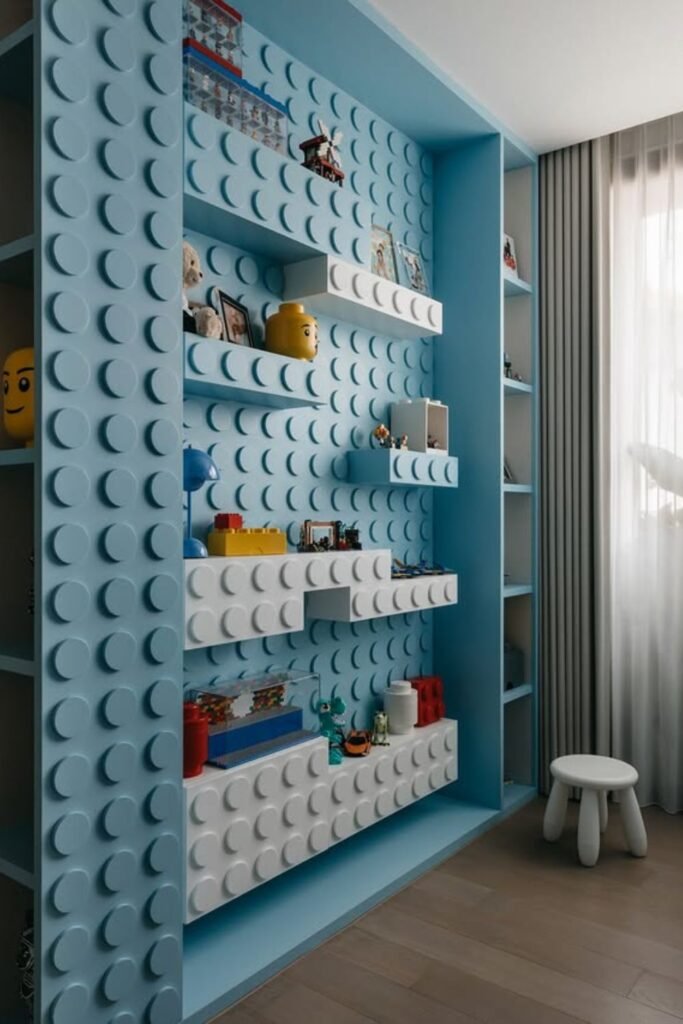
Brick Feature
Turning one wall into a giant Lego-inspired display instantly gives the room a theme without filling every corner with toys.
Built-in shelves and raised brick accents offer natural areas for your favourite creations, minifigures and special collections, while keeping the floor entirely clear.
Kids who want to show off their works, rather than keeping everything in bins, will adore having a dedicated display wall like this.
Soft blue tones keep the arrangement playful, but still feel clean & modern. Built-in shelves are especially useful in small bedrooms.
Because any additional furniture would waste a lot of space. Instead, you can simply pick one accent wall, and fill it with floating shelves (at varying heights).
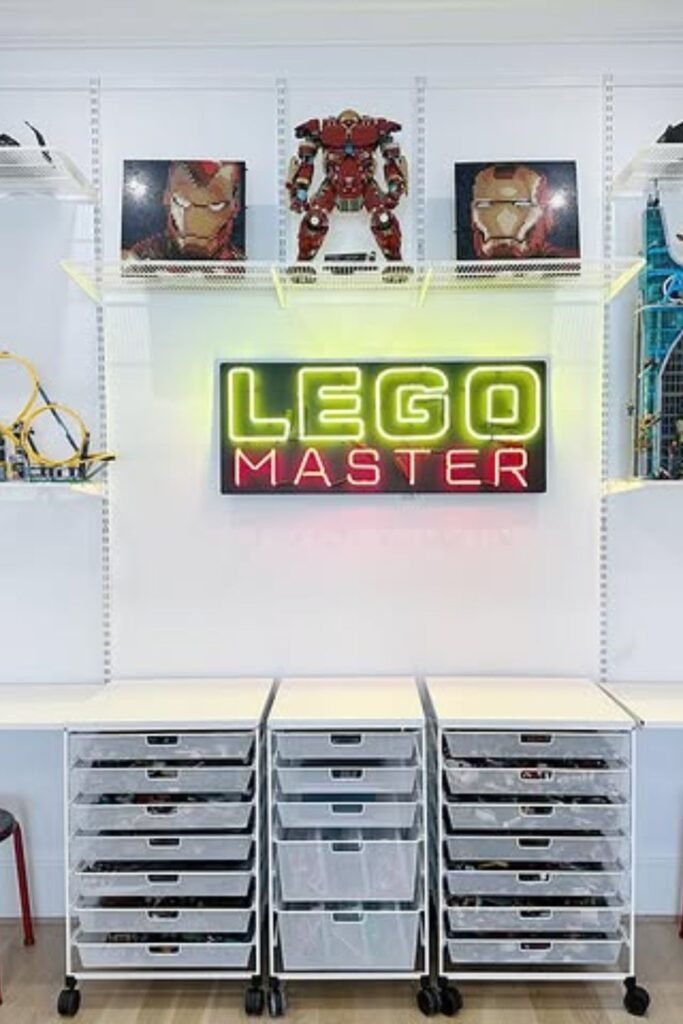
Builder Station
Serious Lego fans eventually reach a point where display space alone is not enough.
Having a specific building zone like this keeps projects, spare parts and completed sets all in one orderly place instead than scattered all over the room.
Sorting bricks is a lot easier with sorter units under the work surface, so you spend less time looking for pieces and more time building.
Large wall shelves above the desks offer space for showcase sets, roller coasters, towers and collectible models that need to be noticed.
Bright signage, framed artwork and themed decor provide personality without encroaching on precious workplace.
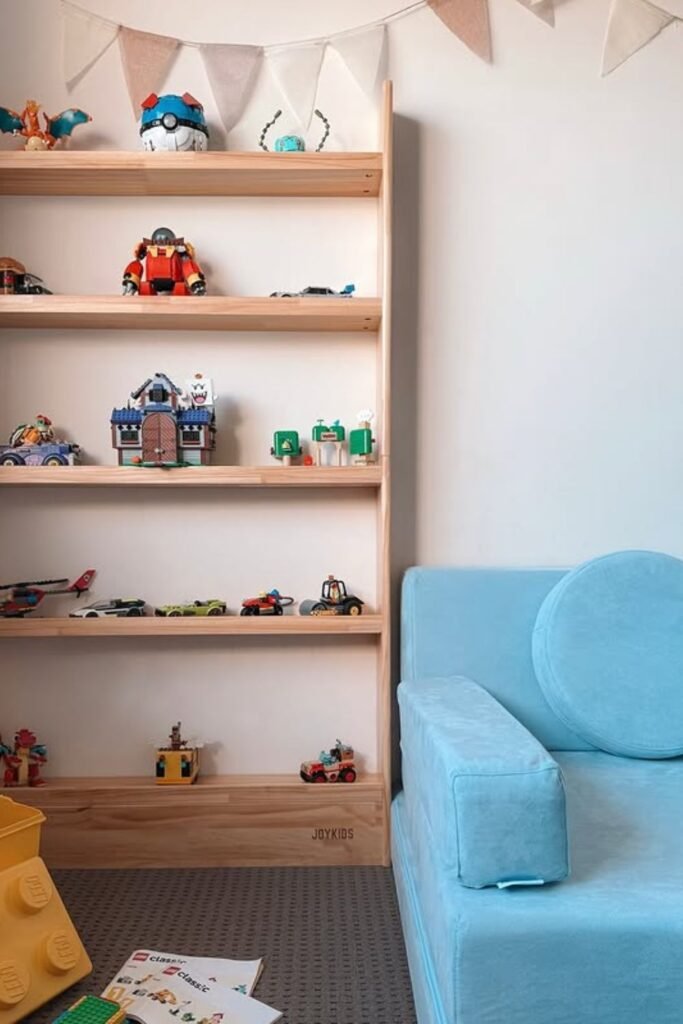
Open Bookcase
Growing collections stay much easier to manage when every shelf has room to breathe. An open wooden bookcase like this gives larger Lego builds.
Vehicles and character sets a specific location without making the room look like a toy store The collections are organically.
Separated on different shelf levels and youngsters can quickly identify favorite projects and display looks more ordered.
Warm wood tones accommodate practically any bedroom or playroom style, so this is a good option if you want Lego displays to feel ageless instead of themed.
The main secret here is the extra space around each model. Crowded shelves can make even good collections look untidy.
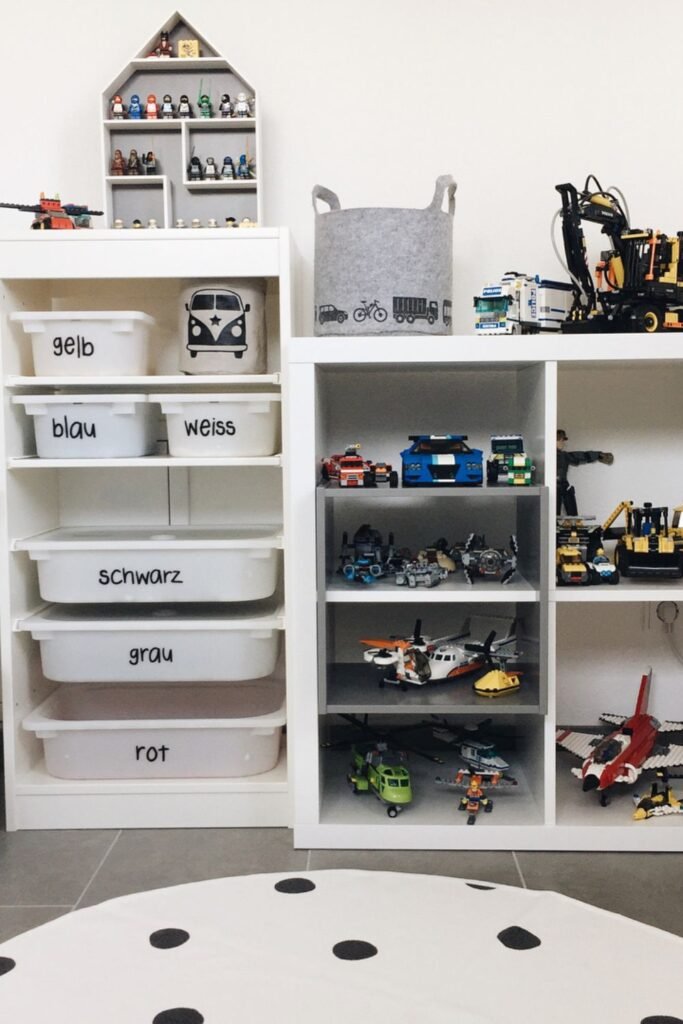
Sorted Storage
Finding the right Lego piece becomes much easier when display and organization work together.
Color-coded bins keep loose bricks in check, and the open cubbies next to them house finished vehicles, planes and construction builds.
Kids can pick up parts for a new project without disrupting models that took hours to finish.
What makes this layout work are the clean categories Vehicles stick with vehicles . Machines stick with machines.
This is a fantastic choice for smaller rooms like bedrooms, playrooms and shared spaces as it keeps things close to hand and minimises visual clutter.
Lighted Nook
Hidden wall niches often become one of the smartest places to display Lego because they protect builds without taking up extra room space.
Subtle built-in lighting illuminates popular cars and race cars, while giving each model enough room to shine.
The evening illumination enhances the charm of the collection and does not blend into the rest of the bedroom.
Shelves built into the wall like this are especially good in an alcove or a recessed wall area beside a doorway, where they won’t feel as bulky as a piece of furniture.
The warm colors behind the shelves give depth and enable multicolored Lego pieces pop without further decorations.
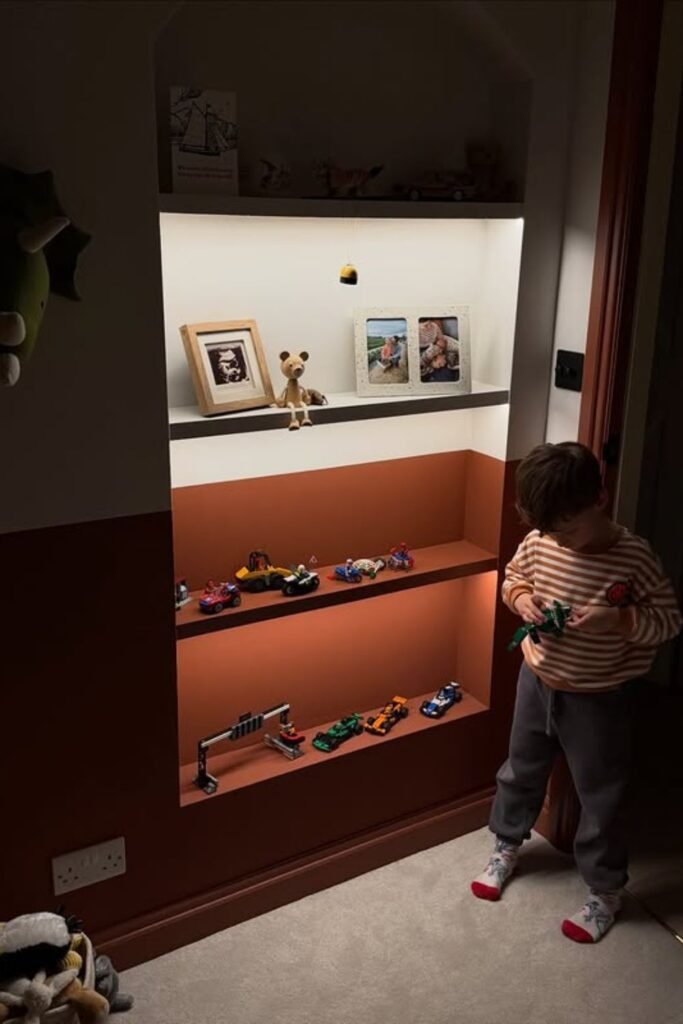
Figure Ladder
Collections with dozens of mini figures can overwhelm a shelf surprisingly fast. A tiered wall display like this solves the problem.
While adding each figure into the home design with minimal floor area. It’s different from regular shelves since it doesn’t hide the figures in the rear.
Each figure is clear to see at different levels. Wall-mounted displays work particularly well for kids.
Who prefer to collect characters from different Lego themes rather than concentrate on big creations.
Small ladders, colorful base plates and staggered rows give it character and make it feel orderly.
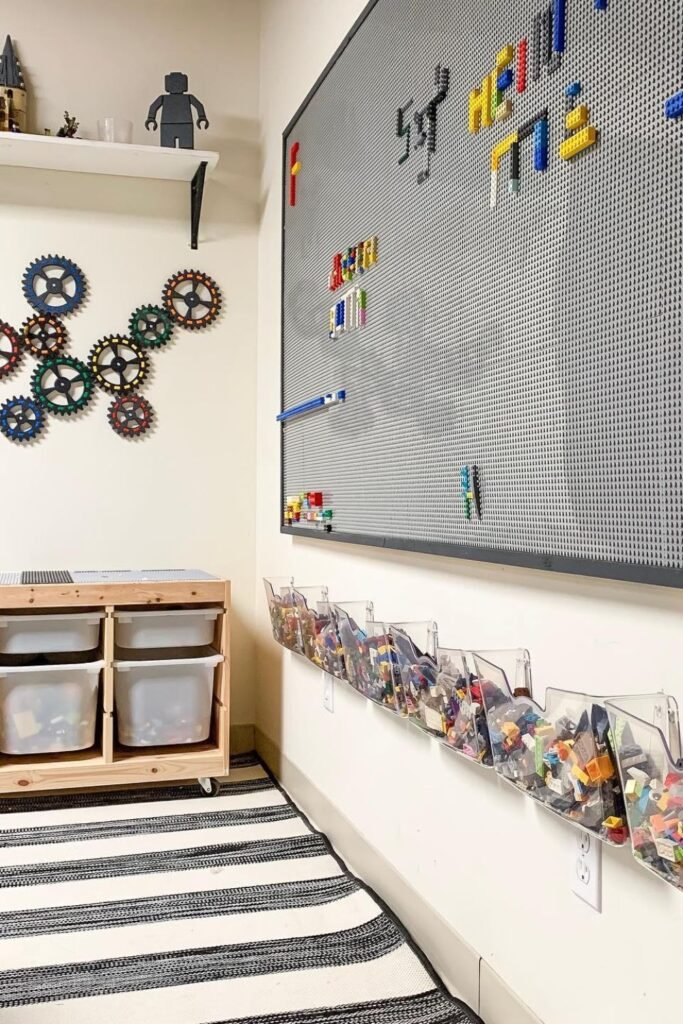
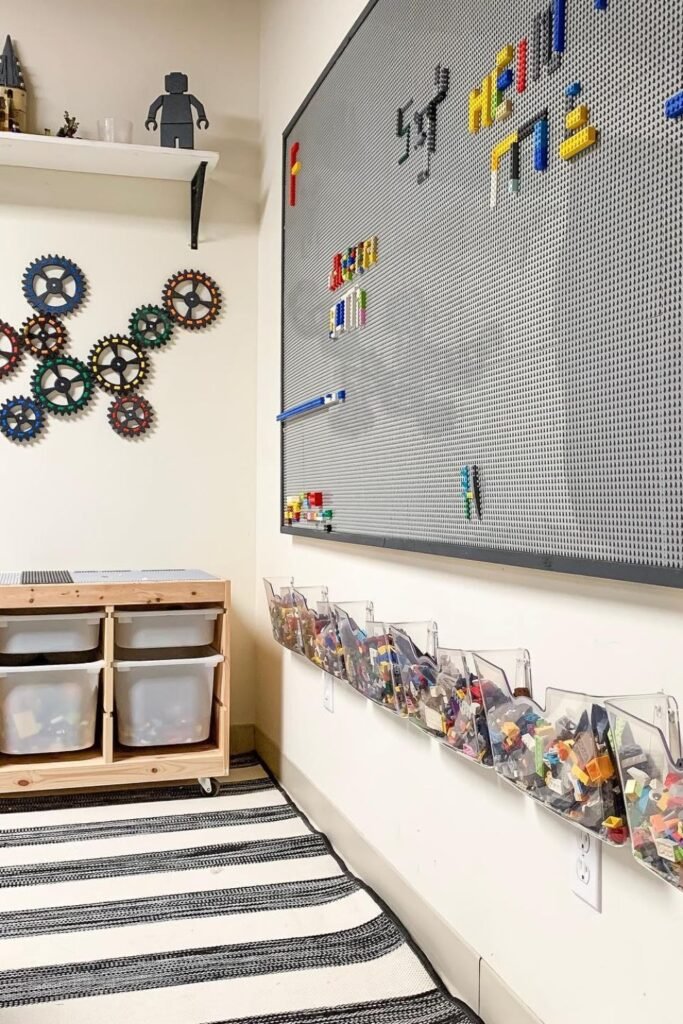
Build Wall
Running out of table space becomes a common problem once Lego building turns into a serious hobby.
That’s handled by a big wall-mounted baseplate that gives kids a space to build, show and experiment without covering every surface in the room.
You can leave new ideas up on the wall, and keep desks and floors clear for other activity.
A whole lot more practical with clearly defined sorting bins underneath so you can see the pieces and grasp them easily during build sessions.
This will be more valuable to creative kids who are always taking builds apart and starting new projects than a typical display shelf.
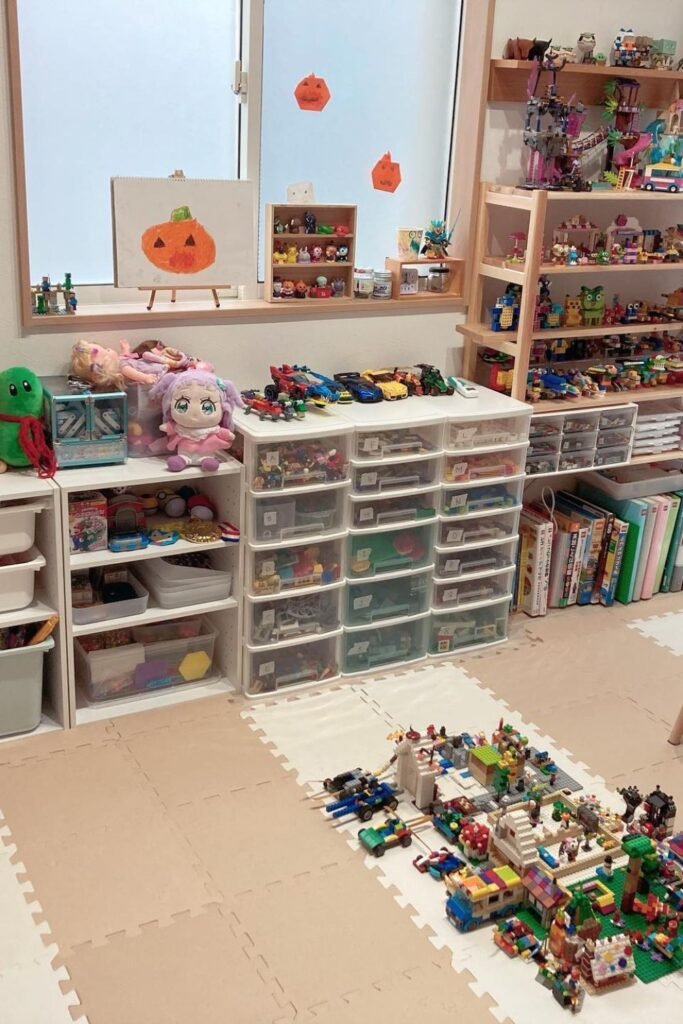
Lego Studio
Collections grow much faster when every build has a place to land after it’s finished. Open shelving for display, clear drawers for sorting.
And low storage containers for larger pieces provide for a strategy that maintains the room useful as the Lego collection grows.
Kids can easily see what they own without having to sift through random containers or pile builds on top of each other.
Natural light also makes this setup even more practical as small parts and colorful constructions can easily be spotted during gameplay.
The area is organized with hundreds of pieces and dozens of inventions since the different storage types function together here.
Display Command
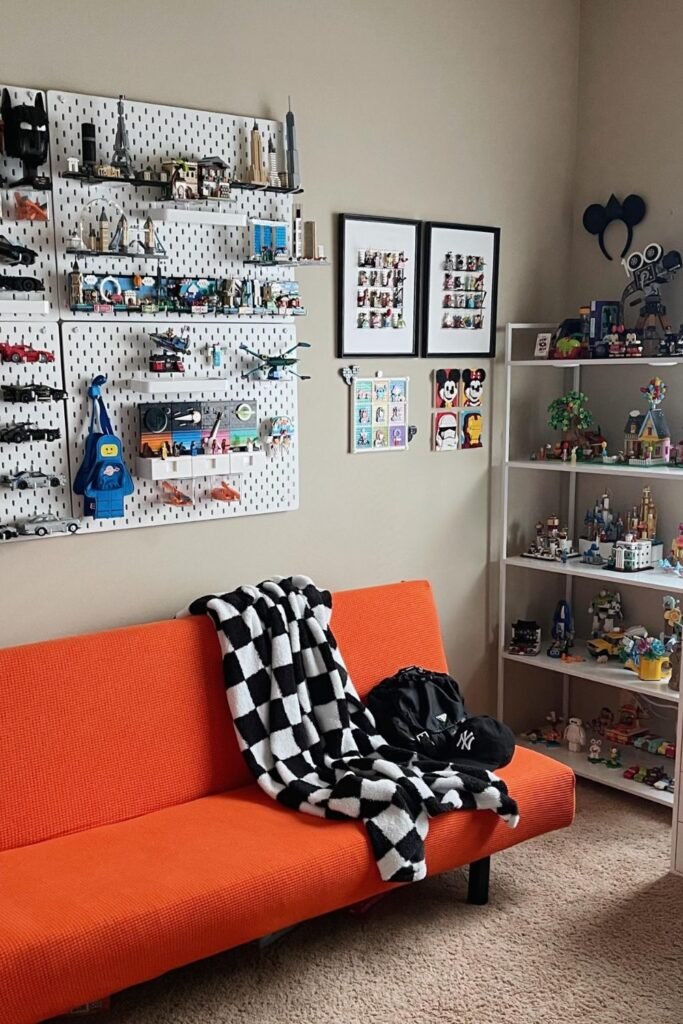
Collectors often reach a point where regular shelves are no longer enough. A pegboard display wall like this turns an entire section of the room.
Turn it into a customisable display of cars, landmarks, micro collections and special sets.
Shelves are adjustable so if a new favorite construction makes it into the collection it’s easy to move things around.
The different display zones are what make this room function so nicely. Larger sets can be arranged on the corner shelving unit.
While smaller automobiles and collectible parts are given their own wall space. Kids and teens who love to update their displays frequently will find this setup flexible enough.
Lighted Display
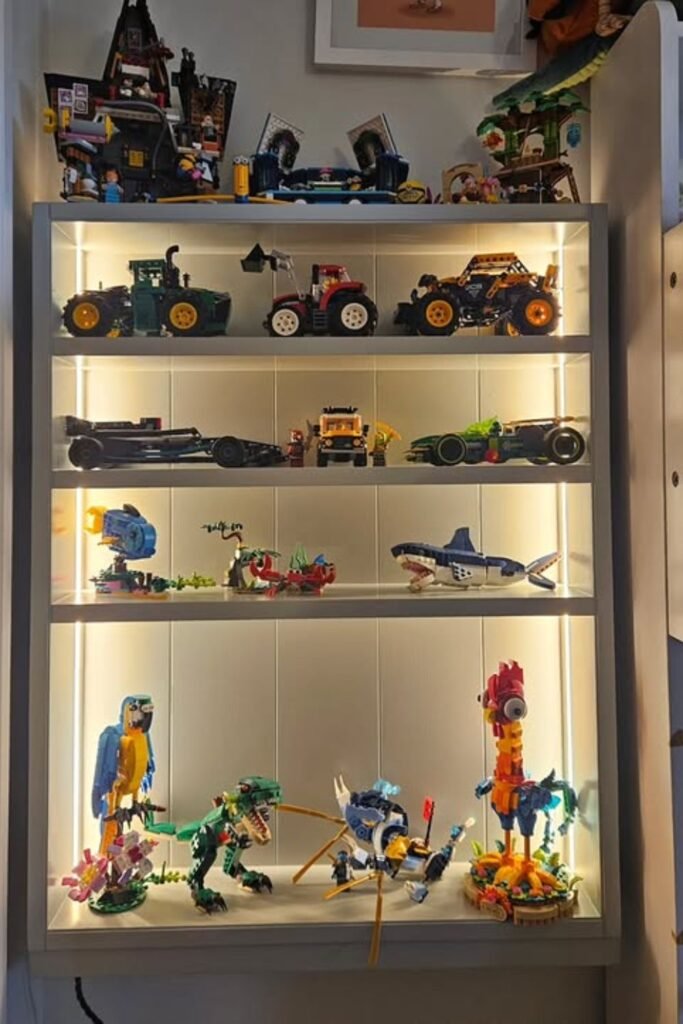
Special Lego builds deserve more attention than being squeezed onto a crowded bookshelf.
Each shelf becomes an instant display thanks to the built-in lighting, which highlights automobiles, animals and realistic models even when the room lights are low.
The focus is on the build and not everything around it, so every creation feels more valuable.
This type of display cabinet may typically fit into narrow locations such as between wardrobes, bunk beds, or corners of a room without taking up useful floor space.
Warm lighting further helps to separate distinct collections and makes it simpler to appreciate larger models from across the room.
FAQs
How Many Lego Sets Should You Display At Once In A Kids Room?
Having every Lego set on display at once might make a well-designed room seem cramped.
A better way is to show your favorite builds and save the others till your kid wishes to rotate them back in.
What Is The Best Way To Display Lego Sets If Kids Still Play With Them?
Active play usually works best with open shelves at a child-friendly height. Kids may easily pick up their favorite creations.
Having separate zones for display sets and everyday play sets also helps to minimize damage while keeping the room nice and easy to maintain.

Hi, I’m Afaf! I’m a law student who loves writing about everyday life – from home projects and crafts to fashion, beauty, and parenting tips.
I’ve been writing for over a year, sharing ideas that are simple, practical, and easy to try. I write about things I find interesting and useful, whether that’s organizing a space, trying a new DIY, or finding activities to keep kids entertained.
My goal is to share helpful ideas without making things complicated. If it works in real life, I’ll write about it.
When I’m not studying or writing, I’m usually experimenting with new projects or scrolling for inspiration!