
25 Kids Room Storage Ideas for 2026
One minute the kids room seems neat, then by bed time, toys are back under the bed, plush animals are taking over every corner.
And bookcases look more cluttered than organized. If you are tired of cleaning the same mess over and over, you’re not alone.
Many storage options look cute on the internet but stop working once kids are really utilizing the area.
Small bedrooms are filled up fast and big toy bins always seem to get bigger messes.
In this article, I’m going to show you 25 kids room storage ideas that balance sleeping, playing and studying better.
Let’s jump in!
How Do You Store Toys in a Kids Room Without Making It Look Messy?
Keeping toys in a kids room without making the whole space look dirty usually boils down to one easy thing: Don’t treat every toy the same.
If you throw everything in one huge bin, they empty it out seeking for one object and the room looks worse than before.
Save this article for later!👇👇👇
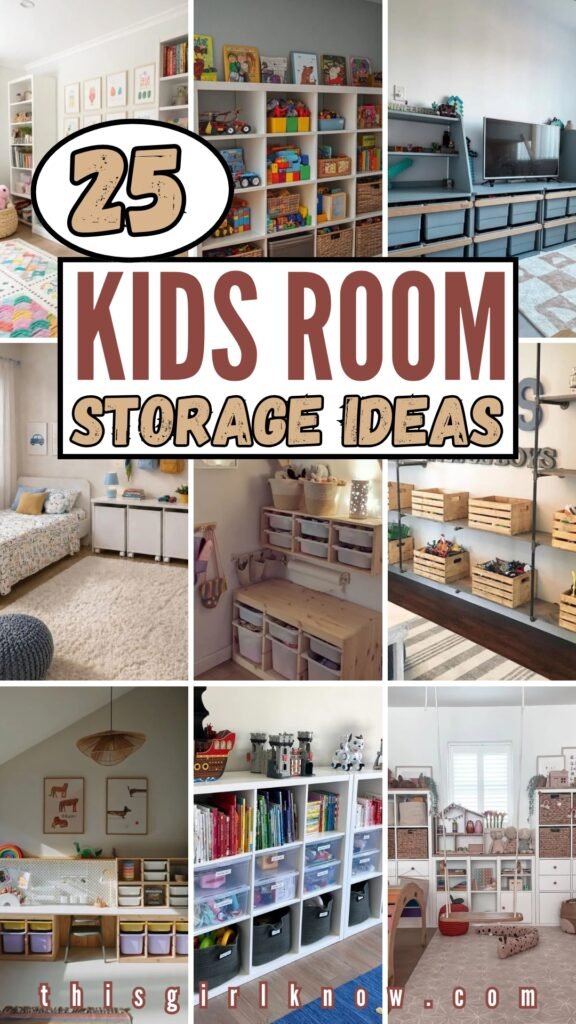
Start by trying to group toys into categories like vehicles, blocks, dolls, books or art supplies.
Open baskets, cube bins and storage benches work best since youngsters can quickly collect items and put them back without assistance.
If your room looks cluttered, utilize wall shelves or under bed storage to keep toys off the floor.
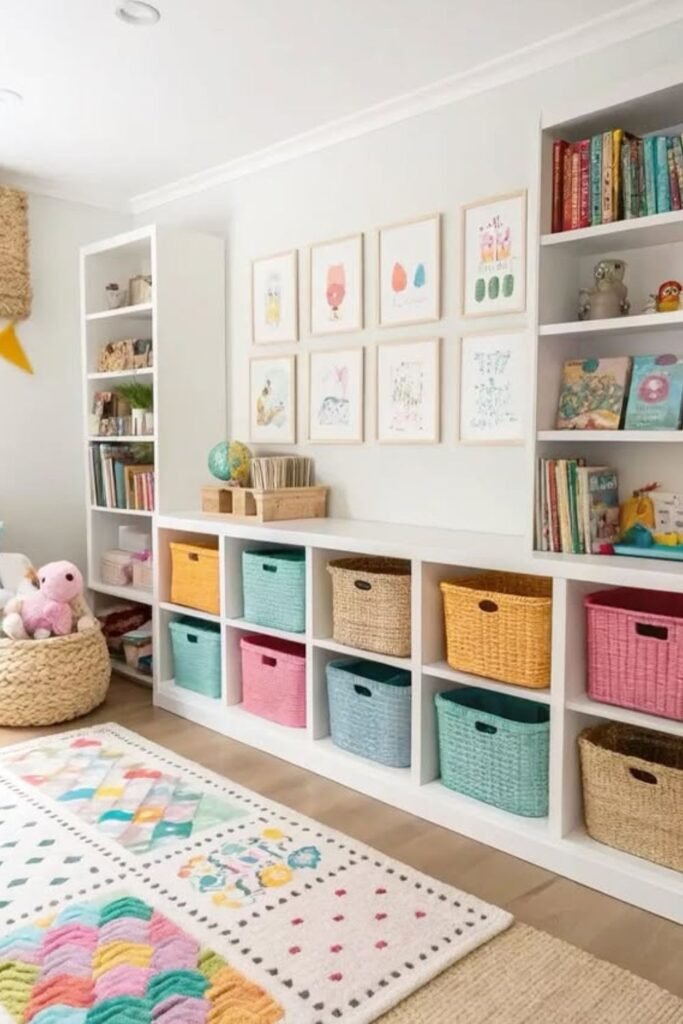
Basket Wall
Toy clutter feels easier to control once everything gets a clear spot instead of piling into one oversized toy box.
Low cube shelves with pull-out baskets work especially well in shared kids rooms, playrooms or bedrooms where toys.
Books and small supplies keep spreading around fast. To reduce bickering at the end of the day when it is time to clean up.
Try different basket colors or textures for categories such as plush animals, blocks, art items or dress-up parts.
Open shelves along one wall keeps thing orderly with out hiding every things behind doors.
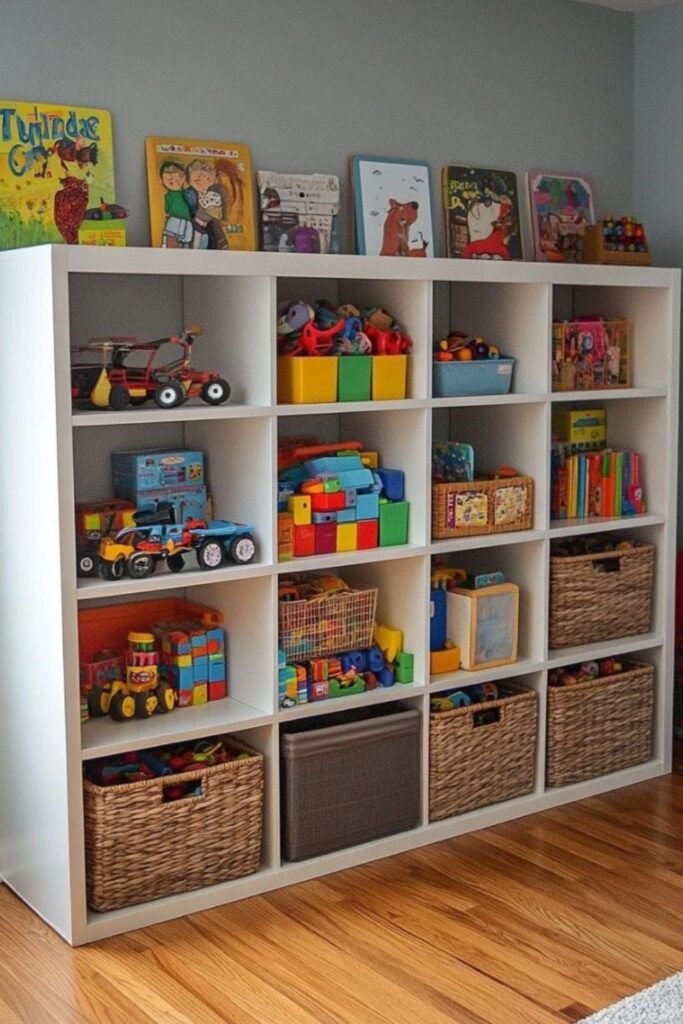
Toy Grid
Cleanup stops feeling impossible once every toy gets its own little zone instead of mixing together in the random basket.
Open cube shelving like this is incredibly functional for youngsters who love to grab toys all day long.
Because everything is easy to see and grasp without turning the whole room upside down.
Group related items together such as automobiles in one part, blocks in another, and books at eye level so youngsters know where things go.
Bigger baskets that stay on the bottom for easy end of the day clean up make for a much calmer floor space.
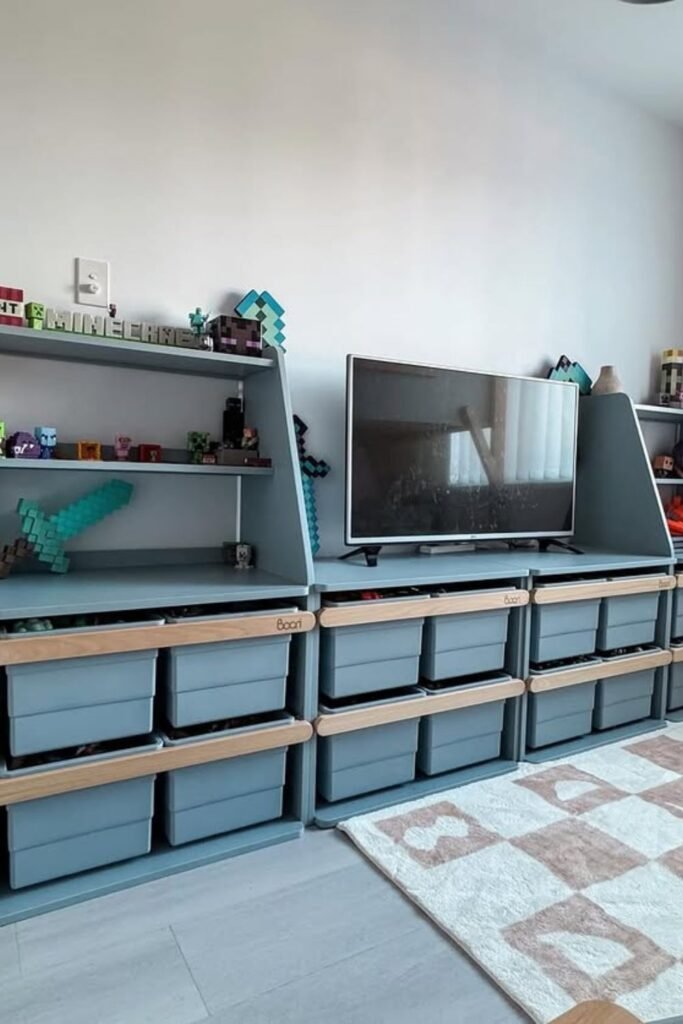
Bin Station
Morning cleanup feels way less chaotic once smaller toys stop getting tossed into random corners.
Low storage bins made onto one continuous shelf are especially great for kids who adore collecting tiny objects like blocks.
Action figures or gaming gadgets since everything stays easy to access without cluttering up the visual space.
Sorting bins that match for toys by category make it easier and faster for youngsters to find what they want, instead of spilling every basket out on the floor.
This layout is great for gaming rooms or playrooms; open shelves create area to exhibit prized collectibles, while hidden bins take care of the mess below.
Shelf Corner
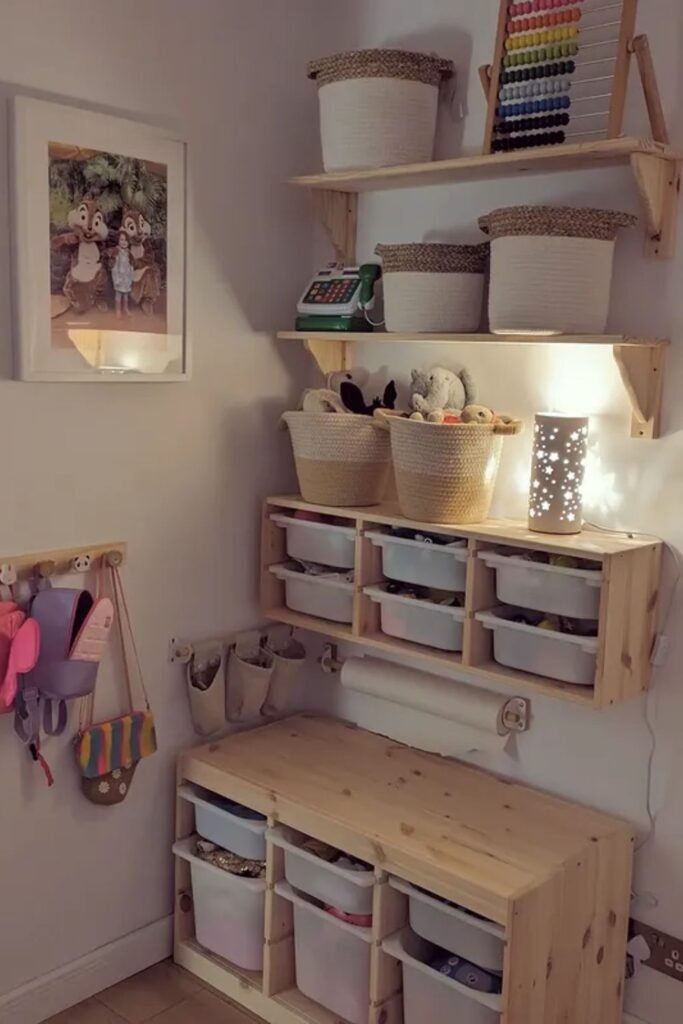
Toy mess usually spreads faster in smaller rooms where every wall has to work harder.
Floating shelves and pull-out bins are a clever tiny storage zone that doesn’t hog valuable floor space especially in toddler rooms or shared play zones.
Soft baskets on the top shelf are great for stuffed toys or objects that are used less often. Lower bins make it easy for kids to grasp everyday toys without pulling everything out.
Small details make a setup like this feel more useful than crowded. Convenient wall hooks just off to the side keep backpacks.
Dress-up bags or headphones off the floor, while a bench with built-in storage keeps extra debris quietly hidden beneath.
Wall Cubes
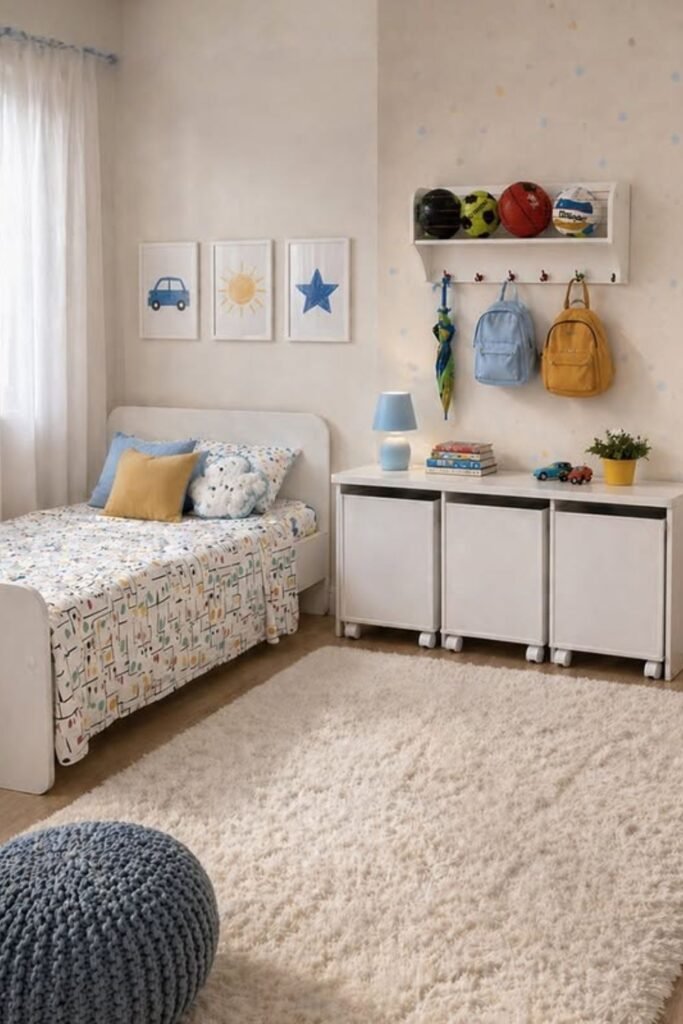
Floor space starts feeling bigger once storage move upward instead of the spreading across every corner.
Cabinets on rolling cubes like these are great for smaller kids bedrooms especially since toys keep tucked away but the room still seems open enough to play in.
Keeping bins closed also helps busy rooms look cleaner fast, especially when toy clutter mounts by bedtime.
Above the storage are wall shelves, another sensible layer without adding to the clutter in the room.
Free up closet space for clothes while still making sports balls, bags or everyday grab-and-go things simple to access.
Crate Storage
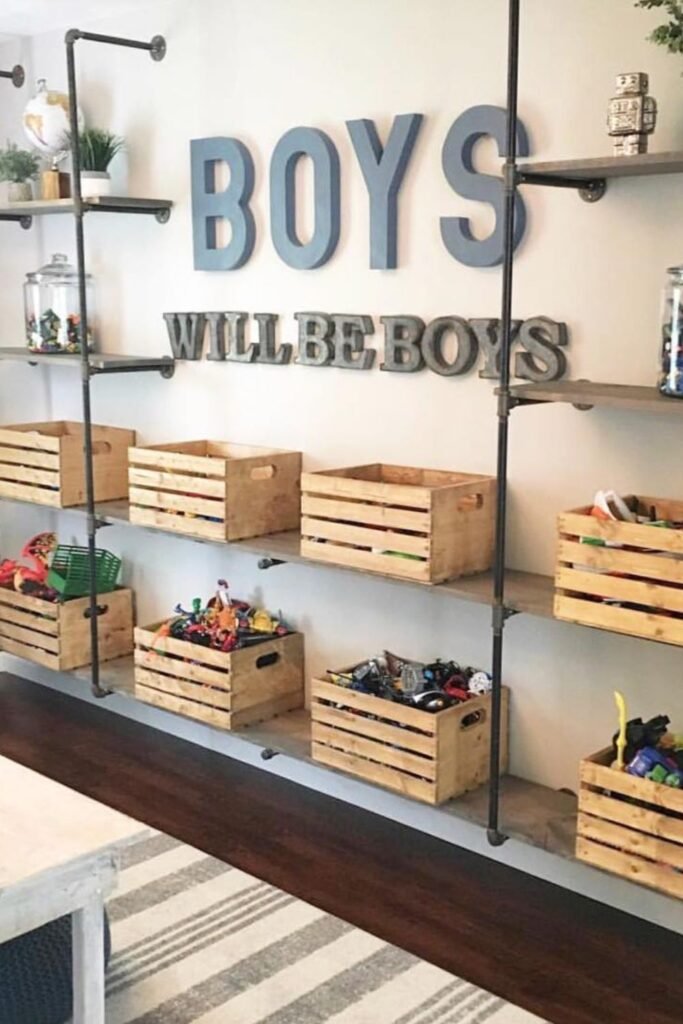
Toy cars, action figures, and random little pieces usually take over faster when kids cannot see where things belong.
And wooden crates arranged across open shelves make sorting look so much easier as every baskets may be dedicated to one category and not one big mishmash.
Labeling crates for trucks, superheroes, building toys or outdoor gear also helps older kids clean up faster without questioning where everything goes.
Kids rooms are generally large and have vacant walls, so turning one side into a whole storage wall is perfect for playrooms or shared spaces with a lot of toys.
Shelves with an industrial aspect, combined with wooden crates, give the space an orderly look without making it seem too young.
Craft Station
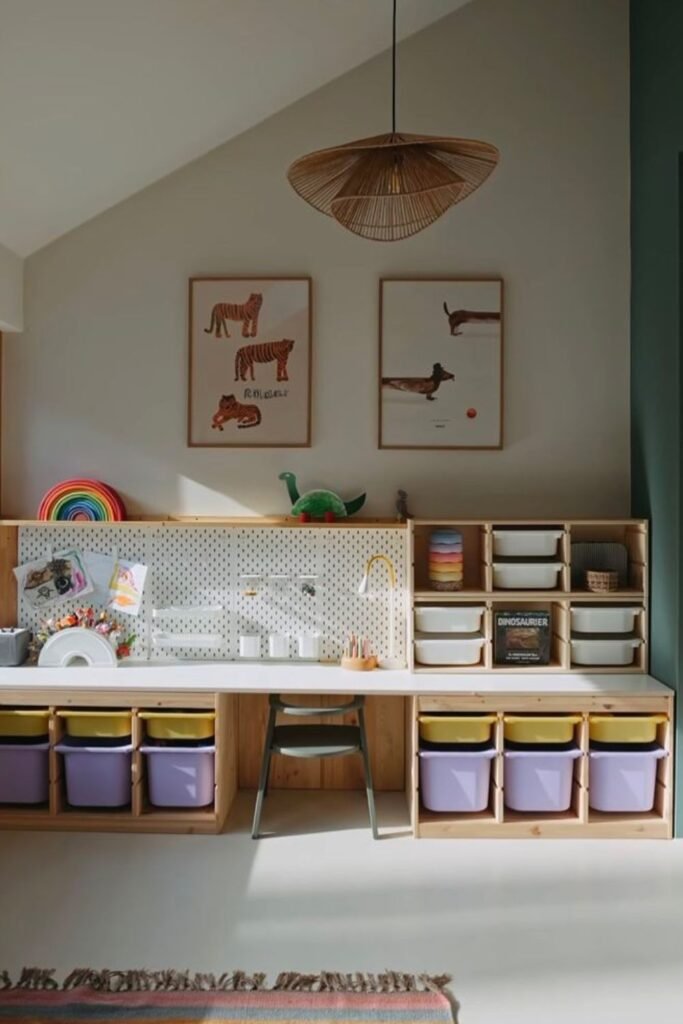
Creative mess feels much easier to manage once art supplies stop floating around the whole room.
A storage wall, with cubbies, pull-out bins and a little desk, creates one orderly zone where coloring books, craft tools and miniature toys all stay within reach.
For young children in particular, keeping smaller containers for everyday items works well since cleanup becomes something they can truly accomplish alone.
Wall pegboards also quietly handle another common problem: they give pens, scissors and tiny tools a place instead of letting them cover the desk every afternoon.
“This setup is a great idea for a room with awkward corners or blank walls to turn that space into a mini homework and play station.”
Label System
Toy cleanup gets much easier once kids stop guessing where things belong. Clear labeled bins work really well in busy kids rooms.
Because books and dolls and pretend play items and blocks and tiny toys all have their own place instead of being all jumbled together in one big mess.
Adding basic labels on containers, especially if you separate items by category they already understand, will help you teach younger kids cleanliness habits quickly.
Long cube shelves like this work great for larger bedrooms, homeschool spaces or playrooms with storage demands that alter frequently.
Books at eye level are favorites and make reading more inviting, and bigger baskets at the bottom discreetly stow away bulky toys that tend to litter the floor.
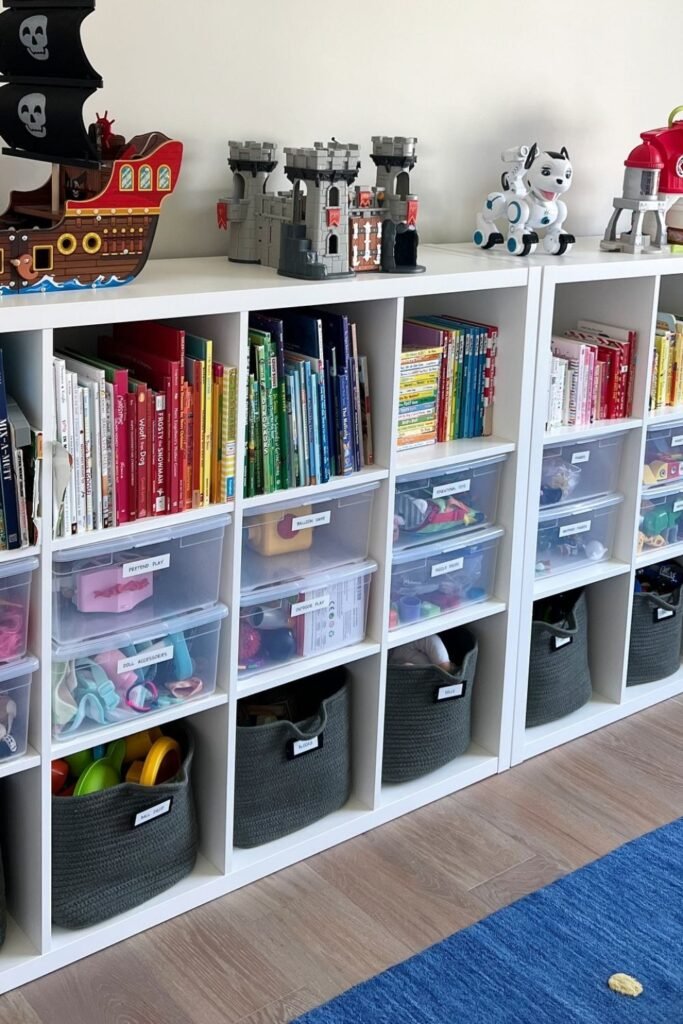
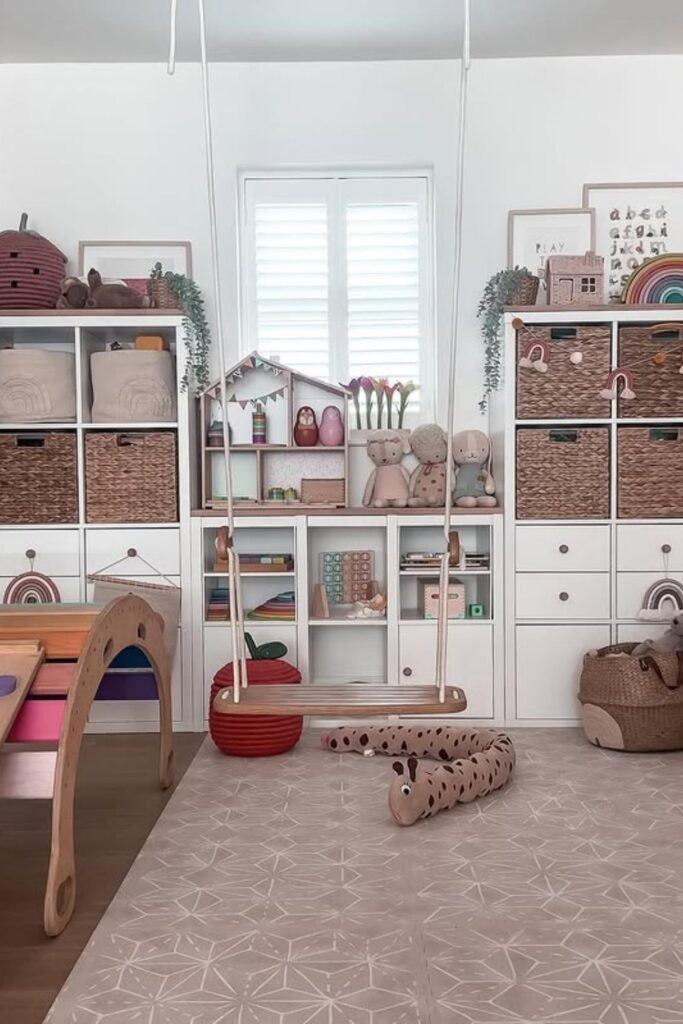
Basket Towers
Storage starts looking calmer once tall shelves stop feeling overcrowded and begin working likes little organizing zones.
Matching cube units with woven baskets help hide toy messes fast, but yet make everyday stuff easy to access.
This setup is best for bedrooms or playrooms with lots of stuffed animals, books and little toys as it divides everything and doesn’t make the area feel busy.
Soft neutral baskets go a long way when you want storage to blend into the decor instead of being the loudest thing in the room.
Open middle shelves provide space for treasured toys, books or pretend play pieces, while lower drawers silently store smaller objects.
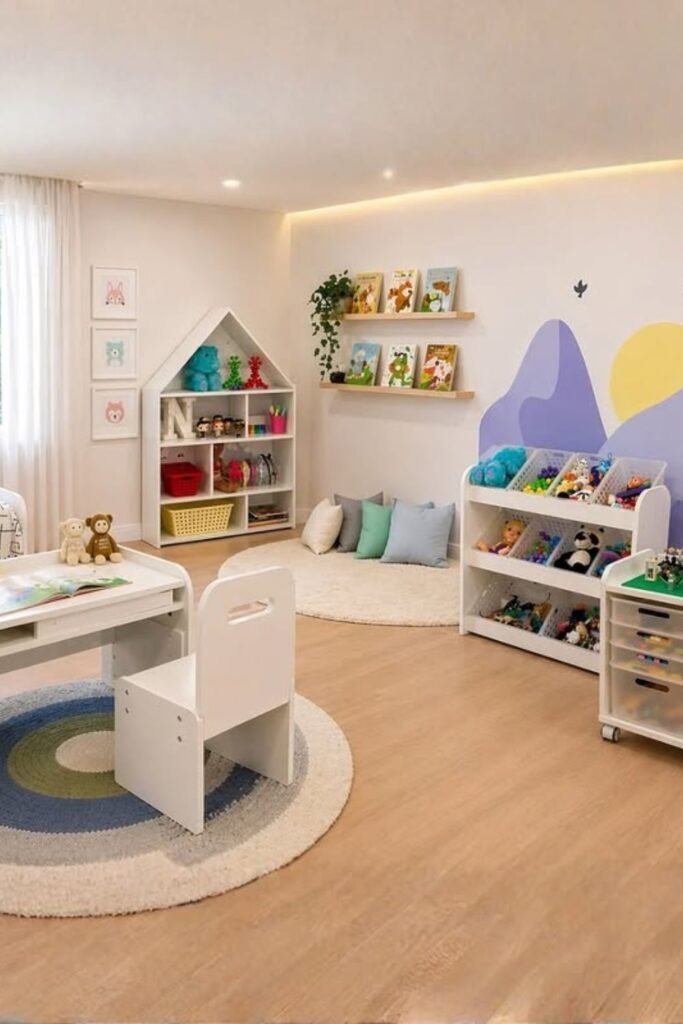
Play Zones
Toy clutter feels less overwhelming once the room gets divided into little activity areas instead of one giant play mess.
Angled bins on open toy shelves are especially well-suited to younger children, as treasured dolls, blocks and figures don’t go lost at the bottom of a toy box.
Also, dividing toys into different groups in different locations helps speed up cleanup because children can find the toy’s home on their own.
In playrooms or bigger bedrooms where kids are going from one activity to another all day, extra floor space is more important than people realize.
The area is functional with a tiny craft table and a comfortable reading nook with floor cushions and modest bookshelves but not cluttered.
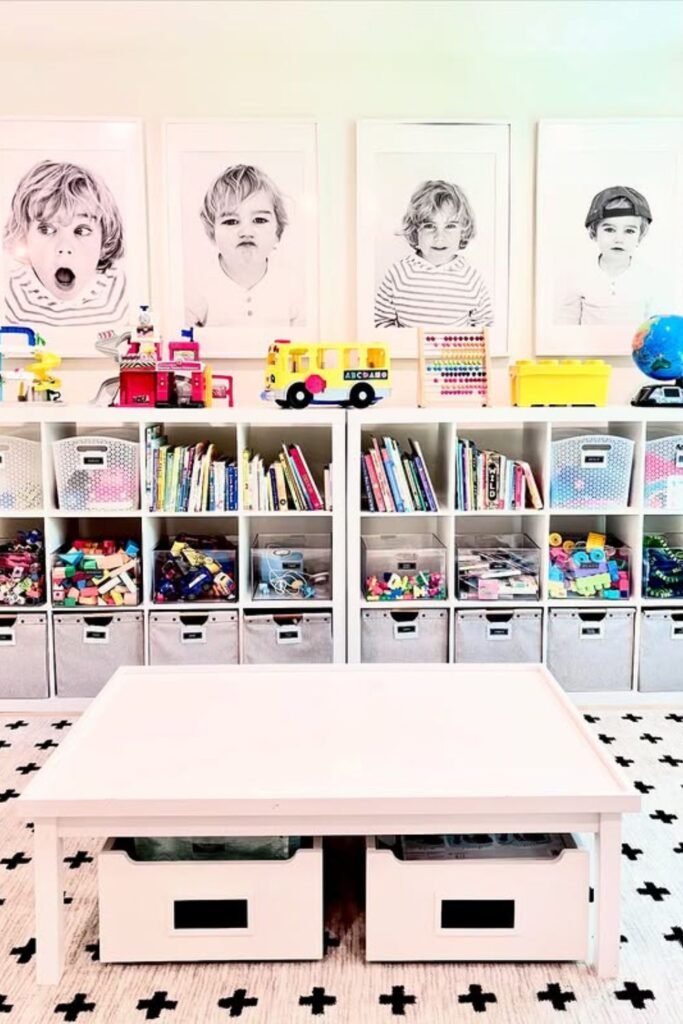
Learning Wall
Toy rooms feel easier to manage once books, building toys and creative supplies stop fighting for the same storage space.
These long cube shelves are great for playrooms or a homeschool section. It keeps everything in focus without creating visual clutter.
Center the books, put smaller toys in glass containers and larger pieces in fabric baskets underneath so kids can get just what they need without taking apart the whole room.
Low shelf is particularly good for smaller children as they can reach their toys and put them away without having to ask for help.
Large wall art above the storage keeps the layout from looking too practical, while a center activity table discreetly creates an area for puzzles, crafts.
Display Shelves
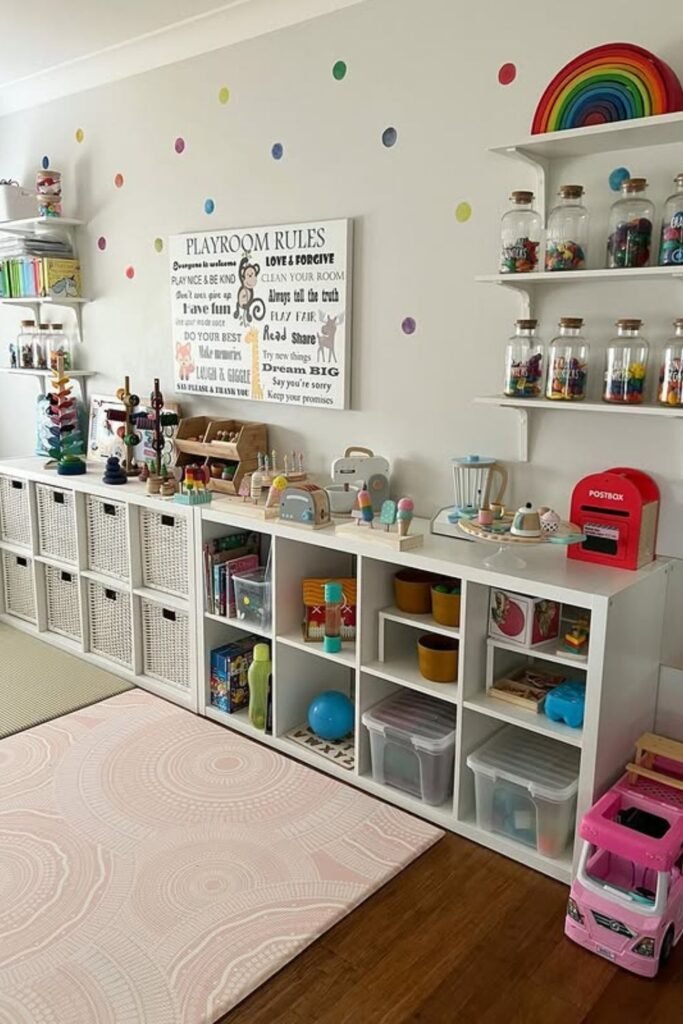
Toy clutter starts looking less chaotic once storage doubles as display space instead of the hiding everything in deep boxe.
Long cube shelves with baskets are especially great for playrooms where books pretend games and learning equipment all require their own places.
Open areas make housekeeping easier because youngsters can notice where everything belongs without pulling out five containers first.
Quietly adding another smart layer for craft jars, sensory toys or little collections that usually clutter tables, wall shelves above the storage.
Colorful dots and amusing design also prevent enormous storage walls from feeling too serious.
Soft Shelves
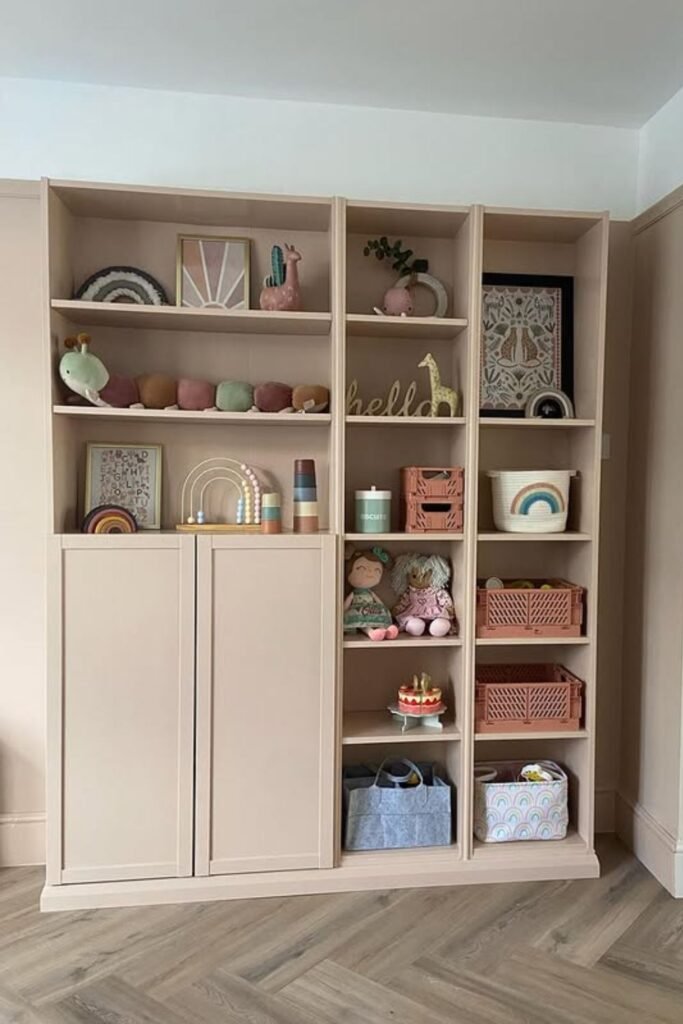
Visual clutter feels much easier to control once storage starts blending into the room instead of standing out everywhere.
Tall built-in shelves paired with closed cabinets work particularly well for kids’ rooms when you want to display beloved toys.
Books, dolls and play pieces are easy to grasp from open shelves at eye level, while lower baskets quietly manage things that don’t need to be out all day.
The soft pink hues and matching bins also help the storage appear tranquil rather than hectic.
Especially in smaller bedrooms where too many vivid colors may rapidly make shelving look cluttered.
Study Corner
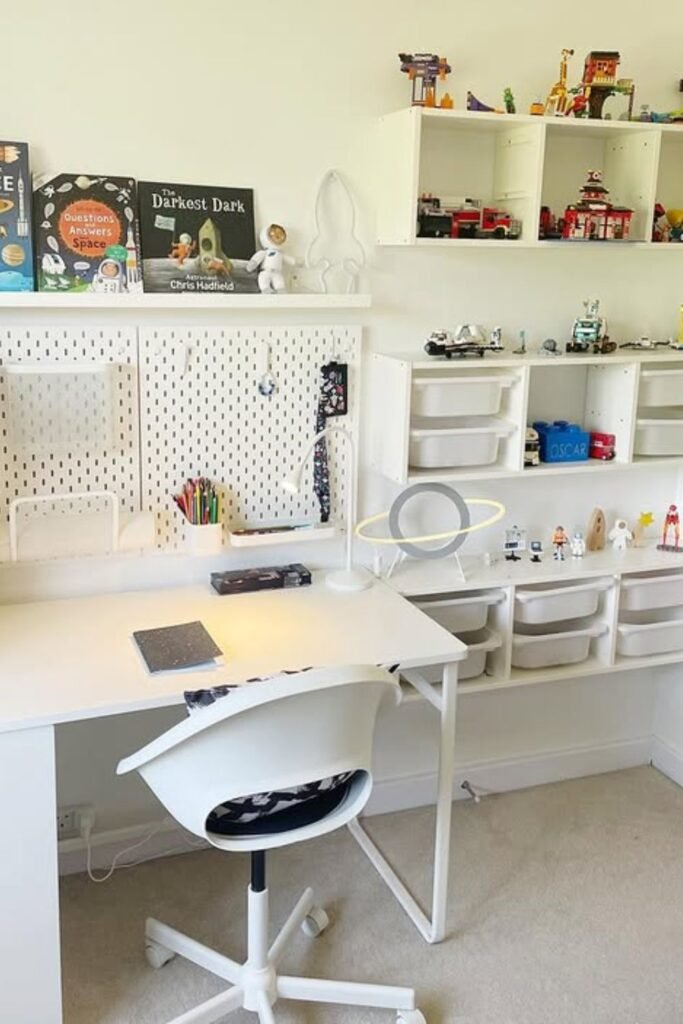
Homework time feels much less distracting once school supplies stop mixing with toys all over the room.
It’s a wall desk with pegboard storage which is especially great for school-age kids.
Pencils and notebooks, craft tools and little collections may stay in one tidy zone, instead of cluttering every surface.
Open shelves above also add treasured books and themed toys to the space without commandeering the desk.
Empty walls can become usable space thus vertical storage like this is a big help to small bedrooms.
Toy Categories
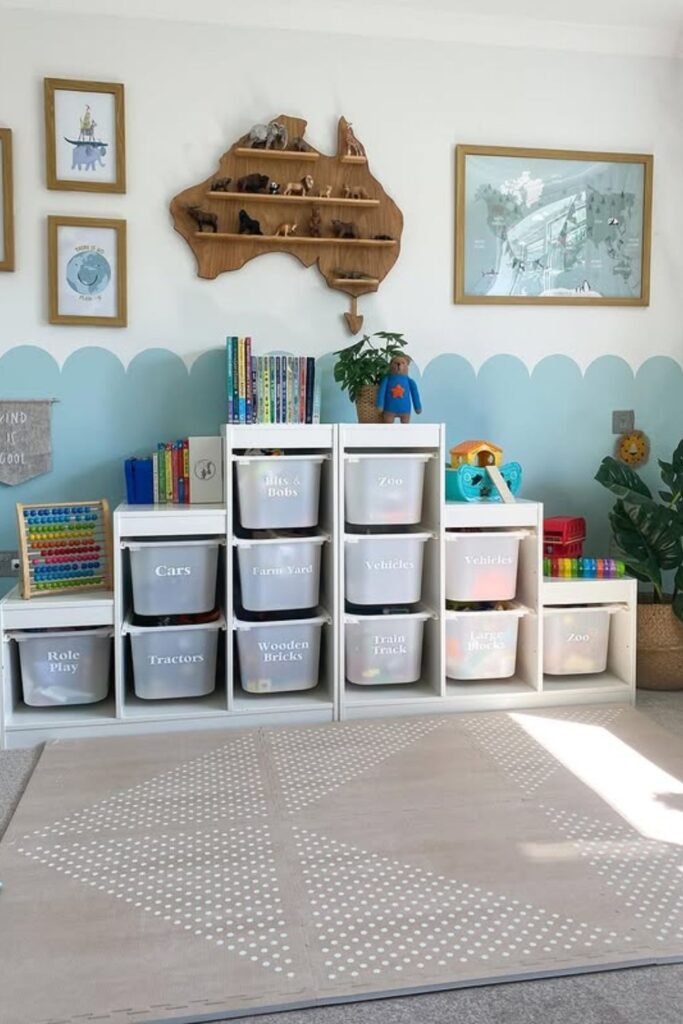
Cleanup feels far less stressful once every toy gets grouped into its own little home instead of mixing into giant overflowing bins.
Clear labeled containers are especially good for playrooms or kids bedrooms with vehicles, animals, blocks and pretend play pieces.
Because kids can easily see what goes where. Another option is sorting toys into categories such as cars, zoo animals, wooden blocks or role play.
Which makes it easy to find your favorite toys without spilling half the room onto the floor.
This kind of design is also great for younger children since the low shelves allow them to easily access things without having to climb or ask for help.
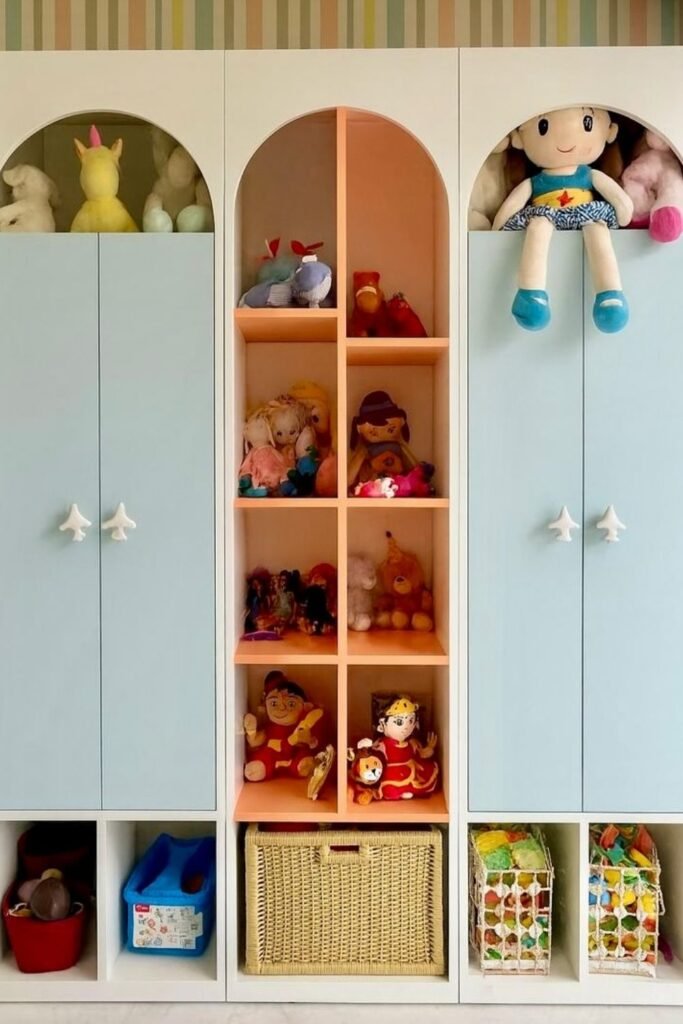
Display Closet
Stuffed animals usually end up everywhere once kids run out of places to keep their favorites close.
Tall storage cabinets with open center shelving provide a sensible solution for combining concealed storage with display space.
Favorite dolls or cuddly toys stay visible in the middle and drawers that are closed silently hide extra mess that doesn’t need to sit out all day.
Lower cubbies also make a major difference for daily cleanup. Baskets and bins give wayward toys, blankets or dress-up parts a fast landing location.
Instead of all over the floor. Soft hues and rounded shelf detail make this storage playful enough for kids and tidy enough to evolve with the area over time.
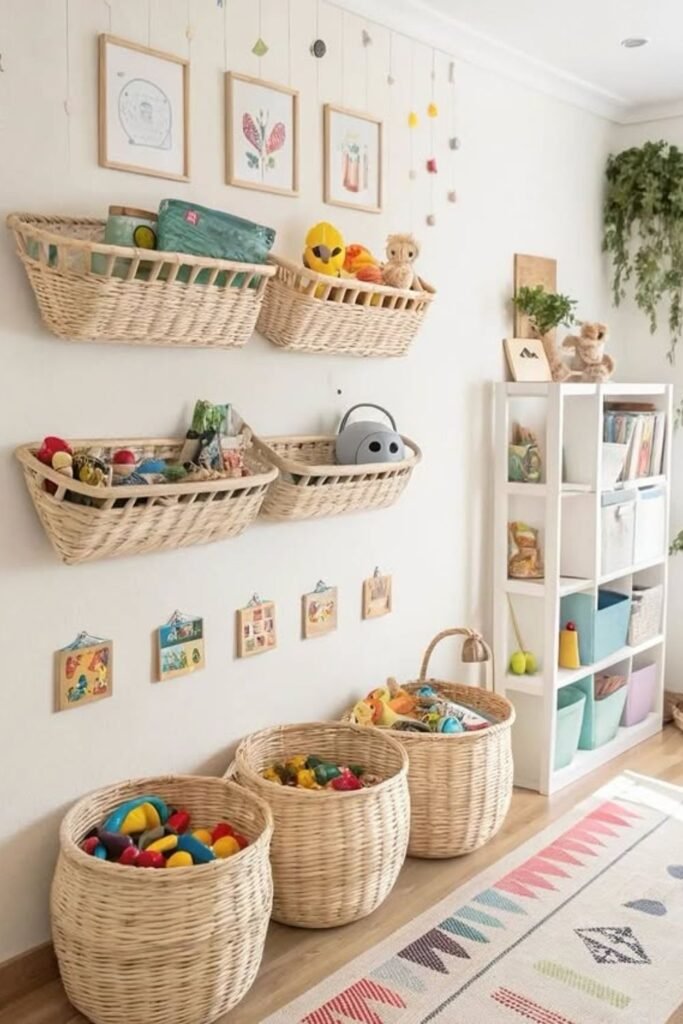
Wall Baskets
Floor space feels much easier to manage once toys stop spreading across every corner of the room.
Hanging wall baskets are particularly handy in small kids bedrooms or play areas as they make favourite items accessible to grab without eating up precious floor space.
Soft toys, pretend food, books or grab-and-go everyday objects work well here, with larger floor baskets underneath to capture bigger toys that tend to end up scattered.
Open cube shelves near the side assist balance the layout by letting books, bins, and activity supplies have their own individual parts instead of piling together.
Natural woven baskets add warmth and playfulness to your storage instead of looking overly plastic or packed.
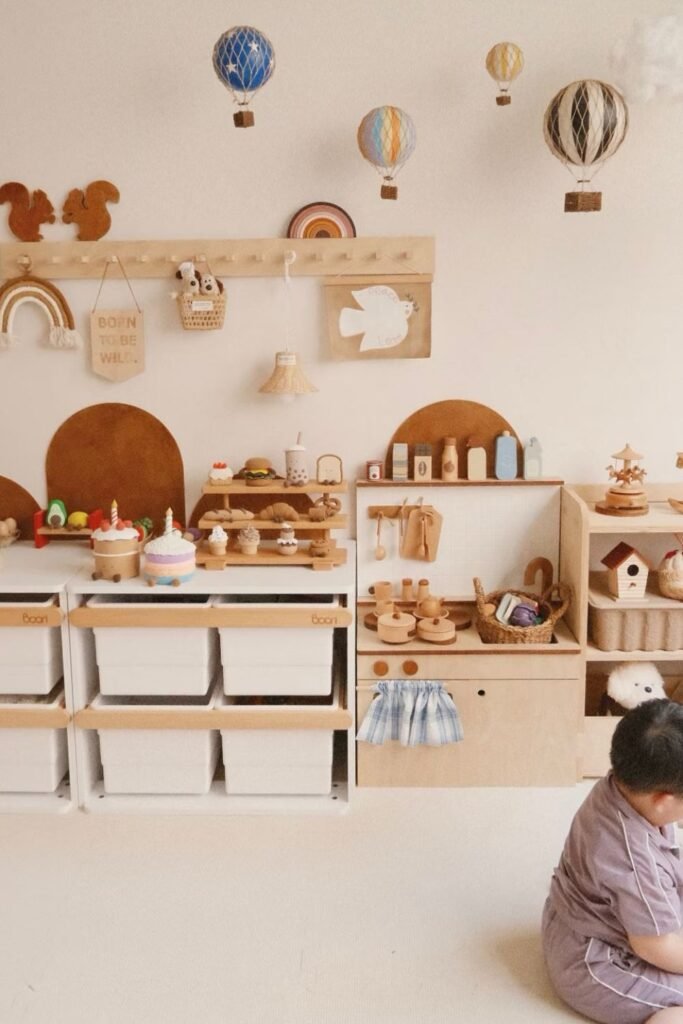
Play Storage
Toy cleanup feels much more natural once kids can grab things without asking for help every few minutes.
Low pull-out bins with open shelves are great in toddler and preschool rooms, keeping favourite toys within easy reach and tucking away extra rubbish underneath.
And creating distinct stations for pretending food, dolls, blocks, and little collections makes play less chaotic and more tranquil.
Warm wood furniture and soft neutral hues keep a room like this fun without being visually cluttered, which is a great way to go if toys already provide plenty of color.
Open floor space in front is important too, because youngsters need enough area to actually sit down, spread out and enjoy the toys they can finally find easily.
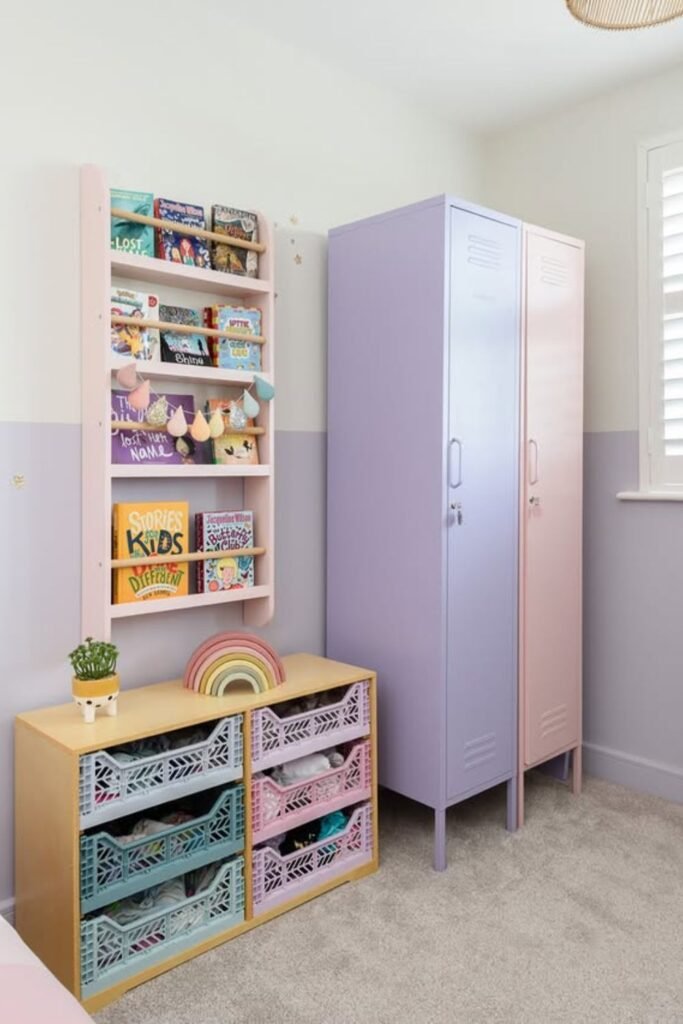
Book Corner
Bedtime routines feel much easier once books stop getting buried inside toy bins or stacked around the room.
Wall-mounted book shelves are particularly useful in smaller children’s bedrooms, as favourite stories may remain on display without occupying floor space.
Kids are more likely to grab a book themselves instead of forgetting what they have when books are facing front.
Soft pastel lockers can gently tackle another typical problem by hiding heavy goods that can overwhelm bedrooms quickly.
Extra clothes. School bags. Seasonal toys or bulkier playthings stay out of the way while lower crate compartments.
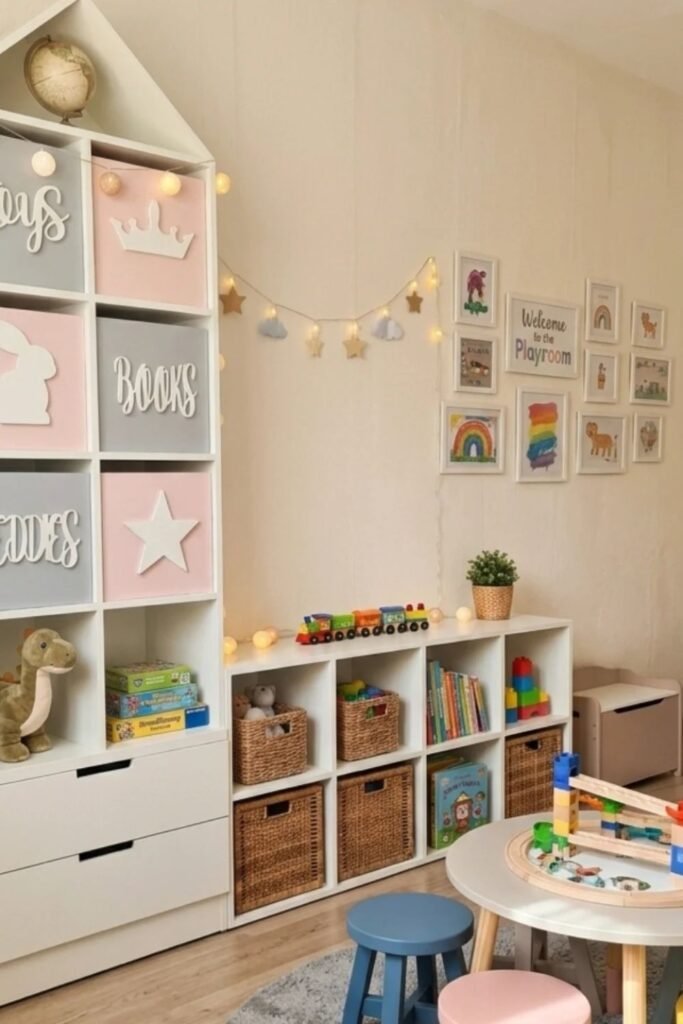
House Shelf
Playrooms start feeling more organized once storage feels fun instead of looks like plain furniture pushed against a wall.
House-shaped shelves are great for smaller kids as books, toys, and favorite stuffed animals are easy to see, without making housekeeping a chore.
Breaking up the space into areas for books, teddies, puzzles and small toys also teaches kids where things belong without needing continual reminders.
The entire setting remains entertaining with warm fairy lights and named divisions that are useful for daily clutter.
Lower cube shelves with woven baskets allow a convenient landing for wayward toys and drawers below assist hide bulkier items that sometimes make rooms look crowded.
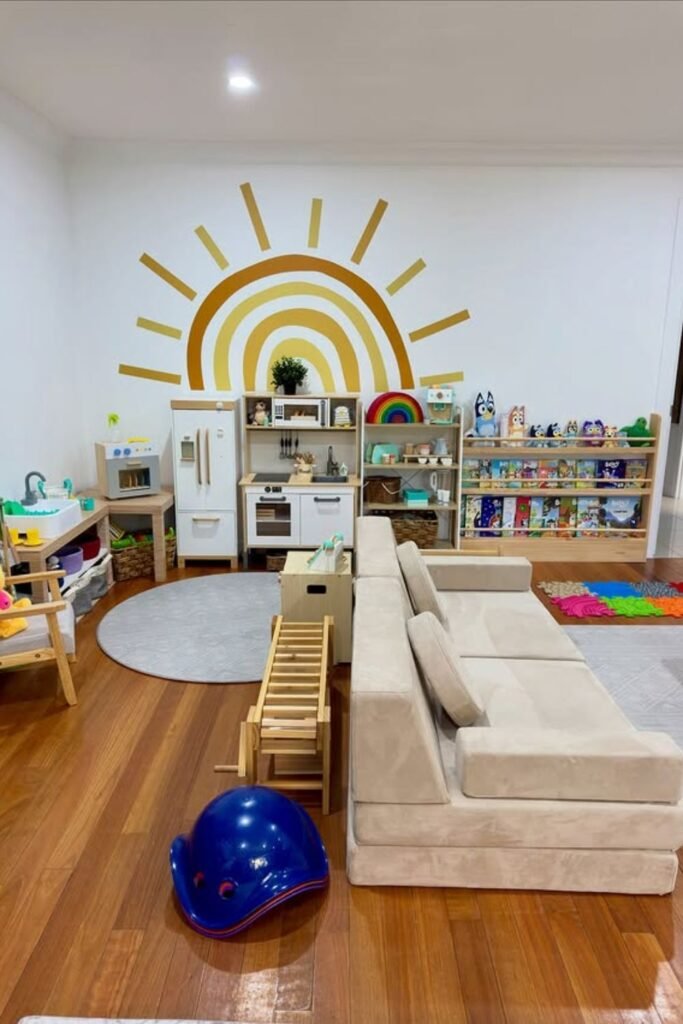
Room Zones
Large playrooms feel messy much faster when toys, books, and pretend play all fight for the same corner.
It all seems to be more manageable by having little zones of activity like this where each place has its own function instead of just being one big toy explosion.
A play kitchen beside storage shelves, a reading wall for books and a soft play section allow kids transition seamlessly between activities.
Open shelves are especially helpful here, with favorite toys left in view and baskets below hiding away the additional parts that tend to pile up on the floor.
The soft seating in the middle also serves as a natural border between places without inhibiting movement.
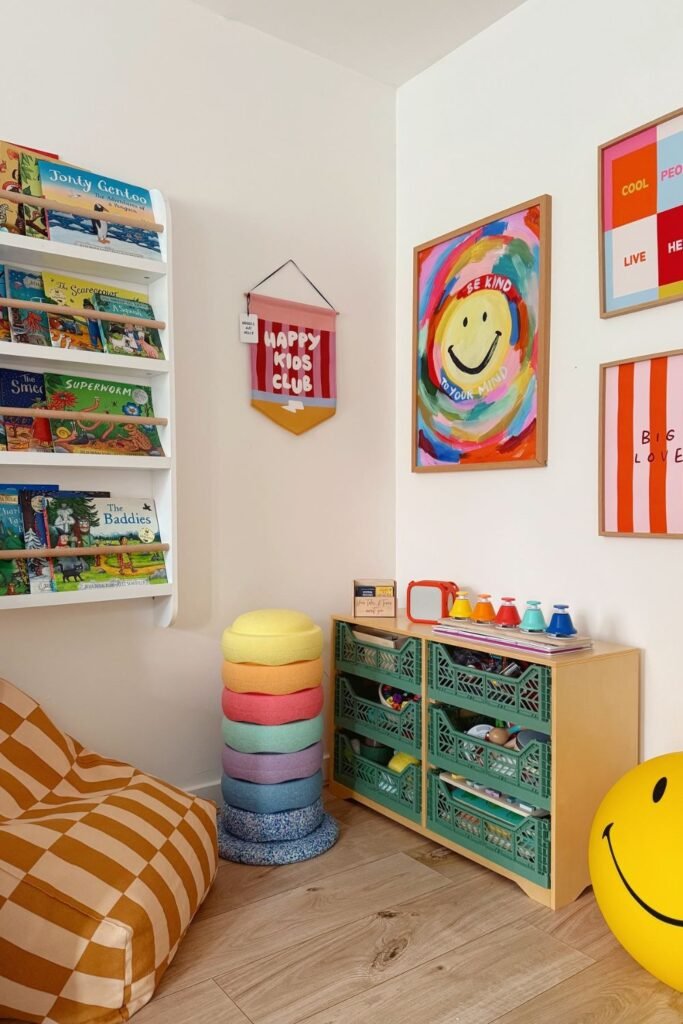
Color Corner
Toy corners feel easier to keep clean once smaller items stop disappearing into random baskets.
This kind of crate drawers is especially great for compact playrooms or bedroom corners because puzzles.
Pretend toys, art tools, and little collections stay tidy without taking over the area.
The pull-out crates also make clean-up feel faster because youngsters can pull out only one section instead of tossing everything out on the floor.
Wall-mounted book shelves save extra space by keeping beloved stories easy to sight with out the bulk of bookshelves.
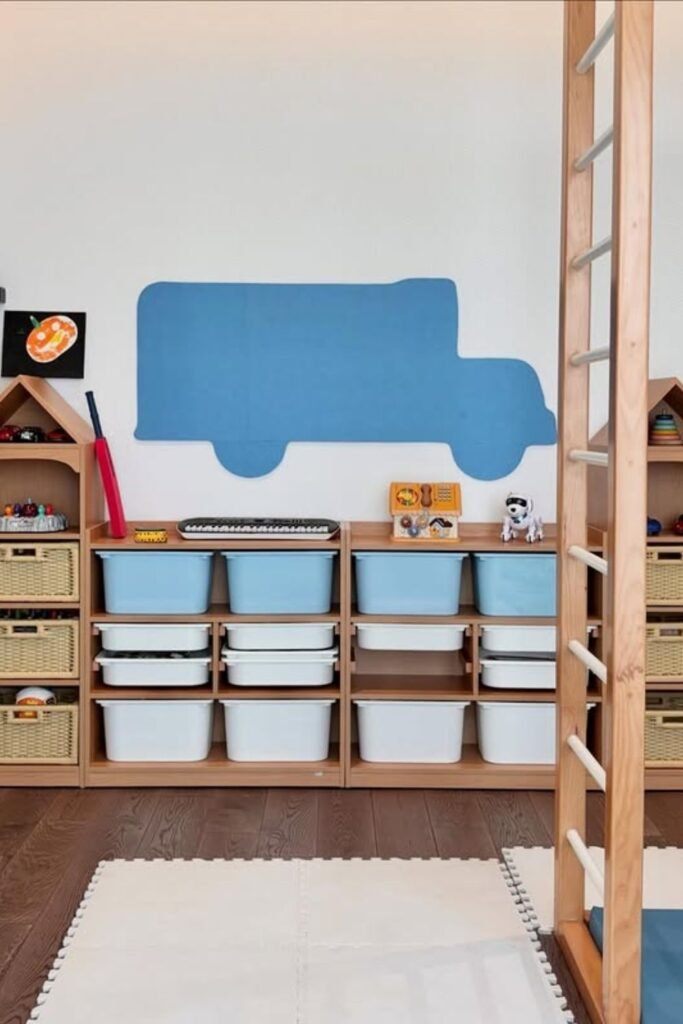
Toy Row
Tiny toys stop taking over the room once every category gets a simple spot instead of piling into one oversized basket.
Long low storage units with pull-out bins work especially well for smaller kids since cars, blocks.
Puzzles and pretend play items are accessible to reach without generating visual chaos. It’s also less frustrating when it’s time for cleanup.
Because youngsters can just throw things back into open bins, instead than opening drawers.
Matching side shelves gently give more storage without making the room appear cluttered, great for books, baskets or beloved display items.
Learning Storage
Toy mess feels much easier to control once books, learning toys and play items stop competing for the same shelf.
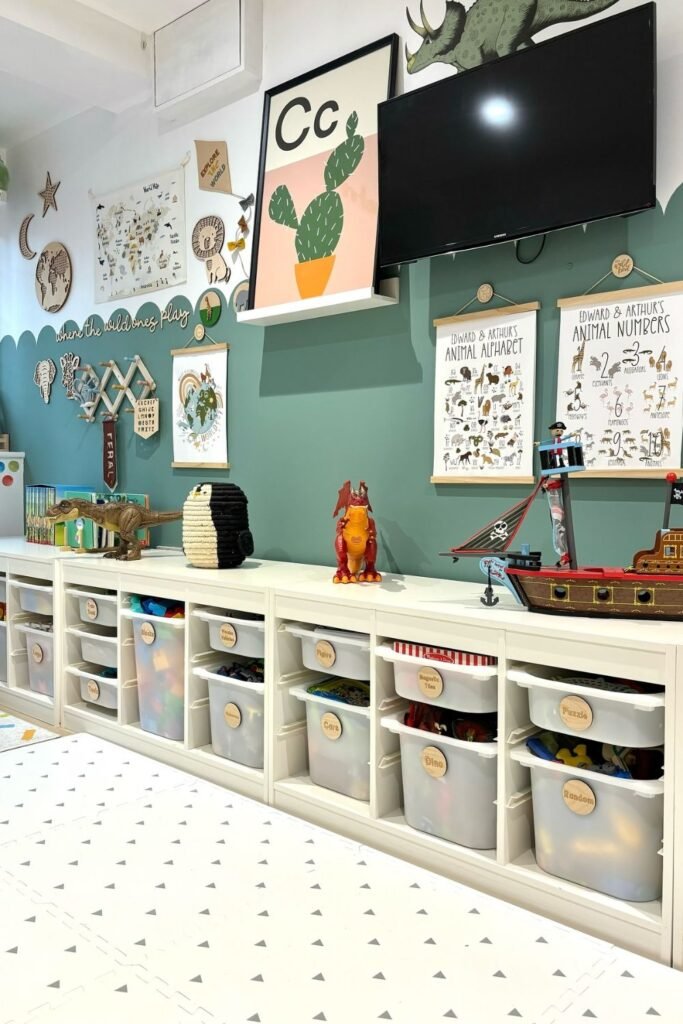
Long, low storage cabinets with labeled bins are great for shared playrooms or learning spaces.
So children can easily identify dinosaurs, puzzles, building toys, or crafts without first having to empty five containers.
Labels also gently teach cleanliness practices as even younger toddlers start to recognize where beloved objects go.
Wall décor overhead makes storage a part of the room rather than simply basic organization furniture.
Hidden Bench
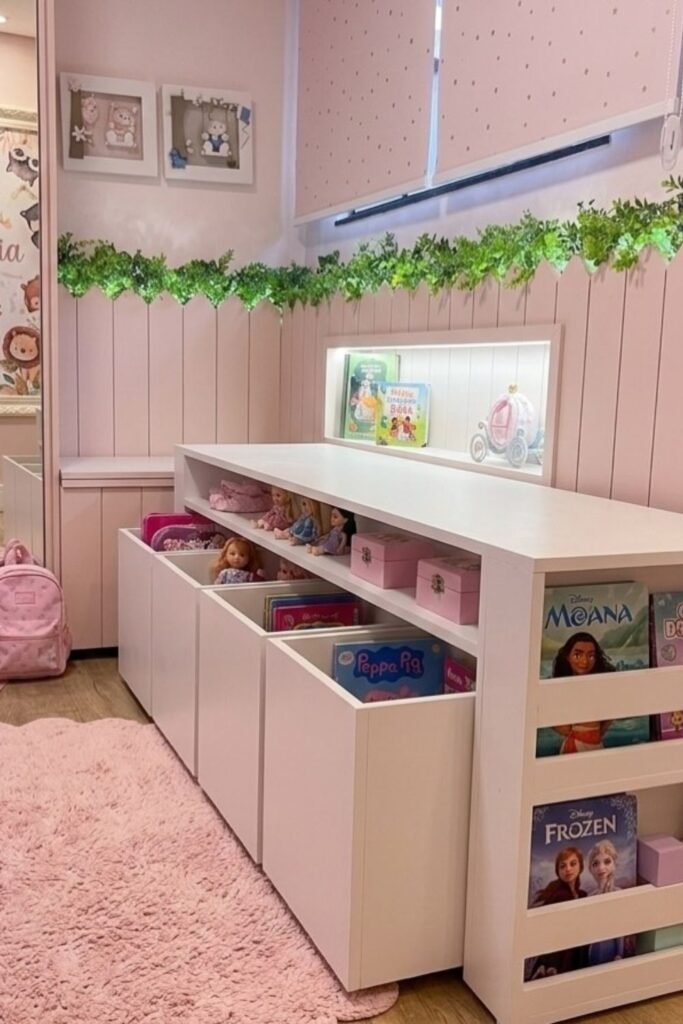
Bedroom floors stay cleaner much longer once toys and books stop fighting for the same tiny space.
This bench-style storage works extremely well in smaller kids rooms as the pull-out compartments may silently store dolls, books and play sets.
While yet keeping everything accessible to reach. The open compartments on top also keep beloved toys visible instead of lost in deep containers that kids seldom open again.
Soft pink rooms are a huge plus for modest storage because tall shelves may easily crowd tight areas.
Side front-facing book shelves turn treasured stories into part of the decor, while concealed parts underneath make housekeeping feel quicker at the end of the day.
FAQs
How Do You Organize A Kids Room Without Buying Too Much Storage?
Extra storage will only work if it fits with how your child actually plays. Sort toys into categories like books, blocks, dolls or pretend play before buying anything new.
Better than cramming the room with random organizers kids quit using in a week are open baskets, cube shelves and under-bed bins.
What Is The Best Way To Keep A Kids Room From Getting Messy Again?
Toys with a simple home that kids can remember are much easier to clean up. Prevent clutter from accumulating too fast with easy-to-access favorite toys.
Rotating extra items in and out every few weeks, and labeled bins. Little cleanup practices done daily are frequently more effective than a major weekend reset.

Hi, I’m Afaf! I’m a law student who loves writing about everyday life – from home projects and crafts to fashion, beauty, and parenting tips.
I’ve been writing for over a year, sharing ideas that are simple, practical, and easy to try. I write about things I find interesting and useful, whether that’s organizing a space, trying a new DIY, or finding activities to keep kids entertained.
My goal is to share helpful ideas without making things complicated. If it works in real life, I’ll write about it.
When I’m not studying or writing, I’m usually experimenting with new projects or scrolling for inspiration!