
23 Kids Room Paint Ideas for 2026
Picking paint for a kids room sounds thrilling, until you really start looking at the hues. All at once every decision looks dangerous.
Bright colors can be overbearing, soft hues can be dull, and popular themes can age faster than you think.
Add a small room, changing interests or furniture you already possess and the whole thing gets increasingly trickier.
If you want a room that seems lively now without demanding you repaint everything next year, you’re at the correct place.
In this article, I’m going to show you 23 kids room paints ideas that make bedrooms feel dynamic but still tidy.
Let’s jump in!
How Do You Pick Kids Room Paint Ideas That Grow With Your Child?
It gets easier when you stop picking kids room paint colors based on their present age.
Kids change favorite colors, interests and characters quickly, so to paint a whole room around one theme can seem like a mistake down the road.
Save this article for later!👇👇👇
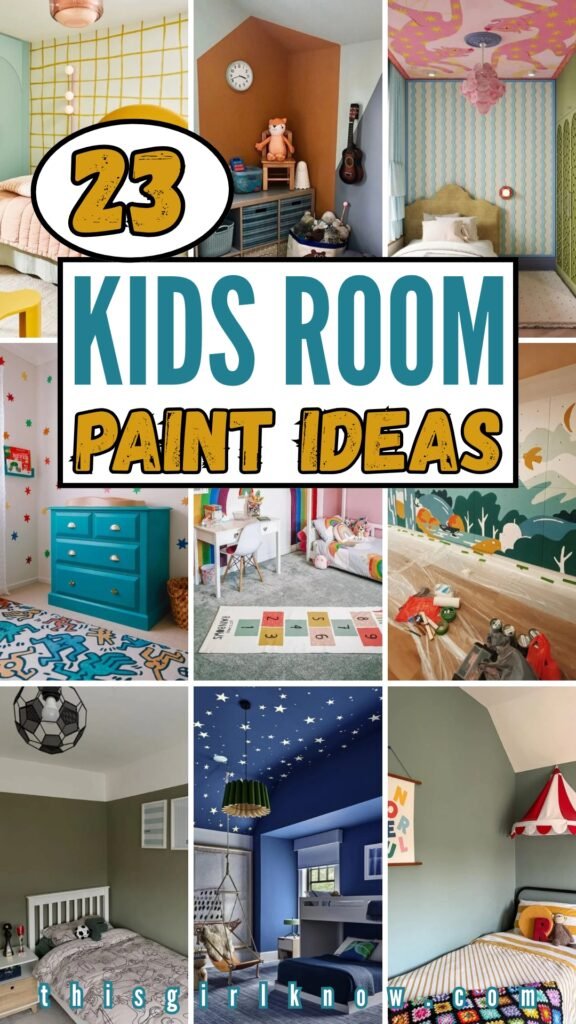
If you want the room to survive longer, start with colours that feel lively but not too juvenile.
Usually soft greens, warm beige, hazy blues, muted pinks or creamy whites do the trick, as you can always refresh the room later with bedding.
First, you’ve need to consider about furniture, lighting, and space size because the appropriate paint looks significantly different when everything comes together.
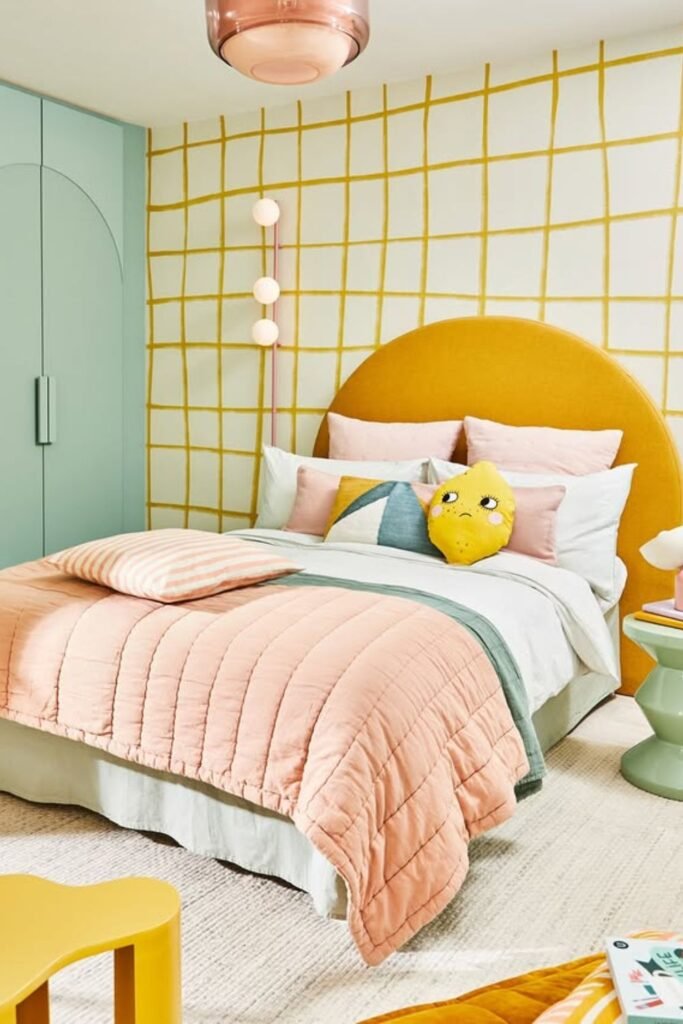
Grid Charm
Playful rooms feel more interesting when paint becomes part of the design instead of staying plain.
A hand painted grid wall like this looks particularly good behind the bed as it immediately makes one side of the room a focal point without flooding every wall with colour.
A soft cream color with mustard lines keeps the space happy but peaceful enough for slumber.
A curved headboard, pastel bedding, and a few of complementing accent colors will pull it all together without making the area feel busy.
This concept also works well for smaller bedrooms, since limiting the design to one wall prevents the area from feeling overly cluttered.
Ceiling Magic
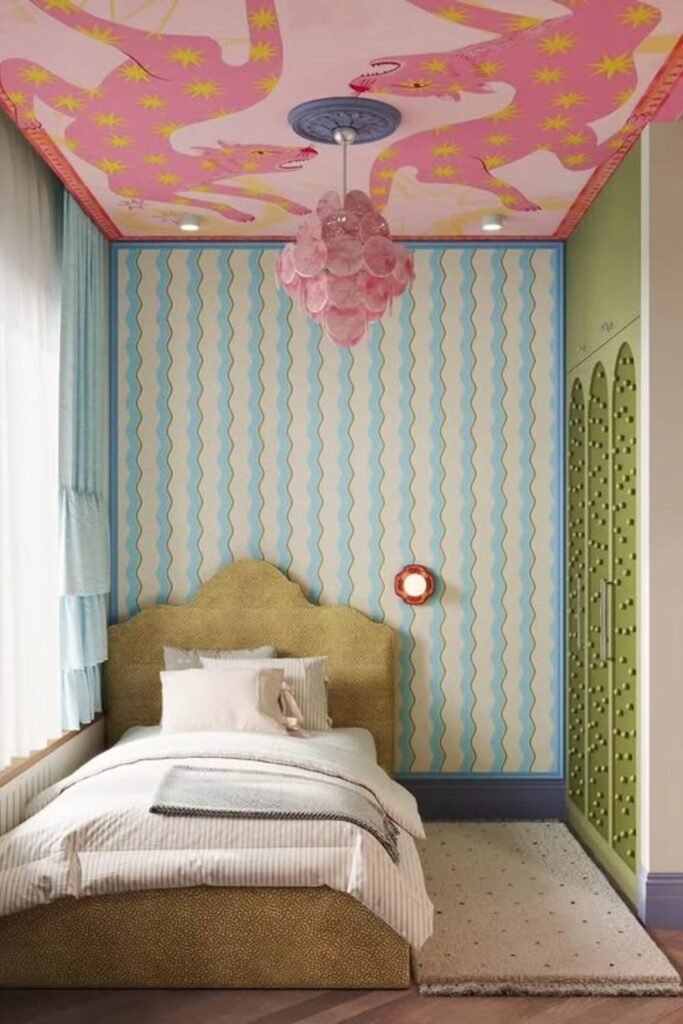
Bold paint ideas feel less overwhelming when you move the drama upward instead of covering every wall.
Narrow kids rooms are wonderful with a painted ceiling full of fun shapes or hand-drawn patterns.
Because it draws the eye upward and makes the room feel more imaginative. The soft wall colors around it help balance the look.
So bedtime doesn’t feel chaotic but remains calm. Wavy wall paint and quirky wardrobes offer personality and you don’t have to add extra wall decor everywhere.
In a room, a plain bedspread is generally best balanced by a dramatic ceiling, as too many conflicting colors can make the area feel cluttered all too quickly.
Paint Peaks
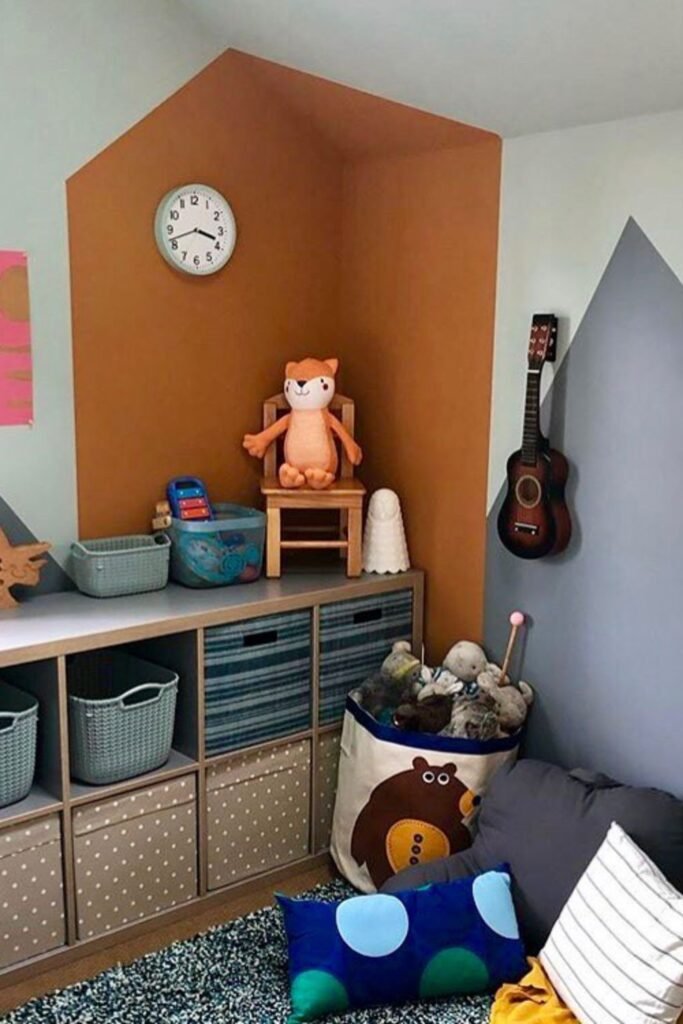
Sharp paint shapes can quietly make a kids room feel more playful without covering every wall in bright colors.
Paint like this in a mountain style is great for reading areas, play zones or smaller bedrooms where you want visual appeal but don’t want to add bulky decor.
The warm brown with muted blue creates a homey feeling to the space, but still feels age friendly as kids grow.
Painter’s tape will help you get nice clean angles, but a little unevenness will make the set-up feel softer and less stringent.
Storage furniture underneath helps to make the painted section look planned and not float awkwardly on an empty wall.
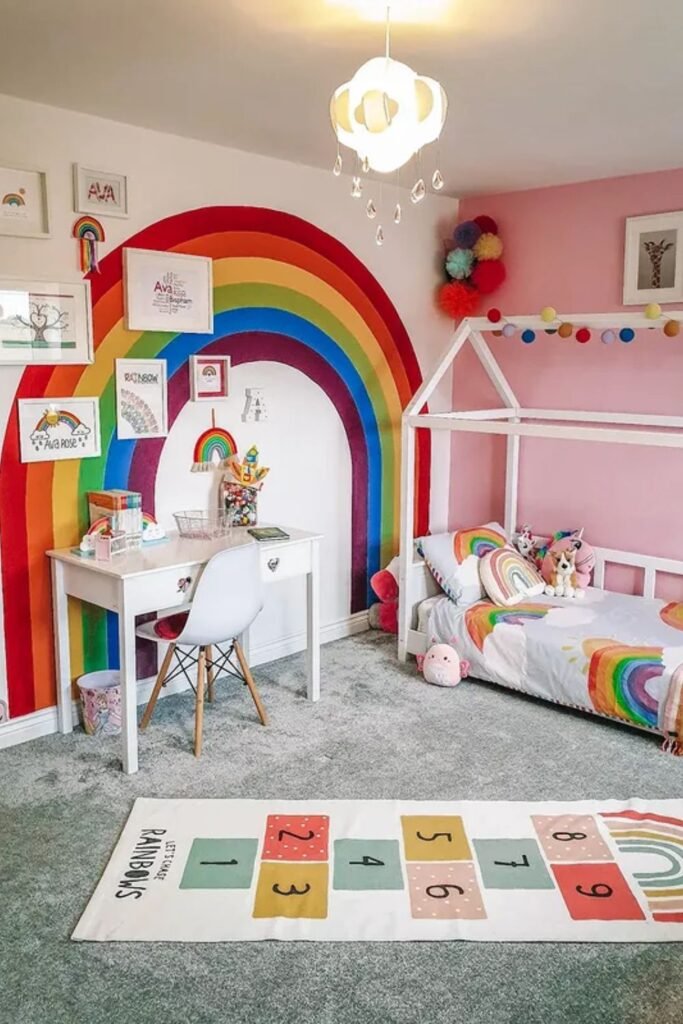
Rainbow Splash
Big empty walls stop feeling boring fast when one painted rainbow becomes the whole personality of the room.
Rainbow arches like this fit beautifully behind study desks, reading corners, or smaller beds because they fill awkward blank spaces without needing extra wallpaper.
Bright colors feel playful, but keeping the rest of the room softer with pale pink walls and white furniture helps stop the space from feeling too loud.
Painter’s tape can help shape cleaner rainbow lines though slightly imperfect curves often feel more fun in kids spaces.
Matching small details like rainbow bedding and wall art ties every thing together without making the room feel overly themed.
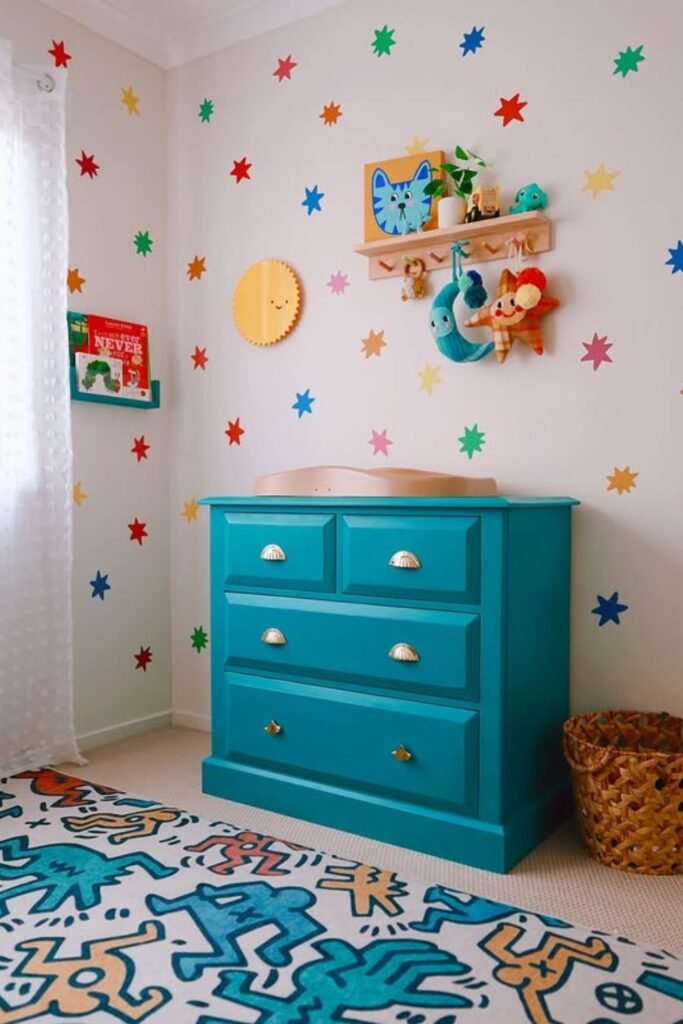
Star Sprinkle
Plain walls start feeling much more playful when small painted details spread across the room instead of one giant mural taking over everything.
These colorful stars are great for nurseries, toddler rooms, or smaller bedrooms where you want the joy of paint but don’t want to make the space feel cluttered.
Picking five or six repeated hues keeps the wall happy, while also looking orderly. Wall stickers will work.
But painting basic star shapes by hand will add a more personal touch to the area and cost less than wallpaper.
Bright furniture elements, such as a bright dresser or patterned rug, help tie the paint together naturally so that the room feels finished.
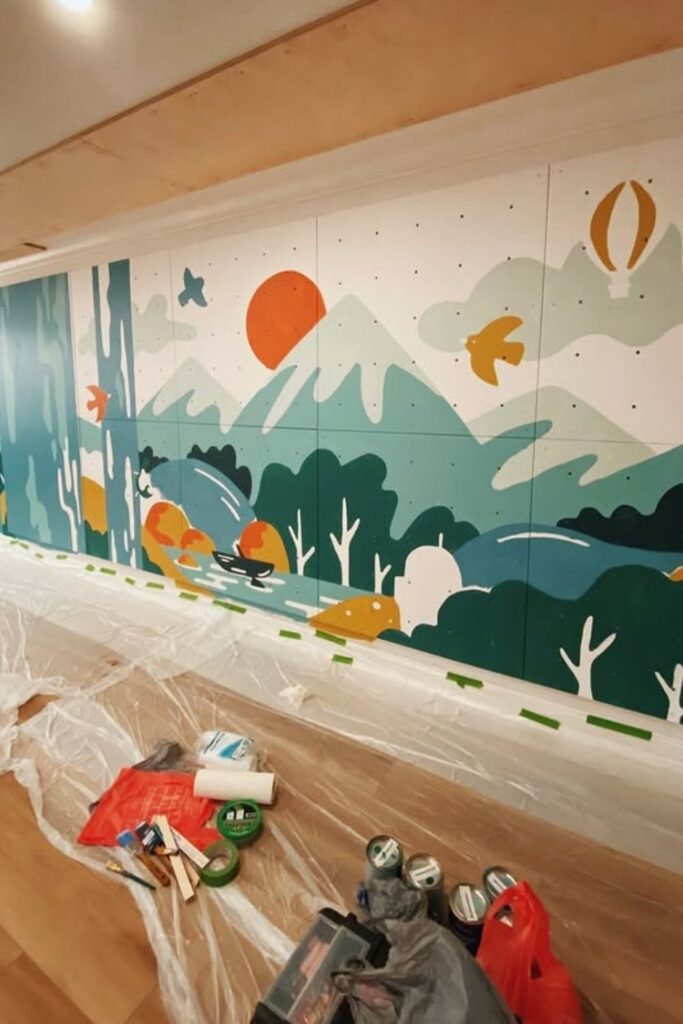
Mural Escape
Nothing fills a long empty wall better than turning paint into a full story kids can grow into over time.
Nature inspired murals like as mountains, rivers, skies and hot air balloons are great for shared bedrooms, playrooms or bigger kids spaces.
When one wall feels a little bare on its own. Soft greens, blues and warm orange accents keep the room fun without going too babyish down the line.
Planning the sketch first with painter’s tape or light pencil marks can make the shapes simpler to balance, especially on big walls.
Here basic bedding and neutral furniture tend to work best, because the painted wall is already doing most of the visual job.
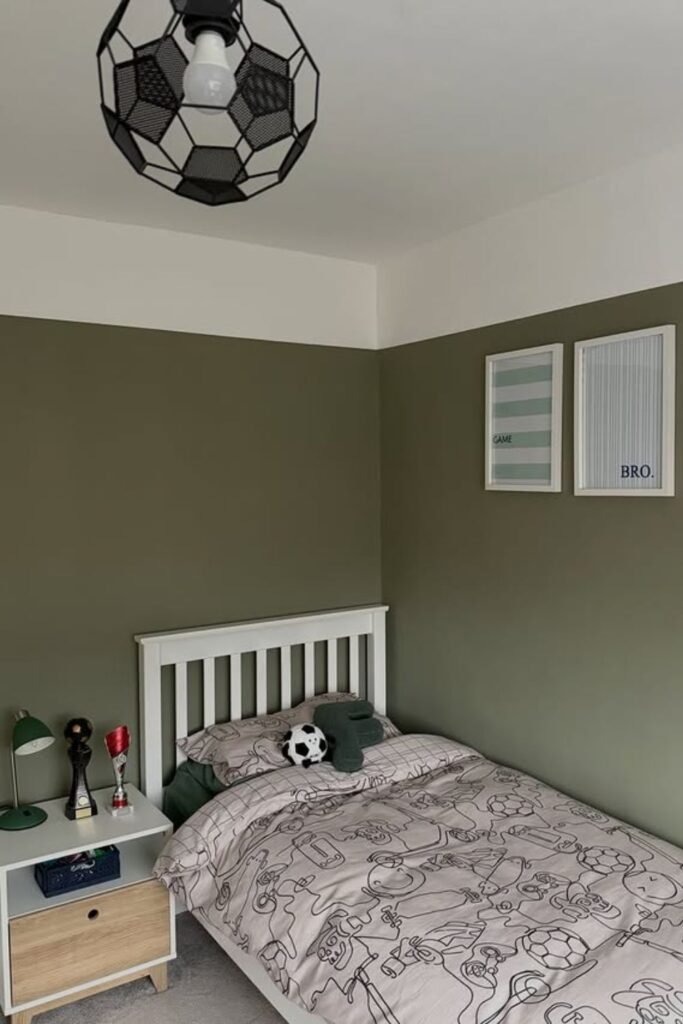
Calm Layers
Muted paint colors quietly solve a problem many parents run into later when bright themes start feeling too young.
Olive green on the bottom half of the wall works particularly well in boys rooms, shared bedrooms or smaller spaces.
Where you want color without making the space feel dismal. A white upper wall makes the ceiling look higher and contrasts darker tints well.
I find that painter’s tape helps create crisp separating lines, but painting the color just above bed height frequently feels more purposeful.
Sports bedding, wood furniture or basic framed art come easy to this spot, making it much easier to update the area as youngsters develop.
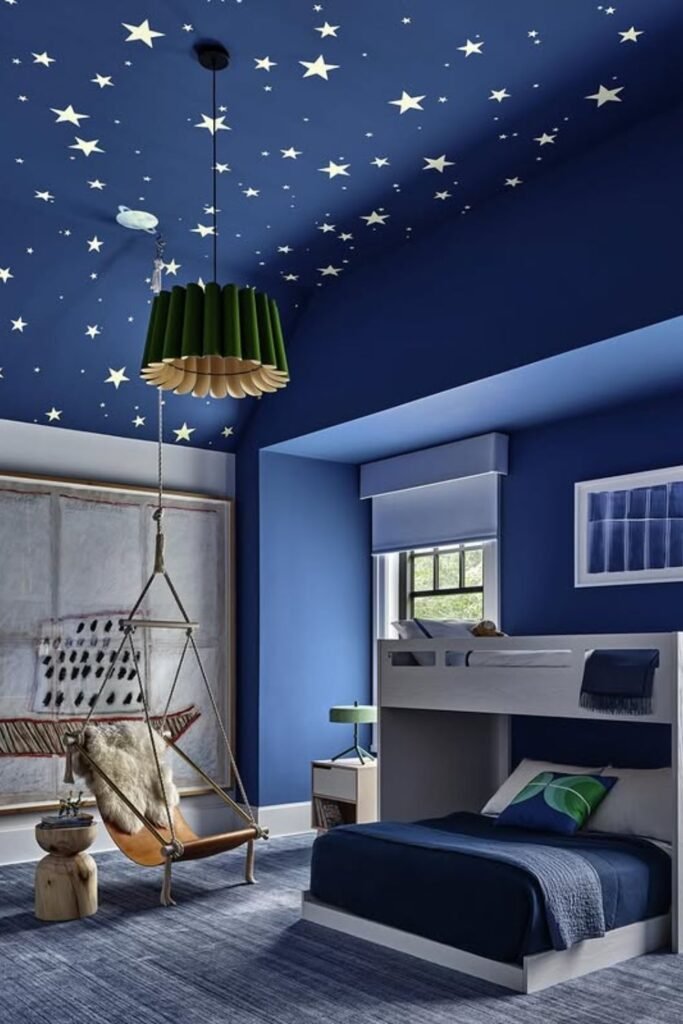
Starry Dreams
Dark paint can feel surprisingly cozy when you use it to create a night-sky effect instead of painting a room plain blue.
Ceiling stars with deep navy walls are great in shared bedrooms, bunk-bed rooms, or areas.
Where nighttime seems to be more difficult because the room still feels too bright or fun.
Small star decals or painted forms spread around the ceiling make the space instantly more immersive without the need for more adornment everywhere else.
The darker tints are broken up with white furniture and gentle lighting helps keep the area comfortable rather than oppressive.
Soft Angles
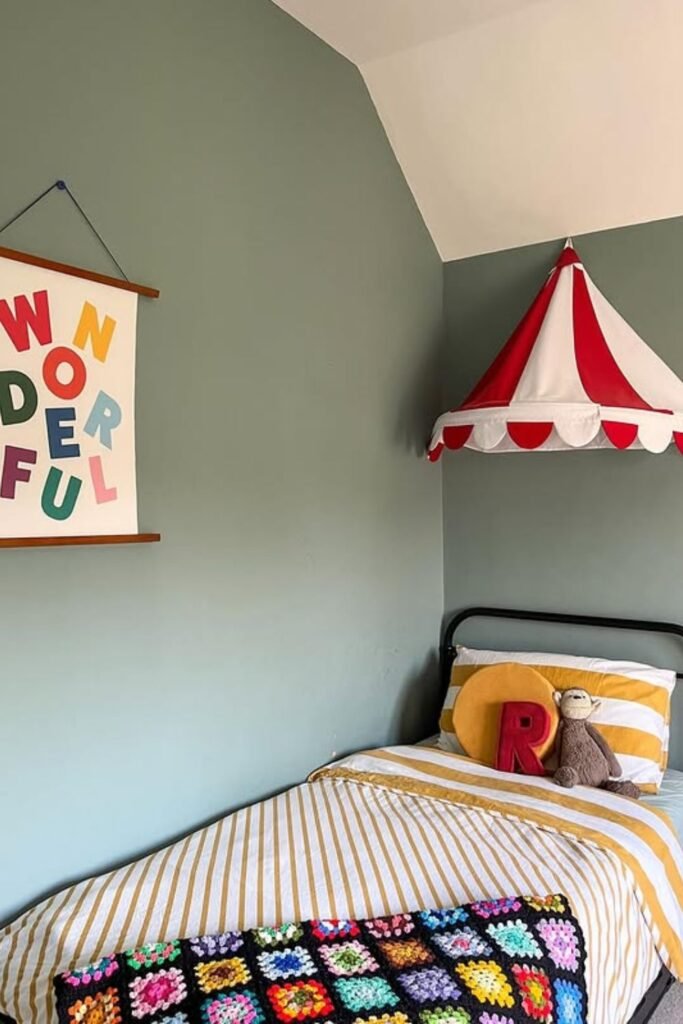
Awkward slanted walls stop feeling difficult when paint follows the shape instead of fighting against it.
Sage green takes up most of the wall and looks well in attic bedrooms, small kids rooms or snug areas where bright colors can be too much.
The topmost half of the wall is white to assist make the ceiling lighter and to stop the room seeming closed-in.
Simple bedding with one vivid accent color (mustard, crimson, etc) offers personality without tons of wall decor.
Usually a reading nook, humorous bunting or one statement print work best here, as the color already gives the area enough character on its own.
Rainbow Garden
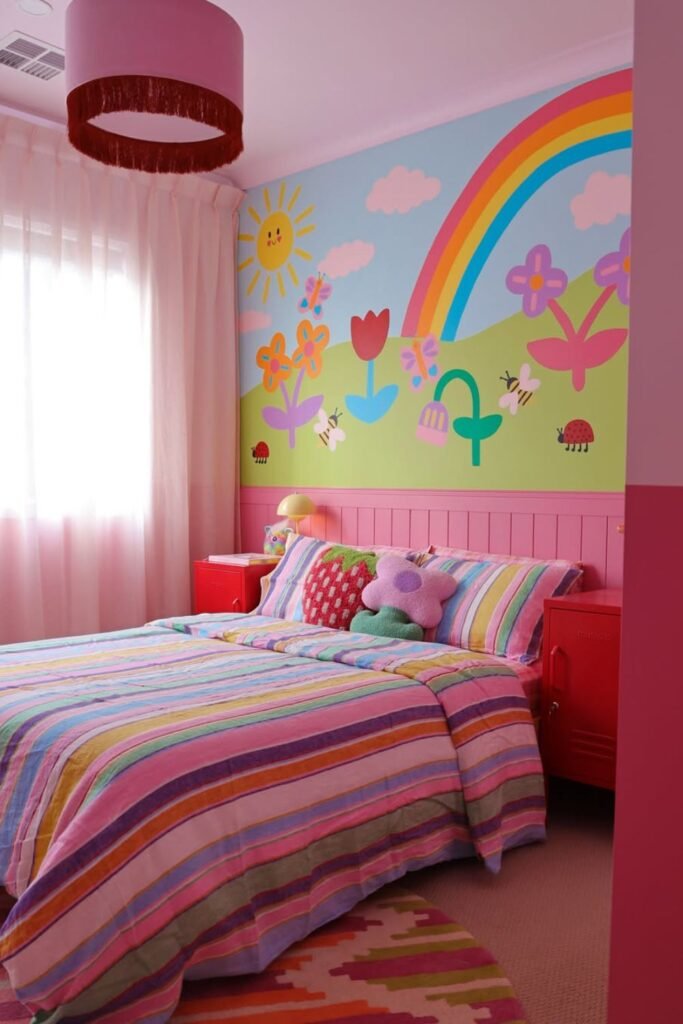
Color-loving kids usually need one strong feature wall instead of filling the entire room with bright paint.
A fun mural with rainbows, flowers, clouds and sunny accents is a great backdrop for the bed as it puts the sleeping area in the spotlight.
Without having to decorate all over the place. Soft pink paneling below helps to balance all the color and keeps the room from feeling too cluttered.
When you blend together several colors Plain curtains and simple furnishings let the painted wall pop more, and bedding in similar tones.
Theme Glow
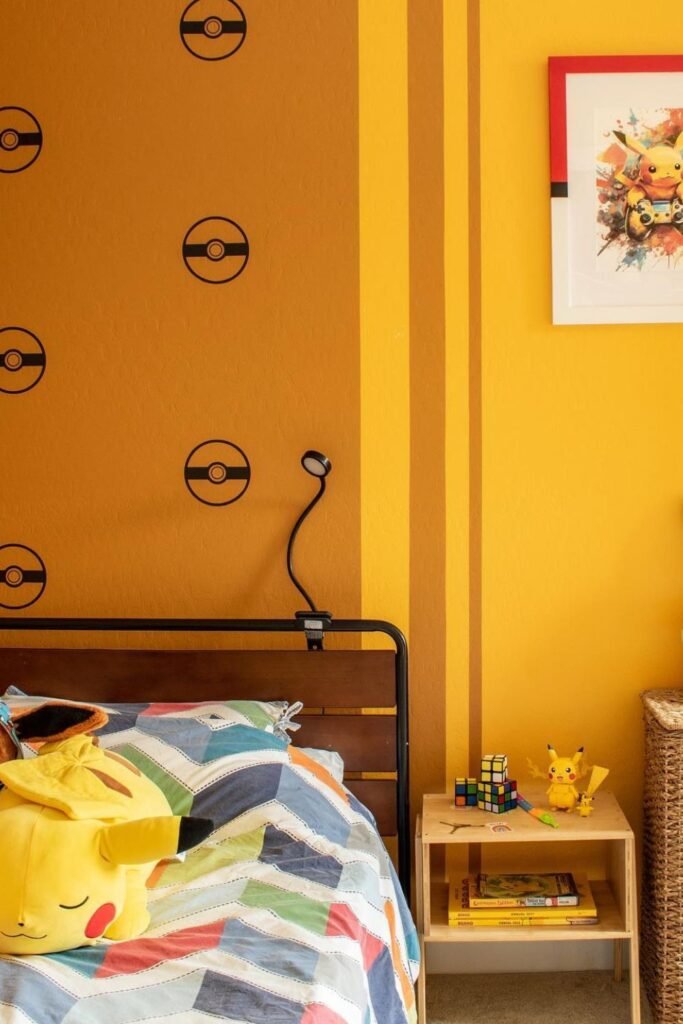
Favorite character rooms feel much smarter when paint carries the theme instead of buying matching furniture for everything.
Mustard yellow walls like these work beautifully for gaming-themed bedrooms because one bold color instantly sets the mood without making the room feel overcrowded.
Thin painted stripes help break up large walls and quietly add extra detail without needing wallpaper.
Smaller themed touches, like framed art, bedding or collectibles, usually work better than filling every corner with matching decor since kids often switch interests fast.
Warm paint colors like yellow or burnt orange also make compact bedrooms feels more energetic and while still keeping the setup simple enough to update later.
Ocean Calm
Nature-inspired paint feels much easier to grow with when the theme stays soft instead of cartoon-heavy.
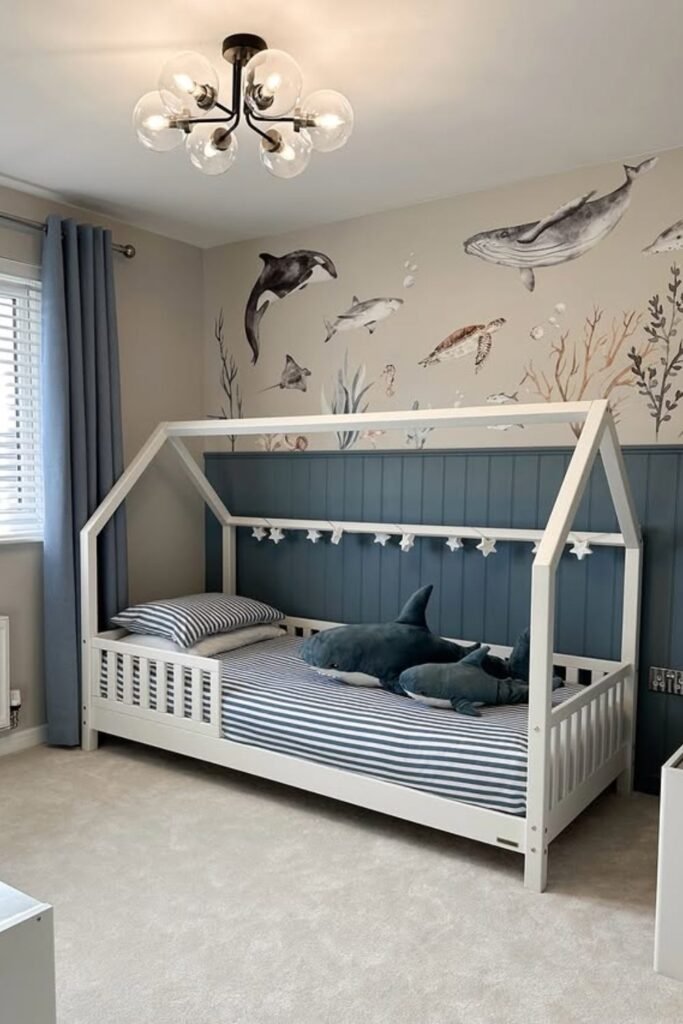
Deep blue panel paint with ocean wall art works nicely in kids rooms where you want something lively but still peaceful for sleep.
Half-painted walls anchor the area and help bigger rooms feel cozier without feeling like you need a ton of extra color.
House-frame beds are especially well suited here as they don’t compete with the wall design but keep the room fun.
Bedding in soft gray, white and mild blue usually works best as the painted backdrop already has most of the individuality, making it easier to adapt later when interests shift.
Color Split
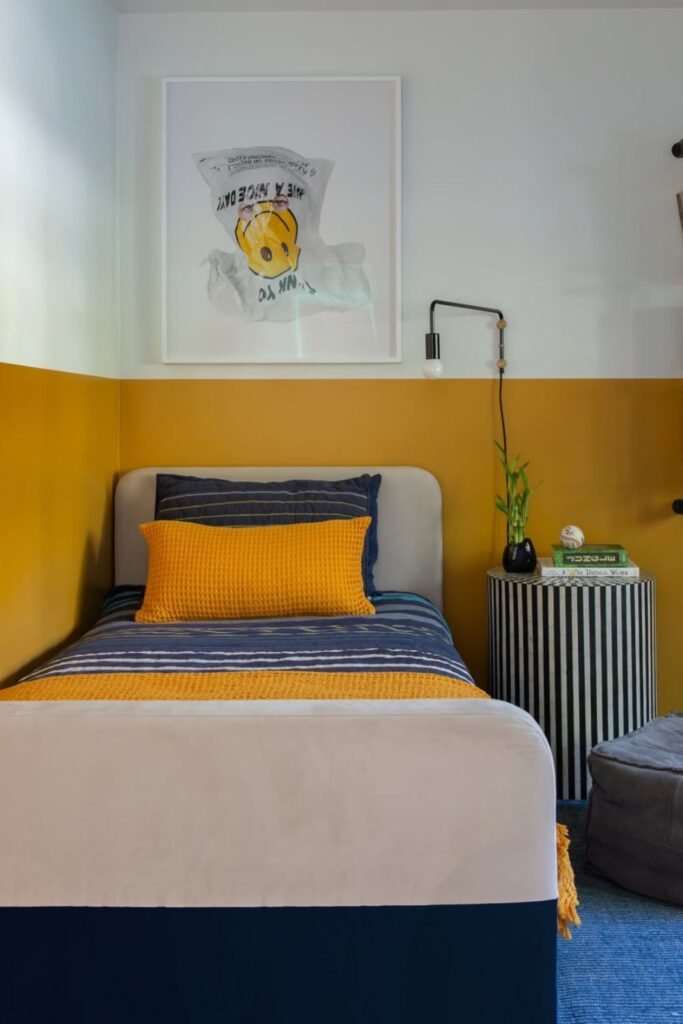
Half-painted walls quietly solve two problems at once by adding color without making the room feel overwhelming.
Especially great for older kids rooms or tween spaces when colorful themes start to feel too young but plain white.
Still feels monotonous is the mustard yellow on the bottom half. Lightness in the upper half of a room makes smaller bedrooms appear spacious.
While a deeper color near the bed creates a warmer, more grounded sensation. Clean lines are what matter here.
This bold color goes well with navy bedding, black accents or simple wall art so future updates will be much easier without having to paint everything over.
Playful Scribbles
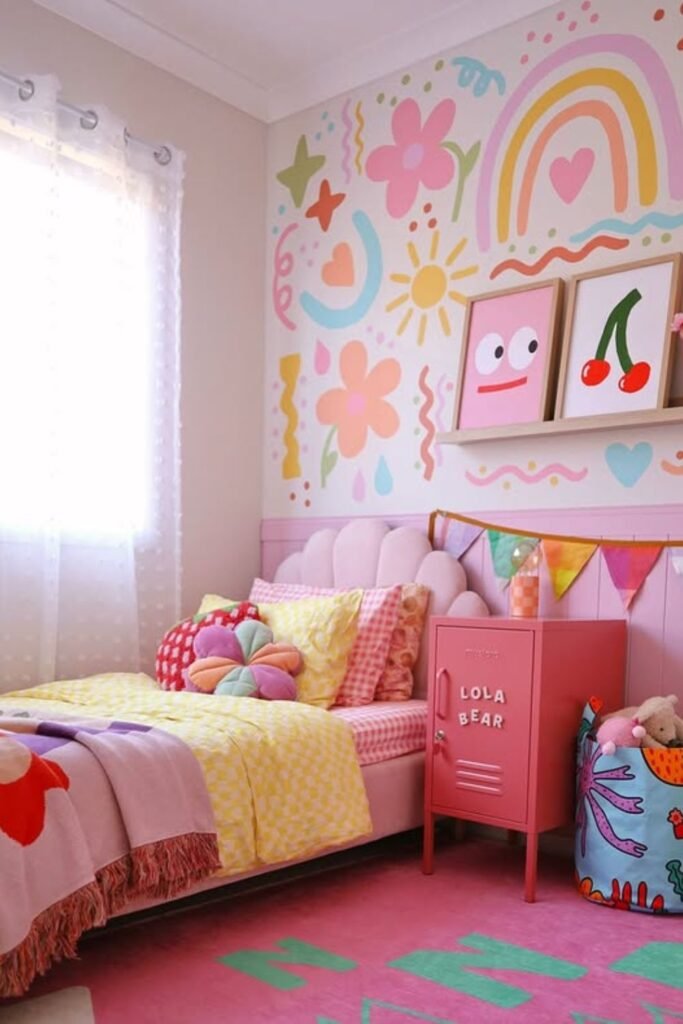
Bright rooms feel much more personal when paint looks fun instead of perfectly polished.
Hand-drawn rainbows, flowers, squiggles and little shapes like these work nicely above beds or reading spots where one plain wall looks too empty.
Soft pastel colours are a good way to make the area bright without making it feel too loud if the furniture already provides lots of colour.
Here, freehand painting may actually work better than flawless stencils, because the somewhat irregular lines.
Create a more whimsical and comfortable feeling environment. Simple paneling organizes busy wall art underneath and matching one.
Tiny Traffic
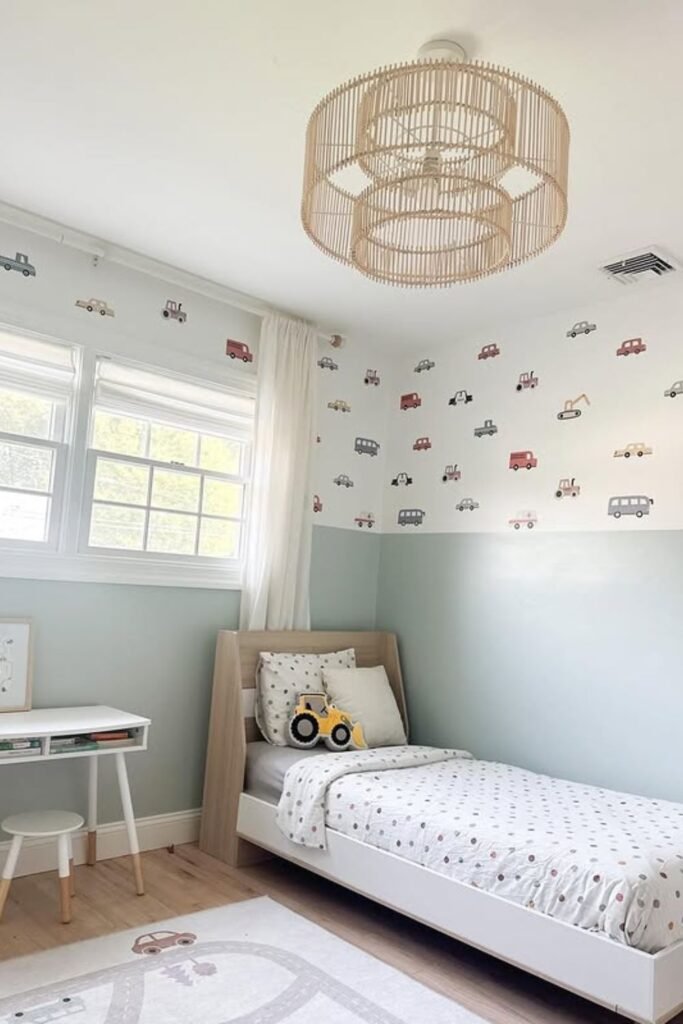
Smaller kids rooms often feel more fun when paint stays simple and playful at the same time.
Tiny automobile features on the upper wall look well in toddler nurseries or transportation-themed bedrooms.
Because they offer charm without covering every inch in chaotic hues. Soft sage paint on the bottom half grounds the space.
And prevents brighter toy colors from making the room feel chaotic. Neutral bedding and light wood furnishings work.
Wall decals may achieve a similar impression fast but hand-painted little vehicles tend to feel more personalized and easier to update as interests change.
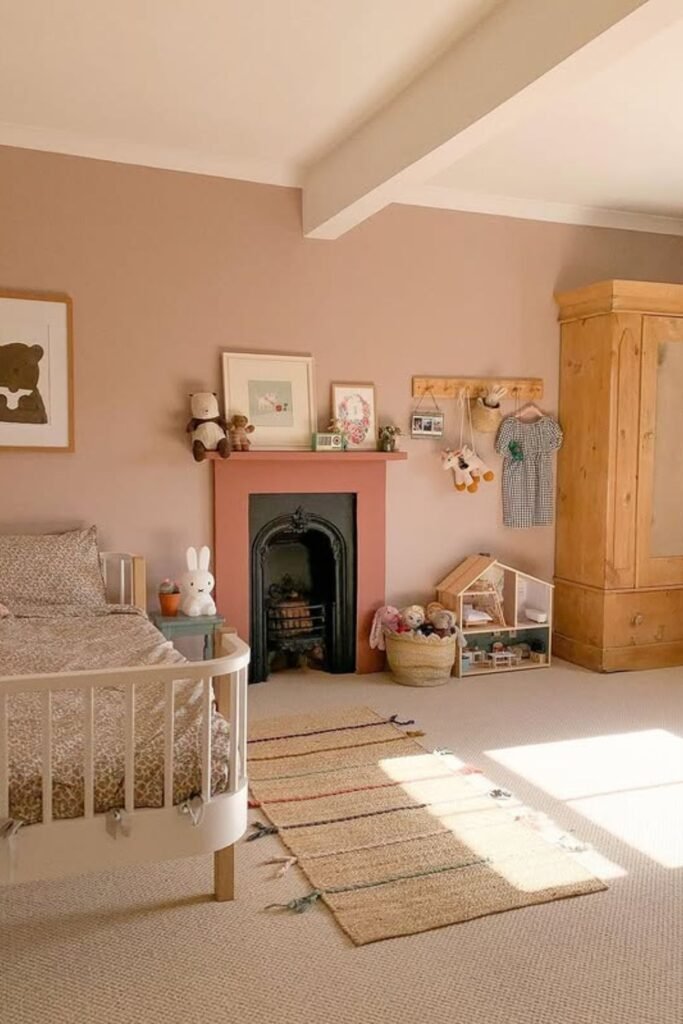
Cozy Blush
Soft neutral paint quietly fixes a problem many parents face when colorful rooms start feeling too young too fast.
Something warm like this blush beige is perfect for nurseries, toddler rooms, or shared spaces where you want something comfortable but not too themed.
A soft pink around a fireplace or focal corner provides personality but leaves lots of room to play with décor later.
Natural wood furniture pairs nicely with muted paint colors, lending a warm, timeless quality to a room.
Calm colors already make the space inviting, so framed art, soft rugs and little toy corners tend to look better here than noisy wall decor.
Stripe Mix
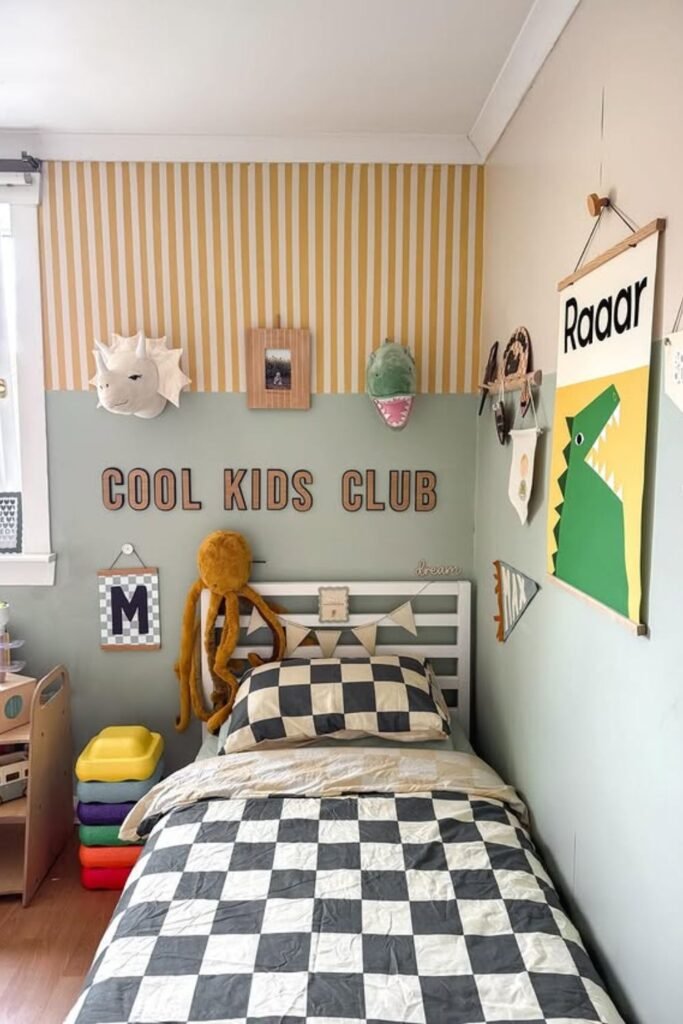
Mixing two paint ideas on one wall can make a small kids room feel much more custom without spending money on wallpaper.
A pretty pairing in narrow bedrooms is bottom soft sage green with vertical mustard stripes above, as it pulls the eyes up and quietly makes the area seem taller.
Playful accents like animal wall decor, checker bedding or amusing signs come easy here.
Since the colors already feel youthful without being overly theme-heavy. The painter’s tape keeps the stripe spacing neat.
But just applying the stripe section to the upper wall prevents the room from looking too cluttered around the bed area.
Sunny Stripes
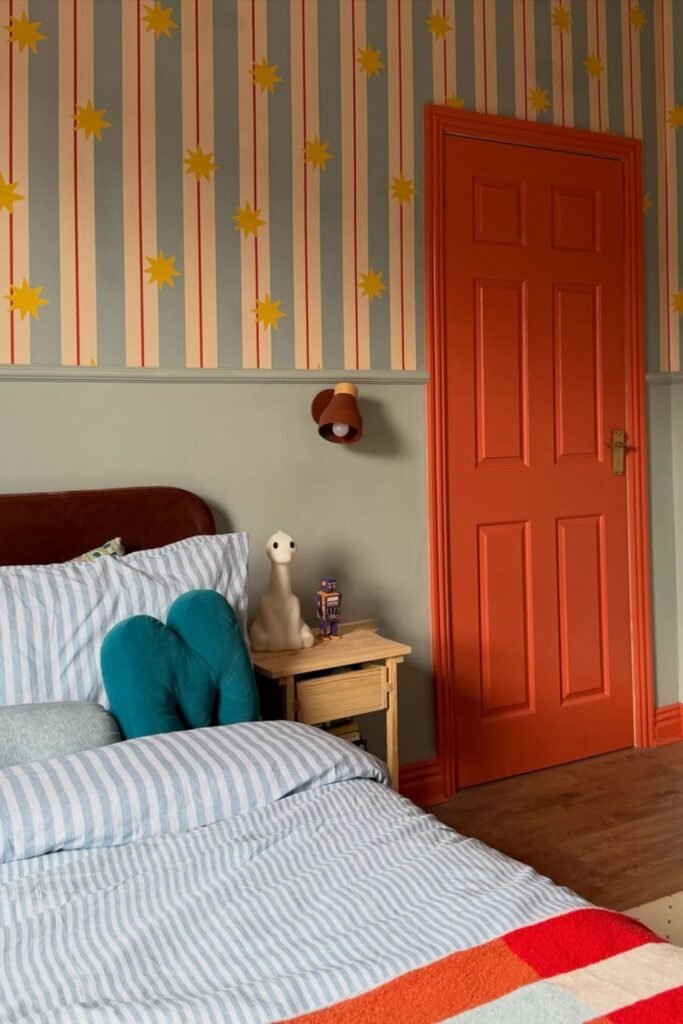
Bold rooms can still feel balanced when one playful pattern gets paired with calmer paint below.
Vertical stripes with little star accents work great in older kids rooms since they offer charm but not too cartoon-ish.
The lower wall in soft sage calms down busier patterns and helps the sleeping area feel more restful at night.
Paint doors and trimmings in a warm statement hue to discreetly turn common components of the room into design accents without buying extra decor.
By measuring the stripe spacing first, you will avoid a lot of frustration, especially if you want the wall to be lively, but also neat and ordered.
Stripe Height
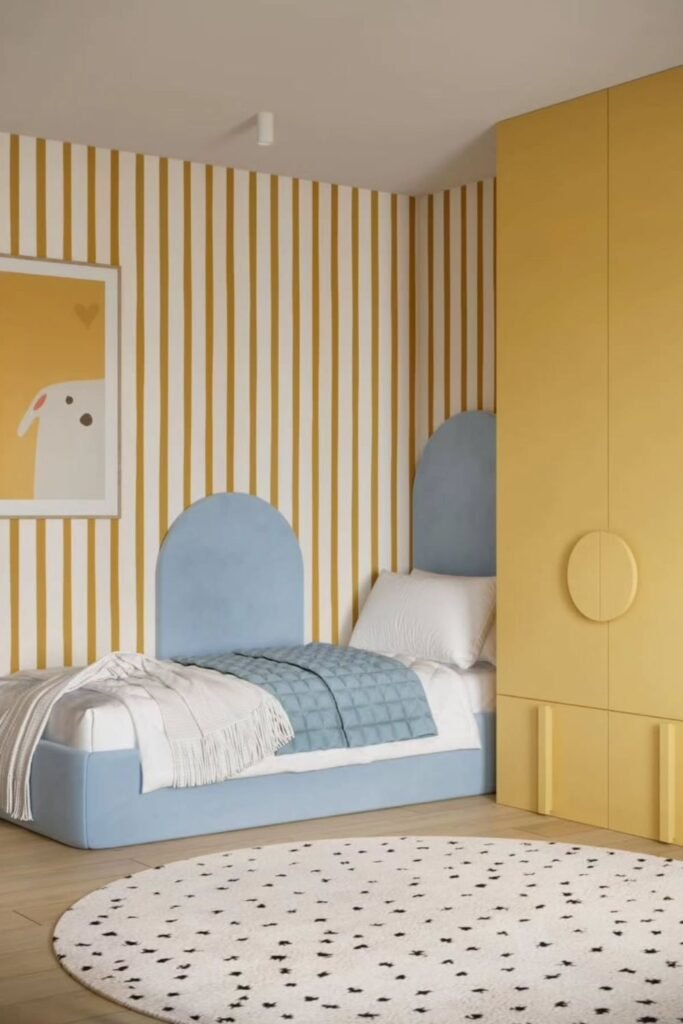
Narrow rooms often feel taller when paint pulls the eye upward instead of spreading color across walls.
Thin mustard stripe likes these works beautifully behind the bed annd because they quietly add personality while still keeping the room calm enough for sleep.
Soft blue furniture balances warmer tones nicely, which helps the space feel playful without becoming too bright.
Matching wardrobes to one stripe color makes the room look more pulled together and stops different pieces from fighting for attention.
Measure your stripe gaps before painting to save time. Uneven spacing may make a tidy room feels chaotic in no time.
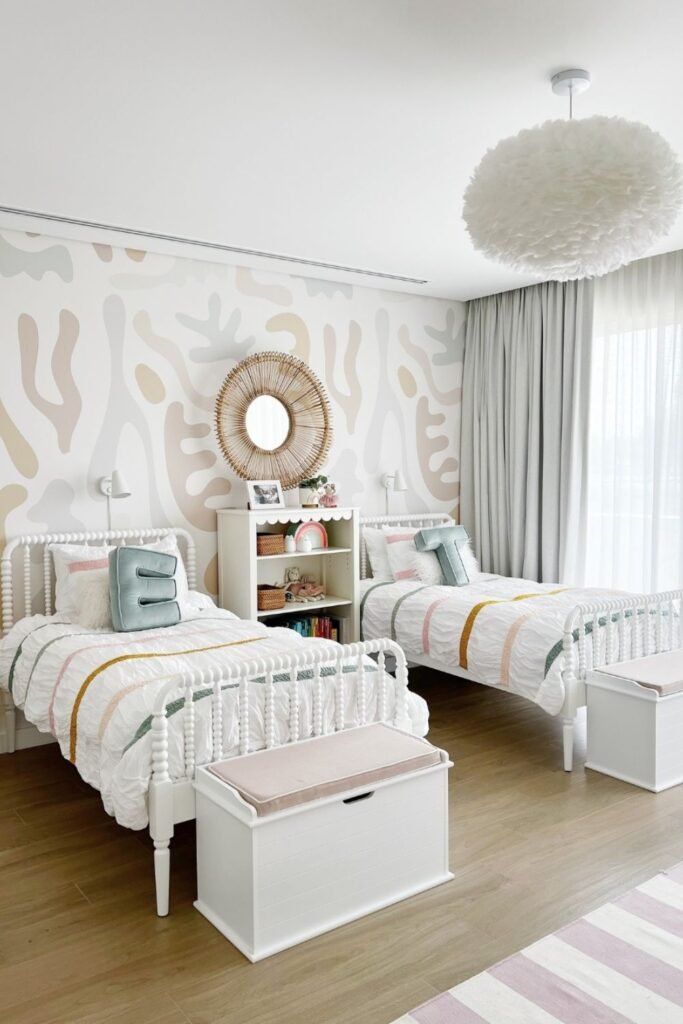
Soft Shapes
Shared kids rooms feels calmer if paint stays playful with out choosing one strong theme that siblings may out the grow quickly.
Organic shapes in soft beige, cream and subdued pink play wonderfully behind twin beds because they discreetly occupy a huge wall without making the area feel busy.
A neutral color like this also makes it easier to decorate, since you can swap out bedding, carpets and storage throughout the years without their clashing.
Freehand curves generally work better than exact lines here, as softer edges keep the area from feeling uptight.
You can match cushions or little decor items in color to make the whole area feel cohesive but still leave room for personality to grow later.
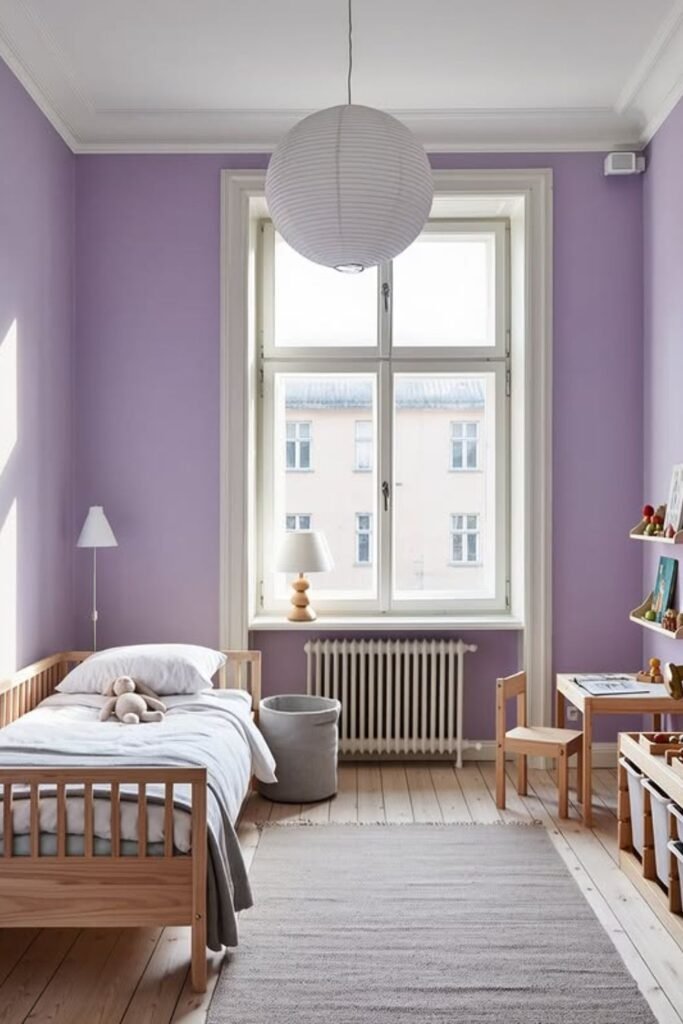
Lavender Calm
Soft purple walls quietly add color without making a kids room feel too loud or overly themed.
Lavender colors like these are great for narrow bedrooms or smaller rooms since they feel fun and yet they are peaceful enough for sleep and quiet time.
Natural wood beds and plain white bedding help balance the pastel color so the room grows more easily with your child over time.
Softer hues are especially good with tall windows and light flooring as natural light keeps everything seeming airy rather than bulky.
Here you can naturally incorporate little tables, toy shelves or reading spots without conflicting with the wall colour.
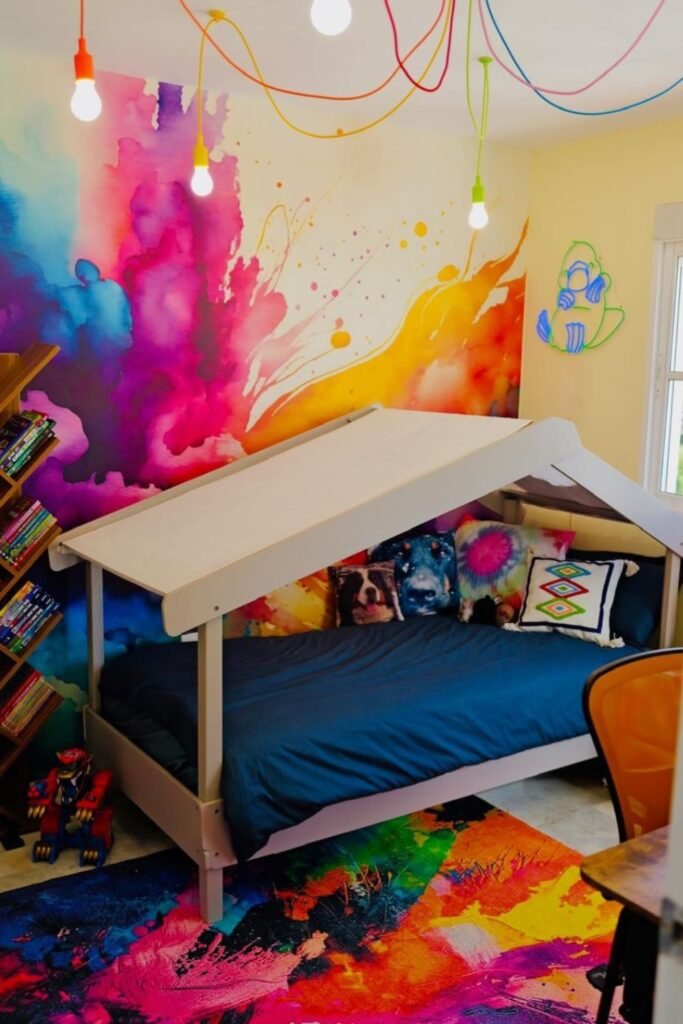
Paint Burst
Creative kids rooms feel much more personal when walls look like part of the imagination instead of plain background color.
Bold paint splashes like pink, blue, orange, and yellow work beautifully in art-loving spaces.
Tween rooms, or creative corners where personality matters more than matching everything perfectly.
Keeping furniture simple, like a white house bed or plain desk, helps stop strong colors from taking over the room completely.
Larger brush style shapes often feel easier to recreate than tiny details especially if you want an artistic look with out stressing over perfection.
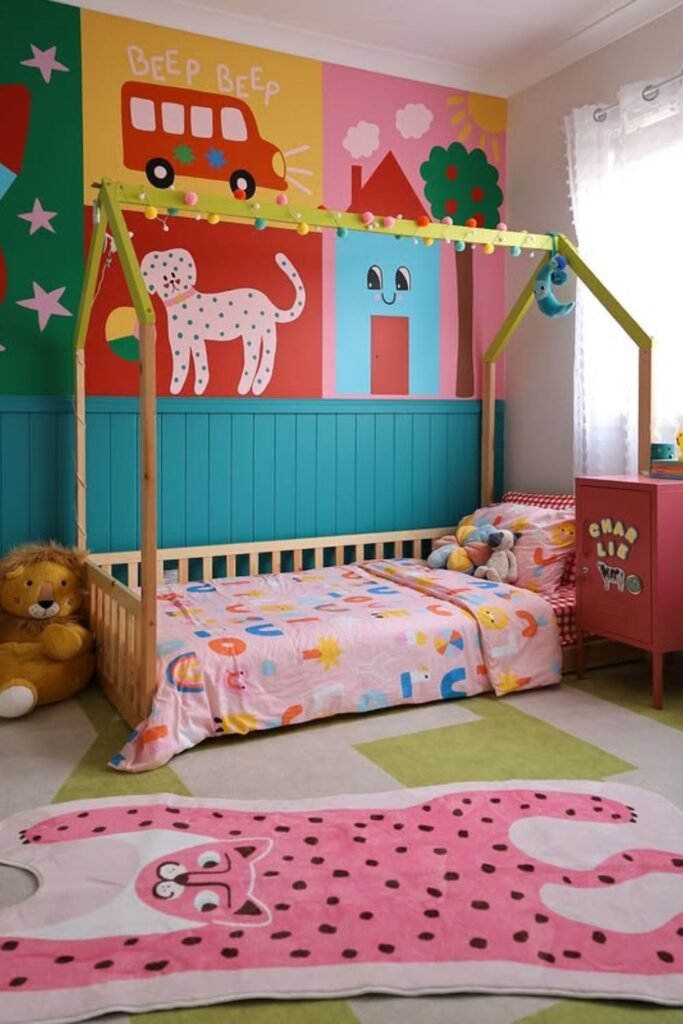
Story Walls
Big blank walls stop feeling empty when paint turns different sections into little scenes kids can enjoy every day.
Playful blocks featuring rockets, busses, trees, animals and happy shapes work great in toddler rooms.
Or settings for younger kids since each portion provides enjoyment without a lot of extra decor.
Deeper paints remain lower on the wall, making brighter colors seem much simpler to balance and helping the room feel grounded rather than overwhelming.
Simple shapes first are less demanding for murals, especially if freehand painting seems scary.
FAQs
What Paint Colors Work Best In A Kids Room Without Feeling Too Childish Later?
Generally, choosing colors a child will grow into makes decorating much easier later. Soft sage green, dusty blue, soft beige, subtle pink, lavender.
And creamy white frequently work best since you can change the look of the room with bedding, carpets or wall art instead of repainting everything.
One whimsical accent wall can have a little fun without committing the entire area to one concept.
How Can You Make A Kids Room Feel Fun Without Using Too Many Bright Colors?
For most walls you want to keep them soft and add color in one place. Using bold paint throughout the space usually doesn’t work as well.
You can paint rainbows, stripes, stars, murals or fun shapes behind the bed to give a sense of excitement to the room without making it a visual jumble.
A mix of vibrant decorations and calmer furnishings also helps the space seem cozy enough to sleep in.

Hi, I’m Afaf! I’m a law student who loves writing about everyday life – from home projects and crafts to fashion, beauty, and parenting tips.
I’ve been writing for over a year, sharing ideas that are simple, practical, and easy to try. I write about things I find interesting and useful, whether that’s organizing a space, trying a new DIY, or finding activities to keep kids entertained.
My goal is to share helpful ideas without making things complicated. If it works in real life, I’ll write about it.
When I’m not studying or writing, I’m usually experimenting with new projects or scrolling for inspiration!