
23 Recycling Activities for Kids 2026
Somehow, empty cereal boxes pile up overnight. Toilet paper rolls lie about “just in case.” Kids still mutter, “I’m bored.”
It can seem harder than it has to be to find something that is enjoyable, keeps those tiny hands occupied, and doesn’t convert your table into a gigantic mess.
Recycling activities solve more than one problem at the same time. You gain easy ways to reuse objects currently sitting at home.
And youngsters get a chance to build, develop, sort and test concepts without even realizing they are learning.
In this article, I will show you 23 creative recycling activities for kids that balance fun, learning, and creativity all together.
Let’s jump in!
How Can Recycling Activities Help Kids Build Creativity And Problem-Solving Skills?
Kids are naturally curious about how thing function they love to take things apart, make bizarre little things.
Recycling activities are a fun way to accomplish just that, without fancy toys or pricey resources.
When your child creates a robot out of an empty box or a game out of bottle caps, they begin to problem solve on their own.
Save this article for later!👇👇👇
They ask questions. They test ideas. They rectify mistakes. They try again. That simple method really drives innovation.
Instead of there being one “right” solution, kids learn how to think in new ways, make choices.
And change everyday items into something altogether unique, all while staying busy and having fun.
Sorting Game
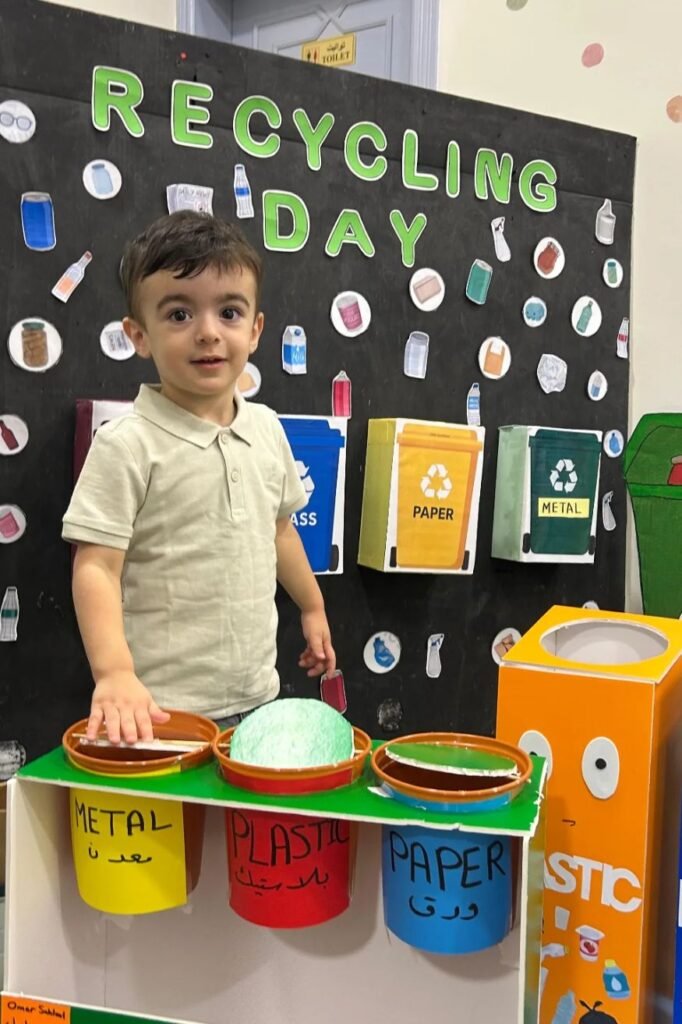
Kitchen counters or classroom tables suddenly feel more exciting once kids turn recycling into a matching game instead of a lesson.
You can set up these using common materials like bottle caps, bits of paper, foil, or clean containers, utilizing empty bowls, tiny buckets, or paper bins.
Little hands usually love dropping things into the “right” category, and it discreetly teaches problem solving.
This idea works especially well for preschool classrooms, homeschool areas, or rainy afternoons. The color coding on the bins makes it easy for younger children to sort.
While older children can challenge themselves by sorting mixed materials faster or racing the clock.
Bin Hunt
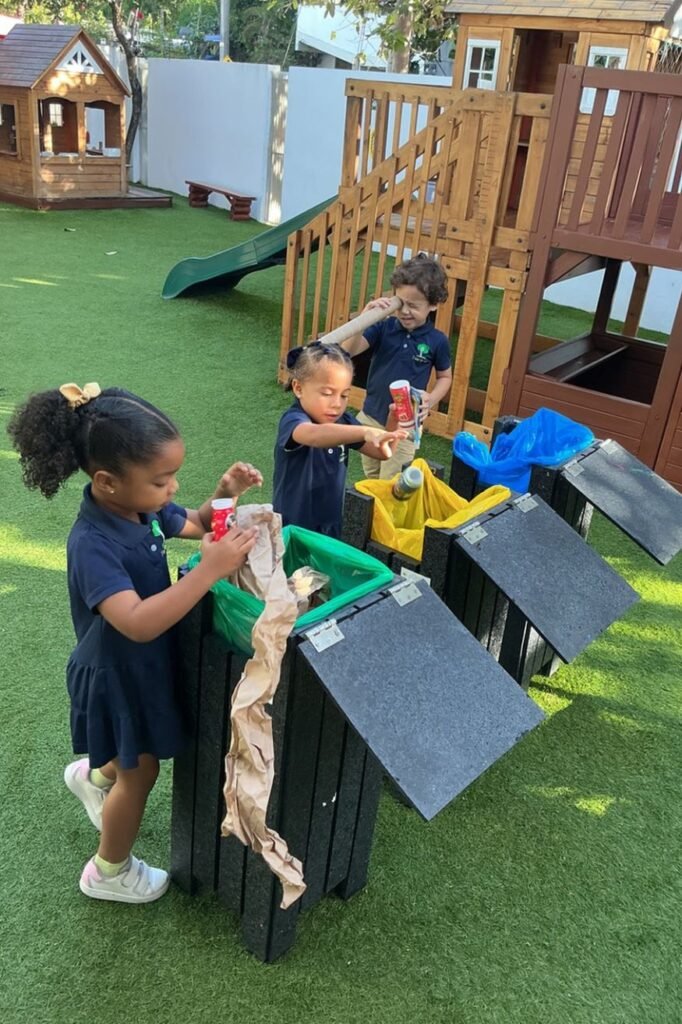
Backyard play suddenly turns into a learning game once kids start sorting “trash” into the right bins on their own.
Empty cardboard boxes, laundry baskets, or buckets can easily recreate this idea at home using colored bags for paper, plastic, and cans.
Open space works best because kids naturally move around, race to the bins, and stay active instead of sitting at a table.
Playground corners, school yards, or even driveways feel perfect for this setup. Small hands usually enjoy the challenge of deciding.
Where each item belongs, and adding a timer can make older kids even more excited.
Tube Goal
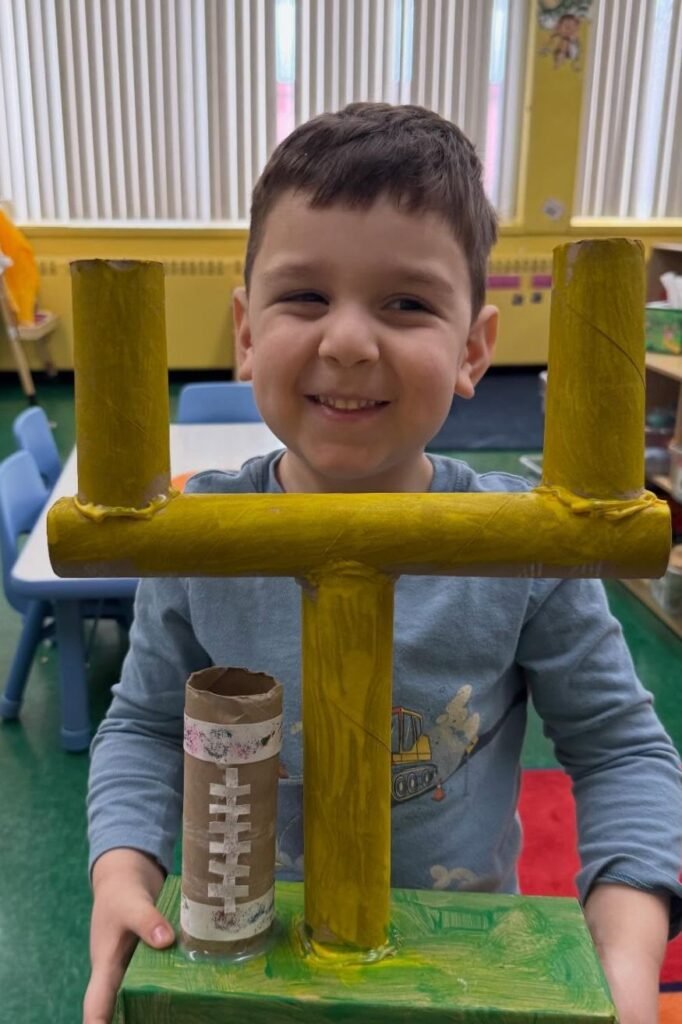
Cardboard tubes become way more exciting once kids turn them into their own mini sports setup.
Empty toilet paper rolls or paper towel tube makes a fantastic goalpost like this, especially if your kid is already into soccer or football.
It all comes together with a bit of yellow paint, a bit of tape, and a solid cardboard basis, no need for pricey craft tools.
This concept works great in playrooms, classroom activity tables or on rainy afternoons at home.
Because youngsters can build first and then “score” with small paper balls or pom-poms.
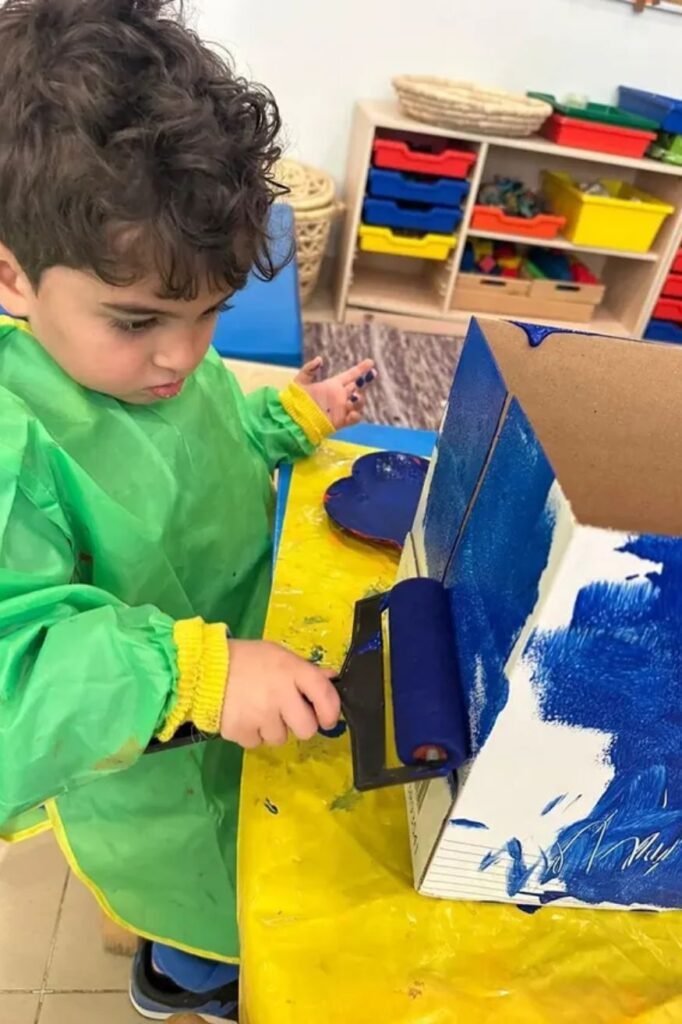
Box Painting
Plain cardboard boxes stop looking like trash once kids get a paint roller in their hands. Leftover delivery boxes can easily turn into houses, garages, castles.
Or make-believe businesses according to what your child likes best. Washable paint and mini rollers tend.
To keep little hands busy longer, as filling large areas seems more intriguing than drawing on tiny pages.
This type of activity does very great in art corners, preschool tables or backyard craft days.
Once the paint dries, youngsters can add windows, doors or stickers to give their recycled creation a new lease of life as something else entirely.
Peel Art
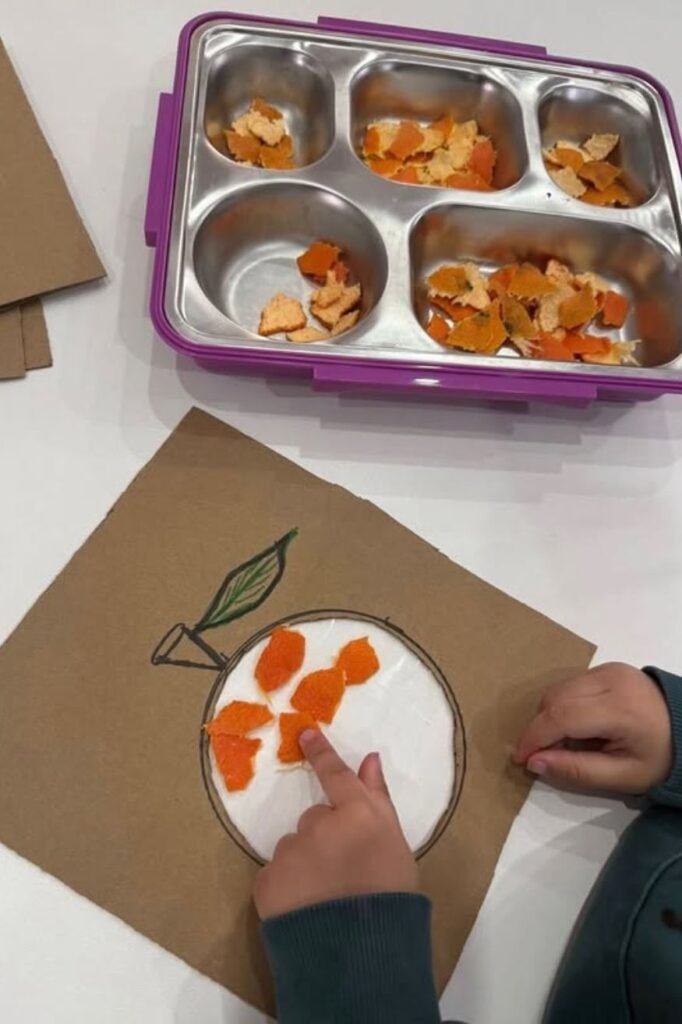
Orange peels stop heading straight to the trash once kids turn them into textured artwork. Snack time leftovers work perfectly for this activity.
tiny pieces of peel can be easily picked up by little hands and placed inside basic forms painted on cardboard.
This is especially great to recreate for nature-themed afternoons, preschool tables, or quiet indoor play.
Fruit outlines, trees, animals or flowers all work well depending on your child’s age. First, fill the shape with adhesive.
This will help keep younger kids on task, as the pieces won’t slide about. ” You may use lemon, orange or dried leaves.
Paper Pit
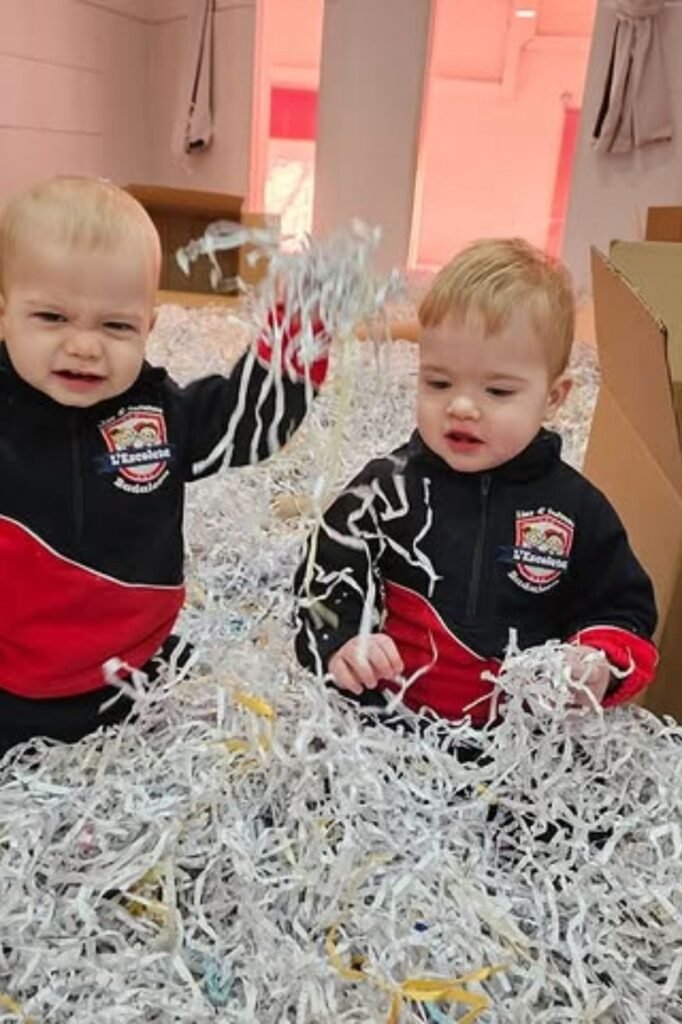
Rainy days feel a lot less chaotic once shredded paper turns into a giant sensory play zone. Old junk mail, scrap paper, or leftover packing strips.
may easily fill cardboard boxes for youngsters to dig, toss and explore without the need for pricey toys.
This style of setup is especially good in playrooms, daycare areas or indoor winter afternoons.
Where little ones love to leap into textures and search for hidden treasures. Or put little toys, letters of the alphabet.
Having everything in a box makes cleanup so much easier and storing shredded paper for future sensory bins makes the enjoyment last longer.
Tray Printing
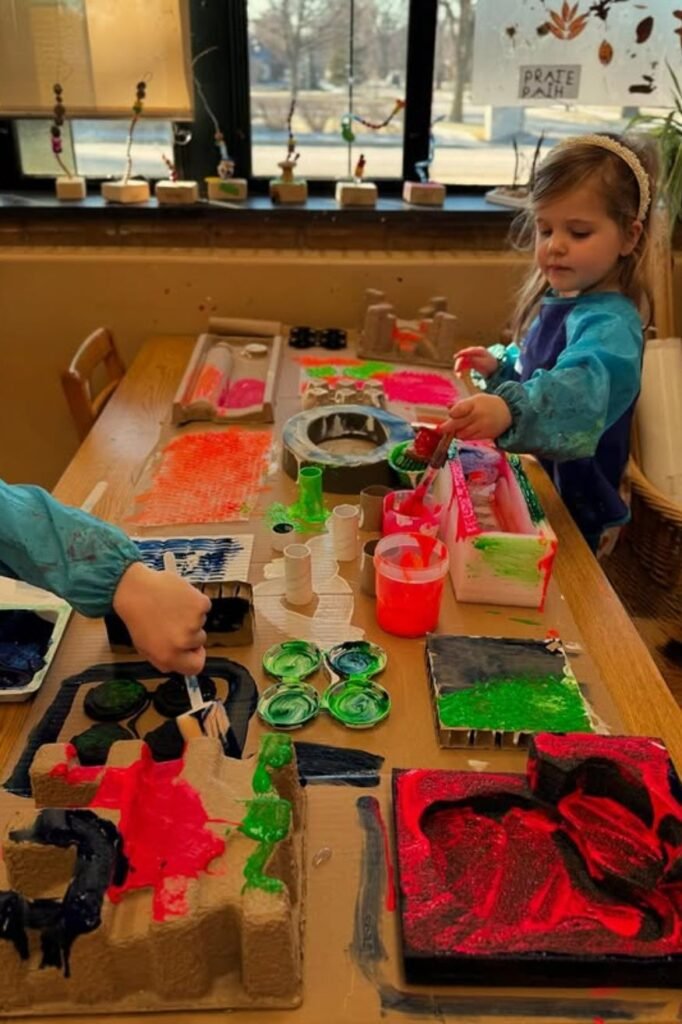
Busy craft tables feel much more exciting once recycled trays and bottle caps turn into giant paint stamps.
Pieces of cardboard, empty food trays, lids, paper tubes and egg cartons can all be fun texture tools rather than going in the rubbish.
This idea works particularly well for art days at preschool, weekend playrooms or messy outdoor tables.
Kids enjoy to press, roll and mix colors in different ways. Bright paint usually keeps tiny hands busy longer because each print is different from the last.
Add bubble wrap, cardboard scraps or old packaging for extra patterns to explore, while quietly developing creative and sensory skills.
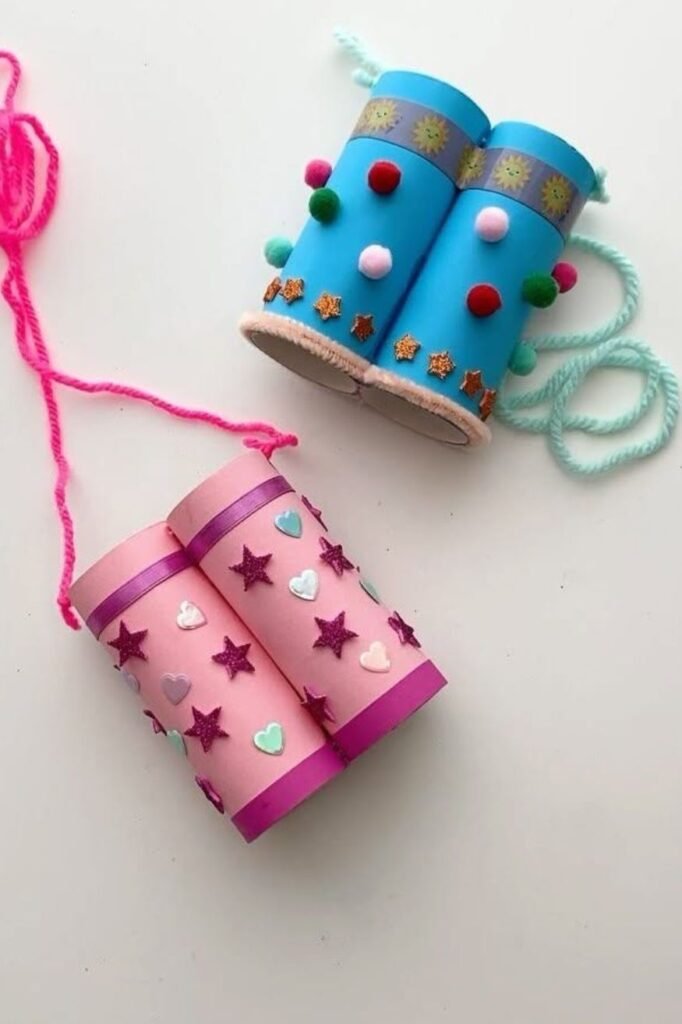
Tube Binoculars
Kids may turn toilet paper rolls into pretend binoculars for outdoor expeditions or inside treasure hunts, which suddenly makes toilet paper rolls much more intriguing.
You can make this for cheap using empty rolls, yarn, coloured paper, stickers, pom-poms and glue.
So it’s excellent for using up items that are already sitting at home. I like dress-up corners and rainy afternoons and fake camping days.
Especially fun is how kids instinctively start hunting for “animals” with makeshift binoculars, hidden toys or secret clues.
Usually, if you let the youngsters decorate all the sides any way they like, it will hold their interest longer. String is easier for little explorers.
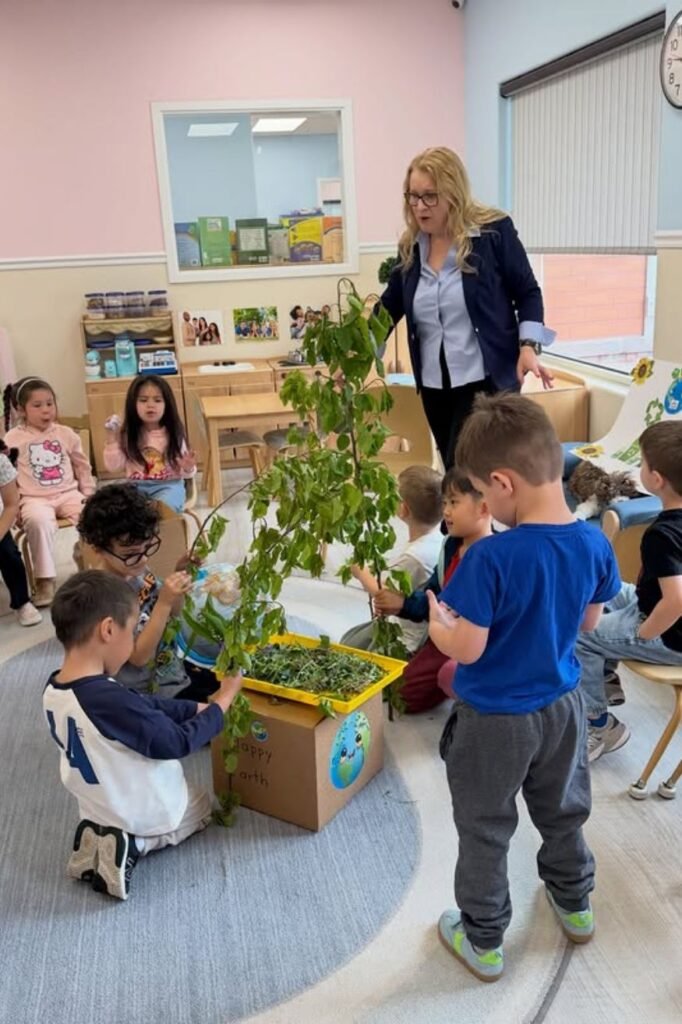
Nature Box
Outdoor walks suddenly feel more meaningful once leaves, branches, and garden clippings turn into a hands on recycling activity.
Empty cardboard boxes work perfectly for collecting natural materials, especially after a park visit or backyard cleanup.
Classroom nature days, spring lessons, or homeschool science time feel like the best fit because kids naturally stay curious.
While touching, sorting, and exploring different textures. Small hands usually enjoy filling the box.
Comparing leaf sizes, or creating mini nature displays from what they collect. Adding flowers, pinecones, or dried grass.
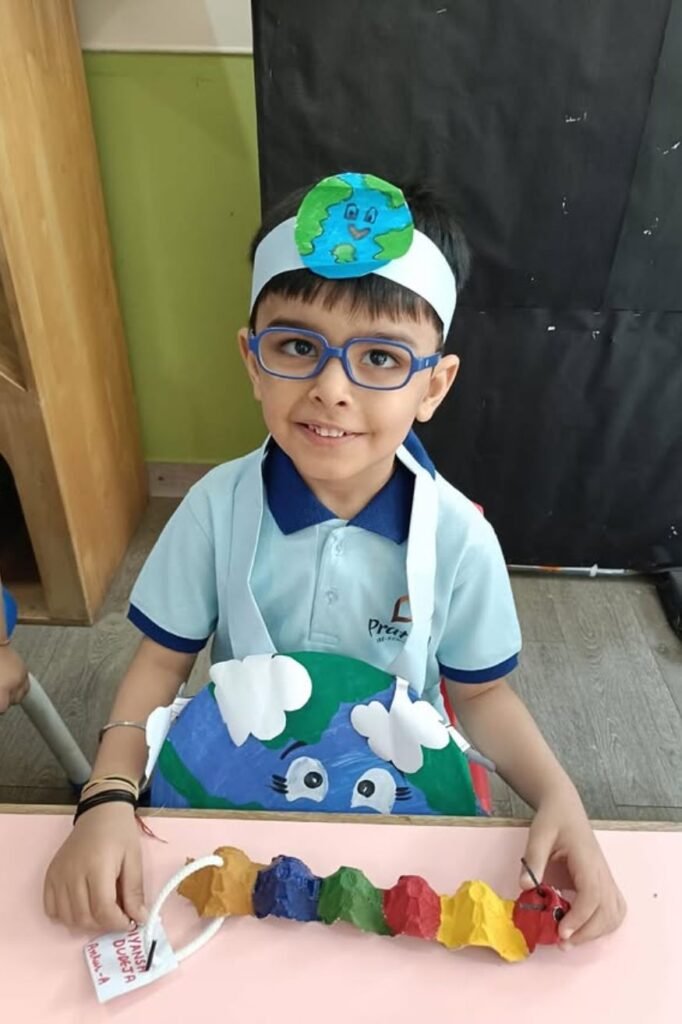
Earth Craft
Recycling lessons feel much more fun once kids can wear or hold something they made themselves.
Egg cartons, bits of cardboard, paper bands and leftover paint are easy to make into bright Earth-themed crafts like hats, necklaces or little decorations.
This idea comes to life especially well through classroom Earth Day activities, spring learning weeks.
Or homeschool science corners, as youngsters retain more of the topic when they can touch and make something hands-on.
Painting pieces of carton in bright colors, or simply turning the action into a tiny art lesson by using paper cutouts of clouds or the planet silently.
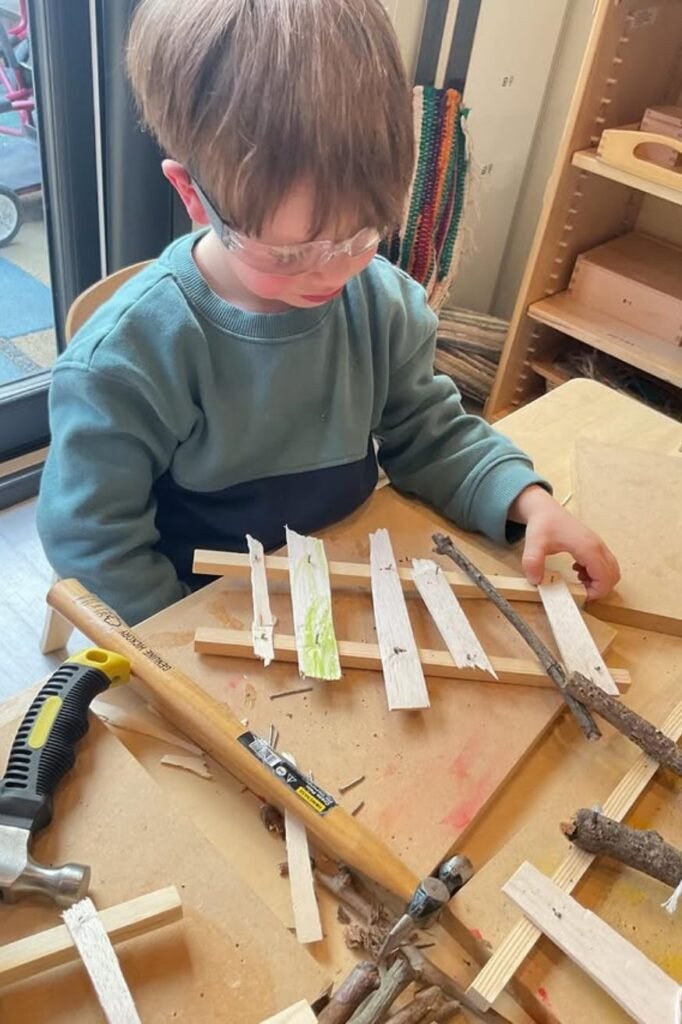
Wood Building
Little builders usually light up once leftover wood pieces and sticks turn into something they can design themselves.
Open-ended building projects with scrap wood, fallen branches, popsicle sticks, or broken craft pieces.
Can lead to surprisingly well-constructed small bridges, fences or little houses. Classroom maker spaces, outdoor craft tables or weekend projects.
With adult supervision seem to be the greatest fit since youngsters naturally start testing ideas and repairing faults as they construct.
Older kids feel more involved as they discover how components fit together with kid-friendly tools and safety eyewear.
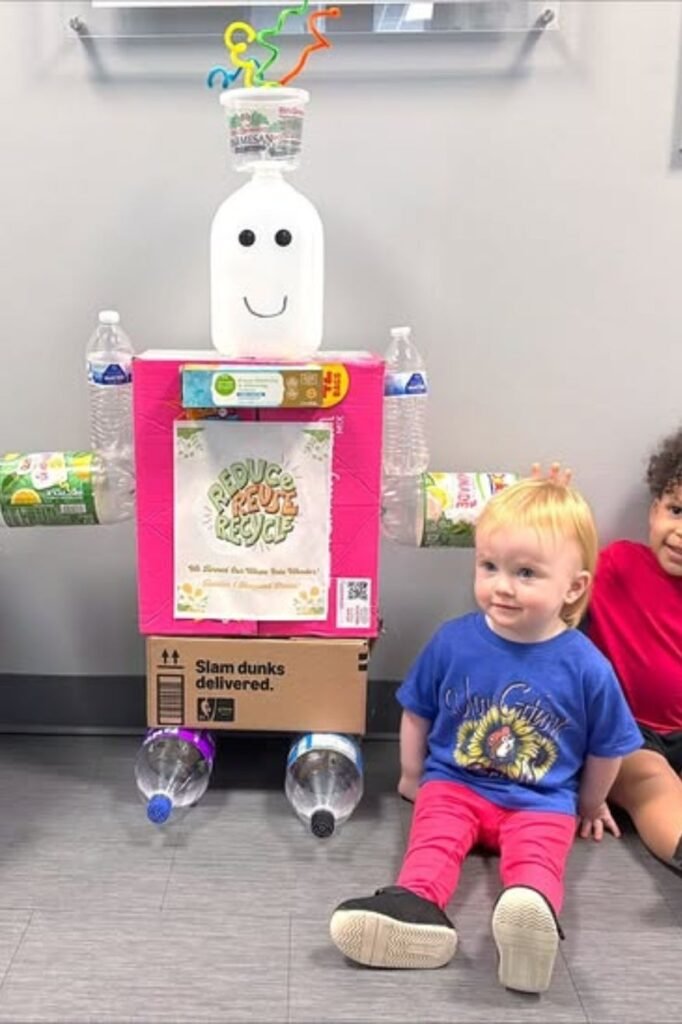
Robot Build
Empty boxes and bottles suddenly become way more exciting once kids realize they can turn “trash” into their own robot creation.
The cardboard shipping boxes, the plastic bottles, the rolls of tissue, the lids and food containers.
All are just right to make ridiculous robot bodies with amusing faces and moving arms.
This exercise seems perfect for classroom recycling weeks, Earth Day projects, or weekend craft tables, where kids naturally begin determining.
What each item should become. Kids love adding eyes, buttons, caps, or painting embellishments, which usually inspires even more inventiveness.
Cardboard Castle
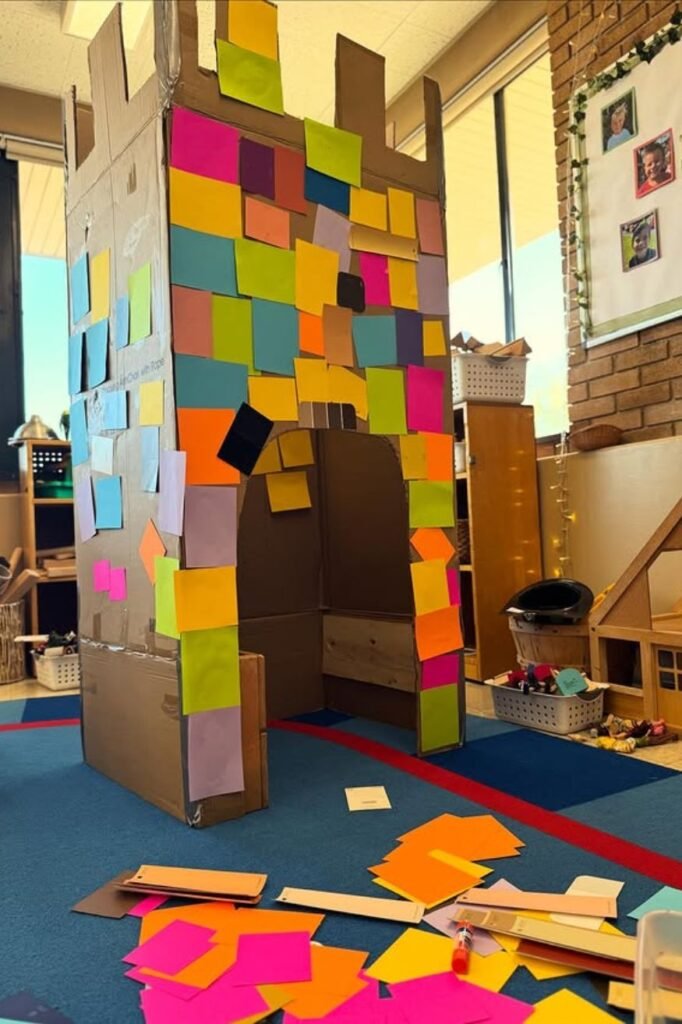
Big delivery boxes rarely stay boring once kids start turning them into giant forts or pretend castles.
Use empty cardboard, left over bits of paper, sticky notes, paint or coloured paper to make a set up like this easily.
Without spending extra money on playhouses. Bigger structures automatically mean youngsters will be busy longer than with tiny crafts.
So playrooms, classrooms or rainy weekends at home seem just right. Another creative stage is decorating walls with colored pieces of paper.
Children can design windows, bricks, secret doors, or humorous patterns as they choose.
Campfire Play
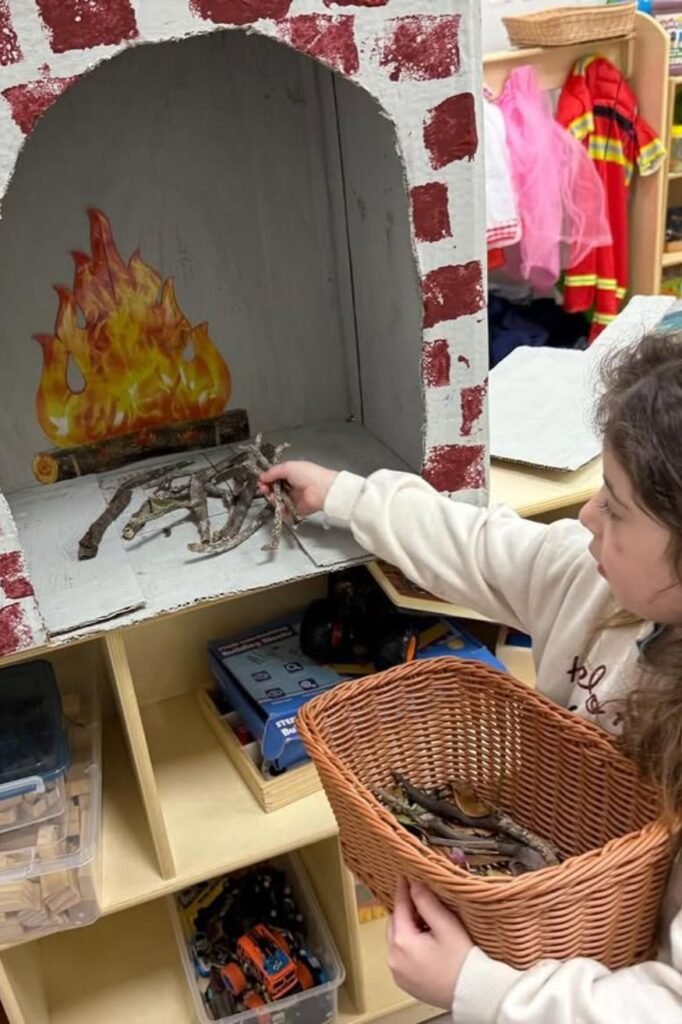
Cozy pretend play gets a fun twist once cardboard boxes and fallen sticks turn into an indoor campfire setup.
Empty boxes may easily form a fireplace, and little branches gathered from the yard make great “firewood” for kids to stack and arrange.
This is especially fun to do in reading corners, dramatic play spaces in classrooms or on rainy afternoons at home.
Since children will automatically start to pretend they are camping, cooking or telling stories around the fire.
You don’t need pricey equipment to make the arrangement feel even more authentic painted brick detailing or paper flames help.
Texture Board
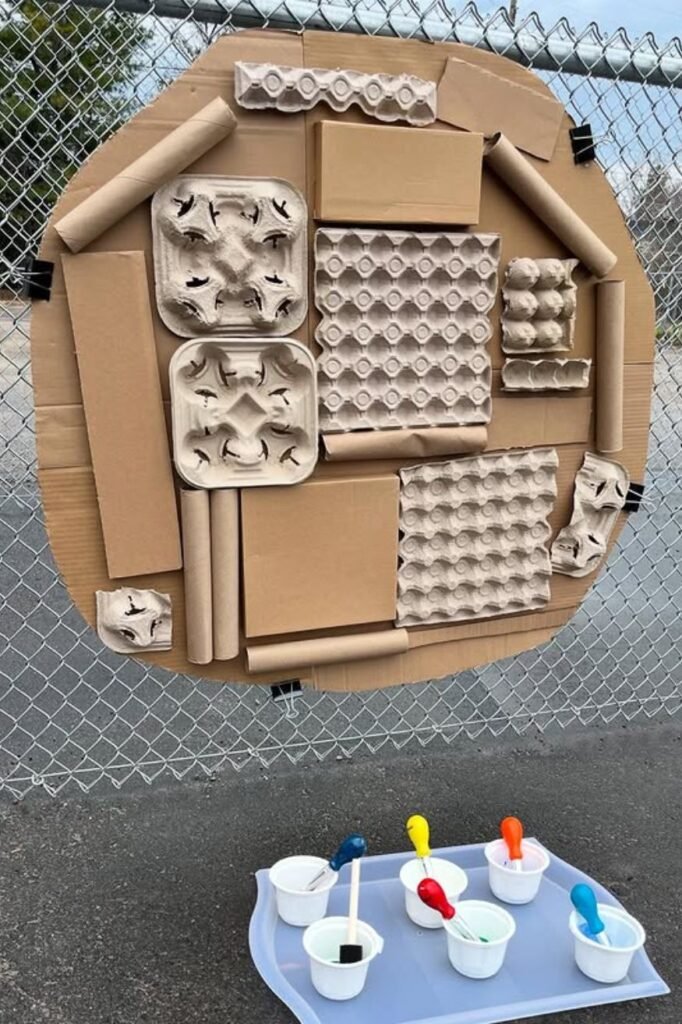
Tiny hands usually stay curious longer when ordinary cardboard scraps turn into a giant touch-and-feel art board.
You may use empty egg cartons, paper towel rolls, shipping boxes, and pieces of packing to make a fun sensory wall for kids to paint, stamp or investigate with their fingers.
Great outdoor fences, school walls or backyard art stations provide more freedom for kids to move and create freely.
It’s more fun when you paint each texture a different color, and quietly assist them observe patterns, shapes and textures.
If you save random cardboard packaging for a few of weeks, you will typically have enough to make a giant version without spending any extra.
Bin Match
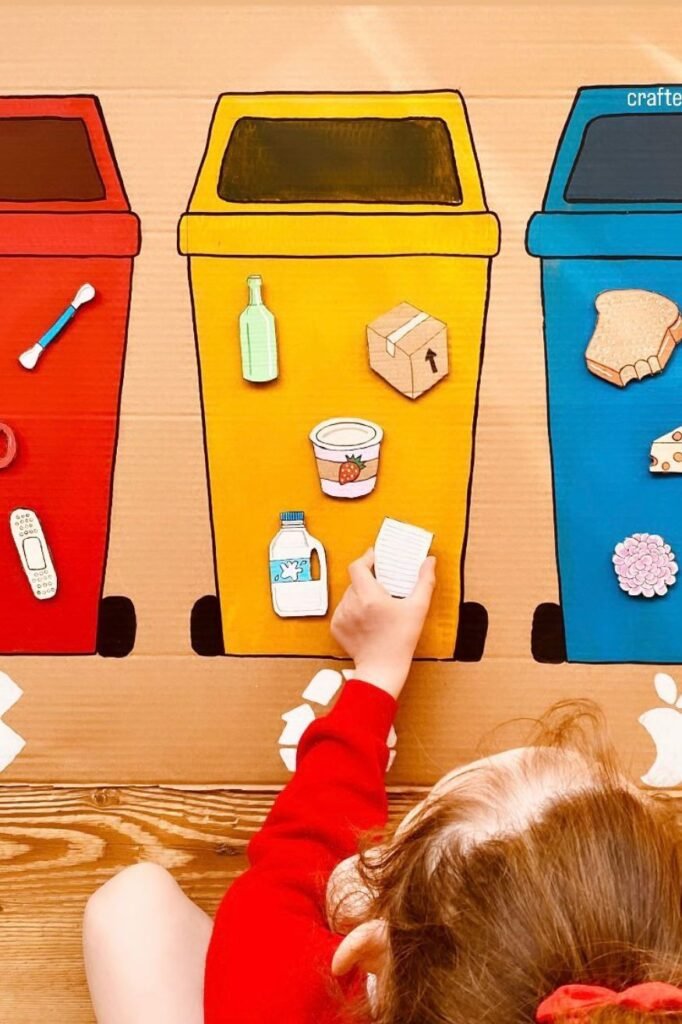
Learning about recycling feels much easier once kids can physically move and sort items instead of only hearing about it.
You can easily make a simple matching game using cardboard, colored paper and printed cutouts.
And it is a fantastic fit for preschool tables, homeschool sessions or quiet afternoons at home.
Paper, food scraps and recyclables are sorted into the right bin, quietly building problem-solving skills as kids stop and think about where to put each item.
Bright colors help little ones recall categories quickly. Older kids can even turn it into a timed game for more fun! Lamination of the pieces or velcro dots.
Cap Sorting
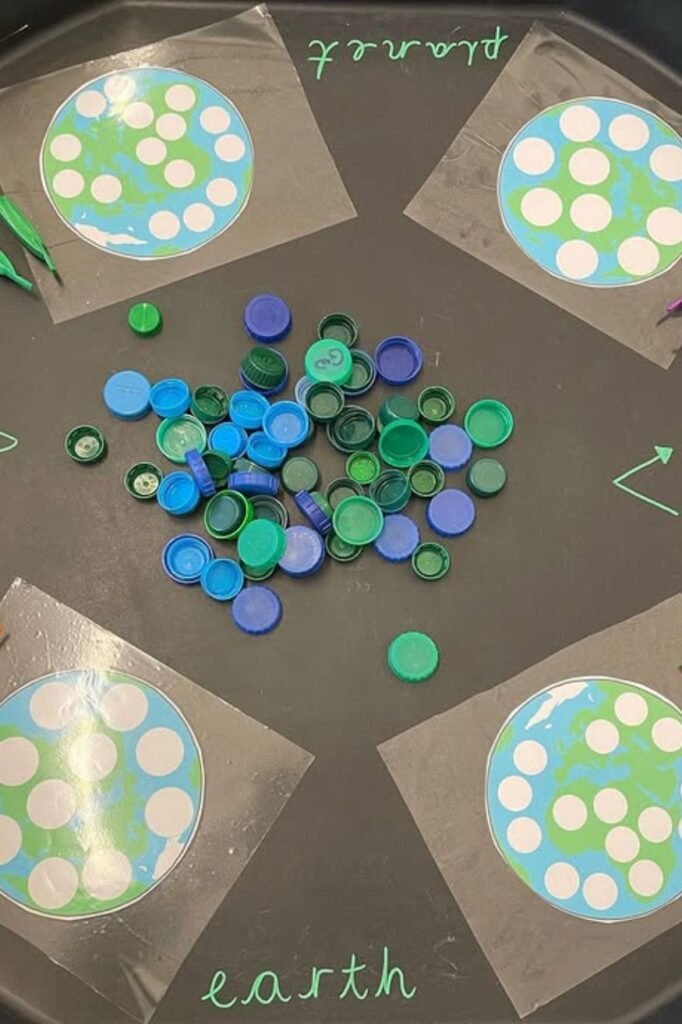
Bottle caps finally stop piling up in kitchen drawers once kids turn them into an Earth-themed matching game.
Empty drink caps, printed Earth circles and basic tweezers can construct this setup in minutes.
While quietly helping tiny hands gain concentration and coordination. Children naturally slow down and focus on putting each cap.
Into the appropriate place, thus preschool tables, quiet learning areas or fine motor stations seem like the perfect match.
The blue and green lids contribute to the recycling vibe of the game, but combining colors can also make it a sorting challenge.
Waste Sorting
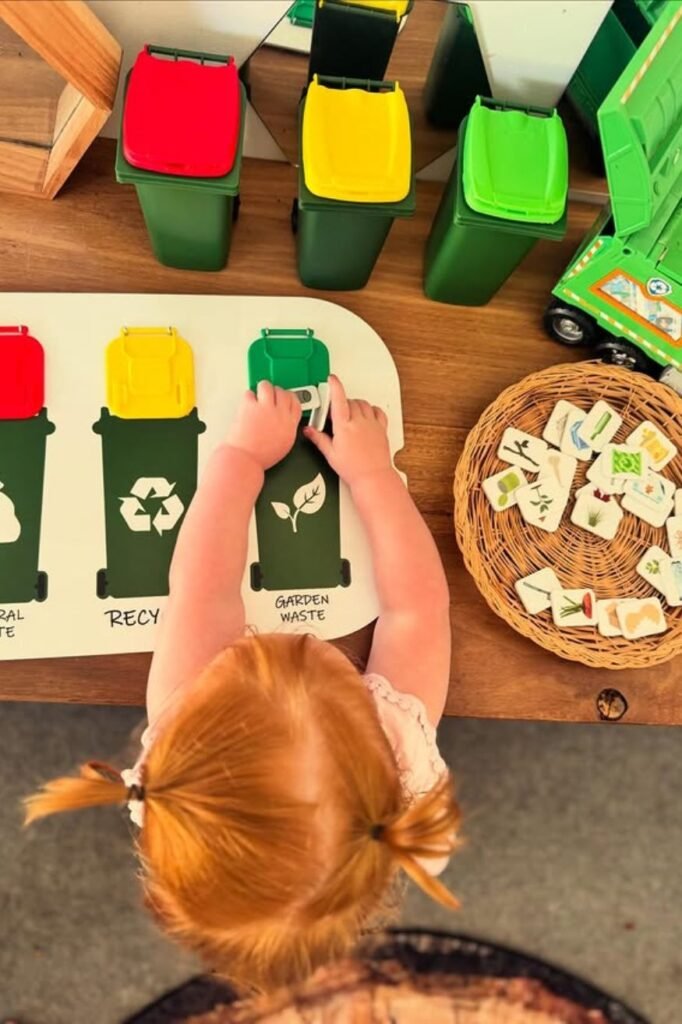
Tiny recycling lessons usually stick better once kids can physically move pieces into the right bin themselves.
You can do this idea again with toy bins, printed labels or even colored paper pasted onto containers.
With pictures of leaves, food scraps, plastic or paper items around the house. Preschool tables, learning centers.
Or calm morning activities seem especially useful, as small hands naturally love matching and sorting while learning what belongs where.
You may even add little toy garbage trucks or real clean recyclables to make it even more fun.
Carton Sorting
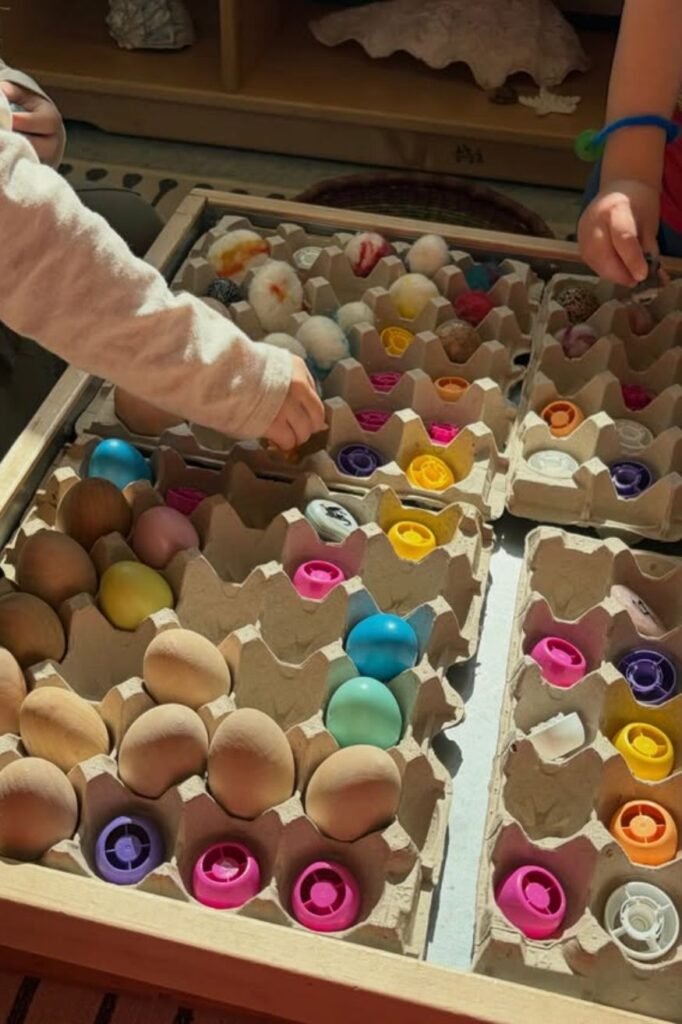
Egg cartons suddenly become much more useful once kids turn them into a colorful sorting station.
You don’t need anything extravagant from the store to reproduce this set up! Empty cartons.
Loose bottle caps, pom-poms, wooden eggs or tiny nature treasures will do. This activity is especially exciting for this since little hands naturally want to pick up.
Match and organize small pieces, so sunny classroom tables, sensory nooks or calm playtime at home are perfect.
Color sorting is fantastic for smaller children but older children can count things, make patterns or sort by texture for an added challenge.
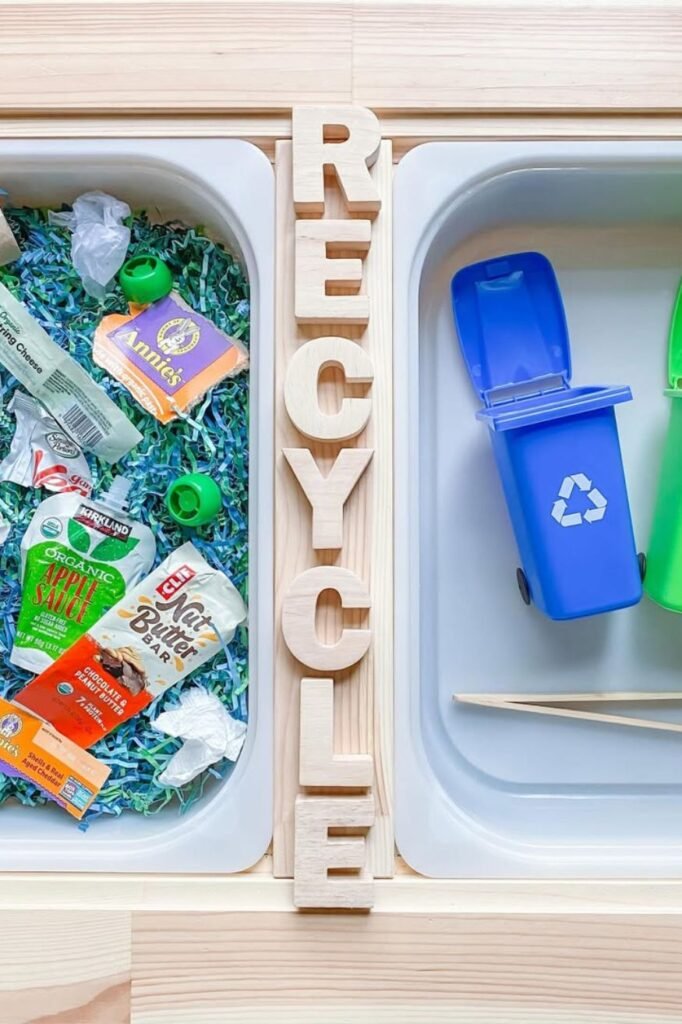
Recycling Tray
Snack wrappers and bottle caps suddenly turn into something useful once kids get the chance to sort “real-life” recyclables on their own.
Shallow bins, shredded paper, toy recycling cans and clean household packaging allow this set-up to be readily recreated for a hands-on learning station at home or in the classroom.
Adding tweezers to fine motor play makes it so much more fun as youngsters have to slow down, concentrate and think about where each object should go.
This kind of setup is especially good on kitchen tables, at preschool centers, or on rainy afternoons as everything stays contained and is easy to clean up.
We change the materials every week to keep the game interesting and help children identify more recyclables they find in everyday life.
Earth Sensory
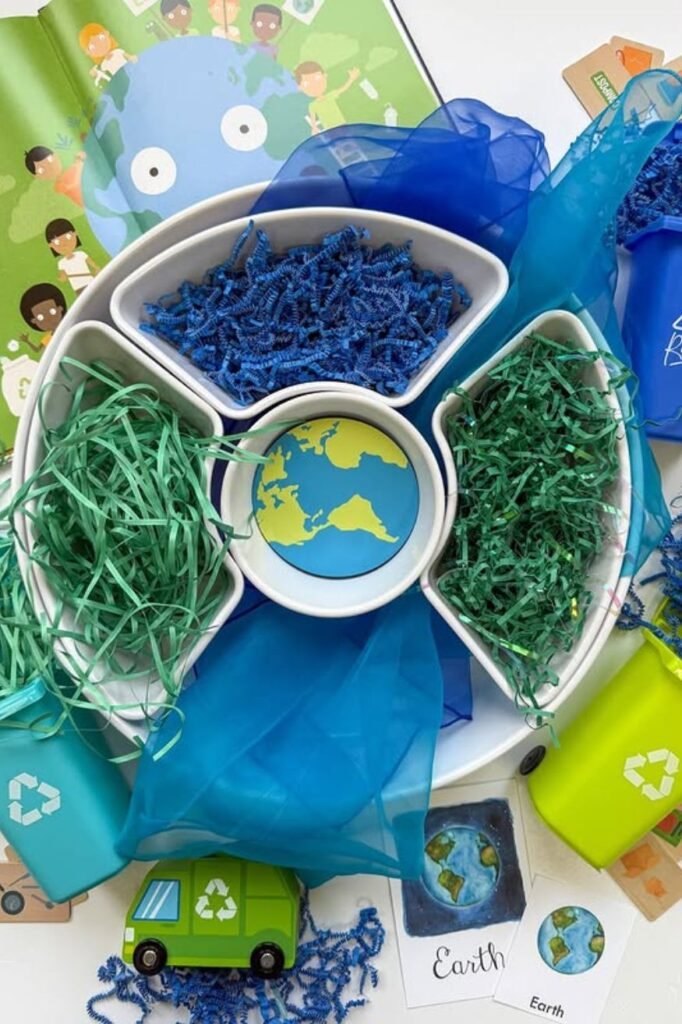
Quiet playtime feels much more meaningful once kids can explore recycling through colors, textures, and hands-on materials.
You can easily construct a sensory tray like this with things you already have lying around the house: shredded paper, blue fabric scraps.
Toy recycle containers, and Earth-themed printouts. Reading corners, preschool tables, or activities related to Earth Day work well.
Because kids tend to slow down naturally, they touch different textures, and they begin talking about caring for the earth as they play.
It’s also an additional game of discovery to hide little earth cards, toy trucks or recyclable items in the filler.
Recycling Race
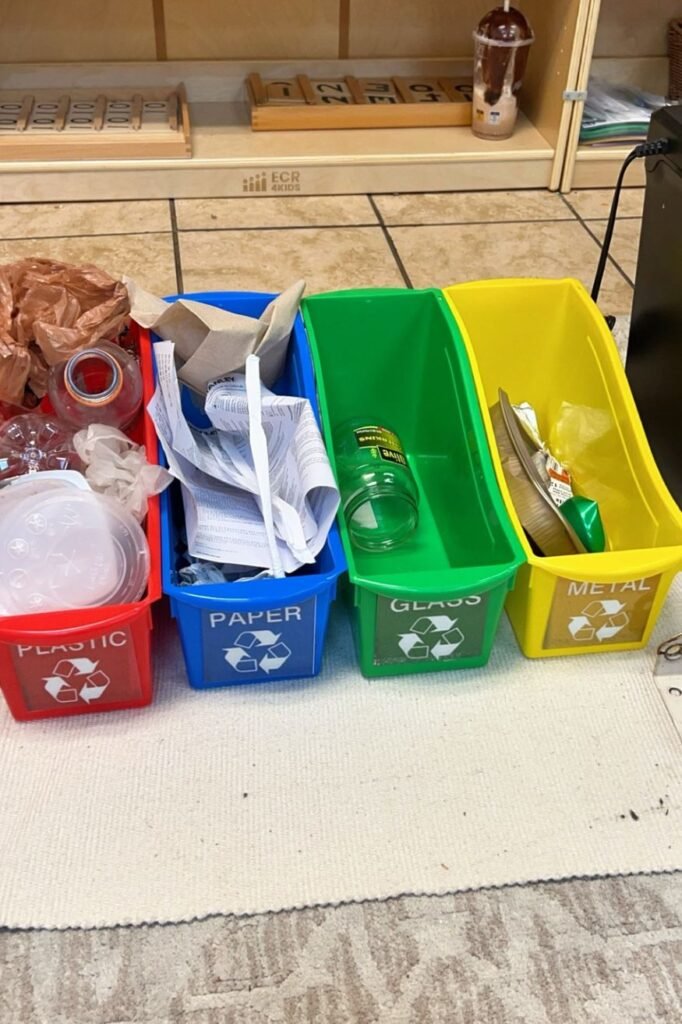
Everyday cleanup feels a lot more fun once kids start sorting real recyclables into colorful bins instead of tossing everything together.
You can duplicate this setup in minutes using empty storage tubs, printed labels or colored baskets and clean paper.
Plastic containers, jars or foil you have around the house. Kitchen corners, classrooms or homeschool places are particularly effective.
Since kids begin to rapidly recognize where things belong via repetition. Turning it into a rapid race is often a better way.
To hold children’s interest and awarding points for perfect sorting is even better. Clear labels or matching colors will make smaller kids feel safe.
Water Rescue
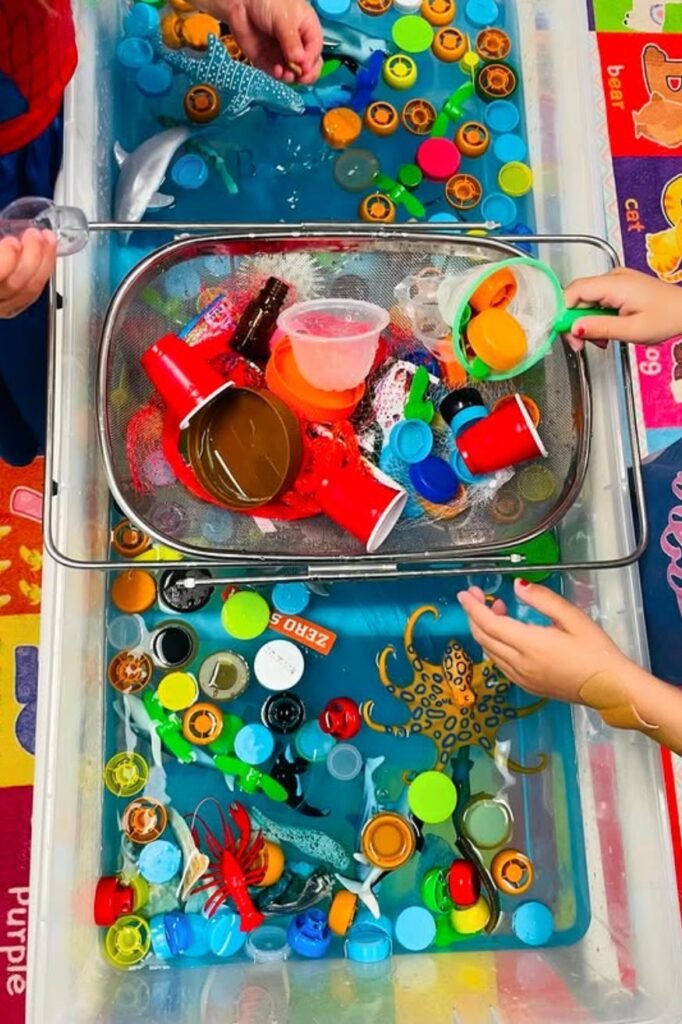
Sensory bins suddenly feel more exciting once kids start “cleaning up” floating recyclables from the water.
Bottle caps, small containers, plastic lids, toy marine animals and scoops can transform an average storage bin.
Into a hands-on recycling game that keeps little hands busy for ages. Kids naturally love to Splash.
Sort and Collect hidden treasures warm afternoons, sensory areas and preschool water stations seem like a wonderful fit.
The use of strainers or small cups adds a sense of rescue mission to the play while gently building up the fine motor skills.
FAQs
How Can I Make Recycling Activities More Fun For Kids?
Making recycling a game is usually much more effective than making it a lesson. Kids frequently stay focused longer.
When they get to touch, move, construct and explore, so sorting races, sensory bins, scavenger hunts or pretend-play settings might be a great way to do this.
Colorful bins, timers or rewards, such as picking the next activity, also can make ordinary recycling duties seem a lot more enjoyable.
Which Recyclable Materials Are Safe For Kids To Use In Activities?
For recycling projects that are child-friendly, clean cardboard, paper rolls, egg cartons, bottle caps, cereal boxes, plastic containers.
And paper scraps tend to be the best. During craft time nothing sharp or with a rough edge metal, broken glass.
Unclean food packaging should be allowed. And washing things beforehand helps to keep messes and activities safe.

Hi, I’m Afaf! I’m a law student who loves writing about everyday life – from home projects and crafts to fashion, beauty, and parenting tips.
I’ve been writing for over a year, sharing ideas that are simple, practical, and easy to try. I write about things I find interesting and useful, whether that’s organizing a space, trying a new DIY, or finding activities to keep kids entertained.
My goal is to share helpful ideas without making things complicated. If it works in real life, I’ll write about it.
When I’m not studying or writing, I’m usually experimenting with new projects or scrolling for inspiration!