
24 Number Activities Preschool Kids for 2026
Have you ever seen your child joyfully count to ten and then give you six blocks when you asked for five.
You stop. They sounded very sure of themselves. What went wrong. They might speed through the numbers without touching the toys.
They might skip things. Maybe kids get bored as soon as you pull out a worksheet. And now you’re probably thinking, “Are they behind?” Am I doing this wrong.
Take a deep breath. Most children don’t have trouble with numbers because they are “bad at math.”
This article highlights 24 thoughtful Number Activities Preschool Kids ideas that fit modern routines in 2026.
Let’s jump in!
How Do Number Activities Help Preschool Kids Build Early Math Skills?
Number activities help you grasp what you remember. When your child says “1 to 10,” they are only saying the sounds again.
But when kids touch one item for each number, they discover what the numbers really signify. That’s how arithmetic really begins.
When your child moves blocks, counts snacks, or hops along a number route, they learn to count, put numbers in order, and understand how many things there are at same time.
They might be able to recognize symbols but still guess amounts if you forgo hands-on practice and go straight to worksheets.
Simple tasks lay the groundwork for strong foundations. And later on, when the foundation is strong, adding, subtracting, and solving problems are much easier.
Save this article for later!👇👇👇
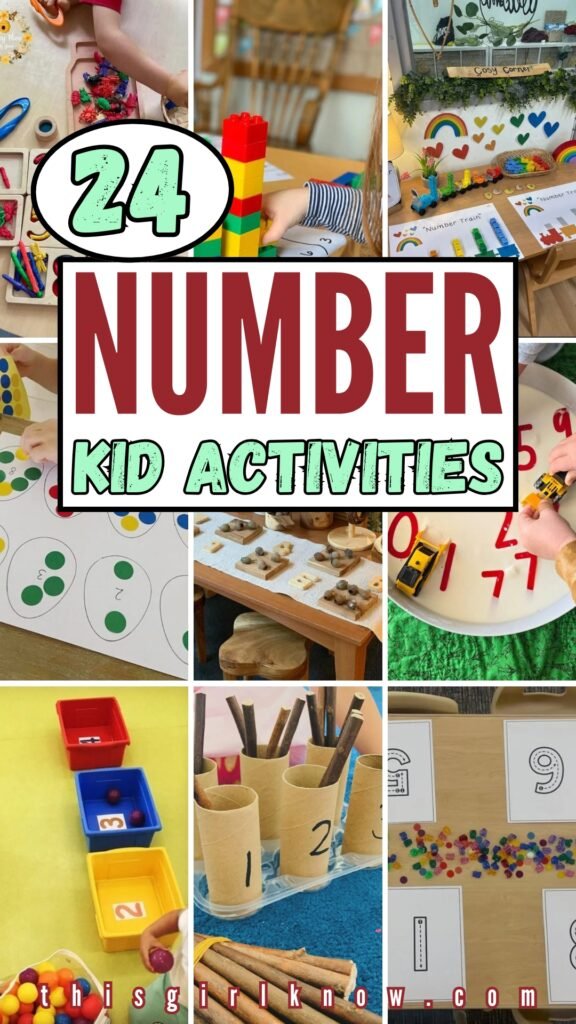
Wooden Counting
Curiosity grows fast when little hands can actually move what they’re counting. Wooden boards paired with small stones turn numbers into something children can feel.
Put this on a low table so your youngster may sit comfortably and pay attention without being distracted. Put a wooden number or symbol on each board.
Then ask them to match the proper amount of stones to it. Encourage them to count slowly: one stone, one touch, one number.
It’s important to repeat things slowly here because rushing frequently leads to blunders. Natural materials are great for calm mornings.
Montessori-style corners, or small group time in the classroom. Kids can focus longer when they have wood and stones to play with.
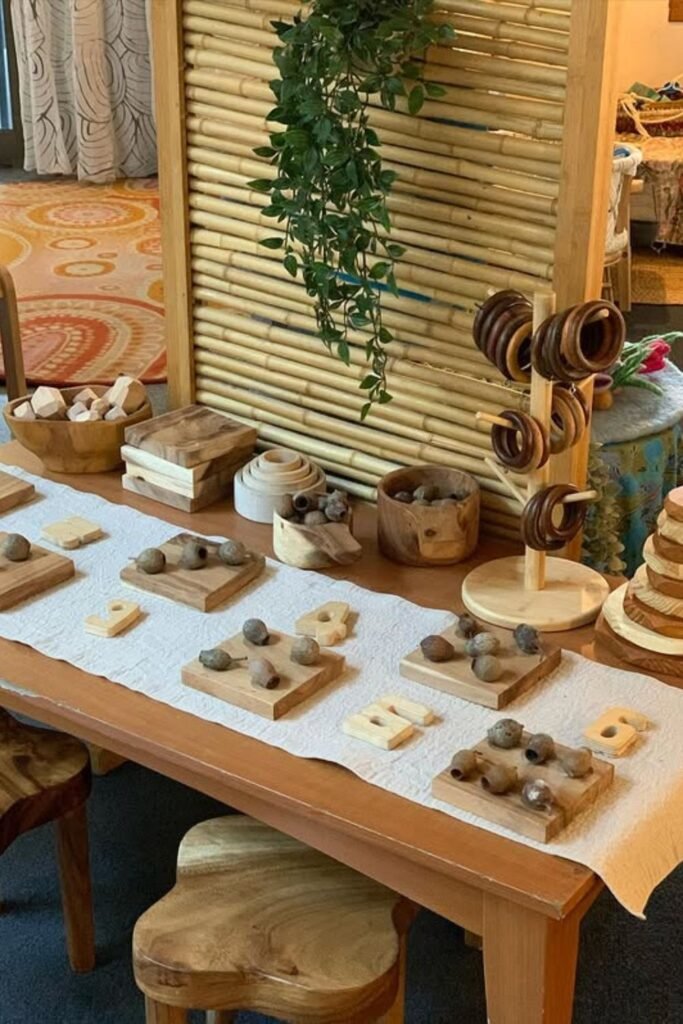
Number Rescue
Excitement changes everything when learning feels like a mission. A simple sensory bin filled with water or even milk for contrast and floating number pieces.
Turns practice for recognition into a game right away. Put in some small toy trucks or diggers and ask your youngster to “rescue” a number you call out.
Put the bin on a towel outside or on a mat that can be washed to make cleaning up easy. Stop them and ask them.
To say the name of the number before they raise it as they scoop or push it toward the right number. That extra second helps you really remember instead of just guessing.
This is great for busy toddlers since it combines movement with attentiveness. Five to ten minutes is a good amount of time for short workouts.
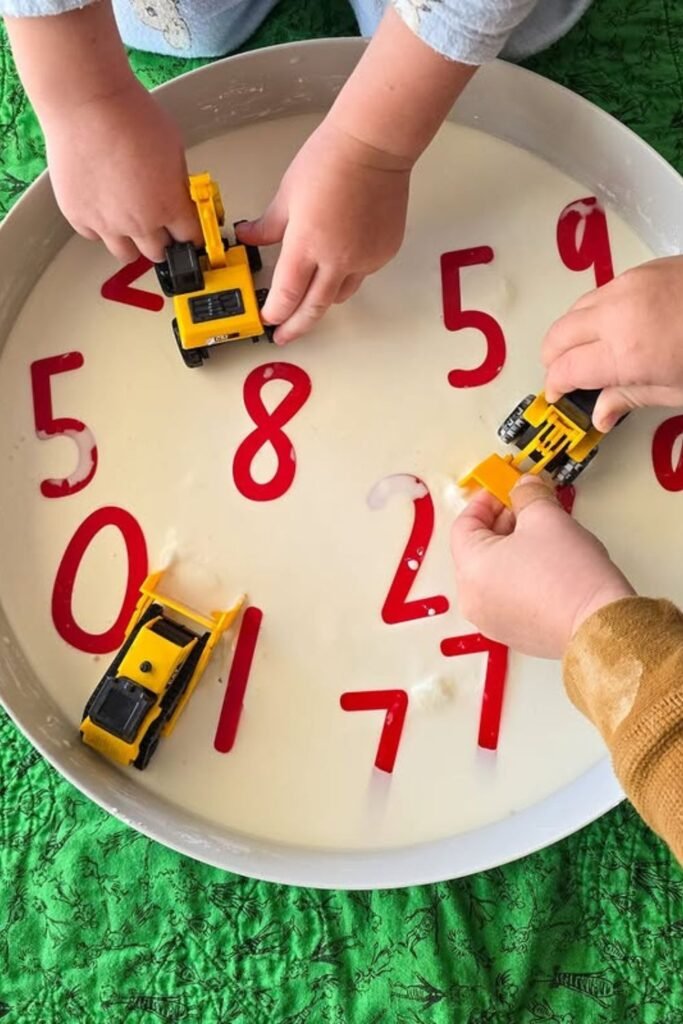
Dot Matching
Bright dots grab attention faster than plain numbers ever will.
Matching stickers to printed quantities gives children a clear visual link between the numeral and amount irepresents.
Draw simple egg shapes or circles and write numbers in each one. Ask your youngster to put the right number of colored dot stickers inside the shape.
Slow them down just enough that they can count each dot out loud before they stick it down. That little break stops people from guessing.
Kitchen tables are perfect for this because they are easy to clean up and set up. Five to ten-minute bursts keep it interesting.
Your youngster will start to see patterns over time, like how three looks different from four. This will help them create a better number sense than just drilling.
Stick Sorting
Movement keeps little learners focused longer than sitting still ever will.
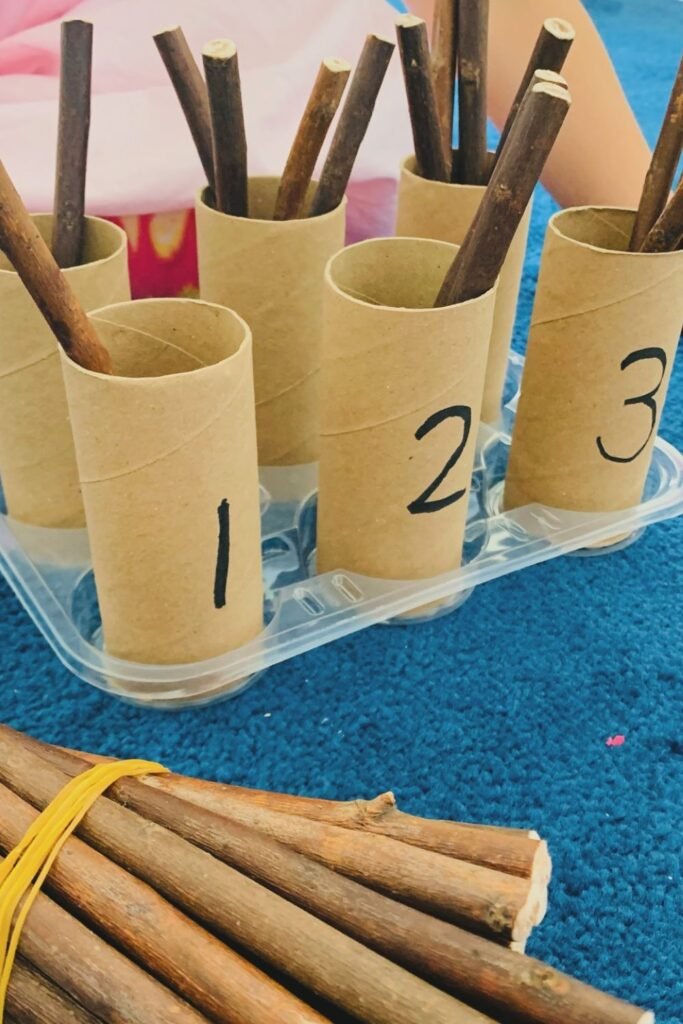
Labeled cardboard tubes paired with small sticks turn counting into a hands-on challenge.
That feels more like fun than work. Put a number on each tube and put them on a tray to keep anything from moving around.
Put the sticks in front of your youngster and ask them to “fill” each tube with the right amount.
This layout works great in outdoor play areas, natural corners, or even on the living room floor.
Using natural materials makes the activity more interesting and makes it feel less like work.
Tracing Paths
Finger movement makes numbers stick in a way worksheets never can.
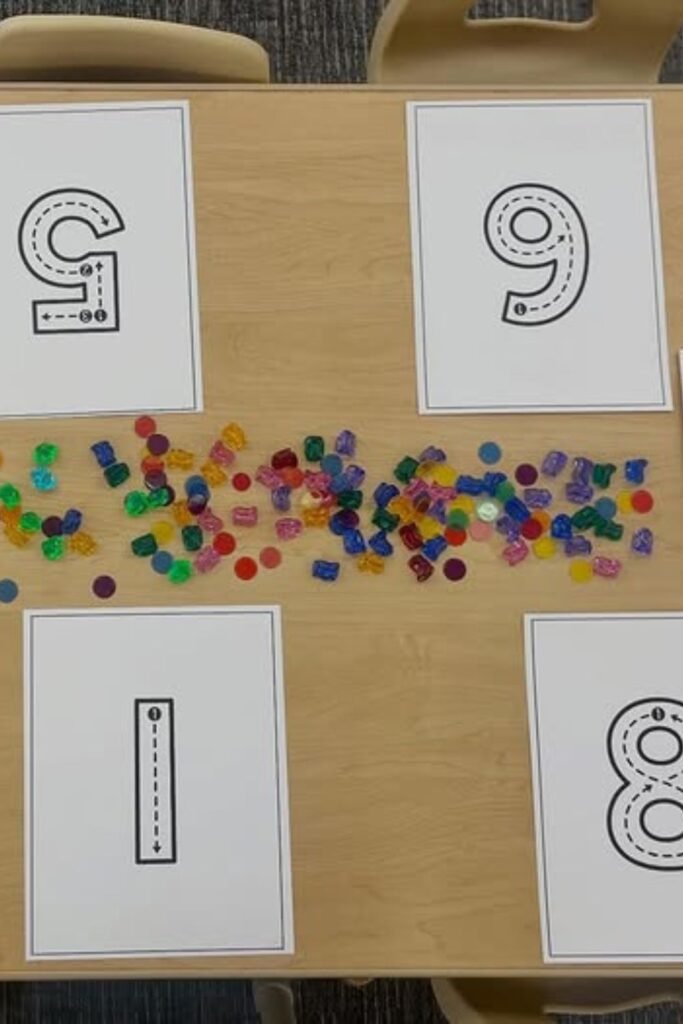
Large printed numerals with dotted tracing lines invite children to follow the correct strokes.
Before they even touch a pencil. Put the number cards on a table and put little counters, stones, or beads in the middle.
Instead of writing, have your youngster softly trace the number path with their finger first. When they know where to go, let them put one counter along the line every time.
That extra layer links formation and quantity. This is a good peaceful place for kids who speed through writing, especially in the classroom.
Strong number formation helps kids feel more confident later on since writing a number is much easier once they know how it “moves.”
Ball Counting
Energy needs direction, especially with active preschoolers.
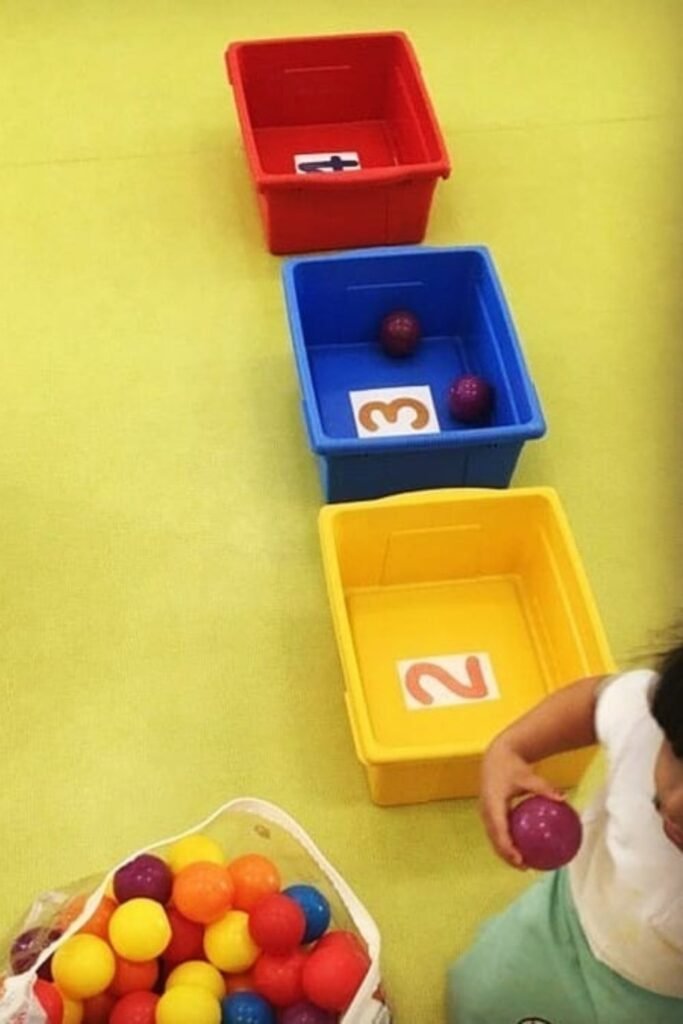
Colorful bins labeled with numbers turn simple ball tossing into focused counting practice without feeling lesson.
Put three or four containers a little way apart and put a number card in each one. Give your child a basket of little balls and tell them a number.
They don’t simply say it; they walk over and put the right amount in the right bin. Tell them to count out loud as each ball falls.
This activity works great in living rooms, schools, or even outside on patios since it offers people room to roam. Kids that have trouble sitting still frequently learn better this way.
They stop overfilling the containers after a while because they start checking themselves, which shows they really understand and aren’t just guessing.
Number Train
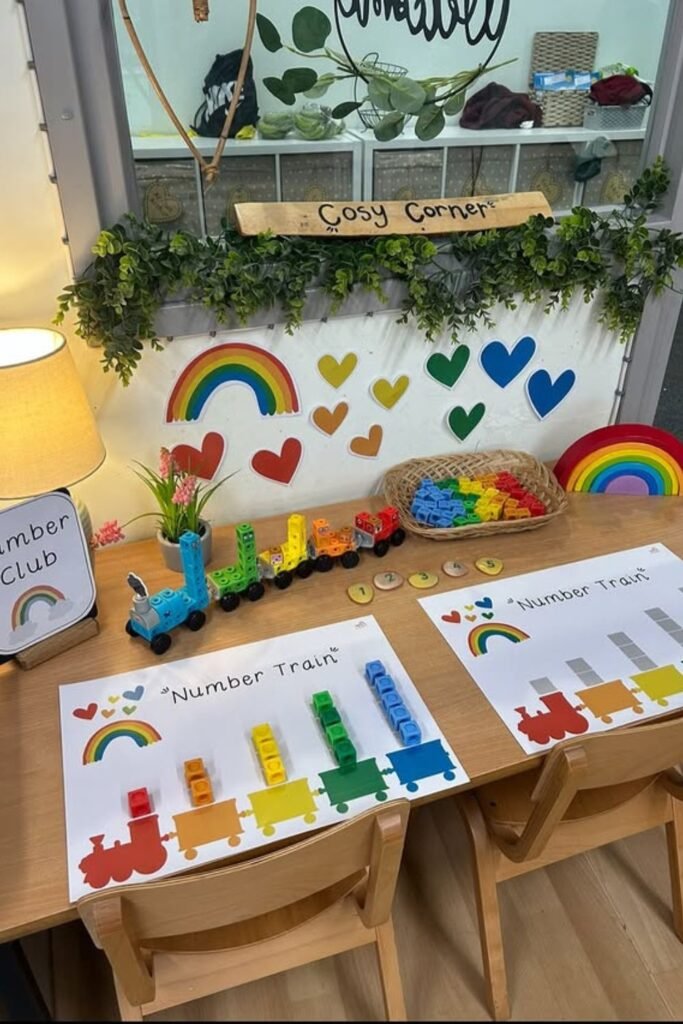
Imagination makes counting stick longer than drills ever will. Turning blocks into a colorful train gives children a reason to build each number instead of just saying it.
Draw simple wagon shapes on paper or lay out train vehicle templates. Put a number card next to each one and ask your youngster to load.
Tell them to count each block as they put it on. They can tell the difference between three and five without getting confused by watching the train grow.
Great for a themed nook in your home or a small classroom station, especially for kids who enjoy cars.
Building in order from one to the next also helps kids learn how to count.
When they’re done, ask them which carriage is the longest. That simple question has students compare amounts without even knowing they’re doing math.
Block Towers
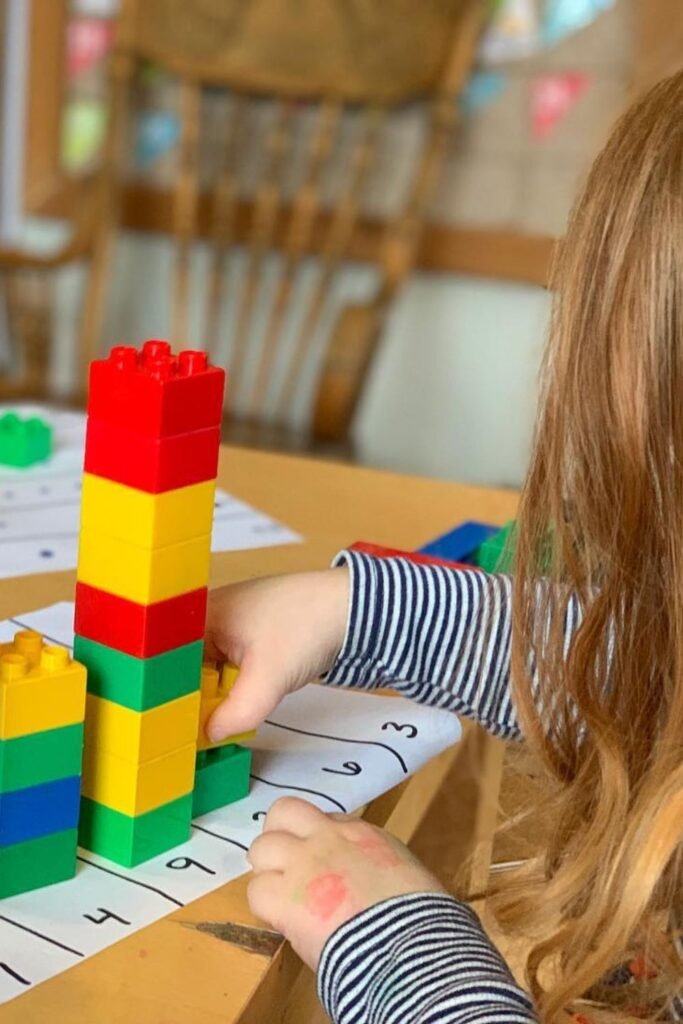
Height makes numbers visible. Stacking blocks into towers gives children a clear picture of which numbers are bigger without needing long explanations.
Put number cards or a basic number line on the table. Tell your youngster to make a tower that goes with each number.
When a few towers are next to each other, stop and ask which one is the tallest. Children can better grasp amount by comparing heights.
Great for afternoons when you have a lot of energy and your hands need something to do. Living rooms, playrooms, or small group centers are all good places to do this.
Doing that over and over again helps you count more accurately and be more patient which are two characteristics that are important in math and in life.
Bug Counting
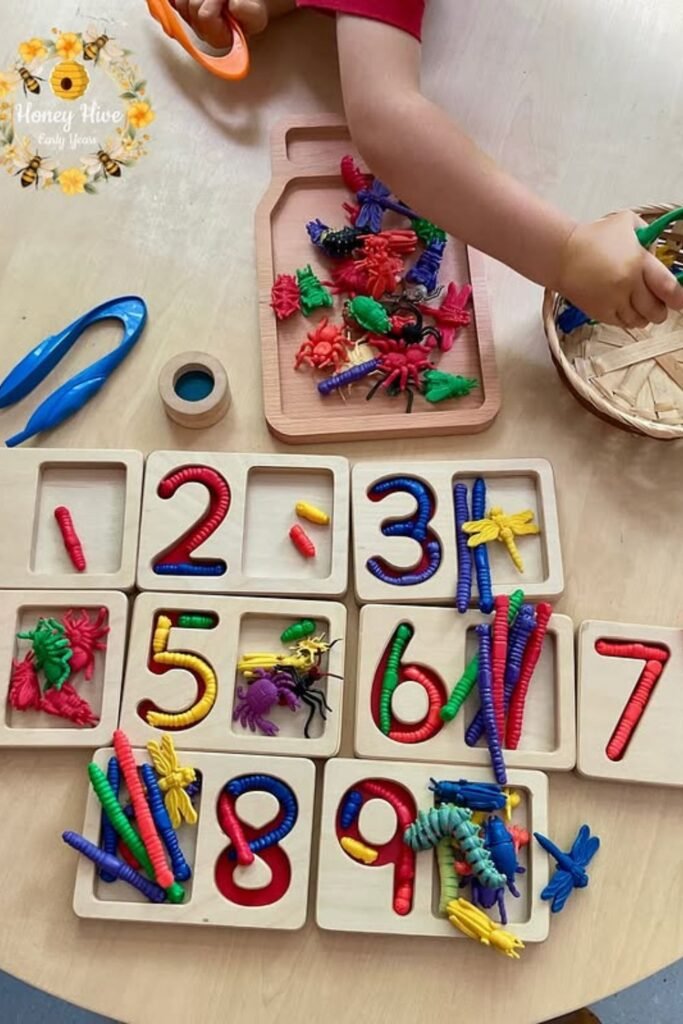
Tiny creatures instantly grab attention. Plastic insects paired with number boards turn counting into a playful sorting game that feels more like discovery than practice.
Put wooden number trays on a low table and put the bugs around them. Tell your child to put the right number of bugs in each space.
Tell them to move one bug at a time and say the number as it goes in. Steady hands are important here because quick counting often leads to blunders.
Great for small group stations or peaceful play at home on your own.
For older preschoolers, you can add tweezers to help them improve their fine motor skills.
hey stop putting bugs in random places and start verifying to see if the number really matches the amount.
Tower Match
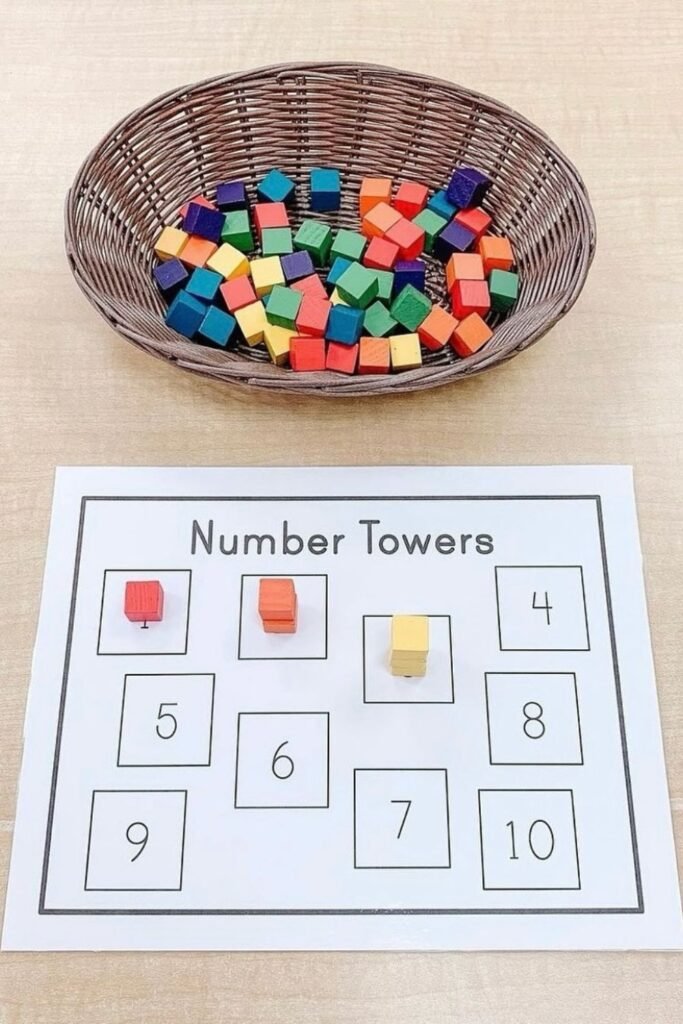
Stacking blocks becomes more meaningful when every tower has a target.
A simple number mat paired with loose cubes turns random building into purposeful counting.
Put the printed number sheet on a flat surface and maintain a basket of little cubes close by.
Tell your youngster to choose a square, read the number, and then build a tower that matches it.
As you stack the cubes, count them so that kids can see how many there are and how tall they are.
This is the perfect place for table work because the surface keeps towers stable. Short tasks keep people’s attention high.
Walnut Tracing
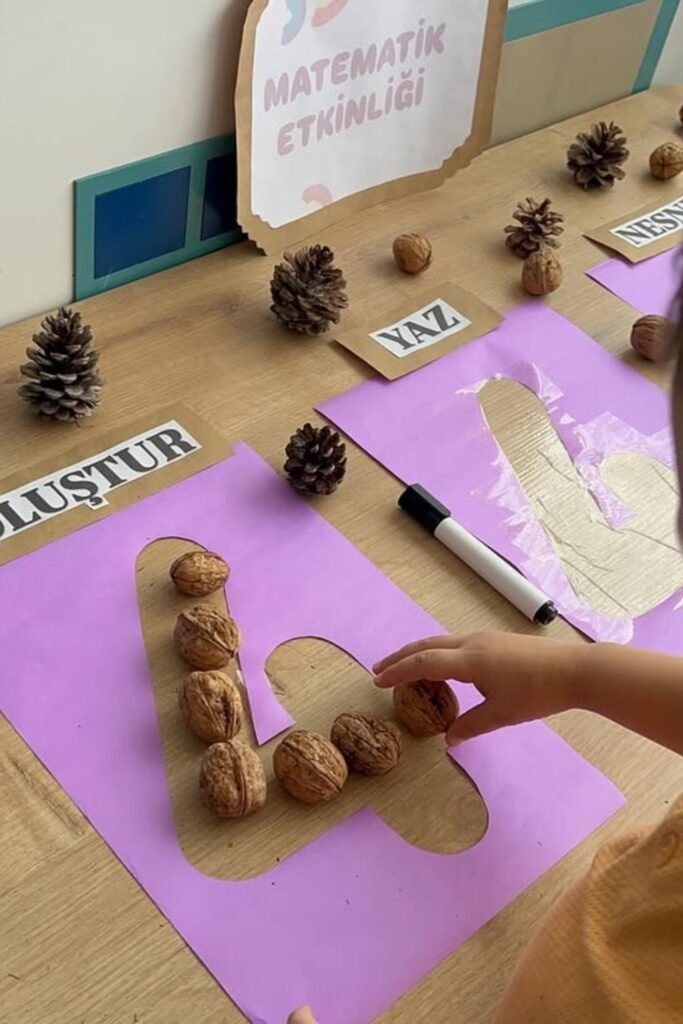
Small hands slow down naturally when they work with real objects. Placing walnuts along the shape of a large printed number turns counting into a calm.
Put bold number outlines on strong paper and keep a dish of pinecones or walnuts handy. Ask your youngster to carefully fill in the number shape, one piece at a time.
Tell them to count as each nut falls into place. Here, accuracy is important. The mistake is easy to see because of the gaps or excess parts, which lets them fix it themselves.
This design works great in quiet areas, nature-themed centers, or during the afternoon when kids are winding down.
Tracing the curves and lines with objects helps kids remember how the number appears and feels, which helps them recognize it and write it later.
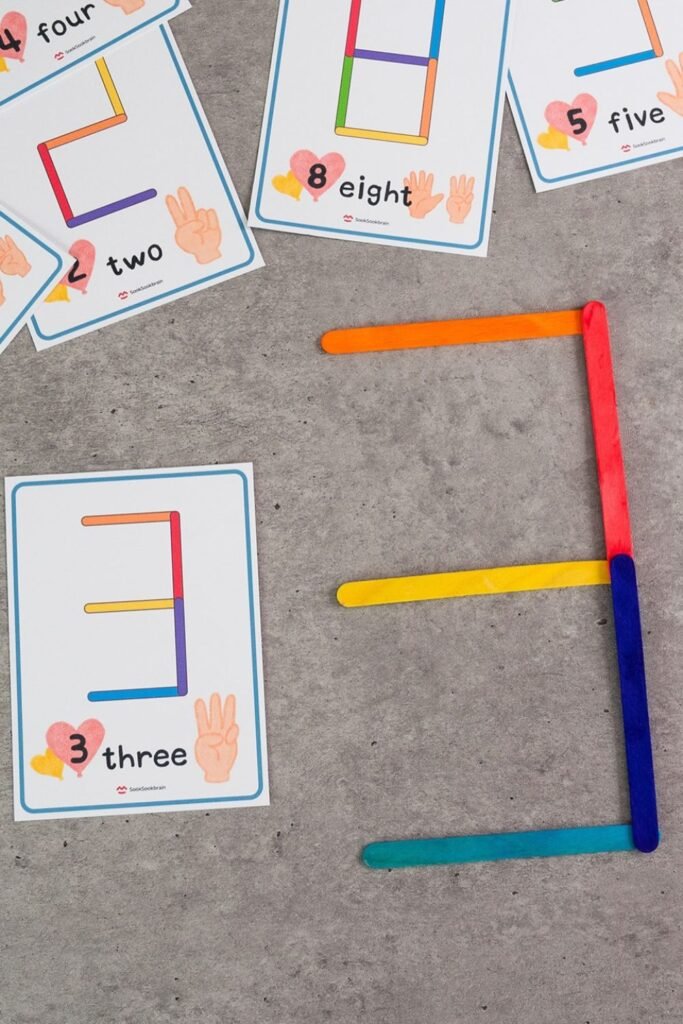
Stick Shapes
Flat sticks on the floor suddenly turn numbers into puzzles. Recreating numerals with colored craft sticks helps children.
See how each number is built, not just what it looks like on paper. Put out number cards as guidance and a few sticks close by.
Ask your youngster to carefully reproduce the shape, making sure the angles are right. Tell them to say the number when the shape is done.
This is the perfect place for floor space because it lets you spread out and try new things. It’s easy to remedy mistakes just move a stick and try again.
Once kids know how to make a number using straight and curved lines, it will be much easier for them to handle a pencil later.
Count Match
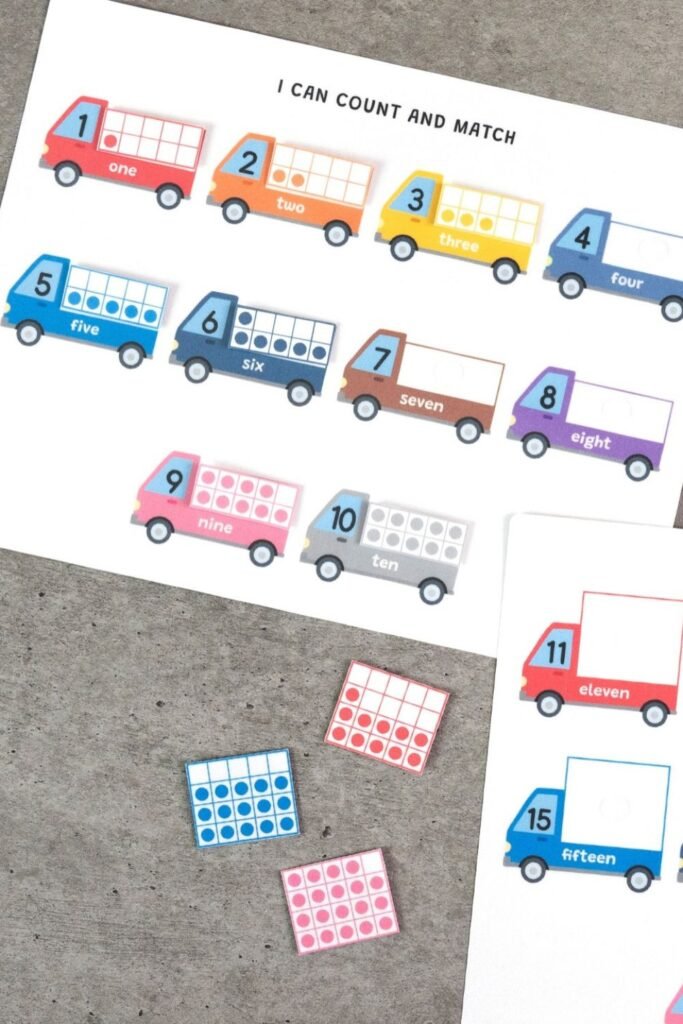
Teen numbers confuse many preschoolers because they sound similar but represent bigger quantities.
Put the mat on the floor and put some loose ten-frame cards nearby. Ask your child to carefully count the dots and put the right card on the right vehicle.
Here, counting slowly is important. Teen numbers need time because kids need to learn to see groups of 10 plus extra ones instead of just “one, two, three.”
Great for math time with a small group or focused practice at home when you’re ready to go beyond ten.
Questions like “How many more does fourteen need to become fifteen” That little change makes people think more deeply.
Math Journal
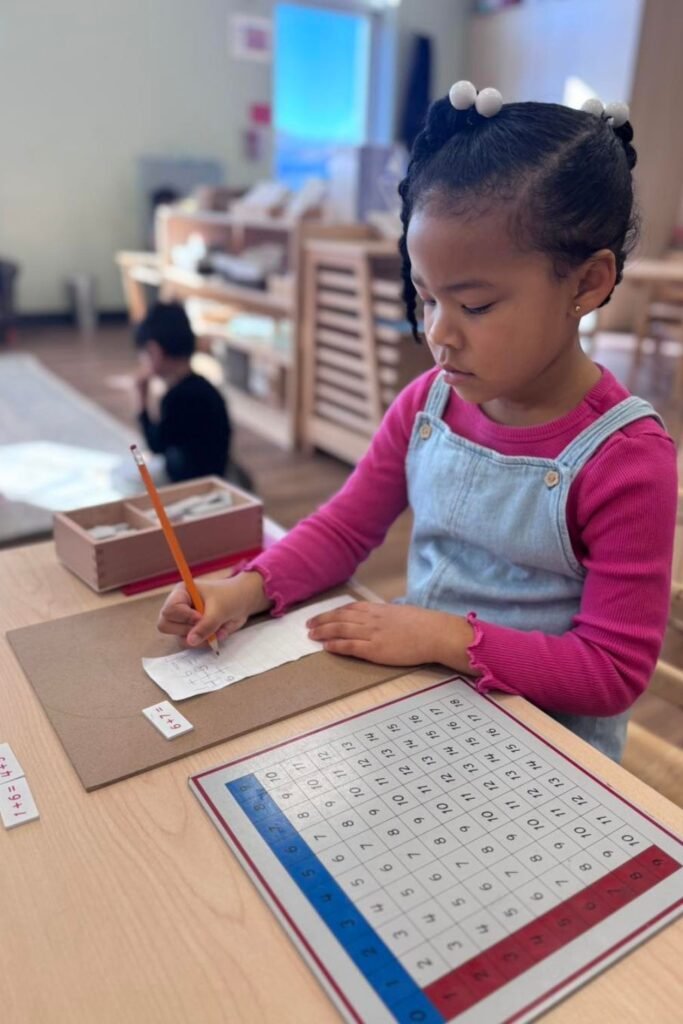
Confidence grows when children explain their thinking, not just give answers. A simple math journal with number cards and a hundred chart turns counting.
Put a tiny number problem or question in front of your youngster and let them write the solution down.
Tell them to point to each number as they count up or down. That habit makes you more accurate and independent.
Best for preschoolers who are ready to move on beyond simple counting. This is a good time for quiet table time.
Writing numbers and answering simple addition problems helps you remember things, stay focused, and see number patterns.
Bead Threading
Fine motor practice and counting can happen at the same time.
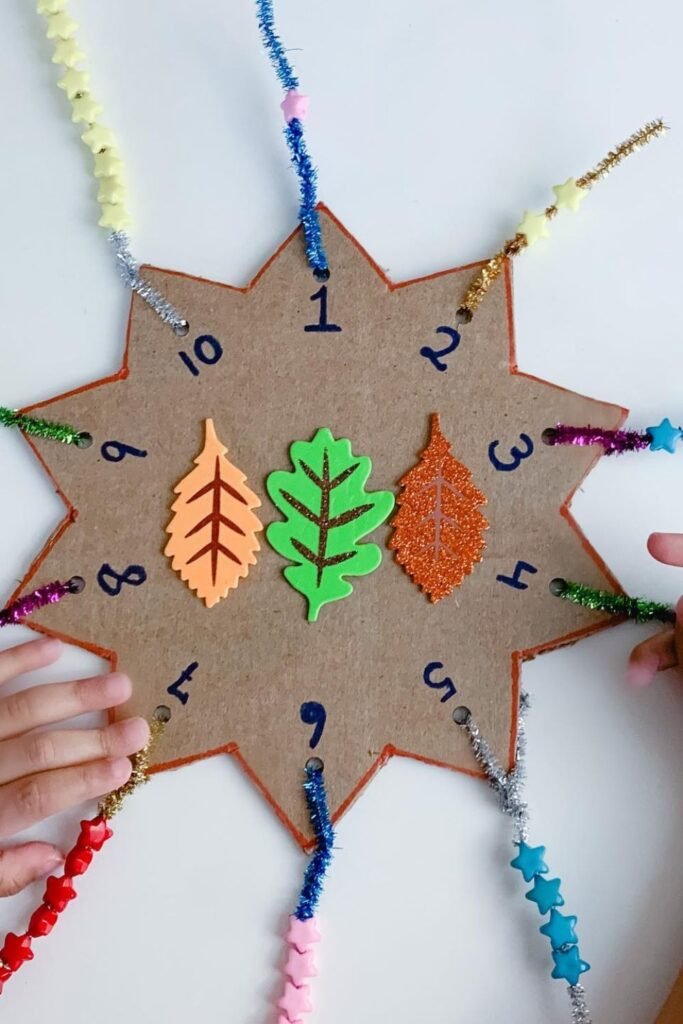
A cardboard number wheel with holes around the edges turns simple bead threading into focused number.
Put numbers around the shape and use pipe cleaners to go through each hole. Ask your child to put the right number of beads on each thread.
Encourage them to count slowly as each bead moves. That beat helps keep people from skipping.
Table setups work nicely here because kids need a stable place to thread. For younger preschoolers, start with the numerals one through five.
Kids who are older can work up to ten. The colors keep things interesting, but the actual learning happens when you do it over and over.
Pom Sorting
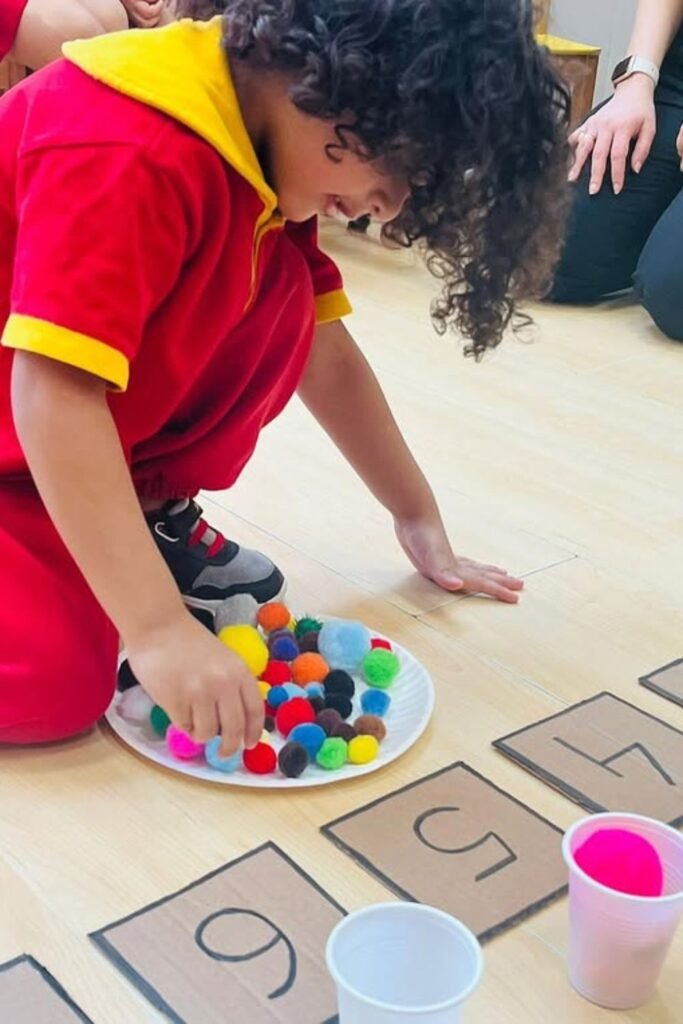
Floor activities often work better for children who need movement. Number cards spread out on the ground with a plate of colorful pom-poms turn counting into an active.
Put the number cards in a line and have tiny bowls or cups close by. Ask your child to choose a card, count the right amount of pom-poms.
And put them in the cup that goes with the card. Counting out loud while moving helps them stay focused.
Great for groups of kids who can take turns or for kids who learn best when they are active and have trouble sitting still.
The smooth feel of the pom-poms makes the exercise more fun, and as the heaps build, it’s easy to see “more” and “less.”
Carrot Counting
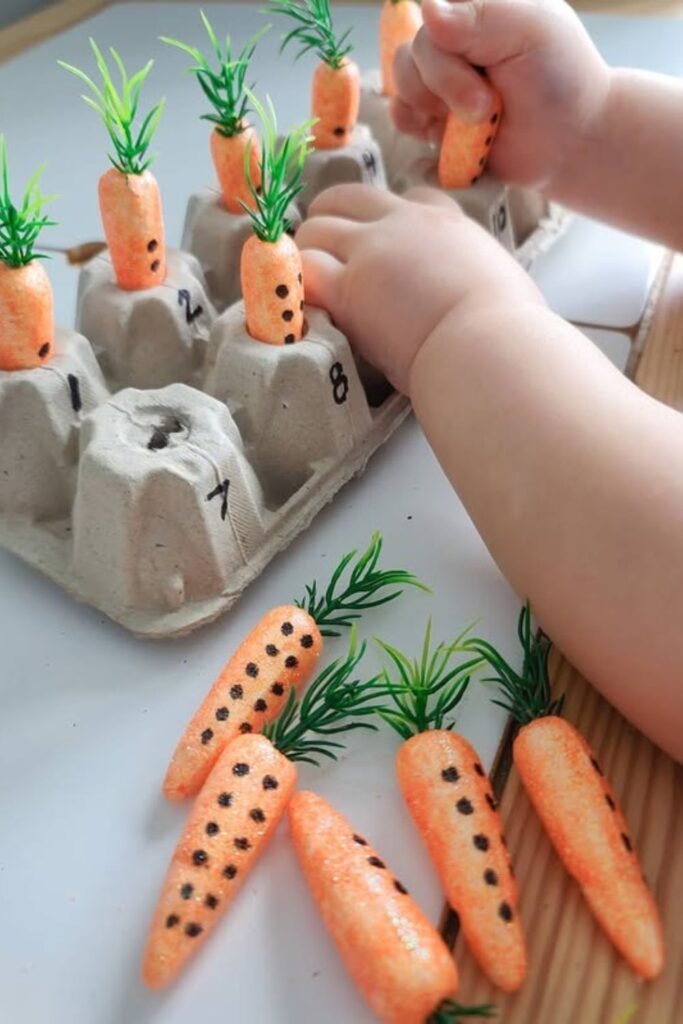
Pretend play makes math feel natural. An egg carton labeled with numbers paired with small toy carrots turns counting into a simple “planting” game.
Put the carrots next to each egg cup and write a number on each one. Ask your youngster to plant the right quantity of carrots in each hole.
Tell them to count slowly as each carrot falls. They will notice right away if one cup has too many since it appears crowded.
This layout works great with kitchen tables or sensory nooks. The agricultural motif keeps things interesting, especially for kids who like to pretend play.
Doing the same thing over and over again helps kids link the written number to the exact amount in front of them.
Clay Numbers
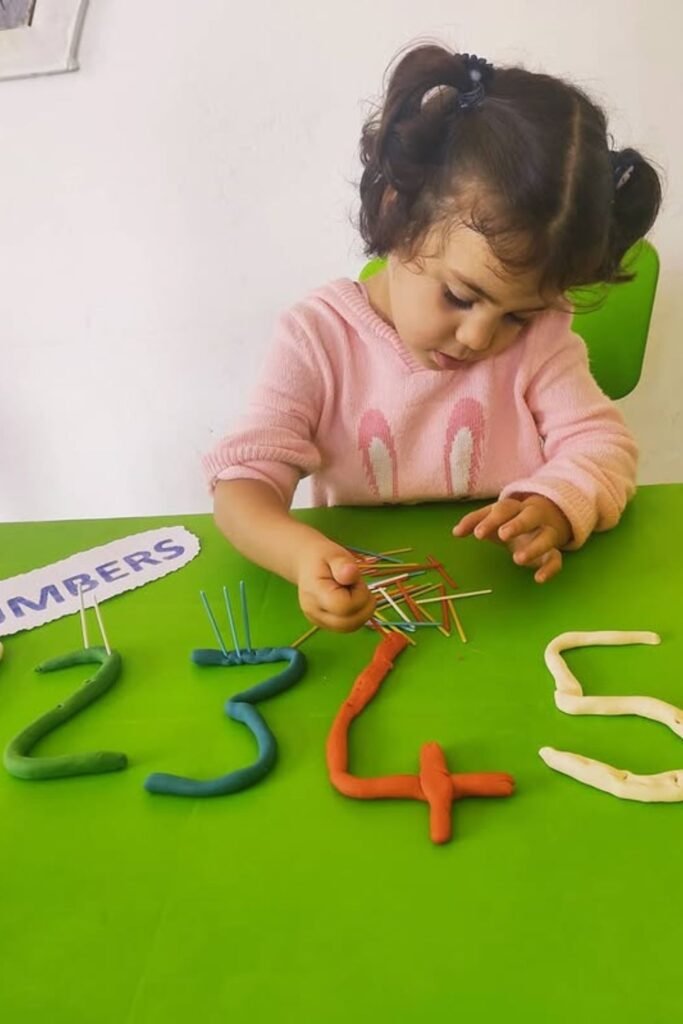
Soft dough invites children to slow down and really look at each numeral.
Shaping numbers with clay and pressing sticks into them turns simple recognition into hands-on.
Put out pieces of modeling clay and make big numerals on the table. Put a tiny stack of toothpicks or matchsticks close by.
Ask your child to push the right amount of sticks into each clay number. Saying the number of sticks out loud helps you remember the shape.
Tables or craft nooks that are easy to clean up work best because clay needs room. First, younger kids learn the numbers one through five.
Dot Cards
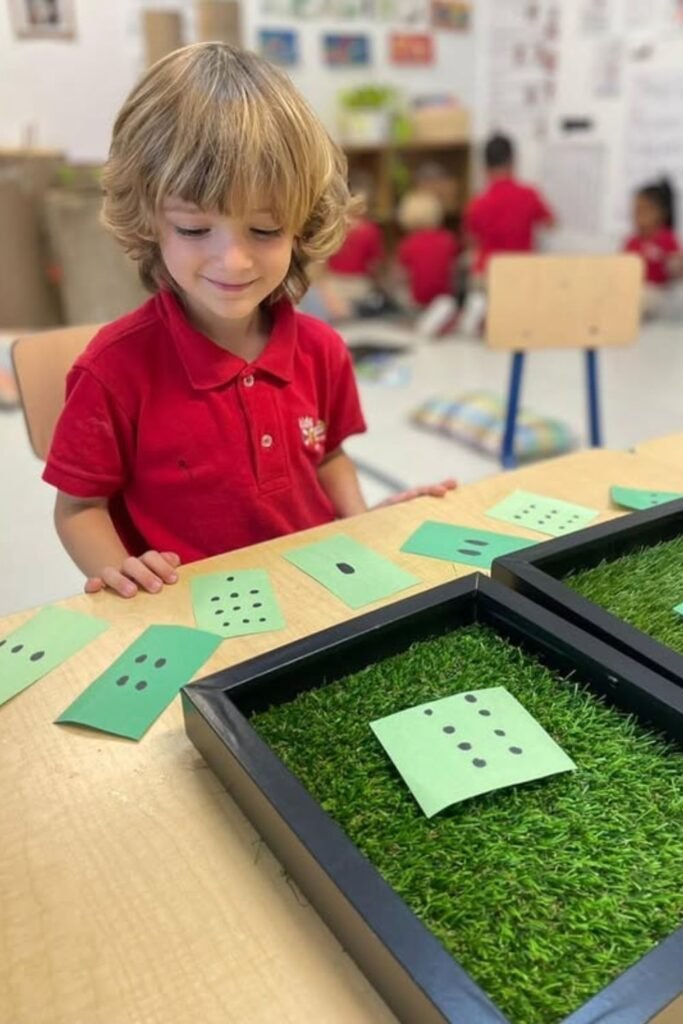
Pattern recognition grows faster when children see numbers in groups instead of counting one by one. Dot cards placed near a sensory tray turn simple matching.
Put a few dot cards on the table and one in the grass tray. Ask your youngster to find the card that matches with out counting out loud straight away.
Let them take a close look for a minute. Quickly recognizing dot patterns helps kids develop a strong sense of numbers and makes them less dependent on slow counting.
This is the perfect place for quiet table work because kids need time to look around. Start with modest numbers, like one to five, if you’re new to it.
When kids start to see patterns right away, you’ll see that they hesitate less and feel more sure of themselves when numbers come up in ordinary life.
Confetti Fill
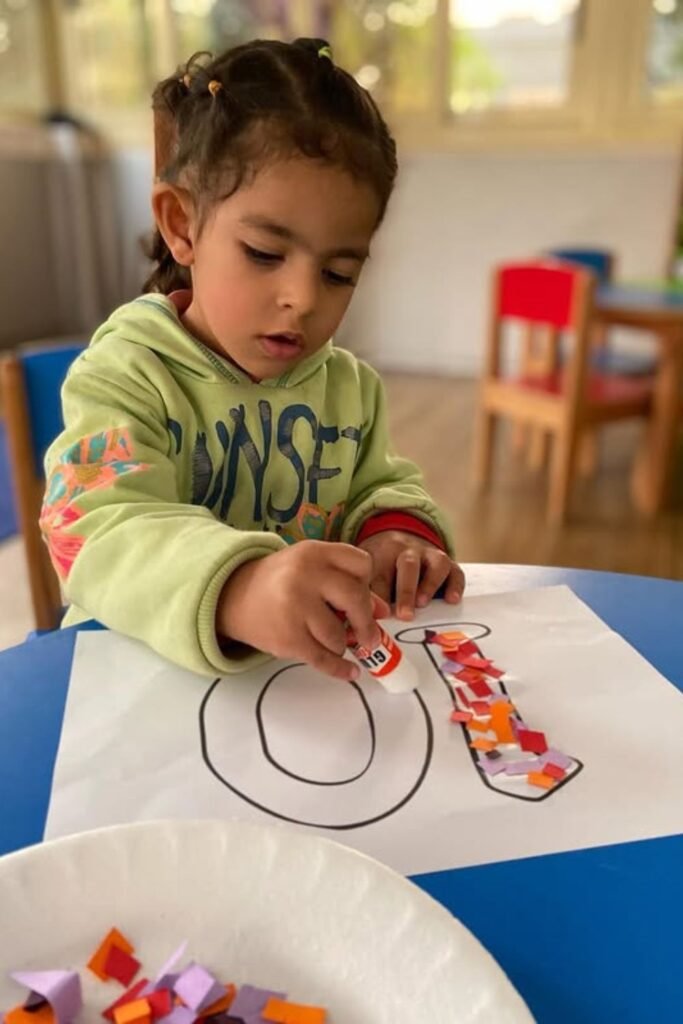
Glue, paper scraps, and big bold numbers can hold attention longer than flashcards ever will.
Filling a printed numeral with tiny pieces of confetti turns simple recognition into focused creation.
Put a big number on the table and keep a small bowl of paper scraps close hand.
Ask your youngster to put glue inside the lines and carefully press the pieces into position.
Tell them to mention the number before they start and again when it’s full. Saying the name over and over while you work helps it stick.
Craft time is the best time here since the kids know they will be making something. Putting the pieces inside the lines slowly improves both fine motor control and visual memory.
Chestnut Count
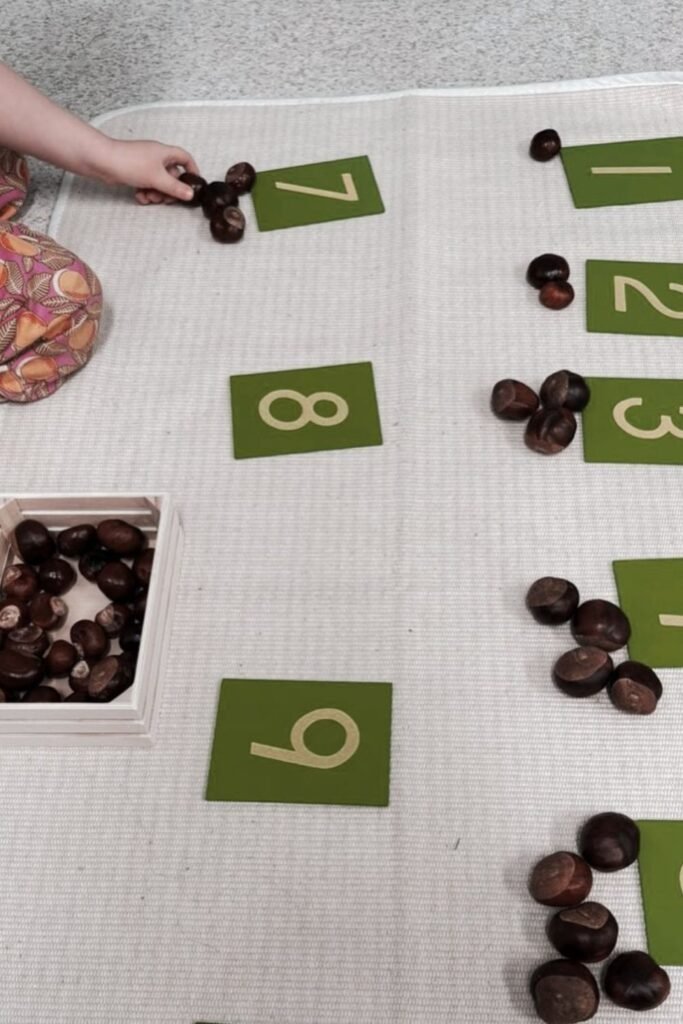
Loose parts on the floor create a calm space for real number practice.
Number cards paired with chestnuts invite children to slow down and focus on matching quantity.
Put the cards on a mat and put a small box of chestnuts next to them. Ask your child to pick a card and put the right amount of chestnuts next to it.
Encourage steady counting by touching each piece once. That movement stops them from missing numbers.
Floor arrangements are great for kids who can focus better when they are sitting on a mat. Natural materials give weight and texture, which keeps people’s attention longer.
After a few groups are done, ask which group has the most or least. When kids compare heaps, they learn more than just how to count.
Number Formation
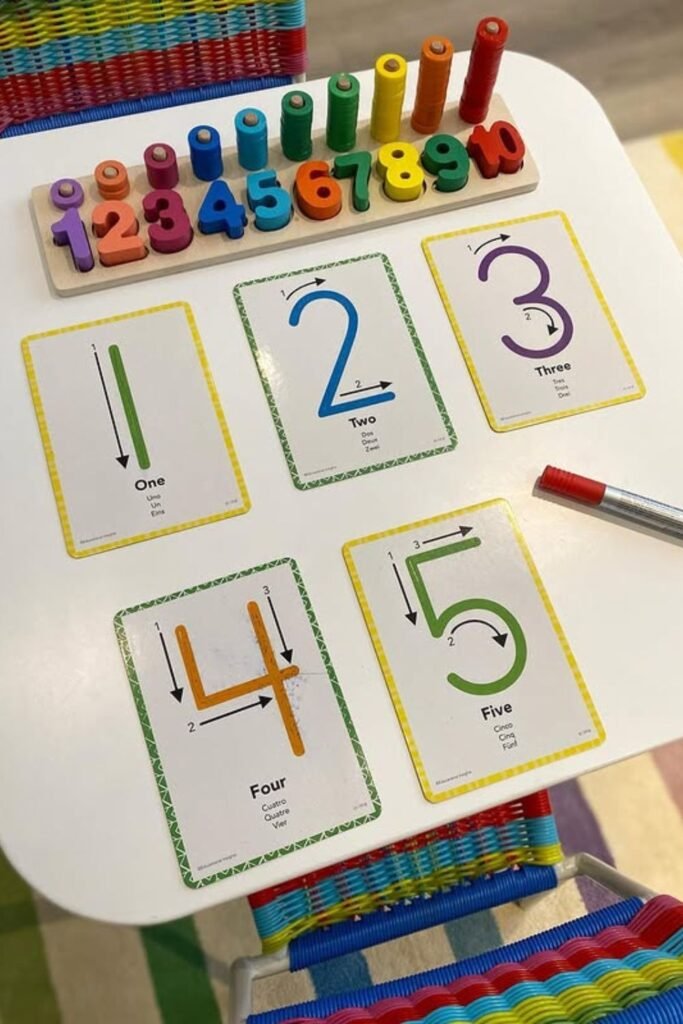
Strong writing starts long before a child picks up a pencil confidently. Number formation cards paired with tracing tools help children learn the correct strokes from the beginning.
Put the cards on a little table and move your finger slowly to show how to do it. Do precisely what the arrows say.
Then give your child a dry-erase marker or let them trace with their finger before they write on paper. That repetition helps your muscles remember.
Here, short, focused practice is optimal. Five minutes per day is better than one long session.
Putting the cards with wooden number pegs or counting pieces adjacent links formation with amount.
Clip Counting
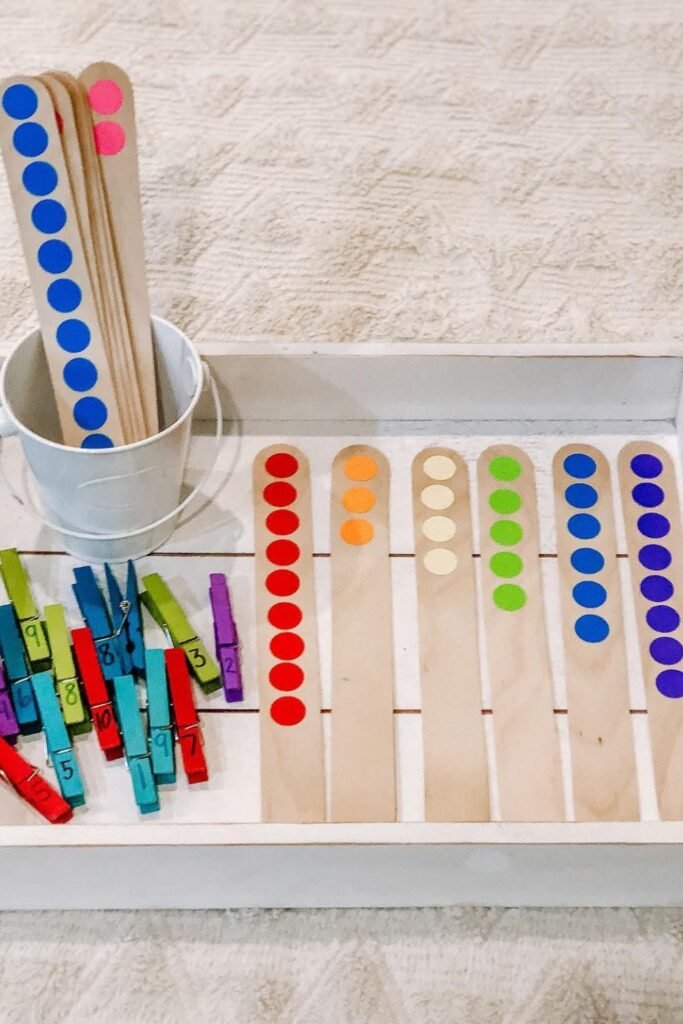
Matching numbers to quantities becomes clearer when children can physically attach the answer.
Colored dots on popsicle sticks and numbered clothespins make counting a simple hands-on game.
Put the sticks on a dish put the clothespins around them. Ask your child to count the dots on one stick and then clip the right number onto it.
Tell them to tap each dot as they count. That constant beat stops people from counting twice.
This works nicely with table stations since kids need both hands free. Start with smaller amounts if you’re new to it. Add bigger numbers as they get better.
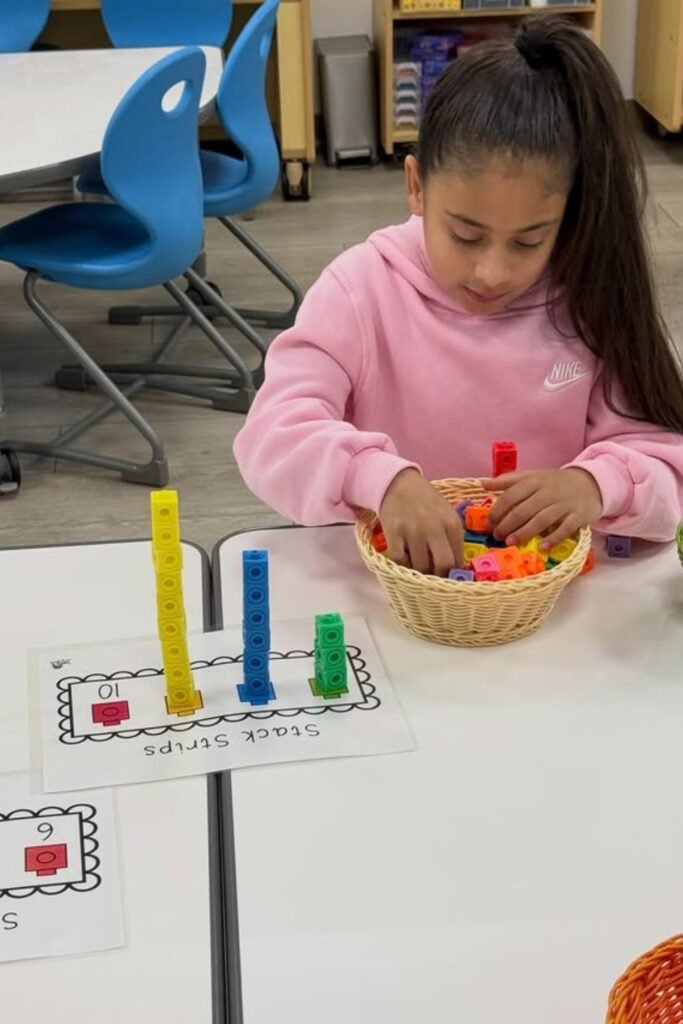
Stack Build
Some kids learn numbers faster when they can see them expand in front of their eyes.
Putting cubes on a foundation card makes counting something you can see and compare easily.
Put a basic number strip or mat on the table and put a basket of linking cubes close by. Tell your youngster to make each stack match the number on it.
Counting each cube as it clicks into place helps students stay focused and accurate. Here, small group tables or separate stations are great.
After a few stacks have been made, stop and ask which one is shorter or taller. Kids can learn the difference between “more” and “less” without extended explanations.
FAQs
What should my preschooler be able to do with numbers before kindergarten?
Most toddlers should be able to count to at least 10, recognize numbers 1–10, and know that the last number they counted informs them “how many.”
If your youngster can count snacks, toys, or steps without missing any and can match a number card to the proper quantity, they’re doing well.
My child can count to 20 but still gets the wrong amount. What’s going wrong?
That usually indicates they know the order of the numbers by heart but don’t know how to count one-to-one. Take it easy.
Have them do things with their hands, like touch one thing for each number they speak. If they hurry, gently tell them to move one piece at a time.
Hi, I’m Afaf! I’m a law student who loves writing about everyday life – from home projects and crafts to fashion, beauty, and parenting tips.
I’ve been writing for over a year, sharing ideas that are simple, practical, and easy to try. I write about things I find interesting and useful, whether that’s organizing a space, trying a new DIY, or finding activities to keep kids entertained.
My goal is to share helpful ideas without making things complicated. If it works in real life, I’ll write about it.
When I’m not studying or writing, I’m usually experimenting with new projects or scrolling for inspiration!