
20 Dog Paw Print Craft Ideas for 2026
You want a cute paw print from your dog, but as soon as you touch their paw, everything goes wrong. Your dog pulls away.
The paint gets all over the place. You start to worry that you’re making them nervous, and all of a sudden, the whole thing seems like a poor idea.
The truth is that most paw print projects don’t work out because no one explains you how to do it the dog’s way.
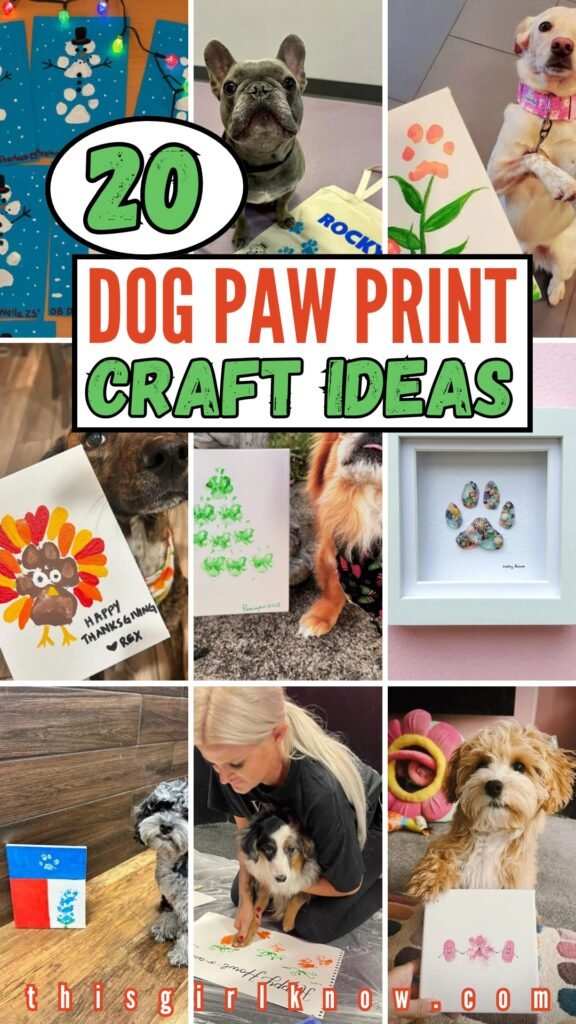
In this article, you’ll uncover 20 easy Dog Paw Print kids’ craft ideas that make creativity accessible in 2026.
Let’s jump in!
How Do You Make a Dog Paw Print Craft Without Stressing Your Dog?
You’re not the only one whose dog becomes uncomfortable when you touch their paws. Most dogs don’t like it.
And making them do it only makes it worse. If you hurry, your dog will pull away, the print will smudge, and everyone will be stressed.
The most important thing is to take your time and make this a peaceful, natural moment, not a big deal.
You can get a clean paw print and a calm dog at the same time if you work around your dog’s comfort instead of battling it.
Save this article for later!👇👇👇
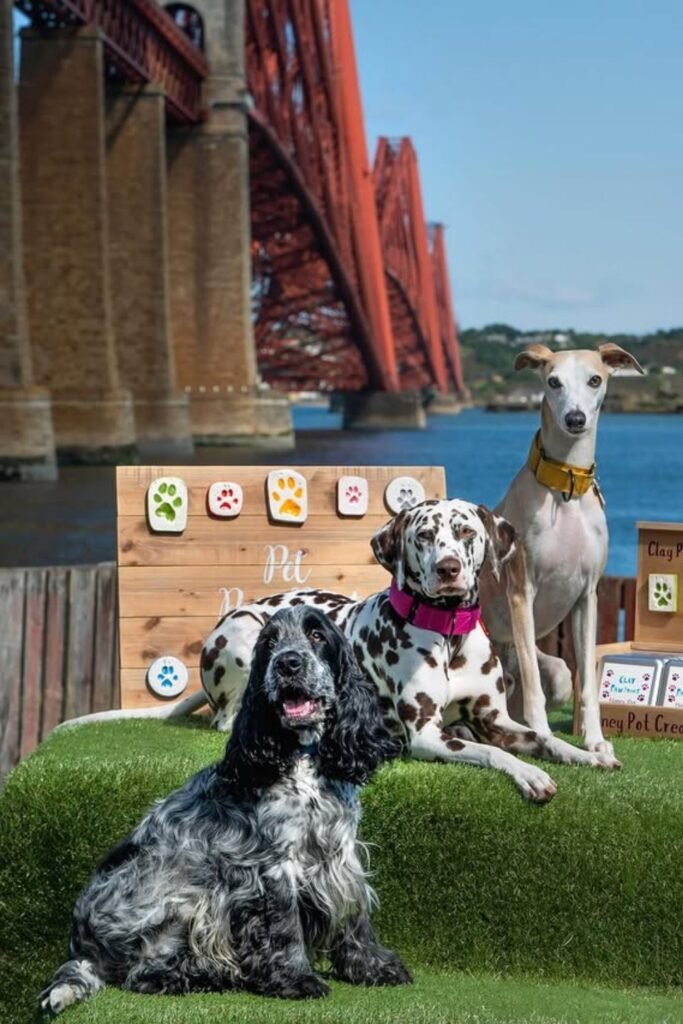
Clay Prints
Messy hands usually scare parents, but soft clay actually works in your favor with kids. Little hands.
Can help press the dog’s paw gently. As you lead the way, turning the moment into teamwork instead of pandemonium.
Clay paw prints are best done on peaceful afternoons or when the class has a pet day because there is no urgency and no paint that drips.
First, roll out the clay. Then, let the youngsters practice pressing their own fingers. Finally, show them how to execute a calm paw press with the dog.
Let the youngsters paint it once it dries or bakes. The moderate pace maintains youngsters’ minds on the task at hand and dogs calm.
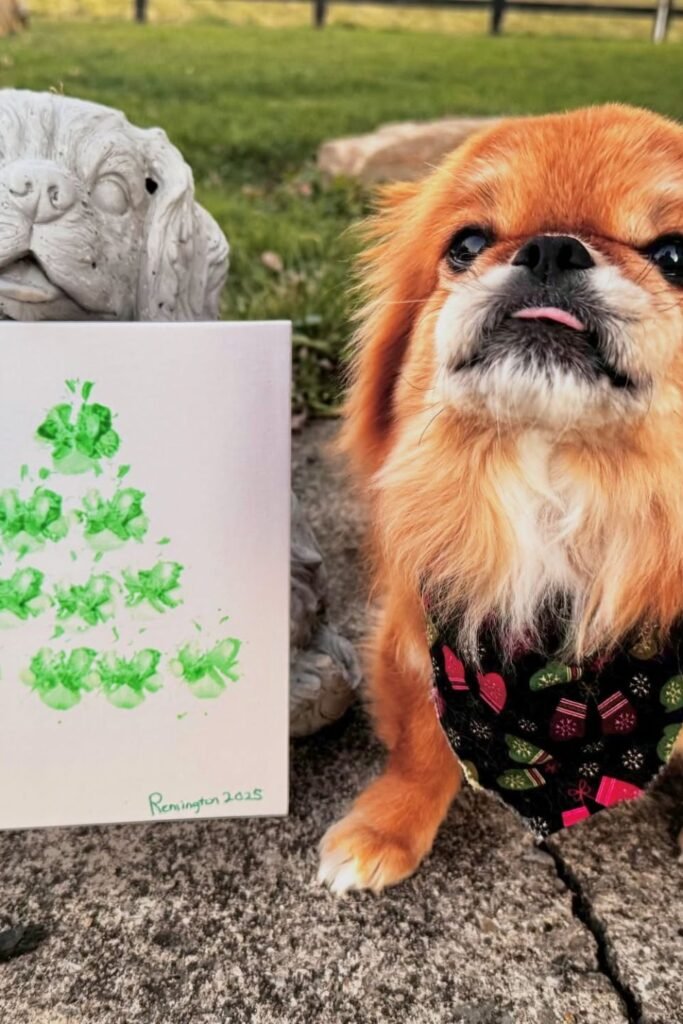
Paw Tree
Holiday crafts get loud fast, but paw-print trees slow kids down in a good way. Turning a dog’s paw into ornaments gives children a clear goal.
So they concentrate on location instead of painting all over the place. The best paint to use is green.
Lightly dab it on the paw and then push it into a triangle shape to make the tree. Once the prints are dry.
Kids can add stars, dots, or a trunk. This keeps their hands occupied while the dog relaxes. This works nicely in living rooms.
Classrooms, or on winter craft days because the end product may be used as seasonal wall art or a keepsake card.
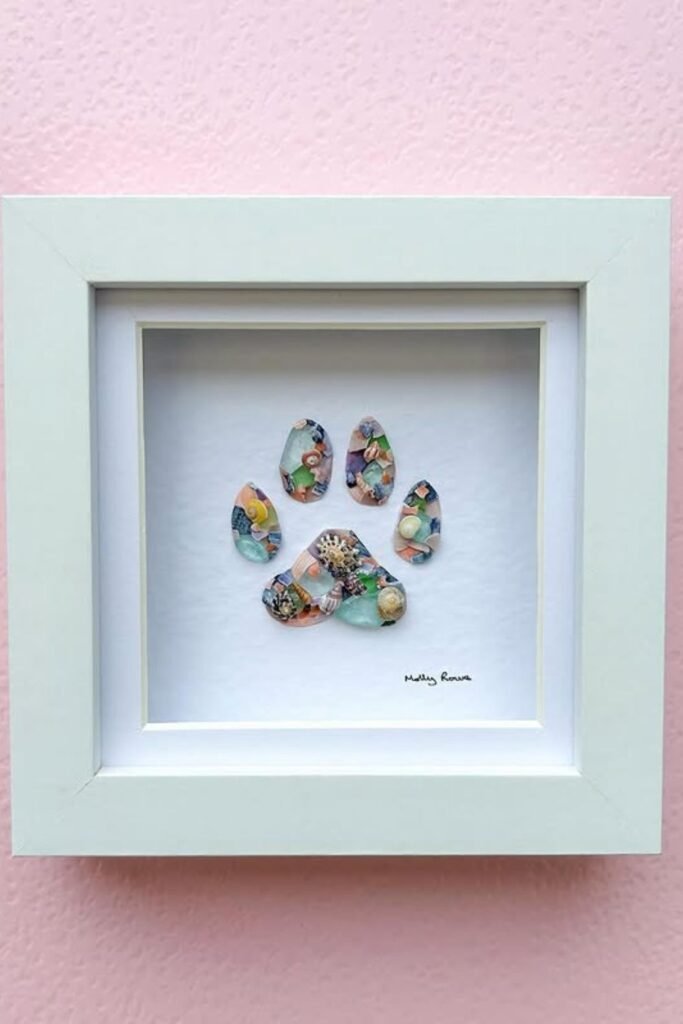
Mosaic Paw
Mosaic paw art is perfect for little hands that want to sort things more than paint. Older kids can assist you put small tiles, beads.
Paper pieces inside a paw outline while you take care of the main paw print on its own. Put the dog’s paw in clay or ink, let it dry.
And then let the youngsters do the decorating. It works best in bedrooms, craft areas, or classroom art desks.
Where you have to be patient. Work on one part at a time and let the youngsters pick the colors or textures.
The dog stays calm, and the kids still feel like they are part of making something great.
Turkey Art
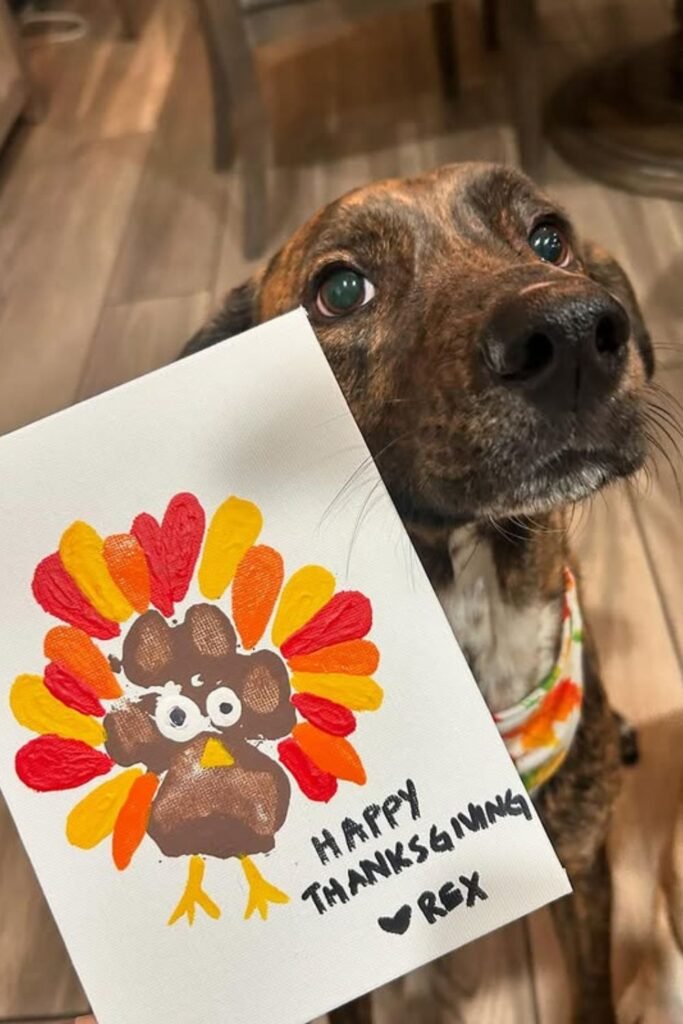
Thanksgiving crafts usually need a clear end goal, and paw-print turkeys give kids exactly that.
Kids can see how something basic may become into a picture by turning one brown paw print into a turkey body.
Warm colors work well here. Dab them on paper plates or miniature canvases, then press the paw once and stop. After the dog takes a break, kids can add eyes, beaks, and legs.
This project is great for dining rooms, classrooms, or afternoons before a holiday because the finished art can be used as decoration.
By only letting the paw print be pressed once, dogs stay quiet and kids stay focused on decorating instead of painting.
Flower Prints
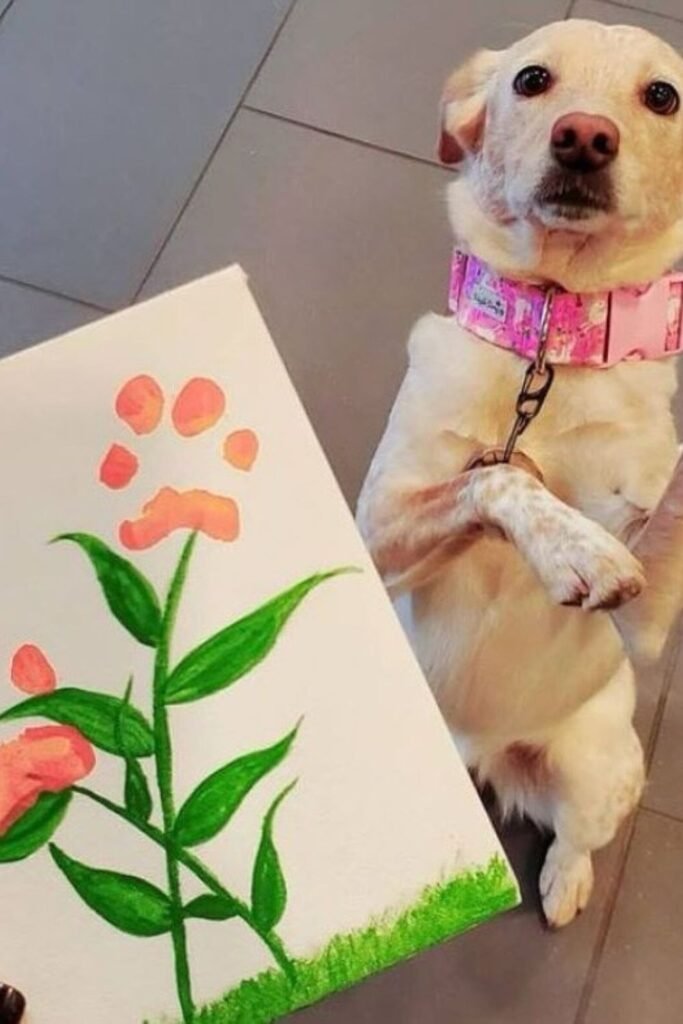
Painted petals make more sense to kids than random paw marks, and that’s why this one works so well.
Kids can focus better when they have a clear goal to work toward, like turning paw prints into flowers.
When you paint the paw pink or red, it makes blooms. Kids can only use brushes or markers to make stems and leaves.
Art workshops, kitchen tables, or activities with a spring theme are all great choices because they are easy to clean up.
After one rapid step, the dogs calm down, and the kids are happy of finishing the art on their own.
Tote Stamping
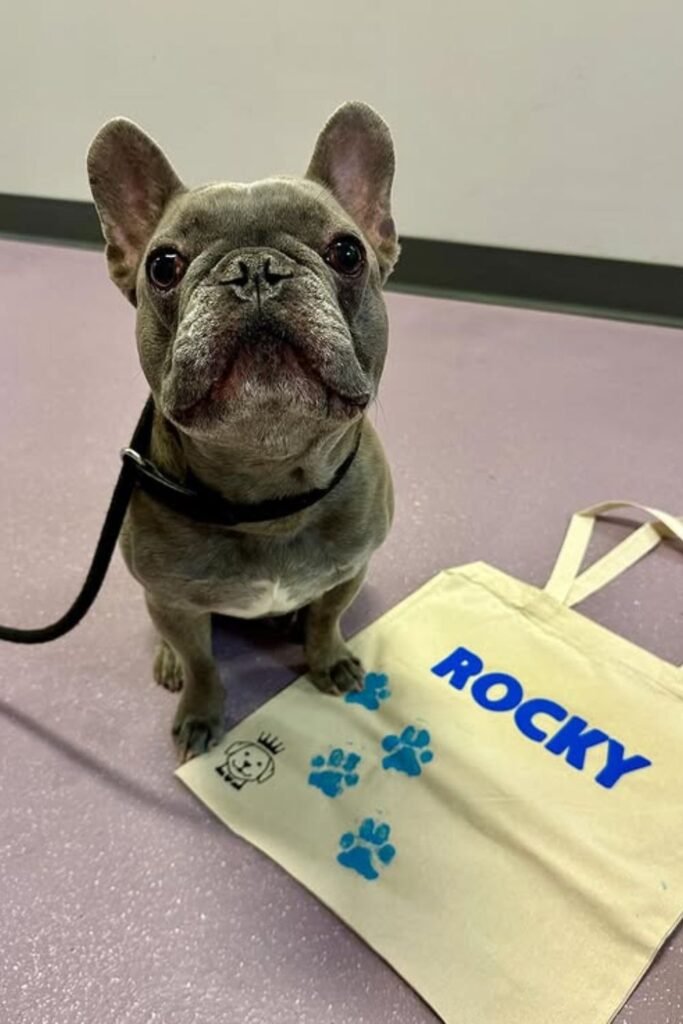
Wearable crafts instantly raise the excitement level for kids. Paw-printed tote bags feel special because children know they can actually use them later.
Fabric paint is the ideal choice here because it stays soft and doesn’t crack after it dries.
Put the bag on a flat surface, slide in the cardboard, and then direct one gentle paw press and stop.
Kids can space out the prints, write names on them with markers, or make them into a library or toy bag.
Craft rooms, school events, or birthday parties are all great places to use these because they keep the mess limited.
Snowman Paws
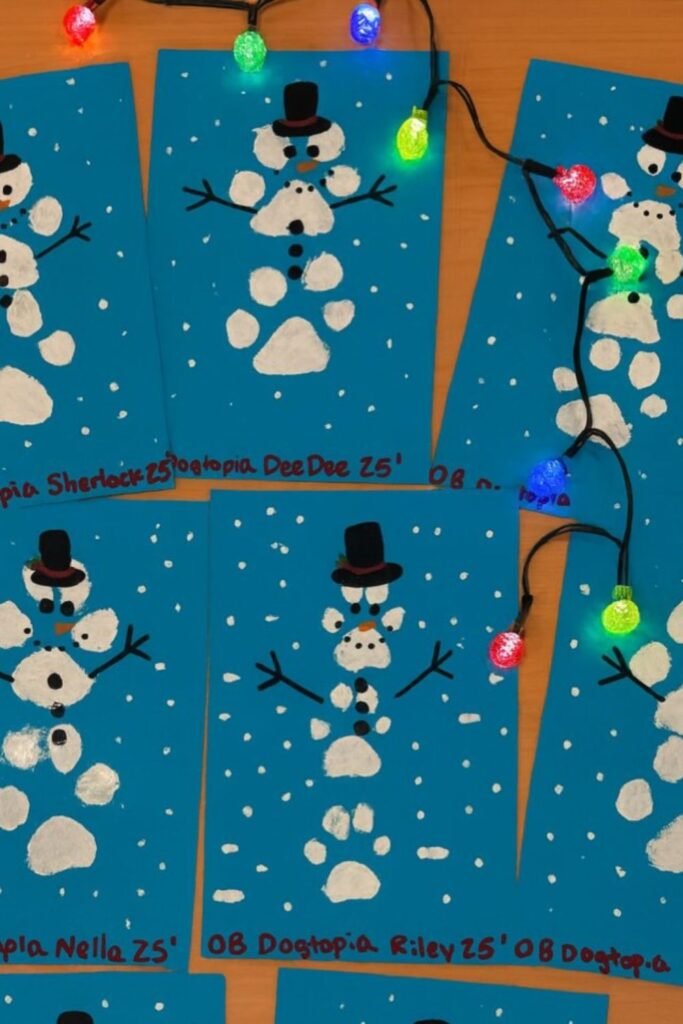
Winter crafts work best when kids can see the picture forming fast. Paw-print snowmen do exactly.
That because each press becomes a body part instead of random marks. It’s easier to see faults.
And rectify them when you use white paint on blue paper. The dog builds the snowman from the bottom up, one steady paw press at a time.
The kids are now in charge of the scarves, caps, arms, and snowflakes. This makes the action last longer without having to get the dog involved again.
Every child finishes up with a somewhat different snowman and a narrative to tell, so this works great in classrooms, at Christmas parties, or on snowy afternoons.
Guided Press
Adult hands make all the difference with younger kids.
Sitting on the floor and guiding the paw slowly turns the moment into a calm, shared activity instead of a rushed one.
One person holds the dog still and calm while another helps the kids watch, count and wait for the press.
The paper stays flat, the paint stays in place, and the paw only touches down once before stopping.
Living rooms, playrooms, or school art days are excellent because there needs to be enough room.
After the image dries, youngsters can use markers or stickers to decorate around it. The dog can then move on to rewards and relax without feeling too stressed.
Family Prints
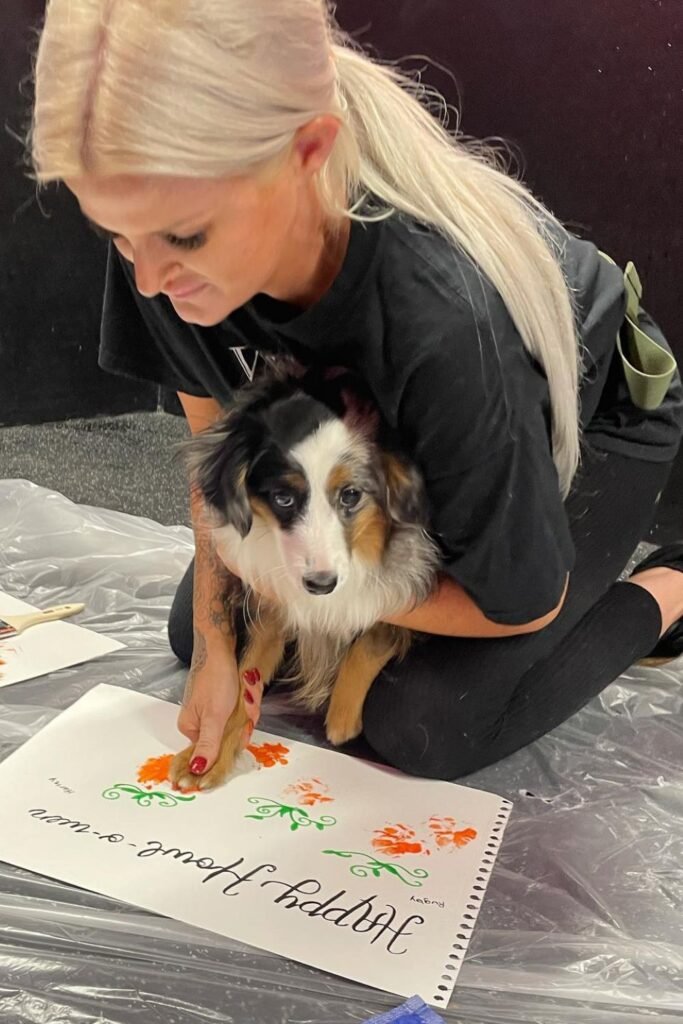
Kids love projects that feel personal, and turning paw prints into a little “family” does exactly that.
Kids put limbs, faces, or small elements around one paw print to make a story. Soft colors are better here.
Because they make the print look better and are more forgiving if it isn’t flawless. This exercise is best for coffee tables.
Playrooms, or peaceful nights at home because it’s more about using your imagination. Than how fast you can do it.
Just one gentle paw press is all it takes for the dog to be done. The youngsters get to choose who holds hands and why after that.
Sunflower Stamp
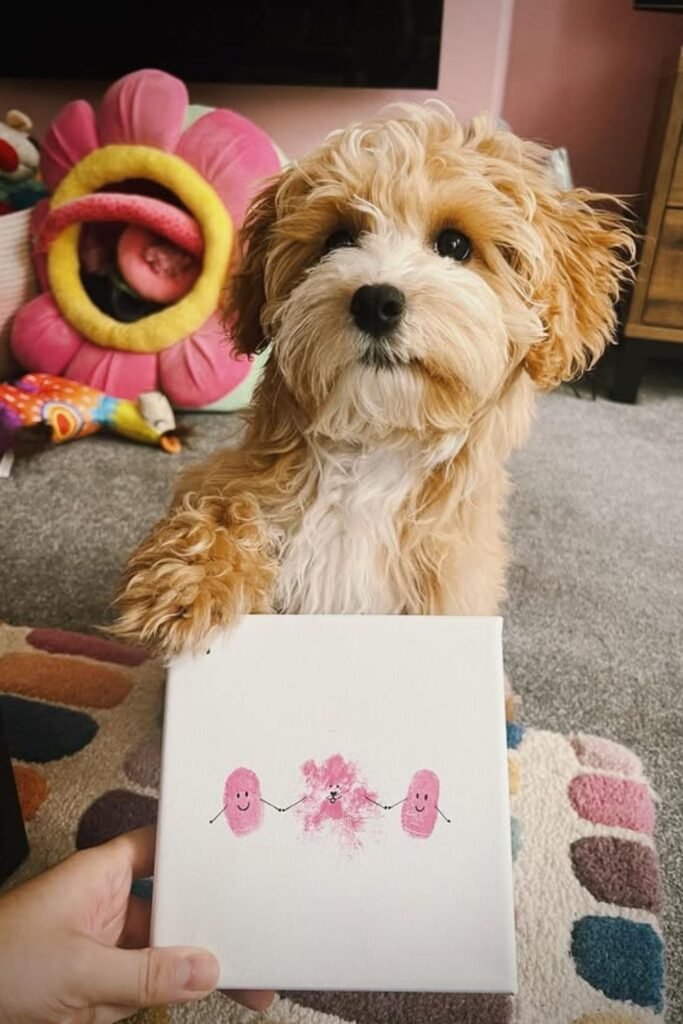
Bright flowers pull kids in faster than blank paper ever will. Paw prints turned into sunflower centers give children a clear focal point.
That they don’t feel lost when the paint peels off. The ideal color for the center is dark paint. Press it once and you’re done.
Then, leave the puppy alone. Kids can keep busy with the yellow petals, green stems, names, and small doodles long after the paw part is over.
The last piece looks happy and complete, so it fits wonderfully on kitchen tables, in classrooms, or on days when you make gifts.
One peaceful push keeps dogs happy, and kids can create around it in their own pace without having to rush or redo anything.
Color Blocks
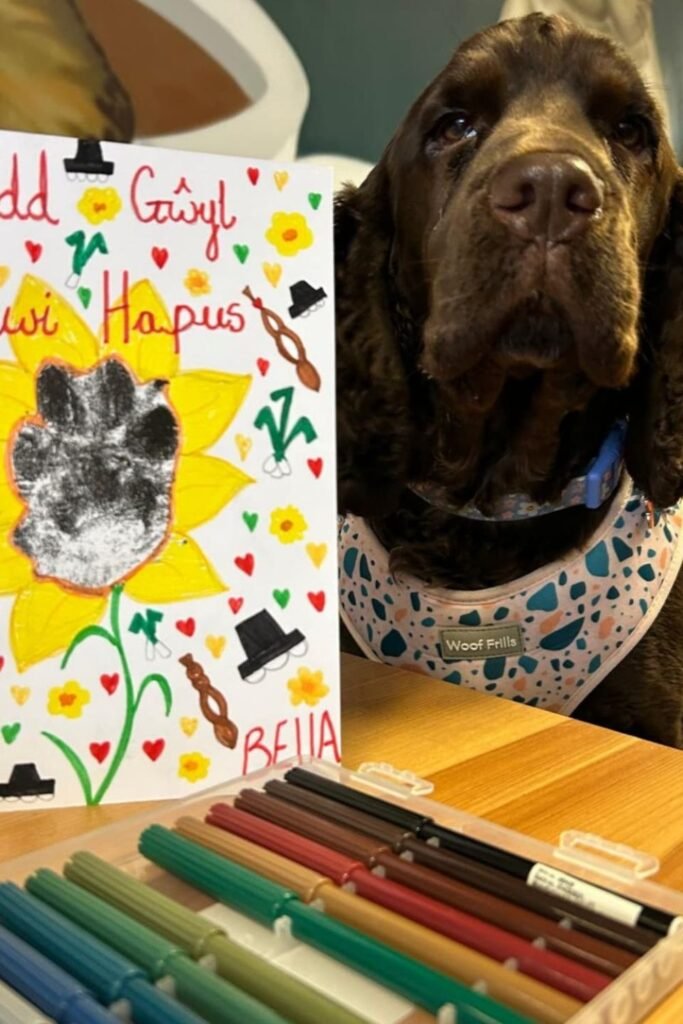
Bold sections make painting less overwhelming for kids. Splitting a small canvas into color blocks gives children clear boundaries.
That they can tell exactly where each paw print goes. One block can carry prints of the sky, another can hold flowers, and another can hold simple forms.
This makes the activity more like a guided game than free-for-all painting. Press the paw once for each part, clean it, and then go forward.
Playrooms, classrooms, or craft time on the weekends are preferable since they keep kids’ attention and make it easier to clean up.
When the kids are done with the paw work, they can fill in the empty places with brushes or markers while the dog sits nearby, having already done its bit.
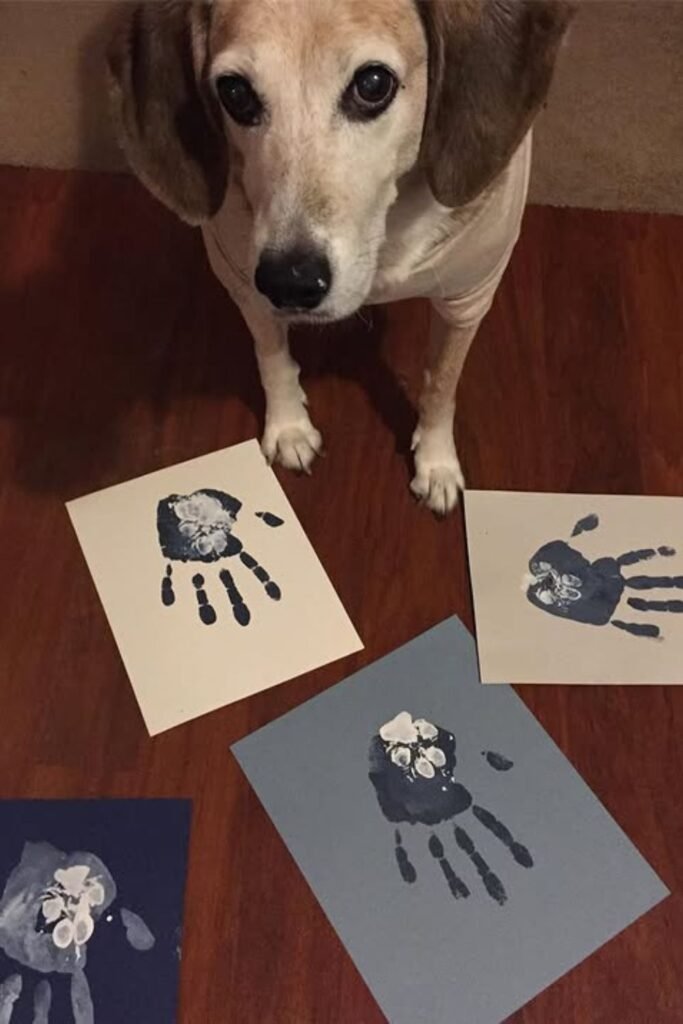
Hand Buddies
Handprints confuse kids; paw prints fix that problem fast. Matching a dog’s paw with a child’s painted hand.
Turns the activity into a side-by-side moment instead of a messy race. Blue or neutral paint makes it simple to see details and clean.
First, one paw press goes down. Then, kids put their hands next to it and design their faces, fingers, or little clothing.
The best places to do this are on the floor of the living room or on the table in the classroom.
Space helps everyone stay relaxed. Kids may own their piece afterward by framing each pair, and the dog stays calm after just one brief press.
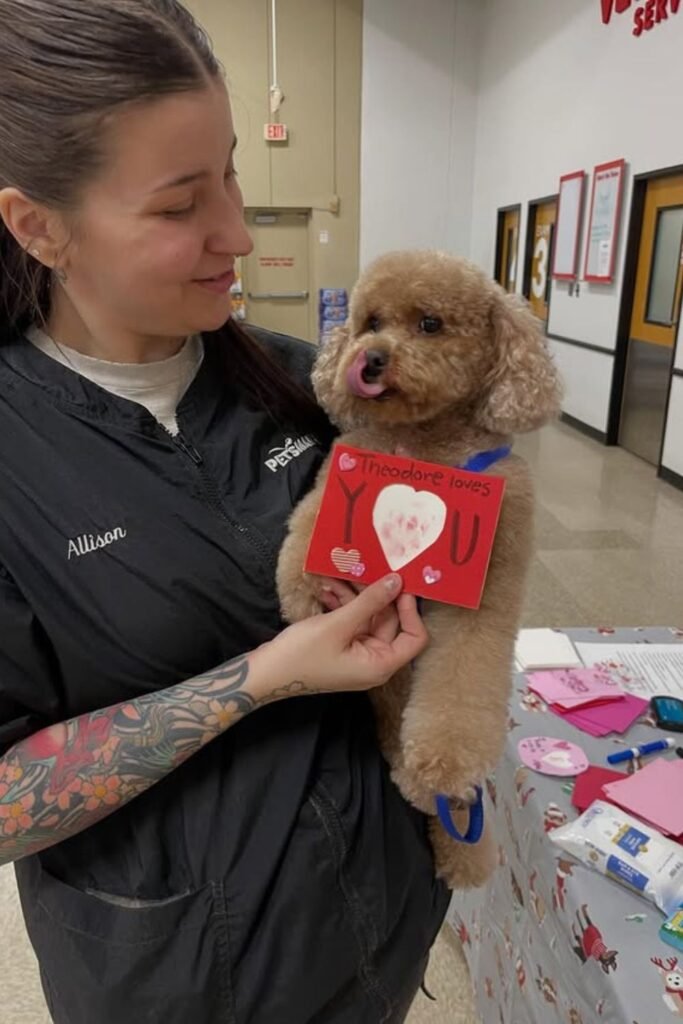
Love Cards
Cards work better than canvases when kids want something they can give away. You don’t need to pay attention for long to make card into a memento with paw-print hearts.
The heart shape is made by pressing down on the middle with a light paw. After that, the dog is done and can go on.
Kids add names, stickers, or short comments to the rest, which keeps the excitement centered instead than spread out.
School events, trips to the vet, or Valentine’s Day festivities are all great because space is limited and time is important.
When you fold cardstock, the paint stays in place, and the resulting card seems personal without getting messy.
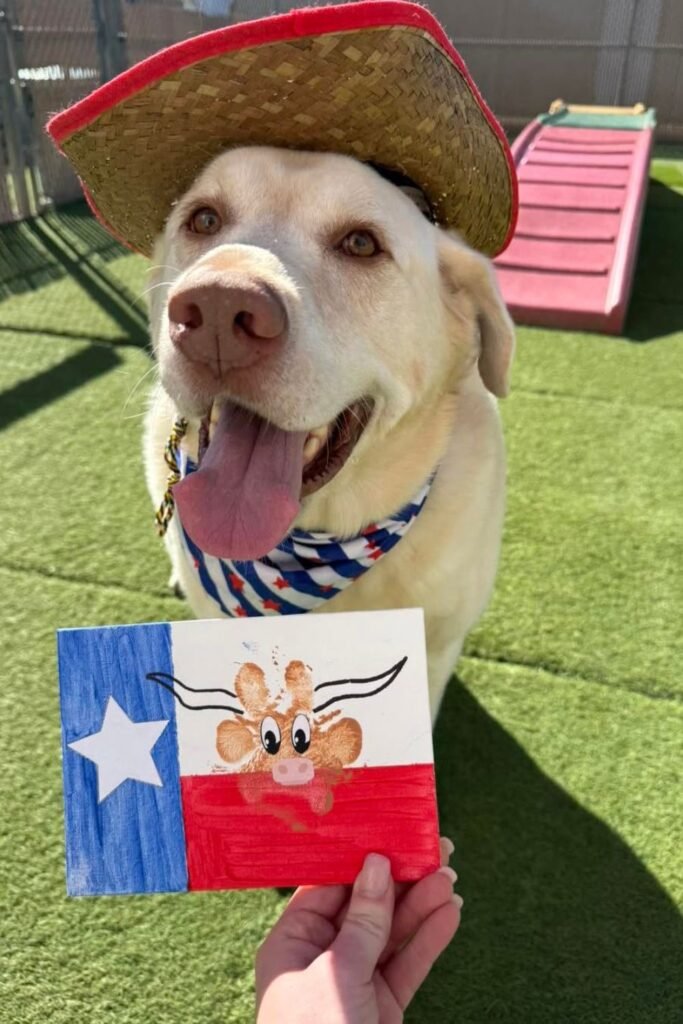
State Pride
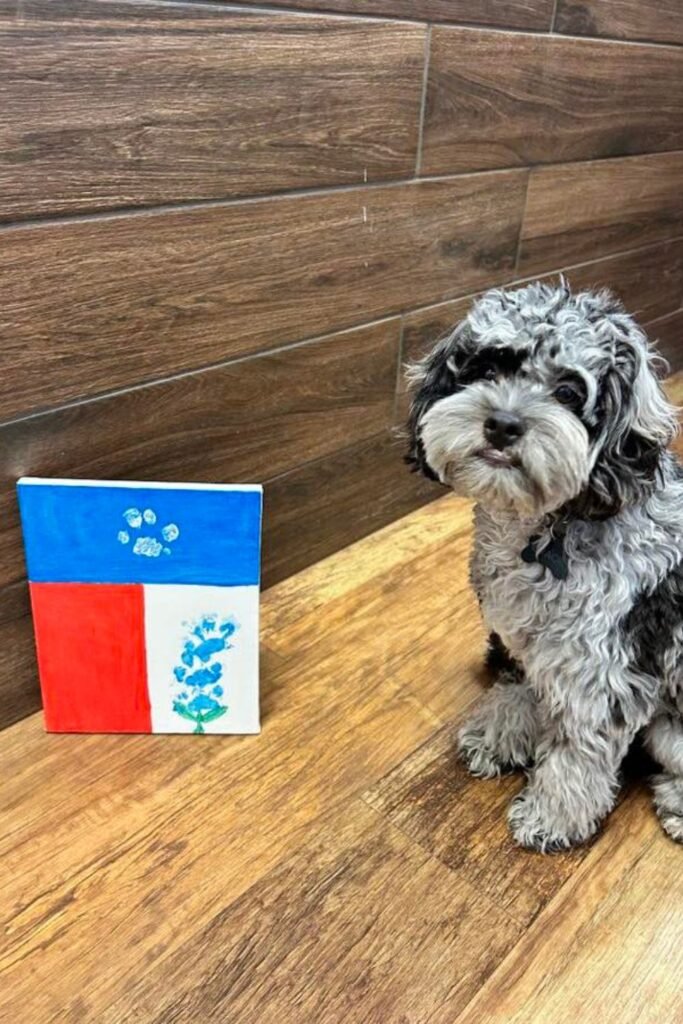
Theme-based crafts hold kids’ attention longer because there’s a story behind them. Turning a paw print into part of a flag or local symbol.
Provides kids a clear cause for each stroke of the brush. First, use neutral colors on the paws, press them once.
And clean them straight away. Then, youngsters can add faces, caps, or other embellishments that fit the theme.
Pride and creativity go hand in hand, so community events, school projects, or holiday weeks are great times to do things.
Paper or paper makes things easy, and kids can keep busy making the scene their own while the dog relaxes after the paw part is over.
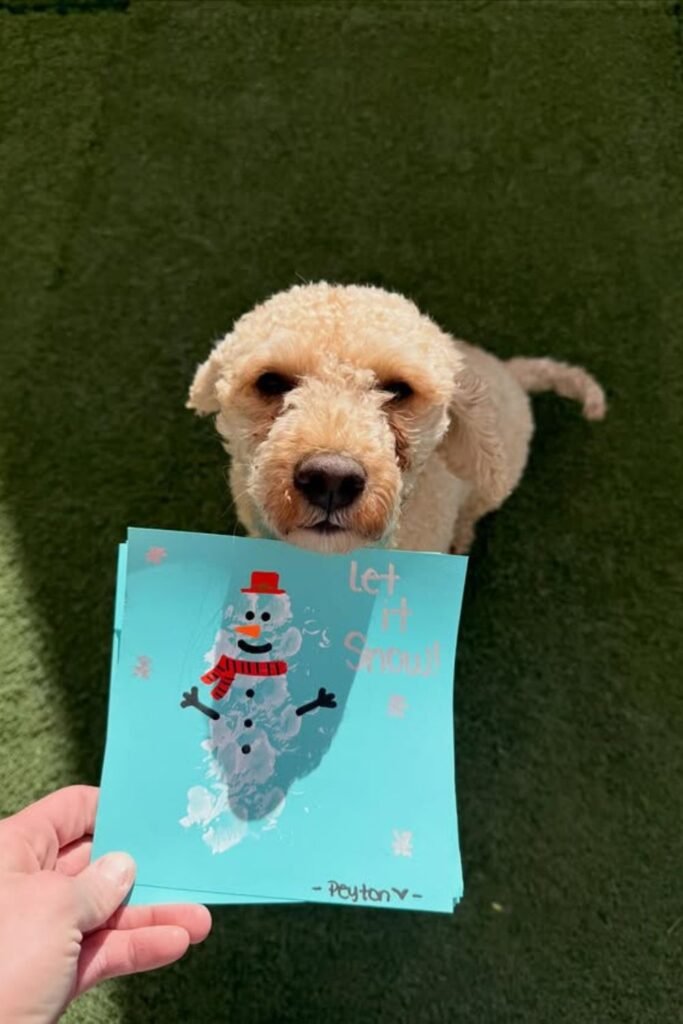
Snow Cards
Kids are more likely to like cold-weather crafts if they can finish something quickly and show it off.
Paw-print snowman cards are easy to make because one print makes the full body in one step.
One coat of white paint on colored cardboard does the trick, and then the paw is washed and done for good.
Kids can add a lot to their scarves, hats, faces, and snowflakes without requiring the dog again.
This is a great place for winter parties, classroom exchanges, or sending cards to relatives.
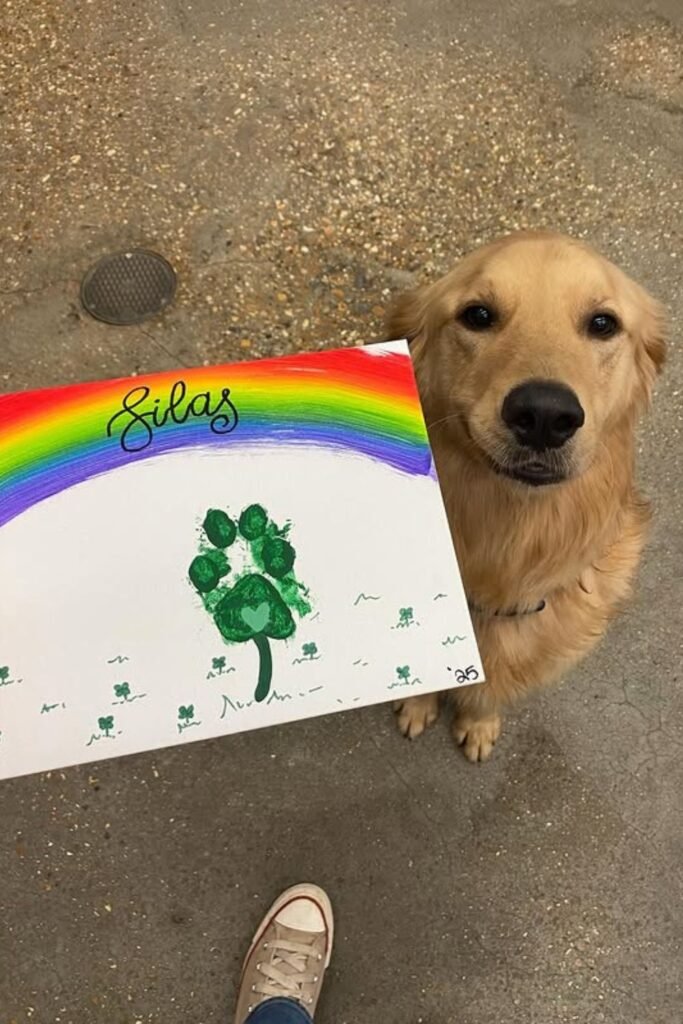
Rainbow Trees
Colors pull kids in before instructions ever do. A paw print turned into a tree trunk gives them a strong starting point, so the rest feels fun instead of confusing.
Pressing green paint once makes the leaves, and then the dog’s paws are wiped clean, and the job is done.
Kids can stay busy with rainbows, grass, names, and other small things after they get their print.
Outdoor tables, classes, or craft days with a pride theme are great places to work since bright colors make people feel welcome.
Using thick paper helps stop bleed-through, and allowing youngsters pick the order of the colors gives them power while the dog stays quiet the whole time.
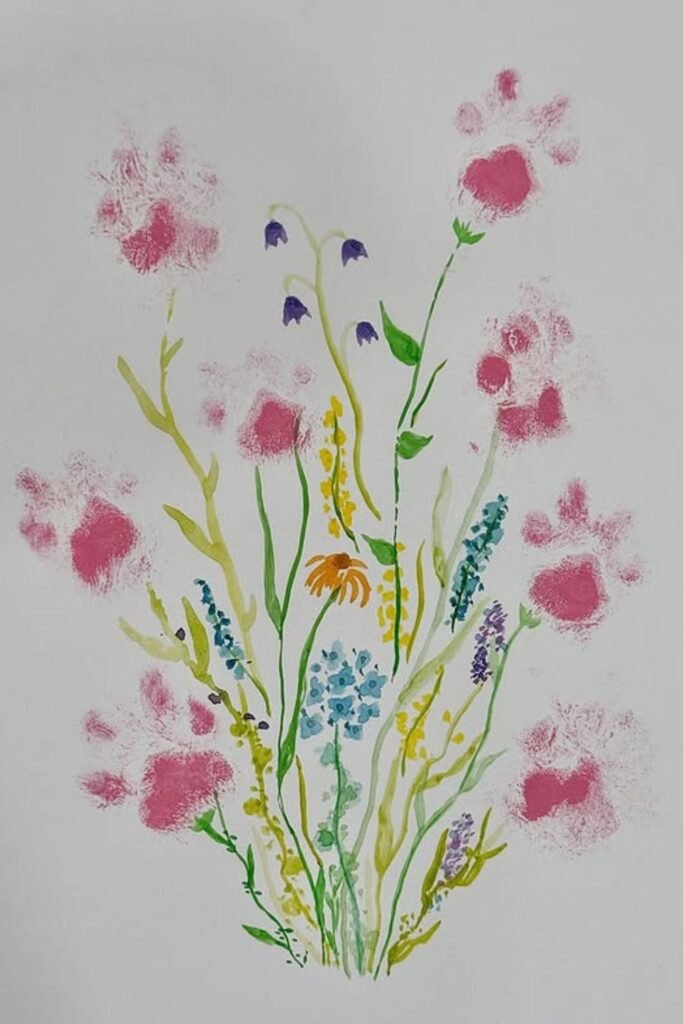
Garden Scatter
Kids who don’t like sticking between the lines will find it easier to relax with loose layouts.
Paw prints on painted flowers make little faults part of the design instead of things that need to be fixed.
Pink or pastel colors are good choices because they go nicely with stems and foliage.
Press the paw down a few times on the paper, then stop and tidy up right immediately.
Then, the kids can paint the garden in the middle however they wish. This is a good place for art corners, peaceful afternoons, or free-paint sessions in the classroom.
Kids don’t have to worry about making everything seem perfect, which keeps the dog quiet and the work done early.
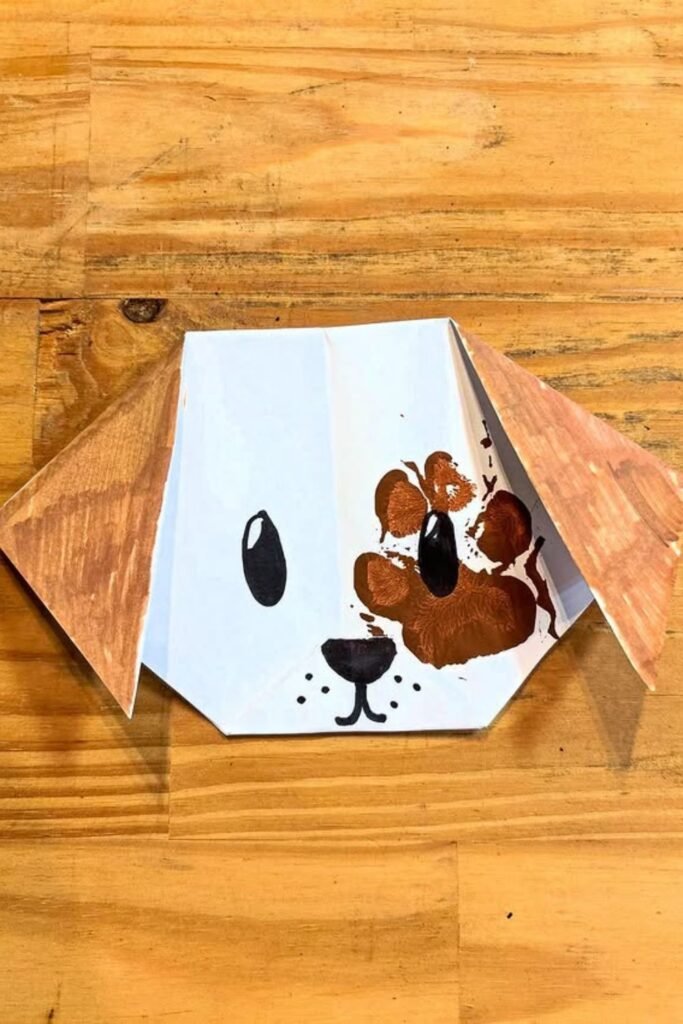
Paper Faces
Folding paper gives kids something to do before paint even shows up. Turning a simple fold into a dog face.
Makes the paw print feel like a feature, not a mess. Once you rub brown paint on the dog’s ear or spot, you clean its paws and the dog is done.
Kids can handle a calm building time on their own with eyes, noses, and extra folds. Tables in the kitchen or desks in the classroom are best.
Since they keep things organized. Using thicker paper helps the folds stay in place, and letting youngsters.
Choose where the paw imprint goes makes each face unique without needing more prints.
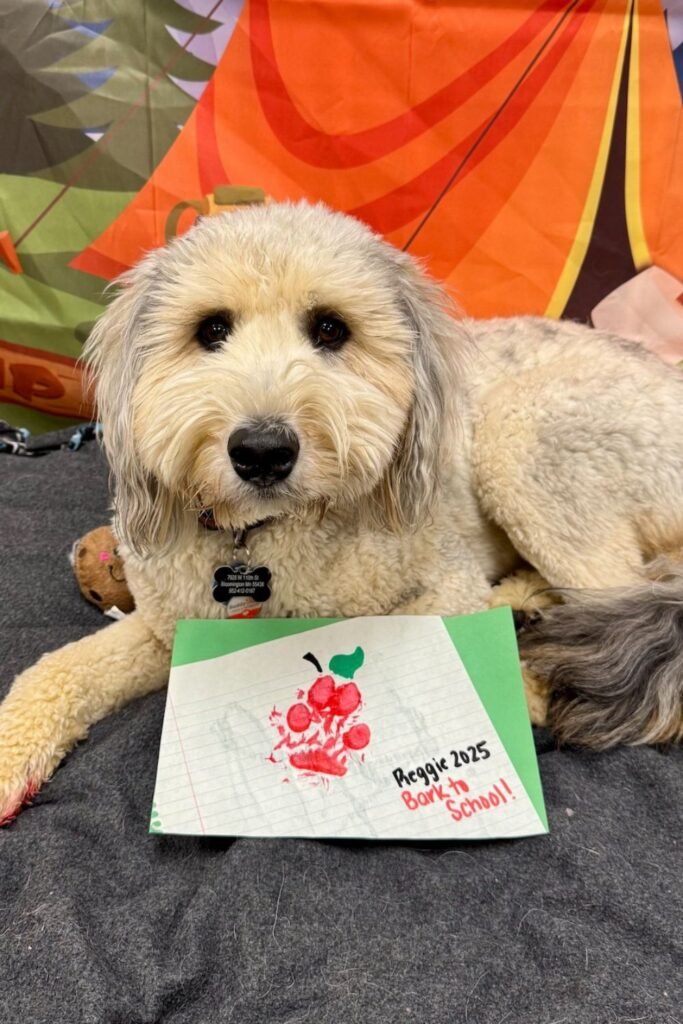
School Apples
Back-to-school crafts feel easier when kids recognize the shape right away. Paw prints turned into apples give them that instant “oh, I get it” moment.
The apple body is made by pressing red paint once. Then the dog’s task is done right away.
Kids may stay occupied with stems, leaves, names, dates, and short messages without feeling rushed.
This works especially well for classroom welcome days, first-week activities, or gifts for teachers because the end result seems relevant and personal.
Adding lines or colors to the paper gives it structure, and letting youngsters put the year on it makes a basic paw print into a memory they’ll want to keep.
Butterfly Keepsakes
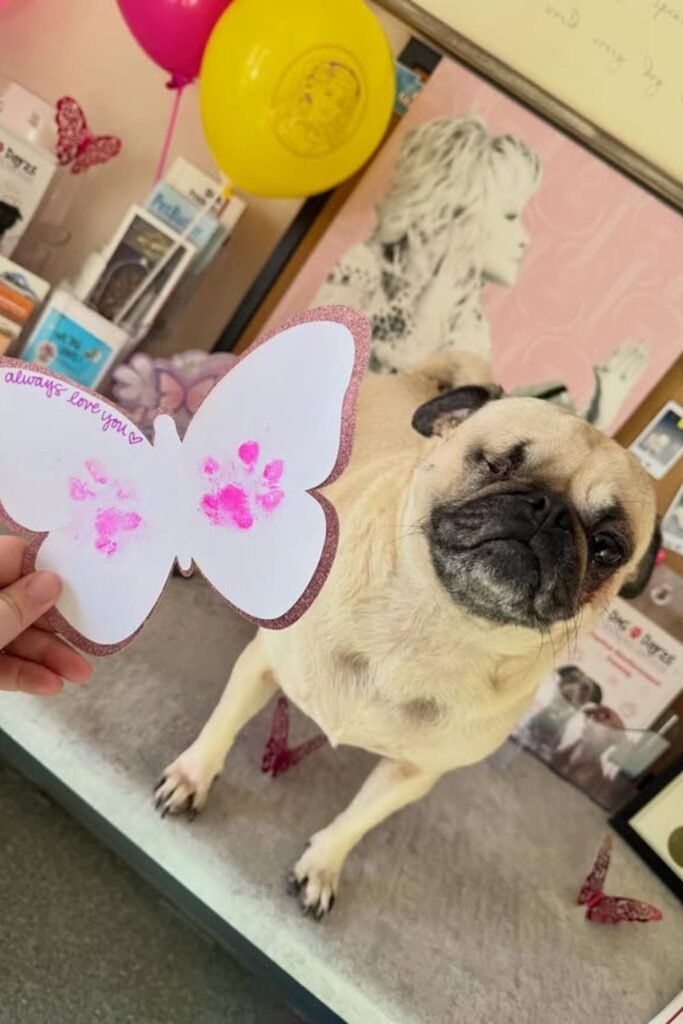
Shaped paper instantly makes kids slow down and pay attention. Paw prints inside butterfly outline turn a simple press into something that already feels special.
Pink or light paint is preferable since it keeps details soft and easy to work with. Just press down on each wing with one paw, then clean up and let the dog go.
Kids can stay occupied by writing notes, adding glitter edges, or painting antennae without needing to print anything else.
Here, school desks, Mother’s Day projects, or memory crafts work best. Using thicker cardstock helps the shape stay strong.
And youngsters love showing off the finished look of the butterfly when you fold it slightly at the middle.
FAQs
How do you keep a dog calm during a paw print craft with kids around?
Not the paint, but the energy is what worries dogs out. Before you bring your dog in, make sure everything is ready.
Keep your voices down and only let your dog press the paw once. As soon as the paw hits the paper, tidy it up and let your dog go away.
What’s the best age for kids to do dog paw print crafts?
It works best for kids ages four and up, but only if their expectations are realistic.
Younger kids do better when dog doesn’t have to do much and the grownups do the paw press.
Older kids can participate with planning, decorating, and cleaning up, which makes the project a quiet, shared activity instead of a frantic one.
Hi, I’m Afaf! I’m a law student who loves writing about everyday life – from home projects and crafts to fashion, beauty, and parenting tips.
I’ve been writing for over a year, sharing ideas that are simple, practical, and easy to try. I write about things I find interesting and useful, whether that’s organizing a space, trying a new DIY, or finding activities to keep kids entertained.
My goal is to share helpful ideas without making things complicated. If it works in real life, I’ll write about it.
When I’m not studying or writing, I’m usually experimenting with new projects or scrolling for inspiration!