
21 Learning Activity for 3 Year Old in 2026
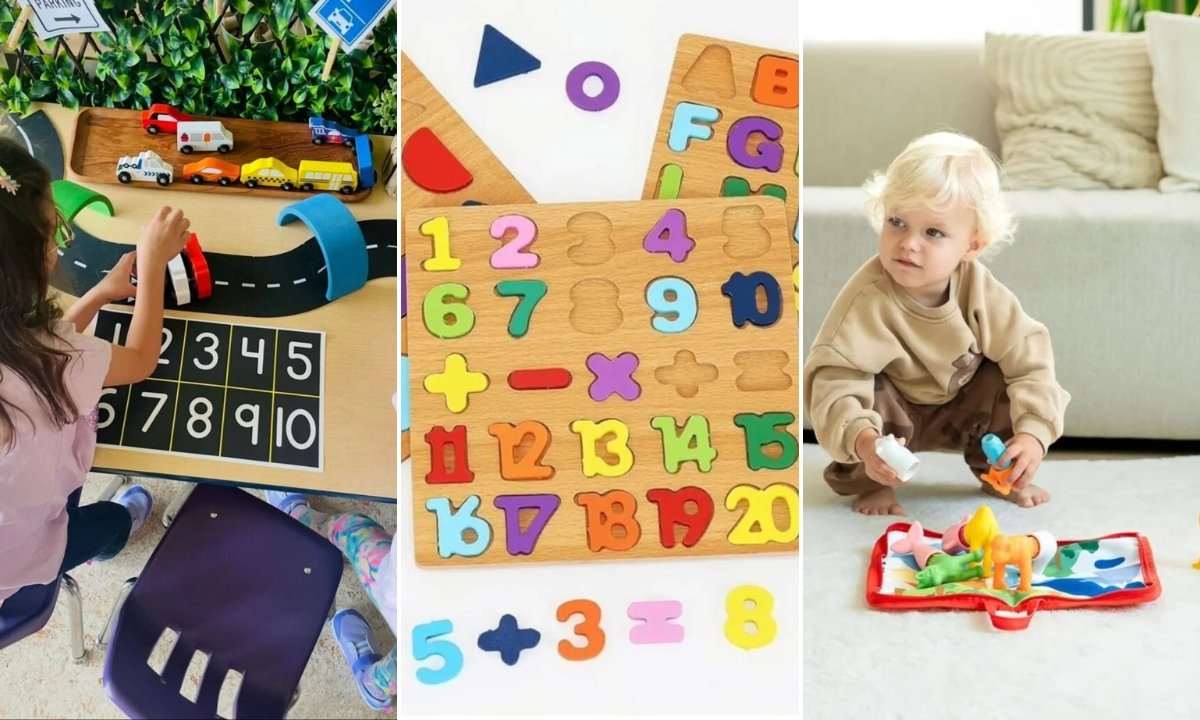
My 3-year-old threw a basket of blocks on the floor yesterday, looked at me, and stated, “I’m bored.” The time was 9:15 in the morning.
You undoubtedly remember that time. You should say yes to learning. You should say no to additional time in front of a screen.
But you also don’t want to make a project that is too hard to put up and takes longer to make than it lasts.
Kids learn quickly at this age, but only if they think it’s fun. They leave if it feels forced. You don’t need expensive toys, worksheets, or a Pinterest-perfect environment.
In this article, you’ll explore 21 learning activity for 3 year old that are fun, creative, and easy to try.
Let’s jump in!
What Educational Games Are Safe and Effective for 3-Year-Olds?
Your youngster doesn’t require flashcards or extensive lessons when they’re three. They require simple games that are suited for the way their brain operates currently.
A safe game has no little pieces that could choke you, no sharp edges, no hard-to-follow rules, and no need to “perform.”
It’s too hard if you have to continually correcting them. A good game teaches you one skill at a time. Sorting helps you think.
Pouring helps you manage your hands. Singing helps you learn words. Jumping and running help you stay balanced and focused.
They’ll stop playing if the game feels like work. They’ll do it again if it feels like play, and that’s when learning really happens.
Save this article for later!👇👇👇
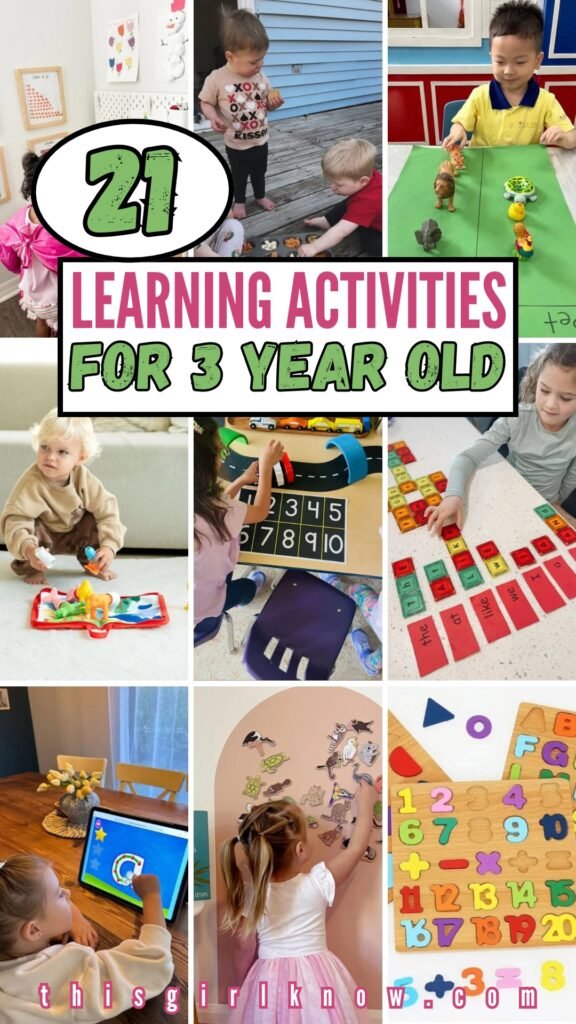
Number Parking
Cars suddenly become math tools the moment you draw parking spaces with numbers. Line up toy vehicles on a small “road” and place a number grid in front.
Say a number and let your child park the right car in that space. Don’t worry about it; just play.
Great for kids who like cars but don’t want to practice counting. You’re not telling kids to “learn numbers”; you’re giving them a job.
A strip of paper with big numbers on it is fine. You can also use painter’s tape on the floor. Short rounds retain people’s attention.
Five minutes of focused parking does more to help kids learn to recognize numbers than a worksheet ever can.
Animal Matching
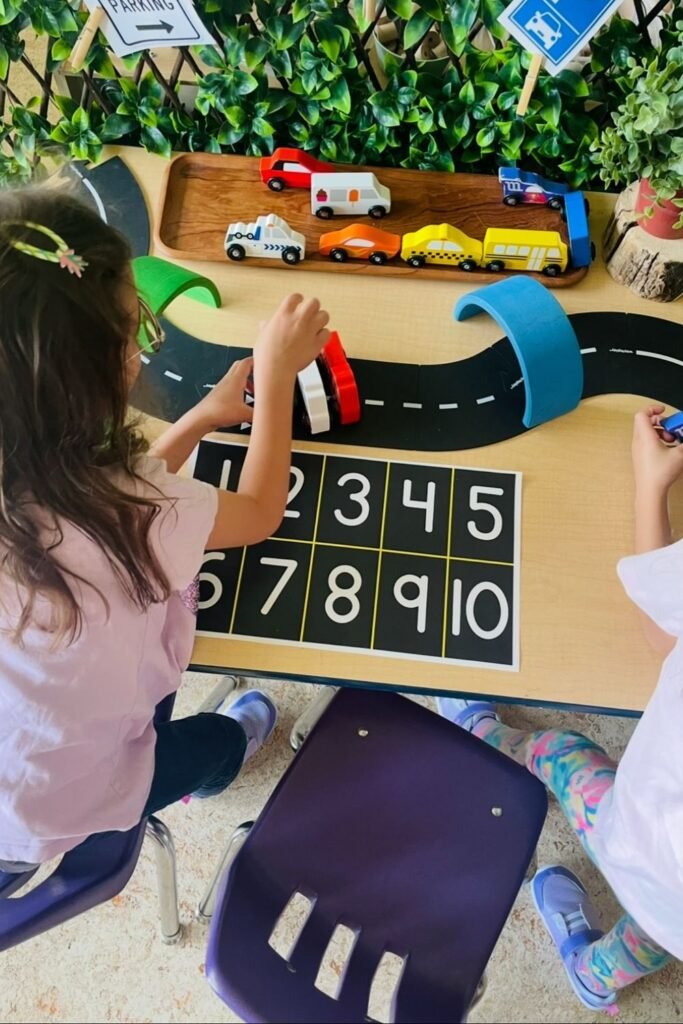
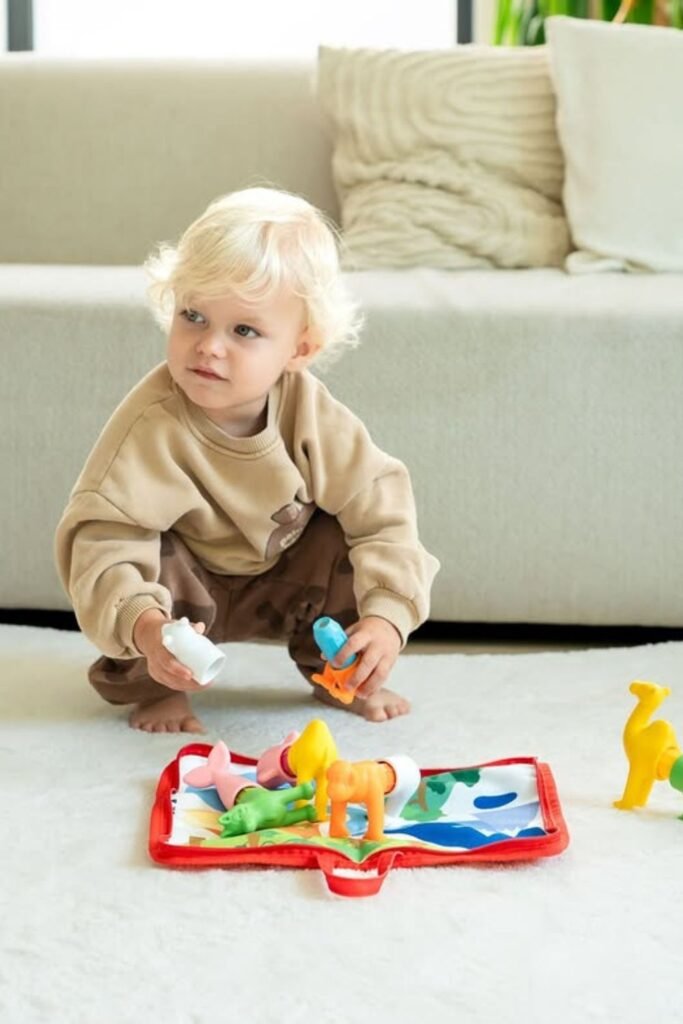
Toddlers love animals long before they can name all the letters in the alphabet. Spread out a small play mat with printed habitats or pictures.
Then put some animal figures close by. Let your child choose where everyone should go. Animals on farms stick together. Animals in the jungle find their way to the forest.
Creatures from the sea swim toward the blue area. You don’t need a sermon about right and wrong; only polite advice if something appears strange.
This works well on living room floors because they don’t feel like a lesson. Kids can pay attention for longer periods of time when they can move the pieces themselves.
Sorting by habitat helps your youngster learn how to think without them knowing they’re doing it. At first, keep the gathering small.
Word Building
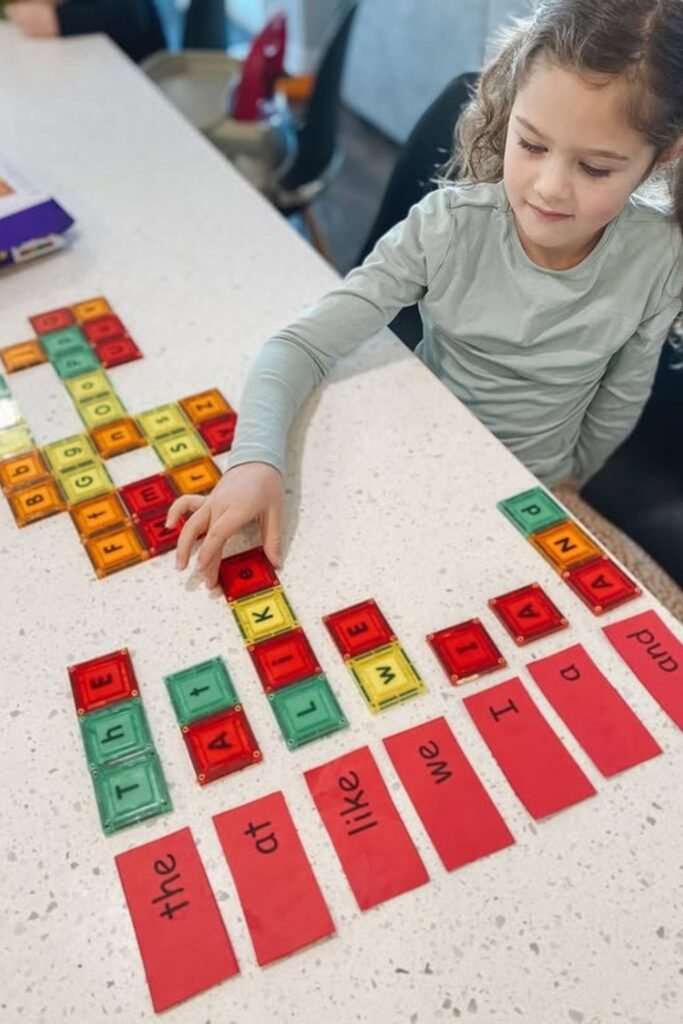
Little hands sliding letter tiles into place can turn reading practice into a puzzle instead of a lesson.
Put some easy sight words on the table and let your child match the letters to the words. Keep it brief. Stay fun.
Begin with words they hear every day, such as “the,” “at,” “we,” or their own name. Words you know make you feel safe, and your confidence develops quickly.
Kitchen tables are great because the flat surface keeps things in place. If your mind starts to wander, make it a game by mixing up the letters and asking, “Can you fix this word?”
You can use magnetic tiles, paper letters, or even sticky notes to perform the job. As they put each letter down, say it out loud together.
Art Corner
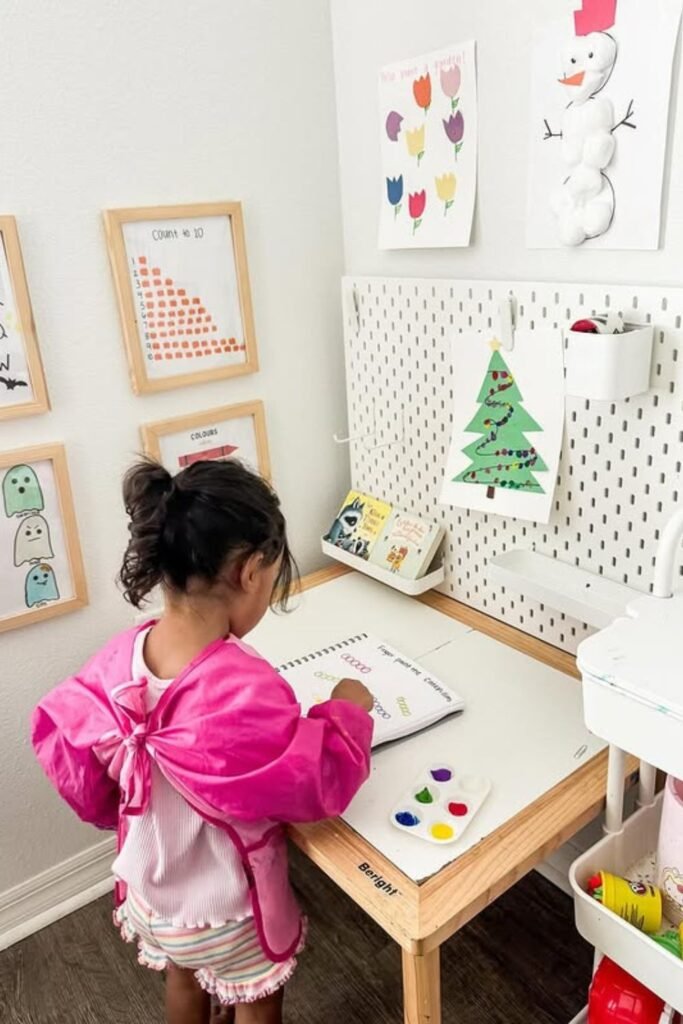
Magic happens when kids have a space that feels like it belongs to them. A small table, a few paints, paper within reach suddenly creativity doesn’t require permission.
Put together a basic art nook in a peaceful part of your house. Keep materials low and easy to get to that your toddler can start without asking.
At this age, being independent quickly boosts confidence. Five colors of paint are plenty. A 3-year-old can get confused by too many options.
Instead of putting everything out at once, change the materials every week. What’s the best part.
Holding a brush, gently dipping it, and controlling strokes all help small hands get ready to write later.
Snack Sorting
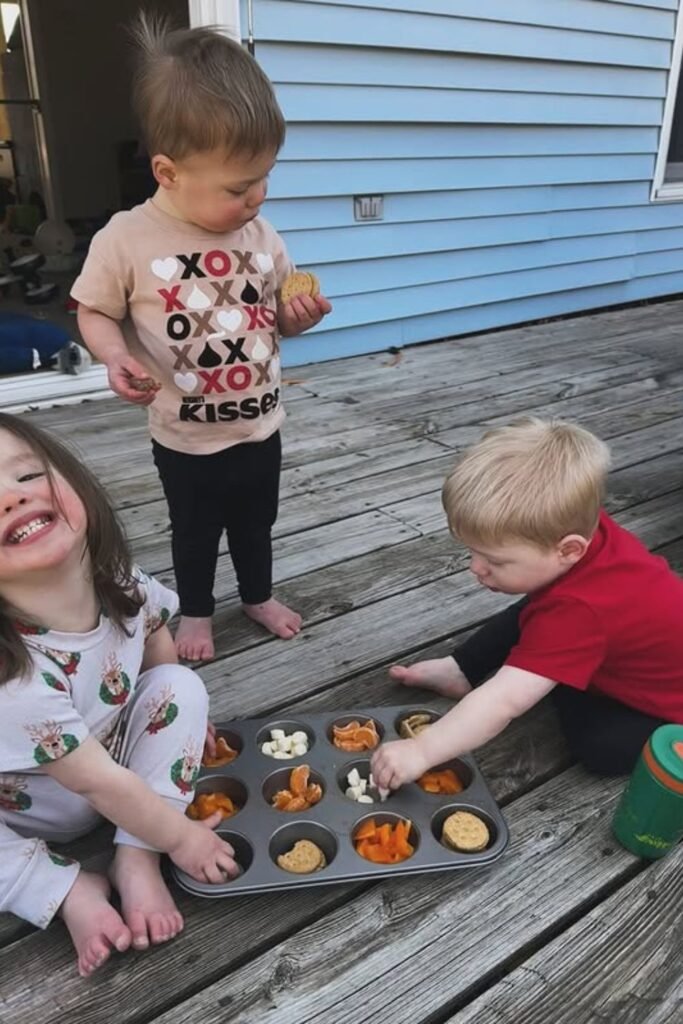
Snack time can turn into a quiet learning moment without anyone noticing. Grab a muffin tin and drop different bite-sized foods into each section.
Crackers in one area, fruit in another, and cheese cubes in a third. Ask your youngster to help you sort before you eat. Put the sweet here. Crunchy goes there.
Put the orange pieces together. Put the round pieces together. You’re helping kids learn math without using the term “math.”
This is great for outside decks, picnic blankets, or kitchen floors. They stay interested when they move around, and the little divisions help them focus.
Counting comes naturally. “How many carrots did you put in there?” You don’t have to answer perfectly. Just talking.
Pet Sorting
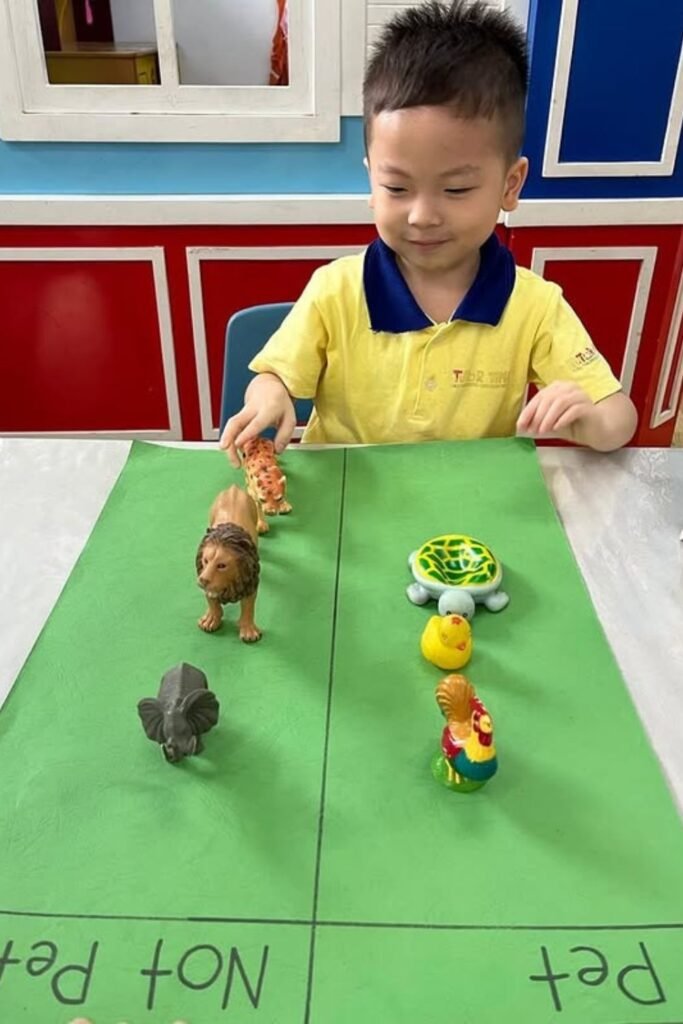
Animals naturally grab a child’s attention, so use that curiosity to introduce simple categories. Draw a line down a piece of pape label one side “pet” and other “not pet.”
Give your child some toy animals and let them choose where each one goes. Lion on the pet side. Stop and think, “Would a lion live in our house.
They can rethink things without feeling like they’re being corrected if you ask them gently.
Small tables or floors in the living room are equally fine. Don’t make the group too big so it doesn’t feel too much. You only need three or four animals to start.
This kind of sorting helps kids learn to think. Children learn that some animals live with people and some dwell in the wild.
Magnet Board
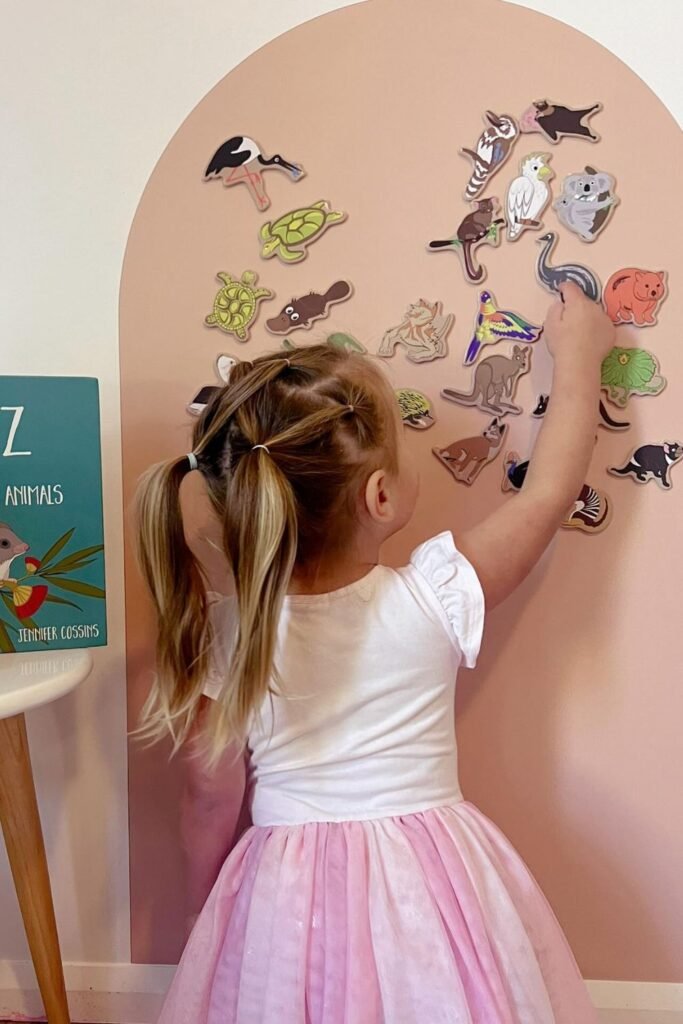
Walls can become learning spaces without turning your home into a classroom. Stick magnetic animals on a board and let your child explore them freely.
No specific rules; just let your curiosity guide you. Let’s start by giving one a name. “That’s a koala.”
Find out where it might dwell or what sound it makes. When they are moving parts around with their hands, conversations flow effortlessly.
Great for calm afternoons or time alone with someone. Some kids can pay greater attention when they stand up and play than when they sit at a table.
Change the themes every few weeks, including ocean animals, agricultural animals and wild animals. Fewer bits at once makes things easier to handle and calmer.
Puzzle Play
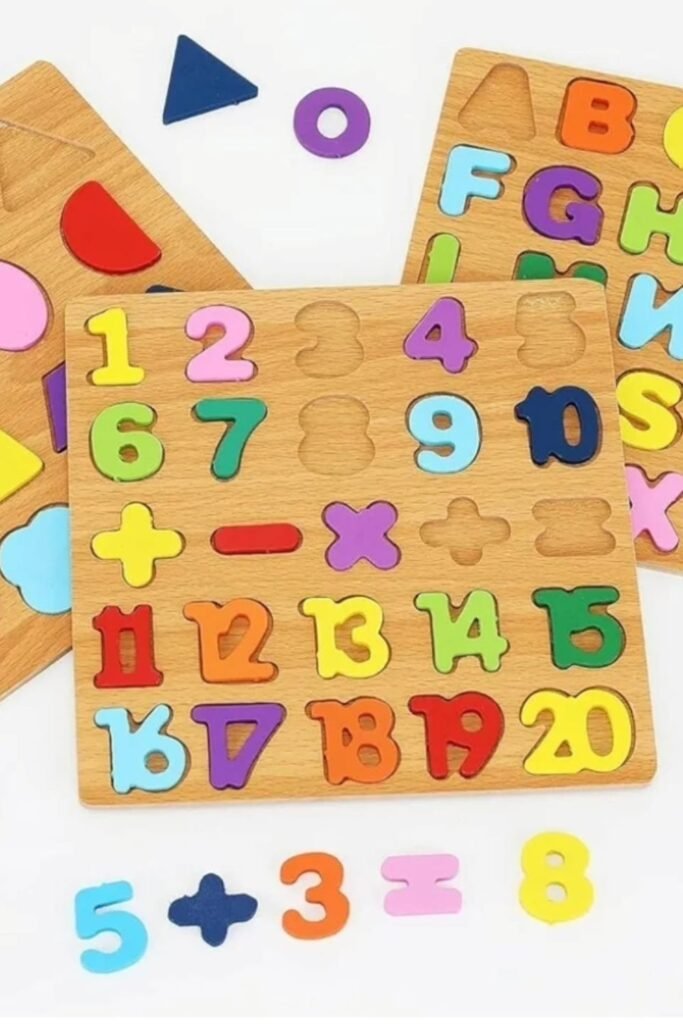
Bright wooden puzzles quietly teach more than most parents expect. One board with numbers, one with letters, one with shapes suddenly hands.
Spread only one puzzle out at a time. Too many boards can distract. Let your child pull pieces out first. Empty spaces invite problem-solving.
Call out a number and see if they can find it. Pick a letter from their name and hunt for it together. Hold up a shape and ask where it belongs.
Coffee tables, playroom rugs even kitchen counters work fine. Short bursts are best. Five focused minutes often beats a long session.
Wooden puzzles build memory, coordination and early math and reading skills — all through simple matching. Keep it light. Curiosity does the heavy lifting.
Letter Tracing
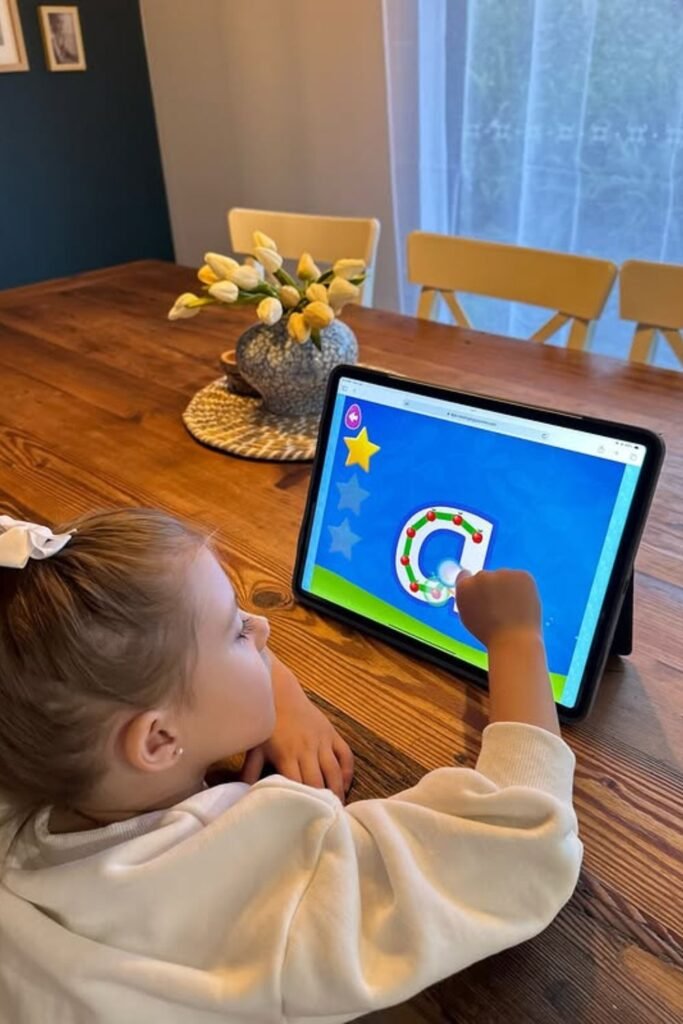
Screens don’t have to mean mindless time. Guided letter tracing on a tablet can actually support early writing if you stay involved.
Sit beside your child instead of handing the device over. Ask them to trace slowly with their finger while you say the letter sound out loud.
Kitchen tables are ideal because posture matters. Keep sessions short five to ten minutes is plenty at this age. Once attention fades stop.
Choose simple apps and that focus on one letter at a time not flashy games with too many distractions. Calm back grounds and clear tracing lines work best.
Follow up off screen. Grab paper and let them try the same letter and with a crayon. Digital practice becomes stronger if real world movement back it up.
Alphabet Hunt
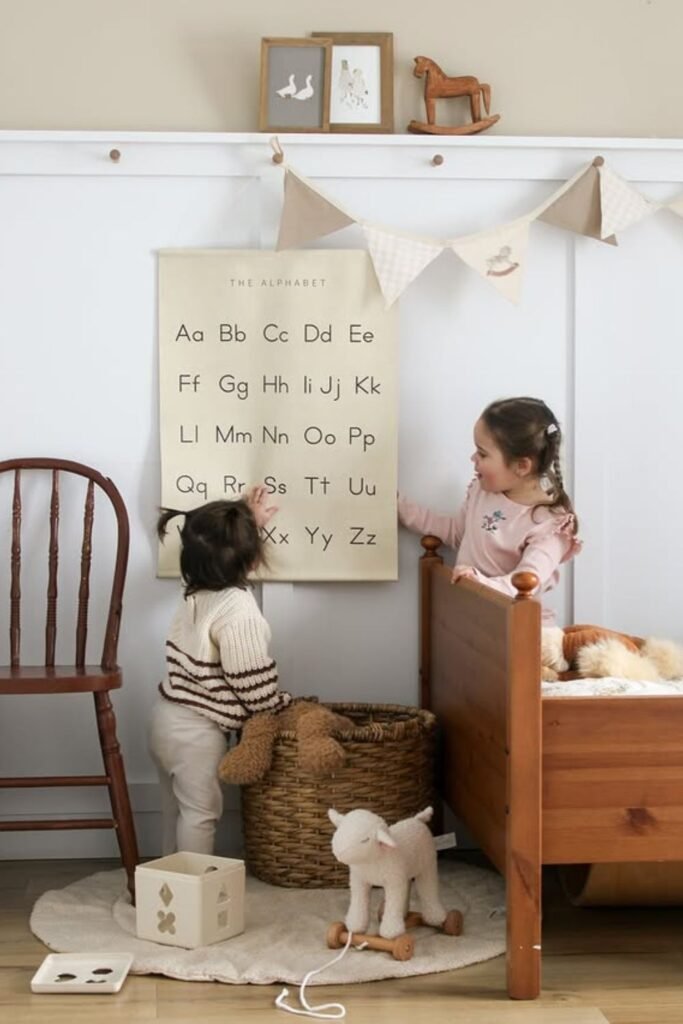
Turn a plain wall into a daily discovery spot. An alphabet poster at your childs eye level invites quick learning moments without sitting down for a lesson.
Tell them to find a letter. Begin with the letters of their name; youngsters bond more quickly when it feels personal.
Bedrooms are great places to practice since you can do it while doing other things. Are you waiting for your pajamas. Look for “P.” Are you getting ready for bed Find “B.”
Have fun with it. Every now and then, change things up and say, “Can you find the letter that sounds like m” You don’t have to speed through all 26.
Daily exposure naturally helps people remember. Two minutes here and there add up to more than one extended session ever could.
Dot Counting
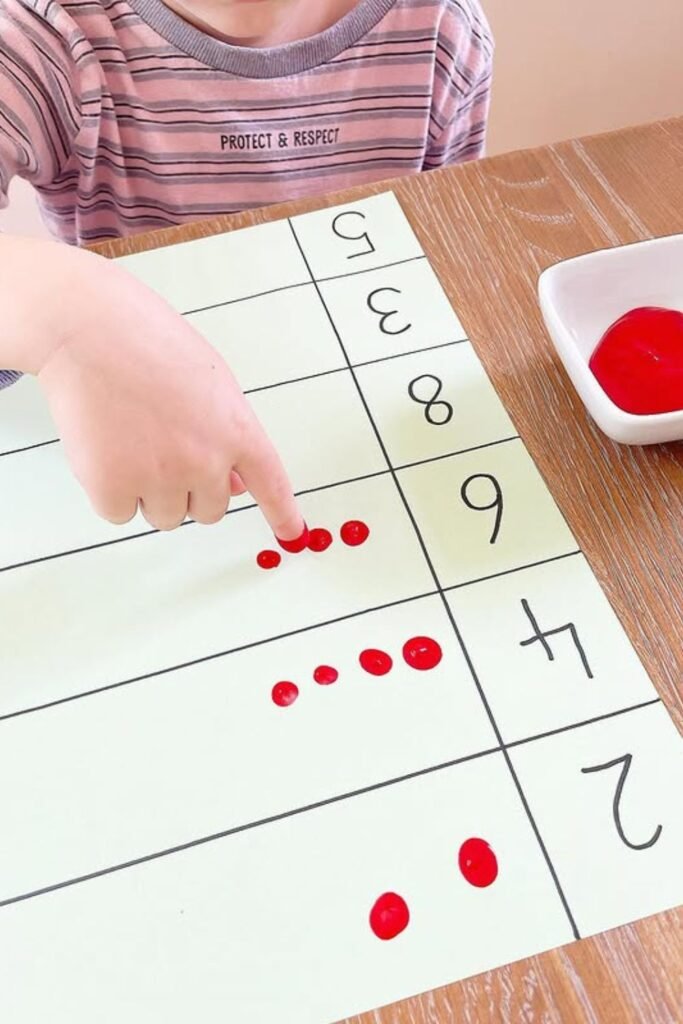
Tiny paint drops can turn number practice into something your child actually wants to finish. Draw a simple grid with numbers down the side.
Then ask them to match each number with the proper number of dots. Dipping a finger into paint is more fun than using a pencil, which maintains kids’ attention longer.
Counting down is easier when you do it one dot at a time. Touch, say the number, and put the dot. This is great for dining tables because they are easy to wipe up.
If you need to, put down paper below. Start with a few digits, such one through five. Change colors halfway through to keep things interesting.
Using your hands to count instead of worksheets really helps you understand numbers better. When your fingers get messy, it usually means you’re really learning.
Sensory Tracing
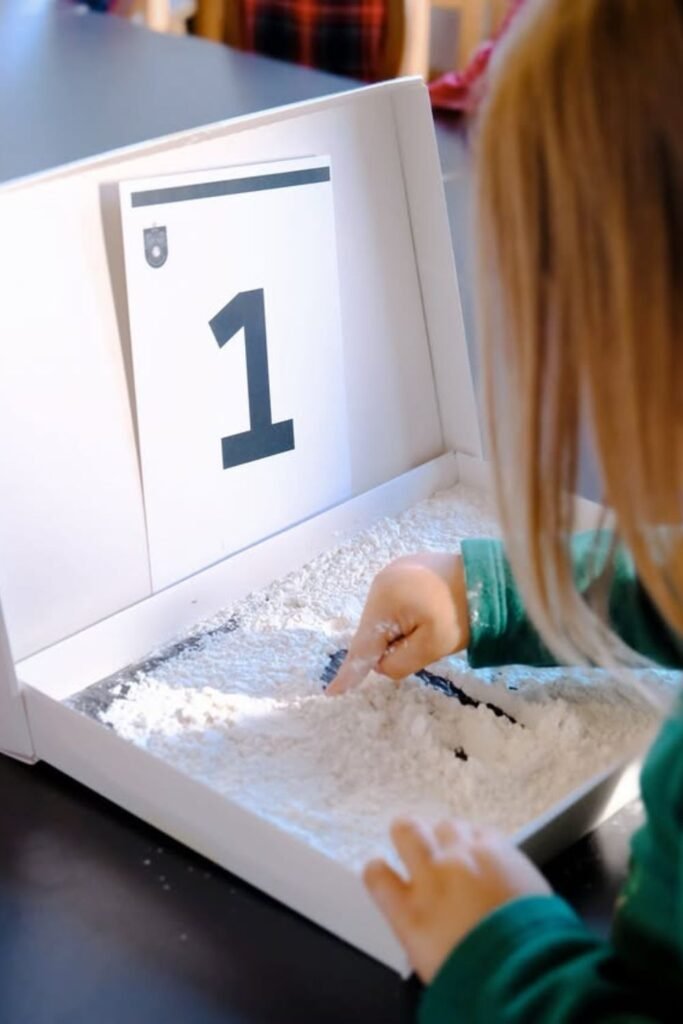
Flour in a shallow tray can hold attention longer than a pencil ever will. Tape a number or letter card upright in front of your child and let them copy it right into the powder.
A gentle shake makes mistakes go away. You don’t need an eraser. That independence makes people less angry, especially kids who shut down when they “mess up.”
Counters in the kitchen are preferable since they make cleaning up easy. A small amount of flour, salt, or even rice is all you need.
Take your time the first time you guide. Say the letter or number out loud while you trace it.
If letters seem too hard, try shapes or simple lines instead. All kinds of lines and curves help you regulate.
Sticker Counting
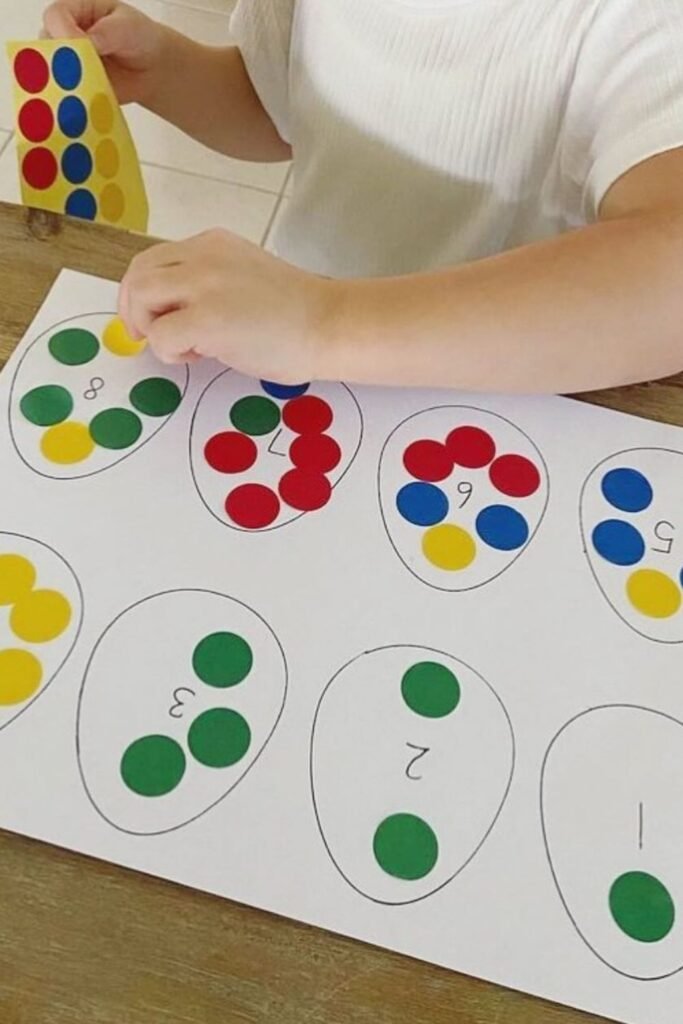
Peeling stickers might look simple, but it’s serious hand training in disguise. Draw large circles on paper and write a number inside each one.
Put the right number of stickers inside and ask your youngster to match the number. Put eight stickers in the circle with the number 8.
Three goes with three. If counting seems hasty, take your time together. As you count out loud, touch each sticker.
Dining tables or high chairs put everything in one place. If you lose focus fast, start with smaller numbers. Colors that are bright assist keep people’s attention longer.
Peeling and pressing make the muscles in your fingers stronger, which you will need later for writing.
Tower Stacking
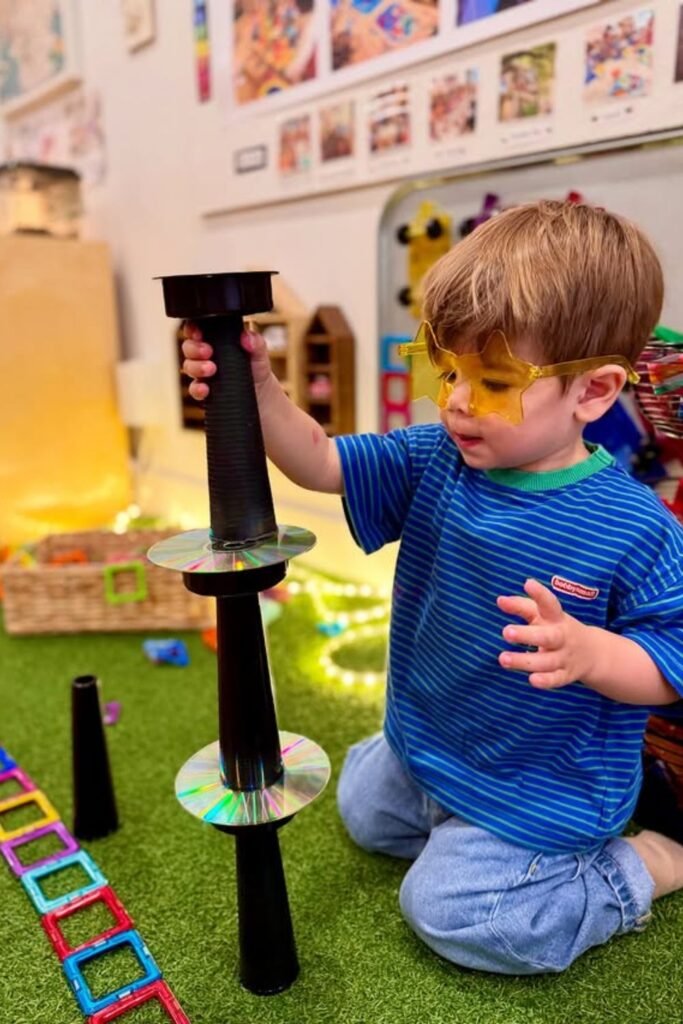
Wobbly towers teach more patience than you might think. Hand over cups, cones, or even recycled containers.
And tell your youngster to build as high as they can without it falling. The fundamental lesson here is balance. More parts at the bottom. On top are the smaller ones.
If the tower falls, stop and don’t fix it for them. Say, “What could we do differently?” At that time, problem-solving gets better.
Carpeted flooring are the greatest since things that fall won’t bounce about. Count each piece as it goes on to make it more interesting.
Every stack makes your fine motor skills, attention, and hand-eye coordination better. It will fall swiftly some days.
Ice Cream
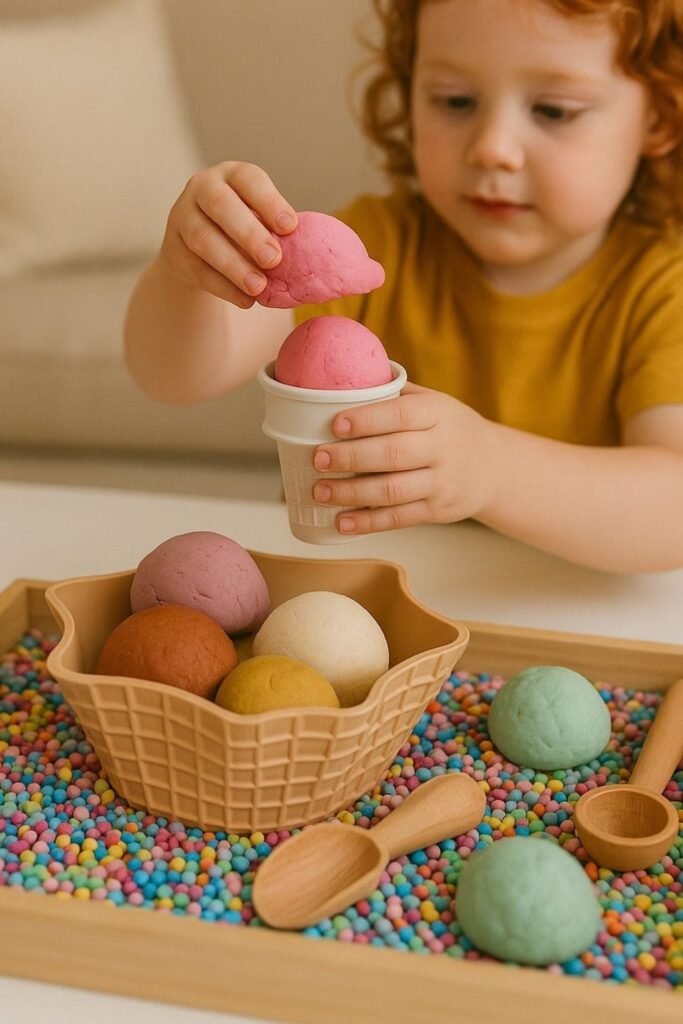
Pretend play becomes powerful learning when you lean into it. Set up a small “ice cream shop” using playdough scoops, bowls, cones or even real kitchen cups.
Let your child take orders. Request two scoops of pink. Three at most. Counting slips in naturally. People give names to colors. If siblings join, it’s time to take turns.
Floor play is preferable here because there is more room to roam around. To make your hand muscles stronger, use a spoon or small scoop.
Making balls out of playdough helps with coordination without feeling like practice. During pretend play, language grows quickly.
“What kind of flavor do you want” “That will cost five dollars.” When imagination is in charge, conversations last longer.
Sensory Bin
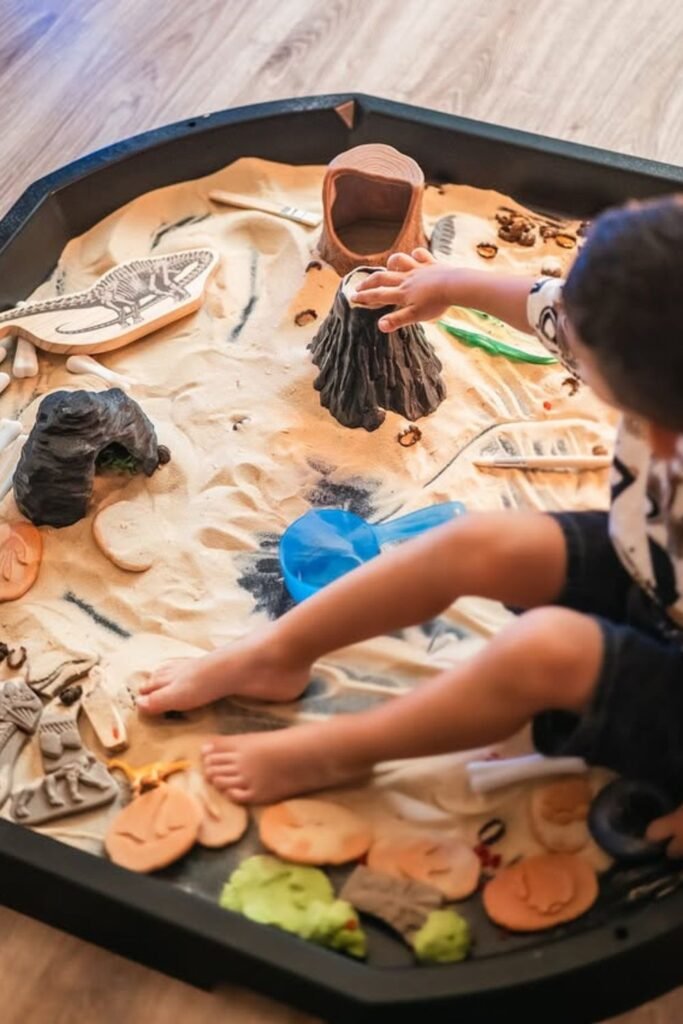
Curiosity takes over the moment hands hit sand. Fill a shallow bin with sand or rice and hide small items inside toy animals, shells, pretend fossils, little scoops.
It doesn’t take long for digging to transform into discovery. Use straightforward questions like “What did you find” or “How many bones are there”.
It’s easy to count, describe, and tell stories. Floor settings are preferable since they make movement feel natural.
Add cups for pouring or brushes for cleaning “fossils.” Scooping and sifting work out your hand muscles and help you stay focused.
Some kids are calm and take their time looking around. Some people tell the complete story. Both techniques help kids learn how to read and write and how to solve problems.
Color Sorting
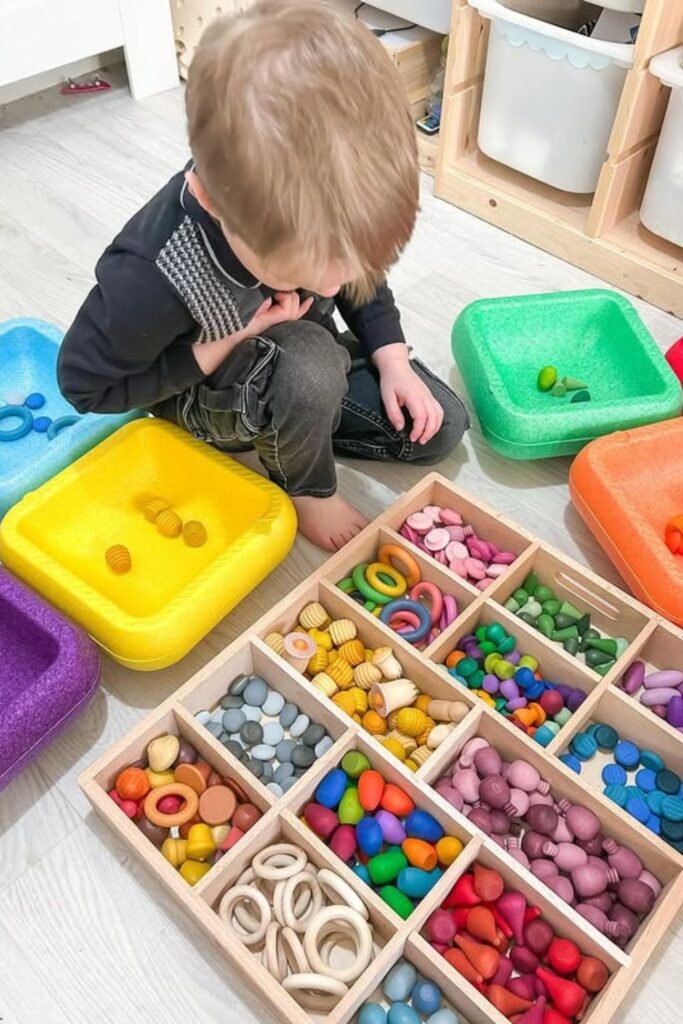
Bright colors naturally pull kids in, so use that to your advantage. Place a few colored bowls or trays on the floor and scatter mixed pieces in the center.
Ask your child to match each object to the proper color. Put the yellow pieces in the yellow tray. Blue circles in the blue one.
Take your time. When kids only focus on one hue at a time, sorting becomes almost relaxing. Floor play works well here because kids can move around between trays.
If you lose interest quickly, start with two colors. Add more when they feel sure of themselves.
Change the materials every day. You can use pom-poms, blocks, beads, or even socks from the laundry basket.
Ball Run
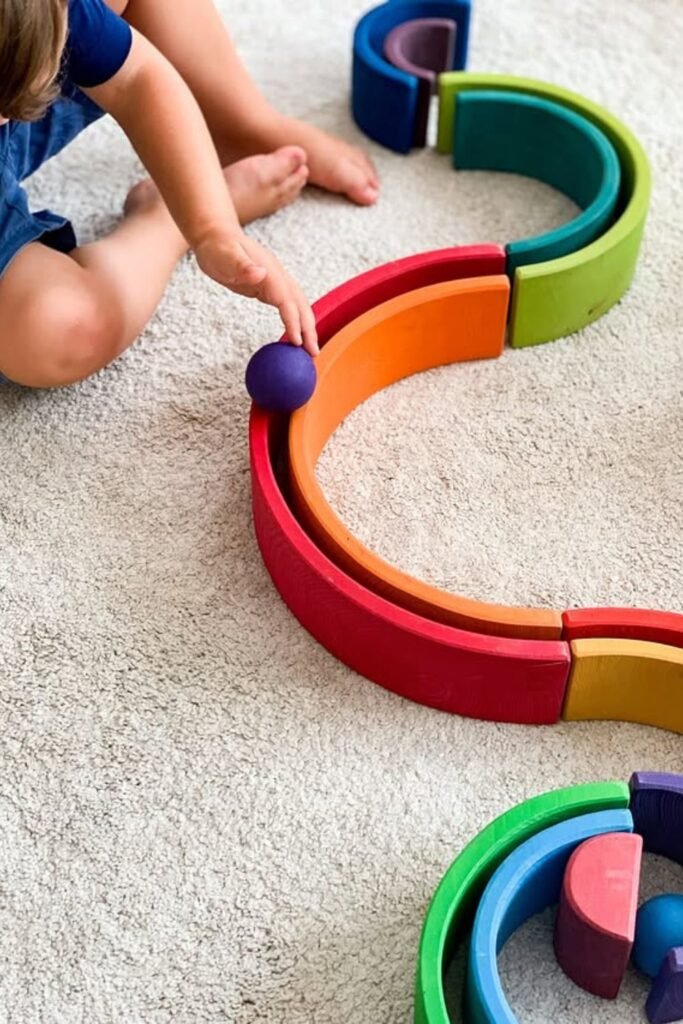
Few things grab attention faster than watching a ball roll. Curved wooden pieces on the floor instantly turn into a mini track.
Put a ball at the top and let gravity do the work. Kids immediately learn that the road is important.
The ball changes direction as you move one curve a little bit. Problem-solving starts up without you having to say anything.
Carpeted areas are excellent since they keep things steady. Begin with a short track. Once they get the idea, make it longer or put books under it to make little “hills.”
As kids carefully put each piece in place, their hand-eye coordination gets better.
Rolling, changing, and trying again doing the same thing over and over again here is fun, not boring.
Block Building
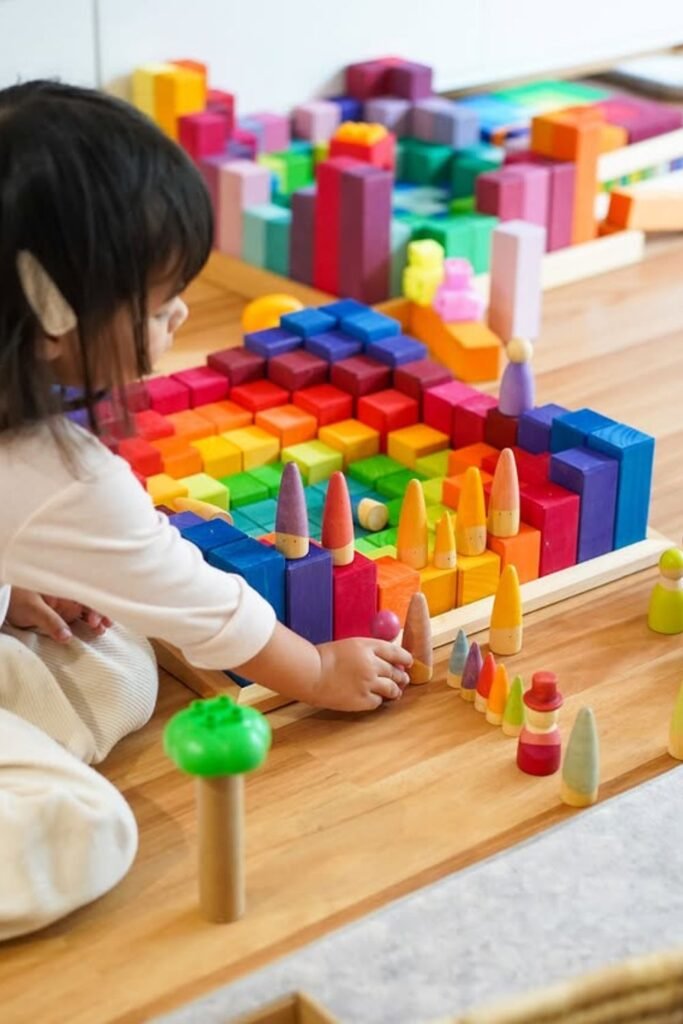
Big piles of wooden blocks open the door to serious thinking. Spread them out on the floor and let your child decide what to create a house, a rainbow wall, a pretend town.
Color patterns often happen on their own. Red and orange adjacent to each other. Green on top of blue.
whether you want to make the learning go longer, gently suggest a pattern and see whether they keep it going.
The floors in the living room have enough room for greater structures. Stay close by but don’t correct the uneven stacks.
Trial and error is a better way to learn balance than following instructions. Add little peg dolls or cones to tell stories.
Road Play
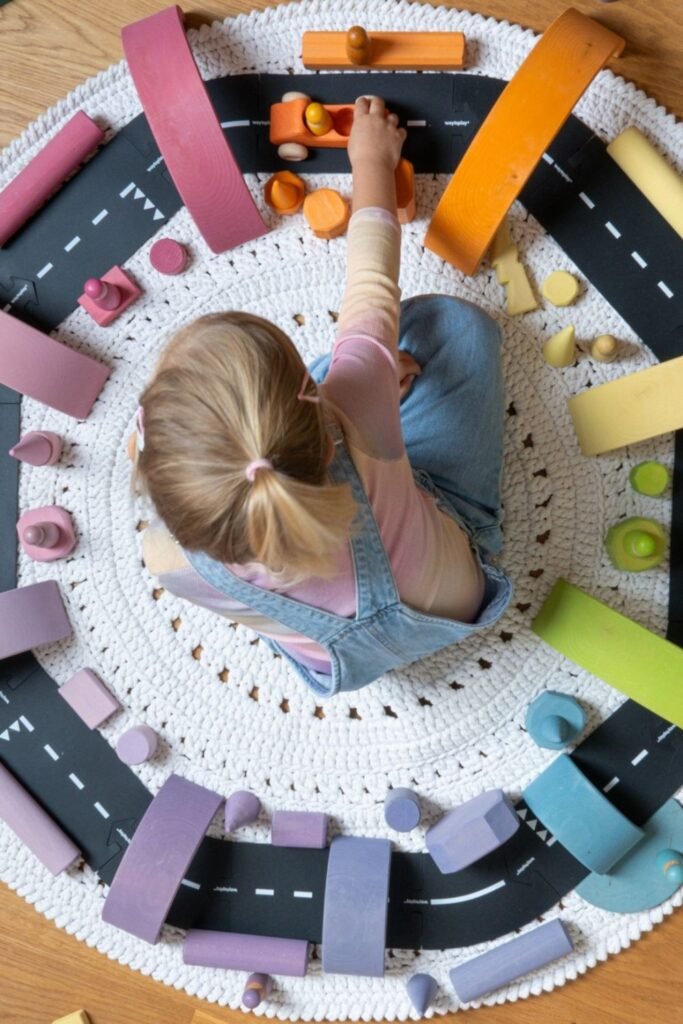
Circle the space with a simple road and watch imagination take over. Wooden blocks become buildings. Small cars turn into busy drivers.
Your child is in the middle of everything, running the whole town. Words like “around,” “through,” “stop,” and “turn” easily come up while talking about traffic.
This configuration works great with rugs or floor mats. Younger kids can keep focused better when everything is in one circle instead of drifting off.
Ask people to help you solve easy problems. “How can the car get over” “Where should the house go” Questions like that help you plan.
Role-playing is a great way to learn a language quickly. Building cities helps people become more aware of space.
Superhero Pretend
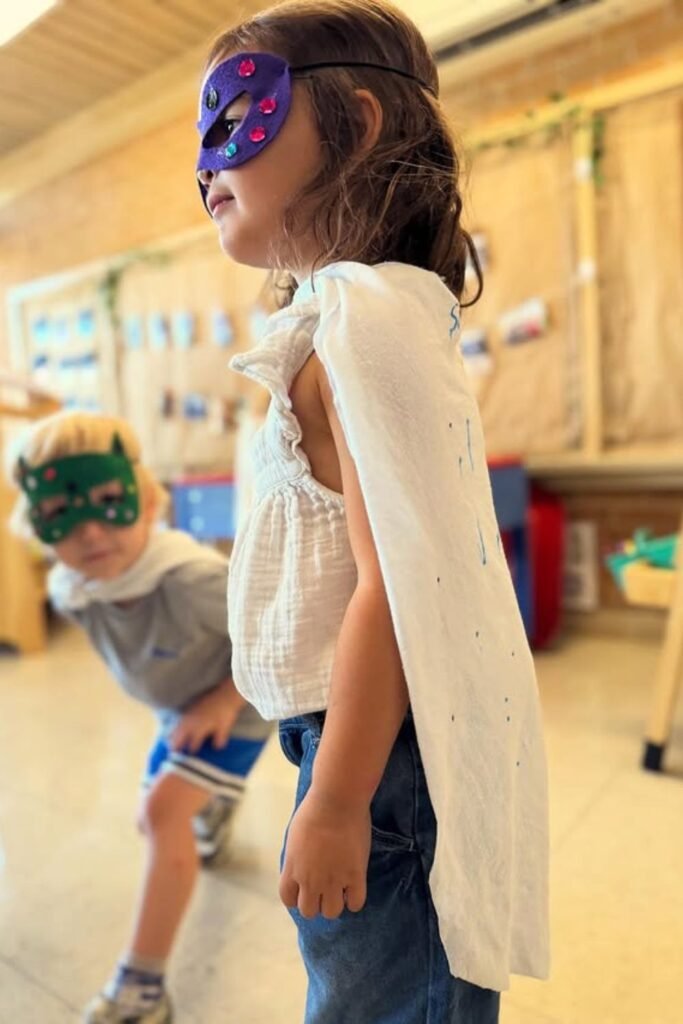
Confidence grows fast when a cape goes on. Hand your child a simple mask or fabric cape and suddenly they’re flying, rescuing, and solving problems.
Imaginative play does more than just build imagination. Ask them who they are saving today. What kinds of powers do they have.
How will they be of help? Telling stories helps you learn new words and how to feel things at the same time.
Big motions might happen in living rooms or open playrooms. Jumping, jogging, and “flying” are all good ways to burn energy.
Taking turns being the hero and the assistant teaches people how to work together. Kids can also safely deal with large sentiments by acting them out through characters.
FAQs
How long should a learning activity last for a 3-year-old?
Shorter is better. Most 3-year-olds can stay focused on one thing for 5 to 10 minutes. Let it go on if they are really into it.
You should stop if they start to walk away, act ridiculous, or get angry. If you end while they’re still intrigued, they’re more likely to come back next time.
You don’t require sessions that last an hour. A few short learning moments throughout the day are much better than one large “lesson.”
Do I need expensive educational toys for my 3-year-old to learn effectively?
No. Your youngster learns best when they play with basic things.
These things help you learn practical skills: cups, utensils, paper, blocks, crayons, and toy animals.
The most important things are talking, interacting, and repeating. You can help children learn by talking to them, asking them questions, and letting them explore.

Hi, I’m Afaf! I’m a law student who loves writing about everyday life – from home projects and crafts to fashion, beauty, and parenting tips.
I’ve been writing for over a year, sharing ideas that are simple, practical, and easy to try. I write about things I find interesting and useful, whether that’s organizing a space, trying a new DIY, or finding activities to keep kids entertained.
My goal is to share helpful ideas without making things complicated. If it works in real life, I’ll write about it.
When I’m not studying or writing, I’m usually experimenting with new projects or scrolling for inspiration!